
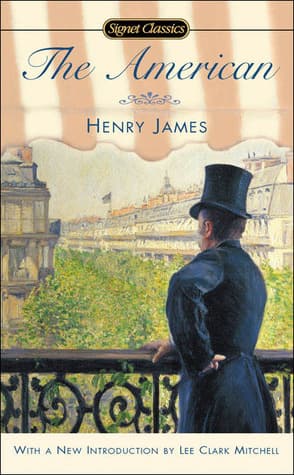
Synopsis
Covers the whole plot, including the ending.
- Difficulty
- Medium
- Pacing
- Slow
- Mood
- Reflective, Melancholy, Socially critical, Elegant
- Read it if
- You enjoy classic literary fiction exploring cultural clashes, moral dilemmas, and the intricacies of 19th-century European society, with a focus on character and social commentary.
- Skip it if
- You prefer fast-paced plots, clear-cut happy endings, or find detailed descriptions of social etiquette and internal monologues tedious.
The American Plot Summary
Covers the whole plot, including the ending.
Christopher Newman's Arrival in Paris
Christopher Newman, a rich American businessman, arrives in Paris after a successful career, feeling a sense of emptiness and a wish for a more refined life. He made his money through hard work but now wants experiences beyond business. He plans to find a beautiful, cultured European wife and immerse himself in art and history. His first experiences in Parisian society show his unpolished American style and an almost childlike interest in European art, which he first sees with a buyer's mindset. He soon meets Mrs. Tristram, an American friend living in Paris, who takes an interest in his search.
Introduction to the Bellegarde Family
Through Mrs. Tristram, Newman meets Madame de Cintré, formerly Claire de Bellegarde, a beautiful and sad young widow from an old, aristocratic French family. Newman is immediately drawn to her grace, quiet dignity, and sorrow. He learns that Claire was married to an older man by her family for money and social status, a marriage that brought her little happiness. Despite her reserved nature, Newman feels an instant connection and a strong wish to win her affection. He starts to visit the Bellegarde home, patiently enduring the formal and often cold welcome from Claire's mother, the Marquise de Bellegarde, and her older brother, the Marquis Urbain de Bellegarde.
Newman's Courtship and the Bellegardes' Hesitation
Newman begins a determined courtship of Claire, showing his sincere admiration and affection. He is direct and earnest, qualities new to the subtle social rituals of European aristocracy. Claire, at first hesitant because of her family's likely disapproval and her own sense of duty, slowly responds to Newman's genuine warmth and unusual charm. However, the Marquise and Urbain see Newman with disdain and suspicion. They are shocked by his lack of noble lineage, his 'new money' status, and his direct American manner, which they see as crude, despite his great wealth.
Claire's Acceptance and Family Opposition
Despite strong opposition from her mother and brother, Claire de Bellegarde, moved by Newman's steady devotion and seeing a chance for happiness, eventually accepts his marriage proposal. This decision causes a major upset within the Bellegarde family. The Marquise and Urbain are furious, seeing the match as a major dishonor to their old name and a betrayal of their aristocratic values. They try to talk Claire out of it through emotional manipulation and appeals to her sense of duty, pointing out the social gap between their world and Newman's. Newman, for his part, remains hopeful, believing his wealth and sincere intentions will overcome their biases.
The Bellegardes' Retreat to Fleurières
As wedding preparations are supposedly happening, the Bellegarde family suddenly leaves Paris for their ancestral country estate, Fleurières, taking Claire with them and leaving Newman confused and upset. He is given vague and conflicting reasons for their departure, none of which truly explain the suddenness or the clear intention to separate him from Claire. Newman, determined not to be stopped, follows them to Fleurières. When he arrives, he is met with an even colder welcome, and Claire is kept mostly apart from him, her despair clear. It becomes obvious that the Bellegardes are actively trying to break off the engagement.
The Bellegardes' Rejection of Newman
In a formal and blunt interview, the Marquise and Urbain de Bellegarde tell Newman they cannot allow the marriage. Their reasons are essentially an attack on his American identity: his lack of old lineage, his 'newness,' his unfamiliarity with their traditions, and his general unsuitability for their noble family. They state their belief that a marriage with Newman would be a permanent stain on their respected name. Newman is deeply hurt and angered by their snobbery and their complete disregard for Claire's feelings and his own. He vows to understand the real reasons behind their sudden and complete rejection.
Noémie Nioche and the Family Secret
Newman, still recovering from the rejection, meets Noémie Nioche, a copyist he had hired, and her father, Monsieur Nioche, a former servant of the Bellegarde family. Through careful questions and observations, Newman starts to suspect the Bellegardes are hiding a dark secret. He eventually learns, through Monsieur Nioche's reluctant testimony and his own inquiries, that the Marquise de Bellegarde and Urbain were involved in the death of the old Marquis de Bellegarde – Claire's father and the Marquise's husband. The old Marquis was confined and allowed to die early, possibly poisoned, to keep him from disinheriting his children and to ensure the family's social and financial status remained secure.
Newman's Moral Dilemma and Claire's Fate
Armed with the letter written by the dying Marquis, which details his mistreatment and implicates the Marquise and Urbain, Newman confronts the Bellegardes. He tells them he has proof of their crime, threatening to expose them to public scandal. The Bellegardes are terrified, knowing their reputation would be ruined. Meanwhile, Claire, overwhelmed by her family's cruelty and societal pressures, and perhaps aware of the family's secret, makes a drastic decision: she announces her plan to enter a Carmelite convent, giving up the world and any chance of marriage with Newman. Her choice leaves Newman heartbroken and helpless.
The Convent Visit and Newman's Revenge
Newman visits Claire at the convent, hoping to change her mind, but finds her firm in her decision. She is calm but distant, her spirit seemingly broken by her family and her situation. Seeing her behind the grille, separated from him by a great gap, deepens Newman's pain and strengthens his wish for revenge. He holds the incriminating letter, a powerful weapon against the Bellegardes, and considers exposing their crime. He wants to see them suffer the social ruin they inflicted on him and Claire. He struggles with the moral implications of such an act, weighing revenge against his own sense of honor.
The Burning of the Letter
After much inner struggle, Newman makes a decision. He realizes that exposing the Bellegardes, while satisfying a desire for revenge, would not bring him happiness or restore Claire to him. It would only further involve him in their corrupt world and perhaps even damage his own character. In a clear moment, he takes the incriminating letter and burns it. This act shows his rejection of their Old World corruption and his embrace of his own American moral code, which values integrity over petty vengeance. He decides to move on from the Bellegardes and their secrets, choosing to keep his own dignity and sense of self.
Departure from Europe
Having burned the letter and accepted Claire's fate, Christopher Newman prepares to leave Europe. He travels to England and then back to America, having gained a deep, though painful, understanding of European society and the limits of his American idealism. He has been deeply hurt by the experience, losing the woman he loved and seeing the moral decay hidden beneath aristocratic appearances. Yet, he emerges with his basic integrity intact, having chosen self-respect over bitter revenge. He remains a wealthy man, but the experience has matured him, giving him a deeper understanding of human nature and cultural differences.
The American Characters
Christopher Newman
Protagonist
A wealthy, self-made American businessman seeking refinement and love in Europe.
Christopher Newman is a quintessential American self-made man: shrewd, honest, direct, and immensely wealthy from his manufacturing ventures. He possesses a strong moral compass and a practical, optimistic outlook on life. Initially, he is somewhat naive about the complexities of European aristocracy and social conventions, viewing the world through a lens of American pragmatism and idealism. He is driven by a desire for a more fulfilling life beyond commerce, specifically seeking a cultured European wife and an appreciation for art and history.
Relationships: Claire de Bellegarde (His love interest, whom he genuinely admires and desires to marry.); Marquise de Bellegarde (His antagonist, Claire's mother, who despises him for his American origins.); Marquis Urbain de Bellegarde (His antagonist, Claire's brother, who shares his mother's aristocratic prejudices.); Mrs. Tristram (An American acquaintance in Paris who introduces him to the Bellegardes and offers advice.)
Claire de Bellegarde (Madame de Cintré)
Love Interest
A beautiful, melancholic French aristocrat torn between love and family duty.
Claire is a woman of immense grace and beauty, but also profound sadness. She is a widow, having been married off for convenience, and carries the weight of her family's expectations and traditions. She is gentle, sensitive, and possesses an innate dignity. Despite her aristocratic upbringing, she is not entirely bound by its prejudices and finds herself drawn to Newman's sincerity and warmth, offering her a glimpse of genuine affection and happiness outside her stifling family.
Relationships: Christopher Newman (Her suitor and the man she comes to love, offering her a chance at happiness.); Marquise de Bellegarde (Her mother, who exerts immense control and pressure over her decisions.); Marquis Urbain de Bellegarde (Her brother, who reinforces the family's strict social codes.); Noémie Nioche (A minor acquaintance; their lives intersect through Newman.)
Marquise de Bellegarde
Antagonist
Claire's proud, aristocratic mother, fiercely protective of her family's ancient name.
The Marquise is the embodiment of the Old World's rigid aristocracy. She is proud, cold, calculating, and utterly devoted to maintaining the purity and prestige of the Bellegarde name. She views Newman's American origins and 'new money' with contempt and disgust, considering him an unacceptable match for her daughter. Her actions are driven by a deep-seated snobbery and a willingness to commit morally dubious acts to preserve her family's social standing.
Relationships: Christopher Newman (Her primary target of disdain and the obstacle to her family's perceived purity.); Claire de Bellegarde (Her daughter, whom she views as a pawn to be controlled for the family's benefit.); Marquis Urbain de Bellegarde (Her son and co-conspirator in maintaining the family's status and secrets.); Old Marquis de Bellegarde (Her deceased husband, whose death she was complicit in.)
Marquis Urbain de Bellegarde
Antagonist
Claire's elder brother, equally proud and snobbish, and complicit in family secrets.
Urbain is the male counterpart to his mother's aristocratic pride. He is stiff, formal, and deeply entrenched in the traditions and prejudices of his class. He lacks the Marquise's overt intensity but shares her disdain for Newman and her determination to prevent the marriage. He is less emotionally expressive but equally manipulative and morally compromised, playing a significant role in the family's schemes and secrets. He represents the sterile and decaying aspects of the European aristocracy.
Relationships: Christopher Newman (He views Newman as an inferior, vulgar American.); Claire de Bellegarde (His sister, whom he expects to obey family dictates.); Marquise de Bellegarde (His mother and ally in preserving the family's standing.); Old Marquis de Bellegarde (His deceased father, whose death he was complicit in.)
Mrs. Tristram
Supporting
An American expatriate in Paris, a shrewd observer of society and Newman's confidante.
Mrs. Tristram is a lively and intelligent American woman who has lived in Paris for many years. She is cynical and worldly, possessing a keen understanding of both American and European society. She acts as a sort of matchmaker and confidante for Newman, initially encouraging his pursuit of Claire. While she appreciates Newman's American qualities, she also understands the insurmountable obstacles he faces in the rigid European social structure, often offering him prescient, if sometimes unheeded, advice.
Relationships: Christopher Newman (His friend and advisor in Parisian society.); Mr. Tristram (Her somewhat passive husband.)
Mr. Tristram
Supporting
Mrs. Tristram's somewhat indolent and conventional American husband.
Mr. Tristram is a pleasant but largely ineffectual American expatriate. He is less sharp and worldly than his wife, often content to follow her lead or remain on the periphery of social events. He represents a more conventional, less ambitious American presence in Europe, providing a contrast to Newman's active pursuit of new experiences. He offers little direct influence on the plot but serves as a sounding board for his wife and Newman.
Relationships: Christopher Newman (An acquaintance and guest in his home.); Mrs. Tristram (His wife, whom he largely defers to.)
Noémie Nioche
Supporting
A French copyist and opportunistic young woman with connections to the Bellegardes.
Noémie is a beautiful, ambitious, and somewhat unscrupulous young French woman who initially works for Newman as an art copyist. She is practical and keenly aware of social dynamics, always looking for opportunities to advance herself. She is instrumental in helping Newman uncover the Bellegardes' secret, driven by her own desire for social climbing and a pragmatic understanding of information's value.
Relationships: Christopher Newman (Her employer, whom she helps with information.); Monsieur Nioche (Her father, a former Bellegarde servant.)
Monsieur Nioche
Supporting
Noémie's father, a former servant of the Bellegardes who holds a dark secret.
Monsieur Nioche is an aging, impoverished Frenchman, formerly in the service of the Bellegardes. He is timid, burdened by his past, and initially reluctant to speak about the family's secrets due to fear and a sense of loyalty. However, under pressure and with the promise of financial reward, he eventually reveals crucial information to Newman about the old Marquis's death, playing a critical role in uncovering the central plot device.
Relationships: Christopher Newman (The person he reveals the family secret to.); Noémie Nioche (His daughter, whose ambition influences his actions.); Bellegarde Family (His former employers, whose secrets he holds.)
Old Marquis de Bellegarde
Mentioned
Claire's deceased father, whose suspicious death holds the key to the family's secret.
The Old Marquis is a crucial, though deceased, character. His will and the circumstances of his death are central to the plot. He was reportedly confined and allowed to die under suspicious circumstances, a secret that his wife and son conspired to keep hidden to protect their inheritance and social standing. His character represents the corrupt underbelly of the aristocratic system.
Relationships: Marquise de Bellegarde (His wife, who was complicit in his death.); Marquis Urbain de Bellegarde (His son, who was complicit in his death.); Claire de Bellegarde (His daughter, whose fate is indirectly affected by his death.)
The American Themes
The Clash of Cultures: Old World vs. New World
A main theme of 'The American' is the sharp contrast between American idealism, directness, and democratic values, and European aristocracy's strict traditions, snobbery, and moral decay. Christopher Newman embodies the 'New World' with his self-made wealth, optimism, and straightforward approach to life and love. The Bellegarde family represents the 'Old World' with their old lineage, complex social rules, and willingness to sacrifice individual happiness for family prestige. Newman's attempts to navigate French society show his innocence and the deep-seated biases of the European elite. This clash is clear in the Bellegardes' rejection of Newman, not for any personal fault, but purely for his lack of an old name and his American 'newness,' showing the deep cultural divide.
“He was a man who had his own ways, and they were not those of the Bellegardes.”
Innocence and Experience/Disillusionment
Newman begins his European journey with American innocence and optimism, believing that wealth and sincere intentions can overcome any problem. He is eager to experience European culture and find love. However, his experiences with the Bellegarde family slowly remove this innocence. He learns that beneath the aristocratic appearance lies snobbery, cruelty, and moral corruption. His journey is one of deep disappointment as he faces the reality that his American values do not fit with, and are often scorned by, the Old World's fixed prejudices and dark secrets. The loss of Claire de Bellegarde is the clearest symbol of this broken idealism.
“He had tasted of the Old World, and it had been bitter to his palate.”
Moral Integrity vs. Social Convention/Corruption
This theme explores the tension between a person's inner moral sense and the damaging influence of societal expectations and aristocratic pride. Newman, despite his early wish to fit into European society, ultimately follows his strong American sense of justice and fairness. The Bellegardes, on the other hand, are willing to commit serious moral wrongs—such as their involvement in the old Marquis's death and their cruel manipulation of Claire—to keep their social standing and family honor. Newman's decision to burn the incriminating letter, giving up revenge, is a strong statement of his personal moral integrity over the desire to stoop to their level of malice, despite his deep hurt.
“He held his revenge in his hand, and he was able to say to himself that he was not afraid of it.”
The Nature of Freedom and Constraint
The novel looks at different kinds of freedom and restriction. Newman shows American freedom – the freedom to make one's own fortune, choose one's path, and marry for love. Claire de Bellegarde, in contrast, shows the ultimate restriction, bound by her aristocratic family's strict expectations, social norms, and a sense of duty that leads her to a convent. Her decision to enter the convent, while seemingly a choice, is presented as a final surrender to an oppressive system, a tragic escape from a life where she has no real control. The Bellegardes themselves, while seeming free, are restricted by their own pride and the need to uphold their ancient name, leading them to morally questionable actions.
“She was not a woman who could be happy without a great deal of freedom.”
Revenge and Forgiveness
The question of revenge is central to Newman's journey, especially after he uncovers the Bellegardes' dark secret. He gains the power to completely ruin their reputation, a tempting idea given their cruel treatment of him and Claire. The novel carefully explores Newman's internal conflict: whether to get revenge and expose their crime, or to rise above it. His final decision to burn the incriminating letter, choosing not to use it, shows a deep act of moral strength and a rejection of the destructive cycle of retribution. It highlights a form of forgiveness, not necessarily toward the Bellegardes, but toward himself, allowing him to move forward with his integrity intact.
“He had a great desire to make them suffer, but he had a greater desire to be himself.”
Plot Devices & Literary Techniques
The Incriminating Letter
A letter from the deceased Marquis detailing his mistreatment, serving as a weapon for Newman.
The letter written by the dying Old Marquis de Bellegarde is the central plot device. It serves as the tangible proof of the Marquise and Urbain's complicity in their patriarch's death, detailing his confinement and the suspicious circumstances leading to his demise. This letter is Newman's 'weapon' against the Bellegardes, giving him immense power over them. Its existence creates the moral dilemma at the heart of the novel: whether Newman will use it for revenge or choose a different path. The letter symbolizes the hidden corruption beneath the aristocratic facade and acts as a catalyst for the climax of Newman's internal conflict.
The Carmelite Convent
Claire's retreat into a religious order, symbolizing her ultimate surrender and the Old World's constraints.
The Carmelite convent serves as a powerful symbolic plot device. Claire's decision to enter the convent is not merely a personal choice but a tragic outcome forced by the unbearable pressures of her family and society. It represents the ultimate escape from a world where she has no agency, a complete renunciation of worldly happiness, including her love for Newman. For Newman, the convent becomes an impenetrable barrier, signifying the final, insurmountable obstacle to his love and the tangible manifestation of the Old World's power to crush individual happiness. It reinforces the theme of constraint and the tragic fate of those who cannot escape its grip.
The 'New World' American vs. 'Old World' European Contrast
The fundamental cultural dichotomy driving character motivations and plot conflicts.
This overarching contrast is not just a theme but also a plot device that structures the entire narrative. Newman's American characteristics (directness, optimism, self-made wealth) constantly clash with the Bellegardes' European traits (aristocratic pride, snobbery, adherence to tradition, hidden corruption). This device fuels the central conflict, explains the Bellegardes' rejection of Newman, and dictates the misunderstandings and emotional distances between the characters. It sets up the 'rules' of engagement that Newman, initially unaware, must learn to navigate, ultimately leading to his disillusionment and moral choices.
The American Quotes
“He was a man of magnificent intentions, but his ideas were not always of the clearest.”
“The world was a great open book for him, and he had learned to read it with a certain shrewdness.”
“She was a woman of the most delicate and complicated constitution, and her beauty was of that kind which seems to have been refined by a process of thought.”
“He felt a certain delicious sense of moral freedom, a sense of being able to do exactly what he liked, without accounting to anyone.”
“It was the old story of the New World trying to buy the Old, and finding that there were some things not in the market.”
“There was a kind of high, still splendor in the air, a sense of things immemorial and indestructible.”
“He was like a man who had been walking in a thick fog and had suddenly come out into the sunshine.”
“The whole situation had a sort of dismal, almost pathetic ugliness.”
“He had an immense curiosity, a curiosity that was almost boyish in its freshness and its scope.”
“It was not a question of his being worthy of her, but of her being worthy of him.”
“He had a great deal of the simple, honest, good-humored American about him.”
“He was learning to know the world, and he was learning it by the only way that is really profitable—by getting bruised.”
“The past was a dead letter; he had torn it up.”
“He had never known what it was to be afraid of anything but not succeeding.”
Quiz
10 questions on the plot and the characters. Each answer comes with a short explanation.
Question 1
What is Christopher Newman's profession or background before he travels to Europe?
- He is an inherited aristocrat from a wealthy East Coast family.
- He is a self-made American millionaire, having made his fortune in business.
- He is a renowned artist seeking inspiration in European galleries.
- He is a scholar on sabbatical, studying European history.
Show answer
B. He is a self-made American millionaire, having made his fortune in business. Christopher Newman is explicitly described as a 'self-made' American millionaire, having accumulated his wealth through his own business ventures before his travels.
Question 2
Which country does Christopher Newman primarily travel to in Europe?
- Italy
- England
- France
- Germany
Show answer
C. France The synopsis states that Newman is 'a 'self-made' American millionaire in France', indicating France as his primary destination.
Question 3
What is the name of the aristocratic family with whom Christopher Newman becomes involved?
- The Montagues
- The Bellegardes
- The Valois
- The Beauchamps
Show answer
B. The Bellegardes Newman falls in love with Claire de Bellegarde, and it is her family, the Bellegardes, who reject his marriage proposal.
Question 4
What is the primary reason the Bellegarde family rejects Newman's proposal of marriage to Claire?
- They believe he is too old for Claire.
- They disapprove of his 'brash American manner' and lack of aristocratic background.
- They suspect he is only interested in their family's social standing.
- Claire is already secretly engaged to another man.
Show answer
B. They disapprove of his 'brash American manner' and lack of aristocratic background. The synopsis explicitly states the family was 'taken aback by his brash American manner' and rejected his proposal, highlighting the clash of cultures.
Question 5
What kind of secret does Christopher Newman discover about the Bellegarde family?
- A secret illegitimate child from a previous generation.
- A guilty secret from their past that could tarnish their reputation.
- They are secretly bankrupt and seeking his money.
- They are involved in political espionage.
Show answer
B. A guilty secret from their past that could tarnish their reputation. The synopsis mentions, 'When Newman discovers a guilty secret in the Bellegardes' past,' indicating a scandal or dark episode.
Question 6
What central theme does 'The American' primarily explore, as per the description?
- The pursuit of artistic genius.
- The clash between European and American cultures.
- The rise of industrialism in the 19th century.
- The complexities of international trade.
Show answer
B. The clash between European and American cultures. The description highlights 'the clash between European and American cultures, the Old World and the New' as James's most powerful, perennial theme explored in this novel.
Question 7
What moral dilemma does Christopher Newman face after discovering the Bellegardes' secret?
- Whether to use his wealth to buy their silence.
- Whether to expose them for revenge or exercise discretion.
- Whether to join forces with them to protect their secret.
- Whether to forget Claire and return to America immediately.
Show answer
B. Whether to expose them for revenge or exercise discretion. The text states he 'confronts a moral dilemma: Should he expose them and thus gain his revenge?'
Question 8
Which literary genres or styles are combined in 'The American', according to the description?
- Science Fiction, Western, and Satire.
- Social comedy, melodramatic romance, and realistic novel of manners.
- Gothic horror, philosophical treatise, and adventure.
- Historical biography, epic poem, and psychological thriller.
Show answer
B. Social comedy, melodramatic romance, and realistic novel of manners. James's work is described as 'at once a social comedy, a melodramatic romance and a realistic novel of manners.'
Question 9
What does the phrase 'Old World and the New' specifically refer to in the context of the novel's themes?
- Ancient civilizations versus modern societies.
- Traditional European aristocracy and culture versus modern American pragmatism and enterprise.
- The past historical events versus future predictions.
- Rural life versus urban development.
Show answer
B. Traditional European aristocracy and culture versus modern American pragmatism and enterprise. In Henry James's works, 'Old World' typically refers to established European society with its traditions and aristocracy, while 'New World' refers to the newer, more individualistic, and often self-made American society, embodying the cultural clash.
Question 10
What is Claire de Bellegarde's relationship to the Marquis de Bellegarde and his mother, based on typical aristocratic family structures of the time?
- She is the Marquis's sister and the daughter of his mother.
- She is the Marquis's wife and the daughter-in-law of his mother.
- She is a distant cousin brought up in the household.
- She is the Marquis's daughter and the granddaughter of his mother.
Show answer
A. She is the Marquis's sister and the daughter of his mother. While not explicitly stated in the brief synopsis, 'Claire de Bellegarde' as a beautiful aristocratic woman falling in love with Newman, and 'Her family' (including the Marquis and his mother) rejecting him, strongly implies she is their daughter/sister, making her a direct member of the aristocratic family unit being discussed. This is a common structure in historical romances of the period.
The American FAQ
What is the central conflict of 'The American'?
The central conflict revolves around the clash between American innocence, directness, and self-made wealth, embodied by Christopher Newman, and the entrenched European aristocracy, tradition, and hidden complexities, represented by the Bellegarde family. Newman's desire to marry Claire is thwarted by the family's rigid social hierarchy and their disdain for his 'new money' origins.
Who is Christopher Newman and what are his primary motivations?
Christopher Newman is a wealthy, self-made American businessman who has retired early to experience European culture and find a wife. His primary motivations are to acquire refinement, beauty, and a sense of belonging in the Old World, and specifically to marry Claire de Bellegarde, driven by genuine affection and a desire for a 'perfect' life.
Who is Claire de Bellegarde and what is her situation?
Claire de Bellegarde is a beautiful, widowed French aristocrat from a prominent but financially strained family. She is deeply constrained by her family's expectations and social conventions, and despite her affection for Newman, she ultimately succumbs to the pressure to renounce their engagement, sacrificing her personal happiness for her family's honor.
What role do the Bellegarde family members play in the story?
The Bellegarde family, particularly Madame de Bellegarde and her son Urbain, represent the rigid, aristocratic Old World values that oppose Newman. They are obsessed with lineage, appearances, and maintaining their social standing, leading them to reject Newman as a suitor for Claire and to conceal a dark family secret.
What is the 'guilty secret' Newman discovers about the Bellegardes?
Newman discovers evidence, in the form of a letter from the late Marquis de Bellegarde, revealing that Madame de Bellegarde and Urbain poisoned the Marquis to prevent him from disinheriting them and marrying his mistress. This secret provides Newman with leverage to expose their villainy.
How does M. Nioche contribute to Newman's understanding of French society?
M. Nioche, a minor character, serves as a more grounded and less aristocratic Frenchman, offering Newman glimpses into a different facet of French life. While not central to the main plot, his interactions provide a contrast to the Bellegardes' world and highlight Newman's gradual immersion, albeit limited, into Parisian society.
What is the significance of the 'tableau' scene where Newman first sees Claire?
The 'tableau' scene where Newman first encounters Claire at the convent signifies her initial presentation as an almost ethereal, idealized figure, perfectly embodying the European beauty he seeks. This initial perception contrasts sharply with the later reality of her constrained existence and the family's harsh opposition, foreshadowing the disillusionment to come.
How does Newman's 'American-ness' manifest in his interactions with the Bellegardes?
Newman's 'American-ness' manifests in his directness, his belief in personal merit over inherited status, his frankness, and his somewhat naive optimism. He lacks the subtle social graces and manipulative tactics of the European aristocracy, often appearing blunt or unsophisticated in their eyes, which contributes to their rejection of him.
Analyze Claire's psychological state throughout the novel.
Claire is psychologically trapped between her genuine affection for Newman and her profound sense of duty, fear, and loyalty to her family's honor and traditions. Her ultimate decision to enter a convent reflects her deep resignation and the crushing weight of societal expectations, leading her to sacrifice personal happiness for familial and religious obligation.
How does the novel explore the psychology of revenge?
The novel explores the psychology of revenge through Newman's moral dilemma. Initially, he is tempted to expose the Bellegardes' secret, driven by hurt and a desire for justice. However, his inherent moral compass and a sense of dignity ultimately lead him to forgo revenge, demonstrating a higher moral ground than his adversaries.
What does Newman's decision to destroy the incriminating letter reveal about his character?
Newman's decision to destroy the incriminating letter reveals his fundamental moral integrity, his capacity for forgiveness, and his ultimate rejection of the Bellegardes' corrupt world. It signifies his realization that stooping to their level of manipulation and scandal would diminish him, and that his American sense of fair play and dignity is more valuable than vengeance.
Is 'The American' a tragedy or a moral triumph for Newman?
While Newman experiences personal loss and heartbreak, the novel can be interpreted as a moral triumph. He maintains his integrity and good character by refusing to engage in the Bellegardes' sordid game, demonstrating a superior moral code. His journey, though painful, ultimately affirms his American values over European corruption.
How does the ending reflect James's views on the clash of cultures?
The ending, with Newman returning to America having lost Claire but gained moral clarity, suggests James's nuanced view that while American innocence might be vulnerable to European sophistication and corruption, it also possesses a moral strength that ultimately triumphs over Old World decadence. It implies that true nobility lies in character, not lineage.
Could Claire have made a different choice, and what would it imply?
Theoretically, Claire could have defied her family and married Newman, but given the rigid social structures and her character, it was highly improbable. Such a choice would have implied a radical rejection of her entire upbringing and social identity, likely leading to complete ostracization and a life of scandal, which she was not psychologically prepared to endure.
What is the significance of the title 'The American'?
The title 'The American' emphasizes Christopher Newman's identity as a representative figure of the New World. It highlights how his nationality and its associated values – independence, directness, and moral clarity – are central to the novel's themes, defining his interactions and ultimately his fate within the European setting.
How does James use humor in this novel?
James employs social comedy and subtle irony, particularly in Newman's initial, somewhat naive observations of European society and the Bellegardes' absurd snobbery. The humor often arises from the cultural misunderstandings and the stark contrast between Newman's straightforwardness and the Europeans' intricate social rituals and hidden motives.
What is the role of Madame de Cintré (Claire's sister) in the narrative?
Madame de Cintré, Claire's sister, serves as an example of a woman who married for social advantage and suffered for it, providing a cautionary tale for Claire. Her initial sympathy for Newman and her later withdrawal into a convent highlight the limited choices available to women of her class and the pervasive unhappiness beneath the surface of aristocratic life.
How does the novel explore the concept of 'old money' versus 'new money'?
The novel explicitly explores the 'old money' versus 'new money' dynamic through the Bellegardes' disdain for Newman's self-made wealth. They view his fortune as vulgar and insufficient to compensate for his lack of ancient lineage, illustrating the deep-seated European belief that inherited status is superior to earned success.
Does Newman achieve his goal of acquiring 'culture' or 'refinement' by the end?
Newman does not acquire 'culture' or 'refinement' in the way he initially envisioned, by marrying into an aristocratic European family. Instead, he gains a more profound understanding of the moral complexities and corruptions that can lie beneath a polished surface, achieving a deeper, more authentic refinement of character rather than superficial social polish.
About the author
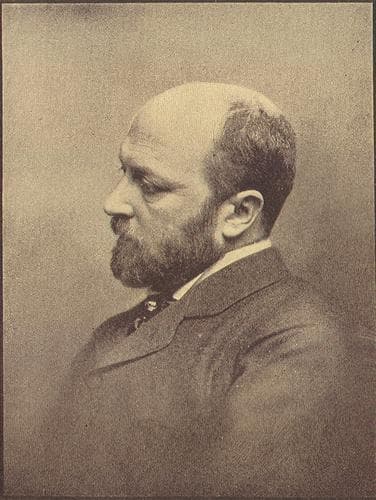
Henry James was an American-British author. He is regarded as a key transitional figure between literary realism and literary modernism, and is considered by many to be among the greatest novelists in the English language. He was the son of Henry James Sr. and the brother of philosopher and psychologist William James and diarist Alice James.
Similar books
- The Portrait of a Lady
Henry James
3.8 (73k) average on GoodreadsHistorical FictionFeatures an American heiress navigating European society, making choices with profound consequences.
- Pride and Prejudice
Jane Austen
4.3 (3M) average on GoodreadsHistorical FictionA novel of manners with intricate social dynamics, class distinctions, and romantic entanglements.
- The Age of Innocence
Edith Wharton
4.0 (139k) average on GoodreadsHistorical FictionWhile Wharton's novel also critiques social structures, its focus is on American high society's internal constraints and hypocrisies. The American specifically examines the transatlantic confrontation, where an outsider (Newman) attempts to navigate and understand an alien European aristocratic system, rather than being born into and stifled by his own.
- The Old Man and the Sea
Ernest Hemingway
3.8 (831k) average on GoodreadsLiterary FictionA Cuban fisherman's long struggle with a giant marlin becomes a story of endurance and dignity, now retold for young adults with illustrations, phonetic guides, and writing prompts in Traditional Chinese.
- One Hundred Years of Solitude
Gabriel García Márquez
4.1 (753k) average on GoodreadsLiterary FictionThrough the multi-generational story of the Buendía family, a mythical town deals with the repeating patterns of time, love, and solitude, as the extraordinary mixes with the ordinary.
- The Goldfinch
Donna Tartt
3.9 (720k) average on GoodreadsLiterary FictionHaunted by a tragic explosion and clutching a stolen Dutch masterpiece, a young orphan navigates the opulent drawing rooms of New York and the gritty underbelly of the art world, desperately seeking connection and redemption amidst a life spiraling into crime and obsession.






Enjoyed the summary?
A summary gives you the shape of the book. The book itself has the detail, the examples and the voice.
Find The American on AmazonAs an Amazon Associate, BookBrief earns from qualifying purchases. How we're funded