

Synopsis
Covers the whole plot, including the ending.
- Difficulty
- Medium
- Pacing
- Moderate
- Mood
- Satirical, Ambitious, Tragicomic, Observational
- Read it if
- You enjoy satirical coming-of-age stories about ambitious, morally ambiguous characters, set against a vibrant historical backdrop.
- Skip it if
- You prefer protagonists with strong moral compasses or dislike stories where characters exploit others for personal gain.
The Apprenticeship of Duddy Kravitz Plot Summary
Covers the whole plot, including the ending.
Duddy's Early Ambitions and Grandfather's Wisdom
Duddy Kravitz is a restless, ambitious, and often unscrupulous teenager growing up in the Jewish quarter of Montreal. He attends Fletcher's Field High School, where he constantly causes trouble for his teachers, especially Mr. MacPherson. Duddy's father, Max, is a small-time pimp and taxi driver, more interested in his own escapades than his sons. Duddy's older brother, Lenny, is the family's hope, destined for medical school. Duddy, however, wants to 'be somebody' and acquire land, a dream instilled in him by his beloved Zayda (grandfather), who often laments the plight of Jews without land. This ambition fuels Duddy's early schemes, including a short-lived film production company.
The Bar Mitzvah Film and Encounter with Yvette
After being expelled from school, Duddy takes on various jobs, including working as a waiter at a resort in Ste. Agathe during the summer. While there, he starts a small business making films of Bar Mitzvah ceremonies and other events for wealthy Jewish families. He enlists the help of an older, alcoholic filmmaker named Friar, who does the actual shooting and editing. It is during this period that Duddy meets Yvette, a quiet, observant French-Canadian girl who works as a switchboard operator at the resort. Yvette is initially wary of Duddy's aggressive demeanor but is slowly drawn to his energy and ambition, becoming his assistant and eventually his lover and confidante. She often helps him out of his financial predicaments.
The Land Acquisition Begins
While driving a wealthy American tourist, Mr. Calvin, around the Laurentians, Duddy finds a beautiful, undeveloped piece of land surrounding a small lake. He immediately recognizes its potential for development and sees it as the realization of his Zayda's dream. This discovery becomes Duddy's obsession. He begins to research the ownership of the various parcels of land around the lake. He realizes they belong to different, often elderly or financially struggling, local farmers. He enlists Yvette to help him navigate property ownership and secure options to buy, often using deceptive tactics and exploiting the landowners' naivety or desperation.
Exploiting Others for Financial Gain
Duddy's ambition to acquire the lakefront property leads him to increasingly unethical actions. He continues to exploit Friar's talent and alcoholism, paying him little while profiting significantly from their film business. When Friar becomes a liability due to his drinking and a car accident, Duddy callously cuts him off, leaving him destitute. He also takes advantage of Yvette's loyalty and financial stability, borrowing money from her repeatedly without much intention of repayment. His schemes become more elaborate, including a brief, disastrous foray into the black market, which nearly lands him in serious trouble and further strains his relationship with Yvette.
The Arrival of Virgil and Duddy's Recklessness
Duddy encounters Virgil Rose, a kind-hearted, epileptic American who had been working for a Montreal-based film distributor. Duddy, seeing an opportunity, befriends Virgil and convinces him to invest in his film business, promising him a share in the profits and a future in filmmaking. Virgil, desperate for purpose and friendship, trusts Duddy. However, Duddy's reckless driving and disregard for Virgil's condition lead to a severe epileptic seizure during a delivery run, causing a serious accident that leaves Virgil paralyzed from the waist down. Despite this tragedy, Duddy continues to exploit Virgil's insurance settlement and disability payments to fund his land purchases, promising to make things right.
The Conflict with Uncle Benjy and Lenny's Downfall
Duddy's wealthy and respected Uncle Benjy, who has always criticized Duddy's character, becomes terminally ill. Benjy tries to give Duddy some moral guidance, urging him to consider the consequences of his actions and to be a better person. Duddy, however, remains largely focused solely on his land. Meanwhile, his brother Lenny, once the family's golden boy, succumbs to the pressures of medical school and his own moral failings. He becomes involved in a drug-smuggling scheme, leading to his expulsion from medical school and public humiliation, shattering his father Max's hopes and further showing the moral decay within the family.
The Last Parcel and the Betrayal of Virgil
With almost all the lakeside parcels secured, Duddy faces a final hurdle: a piece of land owned by a reluctant farmer. Desperate to complete his acquisition, Duddy needs a significant sum of money quickly. He realizes that Virgil's insurance settlement, which he has been managing, is the key. In a climactic act of betrayal, Duddy forges Virgil's signature on a document, stealing the remainder of Virgil's money to purchase the last parcel of land. This act shows Duddy's ruthless ambition, as he sacrifices his friendship and Virgil's future for his own gain, believing the ends justify the means.
Yvette's Discovery and Duddy's Isolation
Yvette, who has been a loyal supporter and lover, is increasingly disturbed by Duddy's callous treatment of Virgil and his relentless pursuit of the land. When she discovers evidence of Duddy's forgery, she is heartbroken and disgusted by his actions. The betrayal of Virgil, a man she also cares for, is the final straw. Yvette confronts Duddy, leading to a bitter and painful breakup. Despite having achieved his dream of owning the land, Duddy finds himself emotionally isolated, having alienated the one person who truly cared for him and saw beyond his ambition, leaving him with a hollow victory.
Zayda's Disappointment and Duddy's Pyrrhic Victory
Having acquired all the land around the lake, Duddy proudly takes his beloved Zayda to see his achievement. He expects his grandfather to be overjoyed, to finally see his dream of land ownership realized through Duddy. However, Zayda, who had always emphasized the importance of being a 'mensch' (a good person), is horrified when he learns the full extent of Duddy's unethical methods, particularly the betrayal of Virgil. Zayda's reaction is not one of pride but of deep disappointment and sorrow. He refuses to acknowledge Duddy's achievement as a moral victory, leaving Duddy's triumph feeling utterly hollow and exposing the true cost of his ruthless ambition.
The Aftermath: Duddy's Unfulfilled Success
Duddy Kravitz has achieved his lifelong ambition: he owns all the land around the lake, poised for lucrative development. He has 'become somebody' in the material sense, accumulating wealth and property. However, his journey has come at a tremendous personal cost. He has lost Yvette, his most loyal companion and the only person who truly understood him. He has alienated Virgil, leaving him permanently injured and financially ruined. Most devastatingly, he has earned the disapproval of his cherished Zayda, who sees him as a success but not a 'mensch.' Duddy is left with his land, his money, and his ambition, but without the love, respect, or moral integrity he unknowingly sacrificed along the way, hinting at an unfulfilled future.
Principal Figures
Duddy Kravitz
Protagonist
A relentless, amoral, and ambitious young man determined to 'be somebody' by acquiring land.
Duddy is the central character, a product of his impoverished Jewish immigrant upbringing in Montreal. He is driven by an intense desire for success and a deep-seated need to prove himself, stemming from his grandfather's stories about the importance of land and his father's perceived failures. Duddy is intelligent, energetic, and resourceful, but also deeply flawed, characterized by his amorality, willingness to exploit others, and a profound lack of empathy. His schemes, while often successful, leave a trail of broken relationships and ruined lives. He craves respect but often confuses it with material wealth, constantly struggling to reconcile his ambition with his grandfather's moral teachings.
Relationships: Zayda (Grandson-grandfather, deep affection, Zayda is Duddy's moral anchor); Max Kravitz (Son-father, strained, Duddy resents Max's perceived failures); Lenny Kravitz (Brother-brother, rivalry, Duddy resents Lenny's favored status); Yvette (Lover/confidante, complex, Yvette loves Duddy but is ultimately betrayed); Virgil Rose (Friend/victim, Duddy exploits Virgil's trust and disability)
Yvette
Supporting
Duddy's loyal French-Canadian lover and assistant, who eventually leaves him due to his amorality.
Yvette is a quiet, observant, and morally grounded French-Canadian woman who works as a switchboard operator at the Ste. Agathe resort. She becomes Duddy's lover, confidante, and indispensable assistant in his land acquisition schemes, often handling the practical details and lending him money. Despite Duddy's often crass and exploitative behavior, Yvette genuinely loves him and sees a spark of something good beneath his ambition. She represents a moral counterpoint to Duddy's amorality, consistently questioning his methods and urging him towards ethical behavior. Her eventual departure signifies Duddy's ultimate moral isolation.
Relationships: Duddy Kravitz (Lover/confidante, deep affection, but ultimately betrayed by his amorality); Virgil Rose (Friend, cares for Virgil and is appalled by Duddy's treatment of him)
Zayda (Grandfather)
Supporting
Duddy's beloved grandfather, a wise and moral figure who instills in Duddy the dream of owning land.
Zayda is Duddy's revered grandfather, a man of deep moral integrity and an enduring symbol of the Jewish immigrant experience. He frequently laments the historical displacement of Jews and emphasizes the importance of owning land, inadvertently planting the seed of Duddy's ambition. More importantly, Zayda constantly stresses the value of being a 'mensch' – a good, honorable person. He is the moral compass of the novel, and his ultimate disappointment in Duddy's methods, despite his material success, highlights the tragic cost of Duddy's ruthless pursuit of wealth. His love for Duddy is unconditional, but his moral standards are unyielding.
Relationships: Duddy Kravitz (Grandfather-grandson, deep affection and moral guidance); Max Kravitz (Father-son, traditional family relationship)
Max Kravitz
Supporting
Duddy's father, a small-time pimp and taxi driver who favors his older son, Lenny.
Max is Duddy's charming but morally ambiguous father, a taxi driver and part-time pimp. He is a 'sport' and a storyteller, more concerned with his own reputation and escapades than with providing a stable home. Max openly favors his older son, Lenny, believing him to be destined for greatness, while often dismissing Duddy as a troublemaker. His own questionable ethics and pursuit of superficial pleasures contribute to the moral landscape Duddy navigates, though Max himself is not malicious, just self-absorbed. He represents a certain kind of 'street smart' survival that Duddy inherits and amplifies.
Relationships: Duddy Kravitz (Father-son, strained, Max often dismisses Duddy); Lenny Kravitz (Father-son, Max openly favors Lenny); Zayda (Son-father, traditional family relationship)
Lenny Kravitz
Supporting
Duddy's older brother, the family's 'golden boy' destined for medical school, who ultimately falls from grace.
Lenny is Duddy's older brother, the family's pride and joy, expected to become a doctor. He is intelligent and initially appears more refined than Duddy, but beneath the surface, he possesses his own moral weaknesses and a sense of entitlement. Lenny resents Duddy's disruptive presence and often looks down on him. His eventual involvement in a drug-smuggling scheme, leading to his expulsion from medical school, serves as a poignant contrast to Duddy's 'success' and highlights the moral compromises even seemingly respectable individuals can make. His downfall shatters the family's hopes and exposes the hypocrisy within their community.
Relationships: Duddy Kravitz (Brother-brother, rivalry and resentment); Max Kravitz (Son-father, Max openly favors Lenny)
Virgil Rose
Supporting
An epileptic American whom Duddy befriends and ultimately exploits, leading to his paralysis and financial ruin.
Virgil is a kind-hearted, somewhat naive epileptic American who comes to Montreal seeking work and purpose. He is vulnerable and desperate for friendship, which Duddy exploits. Virgil trusts Duddy implicitly, investing his meager savings and later his insurance settlement in Duddy's schemes. His severe epileptic seizure, caused by Duddy's reckless driving, leaves him paralyzed, making him a tragic figure and the most direct victim of Duddy's ruthless ambition. Virgil's gentle nature and subsequent suffering serve as a stark reminder of the human cost of Duddy's pursuit of success, and his betrayal is a turning point for Yvette.
Relationships: Duddy Kravitz (Friend/victim, exploited by Duddy); Yvette (Friend, Yvette cares for Virgil and is appalled by Duddy's actions towards him)
Uncle Benjy
Supporting
Duddy's wealthy and respected uncle, who offers moral guidance but is ultimately disappointed by his nephew.
Uncle Benjy is Max's wealthy, cultured, and respected brother. He represents the established, successful Jewish community and often expresses his disapproval of Duddy's lack of moral character and his crude ambition. As he faces a terminal illness, Benjy attempts to impart wisdom to Duddy, urging him to consider the importance of integrity over mere material success. His critical perspective provides another moral lens through which Duddy's actions are viewed, and his ultimate disappointment in Duddy underscores the novel's central themes of ethics and identity. He is a voice of conscience, albeit one Duddy largely ignores.
Relationships: Duddy Kravitz (Uncle-nephew, critical but attempts to guide Duddy); Max Kravitz (Brother-brother, close family ties)
Mr. MacPherson
Supporting
Duddy's long-suffering teacher at Fletcher's Field High School.
Mr. MacPherson is Duddy's teacher at the Jewish academy, Fletcher's Field High School. He is a patient but ultimately overwhelmed educator who bears the brunt of Duddy's mischievous and disruptive behavior. MacPherson represents the traditional institutions and moral authority that Duddy constantly challenges and undermines. His exasperation with Duddy highlights Duddy's early rebellious and anti-establishment tendencies, foreshadowing his later disregard for rules and ethics in his pursuit of success. He is a minor but memorable figure who establishes Duddy's character from a young age.
Relationships: Duddy Kravitz (Teacher-student, antagonistic, MacPherson is tormented by Duddy)
Friar
Supporting
An alcoholic, talented filmmaker exploited by Duddy for his film business.
Friar is an older, alcoholic filmmaker whom Duddy employs to shoot and edit the Bar Mitzvah films. He is a talented artist whose life has been derailed by his addiction. Duddy ruthlessly exploits Friar's talent and vulnerability, paying him poorly and discarding him when he becomes a liability due to his drinking and a car accident. Friar serves as an early example of Duddy's willingness to use and discard people for his own gain, highlighting the protagonist's lack of compassion and his single-minded focus on profit.
Relationships: Duddy Kravitz (Employer-employee, exploitative)
Themes & Insights
The Pursuit of Success and the American Dream
The novel examines the relentless pursuit of success, particularly the 'American Dream' (or in this case, the 'Canadian Dream' of material wealth and land ownership). Duddy's ambition to 'be somebody' and acquire land is at the heart of the narrative. The book questions the moral cost of such ambition, as Duddy's success is built on exploitation, betrayal, and a disregard for ethical conduct. His material triumph is a moral failure, suggesting that success achieved without integrity is hollow. The theme challenges the notion that wealth automatically equates to happiness or respect.
“A man without land is nobody.”
Identity and Belonging
Duddy's quest to 'be somebody' is tied to his sense of identity and belonging as a young Jewish man in post-war Montreal. His Zayda's lament about Jews being a 'people without land' fuels Duddy's drive to establish roots and secure a place. However, Duddy struggles with what it means to be a 'mensch' (a good person) versus merely a 'success'. His identity is shaped by his environment and his choices, leading him to question whether his material gains truly define who he is or if he has lost himself in the process. The novel explores the tension between individual ambition and communal values.
“You're a bright boy, Duddel, but you're not a mensch. A mensch is a human being, a good man.”
Moral Ambiguity and Corruption
The novel is steeped in moral ambiguity, as Duddy consistently operates in a grey area, blurring the lines between shrewd business and unethical behavior. Characters like Max Kravitz also show a casual amorality. Richler portrays a society where corruption is subtle and pervasive, often disguised as ambition or necessity. Duddy's journey shows how easily individuals can rationalize their questionable actions in the pursuit of a greater goal. The story makes readers confront the slippery slope of ethical compromise and the destructive power of unchecked self-interest, showing how Duddy's small deceits escalate into major betrayals.
“He was going to be a somebody. He would show them all. He would make his mark, no matter what.”
The Father-Son Relationship and Family Dynamics
The complex and often dysfunctional family dynamics are central to Duddy's development. His strained relationship with his father, Max, who openly favors Lenny, fuels Duddy's desire to prove himself. The influence of his Zayda, who is his moral compass, contrasts sharply with Max's more pragmatic and less ethical approach to life. The rivalry between Duddy and Lenny, and Lenny's eventual downfall, further complicate these dynamics. The novel explores how parental expectations, perceived favoritism, and the legacy of immigrant struggles shape the aspirations and moral choices of the next generation.
“Max thought of Lenny, the doctor, the hope of the family, and then he thought of Duddy, and sighed.”
Loss of Innocence and Disillusionment
The narrative traces Duddy's journey from a mischievous but relatively innocent teenager to a hardened, cynical, and morally compromised businessman. His 'apprenticeship' is not one of moral growth but of increasing disillusionment with ethical constraints. Characters like Yvette and Virgil experience their own loss of innocence as they are drawn into Duddy's world and eventually betrayed. The novel presents a world where idealism is often crushed by ruthless ambition, and where even the most cherished dreams can be corrupted by the means used to achieve them. Duddy's final, hollow victory shows this pervasive disillusionment.
“He felt empty, a little sick, but he had the land. He had achieved his dream. Why didn't it feel like a victory?”
Plot Devices & Literary Techniques
Foil Characters
Characters who highlight Duddy's traits through contrast.
Several characters serve as foils to Duddy, emphasizing his unique qualities and moral failings. Yvette, with her quiet integrity and genuine affection, contrasts sharply with Duddy's amorality and transactional view of relationships. Virgil Rose, the trusting and vulnerable epileptic, highlights Duddy's exploitative nature and lack of empathy. Zayda, the wise and moral patriarch, acts as Duddy's conscience, his disappointment serving as the ultimate judgment on Duddy's actions. Even Lenny, the 'golden boy' brother, initially appears to be Duddy's opposite, only to reveal his own moral weaknesses later on, showing that corruption isn't exclusive to Duddy.
Symbolism of Land
Land represents security, identity, and the fulfillment of a dream for the Jewish people.
The land around the lake is the central symbolic element in the novel. For Zayda, it represents security, belonging, and a historical aspiration for a people often without a homeland. For Duddy, it initially embodies his grandfather's dream, but quickly transforms into a symbol of material success, power, and his desperate need to 'be somebody.' The acquisition of the land becomes a physical manifestation of his ambition. However, the tainted means by which he acquires it ultimately corrupts its symbolic meaning, turning his 'promised land' into a monument to his moral failures rather than a source of true fulfillment.
Irony
Situational and dramatic irony underscore the gap between Duddy's perception and reality.
Irony is prevalent throughout the novel, particularly situational and dramatic irony. Duddy's relentless pursuit of his Zayda's dream of land ownership, expecting his grandfather's pride, results in Zayda's profound disappointment, creating a bitter situational irony. Duddy's belief that acquiring wealth and property will make him 'somebody' is ironically undercut by his loss of relationships and moral standing, leading to a hollow victory. The dramatic irony often arises from the reader's awareness of Duddy's manipulative tactics and their consequences, while Duddy remains self-assured of his righteousness, highlighting his flawed perception of success.
The 'Apprenticeship' Metaphor
The title itself acts as a metaphor for Duddy's moral education, or lack thereof.
The title, 'The Apprenticeship of Duddy Kravitz,' acts as a central metaphor. An apprenticeship typically implies a period of learning and moral growth under guidance. However, Duddy's 'apprenticeship' is one where he learns to be increasingly ruthless, amoral, and exploitative. He becomes a master of manipulation and self-interest rather than a 'mensch.' The metaphor is ironic, suggesting that the lessons Duddy learns are not those of conventional morality but of cutthroat capitalism and survival at any cost. His 'education' is a journey into moral darkness, leaving him with material gain but profound spiritual emptiness.
The Apprenticeship of Duddy Kravitz Quotes
“A boy can be two things, a Jew or a nobody.”
“You'll be a big man, Duddy. A big man.”
“A man without land is nobody.”
“He was a boy who could make things happen.”
“Money isn't everything, but it's a long way ahead of whatever is in second place.”
“The world was full of people who had something to sell and Duddy had something to buy, and the something was land.”
“He didn't want to be liked. He wanted to be important.”
“Honesty is the best policy. Unless you're in business, then it's a luxury.”
“He knew that if he ever stopped running, he'd be nothing.”
“What did it matter if you made a few enemies if you made a lot of money?”
“He had a conscience, all right, but it was like a muscle he hadn't used much.”
“You can't buy respect, Duddy. You earn it.”
“The trouble with Duddy Kravitz was that he was always running, but he didn't know where to.”
“He was a hustler, a schemer, a dreamer, and a boy who knew how to make things happen.”
Quiz
10 questions on the plot and the characters. Each answer comes with a short explanation.
Question 1
What is Duddy Kravitz's primary ambition throughout the novel?
- To become a famous writer and intellectual.
- To marry Yvette and settle down in a quiet suburban life.
- To acquire land around Ste. Agathe and 'be somebody'.
- To escape Montreal and travel the world.
Show answer
C. To acquire land around Ste. Agathe and 'be somebody'. Duddy's overriding goal is to buy up all the land around Ste. Agathe to build a resort, driven by his grandfather's advice to acquire land and 'be somebody'. This ambition fuels most of his schemes and actions.
Question 2
Which character serves as a significant moral compass for Duddy, despite Duddy often ignoring his advice?
- Jerry Dingleman
- Uncle Benjy
- Grandfather Reb Hersh
- Max Kravitz
Show answer
C. Grandfather Reb Hersh Grandfather Reb Hersh, with his quiet wisdom and emphasis on land ownership as true worth, is the closest thing Duddy has to a moral guide. Duddy often misinterprets or exploits his grandfather's advice for his own gain, but the grandfather's presence is a constant reminder of a different kind of value.
Question 3
What is the primary reason Duddy ends up alienating his friend and business partner, Virgil?
- Duddy steals Virgil's girlfriend.
- Duddy uses Virgil's money for his land deals without Virgil's full knowledge or consent, leading to Virgil's financial ruin and a relapse of his epilepsy.
- Duddy frames Virgil for a crime he didn't commit.
- Duddy openly mocks Virgil's artistic aspirations.
Show answer
B. Duddy uses Virgil's money for his land deals without Virgil's full knowledge or consent, leading to Virgil's financial ruin and a relapse of his epilepsy. Duddy exploits Virgil's trust and money, using Virgil's inheritance and savings for his land purchases, which ultimately leads to Virgil's financial destitution and a severe epileptic seizure, effectively destroying their friendship and Virgil's well-being.
Question 4
What role does Yvette play in Duddy's life and ambitions?
- She is a rival who competes with Duddy for land.
- She is Duddy's loyal assistant and lover, who helps him with his land deals and often tries to temper his ruthlessness.
- She is a wealthy heiress whom Duddy tries to marry for her money.
- She is a figure from Duddy's past who reminds him of his humble beginnings.
Show answer
B. She is Duddy's loyal assistant and lover, who helps him with his land deals and often tries to temper his ruthlessness. Yvette is Duddy's long-suffering lover and an instrumental part of his land acquisition schemes. She handles many of the practical aspects of buying the land, and though she loves him, she is often saddened and frustrated by his amoral methods.
Question 5
Which of the following best describes the novel's satirical commentary on the pursuit of success?
- It suggests that true success comes from intellectual achievement and artistic pursuits.
- It argues that financial success is inherently corrupting and ultimately unfulfilling, often achieved at the expense of others.
- It celebrates the entrepreneurial spirit and ruthless ambition as necessary for upward mobility.
- It implies that success is solely determined by one's social connections and family background.
Show answer
B. It argues that financial success is inherently corrupting and ultimately unfulfilling, often achieved at the expense of others. The novel critiques the single-minded pursuit of material success, particularly as embodied by Duddy. His 'apprenticeship' shows how ambition, when untempered by ethics, leads to alienation, moral compromise, and harm to others, suggesting that such success is often hollow and destructive.
Question 6
What is the significance of the film 'The Boy Wonder' that Duddy attempts to make?
- It is a genuine artistic endeavor that Duddy hopes will bring him critical acclaim.
- It is Duddy's attempt to document the lives of ordinary Jewish immigrants in Montreal, reflecting his community pride.
- It is a cynical, exploitative scheme to make money quickly by capitalizing on perceived community interest and using cheap labor, reflecting his 'hustler' mentality.
- It is a project meant to impress his father, Max, and gain his approval.
Show answer
C. It is a cynical, exploitative scheme to make money quickly by capitalizing on perceived community interest and using cheap labor, reflecting his 'hustler' mentality. The film 'The Boy Wonder' is another one of Duddy's schemes. He sees it as a way to make a quick buck and gain notoriety, rather than a serious artistic venture. He exploits others in its creation, highlighting his mercenary approach to almost everything.
Question 7
How does Duddy ultimately acquire the last piece of land needed for his resort, leading to a significant moral cost?
- He wins it in a high-stakes poker game.
- He manipulates Virgil into signing over his stake in the land, effectively defrauding him and leaving him destitute.
- He blackmails the owner into selling it to him at a reduced price.
- He inherits it unexpectedly from a distant relative.
Show answer
B. He manipulates Virgil into signing over his stake in the land, effectively defrauding him and leaving him destitute. Duddy's final act of ruthlessness involves tricking Virgil into signing documents that transfer Virgil's ownership of the crucial piece of land to Duddy, effectively stealing it from his friend and causing Virgil's complete financial and emotional collapse.
Question 8
What is the significance of the character Jerry Dingleman, the 'Boy Wonder'?
- He represents a positive role model for Duddy, showing how to achieve success through ethical means.
- He is Duddy's older brother who inspires Duddy's ambition.
- He is Duddy's mentor in the legitimate business world, teaching him sound financial practices.
- He is a ruthless, successful hustler and gangster whom Duddy both admires and strives to emulate, representing a corrupted version of the 'self-made man'.
Show answer
D. He is a ruthless, successful hustler and gangster whom Duddy both admires and strives to emulate, representing a corrupted version of the 'self-made man'. Jerry Dingleman, the original 'Boy Wonder,' is a character Duddy looks up to and tries to imitate. Dingleman's success, achieved through dubious and often illegal means, offers Duddy a blueprint for how to 'make it' in the world, reinforcing Duddy's own amoral tendencies.
Question 9
At the novel's conclusion, despite achieving his goal of owning all the land, what is Duddy's emotional state?
- He is filled with triumphant joy and satisfaction, having proven himself to everyone.
- He feels a profound sense of loneliness and emptiness, having alienated almost everyone who cared for him.
- He immediately begins planning his next, even grander, business venture.
- He decides to sell all his land and pursue a life of philanthropy.
Show answer
B. He feels a profound sense of loneliness and emptiness, having alienated almost everyone who cared for him. Despite finally owning all the land, Duddy is left isolated. Yvette leaves him, Virgil is ruined, and his grandfather is deeply disappointed. The triumph of acquiring the land is overshadowed by the profound personal cost and the realization of his loneliness, highlighting the novel's critique of success without integrity.
Question 10
What is the primary setting for most of Duddy's early life and schemes?
- The rural Quebec countryside near Ste. Agathe.
- The wealthy Westmount district of Montreal.
- The working-class Jewish immigrant community of St. Urbain Street in Montreal.
- Toronto's bustling financial district.
Show answer
C. The working-class Jewish immigrant community of St. Urbain Street in Montreal. Duddy grows up and begins his hustling in the vibrant, often chaotic, St. Urbain Street neighborhood of Montreal, a setting rich in the experiences of Jewish immigrant families, which heavily influences his worldview and ambitions.
The Apprenticeship of Duddy Kravitz FAQ
What is 'The Apprenticeship of Duddy Kravitz' about?
'The Apprenticeship of Duddy Kravitz' chronicles the relentless, often unscrupulous, journey of Duddy Kravitz, a young, ambitious Jewish man from Montreal, as he strives to 'be somebody' and acquire land in the Laurentians. The novel follows his schemes, hustles, and moral compromises from his rebellious school days through various entrepreneurial ventures, all driven by a desperate need for validation and a desire to prove himself to his family, especially his grandfather, Zayda.
Why should I read 'The Apprenticeship of Duddy Kravitz'?
You should read this book for its sharp satire, unforgettable characters, and its unflinching portrayal of ambition and moral compromise. Richler's masterful blend of humor and pathos, combined with Duddy's outrageous schemes and ultimately tragic pursuit of success, offers both a comedic and poignant commentary on the immigrant experience, the allure of materialism, and the complex nature of human motivation.
What is the background/setting of 'The Apprenticeship of Duddy Kravitz'?
The novel is set primarily in 1940s and 1950s Montreal, specifically within the city's vibrant Jewish community, and extends to the Laurentian Mountains. Richler vividly depicts the post-war social dynamics, the aspirations of immigrant families, and the distinct cultural milieu of the St. Urbain Street neighborhood, contrasting it with the perceived glamour and opportunity of the wider world Duddy desperately wants to conquer.
What are the most memorable quotes?
One memorable quote is Zayda's advice to Duddy: 'A man without land is nobody.' This phrase becomes Duddy's driving force. Another is Duddy's frequent declaration, 'I'm going to be somebody,' which encapsulates his relentless ambition and insecurity.
What writing style does the author use?
Mordecai Richler employs a satirical, often biting, yet deeply humanistic writing style. His prose is direct and energetic, characterized by sharp wit, vivid characterizations, and a keen eye for social commentary. He uses a blend of realism and exaggeration to create memorable scenes and expose the absurdities and tragedies of his characters' lives.
What minor details add significant meaning?
The recurring motif of Zayda's quiet, almost stoic presence and his simple, profound advice about land subtly underscores Duddy's deep-seated need for his grandfather's approval, even as Duddy's actions often betray Zayda's values. Another detail is the constant mention of Duddy's financial struggles, even when he's making money, highlighting his inherent insecurity and fear of poverty.
What are some subtle foreshadowing moments?
Duddy's early, manipulative schemes, like selling water to schoolmates or exploiting his school film project, subtly foreshadow his later, grander deceptions and his willingness to sacrifice others for his own gain. His difficulty maintaining genuine friendships, particularly with Virgil, also hints at the isolation he will ultimately experience.
What unexpected character connections exist?
An unexpected connection is between Duddy and the disabled Virgil Rose, whom Duddy initially exploits in his film business. Despite Duddy's self-serving actions that ultimately lead to Virgil's injury and subsequent epileptic seizures, Virgil maintains a surprising degree of loyalty and even affection for Duddy, revealing the complex, often one-sided, nature of their bond.
What are unspoken character motivations?
Duddy's relentless pursuit of land and wealth, while outwardly about 'being somebody,' is deeply rooted in an unspoken desire to overcome the perceived shame of his family's poverty, to earn the respect of his largely absent father, Max, and most significantly, to gain the love and approval of his revered grandfather, Zayda, who he fears views him as a 'gonif' (thief).
What psychological complexities do characters exhibit?
Duddy exhibits a complex mix of ambition, insecurity, charm, and ruthlessness. He genuinely desires love and respect, particularly from Zayda, but his deep-seated fear of failure and his transactional view of relationships lead him to betray those who care for him. This internal conflict between his aspirations for goodness and his pragmatic amorality drives much of his character's psychological complexity.
What are the major emotional turning points?
A major emotional turning point is when Duddy's schemes lead to Virgil Rose's debilitating accident, forcing Duddy to confront the real-world consequences of his actions, albeit temporarily. Another is the scene where Zayda finally sees the deed to the land Duddy acquired, and Duddy's desperate hope for approval is met with a profound, heartbreaking rejection, revealing the true cost of his 'success.'
How do relationship dynamics evolve?
Duddy's relationships consistently evolve from initial exploitation or manipulation to eventual disillusionment or betrayal. His relationship with Yvette begins as a working partnership and romantic interest, but her unwavering loyalty is eventually shattered by his deceit. Similarly, his bond with Virgil, initially based on Duddy's opportunism, devolves into a tragic dependency, highlighting Duddy's inability to maintain healthy, reciprocal connections.
Which parts remain ambiguous or open-ended?
The novel leaves the true extent of Duddy's future moral redemption, or lack thereof, somewhat open-ended. While he suffers a significant emotional blow at the end, whether this experience fundamentally changes his character or merely causes a temporary setback in his relentless ambition is left for the reader to ponder. His capacity for genuine self-reflection remains ambiguous.
What are controversial scenes or decisions?
One controversial decision is Duddy's choice to forge Virgil's signature to acquire the final piece of land, effectively stealing from his disabled friend who trusted him. This act is a definitive moral low point, demonstrating Duddy's willingness to cross any line for his ambition, sparking debate about the limits of his amorality and the extent of his self-deception.
'The Apprenticeship of Duddy Kravitz' ending explained: how it ends & what it means
The novel ends with Duddy having successfully acquired all the land he desired, achieving his material goal. However, his triumph is hollow: his beloved grandfather, Zayda, upon learning Duddy defrauded Virgil to get the land, refuses to acknowledge his achievement and turns away in disgust. This means Duddy's relentless pursuit of 'being somebody' ultimately cost him the very approval he craved, leaving him with his land but isolated and emotionally bankrupt, highlighting the tragic irony of his 'apprenticeship.'
About the author

Mordecai Richler was a Canadian author known for his contributions to fiction, particularly in the latter half of the 20th century. He is best known for "The Apprenticeship of Duddy Kravitz," a novel that explores themes of ambition and identity in a Jewish community in Montreal. Richler's work often reflects his experiences and observations of Canadian society.
Similar books
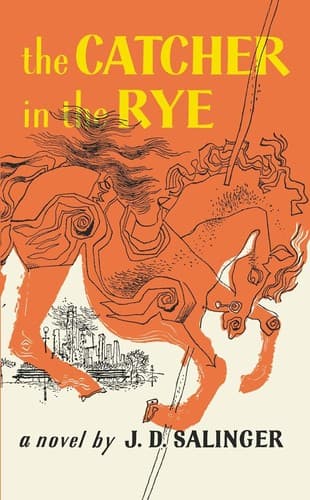
- The Catcher in the Rye
J.D. Salinger
3.8 (2.7M) average on GoodreadsYoung AdultFeatures a cynical, rebellious young protagonist navigating societal expectations and personal ambition.
- Portnoy's Complaint
Philip Roth
3.7 (59k) average on GoodreadsLiterary FictionOffers a humorous and often biting look at Jewish-American identity, family dynamics, and personal neuroses.
- The Great Gatsby
F. Scott Fitzgerald
3.9 (3.8M) average on GoodreadsHistorical FictionWhile both novels explore the corrupting nature of the pursuit of wealth and an 'American Dream,' Richler's work offers a grittier, less romanticized vision rooted in the Canadian immigrant experience. Gatsby's tragedy is one of unattainable idealism; Duddy's is one of achieved, yet morally compromised, ambition.
- The Adventures of Augie March
Saul Bellow
3.8 (16k) average on GoodreadsLiterary FictionBoth feature ambitious Jewish protagonists navigating urban life. However, Augie's journey is a more philosophical and existential quest for self-discovery, whereas Duddy's drive is singularly focused on tangible, material success and land acquisition.
- The Old Man and the Sea
Ernest Hemingway
3.8 (831k) average on GoodreadsLiterary FictionA Cuban fisherman's long struggle with a giant marlin becomes a story of endurance and dignity, now retold for young adults with illustrations, phonetic guides, and writing prompts in Traditional Chinese.
- One Hundred Years of Solitude
Gabriel García Márquez
4.1 (753k) average on GoodreadsLiterary FictionThrough the multi-generational story of the Buendía family, a mythical town deals with the repeating patterns of time, love, and solitude, as the extraordinary mixes with the ordinary.




Enjoyed the summary?
A summary gives you the shape of the book. The book itself has the detail, the examples and the voice.
Find The Apprenticeship of Duddy Kravitz on AmazonAs an Amazon Associate, BookBrief earns from qualifying purchases. How we're funded