
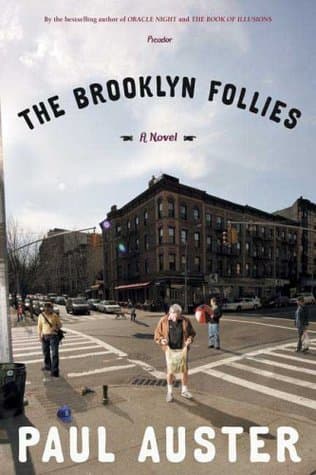
Synopsis
Covers the whole plot, including the ending.
- Difficulty
- Medium
- Pacing
- Moderate
- Mood
- Wry, Reflective, Hopeful, Quirky, Melancholy
- Read it if
- You enjoy character-driven literary fiction with a touch of whimsy, philosophical musings, and a focus on interconnected lives and chance encounters in an urban setting.
- Skip it if
- You prefer fast-paced, plot-heavy thrillers or straightforward narratives without digressions and a more contemplative tone.
The Brooklyn Follies Plot Summary
Covers the whole plot, including the ending.
Nathan Glass Arrives in Brooklyn with a Purpose
Nathan Glass, a recently divorced and retired life insurance salesman, moves to Brooklyn, New York, after being diagnosed with lung cancer. He intends to find a quiet place to die and to write down every mistake and foolish act he has committed throughout his life in a project he calls 'The Book of Human Folly.' He rents a small apartment and starts a routine of watching and writing. Nathan's daughter, Rachel, does not speak to him, which adds to his feeling of being alone. He thinks about his past and the various wrong turns that have led him to this point, seeing Brooklyn as a final, anonymous place where he can finish his task before he dies.
A Chance Reunion with Nephew Tom Wood
While looking in a local independent bookstore called 'The Red Chair,' Nathan is surprised to see his nephew, Tom Wood, working there. Nathan had not seen Tom in years, not since Tom had left a promising academic career and disappeared from his family's life. Tom, at first hesitant, eventually reconnects with his uncle. Nathan learns that Tom is now living a quiet, somewhat aimless life, having given up his intellectual pursuits. This unexpected meeting starts to pull Nathan out of his isolation and gives him a new focus beyond his morbid project, bringing a bit of connection back into his solitary life.
Introduction to Harry Brightman and His Circle
Through Tom, Nathan meets Harry Brightman, the owner of 'The Red Chair' bookstore. Harry, whose real name Nathan learns is Harry Dunkel and who once owned an art gallery in Chicago, is a central person in a group of Brooklyn residents. Harry lives with his niece, Aurora, a smart nine-year-old girl. Nathan also meets Joyce, Harry's former lover and a close friend. This new group of acquaintances, all connected through Harry and the bookstore, begins to draw Nathan into a social life, challenging his initial wish to be alone and unknown in Brooklyn.
The Scarlet Letter Forgery Scheme
Harry Brightman tells Nathan and Tom his plan to create a perfect forgery of a missing page from a first edition of Nathaniel Hawthorne's 'The Scarlet Letter.' Harry believes this will greatly increase the value of an incomplete copy of the rare book. He gets help from a former art forger and a skilled typesetter, carefully planning every detail, from making the paper look old to the ink. Nathan, at first a skeptical watcher, finds himself drawn into the intrigue and moral questions of the scheme. This part of the story introduces suspense and ethical problems, further involving Nathan in the unconventional world of his new Brooklyn acquaintances.
Tom's Unrequited Love and Julia's Arrival
Tom Wood falls in love with Joyce, Harry's former lover and a frequent visitor to the bookstore. Joyce, however, is not emotionally available, as she has not recovered from a past tragedy involving her husband and child. Meanwhile, Nathan's daughter, Rachel, unexpectedly arrives in Brooklyn, having left her husband and her life in Vermont. Her arrival shocks Nathan, forcing him to deal with their strained relationship. Rachel's presence adds another layer to Nathan's life, mixing his personal past with his new Brooklyn present and complicating his wish for a quiet end.
Rachel's Secret and the Search for Lucy
Rachel tells Nathan that she has come to Brooklyn not just to escape her marriage, but to find her half-sister, Lucy, whom Nathan never knew existed. Lucy is the result of a brief affair Nathan had years ago, a secret he had kept hidden. Rachel's determination to find Lucy makes Nathan confront a painful and forgotten part of his life. Nathan, now with a new purpose beyond his 'Book of Human Folly,' starts a search with Rachel to find Lucy, looking into old records and following small clues, which eventually takes them to a rehabilitation center in upstate New York.
The Encounter with Lucy and the Revelation
Nathan and Rachel eventually find Lucy at a facility for people with severe disabilities. Lucy has severe brain damage and cannot communicate or care for herself. This sad meeting shocks Nathan, who is filled with guilt and sorrow for a daughter he never knew. They also learn that Lucy's mother, Rose, Nathan's former lover, died years ago. The discovery of Lucy's condition and Rose's death brings a tragic end to this long-hidden secret, forcing Nathan to deal with the results of his past actions and their devastating impact.
Harry's Bookstore and the Forgery's Outcome
Harry Brightman's bookstore, 'The Red Chair,' faces financial problems and is about to close, which greatly upsets Harry and his friends. Meanwhile, the 'Scarlet Letter' forgery scheme, after much careful planning and work, comes to a surprising end. Harry successfully sells the forged page as part of the incomplete first edition, achieving his goal. However, the money earned is not as much as hoped, and the overall impact on Harry's situation is limited. The scheme, while successful, shows how uncertain their lives in Brooklyn are.
Aurora's Abduction and the Search
In a sudden and shocking turn, Aurora, Harry's niece, is abducted by her mother, who had previously left her. This incident causes panic and despair for Harry and his friends. Harry, along with Nathan, Tom, and Joyce, starts a search for Aurora, contacting police and following every possible clue. The abduction shows the strong emotional connections within this unconventional family and how vulnerable their lives are, turning their everyday worries into a frantic, high-stakes search for the child's safety and return.
The Rescue and a New Beginning
After a tense search, Aurora is found unharmed and returned to Harry. The experience brings a great sense of relief and strengthens the community bonds among Nathan, Harry, Tom, and Joyce. Nathan's lung cancer, which had brought him to Brooklyn, unexpectedly goes into remission. This new chance at life, along with his deeper connections and the resolution of his past with Lucy, changes Nathan's view. He stops writing 'The Book of Human Folly' and starts a new book, 'The Brooklyn Follies,' celebrating the joys of human life he has seen and become part of. The novel ends with Nathan finding a new purpose and a sense of belonging in Brooklyn, surrounded by his chosen family.
Principal Figures
Nathan Glass
Protagonist
A retired life insurance salesman who moves to Brooklyn to die and write about human follies.
Nathan Glass is the novel's narrator and central protagonist. Having recently been diagnosed with lung cancer, divorced, and estranged from his daughter, he moves to Brooklyn with the intention of quietly dying and compiling 'The Book of Human Folly,' a compendium of his life's mistakes. He is initially a solitary, reflective, and somewhat cynical man, but his unexpected reunion with his nephew Tom and subsequent immersion into Harry Brightman's eccentric circle gradually reawakens his zest for life. Nathan's journey is one of rediscovery, confronting past secrets, and finding unexpected connections and purpose.
Relationships: Tom Wood (nephew, initially estranged but reconnects and forms a close bond); Rachel Glass (estranged daughter, whose arrival forces Nathan to confront his past); Harry Brightman (friend and confidant, drawing Nathan into his world); Lucy (secret daughter, discovered late in life)
Tom Wood
Supporting
Nathan's long-lost nephew, a former academic now working in a bookstore.
Tom Wood is Nathan's nephew, a brilliant former academic who mysteriously abandoned his studies and disappeared from his family years prior. When Nathan finds him working in Harry Brightman's bookstore, Tom is quiet, melancholic, and somewhat lost, having traded intellectual pursuits for a simpler, less demanding life. He carries a deep, unrequited love for Joyce. Tom serves as Nathan's initial bridge to the Brooklyn community and provides a quieter, more introspective counterpoint to Harry's exuberance. His presence helps Nathan reconnect with his family and the wider world.
Relationships: Nathan Glass (uncle, with whom he rekindles a close relationship); Harry Brightman (boss and friend); Joyce (object of his unrequited love); Aurora (friend and surrogate family member)
Harry Brightman (Harry Dunkel)
Supporting
The charismatic and eccentric owner of 'The Red Chair' bookstore, with a mysterious past.
Harry Brightman, whose real name is Harry Dunkel, is the charismatic and often flamboyant owner of 'The Red Chair' bookstore. He is a central figure in the Brooklyn community, a magnet for eccentric characters and unusual schemes. Harry is a man of many pasts, having once owned an art gallery in Chicago and being involved in various morally ambiguous ventures, including the 'Scarlet Letter' forgery. He is a surrogate father to his niece, Aurora, and fiercely loyal to his friends. Harry embodies the vibrant, unpredictable spirit of Brooklyn and pulls Nathan into a world far removed from his initial desire for solitude.
Relationships: Nathan Glass (friend and conspirator in the forgery scheme); Tom Wood (employee and friend); Aurora (niece, whom he raises); Joyce (former lover and close friend)
Aurora
Supporting
Harry Brightman's precocious and intelligent nine-year-old niece.
Aurora is Harry Brightman's nine-year-old niece, whom he is raising. She is an exceptionally bright, articulate, and observant child who often offers surprisingly profound insights. Aurora is a beloved member of Harry's unconventional family and brings a youthful innocence and perspective to the adult world around her. Her presence is a source of joy and responsibility for Harry, and her abduction becomes a critical emotional turning point in the novel, uniting the characters in a desperate search. She represents hope and the future within their complex lives.
Relationships: Harry Brightman (uncle and primary caregiver); Nathan Glass (friend and admirer); Tom Wood (friend and surrogate family member)
Joyce
Supporting
Harry's former lover, a compassionate and emotionally guarded woman.
Joyce is Harry Brightman's former lover and a close friend to the entire group. She is a compassionate, kind-hearted woman, but also carries a deep emotional wound from a past tragedy involving the death of her husband and child. This trauma makes her emotionally unavailable, particularly to Tom's affections. Joyce works as a masseuse and provides a grounding, nurturing presence within the bohemian Brooklyn circle. Her emotional journey, marked by loss and a slow process of healing, resonates with the themes of human vulnerability and resilience.
Relationships: Harry Brightman (former lover and close friend); Tom Wood (friend, the object of his unrequited love); Nathan Glass (friend)
Rachel Glass
Supporting
Nathan's estranged daughter, who arrives in Brooklyn seeking her half-sister.
Rachel Glass is Nathan's estranged daughter, who unexpectedly arrives in Brooklyn after leaving her husband. Her relationship with Nathan is initially strained due to years of distance and unspoken resentments. Rachel's primary motivation for coming to Brooklyn is to find her half-sister, Lucy, a secret daughter Nathan had never acknowledged. Her quest forces Nathan to confront a painful chapter of his past and ultimately leads to a reconciliation, or at least a new understanding, between father and daughter. She represents the unresolved past that Nathan must face.
Relationships: Nathan Glass (estranged father, with whom she seeks reconciliation and shared discovery); Lucy (half-sister, whom she actively seeks)
Lucy
Mentioned
Nathan's secret, severely disabled daughter, whose existence is unknown to him for decades.
Lucy is Nathan Glass's secret daughter, the product of a brief affair many years ago. Her existence is unknown to Nathan until Rachel reveals her search for her half-sister. When Nathan and Rachel finally find Lucy, she is an adult with severe brain damage, residing in a care facility, unable to communicate or care for herself. Lucy's tragic condition and the revelation of her mother's death represent the profound, often hidden, consequences of Nathan's past actions and follies. Her discovery serves as a catalyst for Nathan's emotional awakening and his re-evaluation of his life.
Relationships: Nathan Glass (father, whom she never knew); Rachel Glass (half-sister, who sought her out)
Rose
Mentioned
Lucy's mother and Nathan's former lover, whose death is revealed.
Rose is Lucy's mother and Nathan Glass's former lover, with whom he had a brief affair many years before the events of the novel. She is only mentioned in the narrative, primarily when Nathan and Rachel uncover the truth about Lucy. Rose's death is revealed during their search, adding another layer of sadness and lost opportunity to Nathan's past. Her story, though peripheral, highlights the long-lasting impact of past choices and secrets on the present lives of the characters.
Relationships: Nathan Glass (former lover); Lucy (mother)
Themes & Insights
Identity and Self-Discovery
The novel explores how people create their identities, especially when life changes a lot. Nathan Glass, at first trying to define himself by his past 'follies' and a quiet end, unexpectedly finds new parts of himself through his connections in Brooklyn. His journey from an isolated, dying man to someone involved in life again, embracing a new purpose in writing 'The Brooklyn Follies,' shows this theme. Tom Wood also deals with his identity as a former academic, finding a new, quieter sense of self in the bookstore.
“I had come to Brooklyn to die. But in Brooklyn, I had been given a new life.”
The Power of Storytelling and Narrative
Storytelling is a main part of the novel, both as a plot point and an idea. Nathan's first project, 'The Book of Human Folly,' and his later, more positive 'The Brooklyn Follies,' show that people need to create stories to understand life. Harry's 'Scarlet Letter' forgery comments on the power of stories and authenticity. The characters are defined by their personal stories—Harry's mysterious past, Joyce's tragedy, Tom's abandoned academic career—and their interactions are driven by sharing these stories, showing how stories shape perception and connection.
“Every life is a book, and every book is a life.”
Chance, Coincidence, and Fate
Auster often uses chance meetings and coincidences to move the plot and show how unpredictable life is. Nathan's accidental meeting with Tom in a bookstore, and then being drawn into Harry's world, are good examples. The unexpected remission of Nathan's cancer and the sudden abduction and return of Aurora further show how seemingly random events can greatly change people's lives. The novel suggests that while characters make choices, they are also subject to fate, often leading to unforeseen results and chances for connection.
“It's a wonder how things turn out. A wonder and a mystery.”
Family, Chosen and Biological
The novel explores the complexities of both biological and chosen families. Nathan's difficult relationship with his daughter, Rachel, and the discovery of his secret daughter, Lucy, show the burdens and revelations of genetic ties. In contrast, the close community around Harry Brightman—Harry, Aurora, Tom, Joyce, and eventually Nathan—forms a strong 'chosen family.' This group provides emotional support, friendship, and a sense of belonging that goes beyond traditional family structures, showing that deep connections can be made through shared experiences and care.
“We were all orphans in one way or another, and we had found each other.”
Redemption and Second Chances
Many characters in 'The Brooklyn Follies' are looking for or are offered a second chance at life, love, or purpose. Nathan, at first planning to die, gets a remission from cancer and finds a new reason to live and write. Tom Wood, after leaving a promising career, finds a quiet but meaningful life and a sense of belonging. Even Harry, with his past mistakes, is dedicated to creating a community and raising Aurora. The novel suggests that even after past mistakes and personal tragedies, there is always a chance for renewal and to make a better future.
“Life is not a dress rehearsal. It’s the show itself.”
Plot Devices & Literary Techniques
First-Person Narration (Nathan Glass)
Provides an intimate, subjective, and reflective lens into the story.
The entire novel is narrated by Nathan Glass in the first person. This device allows readers direct access to Nathan's thoughts, observations, and emotional journey. His voice is often reflective, tinged with a dry wit and a sense of melancholy, but also capable of profound insight. This subjective perspective shapes the reader's understanding of events and other characters, making the themes of folly, connection, and self-discovery deeply personal. Nathan's evolving perspective, from cynicism to renewed hope, is central to the narrative's impact.
'The Book of Human Folly' and 'The Brooklyn Follies'
Meta-narrative devices that frame Nathan's personal and literary journey.
These two book projects serve as crucial meta-narrative devices. 'The Book of Human Folly' is Nathan's initial, morbid project to catalogue his life's mistakes, reflecting his despair. As his life in Brooklyn changes, this project transforms into 'The Brooklyn Follies,' a celebration of the absurdities, joys, and interconnectedness of human life he experiences. This transformation mirrors Nathan's own emotional arc, illustrating his shift from self-pity to engagement with the world. They are symbolic of his evolving perspective on life and his role as an observer and participant.
The 'Scarlet Letter' Forgery
A central subplot that provides intrigue, ethical dilemmas, and character interaction.
The elaborate scheme to forge a missing page from a rare first edition of Nathaniel Hawthorne's 'The Scarlet Letter' serves as a significant plot device. It introduces elements of suspense and moral ambiguity, drawing Nathan deeper into Harry's unconventional world. Beyond the plot, it acts as a commentary on authenticity, value, and the creation of narratives, echoing the novel's broader themes of storytelling and identity. The forgery brings together a diverse group of characters and highlights Harry's eccentric genius.
Coincidence and Serendipity
Drives plot progression and emphasizes the unpredictable nature of life.
Auster frequently employs coincidence to propel the narrative and shape character destinies. Nathan's chance encounter with Tom in the bookstore, and Tom's subsequent job with Harry, are fundamental to the plot. The unexpected remission of Nathan's cancer and the sudden abduction and safe return of Aurora also rely on chance. This device underscores the idea that life is often governed by unforeseen events, which can lead to profound connections and transformations, challenging the characters' attempts to control their own paths and highlighting the beauty of the unexpected.
The Brooklyn Follies Quotes
“Every book is a world, and every world is a mystery.”
“Life is a story, and we are all its authors.”
“The past is a foreign country; they do things differently there.”
“Happiness is not something you find, it’s something you create.”
“We live in a world of accidents, and yet we imagine it's all planned.”
“Every decision we make, no matter how small, alters the course of our lives.”
“There are no ordinary lives, only lives that go unexamined.”
“Sometimes the greatest adventures are the ones that happen inside your head.”
“Loss is a wound that never truly heals, but we learn to live around it.”
“The world is full of stories, and if you listen closely enough, you can hear them all.”
“To be alive is to be in a constant state of becoming.”
“Books don't just tell stories; they tell us who we are.”
“Brooklyn is a state of mind, not just a place.”
“The biggest follies are often the ones we commit in the name of love.”
Quiz
10 questions on the plot and the characters. Each answer comes with a short explanation.
Question 1
What is Nathan Glass's initial primary reason for moving to Brooklyn?
- To open a new life insurance agency.
- To be closer to his estranged daughter.
- To find solitude and die.
- To research material for a new book.
Show answer
C. To find solitude and die. Nathan Glass explicitly moves to Brooklyn with the intention of finding a quiet place to live out his final days, seeking solitude and anonymity after his divorce and retirement.
Question 2
What is the name of the bookstore where Nathan's nephew, Tom Wood, works?
- The Brooklyn Readery
- Brightman's Books
- The Ancient Kingdom Books
- The bookstore is not given a specific name.
Show answer
D. The bookstore is not given a specific name. While Tom works in a local bookstore, the novel does not explicitly name it. It is simply referred to as 'a local bookstore' where Harry Brightman is the boss.
Question 3
What is the title of the book Nathan Glass begins to write?
- The Brooklyn Follies
- The Book of Human Folly
- My Checkered Career
- An Account of Blunders
Show answer
B. The Book of Human Folly Nathan Glass undertakes his own literary venture, titled 'The Book of Human Folly,' which he intends as an account of his own mistakes and foibles.
Question 4
Who is Harry Brightman, also known as Harry Dunkel?
- Nathan Glass's estranged son.
- Tom Wood's former academic mentor.
- The owner of the bookstore where Tom works.
- A detective investigating a forgery scam.
Show answer
C. The owner of the bookstore where Tom works. Harry Brightman, also known as Harry Dunkel, is the charismatic boss of the bookstore where Tom Wood works. He was once an art gallery owner in Chicago.
Question 5
What specific literary work is central to the scam Nathan Glass becomes involved in?
- Moby Dick
- The Great Gatsby
- The Scarlet Letter
- Walden
Show answer
C. The Scarlet Letter Nathan finds himself drawn into a scam involving a forged page of Nathaniel Hawthorne's classic novel, 'The Scarlet Letter.'
Question 6
How does Nathan Glass initially encounter his long-lost nephew, Tom Wood, in Brooklyn?
- Tom knocks on Nathan's door, having tracked him down.
- Nathan stumbles upon Tom working in a local bookstore.
- They meet by chance at a local diner.
- Nathan's daughter arranges their reunion.
Show answer
B. Nathan stumbles upon Tom working in a local bookstore. Nathan's encounter with Tom is a chance meeting; he discovers his nephew working in a local bookstore, which is a significant departure from Tom's previous academic career.
Question 7
What is the overarching theme suggested by Nathan's project, 'The Book of Human Folly,' and his expanding social circle?
- The futility of human endeavors and the inevitability of death.
- The redemptive power of connection and embracing life's imperfections.
- The dangers of literary forgery and deception.
- The importance of solitude for self-discovery.
Show answer
B. The redemptive power of connection and embracing life's imperfections. Despite his initial desire to die alone, Nathan's involvement with Tom and Harry, and his project on human folly, highlights the novel's theme of finding meaning, connection, and even joy in the messy, imperfect aspects of human life.
Question 8
What was Tom Wood's profession or career path before Nathan encountered him in Brooklyn?
- He was a struggling artist.
- He was pursuing a brilliant academic career.
- He was working in finance in Chicago.
- He was a travel writer.
Show answer
B. He was pursuing a brilliant academic career. When Nathan last saw Tom, his nephew had begun a 'brilliant academic career,' making his current job in a bookstore a surprising change of pace.
Question 9
What does the phrase 'ancient kingdom of Brooklyn, New York' imply about the setting in the context of the novel?
- Brooklyn is literally a monarchy with a long history.
- It suggests Brooklyn is a place of timelessness, full of history and unique character, where disparate lives converge.
- It implies Brooklyn is outdated and resistant to change.
- It's a metaphor for the isolated and forgotten lives of its inhabitants.
Show answer
B. It suggests Brooklyn is a place of timelessness, full of history and unique character, where disparate lives converge. The description 'ancient kingdom of Brooklyn' evokes a sense of Brooklyn as a unique, almost mythical place with its own distinct history and atmosphere, where unusual events unfold and a diverse cast of characters find themselves drawn together by fate.
Question 10
Which of the following best describes the overall tone of 'The Brooklyn Follies' as presented in the book description?
- Bleak and nihilistic, focusing on despair.
- Cynical and detached, observing human flaws with irony.
- Warm, exuberant, and a moving hymn to ordinary human life.
- Suspenseful and thrilling, centered on the forgery plot.
Show answer
C. Warm, exuberant, and a moving hymn to ordinary human life. The book description explicitly states that 'The Brooklyn Follies is Paul Auster's warmest, most exuberant novel, a moving, unforgettable hymn to the glories and mysteries of ordinary human life,' highlighting its optimistic and affirming tone.
The Brooklyn Follies FAQ
What is 'The Brooklyn Follies' about?
'The Brooklyn Follies' follows Nathan Glass, a retired, divorced man who moves to Brooklyn intending to quietly await death. His plans are upended when he reconnects with his long-lost nephew, Tom Wood, and becomes entangled in a vibrant, eccentric community, leading him to rediscover life, connection, and a purpose through writing his 'Book of Human Folly'.
Why should I read 'The Brooklyn Follies'?
You should read 'The Brooklyn Follies' for its heartwarming exploration of second chances, the beauty of human connection, and the unexpected joys found in ordinary life. It's a Paul Auster novel that offers a more optimistic and exuberant tone, filled with memorable characters and a gentle humor, making it a moving and unforgettable read about finding meaning late in life.
What is the background/setting of 'The Brooklyn Follies'?
The novel is set in contemporary Brooklyn, New York, a city that acts as a melting pot for its diverse and often quirky characters. Brooklyn itself becomes almost a character, a place where people come to reinvent themselves, escape their pasts, or simply find a new beginning, reflecting the transient yet deeply interconnected nature of the human experience.
What are the most memorable quotes?
One memorable quote is Nathan's reflection on his project: 'The Book of Human Folly… every blunder, every pratfall, every embarrassment, every idiocy, every foible, and every inane act I have committed during my long and checkered career as a man.' Another is the pervasive idea that 'anything can happen in life, and that even a broken life can be mended, that even a lost soul can be found.'
What writing style does Paul Auster use in 'The Brooklyn Follies'?
Paul Auster employs a conversational, reflective, and often whimsical style, narrated primarily by Nathan Glass. The prose is rich with Auster's characteristic philosophical undertones but is notably warmer and more accessible than some of his earlier works, blending everyday observations with moments of profound insight and a gentle, humanistic humor.
What minor details add significant meaning?
Nathan's initial intention to die in Brooklyn, juxtaposed with his eventual immersion in life, highlights the novel's central theme of unexpected renewal. The recurring motif of books and bookstores, particularly the one where Tom works, emphasizes the power of stories and shared narratives in connecting disparate lives and offering solace.
What are some subtle foreshadowing moments?
Early mentions of Nathan's past as a life insurance salesman subtly foreshadow his later involvement in a scam and his keen observation of human nature and its inherent risks. The initial casual encounters with various Brooklynites hint at the intricate web of connections that will eventually draw Nathan out of his self-imposed isolation, indicating that his solitude won't last.
What unexpected character connections exist?
Beyond Nathan's reunion with his nephew Tom, the unexpected connection between Tom's boss, Harry Brightman (a.k.a. Harry Dunkel), and the broader Brooklyn community reveals how seemingly random individuals are linked by shared histories, past follies, and the serendipitous nature of urban life. Harry's past as an art gallery owner in Chicago, far from his current bookstore life, underscores these hidden connections.
What are unspoken character motivations?
Nathan's initial motivation to 'die in Brooklyn' masks a deeper, unspoken desire for connection and meaning that he believes is lost. Tom Wood's decision to work in a bookstore, abandoning a promising academic career, subtly suggests a yearning for a simpler, more authentic existence away from the pressures and expectations of his past, perhaps seeking a different kind of wisdom.
What psychological complexities do characters exhibit?
Nathan Glass grapples with existential dread, regret over past failures, and a deep-seated loneliness, yet he also possesses an enduring curiosity and capacity for empathy that ultimately pulls him back into life. Tom Wood, despite his intelligence, struggles with disillusionment and finding a meaningful path after a significant personal setback, showcasing the complexities of intellectual potential meeting real-world challenges.
What are the major emotional turning points?
A major emotional turning point is Nathan's reunion with Tom, which shatters his plan for quiet solitude and forces him to re-engage with the world. Another is Nathan's decision to begin writing 'The Book of Human Folly,' transforming his personal regrets and observations into a creative project that gives him purpose and allows him to process his life experiences.
How do relationship dynamics evolve?
Nathan's relationship with Tom evolves from a tentative reconnection with a long-lost relative into a profound bond built on mutual support and understanding. His interactions with Harry Brightman and other Brooklyn residents expand his world, transforming him from a detached observer into an active participant in a vibrant community, demonstrating the redemptive power of new friendships.
Which parts remain ambiguous or open-ended?
The ultimate resolution of the 'Scarlet Letter' scam remains somewhat ambiguous, focusing more on the journey and the connections forged during the attempt rather than a clear-cut outcome. The future trajectory of certain minor characters, after they briefly intersect with Nathan's life, is also left open, reflecting the transient nature of urban encounters.
What are controversial scenes or decisions?
The decision to engage in the scam involving the forged page of 'The Scarlet Letter' could be seen as controversial, as it involves illegal activity. However, within the context of the novel, it serves as a catalyst for Nathan's re-engagement with life and provides a moral ambiguity that highlights the characters' willingness to bend rules in pursuit of a different kind of justice or purpose.
'The Brooklyn Follies' ending explained: how it ends & what it means
The novel ends with Nathan Glass having fully embraced his new life in Brooklyn, his 'Book of Human Folly' progressing, and his connections with Tom and the community solidified. It signifies a profound reversal from his initial desire to die, illustrating that even in old age, life can offer unexpected joys, purpose, and the profound satisfaction of human connection. The ending is an optimistic affirmation of life's unpredictable beauty and the possibility of renewal.
About the author
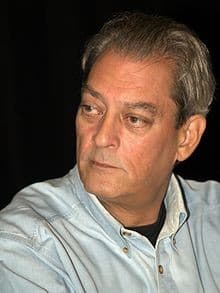
Paul Benjamin Auster is an American writer and film director. His notable works include The New York Trilogy (1987), Moon Palace (1989), The Music of Chance (1990), The Book of Illusions (2002), The Brooklyn Follies (2005), Invisible (2009), Sunset Park (2010), Winter Journal (2012), and 4 3 2 1 (2017). His books have been translated into more than forty languages.
Similar books
- Invisible Cities
Italo Calvino
4.1 (62k) average on GoodreadsFantasyExplores philosophical themes through interconnected narratives and a unique, reflective voice.
- Austerlitz
W.G. Sebald
4.0 (14k) average on GoodreadsHistorical FictionFeatures a reflective protagonist, a journey of discovery, and a melancholic yet deeply humanistic tone.
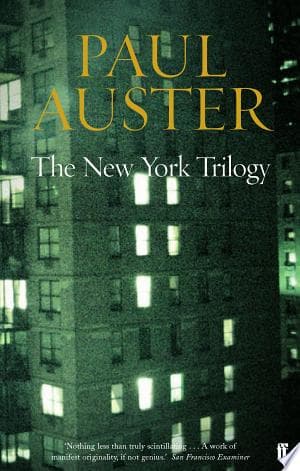
- The New York Trilogy
Paul Auster
3.9 (62k) average on GoodreadsMysteryThe Brooklyn Follies shares Auster's signature blend of mystery, philosophical inquiry, and interconnected narratives with The New York Trilogy. However, The Trilogy is often considered more innovative and groundbreaking in its postmodern experimentation, pushing the boundaries of metafiction further. Follies feels more accessible and character-driven, arguably sacrificing some of the intellectual rigor for a warmer, more sentimental tone, which some critics might see as a step back from the raw inventiveness of his earlier work. While both explore identity and the nature of reality, The Trilogy delves into darker, more existential rabbit holes, whereas Follies finds a more hopeful, albeit still melancholic, resolution in human connection.
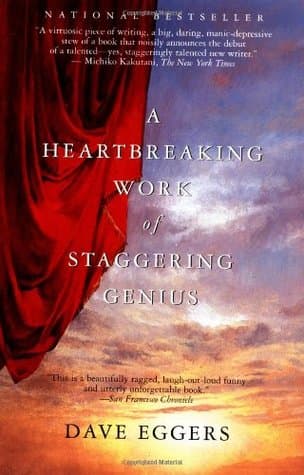
- A Heartbreaking Work of Staggering Genius
Dave Eggers
3.7 (171k) average on GoodreadsLiterary FictionWhile stylistically different, both Eggers' memoir/novel and Auster's The Brooklyn Follies explore the protagonist's attempt to make sense of life and loss through narrative construction. Eggers' work is characterized by its frenetic energy, self-referential humor, and raw emotional intensity, often breaking the fourth wall. The Brooklyn Follies, in contrast, maintains a more traditional, albeit fragmented, narrative structure with a calmer, more reflective tone. Both deal with the search for meaning and the power of storytelling, but Eggers' approach is more overtly experimental and autobiographical, while Auster's remains firmly within the realm of literary fiction, using a more detached, observational lens to explore universal human experiences through fictional characters.
- The Old Man and the Sea
Ernest Hemingway
3.8 (831k) average on GoodreadsLiterary FictionA Cuban fisherman's long struggle with a giant marlin becomes a story of endurance and dignity, now retold for young adults with illustrations, phonetic guides, and writing prompts in Traditional Chinese.
- One Hundred Years of Solitude
Gabriel García Márquez
4.1 (753k) average on GoodreadsLiterary FictionThrough the multi-generational story of the Buendía family, a mythical town deals with the repeating patterns of time, love, and solitude, as the extraordinary mixes with the ordinary.


Enjoyed the summary?
A summary gives you the shape of the book. The book itself has the detail, the examples and the voice.
Find The Brooklyn Follies on AmazonAs an Amazon Associate, BookBrief earns from qualifying purchases. How we're funded