
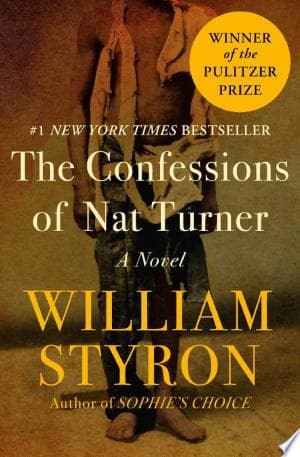
Synopsis
Covers the whole plot, including the ending.
- Difficulty
- Medium
- Pacing
- Moderate
- Mood
- Dark, Intense, Reflective, Tragic
- Read it if
- You are interested in a deep, psychological exploration of a historical figure, the horrors of slavery, and the motivations behind rebellion.
- Skip it if
- You prefer fast-paced action over introspective narrative, or are uncomfortable with graphic depictions of violence and historical racial injustice.
The Confessions of Nat Turner Plot Summary
Covers the whole plot, including the ending.
Awaiting Execution in Jerusalem
The novel begins with Nat Turner, an educated enslaved man, in a jail cell in Jerusalem, Virginia. He awaits execution after leading a failed slave rebellion. Thomas R. Gray, a white lawyer, interviews Nat and records his 'confessions.' Nat is chained, cold, and haunted by the recent violence and the faces of those he killed and lost. He thinks about his early life, his unique position as a literate slave, and the strong religious visions that shaped his destiny. The story often shifts between his current imprisonment and clear flashbacks, showing his inner conflict and the weight of his actions.
Childhood and Early Visions
Nat recalls his early childhood on the Turner plantation. His first mistress, Miss Sarah, recognized and encouraged his intelligence and literacy, which was unusual. He learns to read and write, mainly from the Bible, which deeply influences his perspective. Even as a young boy, Nat has intense religious visions and hears voices, believing God chose him for a special purpose. These early spiritual experiences set him apart from other enslaved people and lead him to see natural events as divine signs, hinting at his later role as a prophet and leader.
The Burden of Literacy and Preaching
As Nat gets older, his literacy and religious passion make him a respected, though sometimes feared, figure among enslaved people. He becomes a traveling preacher, going to different plantations to give sermons. He interprets scripture through the lens of freedom and divine justice. This role gives him purpose but also deep inner conflict, as he struggles with his spiritual calling and his enslaved status. His preaching subtly plants ideas of resistance, even as he outwardly acts subservient to his white owners.
The Degradation of Enslavement
Nat experiences slavery's harsh realities through various owners and plantations, each showing different aspects of its cruelty. He is sold multiple times, separated from loved ones, and sees countless acts of violence, degradation, and sexual abuse against other enslaved people. One particularly painful experience involves his young wife, Cherry, being raped by a white overseer. This fuels his growing rage and strengthens his belief that divine action is needed to end their suffering. These personal and observed injustices solidify his decision to rebel.
The Signs and Portents
Nat becomes more and more absorbed by his religious visions. He interprets natural events like solar eclipses and unusual weather as direct messages from God, signaling the time for the uprising. He retreats into intense prayer and fasting, seeking clarity on his divine mission. These signs, along with his deep study of biblical stories of freedom and revenge, convince him that he is God's chosen tool to lead his people out of bondage through violence. He begins to share his apocalyptic interpretations with a few trusted followers.
Gathering Disciples
Over time, Nat carefully chooses and confides in a small group of enslaved men, including Hark, Nelson, and Sam. They become his most loyal followers. He shares his visions and interpretations of scripture, convincing them of the divine command for their rebellion. These men, each with their own complaints and desire for freedom, pledge their loyalty to Nat and his cause. They meet in secret, planning the details of the uprising, driven by shared desperation and Nat's firm belief in God's will.
The Eve of Rebellion
On the night of August 21, 1831, Nat and his small group gather in the woods, preparing to start their rebellion. Nat feels intense spiritual and emotional turmoil, wrestling with the huge violence they are about to unleash. He has a final, clear vision, strengthening his belief that God demands the destruction of the oppressors. Despite moments of doubt and fear, his conviction in his divine mission wins out, leading him to give the final command to begin the revolt. The tension is clear as they arm themselves with crude weapons.
The Rebellion Begins
The rebellion starts at the home of Nat's owner, Joseph Travis, where Nat and his men kill Travis and his family. From there, they move from plantation to plantation, systematically killing white slaveholders and their families, sparing no one. Nat, though part of the violence, often cannot personally strike the final blow, leaving it to his followers. The initial phase is marked by raw, brutal efficiency, driven by years of stored rage and a desperate hope for freedom. The rebels grow in number as they move through Southampton County.
The Spreading Violence and Retreat
As the rebellion continues, the group grows to include dozens of enslaved men, armed with whatever they can find. The violence spreads across Southampton County, causing fear among the white population. However, the rebels lack advanced weapons and military training. As news spreads, white militias quickly gather. Nat's goal of reaching the armory in Jerusalem is stopped, and a stronger force eventually confronts the rebels. The tide turns against them, and their numbers decrease under attack.
Defeat and Dispersal
Overwhelming white militias crush the rebellion. Many of Nat's followers are killed in battle, captured, or scatter. Nat himself escapes and hides in a cave for several weeks, enduring hunger and solitude. During this time, he continues to struggle with the meaning of his actions, his faith, and his divine mission's failure. The county is gripped by fear and brutal revenge against any suspected enslaved person, leading to widespread executions.
Capture and Confession
After weeks in hiding, a local farmer discovers and captures Nat. He is brought back to Jerusalem and imprisoned, where Thomas R. Gray interrogates him. During these interviews, Nat tells his entire life story, his reasons, and the rebellion's details. He maintains his belief in his cause's righteousness, even in defeat, seeing himself as a martyr. The confession is both a burden and a final statement for Nat, solidifying his story for history.
The Last Days and Execution
As his execution date nears, Nat thinks about the lives lost, both Black and white, and the deep impact of his actions. He struggles with the morality of his violence, especially the killing of children, but ultimately reaffirms his belief that he acted according to God's will. He receives communion from a sympathetic minister but refuses to take back his beliefs. On November 11, 1831, Nat Turner is hanged. His death ends his physical struggle but begins his legacy as a complex and controversial figure in American history.
Principal Figures
Nat Turner
Protagonist
A literate enslaved preacher who leads a violent rebellion against slavery.
Nat Turner is a deeply religious and intelligent enslaved man, whose literacy and prophetic visions set him apart. He is introspective, tormented by the injustices of slavery, and believes himself chosen by God to lead his people to freedom through violent means. His inner life is rich with biblical interpretations, spiritual struggles, and a profound sense of destiny. While capable of great conviction and leadership, he is also depicted as deeply conflicted, particularly regarding the violence he instigates, and struggles with moments of doubt and humanity amidst his divine mission.
Relationships: Thomas R. Gray (Interviewer/Recorder of confessions); Hark (Loyal follower and co-conspirator); Cherry (His enslaved wife, a source of love and motivation); Miss Sarah (His first mistress, who taught him to read); Joseph Travis (His final owner, whom he kills)
Thomas R. Gray
Supporting
The white lawyer who records Nat Turner's confessions.
Thomas R. Gray is the lawyer who interviews Nat Turner in his jail cell, meticulously recording his confessions. He represents the white establishment and the prevailing attitudes of the time, viewing Nat with a mixture of morbid curiosity, professional obligation, and a desire to understand (and perhaps condemn) the slave revolt. While he attempts to transcribe Nat's words accurately, his own biases and interpretations inevitably color the framing of the narrative, serving as the primary filter through which Nat's story is presented to the reader. He is detached but fascinated by Nat's intellect and conviction.
Relationships: Nat Turner (Interviewer/Prisoner)
Hark
Supporting
One of Nat's most loyal and active lieutenants in the rebellion.
Hark is a strong, physically imposing enslaved man who becomes one of Nat's most trusted and devoted followers. He is less intellectual than Nat but possesses a deep-seated resentment against his oppressors and an unwavering loyalty to Nat's vision. Hark is often the one to carry out the more brutal acts of the rebellion, acting as Nat's enforcer and a symbol of the raw, vengeful power unleashed by the uprising. He embodies the desperation and courage of those who choose to follow Nat into violence, driven by a desire for freedom and retribution.
Relationships: Nat Turner (Loyal follower and co-conspirator)
Cherry
Supporting
Nat Turner's enslaved wife, a victim of the system.
Cherry is Nat Turner's beloved wife, an enslaved woman who represents the personal toll of slavery on Nat. Her quiet suffering, particularly her rape by a white overseer, deeply affects Nat and fuels his resolve for rebellion. She is a symbol of the innocent victims of the system, and her experiences underscore the pervasive sexual violence inherent in slavery. While not a direct participant in the rebellion, her pain is a powerful motivator for Nat, and her memory haunts him throughout his confessions, representing what he fought to protect and avenge.
Relationships: Nat Turner (Wife)
Miss Sarah
Supporting
Nat's first mistress, who taught him to read.
Miss Sarah is the elderly, somewhat eccentric mistress of the Turner plantation where Nat is born. She is unique among the white characters for recognizing Nat's intelligence and, against common practice, teaching him to read and write, primarily from the Bible. While her intentions might have been benign or self-serving (to have a literate slave to manage records), her act inadvertently provides Nat with the tools for his intellectual and spiritual development, ultimately empowering him to interpret scripture in a way that leads to rebellion. She represents the complex and often contradictory nature of white individuals within the slave system.
Relationships: Nat Turner (Mistress/Teacher)
Joseph Travis
Mentioned
Nat Turner's final owner and the first victim of the rebellion.
Joseph Travis is Nat Turner's last owner, a relatively 'kind' master by the standards of the time, yet still a slave owner. His household becomes the first target of Nat's rebellion. Travis's character highlights the novel's exploration of whether 'kindness' within the institution of slavery can ever truly mitigate its fundamental injustice. His death, and that of his family, at the hands of Nat's rebels, underscores the indiscriminate nature of the violence and the deep-seated rage that transcended individual owner's temperament.
Relationships: Nat Turner (Owner)
Samuel Turner
Supporting
Nat's owner after Miss Sarah's death, a more typical slaveholder.
Samuel Turner is Miss Sarah's son and Nat's owner after her death. He represents a more conventional, albeit not excessively cruel, slave owner of the era. He recognizes Nat's intelligence and uses it for his own benefit, allowing Nat some privileges but ultimately maintaining his enslaved status. His ownership period exposes Nat to the continued indignities and limitations of bondage, reinforcing Nat's conviction that even under 'better' masters, the institution itself is inherently evil and must be overthrown. His character provides a contrast to Miss Sarah's initial approach to Nat.
Relationships: Nat Turner (Owner)
Nelson
Supporting
Another of Nat's trusted followers in the rebellion.
Nelson is one of Nat's key disciples, joining Hark in the inner circle of the rebellion. He is depicted as a man driven by a similar desire for freedom and vengeance, though perhaps less prominent in the narrative than Hark. Nelson's presence helps to illustrate the collective nature of the rebellion, showing that Nat's message resonated deeply with others who had suffered under slavery. He participates actively in the initial phase of the uprising, demonstrating the widespread impact of Nat's prophetic call to action among the enslaved community.
Relationships: Nat Turner (Follower and co-conspirator)
Themes & Insights
The Corrupting Power of Slavery
The novel shows how slavery corrupts both the enslaved and the enslavers, twisting morality and social structures. Nat's experiences under various masters, from the relatively kind Miss Sarah to the more openly brutal, illustrate the system's inherent violence and degradation. Pervasive sexual abuse, the constant threat of sale and separation, and the denial of basic human dignity are central to Nat's motivation. Even masters who see themselves as benevolent participate in a system that promotes cruelty and deprives individuals of their humanity, showing how the institution itself is evil, regardless of individual temperament. The white community's violent response after the rebellion further highlights the deep moral corruption.
“For the white man, whether he was a kind master or a cruel one, was still the white man, and his way of life was an abomination before the Lord.”
Religion as Justification for Violence and Liberation
Nat Turner's strong religious faith drives his rebellion. He interprets biblical scripture, especially passages about divine punishment and freedom, as direct commands from God for him to lead his people out of bondage through violence. His visions, often about the end of the world, strengthen his belief that he is a prophet chosen for a holy war. This theme explores religion's dual nature: a source of comfort and spiritual strength for the enslaved, but also a powerful idea that can justify extreme violence in the pursuit of justice. The story shows how Nat's deep Christian belief, combined with extreme oppression, becomes a radical theology of freedom.
“And the Spirit of the Lord was upon me, and I heard a voice say, 'Arise, and prepare thyself, and slay thine enemies with fire and sword.'”
The Burden of Literacy and Intellect
Nat's literacy and intelligence set him apart from most enslaved people and become both a gift and a burden. His ability to read the Bible allows him to create a complex religious framework for his rebellion. However, it also isolates him and deepens his understanding of his people's oppression, leading to deep inner conflict. His intellect makes him a leader and a prophet, but it also burdens him with knowledge of his situation and the responsibility to act. The theme explores how education, even in oppressive situations, can awaken revolutionary awareness and the complex psychological cost it takes on the individual who possesses it.
“I had been given a gift, a gift of the mind, and it was a terrible gift, for it showed me too much.”
Memory, Confession, and Historical Interpretation
The novel is presented as Nat's 'confessions' to Thomas R. Gray, which raises questions about memory's reliability, the nature of confession under pressure, and the subjective interpretation of historical events. Nat's story is filtered through his own psychological state, his religious beliefs, and the context of his impending execution. Gray, as the transcriber, also brings his own biases, creating a layered story that challenges the reader to distinguish truth from perspective. This theme shows how history is often built and understood, especially when dealing with marginalized voices and traumatic events, and how telling one's story can be both an act of defiance and a final statement.
“For I am a man, and I confess what I did, and I confess what I thought, and I confess what I feel now, in this cell.”
Manhood and Dignity Under Oppression
A central theme is the struggle for manhood and dignity when facing slavery's emasculating and dehumanizing institution. Nat's rebellion can be seen as an ultimate act of reclaiming power and asserting his manhood, which was systematically denied to enslaved men. The widespread sexual violence against enslaved women, including Nat's wife Cherry, directly challenges enslaved men's ability to protect their families and maintain their honor, fueling their rage. The rebellion, therefore, is not just about freedom, but about restoring a basic sense of self-worth and dignity that slavery actively tried to remove. Nat's inner struggles reflect this fight to maintain his identity and purpose.
“They had taken everything from us, everything but our souls, and even those they tried to buy and sell.”
Plot Devices & Literary Techniques
First-Person Retrospective Narration
Nat Turner recounts his life and rebellion from his jail cell.
The entire novel is narrated in the first person by Nat Turner as he awaits execution. This device provides intimate access to Nat's thoughts, religious visions, and complex motivations, allowing the reader to experience the world through his unique perspective. It creates a sense of immediacy and psychological depth, even as it's filtered through his memory and the act of confession. The retrospective nature also allows for foreshadowing and reflection, giving Nat a chance to interpret his own history and actions.
Religious Symbolism and Allusion
Biblical narratives and prophetic visions drive Nat's actions.
The novel is replete with religious symbolism and allusions, primarily drawn from the Old Testament. Nat interprets natural phenomena (eclipses, signs in the sky) as divine portents and frames his rebellion as a holy war, mirroring biblical narratives of liberation (e.g., Exodus) and divine retribution. This device deepens Nat's characterization as a prophet and provides a powerful ideological framework for his actions, highlighting how he uses scripture to justify and understand his violent mission.
Flashbacks
Nat's memories of his past interweave with his present imprisonment.
The narrative constantly shifts between Nat's present confinement in Jerusalem jail and detailed flashbacks to various stages of his life: his childhood, his experiences with different masters, his spiritual awakening, and the moments leading up to the rebellion. This non-linear structure allows Styron to build Nat's character and motivations gradually, revealing the cumulative effect of slavery on his psyche and the development of his revolutionary ideology. It also creates dramatic tension as the reader moves between the aftermath and the events themselves.
The Confession Frame
Nat's story is presented as a recorded confession to Thomas R. Gray.
The entire narrative is framed as Nat's 'confession' to the white lawyer Thomas R. Gray. This device introduces an element of meta-narrative, raising questions about objectivity, the power dynamics between confessor and recorder, and the construction of historical truth. Gray's presence and occasional interjections remind the reader that Nat's story is being mediated and interpreted, adding a layer of complexity to the narrative's reliability and its historical context.
The Confessions of Nat Turner Quotes
“I had been chosen by God for a great purpose.”
“The white man's law is not God's law.”
“I saw white spirits and black spirits contending, and the sun darkened, and the thunder rolled in the heavens, and blood flowed in streams.”
“Freedom is not a gift, but a right.”
“The Lord spoke to me, telling me that I should arise and prepare myself and slay my enemies with their own weapons.”
“They had taught me to read, but they had not taught me what to read.”
“I was a prophet, a leader, a avenger.”
“I knew what I had to do. The time was at hand.”
“Sleep, Nat, sleep. For soon you will be awake forever.”
“I had seen too much, felt too much, to turn back now.”
“It was not for myself that I acted, but for my people.”
“The blood of the innocent cried out to heaven for vengeance.”
“I was a man, not an animal, and I would die like a man.”
“The sun itself seemed to bleed.”
Quiz
10 questions on the plot and the characters. Each answer comes with a short explanation.
Question 1
What is the primary motivation for Nat Turner's revolt, as presented in the novel?
- To gain personal freedom and escape to the North.
- To avenge the death of his mother.
- He felt divinely ordained to annihilate all white people in the region.
- To establish a new, independent black nation.
Show answer
C. He felt divinely ordained to annihilate all white people in the region. The novel explicitly states that Nat Turner felt 'divinely ordained to annihilate all the white people in the region,' which serves as his primary motivation.
Question 2
In what historical setting does the revolt led by Nat Turner take place?
- The deep South in 1776.
- Southeastern Virginia in the late summer of 1831.
- Maryland in the early 1800s.
- North Carolina during the Civil War.
Show answer
B. Southeastern Virginia in the late summer of 1831. The book description clearly states the revolt occurred 'in the late summer of 1831, in a remote section of southeastern Virginia.'
Question 3
From whose perspective is 'The Confessions of Nat Turner' primarily narrated?
- A white journalist interviewing Nat Turner.
- Nat Turner himself, while awaiting execution.
- A historian recounting the events after the fact.
- One of Nat Turner's followers.
Show answer
B. Nat Turner himself, while awaiting execution. The novel is narrated by 'Nat himself as he lingers in jail through the cold autumnal days before his execution,' providing an intimate first-person account.
Question 4
What does the novel aim to reveal in 'unforgettable human terms' beyond just the plot of the revolt?
- The economic impact of slavery on the Southern states.
- The architectural styles of antebellum Virginia.
- The agonizing essence of Negro slavery and the intermingled miseries, frustrations—and hopes—of the enslaved.
- The specific military strategies employed during the revolt.
Show answer
C. The agonizing essence of Negro slavery and the intermingled miseries, frustrations—and hopes—of the enslaved. The text states the novel 'reveals in unforgettable human terms the agonizing essence of Negro slavery' and dramatizes 'the intermingled miseries, frustrations—and hopes—which caused this extraordinary black man to rise up.'
Question 5
How is Nat Turner described in terms of his personal background and intelligence?
- An illiterate field hand with no prior education.
- A remarkable Negro preacher and an educated slave.
- A runaway slave who learned to read in the North.
- A former soldier who gained combat experience.
Show answer
B. A remarkable Negro preacher and an educated slave. Nat Turner is characterized as 'a remarkable Negro preacher named Nat Turner, an educated slave,' highlighting his unique position.
Question 6
The book description mentions that the revolt was 'the only effective, sustained revolt in the annals of American Negro slavery.' What does 'sustained' imply about the revolt's duration or impact?
- It lasted for several years, leading to widespread emancipation.
- It was ongoing for an extended period before being suppressed.
- It involved a large army of thousands of enslaved people.
- It primarily targeted government officials rather than slave owners.
Show answer
B. It was ongoing for an extended period before being suppressed. 'Sustained' implies that the revolt continued for a significant period beyond a single, isolated incident, making it notable in the history of American slavery.
Question 7
The novel is narrated by Nat Turner 'as he lingers in jail through the cold autumnal days before his execution.' What literary device does this frame story allow the author to employ?
- Stream of consciousness, depicting his immediate thoughts during the revolt.
- Flashbacks and reflection, allowing Nat to recount his entire life leading up to the revolt.
- Dramatic irony, where the reader knows more than the narrator.
- An epistolary format, through letters written from jail.
Show answer
B. Flashbacks and reflection, allowing Nat to recount his entire life leading up to the revolt. Narrating from jail before execution allows Nat to reflect on and recount 'the whole of Nat's Life,' using flashbacks to build the story towards its climax.
Question 8
What is the 'shattering climax' mentioned in the description that the story reaches?
- Nat Turner's peaceful surrender to the authorities.
- The successful establishment of a free black community.
- The bloody day in August when the revolt occurred, leading to widespread violence and Nat's capture.
- The public debate about the morality of slavery that followed the revolt.
Show answer
C. The bloody day in August when the revolt occurred, leading to widespread violence and Nat's capture. The description states the story reaches its 'inevitable and shattering climax that bloody day in August,' referring to the violent peak of the revolt and its immediate aftermath.
Question 9
By re-creating a 'catastrophic event' through the mind of a slave, what literary purpose does Styron achieve in terms of historical interpretation?
- He provides a purely objective, factual account of the historical events.
- He offers a fictionalized, empathetic, and humanizing perspective on a historical figure and the institution of slavery.
- He primarily focuses on the white slaveholders' perspectives and fears.
- He creates a mythological figure, detached from historical reality.
Show answer
B. He offers a fictionalized, empathetic, and humanizing perspective on a historical figure and the institution of slavery. By entering 'the mind of a slave,' Styron 're-created a catastrophic event, and dramatized the intermingled miseries, frustrations—and hopes,' offering a deeply personal and humanizing interpretation of history.
Question 10
The description mentions the novel 'inspired the major motion picture The Birth of a Nation (2016).' Given the controversial nature of historical fiction and adaptations, what challenge might this connection imply for the book's reception or interpretation?
- The book might be seen as less historically accurate due to its fictional adaptation.
- It suggests the book's themes are universally accepted without debate.
- The film's success guarantees the book's historical authenticity.
- The connection implies that the book is primarily a romance novel.
Show answer
A. The book might be seen as less historically accurate due to its fictional adaptation. Historical fiction, especially when adapted, often faces scrutiny regarding its fidelity to historical facts versus its fictionalized elements. The film's own historical interpretations could lead readers to question the book's accuracy, despite it being a work of literary and historical fiction.
The Confessions of Nat Turner FAQ
What is the central premise of William Styron's 'The Confessions of Nat Turner'?
The novel is a fictionalized first-person account narrated by Nat Turner, an educated slave and preacher, as he awaits execution in jail. It explores his life leading up to and including the 1831 slave rebellion he led in Southampton County, Virginia, aiming to understand the motivations behind this violent uprising.
Who is Nat Turner, and what role does religion play in his character and actions?
Nat Turner is depicted as an intelligent, literate slave who deeply believes he is divinely chosen to lead his people out of bondage. His religious convictions, including visions and interpretations of biblical prophecy, are central to his self-perception and his justification for orchestrating the bloody rebellion against white slaveholders.
What is the historical context of the novel?
The novel is set against the backdrop of antebellum Virginia in 1831, a period marked by the brutal institution of slavery and growing tensions between slaveholders and the enslaved. It culminates in the real-life Nat Turner's Rebellion, one of the most significant slave revolts in American history.
How does Styron portray the institution of slavery through Nat's eyes?
Styron portrays slavery as a dehumanizing and morally corrupt system that inflicts immense physical and psychological suffering on the enslaved. Through Nat's experiences on various plantations and with different masters, the novel illustrates the arbitrary cruelty, constant fear, and systemic oppression inherent in the system.
What is the significance of Nat's relationship with Margaret Whitehead?
Nat's encounter with Margaret Whitehead, a young white woman, is a pivotal and disturbing moment where he struggles with a complex mix of attraction and revulsion. His eventual murder of her, despite a flicker of pity, highlights the extreme psychological toll of slavery and the violent breaking of societal taboos during the rebellion.
Are there any subtle indications of Nat's internal conflict regarding his divine mission?
Despite his unwavering belief in his divine calling, Nat occasionally expresses moments of doubt or profound weariness, particularly after witnessing the brutality of the rebellion. His internal monologues reveal the immense burden of his leadership and the moral ambiguities of his violent path, even as he remains committed to it.
How does the character of Thomas Ruffin, Nat's lawyer, contribute to the narrative?
Thomas Ruffin serves as the interrogator and transcriber of Nat's confessions, framing the narrative and providing an external, albeit biased, perspective. His interactions with Nat reveal the stark racial and intellectual divides of the era, while also allowing Nat's voice to emerge, albeit filtered through Ruffin's perception.
What is the psychological impact of Nat's literacy on his development?
Nat's ability to read, especially the Bible, sets him apart from most enslaved people and profoundly shapes his worldview. It fuels his intellectual curiosity, deepens his religious fervor, and ultimately provides him with the ideological framework to interpret his experiences and justify his rebellion as a divinely ordained mission.
How does Styron explore the psychological toll of oppression on Nat?
Styron delves into Nat's psyche, revealing how constant subjugation, the witnessing of atrocities, and the denial of basic human dignity lead to a profound sense of injustice and simmering rage. This psychological pressure cooker, combined with his religious visions, ultimately propels him towards violent rebellion as the only perceived escape.
What psychological factors contribute to Nat's leadership and charisma among other slaves?
Nat's literacy, deep religious conviction, and ability to interpret signs and deliver powerful sermons contribute to his charismatic authority among his fellow slaves. His unwavering belief in his divine mission provides a compelling vision that resonates with the despair and longing for freedom experienced by others, making him a natural leader.
How does the novel grapple with the morality of violence as a means to freedom?
The novel presents a complex and disturbing exploration of violence, portraying it as both a horrific act and, from Nat's perspective, a divinely sanctioned necessity for liberation. While the narrative doesn't shy away from the brutality of the rebellion, it also forces readers to confront the extreme conditions that might drive an individual to such desperate measures.
What is the significance of Nat's final confession and his reflections on his actions?
Nat's final confessions, made while awaiting death, serve as his last testament and an attempt to rationalize his life's path. They underscore his enduring belief in his divine purpose, even as he acknowledges the tragic outcomes, leaving readers to ponder the justifications for his actions and the profound impact of his choices.
How does Styron's portrayal of Nat Turner differ from historical accounts, and what are the implications?
Styron takes considerable artistic license, particularly in Nat's interior monologue and certain fictionalized events like the Margaret Whitehead incident. This deviation sparked controversy, with critics arguing it misrepresents historical Nat Turner and perpetuates harmful stereotypes, while others defended it as a legitimate exploration of the psychological realities of slavery through fiction.
To what extent does the novel critique or uphold the 'noble savage' trope?
The novel walks a fine line; while it grants Nat agency and intellectual depth, some critics argued that Styron's portrayal, particularly the sexualization of Nat's thoughts towards white women, inadvertently reinforced existing racial stereotypes. Others contend it attempts to humanize Nat's complex motivations, moving beyond simplistic tropes.
What is the enduring legacy and controversy surrounding 'The Confessions of Nat Turner'?
The novel remains a highly acclaimed yet deeply controversial work. It won the Pulitzer Prize but faced significant criticism, especially from Black intellectuals, for its historical inaccuracies, Styron's choice to write from a Black perspective as a white author, and its portrayal of Nat's psychology. Its legacy lies in prompting crucial discussions about race, history, and authorial voice.
About the author
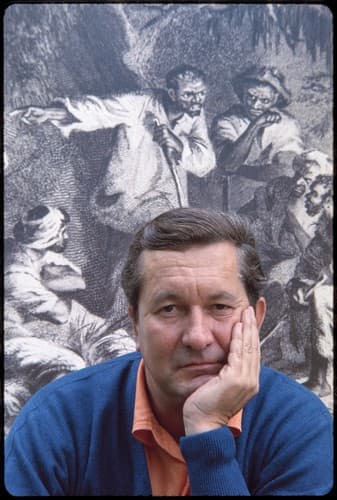
William Clark Styron Jr. was an American novelist and essayist who won major literary awards for his work.
Similar books
- Beloved
Toni Morrison
3.9 (325k) average on GoodreadsLiterary FictionExplores the psychological trauma and brutal realities of slavery through a literary lens.
- The Underground Railroad
Colson Whitehead
4.0 (290k) average on GoodreadsLiterary FictionOffers a fictionalized, yet deeply resonant, portrayal of the desperation and fight for freedom during slavery.
- Roots: The Saga of an American Family
Alex Haley
4.4 (146k) average on GoodreadsHistorical FictionChronicles generations of an enslaved family, depicting the systemic cruelty and resilience.
- The Old Man and the Sea
Ernest Hemingway
3.8 (831k) average on GoodreadsLiterary FictionA Cuban fisherman's long struggle with a giant marlin becomes a story of endurance and dignity, now retold for young adults with illustrations, phonetic guides, and writing prompts in Traditional Chinese.
- One Hundred Years of Solitude
Gabriel García Márquez
4.1 (753k) average on GoodreadsLiterary FictionThrough the multi-generational story of the Buendía family, a mythical town deals with the repeating patterns of time, love, and solitude, as the extraordinary mixes with the ordinary.
- The Goldfinch
Donna Tartt
3.9 (720k) average on GoodreadsLiterary FictionHaunted by a tragic explosion and clutching a stolen Dutch masterpiece, a young orphan navigates the opulent drawing rooms of New York and the gritty underbelly of the art world, desperately seeking connection and redemption amidst a life spiraling into crime and obsession.





Enjoyed the summary?
A summary gives you the shape of the book. The book itself has the detail, the examples and the voice.
Find The Confessions of Nat Turner on AmazonAs an Amazon Associate, BookBrief earns from qualifying purchases. How we're funded