
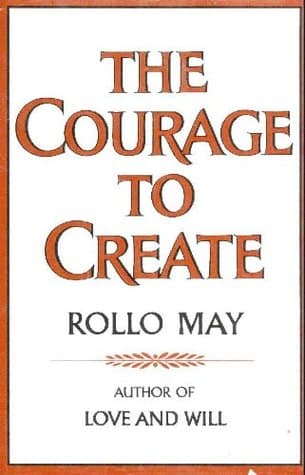
Core Idea
- Difficulty
- Medium
- Read it if
- You are an artist, writer, therapist, or anyone seeking a deeper, philosophical understanding of creativity beyond mere technique, and are willing to confront the existential anxieties inherent in the creative process.
- Skip it if
- You are looking for practical, step-by-step guides to 'be more creative' or quick hacks for productivity, or prefer a purely psychological rather than philosophical approach.
Key Takeaways from The Courage to Create
Courage Precedes Creation
True creativity demands confronting anxiety and embracing the unknown.
May argues that creativity is not just a pleasant activity but a deep act of courage. It means facing the anxiety that comes when one steps into the unknown, challenging existing structures, and bringing something new into being. This applies not only to art but to any field seeking innovation or change. Courage is not the absence of fear, but the ability to act despite it, to commit oneself fully to the creative process, which always involves risk and uncertainty. This courage is fundamental, as it allows individuals to break free from conformity and social pressures that stifle true expression.
“The creative act is not an act of will alone, as is the moral act, but a whole personality moving.”
In the book: May frequently references the existentialist concept of 'anxiety' as a natural response to freedom and the responsibility of choice, which is central to the creative act. He posits that neurosis often stems from a refusal to confront this anxiety and embrace the creative potential within.
Try this: Identify areas in your life where you feel stuck or unfulfilled. Acknowledge the fear of change or failure. Instead of avoiding it, lean into that discomfort, viewing it as a signal that you are on the verge of a significant creative breakthrough. Start small by challenging a routine or a long-held belief.
Related ideas: existential-anxiety, creative-act, risk-taking
Creativity as Encounter
The creative process is a dynamic interaction between self and world, not a solitary invention.
May emphasizes that creativity is not a purely internal process, but an 'encounter' — a dynamic, reciprocal relationship between an individual's unique perspective and the external world. It is about how we perceive, interpret, and engage with reality, transforming it through our subjective experience. This encounter involves openness, receptivity, and a willingness to be affected by what is outside of oneself. The artist does not just impose their will on the canvas; they respond to the canvas, the light, the subject, and the medium itself. This interaction creates new forms and insights that would not come from a purely isolated mind.
“Creativity is the encounter of the intensively conscious human being with his world.”
In the book: May discusses how an artist doesn't simply 'think up' an idea but is deeply engaged with their materials and environment. He might point to a sculptor's interaction with clay, where the material itself informs the evolving shape, or a writer's engagement with language and the nuances of human experience.
Try this: Actively seek out new experiences and perspectives. Engage deeply with your environment, whether it's observing details on a walk, listening intently to a conversation, or immersing yourself in a new subject. Practice 'active listening' not just with people, but with ideas, materials, and situations, allowing them to shape your internal landscape.
Related ideas: subject-object-relation, interconnectedness, perception
The Unconscious as Creative Wellspring
True innovation emerges from the depths of the unconscious, integrated with conscious effort.
May redefines the unconscious not as a place for repressed desires, but as a rich source of intuition, symbols, and new connections vital for creativity. He argues that significant creative breakthroughs often follow a period of 'incubation' where the conscious mind lets go, allowing the unconscious to work. However, this is not passive; it is an active interplay. The conscious mind provides initial input and a critical framework, while the unconscious generates unexpected insights. The creative act, then, is the skilled integration of these two realms, where raw insights are refined into coherent forms.
“The unconscious is not a garbage bin but a wellspring of potential.”
In the book: May alludes to the common experience of 'aha!' moments that occur after a period of intense focus followed by a break, where the solution seemingly 'pops' into mind. He connects this to the Freudian and Jungian concepts of the unconscious, but reinterprets its role as fundamentally generative rather than solely pathological.
Try this: Cultivate practices that allow for unconscious processing, such as journaling, meditation, or simply taking walks without distraction. When facing a creative block, step away from the problem and engage in an unrelated activity, trusting that your unconscious mind will continue to work on it in the background. Always return to conscious refinement.
Related ideas: incubation, intuition, subconscious
Passion for Form
Creative expression requires channeling raw emotion and insight into structured, meaningful forms.
May says that true creativity is not just about having wild ideas; it is about the 'passion for form.' This means taking the chaotic, often overwhelming insights and emotions that come during the creative process and giving them structure, definition, and coherence. It is the disciplined craft that turns raw experience into something communicable and beautiful. This passion for form distinguishes genuine art from mere self-expression or uncontrolled outburst. It is the artist's commitment to finding the perfect medium, the precise word, the harmonious color, or the elegant solution that allows their vision to be fully realized and understood.
“The creative act is an imposing of order on chaos.”
In the book: May would point to the rigorous training of an artist or musician, or the meticulous editing of a writer. He might cite examples of great works where the form itself is as significant as the content, such as a well-composed symphony or a perfectly structured poem.
Try this: Don't just brainstorm ideas; actively think about the 'container' for those ideas. If you're writing, consider the genre, structure, and word choice. If you're problem-solving, think about the most elegant and efficient solution. Embrace constraints as a catalyst for creative problem-solving, rather than a hindrance.
Related ideas: craftsmanship, discipline, structure
Originality vs. Novelty
Authentic creativity stems from unique perspective, not just superficial newness.
May distinguishes between mere 'novelty' — something new for its own sake — and true 'originality,' which comes from a unique individual perspective. Novelty can be superficial and temporary, while originality is deeply personal and transformative. An original creator does not necessarily invent something entirely new, but rather sees existing elements, concepts, or problems in a fundamentally new way, offering fresh insights and connections. This requires deep engagement with the subject matter and a firm commitment to one's own vision, even if it challenges established norms.
“Originality does not mean that which has never been seen before, but that which has never been seen in this way before.”
In the book: May might contrast a fad that quickly passes with a timeless work of art or a groundbreaking scientific theory. The latter doesn't just add new information; it reconfigures our understanding of the world, often by re-examining existing data through a novel lens.
Try this: When approaching a task or project, challenge yourself to look beyond conventional solutions. Ask 'what if?' and 'why not?' even if the initial answers seem absurd. Prioritize developing your unique viewpoint and voice, rather than chasing trends or trying to replicate others' success.
Related ideas: authenticity, perspective-shift, innovation
The Creative Call to Being
Creativity is an affirmation of one's existence and purpose in the face of non-being.
For May, creativity is linked to human existence and our drive to affirm our 'being' in the world. In a universe where we face limits, meaninglessness, and the threat of 'non-being,' the act of creation is a powerful assertion of life, purpose, and significance. It is how we leave our mark, contribute to culture, and define ourselves. This is not just about producing art, but about living a life actively shaped and defined by one's own choices and expressions. To deny one's creative impulses is, in a sense, to deny a part of one's own vitality and potential.
“To be creative means to be alive.”
In the book: May draws on existential philosophy, particularly the idea that humans are 'condemned to be free' and must create their own meaning. He suggests that repression of creative urges can lead to feelings of emptiness and despair, as it's a denial of one's core being.
Try this: Reflect on what truly ignites your passion and gives you a sense of purpose. Actively pursue these interests, no matter how small or seemingly insignificant. Understand that every act of genuine self-expression, from solving a complex problem to arranging a beautiful meal, is an affirmation of your unique being.
Related ideas: existentialism, self-actualization, meaning-making
Neurosis as Creative Blockage
Unexpressed creative potential often manifests as anxiety and psychological distress.
May, as a psychotherapist, connects the repression of creative impulses to various forms of psychological distress and neurosis. He argues that when individuals suppress their natural drive to create, innovate, or express their unique selves, this blocked energy does not simply disappear. Instead, it can appear as anxiety, depression, apathy, or a general feeling of unfulfillment. The 'courage to create' is therefore also the courage to confront the anxieties that prevent us from living authentically. Therapy, in this context, helps individuals identify and overcome these blockages to reclaim their creative potential and, by extension, their vitality.
“Neurosis is the way of avoiding the anxiety of freedom.”
In the book: May's clinical experience informs this point, where he observed patients struggling with a lack of purpose or chronic anxiety, often correlating with an inability to express their true selves or pursue meaningful creative endeavors.
Try this: Pay attention to feelings of chronic dissatisfaction, boredom, or anxiety. Instead of just trying to 'fix' the symptoms, consider if there's an underlying creative urge that needs to be acknowledged and expressed. Seek outlets for self-expression and purposeful action, even if they initially feel daunting.
Related ideas: repression, psychological-blockage, authenticity
Symbols Bridge Conscious and Unconscious
Symbols are essential tools for integrating disparate thoughts and feelings into coherent creative works.
May emphasizes the critical role of symbols in the creative process. Symbols are not just arbitrary signs; they are powerful images, metaphors, or forms that bridge the gap between our conscious, rational mind and the deeper, often irrational, unconscious. They allow us to condense complex emotions, abstract ideas, and intuitive insights into a single, understandable unit. Through symbols, artists, scientists, and thinkers can communicate profound truths that might otherwise be inexpressible. The ability to work with and generate compelling symbols is a mark of significant creative achievement, enabling the integration of diverse experiences into a unified whole.
“The symbol has the power to unite opposite poles of human experience.”
In the book: May would point to the enduring power of myths, religious symbols, or the universal appeal of certain archetypal images in art and literature. He might also reference how scientific theories often use symbolic representations (like equations or models) to convey complex ideas.
Try this: When grappling with a complex idea or emotion, try to find a symbol or metaphor that encapsulates it. Journaling, drawing, or even just free association can help uncover these symbols. Use these symbols to communicate your ideas more effectively and to gain deeper insight into your own thoughts.
Related ideas: archetypes, metaphor, symbolism
The Delphic Oracle as Therapist
Self-knowledge, even painful, is the foundation for creative freedom.
May draws a strong parallel between the Delphic Oracle's command 'Know Thyself' and the therapeutic process, seeing self-knowledge as essential for creativity. Just as the oracle challenged individuals to confront their truths, therapy encourages deep introspection and an honest assessment of one's strengths, weaknesses, fears, and desires. This often uncomfortable process of self-discovery is crucial because authentic creativity cannot come from self-deception or unexamined assumptions. Only by understanding one's true self — the conscious and unconscious drives — can one truly use their unique creative potential and express it authentically in the world.
“Know thyself, and you will know the universe.”
In the book: May integrates psychoanalytic principles with existential philosophy, suggesting that therapy's goal is not just symptom relief but fostering self-awareness that empowers individuals to live more creatively and meaningfully. He uses the ancient wisdom of the oracle to underscore the timelessness of this pursuit.
Try this: Engage in regular self-reflection through journaling, meditation, or seeking feedback from trusted individuals. Be brutally honest with yourself about your motivations, fears, and true desires. This self-awareness will clarify your unique voice and direction, fueling more authentic creative output.
Related ideas: self-awareness, introspection, authenticity-in-creation
Limits as Catalysts
Constraints and boundaries, rather than hindering, often spark profound creativity.
Contrary to the popular idea that boundless freedom encourages creativity, May argues that limits and constraints are often important catalysts. Whether these are self-imposed (like choosing a specific art form or medium) or external (like time, resources, or social norms), boundaries force the creator to be clever, to find new solutions within a defined space. This tension between the expansive urge to create and the restrictive nature of form or circumstance is where true innovation often thrives. Limits provide the necessary structure and resistance against which creative energy can push, leading to more focused, impactful, and original work.
“Creativity arises out of the tension between spontaneity and limitations.”
In the book: May might cite how poets work within the constraints of meter and rhyme, or how architects must balance aesthetic vision with structural integrity and budget. These limitations don't stifle creativity but channel it into specific, powerful expressions.
Try this: Instead of viewing limitations (e.g., budget, time, existing tools) as obstacles, reframe them as creative challenges. Set specific, meaningful constraints for your projects. For example, try to write a story using only dialogue, or solve a problem using only existing resources. This forces ingenuity.
Related ideas: constraints, problem-solving, innovation-through-limitation
The Courage to Create Quotes
“The creative act is not an act of thinking, but an act of being.”
“Freedom is not the absence of commitments, but the ability to choose — and commit myself to — what is best for me.”
“To be courageous is to be oneself, to accept oneself with all one's weaknesses and difficulties, and to be willing to take risks.”
“Creativity requires the courage to let go of certainties.”
“Anxiety is the dizziness of freedom.”
“The opposite of courage in our society is not cowardice, but conformity.”
“Joy is the by-product of effort, not its object.”
“The creative process is a spiritual process.”
“Every person is a creator. We create our own lives, our own worlds.”
“Neurosis is the way of avoiding legitimate suffering.”
“The ultimate source of creativity is the unconscious.”
“To live into the future means to live into the unknown.”
“The artist is the person who has the courage to stand alone and trust his own experience.”
“It is an error to assume that courage is the absence of fear. Fear is a normal and healthy response to danger.”
Quiz
10 questions on the main ideas. Each answer comes with a short explanation.
Question 1
According to Rollo May in 'The Courage to Create,' what common misconception does he challenge regarding the role of imagination and art in human experience?
- They are primarily tools for social cohesion.
- They are merely the frosting on life, rather than its fountainhead.
- They are less important than logic and science.
- They are exclusive to a gifted few.
Show answer
B. They are merely the frosting on life, rather than its fountainhead. May directly challenges the idea that imagination and art are 'the frosting on life,' arguing instead that they are 'the fountainhead of human experience,' suggesting their fundamental importance.
Question 2
What is one of the primary benefits Rollo May suggests comes from liberating our creative impulses?
- Increased financial stability.
- New possibilities for achievement.
- A deeper understanding of scientific principles.
- Reduced need for social interaction.
Show answer
B. New possibilities for achievement. The preface states that liberated creative impulses 'offer new possibilities for achievement,' emphasizing the positive outcomes of embracing one's creativity.
Question 3
Rollo May, drawing on his experience as a therapist, aims to show readers how to overcome what obstacle in their lives?
- Financial hardship.
- Social isolation.
- Old patterns.
- Lack of formal education.
Show answer
C. Old patterns. The description highlights May's role as a therapist showing 'how we can break out of old patterns in our lives,' indicating a focus on personal transformation.
Question 4
Which of the following does May suggest might derive from art forms, rather than being their origin?
- Emotional expression.
- Logic and science.
- Spiritual beliefs.
- Physical dexterity.
Show answer
B. Logic and science. May poses the provocative question: 'What if our logic & science derive from art forms, rather than the other way around?' This challenges conventional views on the hierarchy of human faculties.
Question 5
The book promises to offer a way through what emotional state to achieve a fully realized self?
- Apathy.
- Ignorance.
- Fears.
- Ambition.
Show answer
C. Fears. The description states that May's book 'offers us a way thru our fears into a fully realized self,' emphasizing the role of confronting fear in personal growth and creativity.
Question 6
Which chapter title in 'The Courage to Create' specifically addresses the relationship between creation and the deeper, often hidden, aspects of the human mind?
- The Nature of Creativity.
- Creativity & Encounter.
- Creativity & the Unconscious.
- On the Limits of Creativity.
Show answer
C. Creativity & the Unconscious. The chapter 'Creativity & the Unconscious' directly indicates May's exploration of how unconscious processes contribute to or interact with creative acts.
Question 7
The title of the first substantive chapter, 'The Courage to Create,' implies what central prerequisite for engaging in creative acts according to May?
- Innate talent.
- A willingness to face uncertainty and risk.
- Extensive formal training.
- Social validation.
Show answer
B. A willingness to face uncertainty and risk. The title itself, 'The Courage to Create,' suggests that creativity is not merely a skill but requires a significant act of will and bravery to confront the unknown and potentially disruptive nature of creation.
Question 8
One of the chapter titles mentions 'The Delphic Oracle as Therapist.' What does the inclusion of this specific reference suggest about May's approach to therapy or self-discovery in the context of creativity?
- He advocates for ancient Greek mystical practices in modern therapy.
- He explores the role of self-knowledge and confronting existential truths in the creative process.
- He believes in predestination controlling one's creative potential.
- He argues against the efficacy of contemporary therapeutic methods.
Show answer
B. He explores the role of self-knowledge and confronting existential truths in the creative process. The Delphic Oracle is famously associated with the maxim 'Know thyself.' Its inclusion as 'therapist' suggests May connects self-discovery, confronting difficult truths, and personal insight with the therapeutic and creative journey.
Question 9
Given the book's focus on breaking out of old patterns and achieving a fully realized self, what might May imply about the relationship between personal growth and creativity?
- Personal growth must precede any creative endeavor.
- Creativity is a spontaneous act unrelated to personal development.
- Engaging in creative acts is a vital pathway to personal growth and self-realization.
- Only those who are already fully realized can be truly creative.
Show answer
C. Engaging in creative acts is a vital pathway to personal growth and self-realization. The description links 'liberated creative impulses' to 'new possibilities for achievement' and offers a way 'thru our fears into a fully realized self.' This strongly suggests that creativity is an active process integral to, rather than separate from or subsequent to, personal growth.
Question 10
The inclusion of 'Passion for Form' as a chapter title, alongside 'Creativity & the Unconscious' and 'Creativity & Encounter,' suggests what about May's holistic view of creativity?
- Creativity is primarily about unrestrained, spontaneous expression.
- True creativity balances raw impulse (unconscious), relational aspects (encounter), and the discipline of structure (form).
- Form is merely an external constraint that stifles genuine creative output.
- Only highly structured and formal art is considered truly creative.
Show answer
B. True creativity balances raw impulse (unconscious), relational aspects (encounter), and the discipline of structure (form). By including chapters on the unconscious (raw impulse/depth), encounter (relational/interaction), and passion for form (structure/discipline), May implies a comprehensive view where creativity is not just wild abandon but also involves intentional shaping and structure.
The Courage to Create FAQ
What is the main idea behind Rollo May's 'The Courage to Create'?
Rollo May argues that creativity is not a mere luxury but the fundamental source of human experience, from which even logic and science emerge. The book guides readers to unleash their inherent creative impulses to achieve a more fully realized self.
Does 'The Courage to Create' offer practical steps for fostering creativity?
While deeply philosophical, the book provides insights into the psychological processes of creativity and encourages readers to confront their fears. By understanding the nature of creativity and the unconscious, it helps individuals break free from old patterns, rather than offering prescriptive exercises.
What does Rollo May mean by 'the courage to create'?
The 'courage to create' refers to the bravery required to confront the unknown, embrace anxiety, and bring something new into existence, whether it's a work of art, a new idea, or a new way of living. It involves overcoming the fears that inhibit our innate creative potential.
How does 'The Courage to Create' differ from typical self-help books on creativity?
'The Courage to Create' delves into the philosophical and psychological underpinnings of creativity, rather than focusing solely on techniques or productivity hacks. May explores creativity as an existential act tied to personal growth and overcoming fear, offering a deeper, more therapeutic perspective.
What is the role of the unconscious in creativity, according to Rollo May?
May posits that the unconscious plays a crucial role in creativity by being the reservoir of latent possibilities and insights. Engaging with the unconscious, often through encounter and reflection, allows for the emergence of novel ideas and forms, challenging conventional thinking.
Does 'The Courage to Create' suggest that everyone is creative?
Yes, May implies that creativity is an inherent human capacity, not limited to artists. He suggests that everyone possesses creative impulses that, once liberated, can lead to new possibilities in all aspects of life, from problem-solving to personal expression.
How does May connect creativity with overcoming fear?
May argues that fear is a primary obstacle to creativity, often manifesting as a fear of the unknown, failure, or judgment. By understanding and confronting these fears, individuals can liberate their creative impulses and move towards a more authentic and fully realized self.
What is the significance of 'encounter' in May's view of creativity?
For May, 'encounter' refers to the intense engagement with one's subject matter, another person, or even one's own unconscious. This deep interaction can spark new insights and forms, serving as a vital catalyst for the creative process.
About the author

Rollo May was an American existential psychologist and author, known for exploring the intersection of psychology and creativity. His notable work, The Courage to Create, delves into the nature of creativity and the challenges faced by individuals in expressing themselves. May's writings primarily focus on non-fiction themes related to human existence and the psychological aspects of creativity.
Similar books
- Man's Search for Meaning
Viktor E. Frankl
4.4 (401k) average on GoodreadsBiographyExplores existential meaning and the will to meaning in the face of suffering, echoing May's focus on courage and being.
- Big Magic: Creative Living Beyond Fear
Elizabeth Gilbert
3.9 (150k) average on GoodreadsBusinessGilbert's Big Magic offers a more contemporary, accessible, and often whimsical approach to creativity, encouraging readers to pursue their creative impulses without fear. While Gilbert also addresses fear as a barrier, her approach is largely prescriptive and anecdotal, advocating for a 'light' and joyful engagement with creativity, often personifying ideas as entities seeking a human collaborator. May's The Courage to Create, in stark contrast, grounds the concept of fear in deep existential anxiety and views the creative act as a profound, often arduous, confrontation with being and non-being. May's work is a philosophical treatise on the inherent struggle and courage required, whereas Gilbert's is a self-help guide aiming to make creativity feel less daunting and more fun. Gilbert offers comfort; May offers a call to courageous confrontation.
- The Perks of Being a Wallflower
Stephen Chbosky
4.2 (1.3M) average on GoodreadsPsychologyThrough letters, a shy high school freshman learns to navigate first love, trauma, and self-discovery, stepping off the sidelines and into life.
- Eleanor Oliphant Is Completely Fine
Gail Honeyman
4.3 (708k) average on GoodreadsLiterary FictionA lonely woman's structured life changes when an IT guy and an elderly man help her learn to open her heart.
- One Flew Over the Cuckoo's Nest
Ken Kesey
4.2 (631k) average on GoodreadsPsychologyIn a mind-bending asylum, the boisterous Randle McMurphy wages a defiant war against the tyrannical Nurse Ratched, inspiring his fellow inmates, including the seemingly catatonic Chief Bromden, to reclaim their lost humanity.
- The Bell Jar
Sylvia Plath
4.0 (591k) average on GoodreadsPsychologyIn the suffocating grip of 1950s expectations, a brilliant young woman's descent into mental illness is painted with such vivid, internal clarity that her 'insanity' feels terrifyingly rational and inevitable.





Enjoyed the summary?
A summary gives you the shape of the book. The book itself has the detail, the examples and the voice.
Find The Courage to Create on AmazonAs an Amazon Associate, BookBrief earns from qualifying purchases. How we're funded