
Synopsis
Covers the whole plot, including the ending.
- Difficulty
- Easy
- Pacing
- Slow
- Mood
- Humorous, Quaint, Satirical, Lighthearted
- Read it if
- You enjoy Victorian satire, gentle humor, and stories about social climbing and domestic mishaps, or if you're a fan of early British comedy that influenced modern sitcoms.
- Skip it if
- You prefer fast-paced plots, high-stakes drama, or stories with deep emotional arcs and complex character development.
The Diary of a Nobody Plot Summary
Covers the whole plot, including the ending.
A New Beginning in Holloway
Charles Pooter, a middle-aged clerk in the City of London, starts his diary in April. He writes about moving into a new house in Holloway with his wife, Carrie. He is very proud of his modest home, often describing its features, like the fancy stencil he paints around the dado rail in the hall, which he thinks adds class. His early entries detail his daily routines, small home incidents, and his talks with tradesmen and neighbors. He always has a sense of his own importance and wants to be seen as respectable and a bit above his actual place. He often tells stories of small social mistakes and insults, always presenting himself as the one who was wronged.
Lupin's Arrival and Social Aspirations
Their adult son, Lupin, soon joins the Pooter household. He recently lost his bank job in some scandal. Lupin, a disrespectful and somewhat careless young man, immediately clashes with his father's old-fashioned ideas. He introduces his parents to his 'fast' friends, like Mr. Murray Posh and Mr. James Gowing, whom Pooter finds rude and too familiar. Lupin's behavior, his late nights, and his easy disregard for his father's opinions constantly worry and annoy Charles, who always tries to keep up appearances and his social standing in the neighborhood.
Social Encounters and Minor Humiliations
Pooter often talks about his social interactions, which almost always end in some embarrassment or misunderstanding. He invites Mr. Gowing and Mr. Cummings, two friends, to dinner. The evening is spoiled by their loud behavior and Pooter's clumsy attempts at being a host, such as when he accidentally spills port. He is very sensitive to feeling disrespected, whether it is from tradesmen, neighbors, or even his son's friends who joke about his name or house. These incidents, though small, are carefully written down. This shows Pooter's exaggerated sense of dignity and his inability to see himself as others might.
Lupin's Engagements and Financial Woes
Lupin surprises his parents by saying he is engaged to Daisy Mutlar, the daughter of a rich retired tradesman. This news at first gives Pooter great hope for the family's social and financial future, as Daisy is expected to inherit a lot of money. However, Lupin's unpredictable behavior continues, and he often borrows money from his father. Pooter reluctantly gives it, often complaining about it in his diary. The engagement itself is difficult, with frequent arguments and make-ups. Pooter constantly worries about whether Daisy's family is suitable and what impression they might make on his own friends.
The Ball and Pooter's Social Blunders
The Pooters go to a big costume ball, an event Pooter looks forward to as a chance to mix with higher society. Charles carefully plans his costume, a rather ill-fitting 'Ancient Briton' outfit. At the ball, he tries to dance and talk, but his efforts often lead to awkwardness or being openly laughed at. The evening's main event involves him accidentally stepping on a lady's dress, tearing it, and causing a scene. He is very embarrassed, sure that everyone is laughing at him. This further cements his pattern of social mishaps.
Lupin's Career and Financial Schemes
Lupin, despite his engagement, continues his unstable behavior. He briefly works as a 'stock-broker's clerk,' but he seems to know very little about finance, and his dealings are questionable. He often talks about risky investments and 'tips,' always with too much confidence. Pooter, always the worried father, tries to advise him but is usually ignored. Lupin's financial plans often involve him 'borrowing' money from his father. Pooter sees these as loans, but Lupin often treats them as gifts, causing ongoing tension and financial strain on the Pooter household, even as Pooter hopes for Lupin's eventual success.
The Mutlar Family and Social Clashes
The Pooters meet Daisy Mutlar's family, including her father, Mr. Mutlar, a rich but rather rough retired tradesman. Pooter is immediately put off by their lack of manners and their casual approach to social rules, which is very different from his own strict standards. He is especially sensitive to their perceived condescension towards him and his family. Their interactions are often tense, showing the social differences and Pooter's constant struggle to keep his dignity and feel accepted by those he sees as socially superior, or in this case, simply wealthier.
Lupin's Marriage and Subsequent Disappearance
Despite many arguments and temporary break-ups, Lupin and Daisy Mutlar eventually marry. The wedding itself is chaotic, marked by Lupin's usual disrespect and Pooter's worries about everything going smoothly. After the marriage, their financial situation remains uncertain, and Lupin's business ventures continue to be unstable. To Pooter's dismay, Lupin soon announces that he and Daisy are moving to the continent, supposedly for a business chance. This departure makes Pooter feel both relieved from the immediate burden of his son's presence and deeply worried about his future.
A New Tenant and Lingering Worries
After Lupin leaves, the Pooters decide to take in a lodger, Mr. Padge, to help with their money. Pooter, always a stickler for order, finds Mr. Padge's habits, such as leaving his boots outside his door, to be a constant source of small annoyance. Life in Holloway returns to its familiar rhythm of small home concerns, social visits, and Pooter's careful record of every perceived insult or compliment. Despite the relative calm, Pooter's diary entries continue to show his worries about appearances, his social standing, and the lingering hope (and fear) of Lupin's return.
A Glimmer of Success and the Diary's End
Near the end of the diary, Lupin unexpectedly returns from abroad. He seems to have found success in a gold mine venture. He is now wealthy and acts more refined, which makes Pooter relieved and proud. Lupin even arranges for Pooter to get a promotion and a significant raise at his own company, through his new, important connections. The diary ends with Pooter thinking about his better situation, his son's unexpected success, and a feeling of happiness, though still with his typical small complaints and observations. This brings the story to a somewhat happy, if still Pooter-like, ending.
The Diary of a Nobody Characters
Charles Pooter
Protagonist
A middle-aged City clerk, meticulously documenting his ordinary life and social aspirations.
Charles Pooter is the titular 'nobody,' a clerk in a London firm who believes himself to be a person of considerable importance and refinement. He is meticulous, self-important, and overly sensitive to perceived slights. His diary reveals his deep-seated anxieties about social status, his pride in his modest Holloway home, and his constant efforts to maintain a respectable appearance. Despite his pomposity, he is fundamentally good-natured and devoted to his wife, Carrie, and his son, Lupin, even when Lupin's antics cause him endless frustration. His greatest desire is to be seen as a gentleman, but his attempts often result in social blunders.
Relationships: Carrie Pooter (Devoted wife, often humours his eccentricities); Lupin Pooter (Rebellious son, constant source of worry and pride); Mr. Gowing (Boisterous friend, often causes Pooter minor irritation); Mr. Cummings (Another boisterous friend, frequently involved in Pooter's social mishaps)
Carrie Pooter
Supporting
Charles Pooter's patient and practical wife, often the voice of reason.
Carrie Pooter is Charles's devoted wife, who often serves as a calming influence and a more grounded perspective to her husband's often inflated sense of self. She tolerates his eccentricities with good humour, gently corrects his social missteps, and attempts to mediate between Charles and their son, Lupin. While she shares some of Charles's social aspirations, she is less prone to his petty grievances and more practical in her approach to life. She is a supportive partner, managing the household and offering quiet advice, though Charles often records her comments as merely 'Carrie says…' without fully appreciating her wisdom.
Relationships: Charles Pooter (Devoted husband, whom she gently manages); Lupin Pooter (Son, whose behaviour she often excuses or tries to understand)
Lupin Pooter
Supporting
The Pooters' irreverent and irresponsible son, a constant source of worry and occasional hope.
Lupin is the Pooters' adult son, a 'fast' young man with a casual disregard for convention and his father's old-fashioned values. He is frequently unemployed, involved in dubious business ventures, and prone to borrowing money from his parents. His modern attitudes, boisterous friends, and late-night escapades are a perpetual source of anxiety for Charles Pooter. Despite his flaws, Lupin possesses a certain charm and, at times, a surprising capacity for generosity. His unpredictable nature drives much of the plot, culminating in an unexpected turn of fortune that ultimately benefits his parents.
Relationships: Charles Pooter (Father, whose values he often clashes with); Carrie Pooter (Mother, whom he often manipulates but also genuinely cares for); Daisy Mutlar (Fiancée/Wife, a wealthy heiress); Mr. Murray Posh (Boisterous friend, part of Lupin's 'fast' circle)
Mr. Gowing
Supporting
A boisterous and somewhat crude friend of the Pooters, often involved in their social mishaps.
Mr. Gowing is a long-standing friend of Charles Pooter, though his boisterous behaviour and lack of refinement often irritate Pooter. He is prone to practical jokes, loud laughter, and casual familiarity, which Pooter, with his strict adherence to etiquette, finds uncouth. Gowing frequently visits the Pooters' home, often bringing other friends like Cummings, and his presence almost guarantees some minor social faux pas or domestic accident. Despite Pooter's complaints, Gowing is generally good-natured and provides much of the comic relief through his interactions with the fastidious diarist.
Relationships: Charles Pooter (Friend, often a source of irritation); Mr. Cummings (Friend)
Mr. Cummings
Supporting
Another friend of the Pooters, similar in temperament to Mr. Gowing.
Mr. Cummings is a friend of Charles Pooter and often accompanies Mr. Gowing on visits to the Pooter household. Like Gowing, he is rather boisterous and lacks the social graces that Pooter so highly values. He frequently participates in the playful teasing of Pooter and is often present during the minor domestic and social mishaps that Pooter meticulously records. Cummings contributes to the chaotic, yet ultimately harmless, atmosphere that often surrounds Pooter's social gatherings, further highlighting Pooter's struggle to maintain an image of decorum.
Relationships: Charles Pooter (Friend, often a source of minor annoyance); Mr. Gowing (Friend)
Daisy Mutlar
Supporting
Lupin's wealthy fiancée and later wife, from a less refined but affluent family.
Daisy Mutlar is the daughter of a wealthy retired tradesman and becomes Lupin Pooter's fiancée and later wife. She is portrayed as somewhat flighty and prone to arguments, but also possesses a significant inheritance that makes her a desirable match in Pooter's eyes. Her family's lack of social polish contrasts with the Pooters' aspirations, creating social friction. Daisy's character serves primarily as a catalyst for Lupin's storyline, particularly his brief periods of stability and his eventual, surprising financial success.
Relationships: Lupin Pooter (Fiancée/Wife); Mr. Mutlar (Father); Charles Pooter (Father-in-law, whom she occasionally clashes with)
Mr. Mutlar
Supporting
Daisy Mutlar's wealthy but unrefined father.
Mr. Mutlar is Daisy's father, a retired tradesman who has accumulated considerable wealth but lacks the social refinement that Charles Pooter values. He is portrayed as somewhat coarse and outspoken, often making Pooter uncomfortable with his directness and perceived lack of etiquette. His wealth is a significant factor in Pooter's acceptance of Lupin's engagement to Daisy, despite his reservations about the family's social standing. Mr. Mutlar represents the new money class that Pooter, with his 'old-fashioned' aspirations, struggles to reconcile with.
Relationships: Daisy Mutlar (Daughter); Charles Pooter (Father-in-law, often a source of social discomfort)
Mr. Padge
Mentioned
The Pooters' lodger after Lupin moves out.
Mr. Padge is a lodger taken in by the Pooters after Lupin moves out. His presence is primarily a source of minor domestic irritation for Charles Pooter, who frequently complains about his habits, such as leaving his boots outside his door. While not a major character, Mr. Padge's role highlights Pooter's meticulous nature and his inability to overlook even the smallest deviations from his idea of proper household conduct. He serves as a temporary replacement for Lupin's disruptive presence, albeit in a more subdued, less dramatic fashion.
Relationships: Charles Pooter (Landlord, often annoyed by his habits)
The Diary of a Nobody Themes
Social Class and Aspiration
The novel satirizes the Victorian middle-class's focus on social advancement and keeping up appearances. Charles Pooter constantly tries to improve his family's status, whether through his 'artistic' home decorations, his choice of friends, or his worries about Lupin's marriage. His attempts are often clumsy and lead to embarrassment, showing the pointlessness and absurdity of his pretensions. The difference between his humble reality and his grand view of himself is a main source of humor, revealing the worries of a class caught between the working poor and the established upper class.
“What a to-do! One would think I was a mere nobody to be laughed at.”
The Mundane and the Magnificent
A main theme is how ordinary things are made to seem important. Pooter's diary makes every small detail of his life—a stencil on a dado rail, a minor misunderstanding with a tradesman, a spilled glass of port—seem like a very important event. This intense focus on the everyday, presented with Pooter's exaggerated sense of self-worth, creates much of the novel's humor. It makes fun of the human tendency to overstate one's own importance and the drama of one's daily life, making the reader laugh at Pooter's sincere belief in the grandeur of his 'nobody' life.
“I am not a man who cares for notoriety, but I must say I like to be appreciated.”
Parent-Child Relationships and Generational Conflict
The relationship between Charles Pooter and his son Lupin is a central part of the story, showing the conflict between Victorian traditionalism and newer attitudes. Pooter, with his strict adherence to manners and respectability, is constantly annoyed by Lupin's casual disrespect, 'fast' friends, and questionable business ethics. Lupin represents a younger generation that challenges his father's values and social worries. Despite the constant arguments and Pooter's concerns, there is an underlying sense of fatherly love and pride, especially when Lupin eventually finds unexpected success. This shows their lasting bond despite their differences.
“Lupin is a good boy at heart, but he has his faults.”
Self-Deception and Unreliable Narration
The whole novel is presented as Charles Pooter's diary, making him an unreliable narrator. His entries consistently show himself in the best possible light, often as the victim of others' rudeness or stupidity, even when his own actions clearly cause his problems. The humor comes from the gap between Pooter's view of himself and the reality the reader can understand. This theme explores how people create stories about themselves to maintain their self-esteem, even if those stories do not match the truth. This lets the reader see Pooter's charmingly mistaken worldview.
“My dear Gowing, you are so very boisterous!”
The Comedy of Manners
The book is a classic example of a comedy of manners. It satirizes the social rules, behaviors, and pretenses of a specific class and time. The humor comes from characters trying to follow or break social norms, leading to awkward situations, misunderstandings, and public embarrassments. Pooter's careful recording of these events, often from his biased viewpoint, shows the absurdity of strict social codes and the human tendency to judge and be judged by superficial appearances. The novel criticizes the rigidity of Victorian society through gentle, observant humor.
“I really think I must have a card-basket; it looks so much more respectable.”
Plot Devices & Literary Techniques
First-Person Diary Narration
The entire story is told through Charles Pooter's personal journal entries.
The novel is presented entirely as the diary of Charles Pooter. This device provides an intimate, subjective, and highly unreliable account of events. It allows the reader direct access to Pooter's thoughts, anxieties, and inflated self-perception, creating much of the comedic effect. The diary format highlights Pooter's meticulous nature, his self-importance, and his tendency to magnify minor incidents into major dramas. It also allows for dramatic irony, as the reader can often see the true nature of situations that Pooter misinterprets or downplays, making his self-delusion a central source of humour.
Dramatic Irony
The reader understands more about Pooter's reality than Pooter himself does.
Dramatic irony is prevalent throughout the novel, stemming directly from the diary format. Pooter's earnest and often pompous narration of events frequently clashes with the reality that the reader can discern. For example, he describes his 'artistic' home decorations with pride, while the reader understands they are likely garish or amateurish. His accounts of social blunders consistently cast him as the victim, even when his own awkwardness or lack of self-awareness is the clear cause. This gap between Pooter's perception and objective reality is a primary engine of the novel's satire and humour.
Caricature
Exaggerated portrayal of characters' traits for comedic and satirical effect.
Many characters in 'The Diary of a Nobody' are caricatures, with their defining traits exaggerated for comedic and satirical purposes. Charles Pooter's pomposity, meticulousness, and social anxieties are amplified. Lupin's irreverence and irresponsibility are heightened, as are the boisterousness of Mr. Gowing and Mr. Cummings. This exaggeration serves to lampoon specific social types and behaviours prevalent in Victorian society, making the characters memorable and the satire sharper. It allows the authors to highlight the absurdities of social climbing and class consciousness without needing complex character development.
Slapstick and Situational Comedy
Humour derived from physical actions, clumsy mistakes, and social gaffes.
The novel is replete with instances of slapstick and situational comedy. Pooter frequently experiences minor physical mishaps, such as falling on ice, accidentally tearing a lady's dress at a ball, or spilling food and drink. These physical blunders are often combined with social gaffes and misunderstandings, creating awkward and embarrassing situations for the fastidious Pooter. The comedy arises from the contrast between Pooter's desire for dignity and the undignified realities of his everyday life, as well as the boisterous, often clumsy, behaviour of his friends and family.
The Diary of a Nobody Quotes
“I am a man who has made his way in the world.”
“My dear wife, Carrie, has often remarked that I am a man of ideas.”
“There are some people who are never satisfied.”
“I have often thought that if I had had a different bringing up, I should have been a very different man.”
“It is a great pity that people do not take more interest in their own affairs.”
“One cannot be too careful in these matters.”
“I am not one of those who are always grumbling.”
“There is nothing like a good laugh to clear the cobwebs away.”
“It is a strange thing how quickly one gets used to things.”
“I often think that if I had my time over again, I should do things very differently.”
“The more one sees of the world, the more one is convinced of the folly of mankind.”
“One must keep up appearances, whatever happens.”
“I have always been a man who believes in doing the right thing.”
“It is wonderful how little one knows of the world until one begins to travel.”
Quiz
10 questions on the plot and the characters. Each answer comes with a short explanation.
Question 1
Who is the primary narrator and diarist in 'The Diary of a Nobody'?
- Pooter's son, Lupin
- Carrie Pooter, his wife
- Charles Pooter
- Mr. Gowing, a family friend
Show answer
C. Charles Pooter The diary is written by Charles Pooter, a middle-aged, lower-middle-class London clerk, who meticulously records the mundane events and his social aspirations.
Question 2
What is Charles Pooter's main occupation?
- A stage entertainer
- A court reporter
- A clerk in the City of London
- An artist exhibiting at the Royal Academy
Show answer
C. A clerk in the City of London Charles Pooter is a clerk, and much of his diary details his daily commute and experiences related to his office work, reflecting the typical life of a Victorian 'nobody'.
Question 3
Which of the following best describes the genre and tone of 'The Diary of a Nobody'?
- A dramatic tragedy about social decline
- A romantic novel with a historical setting
- A satirical, slapstick comedy
- A serious historical account of Victorian life
Show answer
C. A satirical, slapstick comedy The book is explicitly described as a 'satirical, slapstick comedy' that uses humor to highlight the everyday struggles and social aspirations of a Victorian family.
Question 4
What is the name of Charles Pooter's son, who is described as 'accident prone'?
- Gowing
- Lupin
- Padge
- Frank
Show answer
B. Lupin Lupin is Charles Pooter's son, and his various mishaps and unconventional behavior are a recurring source of both humor and mild consternation for his father.
Question 5
The book's portrayal of a Victorian family's everyday life and social ambitions paved the way for what modern entertainment format?
- Reality television shows
- Documentary films
- Sitcoms like 'Modern Family' and 'Schitts Creek'
- Epic historical dramas
Show answer
C. Sitcoms like 'Modern Family' and 'Schitts Creek' The provided description explicitly states that the book 'paved the way for sitcoms like 'Modern Family' and 'Schitts Creek'' due to its focus on family shenanigans and relatable humor.
Question 6
What is a recurring source of mild social embarrassment for Charles Pooter, often involving his home or his attempts to entertain?
- His wife's extravagant spending habits
- His son Lupin's wild parties and bohemian friends
- His own artistic failures and lack of recognition
- His boss's frequent visits and criticisms
Show answer
B. His son Lupin's wild parties and bohemian friends Lupin's behavior and choice of friends often clash with Charles Pooter's desire for respectability, leading to numerous comedic and socially awkward situations when guests are present.
Question 7
Who are the authors of 'The Diary of a Nobody'?
- George and Weedon Grossmith
- Charles and Carrie Pooter
- Modern and Family Grossmith
- Schitts and Creek Grossmith
Show answer
A. George and Weedon Grossmith The book was written by the brothers George and Weedon Grossmith, who combined their skills after successful careers as actors and entertainers.
Question 8
What core theme does Charles Pooter's meticulous diary-keeping and constant focus on minor social interactions primarily satirize?
- The harsh realities of Victorian poverty
- The pomposity and trivial aspirations of the lower-middle class
- The dangers of technological advancement in the Victorian era
- The corrupt nature of the British aristocracy
Show answer
B. The pomposity and trivial aspirations of the lower-middle class Pooter's diary highlights his self-importance and his preoccupation with maintaining a respectable, albeit modest, social standing, often making mountains out of molehills, which is a central target of the book's satire.
Question 9
Before collaborating on 'The Diary of a Nobody', what were George and Weedon Grossmith's primary professional backgrounds?
- Both were successful novelists and poets.
- George was a journalist, and Weedon was a barrister.
- They both had successful careers as actors, comics, and Weedon was an artist.
- George was a politician, and Weedon was a clergyman.
Show answer
C. They both had successful careers as actors, comics, and Weedon was an artist. The description states, 'After they both had successful careers as actors, comics and Weedon even having art exhibited at the Royal Academy, the pair combined their skills to write 'The Diary of a Nobody'.'
Question 10
The book is described as giving a 'window to the great British serial comedy'. What aspect of the narrative structure most reflects this idea?
- Its complex, overarching mystery plot.
- The episodic nature of the diary entries, chronicling daily, often trivial events.
- Its reliance on a single, dramatic climax at the end.
- The use of multiple, shifting perspectives from different characters.
Show answer
B. The episodic nature of the diary entries, chronicling daily, often trivial events. Serial comedies, like modern sitcoms, often feature episodic plots where individual entries or episodes revolve around minor events and recurring character interactions, mirroring the structure of Pooter's diary.
The Diary of a Nobody FAQ
What is 'The Diary of a Nobody' about?
'The Diary of a Nobody' is a satirical, slapstick comedy presented as the daily journal of Charles Pooter, a middle-class Victorian clerk living in Holloway. It chronicles his mundane life, social aspirations, and the numerous minor calamities and misunderstandings that befall him and his family, often due to his own pomposity and misinterpretations of events.
Why should I read 'The Diary of a Nobody'?
You should read it for its enduring humor and sharp social satire. It offers a hilarious and surprisingly relatable glimpse into Victorian-era societal pretensions and the universal foibles of human nature, paving the way for modern sitcoms with its episodic mishaps and character-driven comedy.
What is the background/setting of 'The Diary of a Nobody'?
The book is set in late Victorian London, primarily in the Pooter family's modest home in Holloway and the surrounding suburban areas. It captures the atmosphere of middle-class life, including social calls, office routines, and the aspirations of those trying to maintain respectability and climb the social ladder.
What are the most memorable quotes?
While not filled with grand pronouncements, memorable quotes often highlight Charles Pooter's self-importance, such as his frequent observations about 'common' people or his unwavering belief in his own good taste, often immediately contradicted by events or his wife's more sensible remarks.
What writing style does the author use?
The authors, George and Weedon Grossmith, employ a first-person diary format, which allows for a highly subjective and often comically unreliable narration from Charles Pooter. The style is conversational, detailed, and full of Pooter's naive observations, creating humor through dramatic irony and his often-unwitting self-parody.
What minor details add significant meaning?
Minor details, such as Pooter's obsessive concern over the trivial 'spot' on the ceiling, his endless deliberations over house decor, or his precise recording of every social slight, however imagined, underscore his petty anxieties and the narrow scope of his concerns, revealing the superficiality of his social aspirations.
What are some subtle foreshadowing moments?
Subtle foreshadowing often comes in Pooter's initial, overly optimistic assessments of new acquaintances or situations, which invariably lead to disappointment or comedic disaster. For instance, his early delight in his son Lupin's new, seemingly prosperous friends often precedes Lupin getting into debt or embarrassing the family.
What unexpected character connections exist?
An unexpected connection is Pooter's son, Lupin, who frequently brings home unsavory or eccentric friends, like Mr. Padge or Mr. Murray Posh, much to Pooter's dismay. These characters, while often fleeting, serve to disrupt the Pooter household's equilibrium and highlight the generation gap and social anxieties within the family.
What are unspoken character motivations?
Charles Pooter's unspoken motivation is a deep-seated desire for social acceptance and respectability, constantly battling his own inherent awkwardness and lack of genuine social grace. His diary entries, while presenting a veneer of contentment, betray a continuous struggle to impress and to be perceived as 'gentlemanly'.
What psychological complexities do characters exhibit?
Pooter exhibits a complex blend of self-importance and insecurity; he genuinely believes in his own good taste and social standing, yet is constantly vexed by perceived slights and the actions of others. His wife, Carrie, often displays a quiet stoicism and practicality that contrasts with his theatrical reactions, showing a different psychological coping mechanism for their modest circumstances.
What are the major emotional turning points?
Major emotional turning points are less about grand epiphanies and more about the accumulation of minor humiliations and small triumphs. The arrival and subsequent antics of their son Lupin, particularly his questionable associates and financial troubles, consistently bring the Pooters to emotional highs of hope and lows of despair, albeit always within the comedic tone.
How do relationship dynamics evolve?
The relationship between Charles and Carrie Pooter remains steadfastly affectionate despite Charles's foibles, evolving through shared experiences and mutual, if sometimes exasperated, support. The dynamic with their son Lupin is more tumultuous, characterized by parental concern mixed with exasperation as Lupin consistently challenges their Victorian sensibilities and social norms.
Which parts remain ambiguous or open-ended?
The true fates of some of Lupin's more dubious acquaintances, or the long-term impact of certain financial scrapes, often remain somewhat ambiguous, as Pooter's diary tends to focus on the immediate domestic fallout rather than external resolutions. The overall 'success' of the Pooters' social climbing is also left open-ended, implying a perpetual state of striving.
What are controversial scenes or decisions?
Controversial scenes often involve Lupin's rebellious behavior, such as his decision to marry without his parents' full approval or his association with characters like Mr. Murray Posh, who clearly do not meet Pooter's standards of respectability. These decisions, while comedic, challenge the strict Victorian social etiquette of the time.
'The Diary of a Nobody' ending explained: how it ends & what it means
The book ends not with a dramatic resolution, but with Charles Pooter reflecting on the passage of time and his continued, if modest, contentment with his life and marriage. It signifies that despite all the mishaps and social anxieties, the Pooters remain largely unchanged and resilient in their quiet, middle-class existence, reinforcing the cyclical nature of their 'nobody' status and the enduring humor of everyday life.
About the author
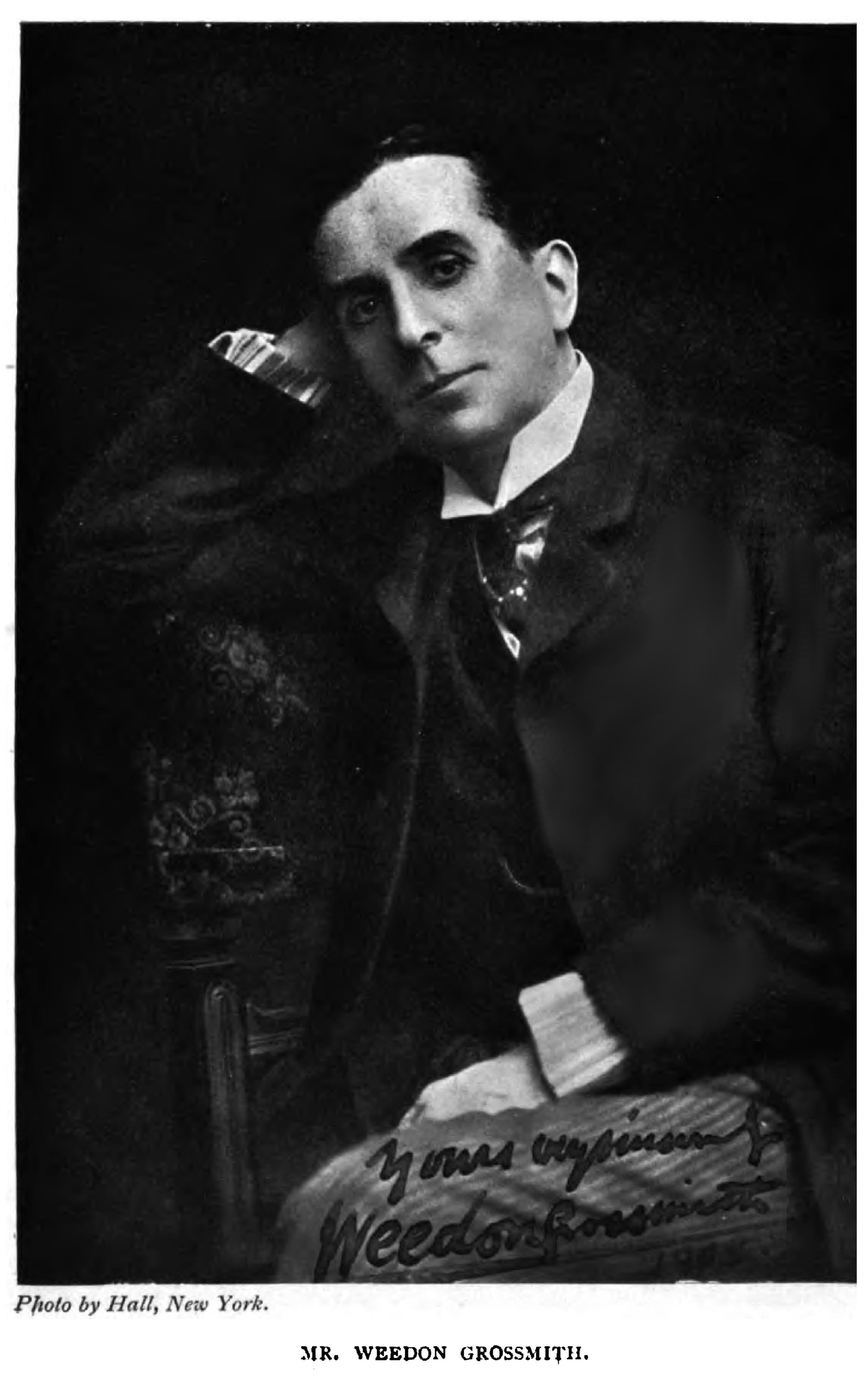
Weedon Grossmith was an English author and actor active in the late 19th century. He is best known for "The Diary of a Nobody," a humorous novel co-written with his brother, which offers a satirical look at the life of a lower-middle-class clerk in Victorian London. His works primarily focus on fiction, blending social commentary with wit.
Similar books
- Three Men in a Boat
Jerome K. Jerome
3.9 (56k) average on GoodreadsLifestyleShares a similar style of Victorian humor and episodic, observational comedy.
- The Importance of Being Earnest
Oscar Wilde
4.2 (302k) average on GoodreadsHistoryFeatures witty social commentary and comedic misunderstandings within Victorian society.
- Our Mutual Friend
Charles Dickens
4.1 (26k) average on GoodreadsHistorical FictionDickens's work offers a panoramic, often grim, social critique of Victorian London with complex plots and a vast array of characters. 'The Diary of a Nobody' is intensely focused, lighthearted, and deals with minor social anxieties rather than systemic injustices. Dickens uses intricate narratives to expose societal ills, while Grossmith uses an intimate, first-person comedic lens on domestic struggles.
- To Kill a Mockingbird
Harper Lee
4.3 (4.5M) average on GoodreadsHistorical FictionIn the 1930s Jim Crow South, Harper Lee writes about racial injustice, moral growth, and the quiet courage of a lawyer father, Atticus Finch, as seen through his young daughter's eyes.
- The Great Gatsby
F. Scott Fitzgerald
3.9 (3.8M) average on GoodreadsHistorical FictionIn the opulent Roaring Twenties, a mysterious millionaire's lavish parties hide his desperate, tragic pursuit of a lost love, exposing the emptiness within the American Dream.
- Pride and Prejudice
Jane Austen
4.3 (3M) average on GoodreadsHistorical FictionIn a society focused on status and money, Elizabeth Bennet navigates love and pride, challenging Mr. Darcy and social expectations to find true affection.




Enjoyed the summary?
A summary gives you the shape of the book. The book itself has the detail, the examples and the voice.
Find The Diary of a Nobody on AmazonAs an Amazon Associate, BookBrief earns from qualifying purchases. How we're funded