

Synopsis
Covers the whole plot, including the ending.
- Difficulty
- Medium
- Pacing
- Slow
- Mood
- Atmospheric, Melancholy, Stark, Intense, Brutal
- Read it if
- You appreciate stark, poetic prose, unflinching portrayals of grief and rural life, and a short, intense reading experience that packs an emotional punch.
- Skip it if
- You prefer plot-driven narratives, find animal cruelty disturbing, or seek a hopeful and lighthearted story.
The Dig Plot Summary
Covers the whole plot, including the ending.
The Badger's Burden
The book starts with an old badger emerging from its den, clearly being hunted. The writing is vivid, focusing on its senses and struggle. It moves through a harsh landscape, always aware of human danger. This opening sets a tone of tension and vulnerability, showing the primal fight for survival. The badger's movements are described in detail, showing its instinct to survive against great odds, a silent escape from a hidden predator.
Grief on the Farm
Daniel, a farmer, lives alone on his remote farm. He is deep in grief after his newborn child's death, a loss that has broken his world and his marriage to Elen. Farm work, once purposeful, now feels meaningless. His days are a cycle of chores, each a reminder of his sadness and the emptiness in his life. The quiet of the house, broken only by farm sounds, makes his isolation worse, leaving him lost in despair.
The Hunter's Pursuit
The badger-baiter, a nameless, brutal man, is shown with chilling detachment. He is driven by a primitive need for violence, using his dogs to track the badger. His methods are cruel and planned, showing no empathy for the animal. This character represents a dark, destructive force in nature, a contrast to the badger's fight for life. His presence casts a long shadow, a constant threat that builds tension and hints at a violent clash.
Elen's Departure
Elen, Daniel's wife, decides to leave the farm. Their shared grief over their child's death has created a gap between them instead of bringing them closer. She cannot cope with Daniel's silence and her own sorrow in the place where their tragedy happened. Her leaving makes Daniel even more isolated, deepening his despair and showing the deep impact of their loss on their relationship. The empty space she leaves is a physical sign of his emotional emptiness.
The Farmer's Routine
Daniel's daily life on the farm is a constant cycle of physical work: mending fences, tending sheep, and battling the weather. He does each task with a heavy heart, finding no escape from his internal suffering. The natural world around him, with its indifferent beauty and practicality, reflects his own emotional state. He sees the violent balance of nature, finding reflections of his pain and life's fragility. The work is a grim necessity, keeping him from giving in to his grief but offering no real comfort.
A Chance Encounter
The paths of Daniel and the badger-baiter start to meet when the baiter's dogs, chasing the badger, go onto Daniel's land. Daniel hears the commotion and realizes someone unwelcome is on his property. This intrusion breaks his solitary routine and brings an outside threat into his already fragile world. The sound of the dogs and the implied violence of their hunt remind him of the harsh realities beyond his grief, setting the stage for a confrontation.
The Pursuit Intensifies
The badger-baiter, with his dogs, finds the badger's den. He starts digging into the earth, determined to get his prey. The scene is described with stark detail, showing the destructive nature of the baiter's actions and the badger's desperate, trapped situation underground. The physical act of digging mirrors the psychological digging into grief, as both characters face raw, painful truths. The badger's struggle is now confined and immediate, its chances of escape quickly fading.
Daniel's Intervention
Daniel, drawn by the sounds of the dogs and the digging, finds the badger-baiter on his land. He confronts the man, his grief-fueled indifference briefly replaced by a surge of protective anger for his property and, perhaps, for the brutalized animal. This confrontation is a clash of two worlds: Daniel's quiet suffering and the baiter's predatory violence. Tension builds as Daniel, usually withdrawn, finds purpose in defending his home against this aggression.
A Violent Climax
The confrontation between Daniel and the badger-baiter turns violent. Daniel, driven by despair and a sudden, fierce protectiveness, fights back. The struggle is raw and brutal, reflecting the primal forces in nature and human behavior. The badger, still trapped or fighting nearby, becomes an accidental cause for this human conflict. The violence is swift and unforgiving, a desperate fight for dominance and survival in the bleak landscape.
Aftermath and Reflection
After the violent confrontation, Daniel faces the consequences. The physical and emotional toll of the fight is huge. He must confront how far grief and desperation can push a person. The scene shows the stark realities of life and death, and the blurred lines between man and beast when pushed to their limits. This moment is a turning point, forcing Daniel to deal with his actions and the brutal world he lives in, possibly offering a grim path towards a new understanding of his own existence.
The Unseen Witness
Depending on the badger's fate, its continued presence, alive or dead, acts as a silent, powerful witness to the human drama. Its fight for survival, its suffering, and its end are linked to Daniel's journey through grief and violence. The badger's perspective, or lack of it, shows the book's exploration of an indifferent natural world and the raw, instinctive responses to pain shared by humans and animals. Its existence highlights the cycle of life and death in the harsh rural setting.
Lingering Echoes
The book ends with Daniel facing a future changed by these events. The violence and deep grief he has endured leave a lasting mark. While there might not be a neat solution, there is a sense of an ending, a change in his understanding of himself and his place in the world. The stark landscape remains, reflecting his inner state, but perhaps with a faint chance of a different kind of survival, a hard-won endurance forged in suffering. He is left to ponder the raw essence of life and loss.
The Dig Characters
Daniel
Protagonist
A grief-stricken farmer haunted by the loss of his child.
Daniel is a farmer living a solitary life in rural Wales. He is consumed by profound grief following the death of his newborn child, which has also fractured his relationship with his wife, Elen. He is stoic, withdrawn, and often silent, finding little solace in his arduous farm work. His connection to the land is deep, but his spirit is broken, making him feel adrift and purposeless. He is a man pushed to his emotional and physical limits, teetering on the edge of despair.
Relationships: Elen (Estranged wife, shared grief over their child's death.); The Badger-Baiter (Antagonistic, a violent intruder on his land.)
Elen
Supporting
Daniel's wife, who leaves him due to their shared, unbearable grief.
Elen is Daniel's wife, a woman equally devastated by the loss of their child. Unlike Daniel, she is unable to remain in the environment that constantly reminds her of their tragedy and his withdrawn silence. Her decision to leave the farm is born of her own immense suffering and a desperate need to escape the suffocating atmosphere of shared, uncommunicated grief. Her absence further isolates Daniel but also highlights the different ways individuals cope with profound loss.
Relationships: Daniel (Estranged husband, shared grief over their child's death.)
The Badger-Baiter
Antagonist
A cruel and nameless man driven by a primitive urge for violence.
The badger-baiter is a nameless, brutal man who embodies a destructive force in the natural world. He is driven by a cold, predatory instinct to hunt and kill badgers, using his dogs in cruel and calculated ways. He lacks empathy and represents the darker, more violent aspects of human interaction with nature. His intrusion onto Daniel's land and his pursuit of the badger serve as the primary catalyst for the story's climax, bringing an external, aggressive force into Daniel's isolated world.
Relationships: Daniel (Antagonistic, a violent intruder and opponent.)
The Badger
Supporting
An old boar struggling for survival against human cruelty.
The badger is an old boar, a creature of instinct and resilience, constantly battling for survival against the harsh elements and the relentless pursuit of the badger-baiter. Its perspective, though animalistic, is portrayed with vivid detail, emphasizing its senses, its fear, and its deep connection to the earth. It represents the raw, unromanticized reality of animal life and serves as a powerful symbol of vulnerability and the struggle for existence in the face of human brutality. Its fate is interwoven with Daniel's emotional journey.
Relationships: The Badger-Baiter (Prey to the baiter's hunt.); Daniel (An unwitting catalyst for Daniel's protective instincts.)
The Dogs
Mentioned
The badger-baiter's tools for hunting.
The dogs are the badger-baiter's instruments of destruction, trained for the brutal sport of badger-baiting. They are depicted as extensions of their master's cruelty, driven by instinct and training. Their baying and scent-tracking serve to heighten the tension and emphasize the relentless nature of the hunt. While not characters in a human sense, their presence is crucial to the plot, signaling the encroaching danger and the impending clash between man and animal, and eventually, man and man.
Relationships: The Badger-Baiter (Tools of the baiter's hunt.); The Badger (Hunters of the badger.)
The Dig Themes
Grief and Loss
The novel explores the debilitating nature of grief, especially the loss of a child. Daniel's every action and thought are shaped by his sorrow, leading to isolation and a sense of meaninglessness. Elen's departure further shows the destructive power of unshared grief. The quiet, almost physical portrayal of their suffering shows how loss can consume people and break relationships. The farm, once a symbol of life, becomes a place for their pain.
“He knew the shape of grief, the weight of it, the way it settled in the bones and made the simplest movement an effort.”
Man vs. Nature
This theme is central, showing nature not as romantic but as a harsh, indifferent, and often brutal force. The badger's fight for survival against the elements and the baiter shows the primal struggle for existence. Daniel, as a farmer, is constantly affected by the weather and the demands of the land, showing humanity's fragile control over nature. The violence in both animal and human behavior is mirrored, suggesting a deep, unromantic connection between them.
“The land gave nothing for free. It took as much as it yielded, sometimes more.”
Primal Instincts and Violence
The book looks at the raw, often uncomfortable, aspects of primal instinct in both humans and animals. The badger's fight for survival, the baiter's predatory drive, and Daniel's eventual violent outburst are all expressions of basic instincts. The violence is not glorified but presented as an unavoidable part of life in a harsh world. This theme questions ideas of human superiority, placing Daniel's actions within a broader context of animalistic struggle when pushed to the brink.
“There was a darkness in him that had been there before the child, waiting, and now it had a name.”
Isolation and Solitude
Isolation is a constant theme, appearing physically and emotionally. Daniel's remote farm life, made worse by Elen's departure, leaves him in deep solitude, increasing his grief. The characters often live in their own worlds, even when near others, showing a fundamental human loneliness. This isolation forces Daniel to confront his pain internally, without outside comfort, making his inner journey stark and personal. The sparse landscape itself reflects this deep aloneness.
“The silence of the house was a thing that could be felt, a heavy, breathing presence.”
The Cycle of Life and Death
The novel shows a stark portrayal of the continuous cycle of life, death, and decay in nature. From the badger's struggle to the farmer's daily encounters with birth and death on the farm, mortality is always present. Daniel's personal loss is framed within this larger, indifferent cycle, suggesting that individual tragedies are part of a greater, ongoing process. This theme lacks sentimentality, emphasizing the brutal beauty and relentless progression of existence.
“Everything was born to die. It was the way of things, a lesson learned early on the land.”
Plot Devices & Literary Techniques
Dual Narrative Perspective
Alternating focus between the badger and Daniel.
The novel primarily employs a dual narrative, shifting between the immediate, sensory experience of the hunted badger and the internal, grief-stricken world of Daniel. This device creates a powerful parallel between animal instinct and human emotion, highlighting shared themes of survival, fear, and vulnerability. It allows the reader to experience the primal struggle from both sides, blurring the lines between human and animal suffering and intensifying the overall tension as their paths inevitably converge.
Foreshadowing
Hints and clues that suggest future events and outcomes.
Cynan Jones masterfully uses foreshadowing through the relentless pursuit of the badger and the growing despair within Daniel. The initial scenes of the badger being hunted immediately establish a sense of impending danger and violence. Daniel's emotional state and the subtle descriptions of his increasing frustration hint at a breaking point. This device builds a sense of dread and inevitability, making the eventual violent confrontation feel both shocking and tragically predetermined, keeping the reader on edge throughout the narrative.
Symbolism of the Land/Weather
The natural environment reflecting internal states and external forces.
The harsh Welsh landscape and unforgiving weather act as a powerful symbolic device. The bleak, unyielding terrain mirrors Daniel's internal desolation and the brutal realities of life and death. The relentless rain, the biting cold, and the muddy earth are not merely backdrops but active forces that shape the characters' experiences and reflect their emotional states. This symbolism emphasizes the indifference of nature to human suffering while also highlighting the primal struggle for survival against overwhelming odds.
Unnamed Antagonist
The badger-baiter is never given a name, emphasizing his archetypal role.
The decision to leave the badger-baiter unnamed is a significant plot device. It strips him of individual humanity, transforming him into an archetypal figure of cruelty and destructive force. This anonymity makes him a more universal representation of human malevolence towards nature and other beings. It also intensifies his menace, as he is less a specific person and more an embodiment of a primal, unthinking aggression, making him a more chilling and formidable antagonist for Daniel to confront.
The Dig Quotes
“The world was not something to be lived in, but something to be endured.”
“There was a loneliness to the work, a quiet, almost sacred loneliness, that had always been part of his life.”
“He knew the land, its moods and its demands, its grudging generosity.”
“The fox was a whisper in the night, a shadow that moved between the worlds of wildness and human order.”
“Grief, like the weather, came and went, but always left its mark.”
“The silence of the fields was not empty, but full of the sounds of hidden life.”
“He dug because it was what he did, what he had always done, a rhythm as old as the earth itself.”
“The past was not a place to visit, but a weight that carried you forward.”
“There was a kind of beauty in the struggle, a hard-won, brutal beauty.”
“Every creature had its hunger, and every hunger its consequence.”
“The world kept turning, indifferent to the small dramas of human lives.”
“He watched the fox, and in its movements, saw something of himself: the stealth, the patience, the endless seeking.”
“The rain came, a steady, insistent drumming, washing the world clean, or at least attempting to.”
“The absence was a presence, heavy and constant, like the earth itself.”
“Life was a cycle, relentless and unforgiving, but also, in its own way, beautiful.”
Quiz
10 questions on the plot and the characters. Each answer comes with a short explanation.
Question 1
What animal's den is the badger-baiter primarily focused on digging up at the beginning of the novel?
- A fox's den
- A badger's sett
- An otter's holt
- A rabbit warren
Show answer
B. A badger's sett The badger-baiter's primary activity, as described in the novel, is digging up badger setts to capture badgers for fighting.
Question 2
What personal tragedy has left the farmer, Daniel, disconsolate and isolated?
- His farm was foreclosed upon.
- His wife left him for another man.
- He lost his newborn child.
- A severe storm destroyed his livestock.
Show answer
C. He lost his newborn child. The farmer's profound grief and isolation stem from the recent loss of his newborn child, a central theme of the novel.
Question 3
Which of these animals does the farmer NOT typically tend to on his farm, based on the descriptions in the book?
- Cows
- Sheep
- Ducks
- Dogs
Show answer
B. Sheep While the farmer has cows, ducks, and dogs, the novel specifically mentions him tending to these animals. Sheep are not a prominent part of his livestock as described.
Question 4
What is the primary motivation for the badger-baiter's actions, beyond simple cruelty?
- Financial gain from selling badgers.
- A desire for control and dominance over nature.
- Revenge against badgers for past damage to his property.
- He is forced into it by a larger criminal organization.
Show answer
B. A desire for control and dominance over nature. While there might be some financial aspect, the novel portrays the badger-baiter as driven by a raw, almost primal need to assert power and control, particularly over the wild creatures and the land itself.
Question 5
What specific weather condition is frequently mentioned, emphasizing the harshness of the rural environment?
- Blistering heatwaves
- Persistent fog
- Heavy, incessant rain
- Deep snowdrifts
Show answer
C. Heavy, incessant rain The novel frequently describes a landscape dominated by wet, heavy conditions, with rain being a constant and oppressive presence that mirrors the characters' internal states.
Question 6
How does the farmer initially react to finding signs of badger baiting on his land?
- He immediately calls the police.
- He tries to set traps for the baiters.
- He largely ignores it, consumed by his own grief.
- He confronts a local suspect directly.
Show answer
C. He largely ignores it, consumed by his own grief. Initially, the farmer is too overwhelmed by his personal grief to actively confront or report the badger baiting, though its presence subtly adds to his distress.
Question 7
The novel's prose is described as 'pared-down' and 'resonant simplicity.' How does this style contribute to the overall atmosphere?
- It creates a sense of romantic idealization of rural life.
- It emphasizes the raw, bleak, and unforgiving nature of the setting and lives.
- It allows for extensive philosophical digressions by the characters.
- It provides a light, humorous counterpoint to the dark subject matter.
Show answer
B. It emphasizes the raw, bleak, and unforgiving nature of the setting and lives. The stark, precise prose mirrors the harsh reality of the rural setting and the raw emotions of the characters, stripping away sentimentality to reveal the core of their struggle.
Question 8
What significant object does the farmer find that directly links the badger-baiter to his land?
- A lost dog collar with the baiter's name.
- A distinctive piece of digging equipment left behind.
- A note threatening him to stay away from the badgers.
- A specific type of snare trap unique to the baiter.
Show answer
B. A distinctive piece of digging equipment left behind. The farmer discovers a piece of digging equipment, a spade or shovel, that the badger-baiter has left behind, serving as a tangible link and a growing intrusion.
Question 9
The novel explores the 'interlocking fates' of the two main characters. How does the badger-baiter's presence specifically impact the farmer's internal state?
- It distracts him entirely from his grief, giving him a new purpose.
- It reignites his sense of purpose and responsibility to protect his land and its creatures.
- It deepens his despair, making him feel even more helpless and alone.
- It inspires him to consider selling his farm and leaving the rural life.
Show answer
B. It reignites his sense of purpose and responsibility to protect his land and its creatures. While initially consumed by grief, the growing threat of the badger-baiter on his land gradually pulls the farmer out of his passive despair, forcing him to engage and protect what little he has left, including the wild life.
Question 10
What is the ultimate, inevitable outcome of the convergence of the farmer and the badger-baiter's paths?
- They form an unlikely alliance against a common threat.
- The badger-baiter is caught and arrested by authorities.
- Their confrontation leads to a violent and tragic end.
- The farmer successfully drives the badger-baiter away without incident.
Show answer
C. Their confrontation leads to a violent and tragic end. The novel builds towards a 'tragic inevitability' where the paths of the two men violently intersect, leading to a fatal confrontation.
The Dig FAQ
What is the central conflict in 'The Dig'?
The central conflict revolves around the intertwining fates of a grief-stricken farmer, Daniel, struggling to maintain his farm after his wife's death, and a desperate badger-baiter, encountering each other in a bleak rural landscape. Their individual struggles with loss, survival, and the harsh realities of their environment inevitably lead to a tragic confrontation.
Who are the two main human characters and what are their primary motivations?
The two main human characters are Daniel, a farmer consumed by grief after his wife's death, whose primary motivation is to simply survive and keep his farm going amidst his profound sorrow. The other is a nameless badger-baiter, driven by a need for money and a brutal, almost ritualistic, pursuit of badgers, reflecting a more predatory and destructive motivation.
How does the setting of the rural landscape contribute to the novel's atmosphere?
The stark, unforgiving rural landscape is not merely a backdrop but an active character, mirroring the internal desolation of Daniel and the brutal nature of the badger-baiter's activities. Its harshness, isolation, and indifference to human suffering amplify the themes of struggle, survival, and the raw, unromanticized reality of life and death.
What role do animals play in the narrative, particularly the badgers?
Animals, especially the badgers, serve as a stark reflection of raw, unvarnished existence and the brutal cycle of life and death. The badger-baiter's pursuit of them highlights human cruelty and exploitation, while Daniel's interactions with his farm animals underscore his connection to the land and the simple, yet profound, realities of his world, contrasting sharply with his internal turmoil.
What is the significance of the title 'The Dig'?
The title 'The Dig' holds multiple significances: literally referring to the badger-baiter's excavation of badger setts, but also metaphorically representing Daniel's psychological 'digging' through his grief and the characters' arduous struggle to carve out an existence in a harsh world. It suggests an uncovering of hidden truths and a confrontation with primal instincts.
Are there any specific recurring images or motifs in the book?
Recurring images include the harsh weather, particularly rain and cold, which reflect the characters' internal states and external struggles. The imagery of blood, mud, and the natural cycle of life and death (births of calves, deaths of badgers) also pervades the narrative, emphasizing the rawness and unforgiving nature of their existence.
How do Daniel's memories of his wife manifest throughout the story?
Daniel's memories of his wife are not explicit flashbacks but rather subtle, pervasive feelings of her absence, manifesting as a deep-seated ache and a constant, quiet grief that underpins all his actions. Her presence is felt through the void she left, influencing his isolation and his struggle to find meaning in his daily farm tasks.
Is there a symbolic connection between the badger and Daniel?
Yes, there is a symbolic connection. The badger, tenacious and fighting for survival in its underground world, can be seen as mirroring Daniel's own struggle to survive and endure his grief, burrowing deep within himself. Both are resilient creatures facing external threats, highlighting themes of vulnerability and endurance in the face of overwhelming odds.
How does the author use sensory details to immerse the reader in the rural environment?
Cynan Jones uses vivid, unsparing sensory details, particularly focusing on the tactile (mud, cold, the feel of tools), olfactory (smell of earth, animals, decay), and auditory (wind, animal sounds, the silence of isolation). This precise, almost visceral prose grounds the reader in the harsh reality of the farm and the natural world, avoiding any romanticization.
How does Daniel's grief impact his decision-making and interactions?
Daniel's grief renders him largely passive and isolated, his decision-making driven more by instinctual survival and routine than active engagement with his surroundings. His interactions are minimal and often fraught, as his profound sorrow creates an emotional barrier, making him withdrawn and detached from others, including his own animals at times.
What psychological state does the badger-baiter represent?
The badger-baiter represents a primal, almost amoral drive for survival and dominance, coupled with a chilling detachment from the suffering he inflicts. His actions suggest a psychological state characterized by desperation, a lack of empathy, and a deep-seated connection to a brutal, predatory existence, perhaps mirroring a form of self-preservation through aggression.
How does the novel explore the theme of isolation?
Isolation is a pervasive theme, experienced by Daniel in his profound grief and by the badger-baiter in his solitary, illicit activities. Both characters are cut off from conventional human connection, existing in a world where each must contend with their struggles alone, emphasizing the starkness of their individual plights and the unforgiving nature of their environment.
Is there a sense of hope or nihilism in the novel's conclusion?
The novel's conclusion leans more towards a stark, unblinking realism than outright hope or nihilism. While tragic, it portrays the relentless cycle of life and death, survival and loss, without offering easy resolutions or romanticized solace. It suggests that existence continues, albeit brutally, emphasizing endurance rather than optimistic outcomes.
How does the author's sparse prose style contribute to the novel's impact?
The author's sparse, pared-down prose creates a powerful, concentrated impact, allowing the raw emotions and brutal realities to resonate without embellishment. This minimalist style forces the reader to confront the core themes directly, magnifying the intensity of Daniel's grief and the harshness of the rural world, making every word carry significant weight.
Could the badger-baiter be seen as a foil to Daniel, or a reflection of a darker aspect of humanity?
The badger-baiter definitely functions as a foil to Daniel, embodying a brutal, destructive force that contrasts with Daniel's more passive, suffering existence. He also reflects a darker aspect of humanity – the capacity for cruelty, exploitation, and a primal struggle for survival that disregards empathy, highlighting the complex moral landscape of the novel.
What is the significance of the novel's short length in conveying its themes?
The novel's short length is crucial to its impact, creating a compressed, intense experience that mirrors the concentrated energy and unrelenting nature of the characters' struggles. This brevity allows the raw emotions and stark realities to hit with immediate force, preventing any dilution of its powerful themes of grief, survival, and confrontation.
Does 'The Dig' offer any commentary on man's relationship with nature?
Yes, 'The Dig' offers a profound commentary on man's relationship with nature, portraying it not as romanticized or idyllic, but as a harsh, indifferent force that both sustains and demands. It highlights the brutal realities of survival, the cycle of life and death, and how humans, whether farmer or poacher, are intricately and often brutally intertwined with the natural world.
How does the novel handle the inevitability of fate?
'The Dig' strongly emphasizes the inevitability of fate, particularly as the two main characters' paths converge with tragic precision. The narrative builds a sense of dread and predestination, suggesting that their individual struggles and the harshness of their environment are leading them towards an unavoidable, destructive encounter, underscoring the novel's lean towards realism and the lack of escape.
Similar books
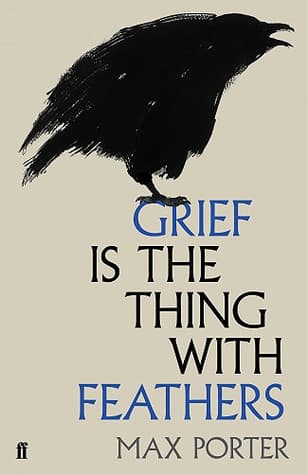
- Grief is the Thing with Feathers
Max Porter
3.9 (26k) average on GoodreadsLiterary FictionExplores grief through experimental prose with an animalistic undertone.
- The Old Man and the Sea
Ernest Hemingway
3.8 (831k) average on GoodreadsLiterary FictionA Cuban fisherman's long struggle with a giant marlin becomes a story of endurance and dignity, now retold for young adults with illustrations, phonetic guides, and writing prompts in Traditional Chinese.
- One Hundred Years of Solitude
Gabriel García Márquez
4.1 (753k) average on GoodreadsLiterary FictionThrough the multi-generational story of the Buendía family, a mythical town deals with the repeating patterns of time, love, and solitude, as the extraordinary mixes with the ordinary.
- The Goldfinch
Donna Tartt
3.9 (720k) average on GoodreadsLiterary FictionHaunted by a tragic explosion and clutching a stolen Dutch masterpiece, a young orphan navigates the opulent drawing rooms of New York and the gritty underbelly of the art world, desperately seeking connection and redemption amidst a life spiraling into crime and obsession.
- Little Fires Everywhere
Celeste Ng
4.1 (713k) average on GoodreadsLiterary FictionIn Shaker Heights, an artist and her daughter move in, and their free-spirited lives clash with a rule-bound matriarch, revealing hidden conflicts beneath a perfect surface.
- Eleanor Oliphant Is Completely Fine
Gail Honeyman
4.3 (708k) average on GoodreadsLiterary FictionA lonely woman's structured life changes when an IT guy and an elderly man help her learn to open her heart.





Enjoyed the summary?
A summary gives you the shape of the book. The book itself has the detail, the examples and the voice.
Find The Dig on AmazonAs an Amazon Associate, BookBrief earns from qualifying purchases. How we're funded