

Synopsis
Covers the whole plot, including the ending.
- Difficulty
- Medium
- Pacing
- Moderate
- Mood
- Quirky, Intimate, Disorienting, Humorous, Tender
- Read it if
- You enjoy experimental literary fiction, quirky characters, and narratives that explore unconventional relationships, sexuality, and the human psyche with a blend of humor and tenderness.
- Skip it if
- You prefer traditional plot structures, clear-cut character motivations, or stories that are easy to categorize and less reliant on internal monologue and surreal elements.
The First Bad Man Plot Summary
Covers the whole plot, including the ending.
Cheryl's Solitary, Obsessive World
Cheryl Glickman, a single woman in her early forties, lives alone in Los Angeles. She works at a non-profit called Open Palm, which teaches self-defense to women. Cheryl's life is marked by intense internal monologues and peculiar rituals. She is fixated on a baby boy she encountered briefly when she was six years old, believing he reincarnates and appears to her in various infants she sees. She also harbors a deep, unrequited love for Phillip Bettelheim, a married, older board member at Open Palm, with whom she fantasizes about a karmic, multi-lifetime romance. Her home life is meticulously ordered, and she practices a form of self-defense called 'Golda,' which involves a specific abdominal clench.
Clee's Arrival and Disruption
Cheryl's carefully constructed world is abruptly disrupted when her bosses, Carl and Paula, ask her to house their twenty-one-year-old daughter, Clee, for a few weeks. Clee is introduced as a beautiful, blonde, and seemingly self-absorbed young woman with a history of difficult behavior. Cheryl, despite her initial apprehension and desire for solitude, agrees to the arrangement. From the moment Clee arrives, her presence is a jarring contrast to Cheryl's quiet existence. Clee is messy, loud, and disrespectful of Cheryl's routines and personal space, immediately creating tension and discomfort within the small house.
The Escalation of Hostility
Clee's behavior quickly escalates from merely annoying to actively hostile. She takes over Cheryl's living room, leaves her belongings everywhere, and makes rude remarks. Cheryl, initially passive-aggressive, attempts to assert herself but is often intimidated by Clee's brazenness. The tension in the house becomes palpable, with Cheryl feeling increasingly violated and out of control in her own home. She begins to have vivid, often violent, fantasies about confronting Clee, but in reality, she mostly retreats into herself, feeling helpless and overwhelmed by the younger woman's disruptive presence. The dynamic becomes a power struggle.
The 'Bad Man' Game Begins
One evening, the dynamic shifts dramatically when Clee, seemingly out of nowhere, initiates a strange and aggressive physical game. She begins to physically assault Cheryl, punching and kicking her, while simultaneously demanding that Cheryl fight back and call her 'bad man.' This unexpected turn of events is shocking and terrifying for Cheryl, yet she finds herself compelled to participate. The 'bad man' game becomes a recurring, almost ritualistic, activity between them, characterized by its intensity and the blurring lines between real pain and theatrical performance. This game begins to redefine their relationship in a profoundly unsettling way.
Cheryl's Transformation and Developing Feelings
As the 'bad man' game continues, Cheryl's initial fear and confusion slowly transform into something else. She discovers a perverse pleasure in the physical confrontation, a release she hadn't known she craved. The game forces her out of her passive existence and into her body in a way her 'Golda' practice never did. Through these intense, violent encounters, Cheryl starts to feel an unexpected connection to Clee. She begins to see beyond Clee's initial cruelty, sensing a vulnerability and even a strange form of care in her actions. This shift marks the beginning of Cheryl's emotional awakening and a developing, complex attachment to Clee.
The Arrival of the Baby
The 'bad man' game is abruptly paused when Clee reveals a significant secret: she is pregnant. This revelation completely alters the dynamic between the two women. The focus shifts from their violent encounters to the impending arrival of a baby. Cheryl, who has always been obsessed with the idea of 'her baby,' finds herself in a unique position to care for and protect Clee and her unborn child. They begin to prepare for the baby's arrival, shopping for baby items and discussing the future. This shared purpose further deepens their bond, fostering a sense of interdependence and domesticity that was previously unimaginable for Cheryl.
Motherhood and the 'Bad Man's' Return
Clee gives birth to a baby boy, whom they name Pootie. Cheryl immediately embraces a maternal role, caring for Pootie with an intensity she has always reserved for her imagined baby. She feels a profound connection to Pootie, seeing him as 'her baby' in a tangible way. However, the 'bad man' dynamic doesn't entirely disappear. Clee, struggling with postpartum emotions and the demands of motherhood, occasionally reverts to a version of her 'bad man' persona, though now less violent and more emotionally manipulative. Cheryl, in turn, finds herself navigating this new, complex family unit, torn between her fierce love for Pootie and her evolving relationship with Clee.
Phillip's Reappearance and Cheryl's Shifting Priorities
Phillip, Cheryl's long-standing obsession, re-enters her life in a more direct way, inviting her to dinner. Previously, this would have been the culmination of her fantasies. However, with Pootie in her life, Cheryl's priorities have drastically shifted. While she still feels a flicker of her old attraction, her overwhelming focus is now on Pootie and Clee. The dinner with Phillip is anticlimactic, highlighting how much Cheryl has changed. Her previous, singular obsession with Phillip has been replaced by a more complex, messy, and real love for her new family.
The Family Unit and Its Challenges
Cheryl, Clee, and Pootie settle into an unconventional but deeply bonded family unit. Cheryl fully embraces her role as Pootie's primary caregiver, experiencing the joys and challenges of motherhood. Clee, while still occasionally difficult and unpredictable, also shows moments of tenderness and dependency, solidifying her place within Cheryl's life. Their relationship remains complex, marked by both deep affection and lingering power dynamics. They navigate the daily routines of life with a baby, learning to rely on each other and creating their own unique domestic rhythm, despite the lingering strangeness of their origins.
Acceptance and a New Beginning
By the end of the book, Cheryl has undergone a profound transformation. Her anxieties and obsessions have largely dissolved, replaced by the responsibilities and joys of caring for Pootie and being intertwined with Clee. She no longer seeks validation from Phillip or yearns for an idealized baby from her past. Instead, she finds a deep, if unconventional, sense of fulfillment in her present life. The 'bad man' game, while still a part of their history, has evolved into a foundation of their bond. Cheryl has found her 'baby' and a family, accepting the messy, beautiful reality of her new existence.
Principal Figures
Cheryl Glickman
Protagonist
A reclusive, anxious woman whose life is transformed by an unexpected houseguest.
Cheryl is a single woman in her early forties, working at a women's self-defense non-profit. She leads a highly internal, ritualistic life, marked by intense anxieties, a lifelong obsession with a baby boy she met at age six, and an unrequited, fantastical love for her colleague, Phillip. She is passive and prone to elaborate internal monologues and fantasies, often struggling to assert herself in real-world interactions. Her 'Golda' self-defense technique is a metaphor for her internal struggles. Her journey is one of profound personal growth, moving from isolation and fantasy to engagement and real love.
Relationships: Clee (initially antagonistic housemate, evolving into a complex, co-parenting partner); Phillip Bettelheim (object of unrequited, obsessive romantic fantasy); Pootie (adopted 'baby' and source of unconditional maternal love)
Clee
Supporting
A beautiful, volatile young woman who disrupts Cheryl's life and becomes her unconventional partner.
Clee is a twenty-one-year-old blonde, the daughter of Cheryl's bosses, Carl and Paula. She is initially portrayed as selfish, cruel, and highly disruptive, challenging Cheryl's ordered existence with her messiness and aggressive behavior. Clee initiates the 'bad man' game, which is both physically violent and psychologically transformative for Cheryl. Beneath her abrasive exterior, Clee is vulnerable and, later, struggles with the realities of unexpected motherhood. She is the catalyst for Cheryl's awakening and, despite her flaws, provides Cheryl with the love and connection she craved.
Relationships: Cheryl Glickman (antagonistic housemate, evolving into a co-parenting partner and complex intimate bond); Pootie (her biological son); Carl and Paula (her parents, with whom she has a strained relationship)
Phillip Bettelheim
Supporting
A married board member at Open Palm, the object of Cheryl's long-standing, unrequited obsession.
Phillip is a married, older man who serves on the board of Open Palm, where Cheryl works. He is handsome and charismatic, but also a known philanderer. For years, Cheryl has harbored an intense, fantastical obsession with him, believing they have a karmic connection spanning multiple lifetimes and that he is 'the first bad man' from her past. He represents Cheryl's idealized, unconsummated romantic desires, a projection of her longing for connection. His actual interactions with Cheryl are polite but distant, highlighting the gap between her fantasy and reality.
Relationships: Cheryl Glickman (object of Cheryl's obsessive, unrequited love); Carl and Paula (colleague and board member)
Pootie
Supporting
Clee's baby son, who becomes the center of Cheryl's maternal affection and new family.
Pootie is Clee's biological son, born unexpectedly. His arrival completely shifts the dynamic between Cheryl and Clee, transforming their violent game into a shared maternal responsibility. For Cheryl, Pootie is the embodiment of 'her baby' – the one she has been obsessed with since childhood. He represents a tangible, unconditional love and a purpose that grounds Cheryl in reality. His presence creates a new, unconventional family unit and is the ultimate catalyst for Cheryl's emotional and psychological healing.
Relationships: Cheryl Glickman (loved as a son, primary caregiver); Clee (biological son, cared for by both women)
Carl
Supporting
Co-founder of Open Palm and Clee's father, who asks Cheryl to house his daughter.
Carl is one of the co-founders of Open Palm and Clee's father. He, along with his wife Paula, asks Cheryl to take Clee in, setting the entire plot in motion. Carl is generally well-meaning but somewhat detached, representing the conventional adult world that Cheryl struggles to navigate. He and Paula are aware of Clee's difficult nature, but seemingly unaware of the extreme extent of the interactions between Clee and Cheryl in their home.
Relationships: Cheryl Glickman (boss and colleague); Paula (wife and co-founder); Clee (father)
Paula
Supporting
Co-founder of Open Palm and Clee's mother.
Paula is Carl's wife and the other co-founder of Open Palm. She, like Carl, is part of the professional world Cheryl inhabits. She helps arrange for Clee to stay with Cheryl, seemingly hoping for a positive influence on her rebellious daughter. Paula, too, remains largely oblivious to the specific, bizarre dynamics unfolding between Cheryl and Clee, representing the often superficial understanding of Cheryl's inner world by others.
Relationships: Cheryl Glickman (boss and colleague); Carl (husband and co-founder); Clee (mother)
The Baby Boy (from memory)
Mentioned
A baby Cheryl met at age six, who becomes the subject of a lifelong obsession and fantasy.
This unnamed baby boy is a figure from Cheryl's memory, encountered briefly when she was six years old. He becomes the central figure of her lifelong obsession, a recurring motif in her thoughts. Cheryl believes he reincarnates and appears to her in other babies she sees, a manifestation of her deep-seated longing for maternal love and connection. He represents her idealized, unattainable version of a child, until Pootie's arrival provides a real-world fulfillment of this fantasy.
Relationships: Cheryl Glickman (object of her lifelong, obsessive maternal fantasy)
Golda
Mentioned
A self-defense technique Cheryl practices, symbolizing her internal control.
Golda is a self-defense technique Cheryl practices, involving a specific abdominal clench and mental focus. It is presented as a way for Cheryl to control her body and mind, a ritualistic practice that grounds her. However, it proves ineffective in the face of real-world threats like Clee, highlighting the limitations of her internal, fantasy-driven coping mechanisms. It symbolizes her attempt to feel powerful and safe, but ultimately falls short compared to the raw, visceral experience of the 'bad man' game.
Themes & Insights
Identity and Self-Discovery
Cheryl's journey is fundamentally about discovering her true self beyond her anxieties and fantasies. Her encounter with Clee, particularly through the 'bad man' game, forces her to confront her passivity and explore hidden aspects of her personality, including a capacity for aggression and a deep maternal instinct. She sheds her idealized self-image and embraces a more complex, messy, and ultimately authentic identity as a caregiver and partner. Her transformation from a woman defined by internal obsessions to one grounded in real-world relationships is central to the narrative.
“What I wanted to be was a person who was good at something. I wanted to be a person who could survive. And the Golda was helping me be that.”
The Nature of Love and Intimacy
The novel explores love in its most unconventional and uncomfortable forms. Cheryl's initial 'love' for Phillip is an obsessive fantasy, devoid of real intimacy. Her relationship with Clee, however, is born from hostility and physical violence, yet evolves into a profound, complex bond characterized by dependency, care, and a strange, undeniable attraction. This challenges traditional notions of romance and family, suggesting that love can emerge from unexpected places and through unconventional means, often requiring a confrontation with one's own 'bad' or uncomfortable parts. The maternal love for Pootie is the most pure, grounding form of love in the story.
“It was just a terrible game, a bad man game. But it was also... it was everything.”
Fantasy vs. Reality
Cheryl lives predominantly in a world of elaborate fantasies – her imagined lifelong romance with Phillip, her reincarnated baby boy, her internal monologues, and her 'Golda' practice. The arrival of Clee violently shatters these carefully constructed illusions. Clee's raw, unfiltered presence and the aggressive 'bad man' game force Cheryl into an uncomfortable, visceral reality that her fantasies could never prepare her for. The book demonstrates how confronting reality, no matter how painful or bizarre, can ultimately be more fulfilling and transformative than retreating into a world of imagination.
“I had been living in a house of cards, and Clee was the wind.”
Power Dynamics and Control
The theme of power is central, particularly in the escalating conflict between Cheryl and Clee. Initially, Clee exerts power through aggression and disruption, while Cheryl struggles with passivity. The 'bad man' game is a direct exploration of this, with Clee dictating the terms and Cheryl learning to reclaim agency through submission and then participation. The power dynamics shift again with Clee's pregnancy and Pootie's birth, as Cheryl gains a different kind of power through her maternal role and caregiving. The novel suggests that power can be fluid, complex, and found in unexpected places, even in vulnerability.
“She was the first bad man. She was the one.”
Motherhood and Nurturing
Cheryl's lifelong obsession with 'her baby' is a profound manifestation of her unfulfilled maternal instincts. The unexpected arrival of Clee's baby, Pootie, provides Cheryl with a tangible outlet for this deep-seated desire. She embraces motherhood with fierce dedication, finding a purpose and connection she had long sought. The book explores the complexities of unconventional motherhood, where the biological mother (Clee) and the primary caregiver (Cheryl) form a unique, interdependent family unit centered around the child. It highlights the transformative power of nurturing and the diverse forms a 'family' can take.
“He was my baby. He was the baby.”
Plot Devices & Literary Techniques
Internal Monologue
Cheryl's constant, detailed, and often anxious inner thoughts drive the narrative.
The novel is almost entirely narrated through Cheryl Glickman's first-person internal monologue. This device provides intimate access to her anxieties, obsessions, fantasies, and peculiar interpretations of the world around her. It allows the reader to experience events filtered through her unique, often unreliable, perspective, highlighting her isolation and the contrast between her rich inner life and her struggles in external interactions. The detailed inner world is a defining characteristic of July's writing and Cheryl's character, making her transformation all the more impactful when she is forced out of her head and into reality.
The 'Bad Man' Game
A recurring, ritualistic physical and psychological role-play between Cheryl and Clee.
The 'bad man' game is a central and highly symbolic plot device. It begins as a series of physical assaults initiated by Clee, where she demands Cheryl call her 'bad man' and fight back. This game serves multiple functions: it's a catalyst for Cheryl's physical and emotional awakening, a means of exploring power dynamics and aggression, and a bizarre form of intimacy that ultimately binds the two women. It represents the uncomfortable, violent, yet ultimately transformative path to their connection, challenging conventional notions of how relationships are formed and love is expressed. It's both literal and metaphorical.
Symbolism of the Baby/Pootie
The 'baby' represents Cheryl's lifelong longing for connection, purpose, and maternal love.
The recurring motif of 'the baby' – first as a memory from Cheryl's childhood, then as a generalized obsession, and finally as Clee's son, Pootie – serves as a powerful symbol. It represents Cheryl's deep-seated desire for unconditional love, a sense of belonging, and maternal fulfillment. Her fixation on the idealized baby highlights her emotional isolation and unfulfilled needs. When Pootie arrives, he becomes the tangible embodiment of this longing, grounding Cheryl in reality and providing her with the purpose and connection she had yearned for, effectively replacing her abstract fantasies with a concrete, messy love.
Unreliable Narrator
Cheryl's subjective, fantasy-driven perspective shapes the reader's understanding of events.
Cheryl Glickman acts as an unreliable narrator due to her highly subjective, anxious, and fantasy-prone internal world. Her interpretations of events, particularly regarding Phillip and the initial interactions with Clee, are often colored by her obsessions and anxieties, rather than objective reality. The reader is often left to infer the true nature of situations, especially the 'bad man' game, through Cheryl's skewed lens. This device creates a sense of disorientation and intimacy, drawing the reader into Cheryl's peculiar mind and making her eventual shift towards reality all the more significant.
The First Bad Man Quotes
“I was aware of my own breathing and of the effort not to look at her breasts.”
“I had a system in my head for people, a way of organizing them so I could bear to be around them.”
“The baby was a tiny, perfect stranger, and I loved him immediately.”
“I was a container for a feeling that was so big it didn't have a name.”
“Sometimes I think the only thing that separates human beings from animals is our ability to accessorize.”
“I felt like a house with the lights on and no one home.”
“The world is a terrifying place, but it's also the only place we have.”
“I wanted to be the kind of person who could say 'I love you' without it sounding like a threat.”
“There is no such thing as a small act of kindness. Every act creates a ripple with no logical end.”
“I was a ghost in my own life, haunting the places I used to live.”
“The body is a map of all the places we've been and all the things we've felt.”
“I realized that the only way to change your life is to change your mind.”
“Sometimes the most radical thing you can do is to stay exactly where you are.”
“We are all just trying to find a way to be comfortable in our own skin.”
Quiz
10 questions on the plot and the characters. Each answer comes with a short explanation.
Question 1
What is the name of the women's self-defense non-profit where Cheryl works?
- Women's Defense Collective
- Open Palm
- Safe Haven Initiative
- Guardian Angels Network
Show answer
B. Open Palm In the book, Cheryl works at a women's self-defense non-profit called 'Open Palm,' which is central to her interactions with Phillip and her bosses.
Question 2
Who is the baby boy that haunts Cheryl, and how did she first encounter him?
- Her younger brother, who died in infancy
- A neighbor's baby she saw through a window at age six
- A baby she met in a past life vision
- A baby she saw in a commercial when she was six years old
Show answer
D. A baby she saw in a commercial when she was six years old Cheryl is haunted by a baby boy she first saw in a commercial at age six, and this memory recurs throughout her life, often appearing as other people's babies.
Question 3
What is the primary reason Clee moves into Cheryl's house?
- Clee is homeless and needs a place to stay
- Cheryl's bosses, who are also Clee's parents, ask Cheryl to take her in temporarily
- Clee is running from the law and needs to hide
- Cheryl offers to let Clee stay as a favor to Phillip
Show answer
B. Cheryl's bosses, who are also Clee's parents, ask Cheryl to take her in temporarily Cheryl's bosses, who are Clee's parents, ask if their daughter can move into Cheryl's house for a little while, which disrupts Cheryl's ordered life.
Question 4
How does Cheryl believe her relationship with Phillip extends beyond their current lives?
- She thinks they were siblings in a past life
- She believes they have been making love for many lifetimes
- She suspects he is her guardian angel
- She feels they were married in a previous incarnation
Show answer
B. She believes they have been making love for many lifetimes Cheryl is obsessed with Phillip and believes they have been lovers across many lifetimes, though they have not consummated their relationship in this one.
Question 5
What significant change does Clee's presence bring to Cheryl's life by the end of the novel?
- Cheryl becomes a successful artist
- Cheryl finds unexpected love and maternal fulfillment with Clee
- Cheryl reconciles with her estranged family
- Cheryl starts a new career in self-defense training
Show answer
B. Cheryl finds unexpected love and maternal fulfillment with Clee Despite Clee's initial selfish and cruel behavior, she ultimately helps Cheryl confront reality and provides her with a profound, unexpected love that includes maternal elements.
Question 6
What is a key physical symptom Cheryl experiences due to her anxiety and emotional state?
- Chronic headaches
- A perpetual lump in her throat
- Frequent nausea
- Skin rashes
Show answer
B. A perpetual lump in her throat Cheryl is described as having a 'perpetual lump in her throat,' symbolizing her suppressed emotions and tightly-wound nature throughout the book.
Question 7
Which of the following best describes the tone and style of 'The First Bad Man' as highlighted in the book description?
- Solemn and tragic
- Heartbreaking, dirty, tender, and funny
- Action-packed and suspenseful
- Romantic and idealistic
Show answer
B. Heartbreaking, dirty, tender, and funny The book is noted for being 'heartbreaking, so dirty, so tender, so funny,' reflecting Miranda July's unique blend of emotional depth, rawness, and humor.
Question 8
What role does Phillip play at Open Palm, and how does this affect Cheryl's interactions with him?
- He is a volunteer, and Cheryl avoids him out of shyness
- He is a board member, and Cheryl's obsession is fueled by their professional proximity
- He is the founder, and Cheryl idolizes him as a leader
- He is a client, and Cheryl pities his situation
Show answer
B. He is a board member, and Cheryl's obsession is fueled by their professional proximity Phillip is a philandering board member at Open Palm, and Cheryl's obsession with him is partly due to their work interactions, though he does not reciprocate her feelings in this lifetime.
Question 9
In what way does Clee's behavior towards Cheryl evolve over the course of the novel?
- She becomes more dependent and childlike
- She starts as selfish and cruel but eventually shows vulnerability and forms a deep bond with Cheryl
- She remains consistently hostile and leaves without reconciliation
- She becomes a mentor figure to Cheryl
Show answer
B. She starts as selfish and cruel but eventually shows vulnerability and forms a deep bond with Cheryl Clee initially bullies Cheryl with selfish and cruel actions, but as the story progresses, their relationship deepens, revealing Clee's vulnerabilities and leading to an unexpected, transformative love.
Question 10
What is a central theme explored through Cheryl's experiences with Clee and Phillip?
- The pursuit of wealth and social status
- The conflict between tradition and modernity
- The intertwining of sexual fantasies and maternal love in personal transformation
- The importance of political activism in self-discovery
Show answer
C. The intertwining of sexual fantasies and maternal love in personal transformation The novel delves into themes of sexual fantasies and fierce maternal love, as seen in Cheryl's obsessions and her evolving relationship with Clee, highlighting how these elements drive her personal growth.
The First Bad Man FAQ
What is 'The First Bad Man' about?
The novel follows Cheryl, a neurotic, lonely woman who works at a women's self-defense nonprofit and lives with obsessive fantasies about her coworker Phillip and a recurring baby from her childhood. Her life is upended when her bosses' daughter, the aggressive and chaotic Clee, moves in with her, forcing Cheryl into an unexpected journey of sexual awakening, maternal love, and self-discovery.
Why should I read 'The First Bad Man'?
It offers a raw, darkly humorous exploration of loneliness, desire, and unconventional relationships, blending surreal elements with emotional depth. Miranda July's unique voice creates a disorienting yet tender narrative that challenges norms around sexuality, motherhood, and human connection.
What is the background/setting of 'The First Bad Man'?
The story is set in contemporary Los Angeles, primarily in Cheryl's cluttered, orderly home and the women's self-defense nonprofit where she works. The mundane suburban setting contrasts sharply with Cheryl's vivid internal fantasies and the chaotic intrusion of Clee.
What are the most memorable quotes from the book?
Notable quotes include Cheryl's reflection, 'I had a system for everything, even the way I breathed,' highlighting her control issues, and her realization about Clee: 'She was the first bad man, the one who made me see I could be loved.' These capture the novel's themes of obsession and transformation.
What writing style does Miranda July use in this novel?
July employs a first-person, stream-of-consciousness style that blends stark realism with surreal, dreamlike sequences. Her prose is sparse yet vivid, often using dark humor and visceral imagery to convey Cheryl's inner turmoil and erotic fantasies.
What minor details add significant meaning to the story?
Cheryl's meticulous systems, like organizing her house with labels and routines, symbolize her need for control amid emotional chaos. The recurring motif of the 'lump in her throat' represents suppressed desires and trauma, subtly shifting as she evolves.
What are some subtle foreshadowing moments in the novel?
Early scenes where Cheryl practices self-defense moves alone hint at her eventual physical and emotional battles with Clee. Her fantasies about Phillip's reincarnated love subtly foreshadow the more grounded, tumultuous relationship she develops with Clee.
What unexpected character connections exist in the book?
Clee, initially portrayed as a selfish intruder, becomes Cheryl's lover and a maternal figure when she gives birth, reversing their dynamic. Phillip, Cheryl's lifelong obsession, is revealed as a shallow contrast to Clee's transformative presence.
What are Cheryl's unspoken motivations throughout the story?
Beneath her obsessive routines, Cheryl is driven by a deep fear of abandonment and a longing for connection, which she channels into fantasies about Phillip and the baby. Her submission to Clee's bullying masks a desire to break free from her isolated existence.
What psychological complexities do the main characters exhibit?
Cheryl displays traits of OCD and maladaptive daydreaming, using control to cope with trauma. Clee's aggression and selfishness hide vulnerability and a need for belonging, creating a push-pull dynamic that blurs lines between abuse and intimacy.
What are the major emotional turning points in the novel?
Key moments include Clee's violent physical confrontations with Cheryl, which force Cheryl out of her fantasy world; the sexual relationship that emerges from their power struggles; and Clee's pregnancy, which awakens Cheryl's maternal instincts and deepens their bond.
How do the relationship dynamics between Cheryl and Clee evolve?
They shift from hostile roommate-ship to a complex blend of dominance and submission, then to sexual intimacy, and finally to a co-parenting partnership. This evolution challenges traditional notions of love, family, and power.
Which parts of the novel remain ambiguous or open-ended?
The nature of Cheryl's recurring baby vision is never fully explained—whether it's a psychological symptom, spiritual belief, or metaphor. The future of Cheryl and Clee's relationship after the birth is left uncertain, emphasizing the novel's focus on process over resolution.
What are controversial scenes or decisions in the book?
The graphic, non-consensual wrestling scenes between Cheryl and Clee blur lines between abuse and eroticism, sparking debate. Cheryl's rapid shift from obsession with Phillip to a fraught relationship with Clee also challenges readers' expectations of romantic narratives.
How does 'The First Bad Man' end, and what does it mean?
The novel ends with Cheryl caring for Clee's newborn baby, having found a sense of purpose and love in this unconventional family. It suggests that healing and connection can emerge from chaos, with Cheryl's 'first bad man' (Clee) catalyzing her transformation from isolation to embodied reality.
What is the significance of the title 'The First Bad Man'?
It refers to Clee, who Cheryl identifies as the 'first bad man' to truly see and love her, subverting gender norms and highlighting how destructive relationships can lead to growth. The title encapsulates the novel's theme of finding humanity in flawed, unexpected places.
How does Miranda July explore themes of motherhood in the novel?
Motherhood is portrayed unconventionally through Cheryl's phantom baby obsession and her role in Clee's pregnancy, suggesting that maternal love can arise outside biological or traditional frameworks. It critiques and expands societal definitions of family.
About the author
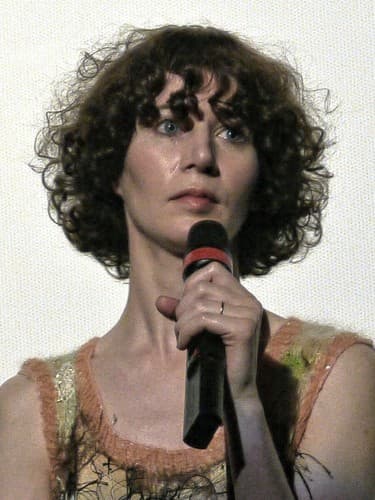
Miranda July is an American author, filmmaker, and artist known for her unique storytelling style. Her works include the short story collection "No One Belongs Here More Than You" and the novel "The First Bad Man," both of which explore themes of connection and identity. July's writing often blends elements of humor and poignancy, reflecting her distinctive voice in contemporary literature.
Similar books
- The Old Man and the Sea
Ernest Hemingway
3.8 (831k) average on GoodreadsLiterary FictionA Cuban fisherman's long struggle with a giant marlin becomes a story of endurance and dignity, now retold for young adults with illustrations, phonetic guides, and writing prompts in Traditional Chinese.
- One Hundred Years of Solitude
Gabriel García Márquez
4.1 (753k) average on GoodreadsLiterary FictionThrough the multi-generational story of the Buendía family, a mythical town deals with the repeating patterns of time, love, and solitude, as the extraordinary mixes with the ordinary.
- The Goldfinch
Donna Tartt
3.9 (720k) average on GoodreadsLiterary FictionHaunted by a tragic explosion and clutching a stolen Dutch masterpiece, a young orphan navigates the opulent drawing rooms of New York and the gritty underbelly of the art world, desperately seeking connection and redemption amidst a life spiraling into crime and obsession.
- Little Fires Everywhere
Celeste Ng
4.1 (713k) average on GoodreadsLiterary FictionIn Shaker Heights, an artist and her daughter move in, and their free-spirited lives clash with a rule-bound matriarch, revealing hidden conflicts beneath a perfect surface.
- Eleanor Oliphant Is Completely Fine
Gail Honeyman
4.3 (708k) average on GoodreadsLiterary FictionA lonely woman's structured life changes when an IT guy and an elderly man help her learn to open her heart.
- The Poisonwood Bible
Barbara Kingsolver
4.1 (659k) average on GoodreadsLiterary FictionA zealous missionary's rigid faith clashes with the Belgian Congo's wilderness and people, unraveling his family through the eyes of his five unforgettable women.






Enjoyed the summary?
A summary gives you the shape of the book. The book itself has the detail, the examples and the voice.
Find The First Bad Man on AmazonAs an Amazon Associate, BookBrief earns from qualifying purchases. How we're funded