
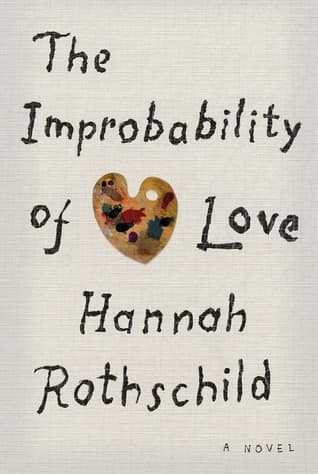
Synopsis
Covers the whole plot, including the ending.
- Difficulty
- Medium
- Pacing
- Moderate
- Mood
- Witty, Satirical, Romantic, Mysterious, Historical
- Read it if
- You enjoy a witty satire of the art world, a charming romance, and a historical mystery woven around a single object.
- Skip it if
- You dislike books with multiple narrative perspectives or find detailed descriptions of art history tedious.
The Improbability of Love Plot Summary
Covers the whole plot, including the ending.
A Chance Encounter in a Junk Shop
Annie McDee, a chef recovering from a breakup, enters a dusty London junk shop looking for a gift for her new, emotionally distant boyfriend, Jesse. Among forgotten items, a dirty oil painting catches her eye. It shows a woman in a blue dress with a small dog, and despite its poor state, Annie feels a connection to it. She buys it for seventy-five pounds, unaware she has a lost masterpiece. She takes it to her small flat above a restaurant, planning to clean it, but its true importance remains hidden.
A Glimpse of Greatness and Growing Suspicion
Chloë, Annie's best friend and an art history student, visits Annie's flat and is immediately drawn to the painting. Despite its dirt, Chloë senses something unusual and, after some research, suggests it might be a significant work, perhaps a lost masterpiece by Jean-Antoine Watteau. This news excites and disbelieves Annie. Meanwhile, Evie, the junk shop owner, begins to regret her sale, hinting the painting was once very important, which increases Annie's suspicion about its true value.
The Art World Awakens
As Chloë continues her research, news of a possible Watteau resurfacing spreads through the competitive London art world. Bartholomew, a cunning art dealer, quickly hears the rumor and wants to acquire the painting, believing it to be 'The Improbability of Love,' a legendary lost work. Other powerful figures, including the wealthy Russian oligarch Vladmir and the avaricious Sheikha al-Hamad, also learn about the painting, each with their own reasons for wanting it. Annie, still largely unaware of the art world's harsh nature, feels increasingly alone and vulnerable.
The Painting's Voice and Past Lives
The story sometimes shifts to the painting's viewpoint, which tells its own long history. It describes its creation by Watteau in 18th-century France, its journey through various aristocratic owners, and its experiences during key moments in European history, including the French Revolution and the World Wars. Through its 'memories,' the painting reveals the lives and loves of its former owners, their passions, betrayals, and the impact it had on them. This unique storytelling gives historical context and deepens the mystery of its disappearance and reappearance.
Escalating Pressure and Personal Stakes
Bartholomew increases his efforts to get the painting, using manipulative tactics and veiled threats. He sends his assistant, Ursula, to befriend Annie. Annie, overwhelmed by the sudden attention and the painting's rising value, becomes more anxious. Her relationship with Jesse, already weak, breaks under the stress, as he cannot support her. She finds comfort and connection with Ben, a kind art restorer Chloë recommends to examine the painting. Annie develops a slow romantic interest in Ben.
Restoration and Revelation
Ben begins the careful process of cleaning and restoring the painting. As layers of grime are removed, the vibrant colors and details of Watteau's original work are revealed. This restoration not only makes the painting more beautiful but also provides important evidence for its authenticity. During this time, Annie spends more time with Ben, finding his quiet passion for art a refreshing change from the greed of the art dealers. Their bond grows, and Annie starts to consider a new relationship.
The Auction House and a Moral Dilemma
Despite the pressure and the chance of a private sale, Annie decides to send the painting to a prestigious auction house, hoping for transparency and a fair valuation. This decision puts her directly against Bartholomew and other powerful collectors, who will do anything to get the masterpiece. She learns about the competitive world of auctions, where provenance, attribution, and market manipulation are important. Annie deals with the moral implications of selling such a historically important piece and how it will affect her life.
Unmasking the Impostor
Through Chloë's research and Ben's restoration work, a key piece of evidence is found that clearly links Annie's painting to 'The Improbability of Love.' This confirms its attribution to Watteau and its status as a lost masterpiece. The art world becomes frantic, with the auction house expecting a record sale. However, this also increases the schemes of Bartholomew and his rivals, who now see the painting as an even more valuable prize, leading to a climax of deception and intrigue.
The Auction and Its Aftermath
The auction day arrives, full of tension and high stakes. The bidding is fierce, with Bartholomew, Sheikha al-Hamad, and Vladimir all wanting the painting. In a dramatic ending, 'The Improbability of Love' sells for an enormous sum. While Annie becomes wealthy overnight, she also feels a sense of loss, realizing that true happiness does not come from material possessions. The sale also shows the true nature of many characters, revealing their greed. Annie must now deal with her new reality and decide what truly matters to her.
Finding Love and a New Path
After the auction, Annie realizes that her true happiness is not in the chaotic art world but in real human connection. She chooses to be with Ben, who values her for who she is, not for the painting she once owned. She decides to use her new wealth to follow her passion for cooking and open her own restaurant, creating a place to share her love for food. Annie finds peace and happiness, having learned to open herself to the 'improbability of love' in both art and life, and embraces a future defined by her own choices and genuine affection.
The Improbability of Love Characters
Annie McDee
Protagonist
A heartbroken chef who unwittingly discovers a lost masterpiece.
Annie is a kind-hearted, somewhat naive chef in her late thirties, recovering from a painful breakup. She is initially shy and lacks confidence, particularly in matters of the heart. Her passion for cooking is a source of comfort and creativity. She possesses an innate aesthetic sensibility, which allows her to connect with the painting on an emotional level, even before knowing its monetary value. Her journey is one of self-discovery, learning to assert herself and trust her instincts amidst the overwhelming pressures of the art world.
Relationships: Jesse (Ex-boyfriend, emotionally unavailable); Chloë (Best friend and confidante); Ben (Love interest, art restorer); The Painting (Object of discovery, catalyst for change)
The Painting (The Improbability of Love)
Central Object/Narrator
A lost Watteau masterpiece that tells its own story.
The painting itself is a character, possessing a unique narrative voice and a long memory. It is a beautiful 18th-century work by Jean-Antoine Watteau, depicting a woman in a blue dress with a small dog. Throughout its existence, it has witnessed centuries of human drama, love, loss, and historical events. It is a silent observer of human nature, reflecting on the transient nature of ownership and the enduring power of art. Its reappearance in Annie's life serves as the catalyst for the entire plot, driving the actions of all other characters.
Relationships: Annie McDee (Current 'owner' and rediscoverer); Jean-Antoine Watteau (Creator); Various historical owners (Past custodians and subjects of its observations)
Bartholomew
Antagonist
A ruthless and cunning art dealer obsessed with acquiring the painting.
Bartholomew is a highly successful but utterly amoral art dealer. Driven by greed and an insatiable desire for prestige, he views art solely as a commodity and a means to power. He is manipulative, arrogant, and will stop at nothing, including deception and intimidation, to get what he wants. He represents the darker, more corrupt side of the art world, contrasting sharply with Annie's genuine appreciation for beauty. His relentless pursuit of 'The Improbability of Love' fuels much of the novel's tension.
Relationships: Annie McDee (Target of his schemes); Ursula (His assistant and spy)
Chloë
Supporting
Annie's best friend and an aspiring art historian.
Chloë is Annie's loyal and intelligent best friend. She is a struggling art history student with a keen eye and a growing knowledge of the art world. It is Chloë who first recognizes the potential significance of Annie's painting, acting as Annie's initial guide and advocate. She provides crucial research and support, helping Annie navigate the complexities of attribution and provenance. Chloë is pragmatic and ambitious, offering a grounded perspective amidst the chaos, and her friendship is a constant source of strength for Annie.
Relationships: Annie McDee (Best friend); Ben (Colleague/acquaintance (introduces him to Annie))
Ben
Supporting/Love Interest
A kind and dedicated art restorer who falls for Annie.
Ben is a gentle, unassuming, and highly skilled art restorer. He possesses a deep respect for art and its history, approaching his work with meticulous care and genuine passion. Unlike the avaricious dealers, Ben's interest in the painting is purely academic and aesthetic. He provides Annie with expert advice and emotional support, becoming a calming presence in her chaotic life. His quiet strength and integrity make him a perfect foil to Jesse and a genuine love interest for Annie.
Relationships: Annie McDee (Love interest, client); Chloë (Acquaintance/professional contact)
Evie
Supporting
The eccentric, sharp-witted owner of the junk shop.
Evie is an elderly woman who runs the junk shop where Annie buys the painting. Despite her age, she is remarkably shrewd and possesses a mysterious knowledge of the painting's past, hinting at its true value and significance. She represents a connection to a bygone era and offers cryptic clues about the painting's provenance. Her initial regret over selling the painting for so little sets off a chain of events, and she remains a figure of intrigue throughout the story.
Relationships: Annie McDee (Seller to Annie); The Painting (Former 'custodian')
Vladimir
Supporting/Antagonist
A powerful and ruthless Russian oligarch with a passion for collecting art.
Vladimir is a wealthy and influential Russian oligarch, a prominent figure in the international art market. He is driven by a desire to acquire the best and most prestigious artworks, often through aggressive means. He represents the new money and power dynamics within the art world, contrasting with the old aristocratic collectors. His interest in 'The Improbability of Love' stems from a blend of genuine appreciation and a desire to bolster his status and collection, making him another formidable rival for Bartholomew and a threat to Annie's ownership.
Relationships: The Painting (Potential buyer); Bartholomew (Rival in the art market)
Sheikha al-Hamad
Supporting/Antagonist
An avaricious and determined collector from the Middle East.
Sheikha al-Hamad is a powerful and wealthy collector from a Middle Eastern royal family. She is portrayed as equally determined and competitive as Vladimir and Bartholomew, representing another significant force in the global art market. Her interest in 'The Improbability of Love' is driven by a desire to enhance her family's cultural prestige and personal collection. She embodies the immense financial power and influence that can shape the destiny of masterpieces, making her a key player in the auction's dramatic climax.
Relationships: The Painting (Potential buyer); Bartholomew (Rival in the art market)
The Improbability of Love Themes
The True Value of Art
The novel explores the many sides of art's value, comparing its monetary worth with its emotional and historical importance. While characters like Bartholomew and Vladimir see the painting as a way to gain status and wealth, Annie and Ben appreciate its beauty, craftsmanship, and the stories it tells. The painting's narration highlights its lasting power to inspire and reflect humanity, going beyond its price. The theme asks readers to consider whether art should be owned or simply appreciated, and if its true value can ever be measured, as seen in the dramatic auction where huge wealth is set against a humble, heartfelt connection.
“I am a painting. I have seen more of life than any human. I have witnessed love and loss, triumph and despair, beauty and ugliness. And I have learned that the true value of art is not in its price, but in its ability to tell a story, to connect us to the past, and to remind us of the enduring beauty of the human spirit.”
Love and Connection
At its core, 'The Improbability of Love' is a love story, not just between Annie and Ben, but also between people and art. Annie's journey begins with heartbreak and a reluctance to love again, much like the painting's journey from being unknown. As she connects with the painting, she slowly opens up to Ben, finding real connection. The title, 'The Improbability of Love,' refers to how rare and precious true love is, whether romantic or artistic. The novel suggests that finding and embracing love, in all its forms, is a profound experience, more fulfilling than money or social status.
“Love, like art, is an improbable thing. It appears when least expected, flourishes in the most unlikely places, and changes everything.”
Identity and Self-Discovery
Annie's accidental discovery of the painting helps her transform. At first, she is defined by her past relationship and perceived ordinariness, but she is thrust into a world that challenges her assumptions and forces her to face her strengths and weaknesses. Through her interactions with the art world's characters and her growing understanding of the painting's history, Annie begins to assert herself, trust her instincts, and define her own values. She ultimately discovers her own power and chooses a path that aligns with her true self, rather than being swayed by outside pressures or the appeal of wealth.
“Sometimes, it takes finding something extraordinary to finally see yourself.”
The Art World: Glamour and Corruption
The novel offers a critical look into the glamorous, rich, and often corrupt world of high-stakes art. It reveals the greed, snobbery, and ruthless ambition hidden beneath the surface of sophistication. Characters like Bartholomew, Vladimir, and Sheikha al-Hamad represent the commercial and power-driven aspects, where provenance can be faked, attributions manipulated, and fortunes made or lost on a single painting. The story highlights the clear difference between those who truly appreciate art and those who use it for profit or prestige, showing the moral complexities in this exclusive world.
“The art world is a gilded cage, beautiful on the outside, but filled with predators within.”
Plot Devices & Literary Techniques
Anthropomorphic Narration (The Painting's Voice)
The painting itself narrates sections of the story, revealing its history.
This unique device allows 'The Improbability of Love' to tell its own story, offering a first-person perspective from the object at the heart of the plot. The painting recounts its creation by Watteau and its journey through centuries of owners and historical events. This technique provides rich historical context, reveals the intimate lives of its previous custodians, and offers a detached, philosophical commentary on human nature. It also builds suspense by gradually unveiling clues about its identity and past, engaging the reader in a deeper connection with the artwork itself.
Mystery and Provenance
The central mystery revolves around the painting's identity and lost history.
The entire plot is driven by the mystery of the painting's true identity and its long-lost provenance. Annie, Chloë, and Ben embark on a detective-like quest to uncover its past, piecing together clues, researching historical records, and examining artistic details. This device creates suspense and intrigue, as the characters (and the reader) are constantly trying to authenticate the artwork and understand its journey. The gradual revelation of its history, coupled with the efforts of those trying to steal or discredit it, propels the narrative forward.
Satire of the Art World
The novel employs humor and exaggeration to critique the art market.
Rothschild uses satire to expose and critique the excesses, absurdities, and moral failings of the high-stakes art world. Characters like Bartholomew, with his ruthless ambition, and the eccentric collectors, with their insatiable desires, are exaggerated portrayals that highlight the greed, snobbery, and sometimes outright corruption prevalent in the industry. This satirical tone provides comic relief while simultaneously delivering sharp social commentary on wealth, class, and the commodification of culture, contrasting with Annie's more genuine and less jaded perspective.
Foil Characters
Characters are strategically paired to highlight contrasting traits and values.
The novel effectively uses foil characters to emphasize key themes and character developments. Jesse, Annie's emotionally unavailable boyfriend, serves as a foil to Ben, who is kind, supportive, and genuinely interested in Annie. Bartholomew, the avaricious art dealer, stands in stark contrast to Annie's innocent appreciation for art and Ben's ethical approach to restoration. These pairings highlight the novel's central conflicts between greed and integrity, superficiality and genuine connection, and ultimately help define Annie's journey of self-discovery and her evolving values.
The Improbability of Love Quotes
“The painting was a portal to another world, a window into the soul of the artist.”
“Love, like art, is often found in the most unexpected places.”
“Every brushstroke tells a story, if only you know how to listen.”
“The art market is a jungle, and only the fittest (and most ruthless) survive.”
“To truly appreciate art, you must allow it to speak to you, not just look at it.”
“Sometimes the greatest treasures are hidden in plain sight, waiting to be rediscovered.”
“The past is never truly gone; it echoes in the present, influencing our choices.”
“Creativity is not just about making something new, but about seeing the familiar with fresh eyes.”
“A good meal, like a good painting, can nourish the soul as well as the body.”
“Beauty can be a dangerous thing, attracting both admiration and avarice.”
“The true value of art is not its price tag, but the emotion it evokes.”
“Mystery is often just a puzzle waiting for the right person to solve it.”
“Even in the darkest of times, art offers a glimmer of hope and connection.”
“Sometimes, the most improbable things are the ones that are meant to be.”
Quiz
10 questions on the plot and the characters. Each answer comes with a short explanation.
Question 1
What is Annie McDee initially looking for when she stumbles upon the 'dirty painting'?
- A new piece of art for her own collection
- A present for an unsuitable man
- Something to sell at a local market
- A prop for a play she is directing
Show answer
B. A present for an unsuitable man Annie McDee finds the painting in a junk shop while searching for a present for a man she is dating, who is described as 'unsuitable'.
Question 2
What is the title of the lost eighteenth-century masterpiece that Annie discovers?
- The Unlikely Masterpiece
- The Artist's Secret
- The Improbability of Love
- A Canvas of Secrets
Show answer
C. The Improbability of Love The painting is a lost eighteenth-century masterpiece titled 'The Improbability of Love,' which is also the title of the book.
Question 3
Which of the following groups is NOT explicitly mentioned as being part of the London art world Annie is drawn into?
- Exiled Russian oligarchs
- Avaricious Sheikas
- Struggling street artists
- Desperate auctioneers
Show answer
C. Struggling street artists The synopsis mentions exiled Russian oligarchs, avaricious Sheikas, desperate auctioneers, and unscrupulous dealers. Struggling street artists are not listed.
Question 4
What kind of shop does Annie find the painting in?
- An antique store
- A high-end gallery
- A junk shop
- A charity shop
Show answer
C. A junk shop The painting is described as being 'dirty' and found by Annie 'in a junk shop'.
Question 5
What historical period does the discovered painting belong to?
- Seventeenth-century
- Eighteenth-century
- Nineteenth-century
- Twentieth-century
Show answer
B. Eighteenth-century The painting is specifically identified as a 'lost eighteenth-century masterpiece'.
Question 6
Beyond an illustrious list of former owners, what else does Annie uncover by delving into the painting's past?
- New artistic techniques
- The darkest secrets of European history
- A hidden treasure map
- The true identity of the artist's muse
Show answer
B. The darkest secrets of European history The synopsis states that Annie will uncover 'not just an illustrious list of former owners, but some of the darkest secrets of European history'.
Question 7
What is the primary emotional journey Annie is expected to undergo as a result of her discovery?
- Learning to become a renowned art dealer
- Opening up to the possibility of falling in love again
- Becoming cynical about the art world
- Finding a new career as a historian
Show answer
B. Opening up to the possibility of falling in love again The synopsis concludes by stating that in delving into the painting's past, Annie 'might just learn to open up to the possibility of falling in love again,' directly linking to her initial 'lovelorn' state.
Question 8
The book is described as a 'savage satire' of London life and the art world. What aspect of the art world is particularly targeted by this satire, based on the description of its inhabitants?
- The innovative techniques of contemporary artists
- The collaborative spirit among gallery owners
- The greed and unscrupulous dealings of its powerful figures
- The academic rigor of art history scholars
Show answer
C. The greed and unscrupulous dealings of its powerful figures The description of the art world's inhabitants as 'exiled Russian oligarchs, avaricious Sheikas, desperate auctioneers and unscrupulous dealers, all scheming to get their hands on her painting' highlights themes of greed and unethical behavior, which are prime targets for satire.
Question 9
How does Annie's initial emotional state relate to the overall theme suggested by the painting's title, 'The Improbability of Love'?
- Her 'lovelorn' state makes her resistant to the idea of love, contrasting with the painting's message.
- She is already in a happy relationship, making the title ironic.
- Her initial search for a gift for an 'unsuitable man' indicates her belief in the ease of finding love.
- She is actively searching for the 'improbability of love' in her own life.
Show answer
A. Her 'lovelorn' state makes her resistant to the idea of love, contrasting with the painting's message. Annie is described as 'lovelorn,' suggesting she has had difficulty with love or is currently without it, which directly sets the stage for her learning to 'open up to the possibility of falling in love again,' aligning with the 'improbability' suggested by the painting's title.
Question 10
The synopsis mentions that the book is also a 'surprising and wonderful love story'. Given Annie's journey, what kind of love story is primarily hinted at?
- A story about her rekindling a past relationship.
- A story focused on the historical romance depicted in the painting.
- A new love interest emerging from the art world chaos.
- A story about her love for art and history.
Show answer
C. A new love interest emerging from the art world chaos. The phrase 'she might just learn to open up to the possibility of falling in love again' strongly implies a new romantic relationship will develop for Annie within the context of her discovery and involvement in the art world, making it a 'surprising and wonderful love story'.
The Improbability of Love FAQ
What is the central mystery driving the plot of 'The Improbability of Love'?
The central mystery revolves around Annie McDee's discovery of a seemingly worthless painting in a junk shop, which turns out to be 'The Improbability of Love,' a lost masterpiece by Jean-Antoine Watteau. The plot follows Annie's unwitting entanglement in the high-stakes art world as various powerful and unscrupulous characters scheme to acquire the painting.
Who is Annie McDee and what is her initial motivation for buying the painting?
Annie McDee is a lovelorn chef who initially buys the painting from a junk shop as a potential gift for her unsuitable boyfriend, Jesse. She is completely unaware of its true value or historical significance, drawn only by a peculiar connection she feels to the artwork.
What role does the painting itself play in the narrative, beyond being an object of desire?
The painting, 'The Improbability of Love,' is personified and acts as a narrator, offering its own perspective on its history and the lives of its owners. This unique narrative device allows the reader to delve into centuries of European history and the emotional impact the artwork has had on individuals.
Who are some of the key antagonists or figures trying to acquire the painting?
The painting attracts a diverse cast of formidable characters, including the exiled Russian oligarch, Vladislav, the avaricious Sheika, and the unscrupulous art dealer, Bartholomew. Each has their own reasons and ruthless methods for wanting to possess 'The Improbability of Love,' creating a web of intrigue around Annie.
How does Annie's journey with the painting impact her personal life and relationships?
Annie's journey with the painting forces her to confront her own insecurities and open up to new possibilities, particularly in love. As she delves into the painting's past and navigates the treacherous art world, she begins to heal from past heartbreaks and eventually finds a more suitable romantic connection.
What is the significance of the painting's 'voice' and its historical flashbacks?
The painting's 'voice' serves as a unique narrative device, allowing the reader to experience its journey through history from its own perspective. Its flashbacks reveal the lives of its illustrious former owners, from aristocrats to artists, and expose some of the darkest secrets and pivotal moments in European history, enriching the historical context.
Are there any subtle clues about the painting's true identity or value before its official authentication?
Beyond Annie's inexplicable connection, subtle clues include the peculiar behavior of the junk shop owner and the immediate, almost instinctual recognition of its potential by certain art world figures who glimpse it. The painting's inherent quality, even under grime, suggests its true nature to trained eyes.
What historical events or periods does the painting 'witness' through its long life?
Through its various owners, the painting 'witnesses' significant historical periods including the French Revolution, the Napoleonic Wars, the Belle Époque, and both World Wars. It provides a unique lens through which to observe the societal changes, political upheavals, and personal tragedies of these eras.
How does the author use satire to critique the contemporary art world?
The author employs sharp satire to expose the absurdities, pretentiousness, greed, and moral ambiguities prevalent in the contemporary art world. Characters like the oligarchs, Sheikas, and unscrupulous dealers are exaggerated to highlight the commercialization and superficiality that often overshadow genuine artistic appreciation.
How does Annie's initial vulnerability and self-doubt evolve throughout the story?
Annie begins as a vulnerable, heartbroken woman, prone to bad romantic choices and lacking self-confidence. Her journey with the painting forces her to develop resilience, assertiveness, and self-worth, ultimately enabling her to stand up to powerful figures and embrace genuine love.
Discuss the psychological impact of owning a masterpiece, as depicted through various characters.
Owning a masterpiece has diverse psychological impacts, from the obsessive pride of collectors like Vladislav and the Sheika, who see it as a symbol of status and power, to the profound emotional connection felt by Annie. It can bring both immense joy and dangerous obsession, revealing the depths of human desire and attachment.
How do the themes of love and loss manifest in Annie's personal journey and the painting's history?
Love and loss are central themes; Annie's journey begins with heartbreak and ends with new love, mirroring the painting's own history. The painting has been a witness to countless love affairs, betrayals, and bereavements across centuries, reflecting how art often endures beyond human relationships.
What psychological motivations drive the antagonists' relentless pursuit of 'The Improbability of Love'?
The antagonists are driven by a complex mix of motivations: status, power, wealth, and an almost pathological desire for possession. For Vladislav, it's about reclaiming lost heritage and asserting dominance; for others, it's pure avarice and the thrill of owning something priceless, regardless of its artistic merit.
Is the ending of the book a clear resolution for Annie and the painting, or is there ambiguity?
The ending provides a satisfying resolution for Annie's personal journey, as she finds love and a sense of belonging. While the painting's immediate fate is resolved, its 'voice' implies its ongoing journey through time, suggesting a perpetual cycle of ownership and witness, leaving a subtle ambiguity about its ultimate, long-term resting place.
What is the deeper meaning behind the title, 'The Improbability of Love'?
The title refers not only to the painting's name but also to the rarity and fragility of true love, both in Annie's life and across the painting's historical journey. It suggests that finding genuine connection, whether with a person or a piece of art, is a precious and improbable occurrence in a world often driven by superficiality and greed.
How does the novel balance its satirical elements with its romantic and historical aspects?
The novel skillfully balances its sharp satire of the art world with genuine romantic warmth and rich historical detail. The satire provides the witty critique, while Annie's evolving love story offers emotional depth, and the painting's historical narrative grounds the story in a broader, more profound human experience.
Could the painting's 'voice' be interpreted in a metaphorical sense, rather than literal?
While presented literally, the painting's 'voice' can also be interpreted metaphorically as the collective memory and historical resonance embedded within art itself. It represents how artworks absorb and reflect the human experiences and stories of their creators and owners across generations, making them living artifacts.
What commentary does the book offer on the value of art – intrinsic versus monetary?
The book strongly contrasts the intrinsic, emotional, and historical value of art with its often inflated monetary value. It critiques a world where masterpieces are traded as commodities, highlighting how genuine appreciation and the profound human connection to art are often overshadowed by financial gain and status.
About the author

Hannah Rothschild is a British author known for her fiction, particularly her novel "The Improbability of Love." The book explores themes of art, love, and identity, set against the backdrop of the art world. Rothschild's writing often combines elements of humor and social commentary.
Similar books
- A Gentleman in Moscow
Amor Towles
4.3 (293k) average on GoodreadsLiterary FictionFeatures a charming protagonist navigating a unique world with historical depth and wit.
- The Goldfinch
Donna Tartt
3.9 (720k) average on GoodreadsLiterary FictionCenters around a valuable painting and the protagonist's journey through the art world, with elements of mystery and crime.
- Mr. Penumbra's 24-Hour Bookstore
Robin Sloan
3.7 (174k) average on GoodreadsFantasyCombines mystery, unique characters, and a charming, slightly quirky tone, though in a different setting.
- To Kill a Mockingbird
Harper Lee
4.3 (4.5M) average on GoodreadsHistorical FictionIn the 1930s Jim Crow South, Harper Lee writes about racial injustice, moral growth, and the quiet courage of a lawyer father, Atticus Finch, as seen through his young daughter's eyes.
- The Great Gatsby
F. Scott Fitzgerald
3.9 (3.8M) average on GoodreadsHistorical FictionIn the opulent Roaring Twenties, a mysterious millionaire's lavish parties hide his desperate, tragic pursuit of a lost love, exposing the emptiness within the American Dream.
- Pride and Prejudice
Jane Austen
4.3 (3M) average on GoodreadsHistorical FictionIn a society focused on status and money, Elizabeth Bennet navigates love and pride, challenging Mr. Darcy and social expectations to find true affection.





Enjoyed the summary?
A summary gives you the shape of the book. The book itself has the detail, the examples and the voice.
Find The Improbability of Love on AmazonAs an Amazon Associate, BookBrief earns from qualifying purchases. How we're funded