
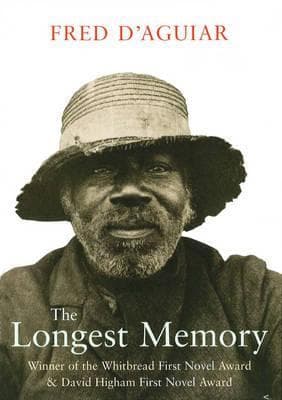
Synopsis
Covers the whole plot, including the ending.
- Difficulty
- Medium
- Pacing
- Slow
- Mood
- Somber, Reflective, Tragic, Poignant
- Read it if
- You appreciate literary fiction that explores the profound psychological and emotional impacts of slavery through multiple, nuanced perspectives, and you are prepared for a deeply moving and tragic story.
- Skip it if
- You prefer fast-paced plots with clear-cut heroes and villains, or you are looking for an uplifting narrative about overcoming adversity without significant loss.
The Longest Memory Plot Summary
Covers the whole plot, including the ending.
Whitechapel's Grief and the Master's Eulogy
The story starts with the death of Chapel, a young enslaved man who was whipped to death after trying to run away. His father, Whitechapel, feels deep sorrow and guilt, believing his own actions led to his son's death. The Master, Mr. Whitechapel, speaks at Chapel's funeral, regretting the loss and thinking about his own kindness towards his enslaved people, especially Whitechapel, whom he sees as his most loyal and oldest 'property'. The Master remembers Whitechapel's past, specifically his choice not to run away when he was younger. This strengthens the Master's belief in Whitechapel's loyalty and the 'natural order' of the plantation. This first part sets up the main problem and how much slavery affected both the enslaved and the enslavers.
Chapel's Forbidden Love and Education
Chapel, a young enslaved man, secretly falls in love with Lydia, the Master's daughter. Their relationship is secret, built on their shared love for books and learning. Lydia, going against the strict social rules of the antebellum South, teaches Chapel to read and write using books from her father's library. This forbidden education brings Chapel great joy and mental awakening, letting him imagine a life beyond the plantation. But it also gives him a growing wish for freedom and a deep unhappiness with his enslaved life, putting him on a dangerous path that leads to his sad end.
Whitechapel's Philosophy of Submission
Whitechapel, an elderly enslaved man, is respected by his peers. He believes strongly in submission and endurance as the only ways to survive slavery. He has lived a long life under slavery, seeing the brutal results of rebellion. He often tells stories and gives advice about working hard, obeying the Master, and avoiding actions that might upset the overseers. His advice comes from a wish to protect his community from harm, even if it means giving up personal freedom. This belief often puts him in conflict with younger, more rebellious enslaved people, including his own son, Chapel.
Chapel's Escape Attempt and Whitechapel's Betrayal
Chapel, driven by his love for Lydia and his wish for freedom, decides to run away from the plantation. He tells his father, Whitechapel, hoping for his approval or at least his silence. However, Whitechapel, afraid for his son's life and his belief that escape is useless, makes the hard choice to tell the Master about Chapel's plans. This act, which Chapel sees as 'betrayal,' comes from Whitechapel's strong belief that escape would only lead to Chapel's death or a worse fate. His actions are a desperate try to protect his son, but they lead to Chapel's capture and severe punishment.
Chapel's Capture and Flogging
Chapel's escape attempt lasts a short time. The overseer quickly catches him and brings him back to the plantation. As punishment for his rebellion and to make an example for the other enslaved people, the Master orders a severe public whipping. Whitechapel has to watch his son's brutal punishment. Despite his inner pain, he stays calm on the outside, following his practice of showing no emotion. The whipping is constant, and Chapel, weak and without hope, eventually dies from his injuries. This is a direct result of the Master's cruelty and the system of slavery.
The Master's Justification and Guilt
After Chapel's death, the Master, Mr. Whitechapel, feels a mix of regret, self-justification, and a brief sense of guilt. He tries to explain his decision to have Chapel whipped, saying it was needed to keep order and stop more uprisings among his enslaved population. He believes he acted within his rights and duties as a slave owner. However, the tragedy of Chapel's death, especially given Whitechapel's perceived loyalty, bothers him. He thinks about the money problems and the disruption to his plantation, but also about the moral difficulties of his position. He does not truly face the inhumanity of his actions.
Lydia's Grief and Disillusionment
Lydia, heartbroken by Chapel's death, feels great sorrow and guilt. She feels responsible for his fate, believing her lessons and their forbidden love made him want freedom and ultimately led to his death. Chapel's death deeply breaks her innocence and her idea of her father's kindness. She starts to see the brutal truth of slavery, no longer able to ignore the cruelty and injustice in the system. Her relationship with her father becomes tense, marked by quiet disapproval and a growing disappointment with her world. This makes her face the moral failings of her family and society.
Whitechapel's Internal Struggle and Memory
After Chapel's death, Whitechapel is tortured by his memories and the painful question of whether he could have done things differently. He constantly thinks about the past, replaying his decision to tell the Master about Chapel's escape plans. The other enslaved people on the plantation see him with a mix of pity and anger; some see him as a traitor. Whitechapel's inner thoughts show his deep sadness, his regret, and his struggle to make sense of his actions with his love for his son. He feels the weight of his long life, burdened by the 'longest memory' of his people's suffering and his own part in the system.
The Editor's Commentary and Historical Context
Throughout the story, there are sections called 'Editor's Commentary' or from other characters' views, such as a newspaper editor or a 'Historian.' These sections give different ideas about slavery, its economic reasons, and the social attitudes of the time. The newspaper editor, for example, praises the Master's actions as a needed way to stop slave rebellion, while also saying how 'humanely' slaves are supposedly treated. These comments highlight the widespread racism and the twisted logic used to support slavery. They contrast sharply with the personal, painful experiences of Whitechapel and Chapel. They make the novel's scope wider than just the plantation.
Whitechapel's Decline and Reflection
As the novel goes on, Whitechapel's health and spirit get much worse. He becomes more withdrawn, haunted by his past and his son's death. He spends his days thinking about his life as an enslaved man, questioning his choices and the belief in submission he supported. He deals with the idea of what he leaves behind, wondering what, if anything, he has left. His memories become broken, mixing past and present, as he tries to understand his life and the great injustices he has faced and seen. The novel ends with Whitechapel's quiet, inner struggle, showing the lasting psychological damage of slavery.
The Longest Memory Characters
Whitechapel
Protagonist
An elderly enslaved man, Chapel's father, and a symbol of stoic endurance.
Whitechapel is the oldest enslaved man on the plantation, revered by some for his longevity and stoicism, and resented by others for his philosophy of submission. He believes that obedience and endurance are the only ways to survive the brutal system of slavery. His greatest regret is the death of his son, Chapel, for which he feels deeply responsible after informing the Master of Chapel's escape plan. He is haunted by his 'longest memory' of his life and the suffering of his people, grappling with the moral implications of his choices. His character embodies the complex psychological toll of slavery and the difficult choices individuals faced.
Relationships: Chapel (Son, whom he loves deeply but 'betrays' out of fear for his safety.); Lydia (Master's daughter, indirectly connected through Chapel's love for her.); Mr. Whitechapel (Master) (Owner, whom he serves with a complex mix of loyalty and fear.)
Chapel
Supporting/Catalyst
Whitechapel's rebellious son, who seeks freedom and education.
Chapel is a young, intelligent, and rebellious enslaved man, the son of Whitechapel. Unlike his father, he yearns for freedom and a life beyond the plantation. His love for Lydia, the Master's daughter, and her teachings ignite his desire for knowledge and liberty. This forbidden education fuels his decision to attempt an escape, which ultimately leads to his tragic death by flogging. Chapel represents the spirit of resistance and the devastating consequences of defying the slave system. His death serves as the central traumatic event that propels the narrative and deeply impacts all other characters.
Relationships: Whitechapel (Father, whose philosophy he rejects but whose love he seeks.); Lydia (Lover and teacher, inspiring his intellectual awakening and desire for freedom.); Mr. Whitechapel (Master) (Owner, against whom he rebels.)
Mr. Whitechapel (The Master)
Antagonist
The owner of the plantation, who believes himself a benevolent slave owner.
Mr. Whitechapel is the owner of the plantation and the enslaver of Whitechapel and Chapel. He embodies the hypocrisy and self-deception of the slave-owning class. He views himself as a fair and benevolent master, believing he treats his enslaved people better than others. He values Whitechapel for his perceived loyalty and hard work. However, he is ultimately a cruel figure, demonstrating his brutality by ordering Chapel's fatal flogging to maintain order. He struggles with a superficial sense of guilt after Chapel's death, but his primary concern remains the economic and social stability of his plantation.
Relationships: Whitechapel (Enslaved property, whom he considers loyal and valuable.); Chapel (Enslaved property, whose rebellion he punishes severely.); Lydia (Daughter, whose moral compass he fails to understand.)
Lydia
Supporting
The Master's daughter, who shares a forbidden love and education with Chapel.
Lydia is the Master's daughter, a young white woman who forms a secret, forbidden relationship with Chapel. She teaches him to read and write, sharing her love for literature and inadvertently fostering his desire for freedom. Her actions, while well-intentioned, are naive to the full consequences within the brutal system of slavery. Chapel's death profoundly impacts her, shattering her innocence and forcing her to confront the inherent cruelty of her father and the institution she lives within. She represents a nascent moral awakening among some white individuals, though her power to effect change is limited.
Relationships: Chapel (Lover and student, whose death profoundly impacts her.); Mr. Whitechapel (Master) (Father, whose actions she comes to despise.)
Cook
Supporting
An enslaved woman who expresses resentment towards Whitechapel.
Cook is an enslaved woman on the plantation who harbors deep resentment towards Whitechapel, particularly after Chapel's death. She sees Whitechapel's philosophy of submission and his actions regarding Chapel's escape as a betrayal of their community and a perpetuation of their suffering. Her perspective offers a contrasting view to Whitechapel's, highlighting the divisions and internal conflicts that could arise among enslaved people. She represents the anger and frustration felt by those who believed in active resistance or at least a stronger sense of solidarity against the oppressors.
Relationships: Whitechapel (Fellow enslaved person, whom she resents for his actions and philosophy.)
The Virginian (Newspaper Editor)
Mentioned/Narrative Voice
A voice representing the prevailing pro-slavery sentiment in the South.
The Virginian is a newspaper editor whose 'articles' are interspersed throughout the novel. This character serves as a mouthpiece for the prevailing pro-slavery ideology of the time, praising the Master's actions, justifying the institution of slavery, and promoting the idea of enslaved people as inherently inferior and needing guidance. His voice is a stark contrast to the emotional, personal narratives of the enslaved characters, highlighting the dehumanizing rhetoric used to maintain the system. He represents the public face of institutionalized racism and the widespread denial of enslaved people's humanity.
The Overseer (Mr. Sanders Sr.)
Supporting
The cruel and unfeeling manager of the plantation.
The Overseer is the harsh and brutal manager of the Whitechapel plantation, responsible for enforcing the Master's will and maintaining order among the enslaved people. He is depicted as merciless and unfeeling, carrying out punishments, including Chapel's fatal flogging, without remorse. He represents the direct face of oppression and the physical brutality inherent in the system of slavery. His character underscores the constant threat of violence and the lack of humanity faced by the enslaved on a daily basis.
Relationships: Mr. Whitechapel (Master) (Employee, carrying out his will.); Chapel (Victim of his brutality.)
The Historian
Mentioned/Narrative Voice
A voice offering a seemingly objective but subtly biased perspective on slavery.
The Historian is another narrative voice that appears in the novel, presenting what purports to be an objective account of slavery and the conditions of enslaved people. However, this voice often subtly reinforces prevailing biases, focusing on economic justifications or downplaying the severity of the suffering. The Historian's perspective, like the newspaper editor's, serves to demonstrate how history can be manipulated or presented to serve particular agendas, further highlighting the challenges of truth-telling and memory in the context of slavery.
The Longest Memory Themes
Memory and History
The novel deeply looks at memory, especially Whitechapel's 'longest memory,' which includes generations of suffering under slavery. It examines how individual memories form identity and how group memory, often twisted or hidden, affects a community. The many voices—Whitechapel's personal memories, the Master's reasons, the newspaper editor's propaganda, and the Historian's 'objective' account—show how history is argued over and how hard it is to keep truth when there is systemic denial. Whitechapel's pain over his past actions and Chapel's desire for a future free of the past are key to this theme.
“'The past is not what it was.”
Resistance and Submission
This theme is central to the conflict between Whitechapel and Chapel. Whitechapel represents submission and endurance, believing it is the only way to survive slavery. He has lived a long life by following the Master's will. Chapel, however, shows active resistance and the desire for freedom, helped by his education and love for Lydia. His escape attempt, though sad, is an act of defiance. The novel explores the moral difficulties of both approaches, asking if submission is a form of agreement or a needed survival method, and if resistance, even if it leads to death, offers a form of dignity.
“Memory is a slave's only possession. It is the only thing that cannot be taken away.”
The Dehumanizing Nature of Slavery
The novel clearly shows the deep dehumanization in slavery, affecting both the enslaved and the enslavers. Enslaved people are treated as property, without their names, families, and basic human rights. Chapel's death by whipping is a clear example of this brutality. The Master's self-deception and his inability to see his enslaved people as fully human also show how the system harms the enslaver. The language used, especially in the Master's and newspaper editor's sections, shows how human beings are treated like goods and the psychological harm caused by such a system, leaving lasting scars on Whitechapel's mind.
“We are to them what they are to us: property. Except we have no property to own.”
Family and Betrayal
The father-son relationship between Whitechapel and Chapel is at the novel's heart. Whitechapel's choice to tell the Master about Chapel's escape, done out of a desperate wish to protect his son, is seen as a deep betrayal by Chapel and some of the other enslaved people. This act breaks their bond and leaves Whitechapel full of guilt. The theme explores the impossible choices forced on enslaved families, where love and the wish to protect could sadly lead to tragic results within the brutal limits of the system. It highlights the deep emotional wounds slavery caused in family relationships.
“My son, my only son. I murdered him. I did it. I sold him to the Master.”
Education and Freedom
Chapel's secret education, given by Lydia, is a strong symbol of freedom and the search for knowledge. Learning to read and write opens Chapel's mind to possibilities beyond the plantation, making him want freedom and self-determination. This theme shows how education, even when forbidden, can be a tool for fighting oppression. However, it also sadly shows the dangers of such knowledge within a system meant to keep people ignorant and obedient, as Chapel's intellectual awakening ultimately leads to his death.
“A mind cannot be enslaved. It can only be free.”
Plot Devices & Literary Techniques
Multiple Perspectives/Polyphony
The story is told through various character viewpoints and narrative voices.
The novel employs multiple first-person perspectives and distinct narrative voices, including Whitechapel's internal monologues, the Master's justifications, Lydia's grief, the newspaper editor's propaganda, and a 'Historian's' account. This polyphonic structure allows D'Aguiar to present a multifaceted and often contradictory understanding of slavery, highlighting the subjective nature of truth and memory. It forces the reader to critically evaluate each perspective and piece together a more comprehensive, albeit fragmented, understanding of the events and their impact on different individuals and society.
Non-linear Narrative
The story jumps back and forth in time, disrupting chronological order.
While centering on Chapel's death, the narrative frequently shifts between past and present, particularly through Whitechapel's fragmented memories and the Master's recollections. This non-linear structure mirrors the disorienting and traumatic nature of memory under slavery, where past events continually intrude upon the present. It also allows the author to reveal information gradually, building suspense and deepening the reader's understanding of the characters' motivations and the historical context without adhering to a strict chronological progression.
Symbolism of Names
Characters' names carry thematic significance, particularly 'Whitechapel'.
The name 'Whitechapel' is given to both the enslaved patriarch and the Master of the plantation, a deliberate choice that blurs the lines of ownership and identity. It symbolizes the profound interconnectedness of the enslaved and enslaver within the oppressive system, suggesting that the Master's identity is inextricably linked to his ownership of enslaved people. The shared name also highlights the dehumanization of the enslaved, reduced to the name of their 'owner' and the 'property' they represent, rather than their inherent human dignity.
Internal Monologue
Extensive use of characters' inner thoughts and reflections.
A significant portion of the novel is conveyed through the internal monologues of characters, especially Whitechapel. This device provides intimate access to their deepest fears, regrets, justifications, and philosophies. Whitechapel's tormented reflections on his past actions and his son's death are central to the novel's emotional core, allowing the reader to understand the complex psychological landscape of an enslaved man. The Master's internal justifications for his cruelty also reveal the self-deception inherent in the institution of slavery.
Repetition and Refrain
Key phrases and ideas are repeated to emphasize themes.
The novel uses repetition of certain phrases and ideas, such as 'the longest memory' or descriptions of the plantation's daily rhythms, to create a sense of cyclical suffering and the indelible mark of the past. This poetic device reinforces the pervasive nature of slavery's trauma and the difficulty of escaping its psychological grip. The repeated internal questioning by Whitechapel about his actions also highlights his ongoing struggle with guilt and regret, giving the narrative a haunting, almost elegiac quality.
The Longest Memory Quotes
“Memory, like a house, has many rooms, some lit, some dark, some you never enter.”
“A white man's God is a white man. He don't hear us unless we sing his songs.”
“The past is a foreign country; they do things differently there.”
“To be without a name is to be without a history, to be without a future.”
“Grief is a ghost that haunts the living, not the dead.”
“A man without hope is a man already dead, even if he walks and breathes.”
“The longest memory is not the one you keep, but the one that keeps you.”
“Freedom is not a gift; it is a fight.”
“The truth is a heavy burden, but a lie is a crushing one.”
“Love does not see color, but society does.”
“Every lash leaves a scar, not just on the skin, but on the soul.”
“To forget is to die twice.”
“The master's house is built on our backs, brick by bloody brick.”
“Silence can be a weapon, or it can be a cage.”
Quiz
10 questions on the plot and the characters. Each answer comes with a short explanation.
Question 1
In what year does the primary plot of 'The Longest Memory' take place?
- 1776
- 1810
- 1831
- 1865
Show answer
B. 1810 The book explicitly states that the story of the young slave's attempted escape occurs in 1810, setting the historical context for the narrative.
Question 2
What is the central conflict regarding the young slave's escape attempt?
- He is caught by the overseer while stealing supplies.
- His father inadvertently betrays him, leading to his capture.
- The white girl he loves reports him to the master.
- He gets lost in the woods and returns voluntarily.
Show answer
B. His father inadvertently betrays him, leading to his capture. A key plot point mentioned is that the young slave's father inadvertently betrays him, highlighting the complex and tragic relationships within the slave community.
Question 3
What kind of relationship does the young slave have with a white girl?
- She is his master's daughter and his tormentor.
- She teaches him to read and write, fulfilling his thirst for learning.
- She helps him plan his escape in detail.
- She is a childhood friend who later rejects him.
Show answer
B. She teaches him to read and write, fulfilling his thirst for learning. The novel highlights the young slave's 'forbidden thirst for learning' which is slaked by his love for a white girl, indicating her role in teaching him.
Question 4
Which of the following best describes the young slave's character?
- Submissive and fearful.
- Rebellious and fiercely intelligent.
- Indifferent to his fate.
- Primarily focused on manual labor.
Show answer
B. Rebellious and fiercely intelligent. The description explicitly characterizes the young slave as 'a rebellious, fiercely intelligent young slave,' which is central to his motivations and actions.
Question 5
The novel explores tensions among slaves themselves. What are these tensions primarily between?
- Field slaves and house slaves.
- Older slaves and younger slaves.
- Stoic survivalists and passionate rebels.
- Those who practice Christianity and those who practice traditional African religions.
Show answer
C. Stoic survivalists and passionate rebels. The book is noted for exploring the 'tensions among slaves themselves - between stoic survivalists and passionate rebels,' which is a key thematic element.
Question 6
How is the relationship between the young slave and his father depicted?
- As one of mutual understanding and support.
- As distant and largely absent.
- As a painful relationship, complicated by the father's unwitting betrayal.
- As a bond strengthened by shared rebellion.
Show answer
C. As a painful relationship, complicated by the father's unwitting betrayal. The description highlights the 'painful relationship with his father' and the father's 'inadvertent betrayal,' indicating a complex and fraught dynamic.
Question 7
What distinguishes Fred D'Aguiar's language in 'The Longest Memory'?
- Its verbose and highly descriptive nature.
- Its use of archaic vocabulary and complex sentence structures.
- Its tautness, resonance, and lyrical simplicity.
- Its detached, journalistic style.
Show answer
C. Its tautness, resonance, and lyrical simplicity. The book is praised for its 'language extraordinary for its tautness and resonance' and 'astonishing lyrical simplicity,' which defines its distinctive style.
Question 8
Beyond the black slave and white master dynamic, what other complicities does 'The Longest Memory' explore?
- The complicities between the plantation owner and neighboring landowners.
- The complicities among family members within the master's household.
- The complicities between black slave and white master, but also internal tensions among slaves.
- The complicities between Northern abolitionists and Southern slaves.
Show answer
C. The complicities between black slave and white master, but also internal tensions among slaves. The novel is noted for being 'informed not only by the complicities between black slave and white master but also by the tensions among slaves themselves,' indicating a nuanced exploration of power dynamics.
Question 9
The novel is described as having 'keenness of observation, subtlety, and restraint.' How does this literary approach likely impact the reader's experience of the difficult subject matter?
- It makes the story feel less impactful due to its understated nature.
- It allows for a more profound and thought-provoking engagement with the horrors of slavery without resorting to sensationalism.
- It creates ambiguity, making the plot difficult to follow.
- It focuses solely on the internal thoughts of characters, neglecting external events.
Show answer
B. It allows for a more profound and thought-provoking engagement with the horrors of slavery without resorting to sensationalism. Literary restraint and subtlety in addressing difficult topics often allow readers to engage more deeply and thoughtfully, fostering a profound impact rather than a superficial or sensational one.
Question 10
Given the description, 'The Longest Memory' can be categorized as belonging to what broader literary movement or focus?
- Post-apocalyptic science fiction.
- Contemporary literature of the African diaspora.
- Victorian romance novels.
- Existentialist philosophy.
Show answer
B. Contemporary literature of the African diaspora. The description explicitly states that the novel 'heralds the arrival of a major new voice in the contemporary literature of the African diaspora,' directly placing it within this category.
The Longest Memory FAQ
What is "The Longest Memory" about?
"The Longest Memory" by Fred D'Aguiar tells the story of Whitechapel, an elderly slave on a Virginia plantation in 1810, and his son, Chapel. The narrative centers around Chapel's attempt to escape the plantation to be with his white lover and tutor, Lydia, and Whitechapel's agonizing decision to betray his son to prevent his likely death, which tragically leads to Chapel's fatal whipping.
Why should I read "The Longest Memory"?
You should read "The Longest Memory" for its unique and powerful exploration of slavery, not just through the lens of black slave and white master, but also the complex tensions and complicities among the slaves themselves. D'Aguiar's lyrical prose and multi-perspective narrative offer a deeply moving and thought-provoking examination of memory, freedom, and the devastating impact of the institution.
What is the background/setting of "The Longest Memory"?
The novel is set on a Virginia plantation in 1810, a period when slavery was deeply entrenched in the American South. The setting emphasizes the oppressive environment of the antebellum South, where slaves were considered property and any attempt at rebellion or escape was met with brutal punishment, shaping the characters' limited choices and profound suffering.
What are the most memorable quotes?
One memorable quote is 'Memory is a selection of images, some elusive, others printed indelibly on the brain.' This highlights the novel's central theme of memory and how individuals choose to remember or forget painful pasts. Another is 'We are not in a position to be too critical of anyone.' uttered by Whitechapel, reflecting the harsh realities and compromises forced upon slaves.
What writing style does the author use?
Fred D'Aguiar employs a taut, lyrical, and resonant writing style, often utilizing short, impactful sentences and poetic language. The novel is structured with multiple first-person perspectives, including Whitechapel, his master, the overseer, and even the whip itself, creating a fractured yet comprehensive view of the events and their aftermath.
What minor details add significant meaning?
The detail of Chapel's 'forbidden thirst for learning,' facilitated by Lydia, is crucial. It represents a profound act of rebellion against the system designed to keep slaves ignorant and subservient, directly leading to his desire for freedom and his tragic escape attempt. The master's diary entries, though brief, reveal his self-deception and the moral justifications he constructs for slavery.
What are some subtle foreshadowing moments?
Whitechapel's repeated reflections on the importance of obedience and the futility of rebellion subtly foreshadow Chapel's eventual escape attempt and its dire consequences. The master's earlier, seemingly benevolent statements about Whitechapel's 'loyalty' also foreshadow the impossible position Whitechapel finds himself in, having to choose between his son's freedom and his presumed safety.
What unexpected character connections exist?
The most unexpected connection is the romantic and intellectual bond between Chapel, a slave, and Lydia, the master's daughter. This relationship defies the rigid racial and social hierarchies of the time, highlighting a shared humanity and intellectual curiosity that transcends the brutal system, yet ultimately contributes to Chapel's downfall.
What are unspoken character motivations?
Whitechapel's unspoken motivation for betraying Chapel is a deep-seated, desperate love and a belief that a short life on the plantation is better than a swift, brutal death. He sees his action as an act of protection, even though it leads to the opposite outcome. The master's motivation for allowing Chapel's education, despite knowing the risks, might stem from a desire to appear enlightened or even a subconscious need to assert his power through 'benevolence.'
What psychological complexities do characters exhibit?
Whitechapel exhibits immense psychological complexity, grappling with guilt, grief, and the burden of a 'longest memory' that forces him to relive his choices. His stoic exterior hides an internal torment, torn between the survivalist mentality ingrained by slavery and his paternal love. The master, too, shows complexity in his internal justifications for slavery, revealing the psychological gymnastics required to maintain such an inhumane institution.
What are the major emotional turning points?
The most significant emotional turning point is Whitechapel's decision to reveal Chapel's escape plans to the master, leading to Chapel's capture. This moment shatters the father-son bond and initiates a cascade of grief and regret. Another is Chapel's death, which profoundly impacts every character, forcing them to confront their roles and complicities in the tragedy.
How do relationship dynamics evolve?
The relationship between Whitechapel and Chapel tragically devolves from a loving father-son bond to one defined by betrayal and incomprehension, shattered by Whitechapel's impossible choice. The relationship between Whitechapel and the master, initially marked by a semblance of paternalistic care, becomes fraught with the master's guilt and Whitechapel's silent accusation after Chapel's death. Even the dynamics among the slaves shift, revealing tensions between those who advocate for quiet survival and those who yearn for freedom.
Which parts remain ambiguous or open-ended?
The exact nature of the master's true feelings towards Whitechapel and Chapel remains somewhat ambiguous; was his 'benevolence' genuine, or merely a tool of control? The novel also leaves open the question of whether Whitechapel's actions were ultimately an act of love or a tragic mistake, inviting readers to ponder the impossible choices faced by slaves.
What are controversial scenes or decisions?
Whitechapel's decision to betray his own son, Chapel, is highly controversial, prompting debate among readers about whether it was an act of a loving father trying to save his son from a worse fate, or a tragic capitulation to the dehumanizing system of slavery. The brutal whipping and death of Chapel, described from multiple perspectives, is also a deeply disturbing and controversial scene.
"The Longest Memory" ending explained: how it ends & what it means
The novel ends with Whitechapel, now older and deeply scarred by the events, reflecting on his 'longest memory' – the memory of his son's death and his own role in it. He is a broken man, living with profound grief and regret, unable to escape the past. The ending signifies the enduring, destructive power of slavery, not just on the body but on the mind and spirit, leaving an indelible mark on those who lived through it and their descendants.
Similar books
- Beloved
Toni Morrison
3.9 (325k) average on GoodreadsLiterary FictionExplores the psychological scars of slavery and intergenerational trauma with lyrical prose.
- The Confessions of Nat Turner
William Styron
4.0 (14k) average on GoodreadsLiterary FictionA historical novel that delves into the mind of an enslaved rebel and the brutal realities of plantation life.
- Homegoing
Yaa Gyasi
4.4 (175k) average on GoodreadsLiterary FictionTraces the legacy of slavery and its impact across generations through multiple character perspectives.
- Roots: The Saga of an American Family
Alex Haley
4.4 (146k) average on GoodreadsHistorical FictionWhile Roots provides a detailed, linear, generational historical saga of slavery rooted in extensive research, The Longest Memory is less concerned with chronological history and more with the poetic, philosophical, and psychological dimensions of memory, guilt, and legacy, using a more fragmented and impressionistic style.
- The Old Man and the Sea
Ernest Hemingway
3.8 (831k) average on GoodreadsLiterary FictionA Cuban fisherman's long struggle with a giant marlin becomes a story of endurance and dignity, now retold for young adults with illustrations, phonetic guides, and writing prompts in Traditional Chinese.
- One Hundred Years of Solitude
Gabriel García Márquez
4.1 (753k) average on GoodreadsLiterary FictionThrough the multi-generational story of the Buendía family, a mythical town deals with the repeating patterns of time, love, and solitude, as the extraordinary mixes with the ordinary.




Enjoyed the summary?
A summary gives you the shape of the book. The book itself has the detail, the examples and the voice.
Find The Longest Memory on AmazonAs an Amazon Associate, BookBrief earns from qualifying purchases. How we're funded