
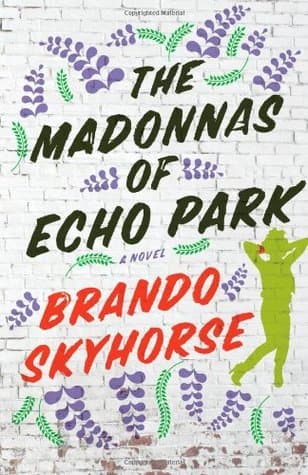
Synopsis
Covers the whole plot, including the ending.
- Difficulty
- Medium
- Pacing
- Moderate
- Mood
- Reflective, Evocative, Melancholy, Authentic
- Read it if
- You appreciate multi-perspective literary fiction exploring Mexican-American identity, gentrification, and the search for belonging in Los Angeles.
- Skip it if
- You prefer fast-paced, plot-driven narratives with a single protagonist and clear-cut resolutions.
The Madonnas of Echo Park Plot Summary
Covers the whole plot, including the ending.
The Drive-By Shooting
In Echo Park, Mexican-American women and girls gather to film a Madonna music video. Felicia Esperanza and her daughter, Aurora, are among them. A drive-by shooting suddenly breaks the joyful scene, injuring several people and killing Guadalupe. This event deeply affects the community and changes Felicia and Aurora's relationship. Aurora becomes quiet and questions her identity and connection to her heritage. Felicia, looking for stability and an escape from the trauma, focuses more on her work as a housekeeper in the Hollywood Hills, creating distance from her daughter.
Felicia's New Life in the Hills
After the shooting, Felicia Esperanza, already a housekeeper, spends more time in the Hollywood Hills, cleaning for Mrs. Caldwell, a rich but distant woman. Felicia finds an unexpected friend in Mrs. Caldwell, who, despite her wealth, feels very isolated. Their relationship, though employer-employee, becomes more personal than Felicia's strained connection with Aurora. Felicia is drawn into Mrs. Caldwell's world of quiet sadness and comfort, finding a temporary escape from her Echo Park anxieties, further widening the gap with her family.
Hector's Burden
Hector, an older Mexican day laborer, struggles to find work alongside younger men in Echo Park. He keeps his dignity despite the difficulties of being undocumented. One day, while looking for work, he sees a brutal murder. The victim is a young man known in the community. Hector faces a choice: report the crime and risk deportation due to his undocumented status, or stay silent and carry the weight of what he knows. His decision shows the uncertain life of undocumented immigrants, where justice is often a luxury they cannot afford, and silence is a way to survive.
The Virgin Mary at the Bus Stop
An older, outwardly religious woman, known for gossiping and judging, waits at a bus stop on Sunset Boulevard. She is proud of her faith, often criticizing others. To her surprise, she sees the Virgin Mary at the bus stop. This event challenges her strict beliefs and makes her face her own hypocrisy. The Virgin Mary's message is not what she expects, causing her to rethink her faith and how she treats others, suggesting a path to real spiritual understanding beyond just following religious rules.
Bus Route Confrontation
A normal bus ride through Echo Park one night turns into a violent fight. Various passengers from different backgrounds and social classes are on board. Tensions build and eventually explode as misunderstandings, biases, and egos clash. The conflict shows the wider cultural and class divisions in Los Angeles. The incident leaves several passengers injured and shaken, showing how small interactions can become disastrous when fueled by hidden societal pressures and a lack of empathy. The bus becomes a small example of the city's complex social makeup.
Aurora's Quest for Identity
Years after the drive-by shooting and her separation from her mother, Aurora Esperanza explores her childhood neighborhood of Echo Park. The area has changed a lot, with new businesses and residents replacing the familiar faces and places of her youth. Aurora feels more and more disconnected from her past and her Mexican-American heritage. Her goal is to understand her history and her place in a quickly changing world, especially in 'the land that belongs to us again,' a symbolic home for Mexican Americans. She tries to connect her personal identity with the changing look of her community.
The Shifting Landscape of Echo Park
As Aurora walks through Echo Park, she sees the deep impact of gentrification. The small, family-owned businesses she remembers are gone, replaced by trendy cafes and shops for a new, wealthier group. Her childhood home might still be there, but its surroundings are unrecognizable. This change reflects her own inner struggle with identity; just as the neighborhood loses its original feel, Aurora feels her own connection to her heritage fading. She struggles to find stability in a place that no longer feels like home, showing the displacement felt by long-term residents in quickly gentrifying areas.
Reconciling with the Past
Through her journey, Aurora meets different people who offer parts of stories and memories, helping her put together not only the details of the drive-by shooting but also her family's history and the larger story of the Mexican-American community in Echo Park. She learns about her mother's struggles and sacrifices, and her people's strength. This exploration helps her start to make peace with her past, including her difficult relationship with Felicia. Aurora begins to understand the complexities of her heritage and the sacrifices made by previous generations, leading to a deeper sense of self and belonging.
Felicia's Return
After years of working for Mrs. Caldwell and keeping her distance from Aurora, Felicia Esperanza starts to face the results of her choices. The quiet emptiness of her life in the Hills, despite its comforts, no longer satisfies her. She realizes the emotional cost her detachment has had on Aurora and herself. Felicia starts to think about her own desire for assimilation and the compromises she made. Her eventual return, both physically and emotionally, to Echo Park and to her daughter, shows her attempt to fix their broken relationship and to reconnect with her roots, acknowledging the cost of seeking the 'American dream' at the expense of family.
The Land That Once Was Ours
Aurora's journey ends with a deeper understanding and acceptance of her Mexican-American identity. She sees the strength of her community, despite the challenges of displacement and discrimination. The phrase 'the land that once was ours,' first said by a day laborer, deeply resonates with her. It means not just a historical claim but a spiritual and cultural reclaiming of identity and belonging in a country that often tries to erase it. Aurora finds a sense of home and purpose, embracing her heritage and the ongoing fight for recognition and justice for her people in Echo Park and beyond.
The Madonnas of Echo Park Characters
Aurora Esperanza
Protagonist
A young woman seeking her identity amidst a changing Echo Park.
Aurora is a thoughtful and sensitive young Mexican-American woman. The traumatic drive-by shooting in her youth profoundly impacts her, leading to a period of withdrawal and a strained relationship with her mother, Felicia. She struggles with her ethnic identity, feeling caught between her heritage and the pressures of assimilation in a rapidly gentrifying Los Angeles. Aurora is driven by a deep need to understand her past, her family's story, and her place in a world that often feels alienating.
Relationships: Felicia Esperanza (Daughter, initially estranged but seeks reconciliation); Guadalupe (Victim of the shooting, her death impacts Aurora deeply)
Felicia Esperanza
Supporting
Aurora's mother, a housekeeper seeking stability and assimilation.
Felicia is Aurora's mother, a hardworking Mexican-American woman who strives for a better life for her family through her work as a housekeeper in the Hollywood Hills. The drive-by shooting exacerbates her desire for stability and a degree of assimilation, leading her to distance herself from the trauma of Echo Park and, consequently, from Aurora. She finds a peculiar solace in her relationship with Mrs. Caldwell, which momentarily fills the void left by her family. Felicia's choices reflect the difficult compromises many immigrants make in pursuit of the American Dream.
Relationships: Aurora Esperanza (Mother, initially estranged due to trauma and choices); Mrs. Caldwell (Employer and unusual confidante)
Hector
Supporting
An aging undocumented day laborer facing moral dilemmas.
Hector is an older Mexican day laborer, an undocumented immigrant who embodies dignity and quiet resilience. Despite his age and the harsh competition for work, he maintains his integrity. He is a keen observer of his community and carries the weight of his undocumented status, which dictates many of his life choices. His moral compass is tested when he witnesses a murder, forcing him to choose between justice and personal safety, highlighting the vulnerability of those living in the shadows.
Relationships: Community Members (Fellow day laborers and residents of Echo Park)
Mrs. Caldwell
Supporting
A wealthy, emotionally detached housewife in the Hollywood Hills.
Mrs. Caldwell is a wealthy woman living in the Hollywood Hills, Felicia Esperanza's employer. Despite her material comforts, she is deeply isolated and emotionally detached from her own life. She develops an unusual, almost dependent, relationship with Felicia, finding a quiet confidante in her housekeeper. Mrs. Caldwell represents a different kind of loneliness and privilege, contrasting sharply with the struggles of the Echo Park community, yet sharing a common thread of human yearning for connection.
Relationships: Felicia Esperanza (Employer, unusual confidante)
Guadalupe
Mentioned
The victim of the drive-by shooting.
Guadalupe is a young woman who is tragically killed in the drive-by shooting during the Madonna video recreation. Her death serves as the catalyst for much of the novel's subsequent events, particularly Aurora's emotional trauma and Felicia's growing distance. Though she is not a developed character, her loss profoundly impacts the community of Echo Park and sets the stage for the themes of violence, loss, and the search for meaning.
Relationships: Aurora Esperanza (Community member, her death traumatizes Aurora); Felicia Esperanza (Community member)
The Religious Hypocrite
Supporting
A judgmental woman who encounters the Virgin Mary.
This unnamed character is an older woman from Echo Park known for her outward piety and judgmental nature. She often criticizes others in the community while upholding a strict, but perhaps superficial, adherence to religious rules. Her surreal encounter with the Virgin Mary at a bus stop challenges her preconceived notions of faith and forces her to confront her own hypocrisy, revealing a deeper, more personal understanding of spirituality.
Relationships: Community Members (Judges others, but is part of the community)
The Madonnas of Echo Park Themes
Identity and Belonging
The novel explores the struggle for identity, especially for Mexican Americans in Los Angeles. Characters like Aurora deal with their heritage in a changing Echo Park, feeling caught between their cultural roots and the pressure to fit in. The phrase 'the land that once was ours' captures the desire for a reclaimed identity and a sense of belonging in a country that often sees them as outsiders. Felicia's choices to move away from Echo Park for a different life also highlight the complex negotiations of identity.
“We slipped into this country like thieves, onto the land that once was ours.”
The American Dream and Its Costs
The American Dream is a main theme, often shown with its hidden costs. Felicia's choice to work in the Hollywood Hills and distance herself from her community, while giving her financial stability, leads to emotional separation from her daughter. Hector's struggle as an undocumented day laborer, risking everything for a chance at work, shows the dream's harsh realities and the uncertainty of life for those on the edges. The novel questions if the dream is truly reachable or if it demands too great a sacrifice of identity and connection.
“They cook the meals, clean the homes, and struggle to lose their ethnic identity in the pursuit of the American dream.”
Gentrification and Displacement
The change of Echo Park through gentrification is a strong background for the characters' personal journeys. Aurora's return to her childhood neighborhood shows a drastically changed area, with familiar places replaced by new businesses. This physical displacement reflects the emotional and cultural displacement felt by long-term residents, especially the Mexican-American community. The theme highlights how economic development can erase history and cultural identity, making people feel disconnected from their roots and their sense of home.
“Aurora goes on a journey through her gentrified childhood neighborhood in a quest to discover her own history and her place in the land that all Mexican Americans dream of, 'the land that belongs to us again.'”
Trauma and Resilience
The drive-by shooting is a central traumatic event that affects Aurora, Felicia, and the entire community. The characters' reactions to this and other hardships, like Hector's moral problem, show their strength. Despite violence, loss, and daily struggles, the community shows lasting spirit. The novel looks at how people cope with trauma, sometimes by distancing themselves, sometimes by trying to understand and reclaim their past, ultimately showing the strength needed to survive and thrive amidst hardship.
“In the aftermath, Aurora Esperanza grows distant from her mother, Felicia, who as a housekeeper in the Hollywood Hills establishes a unique relationship with a detached housewife.”
Plot Devices & Literary Techniques
Interconnected Narratives
The stories of various characters are woven together to form a larger community portrait.
The novel employs a fragmented narrative structure, presenting the stories of different characters (Felicia, Aurora, Hector, the religious woman, etc.) in seemingly disconnected chapters. However, these individual narratives are subtly linked by their shared setting of Echo Park, the lingering effects of the drive-by shooting, and the overarching themes of identity, struggle, and community. This device allows for a multifaceted exploration of the Mexican-American experience, offering diverse perspectives that collectively paint a comprehensive portrait of the neighborhood and its inhabitants.
Symbolism of 'The Land That Once Was Ours'
A recurring phrase symbolizing historical ownership, cultural heritage, and the yearning for belonging.
This phrase, introduced early by an illegal day laborer, acts as a powerful motif throughout the novel. It initially refers to the historical Mexican ownership of the land now known as Los Angeles. More broadly, it symbolizes the Mexican-American community's deep-seated connection to their heritage, their sense of displacement in their own country, and their longing for a place where their identity is recognized and valued. For Aurora, it becomes a personal quest to reclaim her own history and belonging within this contested landscape, transcending a literal interpretation to represent cultural and spiritual reclamation.
The Drive-By Shooting
A catalytic event that initiates plot developments and character transformations.
The drive-by shooting at the novel's outset serves as a critical plot device. It is not merely an incident but a traumatic catalyst that propels much of the subsequent narrative. It directly impacts Aurora's emotional state and her relationship with Felicia, leading to their estrangement. It also highlights the fragility of life and the ever-present threat of violence in the community. The event's aftermath forces characters to make difficult choices and confront their identities, setting the stage for their individual and collective journeys throughout the story.
The Madonnas of Echo Park Quotes
“Every tattoo tells a story, and every story has a beginning, a middle, and an end, even if the end is just the beginning of another story.”
“Echo Park was a place where dreams went to die, but sometimes, just sometimes, they came back to life, stitched together with new scars and old memories.”
“The past isn't dead. It's not even past. It's right here, in the lines on our faces, the scars on our bodies, the ghosts in our heads.”
“You can leave Echo Park, but Echo Park never leaves you.”
“Love was a battlefield, and in Echo Park, the battles were fought with switchblades and broken promises.”
“Some people collect stamps, some people collect coins. We collected grudges.”
“The city was a palimpsest, each generation writing its own story over the faded script of the last.”
“There's a difference between remembering and living in the past. One keeps you human, the other keeps you a ghost.”
“We were all Madonnas in our own way, carrying burdens and blessings, sometimes indistinguishable from each other.”
“Gangs were like families, only with more rules and deadlier consequences.”
“The silence in the house was heavy, filled with all the things left unsaid, all the apologies never made.”
“Hope was a dangerous thing in Echo Park. It had a way of getting crushed, leaving behind sharper edges.”
“We were all just trying to make sense of the chaos, to find a pattern in the spilled paint of our lives.”
Quiz
10 questions on the plot and the characters. Each answer comes with a short explanation.
Question 1
What event initially causes Aurora Esperanza to grow distant from her mother, Felicia?
- Felicia's new job as a housekeeper in the Hollywood Hills.
- Aurora discovering Felicia's past secrets.
- They are caught in the crossfire of a drive-by shooting while acting out a Madonna music video.
- Aurora moving away from Echo Park for college.
Show answer
C. They are caught in the crossfire of a drive-by shooting while acting out a Madonna music video. The synopsis states that after a dozen or so girls and mothers are caught in a drive-by shooting while acting out a Madonna music video, Aurora Esperanza grows distant from her mother, Felicia.
Question 2
Which character establishes a 'unique relationship' with a detached housewife while working as a housekeeper in the Hollywood Hills?
- Aurora Esperanza
- Felicia Esperanza
- The day laborer
- The religious hypocrite
Show answer
B. Felicia Esperanza The synopsis explicitly states, 'Aurora Esperanza grows distant from her mother, Felicia, who as a housekeeper in the Hollywood Hills establishes a unique relationship with a detached housewife.'
Question 3
What is the primary internal conflict faced by the day laborer after witnessing a murder?
- Whether to report the crime and risk his illegal status.
- Whether to seek revenge on the murderer.
- Whether to use the murder as leverage for better work opportunities.
- Whether to confide in his fellow day laborers.
Show answer
A. Whether to report the crime and risk his illegal status. The synopsis mentions a day laborer who 'witnesses a murder that pits his morality against his illegal status,' indicating his dilemma about reporting the crime.
Question 4
What common dream or aspiration is shared by the Mexican-American characters in Echo Park, as described in the book's premise?
- To become famous musicians or artists.
- To return to their ancestral homeland in Mexico.
- To lose their ethnic identity in pursuit of the American dream.
- To reclaim 'the land that belongs to us again,' referring to the land that was once theirs.
Show answer
D. To reclaim 'the land that belongs to us again,' referring to the land that was once theirs. The synopsis explicitly ends with Aurora's quest to find her place in 'the land that all Mexican Americans dream of, "the land that belongs to us again."'
Question 5
How does the 'religious hypocrite' character receive her comeuppance?
- She is exposed by a local newspaper.
- She meets the Virgin Mary at a bus stop on Sunset Boulevard.
- Her family disowns her for her actions.
- She loses all her possessions in a fire.
Show answer
B. She meets the Virgin Mary at a bus stop on Sunset Boulevard. The synopsis states, 'a religious hypocrite gets her comeuppance when she meets the Virgin Mary at a bus stop on Sunset Boulevard.'
Question 6
What is the central focus of Aurora Esperanza's journey later in the novel?
- To find a new job outside of Echo Park.
- To reconnect with her estranged father.
- To discover her own history and her place in her gentrified childhood neighborhood.
- To investigate the drive-by shooting from her past.
Show answer
C. To discover her own history and her place in her gentrified childhood neighborhood. The synopsis describes Aurora going 'on a journey through her gentrified childhood neighborhood in a quest to discover her own history and her place in the land that all Mexican Americans dream of.'
Question 7
The opening quote, 'We slipped into this country like thieves, onto the land that once was ours,' spoken by an illegal Mexican day laborer, primarily introduces which key thematic tension of the novel?
- The conflict between different generations of immigrants.
- The struggle for economic prosperity among the working class.
- The irony and historical injustice of Mexican immigrants being labeled 'thieves' on land that historically belonged to Mexico.
- The desire to assimilate and abandon cultural heritage.
Show answer
C. The irony and historical injustice of Mexican immigrants being labeled 'thieves' on land that historically belonged to Mexico. The quote directly addresses the historical context of Mexicans being on land that was once theirs, highlighting the irony and injustice of their current 'illegal' status.
Question 8
Beyond the Esperanza family, how does the novel connect the lives of various neighborhood members?
- Through a shared community center that hosts weekly events.
- Through a series of interconnected events, including a murder, a religious encounter, and a violent bus route.
- Through a detective investigating crimes that involve multiple characters.
- Through their shared workplace in the Hollywood Hills.
Show answer
B. Through a series of interconnected events, including a murder, a religious encounter, and a violent bus route. The synopsis states, 'The Esperanzas’ shifting lives connect with those of various members of their neighborhood. A day laborer... witnesses a murder... a religious hypocrite gets her comeuppance... a typical bus route turns violent.' These are distinct but interconnected events.
Question 9
What is the significance of the title 'The Madonnas of Echo Park' in relation to the initial inciting incident of the novel?
- It refers to the religious figures worshipped in the local church.
- It alludes to the group of girls and mothers who gather to act out a scene from a Madonna music video, leading to the drive-by shooting.
- It symbolizes the unattainable dreams of the women in the community.
- It describes a specific art installation found in Echo Park.
Show answer
B. It alludes to the group of girls and mothers who gather to act out a scene from a Madonna music video, leading to the drive-by shooting. The title directly links to the opening event where 'a dozen or so girls and mothers gather on an Echo Park street corner to act out a scene from a Madonna music video,' implying these women are the 'Madonnas' of the title.
Question 10
The novel explores the struggle of its characters to 'lose their ethnic identity in the pursuit of the American dream.' This theme suggests a tension between which two cultural forces?
- Tradition and modernity.
- Individualism and community.
- Assimilation into American culture and the preservation of Mexican-American heritage.
- Urban life and rural values.
Show answer
C. Assimilation into American culture and the preservation of Mexican-American heritage. The phrase 'struggle to lose their ethnic identity in the pursuit of the American dream' directly points to the conflict between maintaining one's heritage and assimilating into the dominant culture.
The Madonnas of Echo Park FAQ
What is the central premise of 'The Madonnas of Echo Park'?
The novel explores the lives of Mexican-American characters in Echo Park, Los Angeles, focusing on their struggles with identity, assimilation, and the pursuit of the American dream. It delves into the unseen world of day laborers, housekeepers, and residents grappling with their heritage in a gentrifying neighborhood.
How does the drive-by shooting incident impact the Esperanza family and the community?
The drive-by shooting, which occurs during a Madonna music video reenactment, serves as a catalyst for significant shifts in the characters' lives. For Aurora Esperanza, it creates a lasting emotional rift with her mother, Felicia, and propels her later quest for identity. It also highlights the precariousness of life in the neighborhood.
Describe Felicia Esperanza's relationship with the detached housewife in Hollywood Hills.
Felicia, working as a housekeeper, develops a complex and unusual relationship with a wealthy, emotionally distant housewife. This connection transcends typical employer-employee dynamics, hinting at shared loneliness and unspoken understanding despite their vast social differences.
What role does the 'land that once was ours' theme play in the novel?
This recurring theme, introduced by an illegal Mexican day laborer, underscores the historical context of Mexican-American identity and the sense of dispossession felt by many characters. It fuels Aurora's journey to reclaim her heritage and find her place in a land that feels both familiar and alien.
Who is Aurora Esperanza and what is her primary journey in the book?
Aurora Esperanza is a central character whose journey is largely defined by her quest to understand her history and identity after the trauma of the drive-by shooting. She revisits her gentrified childhood neighborhood, seeking to connect with her past and find her place within the Mexican-American community's complex legacy.
How do the various interconnected stories ultimately converge or reflect each other?
The seemingly disparate stories, such as the day laborer witnessing a murder, the religious hypocrite's encounter, and the violent bus route, are all linked by their shared setting in Echo Park and the common struggles of its Mexican-American residents. They collectively paint a panoramic picture of the community's joys, sorrows, and resilience, culminating in Aurora's overarching quest for belonging.
What is the significance of the Madonna music video reenactment?
The Madonna music video reenactment symbolizes the characters' attempts to embrace American popular culture and perhaps escape their ethnic identities, while ironically bringing them into a violent conflict that reinforces their marginalization. It highlights the tension between assimilation and cultural heritage.
How does the 'religious hypocrite' character's encounter with the Virgin Mary at a bus stop contribute to the novel's themes?
This vignette serves as a moment of divine intervention or profound self-reflection, offering a critique of superficial faith while suggesting the possibility of genuine spiritual awakening. It explores themes of morality, redemption, and the unexpected places where truth can be found within the community.
Are there any subtle connections between the day laborer's experience and Aurora's journey?
The day laborer's moral dilemma after witnessing a murder, pitting his ethics against his illegal status, subtly echoes Aurora's larger quest for justice and identity. Both characters grapple with the precariousness of their existence and the compromises required to navigate a society that often overlooks or exploits them.
How does Felicia's relationship with her employer reflect her own psychological state?
Felicia's unique bond with the detached housewife suggests her own emotional distance and perhaps a longing for connection beyond her domestic role. Her ability to understand and console her employer, despite their class differences, reveals a deep empathy and a quiet strength, possibly a coping mechanism for her own unexpressed grief or desires.
Analyze Aurora's psychological motivation for her journey through gentrified Echo Park.
Aurora's journey is driven by a deep psychological need to resolve her identity crisis, which was exacerbated by the drive-by shooting and her subsequent estrangement from Felicia. She seeks to reconstruct her personal history and understand her place within the evolving cultural landscape of her childhood neighborhood.
How does the novel explore the psychological impact of living as an undocumented immigrant?
Through characters like the day laborer, the novel reveals the profound psychological toll of living in fear, constantly navigating moral compromises, and facing the threat of exposure. It highlights the internal conflict between self-preservation and a desire for justice or dignity, deeply affecting one's sense of self and belonging.
What psychological barriers do the characters face in achieving the 'American dream'?
The characters encounter significant psychological barriers, including feelings of invisibility, the pressure to shed their ethnic identity, and the trauma of discrimination. These internal conflicts often manifest as alienation, self-doubt, and a struggle to reconcile their heritage with the often-elusive promise of upward mobility, leading to a fragmented sense of self.
Is 'The Madonnas of Echo Park' ultimately a hopeful or a tragic story?
The novel presents a nuanced view, intertwining elements of both hope and tragedy. While it exposes the harsh realities and sorrows faced by its characters, Aurora's quest for self-discovery and the resilience shown by the community offer a glimmer of hope for cultural reclamation and identity, even amidst ongoing struggles.
How does Skyhorse use the setting of Echo Park to comment on broader societal issues?
Echo Park, with its history of Mexican-American settlement and ongoing gentrification, serves as a microcosm for larger societal issues such as cultural displacement, economic inequality, and the complexities of immigration. The changing landscape reflects the characters' internal and external battles for identity and belonging.
What is the author's stance on assimilation versus cultural preservation?
Skyhorse portrays the tension between assimilation and cultural preservation without explicitly taking a side, instead exploring the multifaceted experiences of characters caught between these forces. The novel suggests that while assimilation may offer certain advantages, it often comes at the cost of identity, and true belonging may lie in embracing one's heritage.
How does the novel challenge or reinforce stereotypes about the Mexican-American community?
The novel actively challenges stereotypes by presenting a diverse cast of complex, multi-dimensional Mexican-American characters with varied experiences and moral dilemmas. It avoids monolithic portrayals, instead offering an intimate and nuanced look into their lives, thereby humanizing and diversifying the narrative beyond simplistic assumptions.
What does the ending suggest about Aurora's future and the future of the community?
The ending, while not offering a definitive resolution, suggests that Aurora has achieved a deeper understanding of her past and her place within her heritage. It implies a continuous journey for both Aurora and the community, one of ongoing struggle and adaptation, but also of resilience and the persistent hope for cultural affirmation and belonging.
About the author

Brando Skyhorse is an enrolled member of the Muscogee (Creek) Nation and the author of the novel "The Madonnas of Echo Park." His work often explores themes of identity, family, and the Native American experience. Skyhorse is also the recipient of a Whiting Foundation Creative Nonfiction Grant.
Similar books
- The House on Mango Street
Sandra Cisneros
3.6 (126k) average on GoodreadsYoung AdultFocuses on the experiences of a young Latina girl in a changing urban neighborhood.
- Cutting for Stone
Abraham Verghese
4.3 (337k) average on GoodreadsLiterary FictionFeatures interconnected character narratives and themes of identity and belonging across generations.
- The Old Man and the Sea
Ernest Hemingway
3.8 (831k) average on GoodreadsLiterary FictionA Cuban fisherman's long struggle with a giant marlin becomes a story of endurance and dignity, now retold for young adults with illustrations, phonetic guides, and writing prompts in Traditional Chinese.
- One Hundred Years of Solitude
Gabriel García Márquez
4.1 (753k) average on GoodreadsLiterary FictionThrough the multi-generational story of the Buendía family, a mythical town deals with the repeating patterns of time, love, and solitude, as the extraordinary mixes with the ordinary.
- The Goldfinch
Donna Tartt
3.9 (720k) average on GoodreadsLiterary FictionHaunted by a tragic explosion and clutching a stolen Dutch masterpiece, a young orphan navigates the opulent drawing rooms of New York and the gritty underbelly of the art world, desperately seeking connection and redemption amidst a life spiraling into crime and obsession.
- Little Fires Everywhere
Celeste Ng
4.1 (713k) average on GoodreadsLiterary FictionIn Shaker Heights, an artist and her daughter move in, and their free-spirited lives clash with a rule-bound matriarch, revealing hidden conflicts beneath a perfect surface.





Enjoyed the summary?
A summary gives you the shape of the book. The book itself has the detail, the examples and the voice.
Find The Madonnas of Echo Park on AmazonAs an Amazon Associate, BookBrief earns from qualifying purchases. How we're funded