

Core Idea
- Difficulty
- Medium
- Read it if
- You are interested in revolutionary approaches to animal training, the power of non-verbal communication, or a compelling personal story of overcoming adversity and challenging established norms. Particularly valuable for horse enthusiasts seeking ethical and effective training methods.
- Skip it if
- You are looking for a purely academic text on equine behavior, prefer fiction, or are not interested in personal memoirs that intertwine with professional methodology.
Key Takeaways from The Man Who Listens to Horses
The Language of Equus
Horses communicate through a universal, observable non-verbal language.
Roberts's main idea is that horses, like all prey animals, have a highly developed non-verbal communication system, which he calls 'Equus'. This language is the same for all horse breeds and humans can learn to understand it. It is a system of gestures, expressions, and movements that show intent, mood, and social rank. By watching mustangs in the wild, Roberts figured out this language, realizing that horses constantly signal their intentions and feelings. Understanding Equus lets humans talk to horses in a way that feels natural and safe to the animal, building trust instead of fear. This change from training based on dominance to training based on communication is the core of his method.
“Horses communicate in a silent language, a complex ballet of ear flicks, head turns, and body postures that, once understood, unlocks their world to us.”
In the book: Roberts spent countless hours observing wild mustangs in Nevada at age 13, meticulously documenting their interactions, their displays of submission, dominance, fear, and comfort. He learned to mimic their 'flight' and 'fight' signals, and more importantly, their 'join-up' sequence.
Try this: Instead of forcing a horse, learn to 'speak' to it using its own language. Observe a horse's ears, eyes, and body posture to understand its current state. Respond with appropriate body language – for instance, avoiding direct eye contact and presenting a non-threatening profile to a fearful horse.
Related ideas: equus-language, non-verbal-communication, horse-behavior
Join-Up: The Invitation to Partnership
Earning a horse's trust through mimicry and respect, not force.
The 'Join-Up' is Roberts's main method for creating a willing partnership with a horse. It is a carefully planned series of non-verbal cues meant to imitate how a dominant horse invites a subordinate into its herd. Roberts uses specific body language to 'drive' the horse around a round pen, creating a mild sense of pressure and unease. He then precisely releases this pressure when the horse shows signs of giving in and wanting to connect (e.g., licking lips, lowering head, turning an ear towards him). The key moment is when the horse actively tries to 'join' the human, often by turning to face them, walking towards them, and eventually following them. This process, often taking less than 30 minutes, creates a deep bond built on trust and willing cooperation, replacing old methods based on force.
“My goal is not to break the horse, but to invite it to join me, to choose me as its leader.”
In the book: The most famous demonstration is Roberts's invitation to Queen Elizabeth II, where he performed a Join-Up with an unhandled wild horse, saddling and riding it within minutes, astonishing the royal observers.
Try this: When introducing yourself to a new horse, or restarting with a difficult one, approach with an understanding of the Join-Up principles. Avoid direct, confrontational approaches. Allow the horse space, then gradually invite connection through subtle body language, rewarding even the slightest positive responses.
Related ideas: join-up-method, trust-building, horse-training
Escaping the Cycle of Violence
Trauma from early life shaped Roberts's gentle philosophy.
Roberts's gentle methods came from a clear contrast to his own childhood. His father, a horse trainer, used traditional, often brutal, methods of 'breaking' horses through force and fear. Monty himself experienced physical abuse from his father, which gave him a deep understanding of animals treated similarly. This personal pain drove his resolve to find a better, more humane way to interact with horses. He saw that training based on fear only created obedience, not partnership, and often led to dangerous and unpredictable horse behavior. His work shows that breaking cycles of violence and proving that kindness and understanding lead to better results.
“Violence begets violence, whether with horses or humans. My father taught me what not to do.”
In the book: Roberts recounts numerous instances of his father's violent training methods, including 'bucking out' horses until they were exhausted and submissive, and the physical abuse he himself suffered for questioning these methods.
Try this: Reflect on how past experiences, particularly those involving force or intimidation, might be shaping your current interactions. Seek out methods that prioritize understanding and cooperation over coercion in all relationships, human or animal.
Related ideas: trauma-informed-approach, non-violence, empathy
The Power of Observation
Deep listening begins with keen, unbiased observation.
Roberts stresses that his 'magic' is not natural talent, but comes from constant observation and a willingness to learn from horses themselves. He spent years simply watching wild mustangs, without adding human expectations or ideas. This deep, unbiased observation helped him decode their complex social structures and communication cues. He argues that most misunderstandings between humans and animals (and humans and humans) happen because people fail to truly observe and listen to the non-verbal signals being sent. By quieting our own thoughts and old ideas, we can become more aware of subtle messages, leading to deep insights and better communication.
“The horse will tell you everything you need to know, if only you learn to watch and truly listen.”
In the book: His solitary expedition into the Nevada desert at 13, where he spent months living among wild mustangs, meticulously documenting their every interaction, is the prime example of his dedication to observation.
Try this: Practice 'active observation' in your daily life. Before reacting or speaking, take a moment to truly observe the body language, facial expressions, and subtle cues of others. In new situations, prioritize observation over immediate action.
Related ideas: active-listening, observational-learning, mindfulness
Beyond the Horse: Universal Communication
Lessons from horses apply directly to human relationships.
One of the most important lessons from Roberts's work is that non-verbal communication principles are universal. He argues that the same ideas of building trust, respect, and understanding fear and comfort, which he uses with horses, apply equally to human interactions. Whether it is parent-child relationships, employer-employee dynamics, or solving conflicts, recognizing and responding to non-verbal cues can greatly improve outcomes. His work with companies like IBM and Disney shows that creating an environment of psychological safety and clear, respectful communication (even unspoken) leads to higher productivity and stronger teams. This idea raises his 'horse whispering' from an animal training technique to a powerful tool for human connection.
“The language of trust and respect, once learned from a horse, translates surprisingly well to the human world.”
In the book: Roberts's extensive work with over 250 corporations, where he teaches executives and employees about non-verbal communication, demonstrating how 'Equus' principles can improve team dynamics and leadership.
Try this: Apply the principles of 'Join-Up' to human interactions: seek voluntary cooperation rather than demanding it, understand and respond to the unspoken needs of others, and build trust through consistent, respectful behavior.
Related ideas: interpersonal-communication, leadership-skills, psychological-safety
The Dangers of Anthropomorphism
Projecting human emotions onto animals hinders true understanding.
Roberts consistently warns against the common human habit of treating animals like humans – giving them human thoughts, reasons, and feelings. He argues that this prevents us from understanding animals on their own terms. When a horse 'acts stubborn' or 'misbehaves,' it is often a natural response to fear, confusion, or instinct, not bad intentions or defiance. By seeing their actions through a human lens, we misidentify the problem and use wrong solutions, often leading to frustration and conflict. True understanding comes from recognizing and respecting the animal's unique mind and instincts as a different species.
“To truly understand a horse, you must stop thinking like a human and start thinking like a horse.”
In the book: He often describes how people misinterpret a horse's flight response as 'stubbornness' or a 'challenge,' when in reality, it's a deep-seated survival instinct.
Try this: When interacting with animals (or even people from different cultural backgrounds), challenge your assumptions. Ask yourself if you are projecting your own feelings or motivations onto them, or if you are truly observing their behavior from their perspective.
Related ideas: animal-cognition, species-specific-behavior, cognitive-bias
Fear: The Root of Resistance
Most 'bad' behavior stems from fear, not defiance.
Roberts repeatedly says that for prey animals like horses, fear is the most powerful and basic emotion. Most aggressive, 'stubborn,' or unpredictable behaviors in horses come from fear – fear of the unknown, fear of pain, fear of being trapped, or fear of humans. Traditional training often makes this fear worse, creating a bad cycle. Roberts's methods, in contrast, aim to systematically reduce and remove fear, replacing it with a sense of safety and trust. When a horse feels safe and understood, its natural cooperation appears, and many behavior problems simply disappear. This idea has important implications for understanding and managing fear-driven behaviors in humans too.
“A fearful horse is a dangerous horse. Remove the fear, and you remove the danger.”
In the book: Roberts's ability to quickly calm and 'gentle' horses deemed 'unbreakable' or 'dangerous' by other trainers, simply by identifying and addressing their underlying fears through non-confrontational communication.
Try this: When faced with resistance or 'bad' behavior in any context, first consider if fear is an underlying factor. Address the fear through reassurance, clear communication, and creating a safe environment, rather than resorting to punishment or force.
Related ideas: fear-response, behavioral-psychology, trauma-healing
The Gentle Leadership Paradox
True leadership is earned through respect, not dominance.
Roberts's approach questions the traditional idea of leadership as dominance. He shows that in the horse world, the true leader is not the most aggressive, but the one who provides safety, security, and clear direction, earning the willing following of the herd. His 'Join-Up' is an invitation to leadership, where the horse chooses to follow. This 'gentle leadership' idea applies strongly to human situations. Leaders who inspire trust, communicate clearly, and genuinely care for their team members get much greater loyalty and productivity than those who rule through fear or position. It is about being someone others want to follow, not someone they have to follow.
“A leader doesn't command through intimidation, but through the willing following of those who trust and respect them.”
In the book: The Join-Up process itself is a prime example: Roberts doesn't force the horse to follow; he creates an environment where the horse actively seeks to join him, demonstrating a choice to accept his leadership.
Try this: In leadership roles, focus on building trust and providing clear, consistent guidance. Prioritize the well-being and understanding of your team. Seek to be a leader people choose to follow, rather than one they simply obey.
Related ideas: servant-leadership, authentic-leadership, team-building
The Unspoken Dialogue with James Dean
A friendship built on shared empathy for the misunderstood.
Roberts's unexpected friendship with actor James Dean adds a touching human element to his story. Dean, often seen as rebellious and mysterious, shared with Roberts a deep understanding for those marginalized and misunderstood, whether horses or people. Roberts saw in Dean a similar spirit who, despite his fame, felt a deep connection to those who struggled to communicate or fit in. Their bond highlights the idea that real connection often goes beyond spoken words, relying instead on shared understanding, recognizing vulnerability, and being able to 'listen' to what is not said. This friendship shows Roberts's belief in the universal language of empathy.
“James Dean understood the unspoken language, the vulnerability beneath the surface, just like I did with horses.”
In the book: Roberts's detailed recounting of his friendship with James Dean, their shared experiences, and Dean's intuitive understanding of horses, often mirroring Monty's own insights.
Try this: Seek to understand the unspoken needs and feelings of others, especially those who may be struggling to express themselves. Build connections based on shared empathy and a willingness to look beyond surface appearances.
Related ideas: empathy, human-connection, vulnerability
Challenging the Status Quo
Innovation often requires courage to defy entrenched traditions.
Roberts's journey was a constant struggle against old, often harsh, horse training traditions. His methods were laughed at, dismissed, and actively opposed by the mainstream horse community for decades. He faced rejection from his own father and the professional world, enduring significant personal and financial trouble. Yet, his strong belief in a more humane and effective way eventually led to global recognition and a major change in horse training. His story is a powerful reminder that real innovation often requires great courage, endurance, and a willingness to challenge old ways, even when facing huge opposition. It shows the importance of conviction when facing hardship.
“To change the world, even a small part of it, you must be willing to stand alone against the tide.”
In the book: The decades-long struggle Roberts faced to gain acceptance for his methods, including being blacklisted from rodeos and horse shows, and his ultimate vindication through the Queen's invitation.
Try this: If you believe in a better way, even if it's unconventional, pursue it with conviction. Be prepared for resistance, but let your results and the positive impact of your approach speak for themselves.
Related ideas: innovation, resilience, paradigm-shift
The Man Who Listens to Horses Quotes
“The horse will tell you, if you listen.”
“Violence is never the answer. Not for horses, not for people.”
“Trust is not something you demand; it is something you earn.”
“Every horse is an individual, and you must treat them as such.”
“Horses are not born bad; they are made bad by bad handling.”
“The Join-Up is a conversation, not a conquest.”
“When you teach without force, the lesson is remembered forever.”
“Fear is the greatest enemy of progress.”
“The greatest reward is seeing a horse choose to be with you.”
“If a horse is misbehaving, it's usually because it doesn't understand what you're asking.”
“My goal is not to break a horse, but to make it want to work with me.”
“It's all about empathy. Putting yourself in their shoes, or hooves, as it were.”
“The language of the horse is universal, if only we take the time to learn it.”
“Sometimes the greatest lessons come from the most difficult horses.”
Quiz
10 questions on the main ideas. Each answer comes with a short explanation.
Question 1
What groundbreaking method did Monty Roberts develop that allows him to quickly gain a horse's trust and acceptance?
- Electric shocking to subdue the horse
- Forcing the horse into submission with physical restraint
- His 'join-up' method, based on nonverbal communication
- Using tranquilizers to calm the horse before training
Show answer
C. His 'join-up' method, based on nonverbal communication Monty Roberts's signature method is 'join-up,' which relies on understanding and mimicking equine nonverbal communication to establish trust and partnership, rather than force or sedation.
Question 2
At what age did Monty Roberts begin riding horses?
- Five years old
- Ten years old
- Two years old
- Thirteen years old
Show answer
C. Two years old The book states that Roberts started riding at the age of two, indicating a very early immersion in the world of horses.
Question 3
What significant event marked the turning point for Monty Roberts's methods gaining international recognition?
- Winning a major rodeo championship
- An invitation to demonstrate his method to the Queen of England
- His friendship with James Dean
- Publishing his first academic paper on horse psychology
Show answer
B. An invitation to demonstrate his method to the Queen of England The invitation to demonstrate his 'join-up' method to the Queen of England is highlighted as the event that changed his life and brought his methods to a global stage.
Question 4
Where did Monty Roberts go at the age of 13 to study mustangs in the wild, an experience that profoundly influenced his understanding of horses?
- The plains of Montana
- The high deserts of Nevada
- The mountains of Colorado
- The ranches of Texas
Show answer
B. The high deserts of Nevada At 13, Roberts went alone into the high deserts of Nevada to observe mustangs, which was a pivotal experience in developing his unique insights.
Question 5
How did Monty Roberts's father react to his unconventional horse training methods?
- He fully supported and encouraged them.
- He was indifferent and let Monty train as he wished.
- He was a violent horse-trainer who was unwilling to accept Monty's methods.
- He adopted Monty's methods after seeing their success.
Show answer
C. He was a violent horse-trainer who was unwilling to accept Monty's methods. The book explicitly states that his father was a 'violent horse-trainer' who was 'unwilling to accept Monty's unconventional training methods,' highlighting a significant personal conflict.
Question 6
Beyond horses, Monty Roberts's understanding of nonverbal communication is applied to which of the following human relationships?
- Strictly professional settings, like doctor-patient interactions
- Only friendships and casual acquaintances
- Parent and child, employee and employer, and abuser and abused
- Mainly political negotiations and international diplomacy
Show answer
C. Parent and child, employee and employer, and abuser and abused The book emphasizes that his understanding of nonverbal communication extends to human relationships such as parent and child, employee and employer, and abuser and abused.
Question 7
What is the remarkable claim Roberts makes about the speed with which he can train a wild, unhandled horse to accept a bridle, saddle, and rider?
- In approximately one week
- In a full day of intensive training
- In 30 minutes
- Over several months of consistent work
Show answer
C. In 30 minutes A key aspect of his legend is his ability to persuade a wild horse to accept a bridle, saddle, and rider in just 30 minutes, showcasing the effectiveness of his gentle methods.
Question 8
Given his philosophy, what would Monty Roberts most likely advocate for in resolving conflicts in human relationships?
- Dominance and assertion of authority through verbal commands.
- Ignoring nonverbal cues and focusing solely on spoken agreements.
- Learning to 'listen' to and understand nonverbal communication for deeper connection.
- Employing physical force to establish boundaries and control.
Show answer
C. Learning to 'listen' to and understand nonverbal communication for deeper connection. His work with horses and its application to human relationships centers on the power of nonverbal communication, suggesting that 'listening' beyond words is crucial for understanding and resolving conflicts.
Question 9
The book describes Monty Roberts's 'horse sense' as being based on what primary factor?
- Innate magical abilities passed down through generations.
- Extensive formal academic study in animal psychology.
- A lifetime of experience and observation, particularly of wild horses.
- The use of advanced technological devices to interpret horse behavior.
Show answer
C. A lifetime of experience and observation, particularly of wild horses. The text states his 'amazing 'horse sense' is based on a lifetime of experience,' particularly his early observations of mustangs in the wild, rather than magic or formal schooling.
Question 10
Which of the following corporations is NOT mentioned as having worked with Monty Roberts, demonstrating the broad applicability of his communication insights?
- General Motors
- ExxonMobil
- IBM
- Disney
Show answer
B. ExxonMobil The book specifically lists General Motors, IBM, Disney, and Merrill Lynch among the over 250 corporations he's worked with. ExxonMobil is not mentioned.
The Man Who Listens to Horses FAQ
What is 'Join-Up' and how does it work?
'Join-Up' is Monty Roberts's signature method of non-violent horse training, based on the communication signals he observed in wild mustangs. It involves a specific sequence of body language and movement that persuades a horse to voluntarily accept a human's leadership, often in under 30 minutes, without force or fear.
Does Monty Roberts's method work on all horses, including wild or previously abused ones?
Yes, Monty Roberts's methods, particularly 'Join-Up,' are designed to work on all horses, including those considered wild, unbroken, or with a history of abuse. His approach focuses on understanding the horse's natural instincts and communication, allowing even the most fearful animals to trust and connect.
How is Monty Roberts's horse training different from traditional methods?
Monty Roberts's methods fundamentally differ from traditional horse breaking by rejecting force, pain, and fear. Instead of dominance through intimidation, he uses observation, non-verbal communication, and understanding of equine psychology to build trust and willing partnership, often achieving results in minutes rather than weeks.
What inspired Monty Roberts to develop his unique horse training techniques?
Monty Roberts was inspired by observing wild mustangs in Nevada at age 13, where he learned their natural communication patterns. This contrasted sharply with the violent methods he witnessed and experienced from his father, leading him to seek a more humane and effective way to interact with horses.
Beyond horses, how do Monty Roberts's insights on nonverbal communication apply to human relationships?
Roberts's insights demonstrate that nonverbal cues are powerful in all relationships, whether between parent and child, employer and employee, or abuser and abused. He teaches that by learning to 'listen' to unspoken signals, individuals can foster deeper understanding, trust, and more effective communication in human interactions.
Did Monty Roberts really train horses for the Queen of England?
Yes, a pivotal moment in Monty Roberts's career was an invitation to demonstrate his 'Join-Up' method to Queen Elizabeth II at Windsor Castle. This event brought his revolutionary techniques to international attention and helped validate his lifetime of work.
What challenges did Monty Roberts face in getting his methods accepted?
Monty Roberts faced significant resistance and skepticism from the traditional horse-training community, including his own father, who used violent methods. His gentle approach was often seen as unconventional and ineffective, leading to a long struggle for recognition and acceptance.
What is the key takeaway from 'The Man Who Listens to Horses' regarding animal communication?
The key takeaway is that animals, particularly horses, communicate through a complex system of nonverbal signals, and humans can learn to understand and respond to these signals without resorting to force. This book emphasizes empathy, observation, and building trust as the foundation for profound interspecies communication.
About the author

Monty Roberts is an American horse trainer and author known for his work in equine psychology and training. His book, "The Man Who Listens to Horses," details his experiences and methods in understanding horse behavior and communication. Roberts has gained recognition for promoting non-violent training techniques and building trust between horses and humans.
Similar books
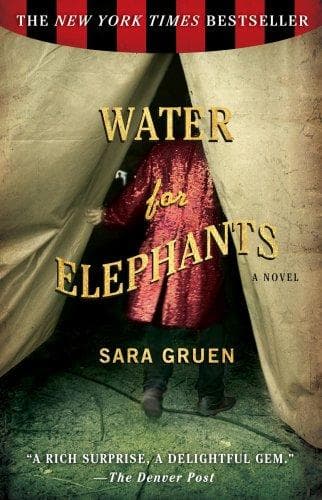
- Water for Elephants
Sara Gruen
4.1 (1.4M) average on GoodreadsHistorical FictionWhile fiction, it vividly portrays the brutal methods of animal training in the past and the profound bond that can develop with empathetic handling.
- The Perks of Being a Wallflower
Stephen Chbosky
4.2 (1.3M) average on GoodreadsPsychologyThrough letters, a shy high school freshman learns to navigate first love, trauma, and self-discovery, stepping off the sidelines and into life.
- Eleanor Oliphant Is Completely Fine
Gail Honeyman
4.3 (708k) average on GoodreadsLiterary FictionA lonely woman's structured life changes when an IT guy and an elderly man help her learn to open her heart.
- One Flew Over the Cuckoo's Nest
Ken Kesey
4.2 (631k) average on GoodreadsPsychologyIn a mind-bending asylum, the boisterous Randle McMurphy wages a defiant war against the tyrannical Nurse Ratched, inspiring his fellow inmates, including the seemingly catatonic Chief Bromden, to reclaim their lost humanity.
- The Bell Jar
Sylvia Plath
4.0 (591k) average on GoodreadsPsychologyIn the suffocating grip of 1950s expectations, a brilliant young woman's descent into mental illness is painted with such vivid, internal clarity that her 'insanity' feels terrifyingly rational and inevitable.
- The Subtle Art of Not Giving a F*ck: A Counterintuitive Approach to Living a Good Life
Mark Manson
3.9 (530k) average on GoodreadsBusinessEmbrace your flaws and stomach life's lemons, because true happiness isn't about relentless positivity, but about choosing what truly matters to give a f*ck about.





Enjoyed the summary?
A summary gives you the shape of the book. The book itself has the detail, the examples and the voice.
Find The Man Who Listens to Horses on AmazonAs an Amazon Associate, BookBrief earns from qualifying purchases. How we're funded