
Synopsis
Covers the whole plot, including the ending.
- Difficulty
- Medium
- Pacing
- Slow
- Mood
- Introspective, Philosophical, Analytical, Mysterious
- Read it if
- You enjoy deep psychological exploration, Jungian philosophy, and character-driven literary fiction with a focus on self-discovery and family dynamics.
- Skip it if
- You prefer fast-paced thrillers, straightforward mysteries, or stories without extensive internal monologue and philosophical discussion.
The Manticore Plot Summary
Covers the whole plot, including the ending.
David Staunton's Despair and the Call to Therapy
David Staunton, a brilliant and successful criminal lawyer, feels a deep personal crisis after his father, Boy Staunton, dies ambiguously. Despite his professional success, David feels empty and disconnected from others. He struggles to grieve for his father and with their difficult relationship. Needing to understand himself and following a colleague's advice, David decides to try Jungian analysis. He travels to Zürich, Switzerland, to begin therapy with Dr. Johanna von Haller, a well-known Jungian analyst. This choice is a big change from his usual rational life, opening him to explore his unconscious mind and hidden parts of his personality.
Unearthing the Past in Analysis
In his sessions with Dr. von Haller, David begins the hard process of looking inward. He first resists the symbolic parts of Jungian thought but slowly starts to examine his past. A main focus is his relationship with his father, Boy Staunton, whom David admired but also resented for his strong presence and emotional distance. David remembers his childhood, which was privileged but emotionally cold, and his mother's quiet unhappiness. He deals with feelings of not being good enough, a fear of failure, and the constant pressure to meet his father's expectations. Dr. von Haller guides him through dream analysis and active imagination, helping him find archetypal patterns and hidden emotions linked to his family history and the Deptford community.
The Shadow and the Anima
As his analysis continues, David confronts his 'shadow'—the hidden, unwanted parts of his personality. He realizes he can be cruel and tends to think about emotions rather than feel them, often hurting real human connection. Dr. von Haller also teaches him about the 'anima,' the unconscious feminine part in a man. David starts to see how his inability to connect with women, and his general emotional distance, comes from a neglected anima. He remembers his short, unsatisfying relationships and his deep fear of intimacy. This realization is both painful and freeing; it shows him a way to better emotional balance. He begins to understand how his father's own struggles with these archetypes affected his upbringing.
The Deptford Connection and Dunstan Ramsay's Influence
Dr. von Haller often connects David's personal history to the Deptford community, especially the people involved in his father's life and death. Dunstan Ramsay, David's godfather and his father's long-time acquaintance, often comes up. David remembers Ramsay's unusual nature, his studies, and his somewhat unsettling presence. He starts to understand that Ramsay, along with other Deptford figures like Mrs. Dempster and Paul Dempster (now the magician Magnus Eisengrim), hold important clues to his father's complex character and the events around his death. The analyst helps David see that his father was not just the successful public figure he seemed to be, but a man caught in a web of past relationships and secrets.
The Invitation to Sorgenfrei
Near the end of his therapy in Zürich, David receives an interesting invitation. Dr. von Haller, seeing his intelligence and progress, suggests he attend an annual Jungian conference at the remote Swiss castle of Sorgenfrei, hosted by the wealthy collector, Liesl Naegeli. This invitation moves him from individual analysis to a more communal, but still psychological, experience. Liesl Naegeli is Magnus Eisengrim's sister and a long-time friend of Dunstan Ramsay. David is unsure at first, preferring his structured life, but Dr. von Haller encourages him to use this chance for more self-discovery and a different kind of psychological exploration. This sets the stage for David to meet the very people connected to his father's past.
Arrival at Sorgenfrei and the Eccentric Company
David travels to Sorgenfrei, a remote and somewhat grand castle, where he finds himself among an unusual and intellectually lively group. He immediately notices Dunstan Ramsay, his godfather, whom he has not seen in years. Ramsay, now an elderly scholar, greets him with warmth and his usual reserve. David also meets Liesl Naegeli, the strong and sharp hostess, whose directness and insight both challenge and interest him. Other guests include academics, artists, and Jungian enthusiasts. The atmosphere is one of intense intellectual discussion, deep psychological inquiry, and a touch of drama. David, used to the strict world of law, finds himself in a place where the lines between reality and symbolism often blur.
The Deptford Trinity Reunited
At Sorgenfrei, David sees the unique relationship between Dunstan Ramsay, Liesl Naegeli, and Magnus Eisengrim (Paul Dempster), whom he now knows as the famous magician. He learns that these three form a 'Deptford Trinity,' deeply connected by their shared past and the snowball incident that hit Mrs. Dempster. He sees their intellectual debates, their deep understanding of each other, and the strong, almost mystical, bond between them. Liesl, in particular, is a powerful presence, challenging Ramsay's scholarly strictness and Eisengrim's theatrical persona. David begins to understand that these people hold the answers to a story far more complex and important than he ever thought, a story that greatly affected his father, Boy Staunton.
The Nature of Boy Staunton's Death
The central mystery of Boy Staunton's death becomes a main topic at Sorgenfrei. David learns that his father's death was not an accident, but a carefully planned suicide, arranged by Boy himself, with Magnus Eisengrim's unwitting help. The 'magic trick' of the car driving into the lake was a final act of control and a symbolic return to the water, a recurring idea in his life. Liesl Naegeli and Dunstan Ramsay offer important details, revealing Boy's deep unhappiness, his inability to face his past, and his spiritual emptiness despite his material success. David is shocked by this, forced to rethink everything he knew about his father and his family history.
The Manticore and Jungian Archetypes
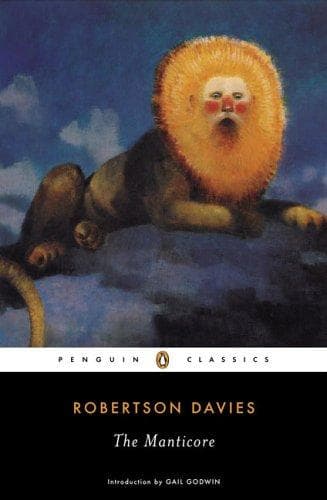
During his time at Sorgenfrei, David learns about the Manticore, a mythical creature with a lion's body, a man's face, and a scorpion's tail. This creature becomes a strong symbol for David's own psychological state—a man of intellect and power (lion's body) but with a destructive, poisonous side (scorpion's tail) and a human face that often hides his true nature. Through talks with Ramsay and Liesl, and his own thoughts, David starts to bring these different parts of himself together. He accepts his own Manticore nature, recognizing both his strengths and his flaws. This realization is an important step in his self-discovery, moving him towards a more complete and real self. He also sees the Manticore in his father, Boy Staunton.
Confronting the Past and Embracing the Future
David's time at Sorgenfrei ends with him accepting his father's complex life and death, and a clearer understanding of his own identity. He comes to terms with the fact that Boy Staunton was not simply a hero or villain, but a flawed and sad figure. David also acknowledges his own emotional repression and the need to embrace his more intuitive side. He has moved from intellectual analysis to a more complete, psychological understanding of himself and the world. While the process continues, he leaves Sorgenfrei feeling free, ready to face his future with new authenticity and a greater ability to connect, having learned from his Jungian journey and the revelations from the Deptford Trinity.
The Manticore Characters
David Staunton
Protagonist
A brilliant but emotionally repressed criminal lawyer seeking self-understanding after his father's death.
David Staunton is the central figure of the novel, a highly successful and intellectually formidable criminal lawyer. He is characterized by his logical mind, his meticulous attention to detail, and a profound emotional detachment that leaves him feeling isolated and unfulfilled. His journey begins in a state of deep personal crisis following his father Boy Staunton's death, which he struggles to process. David is driven by a deep, if unconscious, need to understand himself and his complex relationship with his father. He initially resists the symbolic and intuitive aspects of Jungian analysis but gradually opens himself to introspection, revealing a sensitive and vulnerable core beneath his polished exterior.
Relationships: Boy Staunton (complex, fraught father-son relationship marked by admiration, resentment, and a lack of emotional intimacy); Dr. Johanna von Haller (therapist and guide in his Jungian analysis); Dunstan Ramsay (godfather, family friend, and intellectual mentor who helps him understand his past); Liesl Naegeli (hostess at Sorgenfrei, intellectual sparring partner, and catalyst for his understanding of the Deptford mysteries)
Boy Staunton
Antagonist/Catalyst
David's deceased father, a wealthy and charismatic but ultimately unfulfilled figure whose life and death drive the plot.
Boy Staunton, though deceased at the novel's opening, remains a dominant and catalytic figure throughout David's journey. He is presented as a charismatic, successful, and powerful industrialist, a 'man of the world' who achieved great material wealth. However, beneath this polished exterior, Boy was deeply insecure, emotionally stunted, and haunted by his past in Deptford, particularly his role in the fateful snowball incident. His inability to confront his psychological demons and his profound spiritual emptiness ultimately lead to his meticulously planned suicide. His complex legacy and the mystery of his death compel David to seek self-understanding.
Relationships: David Staunton (distant and emotionally complex father-son relationship); Dunstan Ramsay (lifelong acquaintance and rival, whose perspective reveals Boy's true nature); Liesl Naegeli (brief, unfulfilling affair that highlights his emotional immaturity); Magnus Eisengrim (unwitting participant in his final, symbolic 'magic trick')
Dr. Johanna von Haller
Supporting
David's insightful Jungian analyst in Zürich, guiding him through his initial self-discovery.
Dr. Johanna von Haller is David Staunton's Jungian analyst in Zürich. She is portrayed as an intelligent, intuitive, and highly skilled therapist, capable of piercing through David's intellectual defenses. Her role is to guide David through the complex landscape of his unconscious mind, helping him interpret dreams, confront his shadow, and understand the archetypal patterns at play in his life. She is patient but firm, pushing David to look beyond his rationalistic worldview. Dr. von Haller represents the initial gateway to David's psychological and spiritual awakening, laying the groundwork for his later encounters at Sorgenfrei.
Relationships: David Staunton (therapist-patient relationship, marked by trust and intellectual challenge)
Dunstan Ramsay
Supporting
David's godfather, a retired schoolteacher and scholar of hagiography, deeply connected to the Deptford past.
Dunstan Ramsay is David Staunton's godfather and a pivotal figure from 'Fifth Business.' Now an elderly, distinguished scholar of saints, he is deeply intertwined with the Deptford past and the lives of Boy Staunton and Magnus Eisengrim. Ramsay possesses a vast knowledge of Jungian psychology, mythology, and the spiritual dimensions of life. He is intellectual, observant, and often serves as a moral compass and interpreter of events. At Sorgenfrei, he provides crucial historical context and psychological insights into Boy Staunton's character and death, helping David piece together the complex narrative of his family and community.
Relationships: David Staunton (godfather and mentor, providing historical and psychological context); Boy Staunton (lifelong acquaintance, rival, and a key figure in their shared Deptford history); Liesl Naegeli (intellectual companion and fellow explorer of psychological and magical realms); Magnus Eisengrim (long-time friend and associate, part of the 'Deptford Trinity')
Liesl Naegeli
Supporting
Magnus Eisengrim's sister, a wealthy, sharp-witted Jungian scholar and hostess of Sorgenfrei.
Liesl Naegeli is Magnus Eisengrim's half-sister and the formidable, intellectually brilliant hostess of Sorgenfrei. She is a woman of immense wealth, sharp wit, and profound psychological insight, deeply immersed in Jungian thought and the world of magic and myth. Liesl is direct, challenging, and often uses humor and paradox to provoke deeper understanding. She plays a crucial role in helping David confront the truth about his father's death and understand the deeper symbolic meanings behind the events. Her keen intellect and unconventional wisdom push David beyond his analytical comfort zone, facilitating his psychological integration.
Relationships: David Staunton (intellectual and psychological challenger, host); Magnus Eisengrim (half-sister and manager, sharing a deep, unconventional bond); Dunstan Ramsay (close friend and intellectual companion, sharing a long history)
Magnus Eisengrim
Supporting
The world-renowned magician, formerly Paul Dempster, a key figure in the Deptford mystery.
Magnus Eisengrim, born Paul Dempster, is the world-renowned stage magician and the half-brother of Liesl Naegeli. He is a figure of mystery and theatricality, embodying the archetypal trickster and the power of illusion. While less directly involved in David's psychological analysis, his presence at Sorgenfrei and his connection to the Deptford past are vital. He is revealed as an unwitting participant in Boy Staunton's final 'magic trick' of suicide, tying him directly to the central mystery of the novel. Eisengrim represents the non-rational, the magical, and the transformative power of art, balancing the intellectual discussions at Sorgenfrei.
Relationships: Liesl Naegeli (half-sister and manager, sharing a deep, unconventional bond); Dunstan Ramsay (lifelong friend and protector, part of the 'Deptford Trinity'); Boy Staunton (unwittingly involved in his death, a figure from his traumatic past)
Mrs. Dempster
Mentioned/Catalyst
The 'fool-saint' whose life was profoundly impacted by the Deptford snowball incident.
Mrs. Dempster, though only mentioned in 'The Manticore,' is a foundational figure whose story underpins the entire Deptford Trilogy. Her accidental injury from the snowball incident, which led to her becoming 'simple-minded' but also 'a saint,' profoundly affected Boy Staunton, Dunstan Ramsay, and Paul Dempster (Magnus Eisengrim). Her presence in the narrative, even in absentia, serves as a powerful symbol of innocence, suffering, and the numinous. Her impact on the male characters, particularly Boy Staunton's lifelong guilt and repression, is central to understanding the motivations and psychological states explored in David's analysis.
Relationships: Boy Staunton (victim of his prank, a source of lifelong guilt); Dunstan Ramsay (object of his fascination and spiritual inquiry, his 'personal saint'); Magnus Eisengrim (Paul Dempster) (his mother, whose fate deeply scarred him)
Pargetter
Supporting
David's assistant and a fellow lawyer, offering a contrasting perspective on life.
Pargetter is David Staunton's assistant at his law firm. He is a younger, more emotionally open, and less intellectually rigid character than David. Pargetter represents a more grounded and conventional perspective on life and relationships. His occasional remarks and questions serve to highlight David's emotional distance and intellectual isolation, acting as a foil. While not deeply involved in the Jungian analysis, Pargetter's presence in David's professional life underscores David's initial inability to connect authentically with others and provides a benchmark for his later growth.
Relationships: David Staunton (professional colleague and assistant)
The Manticore Themes
Identity and Self-Discovery
The novel's main theme is David Staunton's difficult journey of self-discovery through Jungian analysis. He deals with a divided identity, shaped by his father's influence and his own emotional repression. Therapy makes him confront his 'shadow' self, integrate his 'anima,' and understand the archetypal forces in his life. This search leads him to recognize his own 'Manticore' nature, helping him become a more complete and real person. His journey shows that true identity comes not from professional success or social roles, but from integrating conscious and unconscious parts of oneself.
“What had I ever done but live a life that was one long evasion of the truth about myself?”
The Burden of the Past
The past, especially the Deptford events around the snowball incident and the lives of Boy Staunton, Dunstan Ramsay, and Magnus Eisengrim, greatly affects the present. David's inability to grieve for his father or form real relationships is directly linked to unresolved emotional and psychological burdens passed down. The discoveries at Sorgenfrei, detailing Boy Staunton's complex life and his planned suicide, show how unaddressed past problems and hidden emotions can lead to destructive results. The novel suggests that understanding and accepting the past is necessary for psychological wholeness.
“It was not enough to know the facts; I had to know the feeling behind the facts.”
Jungian Psychology and Archetypes
Jungian psychology is not just a plot element but a main theme in the novel. Ideas like the 'shadow,' 'anima,' 'individuation,' and various archetypes (e.g., the Manticore, the wise old man, the trickster) are directly discussed and applied to David's journey. His therapy with Dr. von Haller and the talks at Sorgenfrei show how these psychological ideas can explain personal history, relationships, and the deeper meanings behind seemingly random events. The novel explores how understanding these universal patterns can lead to deep self-knowledge and spiritual growth.
“The Manticore is a creature of intellect and power, but also of poison and self-destruction. It is a symbol of the human condition, Mr. Staunton.”
The Nature of Truth and Illusion
The story often blurs the lines between objective truth and subjective experience, reality and illusion. Boy Staunton's life was a carefully built facade, and his death, arranged as a 'magic trick,' further highlights this theme. Magnus Eisengrim, the magician, represents the power of illusion, making characters and readers question what is real. David, as a lawyer, initially relies only on facts, but his Jungian journey teaches him that psychological and symbolic truths are just as, if not more, important. The novel suggests that a deeper understanding of life requires accepting paradox and the interplay of visible and invisible forces.
“Truth, Mr. Staunton, is not always what can be proved in a court of law.”
The Search for Meaning and Spirituality
Beneath David's initial intellectualism is a strong desire for meaning that his successful but empty life cannot provide. His father's spiritual emptiness, despite his wealth, serves as a warning. The novel explores different ways to find meaning: through Jungian self-reflection, the study of hagiography (Dunstan Ramsay), and the esoteric world of magic (Magnus Eisengrim and Liesl Naegeli). The Deptford Trilogy looks at the spiritual, and 'The Manticore' continues this by showing David's move from a purely rational view to one that acknowledges the spiritual and symbolic aspects of existence.
“The greatest tragedy of all is not to die, but to live without ever having truly lived.”
Plot Devices & Literary Techniques
Jungian Analysis
The primary narrative framework and catalyst for David's psychological journey.
Jungian analysis serves as the central plot device, structuring David Staunton's journey of self-discovery. The novel details his therapy sessions with Dr. von Haller, including dream interpretation, active imagination, and discussions of archetypes like the Shadow, Anima, and the process of individuation. This framework allows the author to explore complex psychological themes directly, providing a lens through which David, and the reader, can understand his past, his relationship with his father, and his own emotional landscape. It moves the plot forward by revealing layers of David's unconscious and connecting him to the broader Deptford mythology.
The Manticore Archetype
A symbolic creature representing David's complex and contradictory nature.
The Manticore, a mythical beast with a man's face, lion's body, and scorpion's tail, functions as a powerful symbolic plot device. It is introduced and discussed at Sorgenfrei, becoming a central metaphor for David's own psychological makeup: his intellectual prowess (man's face), his hidden power and aggression (lion's body), and his capacity for self-destruction or inflicting emotional pain (scorpion's tail). Recognizing and integrating this archetype is crucial to David's individuation process, helping him accept the contradictory aspects of his personality and understand his father's similar struggles. It provides a concrete image for abstract psychological concepts.
The Deptford Trinity
A group of interconnected characters whose shared past reveals the truth of Boy Staunton's life and death.
The 'Deptford Trinity' – Dunstan Ramsay, Liesl Naegeli, and Magnus Eisengrim – acts as a collective plot device. Their reunion at Sorgenfrei and their shared history with Boy Staunton provide the crucial missing pieces to the puzzle of his life and death. Each member offers a unique perspective on the past, allowing David to piece together a more complete and nuanced understanding of his father. Their collective wisdom, eccentricities, and deep psychological insights serve to expand David's worldview beyond his initial rigid rationality, driving the plot towards the ultimate revelation of Boy's suicide and its symbolic meaning.
Retrospective Narrative and Revelation
The plot unfolds through David's memories and the gradual unveiling of past events.
The novel employs a retrospective narrative, where the present-day events of David's therapy and his time at Sorgenfrei are interspersed with flashbacks and recounted memories. This device allows David to revisit and re-evaluate his childhood, his relationship with his father, and the key events of the Deptford saga from a new, psychologically informed perspective. The plot progresses through a series of revelations, as David gradually uncovers truths about his past that were previously repressed or misunderstood, culminating in the shocking truth about his father's death. This structure emphasizes the theme of the past's enduring influence.
The Manticore Quotes
“The unexamined life is not worth living, but the examined life is no bowl of cherries either.”
“We are all the heroes of our own stories, and the villains of other people's.”
“The past is not dead; it is not even past.”
“To know oneself is to know one's limitations, and that is the beginning of wisdom.”
“We inherit not only our parents' genes but their unresolved conflicts.”
“The mind is a labyrinth, and psychoanalysis is the thread that leads us out.”
“Truth is not a diamond to be held up to the light, but a prism that refracts differently for each observer.”
“We are all actors on the stage of life, but some of us have forgotten our lines.”
“The shadow of the father falls long upon the son.”
“To love is to risk, and to risk is to be vulnerable—that is the human condition.”
“The law is a mirror of society, but like all mirrors, it can distort as much as it reflects.”
“We build our prisons with the bricks of our own fears.”
“The analyst's couch is not a place of comfort, but a battlefield of the soul.”
“In the end, we are all alone with our choices, and that is both our burden and our freedom.”
Quiz
10 questions on the plot and the characters. Each answer comes with a short explanation.
Question 1
What is the primary reason David Staunton seeks therapy in 'The Manticore'?
- To overcome a career setback as a lawyer
- To deal with his father's mysterious death and their troubled relationship
- To recover from a failed romantic relationship
- To address substance abuse issues
Show answer
B. To deal with his father's mysterious death and their troubled relationship David Staunton, though successful as a lawyer, is haunted by the death of his father, Boy Staunton, and their complex relationship, which drives him to undergo Jungian analysis in Zurich.
Question 2
Who is David Staunton's father, whose death is central to the plot of 'The Manticore'?
- Dunstan Ramsay
- Boy Staunton
- Percy Boyd Staunton
- Liesl Naegeli
Show answer
B. Boy Staunton Boy Staunton (also known as Percy Boyd Staunton) is David's father, whose mysterious death in 'Fifth Business' and its aftermath are explored through David's therapy in 'The Manticore'.
Question 3
In which city does David Staunton undergo his therapeutic sessions in 'The Manticore'?
- Toronto
- London
- Zurich
- New York
Show answer
C. Zurich David travels to Zurich, Switzerland, to engage in Jungian analysis, a key setting where he delves into his psyche and past.
Question 4
What psychological framework is primarily used in David's therapy sessions in 'The Manticore'?
- Freudian psychoanalysis
- Cognitive behavioral therapy
- Jungian analysis
- Existential therapy
Show answer
C. Jungian analysis The novel employs Jungian analysis, focusing on archetypes, the collective unconscious, and personal integration, which shapes David's exploration of his father's death and his own identity.
Question 5
Which character from 'Fifth Business' reappears in 'The Manticore' to provide insight into David's past?
- Liesl Naegeli
- Dunstan Ramsay
- Mary Dempster
- Paul Dempster
Show answer
B. Dunstan Ramsay Dunstan Ramsay, the narrator of 'Fifth Business', interacts with David in 'The Manticore', offering perspectives on Boy Staunton's death and the Deptford events.
Question 6
What symbolic creature gives 'The Manticore' its title, and what does it represent in the context of David's therapy?
- A dragon symbolizing fear and destruction
- A manticore representing the integration of human and animal aspects of the psyche
- A phoenix symbolizing rebirth and renewal
- A griffin representing guardianship and protection
Show answer
B. A manticore representing the integration of human and animal aspects of the psyche The manticore, a mythical beast with a human head, lion's body, and scorpion's tail, serves as a Jungian archetype in David's therapy, symbolizing the struggle to reconcile rational and instinctual parts of himself.
Question 7
How does David's profession as a lawyer influence his approach to therapy in 'The Manticore'?
- It makes him skeptical and analytical, initially resisting emotional exploration
- It helps him quickly accept therapeutic insights due to his logical training
- It leads him to view therapy as a legal case to be solved
- It causes him to avoid therapy altogether, seeing it as unscientific
Show answer
A. It makes him skeptical and analytical, initially resisting emotional exploration David's background as a successful lawyer makes him rational and detached, which initially hinders his therapeutic progress as he struggles to engage with the emotional and unconscious aspects of his psyche.
Question 8
What key event from David's childhood, related to his father, is explored in his therapy sessions?
- A family vacation where his father saved him from drowning
- The incident where a snowball thrown by Boy Staunton hit Mary Dempster
- His father's bankruptcy and subsequent recovery
- A school play where David outperformed his father
Show answer
B. The incident where a snowball thrown by Boy Staunton hit Mary Dempster The snowball incident from 'Fifth Business', where Boy Staunton threw a snowball that hit Mary Dempster, leading to premature birth and lifelong consequences, is a traumatic memory David examines to understand his father's guilt and legacy.
Question 9
In 'The Manticore', how does the novel's structure reflect its thematic focus on self-discovery?
- Through a linear narrative that chronologically details David's life
- By using a series of therapy sessions and flashbacks to unravel David's psyche
- Via an epistolary format with letters between David and his therapist
- Through a fragmented, non-chronological style that mimics confusion
Show answer
B. By using a series of therapy sessions and flashbacks to unravel David's psyche The novel is structured around David's therapy sessions in Zurich, interspersed with flashbacks and dreams, mirroring the Jungian process of delving into the unconscious to achieve self-integration and understanding.
Question 10
What role does Liesl Naegeli play in David's journey in 'The Manticore'?
- She is David's therapist who guides his Jungian analysis
- She is a love interest who distracts David from his therapeutic goals
- She is a mysterious figure who challenges David's rational worldview and connects him to deeper truths
- She is a journalist investigating Boy Staunton's death
Show answer
C. She is a mysterious figure who challenges David's rational worldview and connects him to deeper truths Liesl Naegeli, a character introduced in 'The Manticore', acts as a catalyst for David's transformation by confronting his intellectual defenses and introducing him to mystical and artistic perspectives, aiding his psychological integration.
The Manticore FAQ
What is 'The Manticore' about?
The novel follows David Staunton, a successful but emotionally troubled lawyer who seeks Jungian psychoanalysis in Zurich after his father's mysterious death. Through therapy sessions with Dr. Johanna von Haller, David explores his complex relationship with his domineering father, Boy Staunton, and uncovers repressed childhood memories from Deptford, Ontario, that connect to the trilogy's central death.
Why should I read 'The Manticore'?
It offers a masterful exploration of Jungian psychology through fiction, with Davies using the therapeutic process to delve into themes of identity, father-son dynamics, and personal myth-making. The novel stands out for its intellectual depth while remaining emotionally engaging, and it's essential for understanding the interconnected narratives of The Deptford Trilogy.
What is the background/setting of 'The Manticore'?
The story alternates between 1960s Zurich, where David undergoes analysis at the Jung Institute, and flashbacks to his childhood in Deptford, Ontario, during the early 20th century. The Swiss setting provides a clinical, introspective atmosphere contrasting with the emotionally charged Canadian memories.
What are the most memorable quotes?
Key quotes include David's realization 'I am not my father's keeper' reflecting his struggle for independence, and Dr. von Haller's observation 'The unconscious is not a dustbin; it is a treasure house' emphasizing the Jungian approach. Another significant line is 'The manticore is the beast that devours its young' symbolizing David's psychological inheritance.
What writing style does the author use?
Davies employs a sophisticated, psychologically dense prose style that blends clinical analysis with vivid storytelling. The narrative unfolds primarily through David's therapy transcripts and memories, creating a layered structure that mirrors the therapeutic process of uncovering hidden truths.
What minor details add significant meaning?
The recurring image of the stone in the snowball from 'Fifth Business' reappears when David recalls his childhood involvement in the incident that injured Mary Dempster. This seemingly minor detail becomes crucial as David realizes his unconscious guilt connects to both Mary and his father's death.
What are some subtle foreshadowing moments?
Early references to David's 'perfect memory' that proves incomplete foreshadow his repressed trauma. His initial resistance to discussing his mother hints at deeper family secrets, and casual mentions of Boy Staunton's 'accidental' death contain clues that emerge as psychologically motivated.
What unexpected character connections exist?
Through therapy, David discovers his father's hidden relationship with Liesl, the dwarf from 'Fifth Business,' revealing Boy Staunton's secret vulnerabilities. He also uncovers how his childhood interactions with the damaged Mary Dempster created unconscious guilt that shaped his adult personality.
What are unspoken character motivations?
David's pursuit of psychoanalysis masks his deeper need to prove he's not responsible for his father's death. Boy Staunton's relentless ambition stemmed from insecurity about his humble origins, while David's mother's passivity concealed her quiet rebellion against her husband's dominance.
What psychological complexities do characters exhibit?
David embodies the 'thinking type' Jungian personality—intellectual but emotionally stunted—while his father represents the unintegrated shadow. Dr. von Haller demonstrates how a therapist must balance clinical detachment with genuine empathy, and Liesl serves as a trickster figure who challenges David's rigid self-perception.
What are the major emotional turning points?
Key moments include David's breakdown when recalling the snowball incident, his realization that he both loved and hated his father, and his acceptance that his 'perfect' memories were psychological defenses. The climax occurs when he integrates his shadow through the manticore dream, achieving emotional breakthrough.
How do relationship dynamics evolve?
David's relationship with his deceased father transforms from resentful idolization to nuanced understanding. His therapeutic alliance with Dr. von Haller moves from resistance to transference to genuine collaboration. His connection to Liesl evolves from disgust to recognition of her as a psychological mirror.
Which parts remain ambiguous or open-ended?
The exact circumstances of Boy Staunton's death remain psychologically ambiguous rather than forensically resolved. David's ultimate integration after therapy is suggested but not guaranteed, and the novel leaves open whether his new self-understanding will translate to lasting change in his external life.
What are controversial scenes or decisions?
Some readers debate whether David's psychological revelations excuse his earlier coldness and professional ruthlessness. The novel's Jungian framework has been criticized as overly schematic, while others praise its psychological authenticity. David's eventual sympathy for his father challenges simplistic moral judgments.
'The Manticore' ending explained: how it ends & what it means
The novel concludes with David completing his analysis and preparing to return to Canada, having accepted his manticore dream as symbolic integration of his aggressive instincts. The ending suggests psychological progress rather than complete resolution, emphasizing that self-knowledge is a continuous process rather than a final destination.
How does 'The Manticore' connect to 'Fifth Business'?
David Staunton is the son of Boy Staunton, whose death opens 'Fifth Business.' David's therapy revisits key events from the first novel—particularly the snowball incident and Mary Dempster's injury—but from a psychological rather than mythical perspective, creating intertextual depth.
What role does Jungian psychology play in the narrative?
Jungian concepts structure the entire novel, with David's therapy exploring archetypes (like the shadow and anima), individuation, and personal mythology. The manticore itself represents a Jungian symbol of integrated opposites—part human, part beast—mirroring David's psychological journey.
How does Davies use dreams in the novel?
David's dreams, particularly the manticore dream, serve as Jungian portals to his unconscious. They reveal repressed memories, symbolize psychological conflicts, and provide therapeutic breakthroughs that his conscious mind resists, making dream analysis central to the narrative progression.
About the author
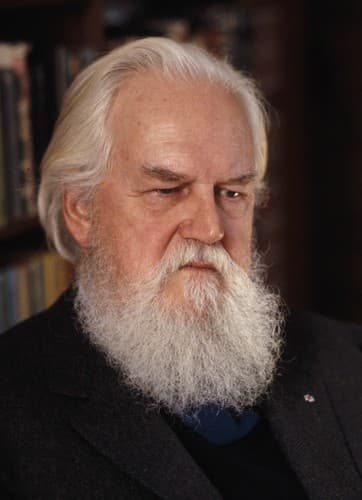
William Robertson Davies was a Canadian novelist, playwright, critic, journalist, and professor. He was one of Canada's best known and most popular authors and one of its most distinguished "men of letters", a term Davies gladly accepted for himself. Davies was the founding Master of Massey College, a graduate residential college associated with the University of Toronto.
Similar books
- Fifth Business
Robertson Davies
4.0 (17k) average on GoodreadsLiterary FictionThe preceding book in The Deptford Trilogy, offering another perspective on Boy Staunton's life and death.
- The World According to Garp
John Irving
4.1 (205k) average on GoodreadsLiterary FictionExplores complex family relationships and the impact of a dominant parent figure in a literary style.
- Siddhartha
Hermann Hesse
4.0 (583k) average on GoodreadsHistorical FictionA journey of self-discovery and philosophical exploration, albeit in a different cultural context.
- The Magus
John Fowles
4.0 (48k) average on GoodreadsLiterary FictionWhile both novels delve into psychological complexity and mystery, The Manticore grounds its psychological exploration in the more realistic, albeit often fantastical, realm of therapeutic dialogue and internal revelation. Fowles' The Magus relies more heavily on external manipulation and elaborate psychological games orchestrated by other characters to challenge its protagonist, making Staunton's journey more introspective and less plot-driven in a conventional sense.
- The Old Man and the Sea
Ernest Hemingway
3.8 (831k) average on GoodreadsLiterary FictionA Cuban fisherman's long struggle with a giant marlin becomes a story of endurance and dignity, now retold for young adults with illustrations, phonetic guides, and writing prompts in Traditional Chinese.
- One Hundred Years of Solitude
Gabriel García Márquez
4.1 (753k) average on GoodreadsLiterary FictionThrough the multi-generational story of the Buendía family, a mythical town deals with the repeating patterns of time, love, and solitude, as the extraordinary mixes with the ordinary.






Enjoyed the summary?
A summary gives you the shape of the book. The book itself has the detail, the examples and the voice.
Find The Manticore on AmazonAs an Amazon Associate, BookBrief earns from qualifying purchases. How we're funded