
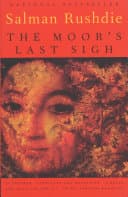
Synopsis
Covers the whole plot, including the ending.
- Difficulty
- Hard
- Pacing
- Moderate
- Mood
- Epic, Phantasmagorical, Witty, Tragic, Historical
- Read it if
- You enjoy epic, multi-generational sagas with a strong, distinctive narrative voice, magical realism, and a deep exploration of history, art, and identity.
- Skip it if
- You prefer linear plots, realistic fiction without fantastical elements, or find dense, allusive prose challenging.
The Moor's Last Sigh Plot Summary
Covers the whole plot, including the ending.
The Moor's Birth and Peculiar Aging
Moraes Zogoiby, the narrator, says he is the last of the Zogoiby family, a long line of Cochinese spice merchants and crime lords. He is born in Bombay, India, to Aurora da Gama, a famous artist, and Abraham Zogoiby, a businessman and criminal leader. From birth, Moraes ages twice as fast as normal humans. This fast aging shapes his early life and makes him an outsider even in his unusual and powerful family. His birth comes with a series of lucky, yet troubling, events, hinting at the dramatic and often sad path of his life and his family's fate.
The Matriarchs: Aurora and Isabella
Moraes explores his family's history, especially its strong women. His mother, Aurora da Gama, is a painter, known for her 'palimpsest' style, layering history and myth onto her canvases. She is the granddaughter of Francisco da Gama, a Portuguese spice merchant, and his Jewish-Indian wife, Isabella. Isabella is a strong figure, the true founder of the Zogoiby dynasty's wealth and power, known for her business sense and strong will. The complex link between Aurora and Isabella, marked by both love and strong competition, shapes the family's future and greatly affects Moraes's understanding of his background.
Abraham Zogoiby's Rise and Fall
Abraham Zogoiby, Moraes's father, starts as a successful spice trader. But, driven by ambition and wanting to secure his family's place, he slowly moves into the world of organized crime, becoming a known figure in Bombay's underworld. His empire grows through smartness, ruthlessness, and a skill for controlling political and economic forces. Despite his criminal acts, Abraham is very dedicated to Aurora and their children. His rise to power connects with India's political state after independence, bringing both great wealth and dangerous enemies, setting the stage for future fights and betrayals.
Childhood and Family Dynamics
Moraes grows up in a big, messy, and rich home in Bombay, full of servants, artists, and criminals. He has three older sisters – Ina, Minnie, and Mynah – called 'the Three Graces.' His fast aging makes him unusual, often feeling like an old man in a child's body. He forms a close, almost too close, bond with his sister Ina, who is both protective and possessive. The family constantly deals with its mixed background – Portuguese, Jewish, Indian – and the tensions between different cultures and religions. This complex setting shapes Moraes's identity and his view of the world.
The Painting and the Betrayal
Aurora da Gama starts her most ambitious painting, 'The Moor's Last Sigh,' a large canvas she intends as her best work. This painting becomes a place for her ideas about family history, myths, and personal secrets. As she paints, her art mixes with the breaking down of family relationships. Moraes finds out about a betrayal involving his father, Abraham, and his mother's muse and lover, Vasco Miranda. This news deeply hurts Moraes and shatters his perfect view of his parents' marriage, planting seeds of anger and distrust that will have lasting effects on the family.
The Destruction of the Zogoiby Empire
After the betrayal and India's growing political problems, the Zogoiby family's once strong empire begins to fall. Abraham's criminal businesses face tough competition and government crackdowns. The family's great wealth and power decrease, leading to a time of decline and disorder. Moraes sees the slow, painful end of his family's power, a process sped up by internal fights and outside pressures. This time marks a turning point, making Moraes face the harsh facts of their lower status and their legacy's weakness, leading to the Zogoiby home's eventual scattering and destruction.
Moraes's Exile and Journey to Spain
A series of bad events, including his sisters' deaths and his parents' final end, leaves Moraes the only survivor of his immediate family. Overwhelmed by sadness, guilt, and his family's history, Moraes goes into exile. He travels to Spain, specifically to Andalusia, wanting to find his family roots and the historical legacy of 'the Moors' in Europe. This trip is both a physical escape and a search for himself, as he tries to make sense of his broken identity with his rich, complex heritage and his past pain.
Encounter with Aadam Sinai
In Spain, Moraes looks for Aadam Sinai, a former lover of his mother, Aurora, and an important, mysterious figure in her artistic life. Aadam, now an old, private artist, gives Moraes a place to stay and a fragile sense of belonging. Their relationship is complex, marked by Aadam's past link to Aurora and Moraes's own unresolved feelings about his mother. Aadam's house is full of Aurora's paintings, including a version of 'The Moor's Last Sigh,' which reminds him of his family's legacy and its secrets. This meeting helps Moraes put together more of his mother's story and his own.
The Moor's Last Sigh: Revelation and Art
As Moraes lives with Aadam Sinai, he starts to fully grasp the many meanings in his mother's painting, 'The Moor's Last Sigh.' The painting, a mix of history, personal story, and myth, shows the depths of Aurora's soul and how her family's past connects with the wider history of the Moors in Spain. Moraes realizes that the painting is not just about Boabdil, the last Moorish king of Granada, but also about himself – the 'Moor' of his own family's fall. This realization is a key moment in his journey of self-acceptance and understanding.
The Final Confrontation and Legacy
Moraes's time in Spain ends with a confrontation with his past, both inside himself and outside. He thinks about his heritage's good and bad parts, the destructive power of love and hate in his family, and his own place as the last Zogoiby. The novel ends with Moraes, still aging quickly, continuing to tell his story, making sure his extraordinary family's legacy, with all its wins and losses, will not be forgotten. He accepts his role as the storyteller, the living example of his family's 'last sigh,' forever tied to the story he carefully creates.
Principal Figures
Moraes 'Moor' Zogoiby
Protagonist/Narrator
The last scion of the Zogoiby dynasty, aging at an accelerated rate.
Moraes is a sensitive, intelligent, and deeply introspective man, cursed with an accelerated aging process that makes him an old man by his twenties. This condition isolates him and gives him a unique, often melancholic, perspective on life. He is a compulsive storyteller, driven by a need to chronicle his family's epic history and understand his own identity within its complex tapestry. His mixed heritage (Portuguese, Jewish, Indian) and his family's fall from grace fuel his sense of being an outsider and a survivor.
Relationships: Aurora da Gama (Son, deeply attached and admiring, yet haunted by her secrets.); Abraham Zogoiby (Son, initially admiring, later disillusioned by his father's betrayals.); Ina Zogoiby (Sister, a deeply intimate and almost incestuous bond.); Aadam Sinai (Refugee, complicated by Sinai's past with Aurora.)
Aurora da Gama
Supporting/Central Figure
Moraes's mother, a celebrated and passionate artist.
Aurora is a formidable and charismatic figure, a renowned painter whose art is a fusion of history, myth, and personal experience. She is passionate, independent, and fiercely protective of her artistic vision. Her love for Abraham is deep, but she is also capable of profound betrayal, particularly with Vasco Miranda. Her 'palimpsest' paintings, especially 'The Moor's Last Sigh,' are central to the novel's themes and Moraes's understanding of his heritage. She embodies the vibrant, chaotic spirit of India and the Zogoiby family.
Relationships: Moraes Zogoiby (Mother, a powerful influence on his life and art.); Abraham Zogoiby (Husband, a passionate but ultimately betrayed relationship.); Isabella da Gama (Granddaughter, a complex relationship of admiration and rivalry.); Vasco Miranda (Lover and muse, a source of both inspiration and betrayal.)
Abraham Zogoiby
Supporting
Moraes's father, a powerful businessman and crime lord.
Abraham is a shrewd, ambitious, and ruthless man who builds the Zogoiby family's criminal empire. He is devoted to Aurora and his family but is also capable of great deceit and violence. His rise to power is intrinsically linked to the political and economic landscape of Bombay. He represents the darker, more pragmatic side of the Zogoiby legacy, willing to cross moral lines for power and security. His betrayal of Aurora with Vasco Miranda is a central catalyst for the family's decline.
Relationships: Moraes Zogoiby (Father, initially a figure of authority and later a source of disappointment.); Aurora da Gama (Husband, a passionate but ultimately destructive relationship.); Vasco Miranda (Business partner and rival, complicit in betrayal.)
Isabella da Gama
Supporting
Moraes's great-grandmother, the formidable matriarch of the family.
Isabella is the true founder of the Zogoiby family's wealth and influence. A Jewish-Indian woman married to a Portuguese spice merchant, she is a figure of immense strength, intelligence, and unwavering will. She navigates the complex social and political landscape of Cochin with remarkable acumen, laying the groundwork for the family's future. Her pragmatic and often ruthless nature contrasts with Aurora's artistic temperament, but both share a powerful, matriarchal drive.
Relationships: Aurora da Gama (Grandmother, a strong influence and a source of family history.); Francisco da Gama (Husband, a partnership that founded the family's fortunes.)
Ina Zogoiby
Supporting
Moraes's eldest sister, with whom he shares a close, complicated bond.
Ina is one of 'the Three Graces,' Moraes's older sisters. She is beautiful, spirited, and fiercely protective of Moraes, yet also possessive and manipulative. Their relationship borders on the incestuous, marking Moraes with a complex blend of love, guilt, and longing. Her tragic fate is a significant blow to Moraes and further contributes to the family's dissolution. She represents the intense, often destructive, passions within the Zogoiby family.
Relationships: Moraes Zogoiby (Sister, a deeply intimate and complicated bond.); Minnie and Mynah Zogoiby (Sisters, part of the 'Three Graces'.)
Vasco Miranda
Supporting/Antagonist
Aurora's muse and lover, involved in a betrayal with Abraham.
Vasco Miranda is a charismatic and enigmatic figure, initially Aurora's muse and later her lover. He is also involved in Abraham's business dealings, leading to a complex web of loyalty and betrayal. His affair with Aurora, orchestrated by Abraham, is a central betrayal that shatters the Zogoiby family's harmony and deeply wounds Moraes. He represents the seductive and destructive forces that can infiltrate even the strongest family bonds.
Relationships: Aurora da Gama (Lover and muse.); Abraham Zogoiby (Business associate and co-conspirator in betrayal.)
Aadam Sinai
Supporting
An aging artist and former lover of Aurora, who provides refuge for Moraes in Spain.
Aadam Sinai is an older, reclusive artist living in Spain. He was a significant figure in Aurora's past, a lover, and an artistic companion. He offers Moraes a sanctuary after his exile from India, and his house contains many of Aurora's paintings, including a version of 'The Moor's Last Sigh.' He serves as a bridge to Moraes's mother's past and helps Moraes understand the deeper meanings of his family's history and art. He is a melancholic figure, living with the ghosts of his own past.
Relationships: Moraes Zogoiby (Host and confidante.); Aurora da Gama (Former lover and artistic companion.)
Themes & Insights
Identity and Heritage
The novel looks at the complex parts of identity, especially for Moraes, who deals with his mixed background (Portuguese, Jewish, Indian) and his fast aging. His trip to Spain is a search to understand his roots, both personal and historical, and to bring together the different cultural influences that shape him. The family's history, mixed with India's history and the Moors in Spain, constantly makes Moraes question who he is and where he belongs. Aurora's art, especially 'The Moor's Last Sigh,' is a main comparison for this layered identity.
“What we are, we are, because of what we were. Every new thing is a thing that was.”
The Power of Storytelling and Art
Storytelling is central to the novel, with Moraes acting as the narrator, putting together his family's broken history. His mother's art, especially the 'palimpsest' paintings, is a similar way of telling stories, layering narratives and meanings. Art is shown as a way to understand, keep, and even create reality. Telling the past, whether with words or paint, gives meaning to chaotic events and lets characters deal with their legacy. The novel itself shows the lasting power of stories.
“I am the story of myself, and the story of my family. I am the story of India, too, in a way.”
Love, Betrayal, and Family Curses
The Zogoiby family has intense, often destructive, love and many deep betrayals. The love between Aurora and Abraham is passionate but broken by Abraham's manipulation and Vasco Miranda's part. The close bond between Moraes and Ina highlights family affection's dangerous excesses. The novel suggests betrayal and its results happen in cycles, almost like a family curse passed down. These complex emotions drive much of the plot and lead to the family's eventual fall.
“Families are the cradles of love, but also the crucibles of hatred.”
History and Memory
The novel often blurs the lines between personal memory, family history, and big historical stories. Moraes's memories are subjective and shaped by his view, while Aurora's paintings rethink history. The story connects the Zogoiby family's fortunes to important historical events in India and the Moors' legacy in Spain. Memory is shown as a fluid, often unreliable, force that can be both a burden and a source of identity. The past is not just told but actively reinterpreted and lived through the characters.
“History is a wound, and we are its endless scar.”
Plot Devices & Literary Techniques
Accelerated Aging (Progeria-like Condition)
Moraes ages twice as fast as normal humans.
This unique biological condition is a central plot device. It isolates Moraes, makes him an eternal outsider, and provides a constant, poignant reminder of the fleeting nature of life and time. It directly influences his perspective, making him an 'old soul' from childhood, and physically manifests the rapid decline and eventual end of his family line. It also serves as a metaphor for the accelerated pace of change in post-colonial India and the rapid decline of once-powerful dynasties.
The Palimpsest
Aurora's artistic technique of layering paintings, mirroring the novel's structure.
Aurora da Gama's artistic method of painting over previous works, allowing faint traces to show through, is a powerful metaphor for the novel's narrative structure. Just as Aurora's canvases contain multiple layers of history and meaning, Moraes's story is a palimpsest of personal memories, family myths, and historical events. This device emphasizes the idea that the past is never truly erased but always present, influencing and shaping the present. It highlights the subjective and layered nature of truth and memory.
'The Moor's Last Sigh' Painting
Aurora's magnum opus, a canvas containing the family's secrets and destiny.
This painting is not merely a piece of art but a living, evolving entity within the narrative. It represents Aurora's artistic genius, her personal struggles, and her interpretation of family history and myth. As Moraes unravels the layers of the painting, he simultaneously uncovers the secrets and betrayals within his own family. It becomes a central symbol of heritage, identity, and the enduring legacy of the Zogoiby family, connecting Moraes's personal story to the historical 'Moor' of Granada.
The Narrator's Voice (Unreliable Narrator)
Moraes's subjective and often biased recounting of events.
Moraes Zogoiby is a highly subjective and at times unreliable narrator. His accelerated aging gives him a unique, often melancholic, perspective, and his deep emotional investment in his family's story means his accounts are colored by love, resentment, and a desire to shape his own legacy. This device allows Rushdie to explore the nature of truth, memory, and the construction of history, inviting the reader to question and interpret the events alongside Moraes.
The Moor's Last Sigh Quotes
“Moorish art had always been a thing of the imagination, not of the eye; a thing of the mind, not of the hand.”
“We are all immigrants from the past.”
“To be born again, you must first die. And to die, you must first live.”
“History is a dream from which we are trying to awaken.”
“Love is a thing of the imagination, a thing of the mind, not of the eye.”
“The past is a foreign country; they do things differently there.”
“Every act of creation is first an act of destruction.”
“The artist is a man who is forever trying to escape from his own skin.”
“Memory, like a house, has many rooms.”
“We are all made of stories.”
“To forget is to die a little.”
“The world is full of ghosts, and we are among them.”
“Language is the only homeland.”
“Time is a great devourer.”
Quiz
10 questions on the plot and the characters. Each answer comes with a short explanation.
Question 1
Who is the narrator and central character of 'The Moor's Last Sigh'?
- Aurora Zogoiby
- Moraes 'Moor' Zogoiby
- Abraham Zogoiby
- Vasco Miranda
Show answer
B. Moraes 'Moor' Zogoiby Moraes 'Moor' Zogoiby is explicitly identified as the narrator and the last surviving scion of the Zogoiby dynasty.
Question 2
From which Indian city does the Zogoiby dynasty of spice merchants originate?
- Mumbai
- Calcutta
- Cochin
- Goa
Show answer
C. Cochin The Zogoiby family are described as 'Cochinese spice merchants,' indicating their origin in Cochin, India.
Question 3
What unique physical characteristic does Moraes 'Moor' Zogoiby possess, related to his aging?
- He ages in reverse, growing younger.
- He ages twice as fast as normal people.
- He stops aging completely after childhood.
- His physical age constantly fluctuates.
Show answer
B. He ages twice as fast as normal people. The Moor suffers from a condition where he ages twice as fast as normal people, making his life span half the usual length.
Question 4
Who is Aurora Zogoiby in relation to Moraes 'Moor' Zogoiby?
- His grandmother
- His sister
- His mother
- His wife
Show answer
C. His mother Aurora Zogoiby is the Moor's mother, a powerful and influential artist, central to the family saga.
Question 5
The novel's title, 'The Moor's Last Sigh,' directly references a historical location in Spain. What is it?
- The Alhambra Palace
- The Generalife Gardens
- The Strait of Gibraltar
- Suspiro del Moro, a mountain pass near Granada
Show answer
D. Suspiro del Moro, a mountain pass near Granada The title refers to 'Suspiro del Moro' (Sigh of the Moor), a mountain pass where Boabdil, the last Nasrid ruler of Granada, is said to have looked back at his lost kingdom.
Question 6
What is the primary artistic medium of Aurora Zogoiby, the Moor's mother?
- Sculpture
- Music composition
- Painting
- Writing poetry
Show answer
C. Painting Aurora Zogoiby is a renowned and influential painter, whose works often reflect and influence the family's history.
Question 7
What is the name of the Zogoiby family's ancestral home in Cochin?
- The Spice Palace
- The Cochineal House
- The Palácio da Cochin
- The Palácio da Cochina
Show answer
D. The Palácio da Cochina The family's grand and eccentric ancestral home in Cochin is known as the Palácio da Cochina, a central setting for much of the early narrative.
Question 8
Which historical event or concept is heavily intertwined with the Zogoiby family's identity and the 'Moor' aspect of the title?
- The British Raj in India
- The partition of India
- The Reconquista and expulsion of the Moors from Spain
- The Portuguese colonization of Goa
Show answer
C. The Reconquista and expulsion of the Moors from Spain The 'Moor' in the title and the Zogoiby family's history are deeply linked to the historical Moors of Spain and their expulsion during the Reconquista, a theme that resonates with Moraes's own exile.
Question 9
Moraes Zogoiby eventually flees India and ends up in which European country?
- Portugal
- Italy
- Spain
- England
Show answer
C. Spain Moraes Zogoiby's journey takes him from India to Spain, where he finds himself in exile, mirroring the historical Moors.
Question 10
What is the significance of the 'spice merchants and crime lords' description of the Zogoiby dynasty?
- It highlights their legitimate business ventures and philanthropic efforts.
- It establishes their dual nature, combining wealth and power with illicit activities and moral ambiguity.
- It indicates their decline from legitimate trade into pure criminality.
- It refers to their historical role as arbitrators in local legal disputes.
Show answer
B. It establishes their dual nature, combining wealth and power with illicit activities and moral ambiguity. The description 'spice merchants and crime lords' immediately establishes the family's complex and morally ambiguous nature, key to the novel's exploration of power, wealth, and identity.
The Moor's Last Sigh FAQ
Who is Moraes 'Moor' Zogoiby and what is his unique condition?
Moraes 'Moor' Zogoiby is the narrator and protagonist, the last male heir of the Zogoiby family, born with a condition that causes him to age twice as fast as normal people. This rapid aging defines his short, intense life and perspective, making him an exile both physically and temporally from his family's history.
Describe the central conflict between Aurora Zogoiby and Vasco Miranda.
The central conflict revolves around the love affair and subsequent bitter rivalry between Aurora Zogoiby, a powerful artist, and Vasco Miranda, her protégé and lover. Vasco's betrayal, his theft of Aurora's artistic ideas and her son, and his eventual transformation into a figure of religious extremism fuel the novel's dramatic core and drive Moor's quest for understanding.
What role do the Zogoiby matriarchs play in the family's history?
The Zogoiby family is dominated by a line of formidable matriarchs, including Isabella, Epifania, and Aurora, whose strong wills, artistic talents, and passionate natures shape the family's destiny. They are the driving forces behind the spice trade, the family's social standing, and its artistic legacy, often clashing with each other and with the men in their lives.
How does the novel explore the theme of 'doubling' or 'mirroring'?
The novel frequently employs doubling, evident in Moor's rapid aging mirroring the accelerated pace of modern India, the artistic rivalry between Aurora and Vasco, and the historical parallels drawn between India and Spain. This motif underscores themes of identity, betrayal, and the cyclical nature of history and personal relationships.
What is the significance of the 'Moor's Last Sigh' and its connection to Spain?
The 'Moor's Last Sigh' refers to the historical lament of Boabdil, the last Nasrid ruler of Granada, upon his exile from Spain. For Moraes, it symbolizes his own exile and the loss of his family's legacy, connecting his personal story to the broader historical narrative of displacement, cultural clashes, and the end of an era, particularly in the context of Indian and Spanish history.
How does the novel use the spice trade as a metaphor?
The spice trade, the foundation of the Zogoiby family's wealth, serves as a metaphor for India's rich cultural blend and its historical connections to the world. It represents the exotic, the valuable, and the often-contested nature of resources and power, reflecting the complex intermingling of cultures and the exploitation that can accompany it.
Discuss Aurora Zogoiby's artistic philosophy and its impact on her life.
Aurora Zogoiby's art is a vibrant, syncretic blend of Indian and Western influences, deeply personal and often prophetic, reflecting her passionate and chaotic inner world. Her art is her primary mode of expression and defiance, but it also becomes a source of conflict and pain, particularly when Vasco Miranda betrays her by stealing and perverting her artistic vision.
How does Moor's accelerated aging influence his psychological development and worldview?
Moor's rapid aging instills in him a profound sense of urgency, melancholy, and a detached, observational perspective on life. He experiences childhood, adolescence, and adulthood in a compressed timeframe, leading to a unique blend of youthful innocence and aged wisdom, and a constant awareness of his impending end, shaping his narrative voice.
Analyze Vasco Miranda's transformation from artist to fundamentalist.
Vasco Miranda's transformation from a struggling artist and Aurora's lover to a manipulative, religiously fanatical figure reflects a psychological descent driven by envy, resentment, and a desire for power. His embrace of fundamentalism offers him a new identity and a platform for control, contrasting sharply with Aurora's more inclusive artistic vision.
What is the psychological impact of the 'curse' on the Zogoiby family?
The 'curse' on the Zogoiby family, particularly the premature deaths and misfortunes, creates a pervasive atmosphere of fatalism and anxiety. Psychologically, it fuels the characters' desperate attempts to control their destinies or resign themselves to an inevitable fate, contributing to the family's internal conflicts and tragic outcomes.
How does the novel critique religious fanaticism, particularly through the character of Vasco Miranda?
The novel critiques religious fanaticism by portraying Vasco Miranda's descent into extremism as a destructive force that perverts art, manipulates people, and incites violence. His rigid ideology stands in stark contrast to the novel's celebration of syncretism and cultural blending, highlighting the dangers of intolerance and dogmatism.
Discuss the novel's exploration of identity, particularly in a post-colonial Indian context.
The novel explores identity through the Zogoiby family's mixed heritage (Jewish, Portuguese, Indian) and their constant negotiation of various cultural influences. It reflects the complexities of post-colonial India, where identities are fluid, hybrid, and often contested, questioning fixed notions of nationality and belonging.
In what ways does 'The Moor's Last Sigh' function as a modern epic?
The novel functions as a modern epic through its sprawling narrative, covering generations of a family, its larger-than-life characters, and its engagement with grand themes like love, betrayal, history, and nation-building. It blends myth, history, and personal saga, echoing classical epic structures while recontextualizing them for contemporary India.
What is the significance of the novel's blend of realism and magical realism?
The blend of realism and magical realism, such as Moor's accelerated aging and other fantastical elements, allows the novel to explore profound truths about human experience and history that transcend mere factual representation. It creates a dreamlike quality that mirrors the subjective nature of memory and storytelling, inviting readers to interpret events on multiple levels.
How does the narrative structure, with Moor as the storyteller, impact the reader's perception of events?
Moor's role as an unreliable narrator, deeply embedded in the family's history and burdened by his unique condition, colors the reader's perception of events. His subjective biases, emotional intensity, and the occasional fantastical elements he introduces challenge the notion of objective truth, forcing the reader to actively engage in interpreting the narrative.
What is the role of memory and storytelling in the novel?
Memory and storytelling are central themes, as Moor compulsively recounts his family's history from his exile, attempting to make sense of his past and his identity. The act of narration itself is a form of preservation and creation, shaping the past into a coherent, albeit subjective, narrative that battles against the erosion of time and the pain of loss.
How does the novel portray the relationship between art and politics?
The novel portrays the relationship between art and politics as complex and often contentious. Aurora's art is deeply political, reflecting social realities and challenging norms, while Vasco's art becomes a tool for his political and religious agenda. This dynamic illustrates how art can be both a powerful force for social commentary and a casualty or instrument of ideological conflict.
What is the significance of the Zogoiby family's ancestral home, 'Palace of the Moor's Last Sigh'?
The 'Palace of the Moor's Last Sigh' is more than just a residence; it is a repository of family history, art, and memory, embodying the Zogoiby legacy. Its eventual decline and destruction mirror the fate of the family itself, symbolizing the loss of a syncretic past and the encroachment of a more fragmented, intolerant present, making it a crucial symbolic setting.
About the author

Sir Ahmed Salman Rushdie is an Indian-born British-American novelist. His work often combines magic realism with historical fiction and primarily deals with connections, disruptions, and migrations between Eastern and Western civilizations, typically set on the Indian subcontinent. Rushdie's second novel, Midnight's Children (1981), won the Booker Prize in 1981 and was deemed to be "the best novel of all winners" on two occasions, marking the 25th and the 40th anniversary of the prize.
Similar books
- One Hundred Years of Solitude
Gabriel García Márquez
4.1 (753k) average on GoodreadsLiterary FictionFeatures a multi-generational family saga, magical realism, and a rich, evocative narrative style.
- The God of Small Things
Arundhati Roy
3.9 (244k) average on GoodreadsLiterary FictionArundhati Roy's The God of Small Things shares The Moor's Last Sigh's focus on family dynamics and the impact of history on individual lives in Kerala. Both novels explore forbidden love, social hierarchies, and the destructive power of societal norms. However, Roy's narrative is more intensely focused on the intimate, tragic story of a single family, using a non-linear but ultimately more contained and emotionally direct narrative style. While Rushdie's scope is vast and global, Roy's novel achieves its power through its intense focus on the small details and the profound emotional depth within a specific, localized context, making its critique of caste and social injustice more acutely felt on a personal level.
- The Old Man and the Sea
Ernest Hemingway
3.8 (831k) average on GoodreadsLiterary FictionA Cuban fisherman's long struggle with a giant marlin becomes a story of endurance and dignity, now retold for young adults with illustrations, phonetic guides, and writing prompts in Traditional Chinese.
- The Goldfinch
Donna Tartt
3.9 (720k) average on GoodreadsLiterary FictionHaunted by a tragic explosion and clutching a stolen Dutch masterpiece, a young orphan navigates the opulent drawing rooms of New York and the gritty underbelly of the art world, desperately seeking connection and redemption amidst a life spiraling into crime and obsession.
- Little Fires Everywhere
Celeste Ng
4.1 (713k) average on GoodreadsLiterary FictionIn Shaker Heights, an artist and her daughter move in, and their free-spirited lives clash with a rule-bound matriarch, revealing hidden conflicts beneath a perfect surface.
- Eleanor Oliphant Is Completely Fine
Gail Honeyman
4.3 (708k) average on GoodreadsLiterary FictionA lonely woman's structured life changes when an IT guy and an elderly man help her learn to open her heart.





Enjoyed the summary?
A summary gives you the shape of the book. The book itself has the detail, the examples and the voice.
Find The Moor's Last Sigh on AmazonAs an Amazon Associate, BookBrief earns from qualifying purchases. How we're funded