
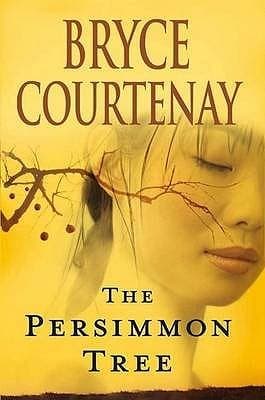
Synopsis
Covers the whole plot, including the ending.
- Difficulty
- Medium
- Pacing
- Moderate
- Mood
- Heartbreaking, Hopeful, Romantic, Resilient, Historical
- Read it if
- You enjoy epic historical romances set against the backdrop of WWII in the Pacific, with a focus on human resilience and the enduring power of love.
- Skip it if
- You prefer fast-paced thrillers or are sensitive to detailed descriptions of wartime atrocities and the harsh realities of internment camps.
The Persimmon Tree Plot Summary
Covers the whole plot, including the ending.
The Invasion of Java
In 1942, on the Dutch East Indies island of Java, Anna van der Bok, a young Dutch woman, lives a sheltered life with her family on their plantation. The Japanese invasion becomes a reality when the Imperial Japanese Army sweeps through the island. Anna and her family, along with many other European residents, are caught in the chaos. The invasion involves extreme violence, looting, and the systematic gathering of non-Japanese civilians. Anna experiences the immediate breakdown of order and the loss of her comfortable life, forcing her into a desperate fight for survival as she sees the terrible acts committed by the invading forces.
A Chance Encounter and a Desperate Escape
During the Japanese occupation, Anna meets Nick Duncan, an American intelligence agent stranded on Java. Nick, a skilled and resourceful man, is trying to avoid capture and find a way off the island. Their meeting is dangerous, but a shared need for survival quickly connects them. They decide to try to escape together, navigating the dangerous land filled with Japanese patrols and desperate villagers. Their journey is risky, marked by close calls, hunger, and the constant threat of being found. They see firsthand the brutality of the occupation and the suffering of the Javanese people.
Separation and the Prison Camp
Despite their efforts, Anna and Nick are separated during a Japanese search. Nick, through luck and training, avoids capture and continues his journey to freedom. Anna, however, is not so lucky. Japanese soldiers apprehend her, and she is interned in a harsh civilian prison camp. Conditions in the camp are terrible: overcrowding, starvation, disease, and constant abuse by the Japanese guards. Anna endures great hardship, seeing death and despair daily, but her will to survive and hope for reunion with Nick keeps her going.
Nick's Mission and Return
Nick Duncan successfully leaves Java and returns to Australia. Haunted by the suffering he saw and Anna's fate, he dedicates himself to the war effort as an intelligence officer, using his knowledge of the region and experiences to help the Allied forces. He gets involved in dangerous secret operations, always hoping his work might help liberate Java and give him a chance to find Anna again. His missions often put him in peril, but his resolve is strengthened by his memories of Anna and their shared ordeal.
Life in the Camp and the Persimmon Tree
Inside the Japanese internment camp, Anna endures years of hardship. She sees many friends and fellow prisoners die but refuses to give in to despair. She forms bonds with other women, sharing small rations and emotional support. A small, strong persimmon tree growing in the camp becomes a strong symbol of hope and endurance for Anna. Its ability to bear fruit despite the harsh conditions reflects her own determination to survive. The tree becomes a secret place of comfort and a reminder of the beauty and life that still exist outside the camp walls.
The War Ends and Liberation
After years of brutal imprisonment, World War II ends with Japan's surrender. The internment camps are liberated, and Anna, thin but alive, emerges from her ordeal. The liberation brings great relief and mixed emotions, as the joy of freedom mixes with grief for those lost and the trauma of her experiences. She begins the slow, painful process of physical and psychological recovery, dealing with the profound changes she has undergone and the uncertain future. Her first thoughts, however, are of finding Nick.
The Search for Loved Ones
After liberation, Anna begins the difficult task of finding her family and, most importantly, Nick. The world has changed due to the war, and communication is hard. She navigates displaced persons camps and bureaucracy, her hope often tested by the sheer amount of human suffering and displacement. Meanwhile, Nick, having returned to Java post-war with the Allied forces, is also desperately searching for Anna. He uses his intelligence contacts and resources to search the island for any information, fearing she may not have survived the camps. Their paths, though parallel, remain frustratingly separate.
Reunion and Lingering Scars
After a long and difficult search, Anna and Nick are finally reunited, a moment of strong emotion. Their love for each other has lasted through separation and the horrors of war. However, their reunion has challenges. Both have been deeply scarred by their experiences, Anna by the camps and Nick by his dangerous missions and the loss he saw. They struggle to reconcile who they were before the war with who they have become. The process of healing and rebuilding their relationship is long and hard, marked by tender moments and the return of past traumas.
A New Life in Australia
Wanting a fresh start away from the memories of Java, Anna and Nick decide to build a new life together in Australia. They face the challenges of adjusting to peacetime, a new country, and the lasting effects of their wartime experiences. Nick tries to regain a sense of normalcy, while Anna deals with the psychological aftermath of the internment camp. They find comfort in each other, but memories of the past are always present. They work to create a home and a future, aiming to find peace and happiness despite the shadows of the war.
The Enduring Power of Love
Over the years, Anna and Nick's relationship is tested by the lasting trauma of the war, the challenges of rebuilding their lives, and the complexities of human connection. They learn to deal with each other's scars, offering comfort and understanding. The persimmon tree, a symbol of strength and hope from Anna's darkest days, becomes a recurring image in their lives, representing the lasting nature of life and love. Their story ultimately shows how love can heal, forgive, and provide meaning even in the face of great suffering.
The Persimmon Tree Characters
Anna van der Bok
Protagonist
A resilient Dutch woman who endures the Japanese occupation and internment.
Anna begins as a relatively naive young woman living a privileged life on a Java plantation. The Japanese invasion shatters her world, forcing her to confront unimaginable brutality and suffering. She is characterized by her extraordinary resilience, inner strength, and unwavering hope. Despite enduring years of starvation, disease, and abuse in a Japanese internment camp, she refuses to lose her humanity or her will to survive. Her love for Nick Duncan and the symbolic hope embodied by the persimmon tree are her driving forces.
Relationships: Nick Duncan (Deep and enduring romantic love, shared trauma, and mutual support.); Fellow internees (Shared suffering, camaraderie, and mutual support in the prison camp.)
Nick Duncan
Protagonist
An American intelligence officer who falls in love with Anna amidst the war.
Nick is a resourceful, brave, and intelligent American intelligence operative. He is highly skilled in survival and espionage, but beneath his tough exterior lies a compassionate heart. His encounter with Anna during the Java invasion profoundly changes him, and his love for her becomes a central motivation. He is driven by a strong sense of duty and a fierce desire to protect those he cares about. The trauma of war and the separation from Anna leave deep scars, but his determination to find her and rebuild their lives is unwavering.
Relationships: Anna van der Bok (Deep and enduring romantic love, shared trauma, and mutual support.); Allied forces (Colleague and subordinate in intelligence and military operations.)
The Japanese Guards/Officers
Antagonist
Brutal and dehumanizing captors in the internment camps.
The Japanese guards and officers represent the brutal and dehumanizing face of the Imperial Japanese Army during World War II. They are portrayed as cruel, sadistic, and indifferent to the suffering of their prisoners. Their actions, driven by a rigid military code and ingrained prejudice, are responsible for the immense physical and psychological torment endured by Anna and other internees. They embody the destructive force of war and the loss of humanity that can occur during conflict, serving as the primary external threat to Anna's survival.
Relationships: Anna van der Bok (Captor-prisoner relationship, marked by cruelty and defiance.)
The Javanese People
Supporting/Mentioned
Locals caught between the Dutch colonizers and Japanese invaders.
The Javanese people are depicted as the indigenous population caught in the crossfire of the war. They suffer under both Dutch colonial rule and the subsequent, even more brutal, Japanese occupation. Their presence highlights the broader impact of the conflict on local populations, often exploited and victimized by all sides. While some aid Anna and Nick, others are driven by their own desperation and survival instincts. They represent the silent suffering of a people whose homeland becomes a battleground for foreign powers.
Relationships: Anna van der Bok (Occasional aid or indifference, reflecting the complex colonial dynamics.); Nick Duncan (Occasional aid during his escape efforts.)
Anna's Family
Supporting/Mentioned
Anna's parents and siblings, victims of the war.
Anna's family, including her parents and siblings, represent the initial stability and privilege of her life before the war. They are among the first victims of the Japanese invasion, their fate highlighting the immediate and devastating impact of the conflict on civilian families. Their loss is a significant source of grief and trauma for Anna, fueling her will to survive and later, her struggle to heal. While not extensively detailed, their early presence establishes the comfortable world Anna loses and the profound personal cost of the war.
Relationships: Anna van der Bok (Familial love, shared early life, and eventual loss.)
Fellow Internees
Supporting
Women who share Anna's suffering in the Japanese prison camp.
The other women in the Japanese internment camp, though often unnamed or composite characters, play a crucial supporting role. They form a micro-community of shared suffering, resilience, and mutual support. These women provide Anna with companionship, comfort, and a sense of shared humanity in the most inhumane conditions. They represent the collective strength and spirit of survival among the prisoners, showing how communal bonds can help individuals endure unimaginable trauma. Their stories, though often brief and tragic, underscore the pervasive impact of the camp.
Relationships: Anna van der Bok (Shared suffering, friendship, and mutual emotional and practical support.)
The Persimmon Tree Themes
The Enduring Power of Love
At its core, The Persimmon Tree explores how love can change and renew people during the darkest human experiences. Anna and Nick's love story begins in war, is tested by long separation, great suffering, and trauma, yet it lasts. Their love acts as a source of hope and a reason to survive, proving to be a healing force that allows them to rebuild their lives. This theme is clear in Anna's hope for Nick in the camp and Nick's relentless search for her after the war.
“Without love, life for most of us would lack true meaning.”
Resilience and Survival
The novel clearly shows the human spirit's strength in extreme difficulty. Anna's journey through the Japanese internment camp shows her incredible resilience. She endures starvation, disease, abuse, and great loss, yet she never fully gives in to despair. Her ability to find hope in small things, like the persimmon tree, shows her will to survive. Nick also shows remarkable strength through his dangerous escapes and intelligence work, driven by similar determination. The characters' survival is not just physical, but also a struggle to keep their humanity.
“The persimmon tree was a reminder that even in the most barren of places, life could find a way to take root and flourish.”
The Brutality and Trauma of War
The book clearly shows the terrible realities of World War II in the Pacific, especially the Japanese occupation of Java and the atrocities in internment camps. It shows the physical and psychological scars left by war, not just on soldiers but on civilians. Anna's experiences in the camp, including starvation, disease, and constant threat of violence, are central to this theme. The lasting trauma that affects both Anna and Nick after the war, seen in their struggles to adjust to peacetime, highlights that the war's effects go far beyond the battlefield.
“The war had stolen not just their youth, but their innocence, leaving behind a landscape of ghosts and unspoken horrors.”
Loss and Memory
Loss is a common theme throughout the novel. Anna loses her family, her home, her freedom, and years of her life. Nick experiences the loss of comrades and the constant threat of losing Anna. The characters constantly deal with memories of what was lost and the people who died. The novel explores how memory, while painful, can also drive survival and honor the past. The characters' struggle to match their pre-war selves with their post-war identities is deeply connected to the memories of their profound losses.
“The past was not something you could simply leave behind; it clung to you like a shadow, sometimes a comfort, often a burden.”
Plot Devices & Literary Techniques
The Persimmon Tree
A powerful symbol of hope, resilience, and endurance.
The persimmon tree in the internment camp serves as a central symbolic plot device. For Anna, it represents life, hope, and the possibility of beauty even in the most desolate circumstances. Its ability to bear fruit despite the harsh conditions mirrors Anna's own resilience. The tree becomes a secret place of solace and a private reminder of the world outside the camp. It connects her to the natural world and provides a tangible focus for her will to survive, ultimately becoming a symbol of enduring love and new beginnings after the war.
First-Person Narrative (Implied Authorial Voice)
Courtenay's personal introduction sets a reflective and intimate tone.
While the main narrative is third-person, Bryce Courtenay's personal introduction as the author, explicitly stating his intent to write a love story and his age, acts as a framing device. This unique authorial intrusion sets a deeply personal and reflective tone for the entire novel. It primes the reader to view the story not just as historical fiction, but as a profound exploration of love from a seasoned perspective. This device adds an emotional layer, suggesting the wisdom and empathy that underpin the narrative, making the love story feel more authentic and deeply considered.
Parallel Journeys
Anna and Nick's separate but equally harrowing paths during the war.
The novel employs the plot device of parallel journeys, depicting Anna's brutal experience in the internment camp simultaneously with Nick's dangerous missions as an intelligence officer. This allows the narrative to explore different facets of the war's impact and to heighten the emotional tension of their eventual reunion. Their separate struggles, each driven by the hope of reuniting with the other, underscore the depth of their love and the immense challenges they overcome. It emphasizes the vastness of the war and how it separated and reshaped individuals.
Flashbacks and Memories
Recollections of the past to inform present struggles.
The novel uses flashbacks and the characters' internal memories to reveal their past lives and the traumatic events they endured. These aren't always explicit 'flashback' chapters but often manifest as characters reflecting on their pre-war existence, the initial invasion, or specific moments of suffering. For Anna, these memories often include the comfort of her past life or the horrors of the camp. For Nick, they are of his time with Anna or the dangers of his missions. This device deepens characterization and highlights the enduring psychological impact of trauma, showing how the past continually informs their present struggles and their capacity for love and healing.
The Persimmon Tree Quotes
“The greatest gift you can give another is the purity of your attention.”
“The past is a foreign country; they do things differently there.”
“Hope is a good breakfast but a poor supper.”
“Sometimes the only way to stay sane is to go a little crazy.”
“Love is not about possession. It's about appreciation.”
“A man's worth is not measured by the clothes on his back, but by the heart in his chest.”
“The world is full of good people, if you know where to look.”
“War strips away everything but the bare essence of a man.”
“Memory is a funny thing. Sometimes it's a blessing, sometimes a curse.”
“Even in the darkest night, a single star can still shine.”
“The greatest battles are fought not on the battlefield, but within the heart.”
“Freedom is not free. It is paid for with blood and tears.”
“Sometimes, the only thing left to do is to keep breathing.”
Quiz
10 questions on the plot and the characters. Each answer comes with a short explanation.
Question 1
In what year does the main story of 'The Persimmon Tree' begin, coinciding with the Japanese invasion of Java?
- 1939
- 1942
- 1945
- 1950
Show answer
B. 1942 The author explicitly states the story is set in 1942 in Java during the Japanese invasion.
Question 2
According to the author's preface, what emotion does he aim to capture the essence of in 'The Persimmon Tree'?
- Revenge
- Fear
- Love
- Ambition
Show answer
C. Love Bryce Courtenay states, 'I have tried to capture the essence of love - how in a world gone mad with malice and hate, it has the ability to forgive and to heal.'
Question 3
Which specific location is mentioned as the setting for the story, contrasting with a 'paradise' perception?
- Hawaii
- Borneo
- Java
- Philippines
Show answer
C. Java The author clearly states, 'It is 1942 in Java and the Japanese are invading the islands like a swarm of locusts.'
Question 4
What primary genre does Bryce Courtenay identify 'The Persimmon Tree' as, despite his initial apprehension?
- War Thriller
- Mystery
- Love Story
- Political Drama
Show answer
C. Love Story The author states, 'The Persimmon Tree is unashamedly a love story. I've always wanted to write one but until now have been afraid to do so.'
Question 5
Why did Bryce Courtenay feel hesitant to write a love story before 'The Persimmon Tree'?
- He lacked personal experience with love.
- He believed most men don't understand women's hearts/heads.
- He thought the genre was less respected.
- He was too busy with other writing projects.
Show answer
B. He believed most men don't understand women's hearts/heads. Courtenay explains, 'most men in my experience have very little idea of what really goes on in a woman's heart or head. Now, at the age of 74, I just might know enough and have sufficient courage to write on the subject.'
Question 6
What age does Bryce Courtenay mention he reached, which he felt gave him enough understanding and courage to write this love story?
- 60
- 68
- 74
- 80
Show answer
C. 74 The author states, 'Now, at the age of 74, I just might know enough and have sufficient courage to write on the subject.'
Question 7
How does the author describe the nature of love in the context of his story, particularly regarding its acquisition?
- It is easily found and maintained.
- It is always hard earned but ultimately wonderful and necessary.
- It is a fleeting emotion, rarely lasting.
- It is a weakness in times of war.
Show answer
B. It is always hard earned but ultimately wonderful and necessary. Courtenay writes, 'As it is in this story, love is always hard earned but, in the end, a most wonderful and necessary emotion.'
Question 8
The author uses a specific simile to describe the Japanese invasion of the islands. What is it?
- Like a tidal wave
- Like a swarm of locusts
- Like a creeping vine
- Like a sudden storm
Show answer
B. Like a swarm of locusts The author states, 'the Japanese are invading the islands like a swarm of locusts,' emphasizing the overwhelming and destructive nature of the invasion.
Question 9
What larger purpose does Courtenay suggest love serves 'in a world gone mad with malice and hate'?
- To ignite further conflict
- To provide temporary escapism
- To forgive and to heal
- To justify selfish actions
Show answer
C. To forgive and to heal The author explains, 'I have tried to capture the essence of love - how in a world gone mad with malice and hate, it has the ability to forgive and to heal.'
Question 10
Based on the preface, what would life 'lack true meaning' for most people, according to Bryce Courtenay?
- Adventure
- Wealth
- Power
- Love
Show answer
D. Love The author concludes his preface by stating, 'Without love, life for most of us would lack true meaning.'
The Persimmon Tree FAQ
What is the central premise of 'The Persimmon Tree'?
'The Persimmon Tree' is primarily a love story set against the backdrop of World War II in Java, 1942, during the Japanese invasion. It follows the intertwined fates of a young Dutch woman, Anna van der Boon, and a young American man, Nick Duncan, as they navigate immense hardship and separation.
Who are the main protagonists of the story?
The main protagonists are Anna van der Boon, a resilient and compassionate Dutch woman from Java, and Nick Duncan, a resourceful and determined American who becomes stranded on the island. Their individual journeys and their enduring connection form the core of the narrative.
What historical period and setting are central to the novel?
The novel is primarily set in Java and other Pacific islands during World War II, specifically beginning in 1942 with the Japanese invasion. It vividly depicts the brutal realities of war, occupation, and the harsh conditions of prisoner-of-war camps and civilian internment.
How does the author describe the nature of love in the context of the war?
Bryce Courtenay portrays love as a powerful, healing force capable of enduring and forgiving even amidst the malice and hate of war. He emphasizes that love is hard-earned but ultimately essential for meaning, providing solace and motivation for the characters to survive.
What significant role does the 'Persimmon Tree' itself play in the narrative?
The persimmon tree often symbolizes hope, resilience, and the enduring connection between Anna and Nick. It can represent a place of memory, a promise of reunion, or a quiet witness to their suffering and eventual peace, even after tremendous loss.
Are there any recurring symbols or motifs beyond the titular tree?
Yes, other recurring motifs include the letters and messages exchanged (or hoped for) between Anna and Nick, symbolizing their desperate attempts to maintain connection. The harsh jungle environment itself acts as a symbol of both danger and, at times, unexpected sanctuary.
How do the Japanese characters, particularly those in command, contribute to the story's complexity?
While often depicted as brutal occupiers, some Japanese characters are given nuances that explore the complexities of war, such as individual acts of cruelty versus reluctant obedience. Their presence highlights the immense power imbalance and psychological torment faced by the prisoners.
What subtle connections exist between Anna's experiences and Nick's, even when they are separated?
Despite their physical separation in different camps and locations, Anna and Nick often face parallel struggles of survival, loss, and the fight to maintain their humanity. Their shared memories and the hope of reunion subtly link their individual narratives, even across vast distances.
How does Anna's character demonstrate psychological resilience in the face of immense trauma?
Anna exhibits profound psychological resilience by maintaining her compassion and hope despite enduring brutal internment, starvation, and the loss of loved ones. Her internal strength and focus on survival, often for the sake of others, prevent her from succumbing to despair.
What psychological impact does prolonged separation and uncertainty have on Nick Duncan?
Nick's prolonged separation from Anna and the constant uncertainty about her fate profoundly impact him, fueling his determination to survive and find her. This psychological drive becomes a coping mechanism against the horrors of war and imprisonment, though it also manifests as deep emotional scars.
How do the secondary characters, such as fellow prisoners, influence the protagonists' mental states?
Fellow prisoners, both in civilian and POW camps, often provide crucial psychological support through shared camaraderie, small acts of defiance, and mutual aid. These relationships help Anna and Nick maintain their sanity, humanity, and hope amidst dehumanizing conditions.
In what ways do both Anna and Nick grapple with forgiveness after the war?
Both Anna and Nick grapple with the immense challenge of forgiving the atrocities they endured, and perhaps even forgiving themselves for actions taken to survive. Their journey toward healing involves acknowledging their pain while slowly finding a path to move beyond the bitterness, often aided by their enduring love.
Is 'The Persimmon Tree' more of a historical account or a fictional romance?
While deeply rooted in the historical realities of WWII in the Pacific, 'The Persimmon Tree' is fundamentally a fictional romance. The historical context serves as a powerful backdrop to amplify the themes of love, loss, and human endurance, rather than being a strict historical recounting.
What is the author's message about the true cost of war, beyond physical casualties?
Bryce Courtenay conveys that the true cost of war extends far beyond physical casualties, encompassing profound psychological trauma, the destruction of innocence, and the immense difficulty of rebuilding lives and relationships. The characters' struggles highlight the enduring emotional scars and the long journey to healing.
How does the novel challenge or reinforce traditional notions of heroism?
The novel challenges traditional notions of heroism by portraying it not just through grand acts of courage, but also through the quiet, daily resilience of ordinary people. Anna's perseverance in the internment camp and Nick's determination to survive and find her redefine heroism as the unwavering will to live and love amidst despair.
Could the ending be interpreted as overly optimistic given the immense suffering depicted?
Some might interpret the eventual reunion and resolution as optimistic, but it's presented as hard-earned and tinged with the lingering pain of their experiences. The author emphasizes that while love can heal, it doesn't erase the past, offering a hopeful but realistic view of post-war recovery.
What role does fate or destiny play in Anna and Nick's relationship?
Fate or destiny seems to play a significant role in continually bringing Anna and Nick together and guiding their individual paths, despite immense obstacles. Their initial meeting and subsequent reunions often feel guided by a force beyond their control, reinforcing the idea of a profound, fated connection.
How does the novel portray the different forms of love – romantic, familial, and platonic – in wartime?
The novel portrays romantic love between Anna and Nick as a driving force for survival and hope. Familial love is shown through Anna's devotion to her family, and platonic love is evident in the deep bonds formed between prisoners, all acting as vital anchors in a world stripped of normalcy.
About the author

Arthur Bryce Courtenay, was a South African-Australian advertising director and novelist. He is one of Australia's best-selling authors, notable for his book The Power of One.
Similar books
- The Nightingale
Kristin Hannah
4.6 (698k) average on GoodreadsHistorical FictionEpic WWII romance with strong female protagonists and themes of survival and sacrifice.
- A Town Like Alice
Nevil Shute
4.1 (49k) average on GoodreadsHistorical FictionFeatures a British woman's internment by the Japanese during WWII and her subsequent journey of healing and love.
- Shōgun
James Clavell
4.4 (147k) average on GoodreadsHistorical FictionAlthough set in a different era, it shares the epic scope, detailed historical setting, and themes of love and survival in a foreign land.
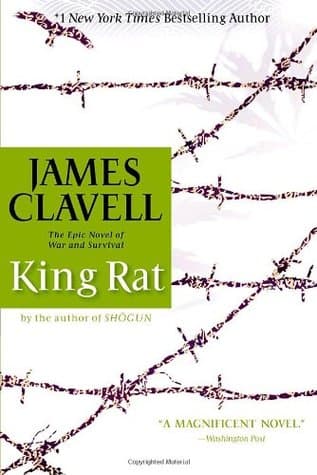
- King Rat
James Clavell
3.5 (8k) average on GoodreadsFantasyBoth depict Japanese POW camps during WWII. Clavell's King Rat offers a much deeper, more morally ambiguous, and psychologically complex exploration of human degradation, social hierarchies, and survival strategies within the camps. Courtenay focuses more on the romantic narrative and the heroic endurance of his protagonists, whereas Clavell delves into the darker facets of human nature under extreme duress, with less emphasis on a traditional romance.
- To Kill a Mockingbird
Harper Lee
4.3 (4.5M) average on GoodreadsHistorical FictionIn the 1930s Jim Crow South, Harper Lee writes about racial injustice, moral growth, and the quiet courage of a lawyer father, Atticus Finch, as seen through his young daughter's eyes.
- The Great Gatsby
F. Scott Fitzgerald
3.9 (3.8M) average on GoodreadsHistorical FictionIn the opulent Roaring Twenties, a mysterious millionaire's lavish parties hide his desperate, tragic pursuit of a lost love, exposing the emptiness within the American Dream.


Enjoyed the summary?
A summary gives you the shape of the book. The book itself has the detail, the examples and the voice.
Find The Persimmon Tree on AmazonAs an Amazon Associate, BookBrief earns from qualifying purchases. How we're funded