“To be, or not to be: that is the question.”
— Hamlet's soliloquy contemplating life and death.

Goodreads Rating
4.55/ 5(4,255 reviews)
Genre
Summary Read
14 min
Book Length
Thousands of hours (for full immersion)
Sign in to track this book
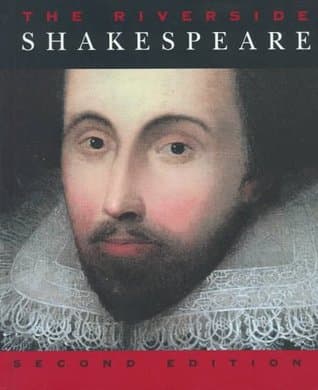
Explore Shakespeare's complete works with the updated Riverside Shakespeare, featuring critical essays, textual notes, and newly attributed plays.
Ask anything about The Riverside Shakespeare and get instant answers grounded in the summary.
“To be, or not to be: that is the question.”
— Hamlet's soliloquy contemplating life and death.
“Friends, Romans, countrymen, lend me your ears; I come to bury Caesar, not to praise him.”
— Mark Antony's funeral oration for Julius Caesar.
“Romeo, Romeo! wherefore art thou Romeo?”
— Juliet lamenting Romeo's name from her balcony.
“All the world's a stage, and all the men and women merely players.”
— Jaques' monologue on the seven ages of man in 'As You Like It'.
“Double, double toil and trouble; Fire burn and cauldron bubble.”
— The Witches' incantation in 'Macbeth'.
“A horse! a horse! my kingdom for a horse!”
— Richard III's desperate cry during the Battle of Bosworth Field.
“The course of true love never did run smooth.”
— Lysander's observation to Hermia in 'A Midsummer Night's Dream'.
“Though she be but little, she is fierce!”
— Helena describing Hermia in 'A Midsummer Night's Dream'.
“Et tu, Brute? Then fall, Caesar!”
— Julius Caesar's dying words upon seeing Brutus among his assassins.
“We are such stuff as dreams are made on, and our little life is rounded with a sleep.”
— Prospero's philosophical reflection on the ephemeral nature of life in 'The Tempest'.
“If music be the food of love, play on.”
— Duke Orsino's opening line in 'Twelfth Night'.
“The fault, dear Brutus, is not in our stars, but in ourselves, that we are underlings.”
— Cassius attempting to incite Brutus against Caesar.
“What's in a name? That which we call a rose by any other word would smell as sweet.”
— Juliet questioning the significance of Romeo's family name.
“Cowards die many times before their deaths; the valiant never taste of death but once.”
— Julius Caesar's assertion of bravery.
Ready to see how well you understood this book? Take our interactive quiz with 10 questions.
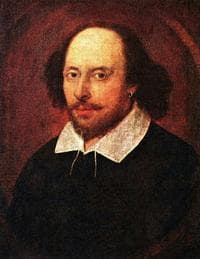
William Shakespeare was an English playwright, poet and actor. He is widely regarded as the greatest writer in the English language and the world's pre-eminent dramatist. He is often called England's national poet and the "Bard of Avon". His extant works, including collaborations, consist of some 39 plays, 154 sonnets, three long narrative poems, and a few other verses, some of uncertain authorship. His plays have been translated into every major living language and are performed more often than those of any other playwright. Shakespeare remains arguably the most influential writer in the English language, and his works continue to be studied and reinterpreted.
Anonymous, Alcoholics Anonymous
4.5

Pope John Paul II
4.4
Will Durant
4.4
Anonymous
4.4
Edward R. Tufte
4.4
Rhonda Byrne
4.3
Dave Ramsey
4.3
Steve McConnell
4.3
Support the author — grab the full book.
As an Amazon Associate, BookBrief earns from qualifying purchases, at no extra cost to you. How we're funded.