

Core Idea
- Difficulty
- Easy
- Read it if
- You feel constrained by societal expectations, are looking to redefine your personal success, and want practical advice on challenging common beliefs.
- Skip it if
- You prefer traditional self-help advice focused on adhering to established norms, or are uncomfortable with the idea of strategic selfishness or questioning authority.
Key Takeaways from The Rules to Break
Redefine Success Beyond Wealth
True success isn't just a big salary; it's about fulfillment and personal value.
Templar questions the belief that success is only about high income and job titles. He argues this narrow view often pushes people into careers they dislike, sacrificing personal well-being for status. Instead, success should be a personal measure, including job satisfaction, work-life balance, personal growth, good relationships, and the ability to pursue interests. Breaking this rule means consciously creating a life that matches one's values, rather than chasing outside markers. It is about finding joy and purpose in daily activities and contributing in ways that feel authentic, regardless of pay.
“The common definition of success – a good job earning lots of money – is often a trap that leads to unhappiness.”
In the book: Templar cites numerous examples of individuals who achieve financial success but remain unfulfilled, highlighting the disconnect between wealth and happiness.
Try this: Evaluate your personal definition of success. List your top five values and assess how your current life and career align with them. If there's a significant mismatch, identify one small step you can take to shift towards a more value-driven path, whether it's exploring new hobbies or seeking more meaningful work.
Related ideas: personal-values, intrinsic-motivation, work-life-balance
Challenge Authority, Don't Blindly Trust
Questioning those in power, like 'teacher knows best', fosters critical thinking and personal agency.
Templar suggests breaking the rule of always deferring to authority figures, whether teachers, experts, or parents. While respecting knowledge is important, blind obedience can hinder critical thinking, innovation, and personal growth. He notes that 'experts' can be wrong, biased, or present only one viewpoint. By questioning, researching, and forming independent judgments, people develop stronger reasoning skills and a more nuanced understanding of the world. This does not mean being disrespectful, but actively engaging with information and taking responsibility for one's own learning and decisions, instead of passively accepting instructions.
“The rule 'teacher knows best' can stifle independent thought and prevent you from forming your own conclusions.”
In the book: Templar uses the example of a student who blindly accepts a teacher's outdated information, missing out on new discoveries or alternative viewpoints.
Try this: Before accepting advice or information from an authority figure, take a moment to consider their potential biases, research alternative perspectives, and critically evaluate the evidence. Formulate your own informed opinion, even if it differs from the 'expert' view.
Related ideas: critical-thinking, cognitive-bias, independent-thought
Dismiss External Opinions
What others think of you is often irrelevant to your happiness and self-worth.
One of Templar's most freeing rules to break is the idea that 'it matters what other people think.' He believes that too much concern for outside approval causes anxiety and stops people from living authentically. Others' opinions are often temporary, based on incomplete information, or simply reflect their own insecurities. Valuing others' judgments over one's own desires leads to a life of conformity and regret. True self-worth comes from within, built by acting in line with personal values and pursuing what brings joy, regardless of societal approval. Breaking this rule frees up significant mental energy and promotes genuine self-acceptance.
“It matters what other people think. This is one of the most damaging rules you can live by.”
In the book: Templar describes how people avoid pursuing dream careers or unique hobbies out of fear of judgment from friends, family, or colleagues.
Try this: Identify one decision you've made or action you've avoided due to fear of what others might think. Re-evaluate it based solely on your own desires and values. Take a small, brave step towards doing what you truly want, even if it might raise an eyebrow.
Related ideas: self-acceptance, external-validation, authenticity
Strategic Selfishness for Others
Being 'generous' to a fault can deplete you, making you less effective for others in the long run.
Templar argues against always being generous, suggesting that constantly putting others' needs first can lead to burnout, resentment, and an inability to help anyone effectively. He recommends a more strategic approach to generosity, where one first ensures their own well-being and resources are sufficient. This is not about being truly selfish, but about recognizing that you cannot give from an empty cup. By setting boundaries, saying 'no' when needed, and prioritizing self-care, people maintain their energy and ability to give meaningfully when it truly counts, making their contributions to others more sustainable and impactful.
“The rule 'be generous' often means giving away more than you can afford, leaving you depleted and resentful.”
In the book: He gives the example of someone who constantly volunteers for extra work or favors, becoming overwhelmed and ineffective, ultimately letting everyone down.
Try this: Review your commitments and identify one area where you habitually over-give. Practice setting a boundary or saying 'no' to a request that would deplete your resources without genuinely benefiting you or others long-term. Reallocate that time or energy to self-care.
Related ideas: boundaries, self-care, burnout-prevention
Embrace Imperfection and Mistakes
The pursuit of perfection is paralyzing; mistakes are essential for learning and progress.
Templar challenges the rule of striving for perfection, stating it is a main barrier to action and innovation. The fear of making mistakes or not meeting an impossible standard often leads to procrastination, inaction, or giving up too soon. Instead, he suggests embracing imperfection and seeing mistakes as valuable learning chances. Every attempt, even a flawed one, offers data and experience that helps growth. Breaking this rule means adopting a 'good enough' mindset to start, making improvements along the way, rather than waiting for an ideal, unattainable state. It allows one to experiment, take risks, and ultimately achieve more.
“The rule 'do it perfectly' often leads to procrastination and a fear of trying anything new.”
In the book: Templar points out how many creative projects or entrepreneurial ventures never start because the creators are waiting for the 'perfect' idea or execution.
Try this: Identify a project or task you've been putting off due to perfectionism. Commit to completing a 'good enough' first draft or version within a set timeframe, even if it's flawed. Focus on getting it done, then iterate and improve.
Related ideas: perfectionism, growth-mindset, procrastination
Don't Always Be 'Nice'
Saying no and asserting yourself, even if it feels 'un-nice', is crucial for self-respect and effectiveness.
Templar argues that the cultural command to 'always be nice' can be harmful, causing people to avoid conflict, hide their true feelings, and let others take advantage. Being 'nice' often means being a people-pleaser, unable to set boundaries or assert one's needs. Breaking this rule means recognizing that real kindness does not require constant agreement or self-sacrifice. It involves being assertive, clear, and even firm when necessary, to protect one's time, energy, and values. This does not mean being rude, but showing confident self-respect. Learning to say 'no' effectively and communicate honest feelings, even if uncomfortable, is vital for healthy relationships and personal integrity.
“The rule 'always be nice' can make you a doormat, unable to protect your own interests or express your true feelings.”
In the book: He illustrates with scenarios where people agree to unreasonable requests or tolerate disrespectful behavior because they don't want to appear 'mean' or 'difficult'.
Try this: Think of a recent situation where you felt obligated to agree to something or didn't express your true feelings to avoid being 'un-nice'. Rehearse how you would have assertively (but politely) communicated your boundaries or feelings instead. Next time, try it.
Related ideas: assertiveness, people-pleasing, boundaries
Challenge the 'Fairness' Illusion
Life isn't inherently fair, and expecting it to be leads to frustration and victimhood.
Templar states that expecting universal fairness is a naive and ultimately disempowering belief. Life is naturally unpredictable and unequal, and clinging to the idea that things 'should' be fair only leads to bitterness, resentment, and feeling like a victim when injustices happen. Breaking this rule means accepting life's inherent unfairness and focusing energy not on what 'should be,' but on what can be done. It shifts control inward, encouraging people to adapt, strategize, and create their own opportunities, rather than waiting for good fortune. This mindset fosters resilience and proactive problem-solving.
“The rule 'life should be fair' is a childlike fantasy that prevents you from taking responsibility for your own outcomes.”
In the book: Templar uses the example of someone constantly complaining about others' successes or their own misfortunes, rather than actively working to improve their situation.
Try this: When faced with an 'unfair' situation, instead of dwelling on the injustice, shift your focus to what aspects you *can* control or influence. Brainstorm at least three proactive steps you can take to mitigate the impact or create a better outcome for yourself.
Related ideas: resilience, locus-of-control, victim-mentality
Don't Always Follow Your Passion
Sometimes, building competence and value first can lead to passion, rather than the other way around.
While 'follow your passion' is common advice, Templar suggests it is a rule worth breaking, or at least reinterpreting. He argues that blindly chasing an undeveloped passion can lead to financial instability and disappointment. Instead, he proposes that passion can often be grown through mastery. By focusing on developing valuable skills, becoming good at a field, and creating value for others, people often find that enjoyment and passion naturally appear. This practical approach suggests building a strong foundation of skills and financial stability first, which then provides the resources and freedom to explore or move towards true passions, rather than starting with an unproven interest and hoping for the best.
“The rule 'always follow your passion' can lead to financial instability and a lack of marketable skills.”
In the book: Templar contrasts the struggling artist who followed only their passion with the individual who built a strong career and then used their financial freedom to pursue artistic endeavors.
Try this: Instead of immediately quitting your job to pursue a passion, identify skills that are highly valued in the market. Focus on developing one such skill, even if it's not your 'dream' area. See if a sense of mastery and value creation sparks new interests or opens doors to your true passions.
Related ideas: skill-acquisition, career-development, mastery
Ditch the 'Busy' Badge of Honor
Being constantly busy is often a sign of inefficiency or poor prioritization, not productivity.
Templar criticizes the modern obsession with busyness, arguing that it is often mistaken for productivity or importance. He suggests that constantly being 'busy' can be a sign of poor time management, an inability to delegate, or a fear of stillness. Breaking this rule means recognizing that true effectiveness comes from focused work on high-impact tasks, rather than simply filling every moment. It involves prioritizing, setting clear boundaries, and intentionally making space for rest, reflection, and strategic thinking. By letting go of the need to appear busy, people can reclaim their time, reduce stress, and genuinely accomplish more meaningful work, rather than just spinning their wheels.
“The rule 'always be busy' has become a badge of honor, but it often means you're doing a lot without achieving much.”
In the book: He observes that many 'busy' people are actually reactive, jumping from one urgent (but not important) task to another, rather than proactive in their work.
Try this: For one week, track how you spend your time. Identify activities that make you feel busy but don't contribute significantly to your goals. Strategically eliminate or delegate one such activity and use the freed-up time for focused work or intentional rest.
Related ideas: time-management, productivity, prioritization
Embrace the Power of 'No'
Saying 'no' protects your time, energy, and priorities, enabling you to say 'yes' to what truly matters.
Templar points out that many people struggle with saying 'no,' which is a major obstacle to living a self-directed and fulfilling life. The fear of disappointing others, appearing unhelpful, or missing out often leads to overcommitment, spreading oneself too thin, and neglecting personal priorities. Breaking this rule involves understanding that 'no' is a complete sentence and a powerful tool for self-preservation and focus. By carefully declining requests that do not align with one's goals or capacity, people create the necessary space and energy to truly excel in chosen areas and dedicate themselves to what genuinely matters, rather than being pulled in many directions by outside demands. It is an act of self-respect and strategic prioritization.
“The inability to say 'no' is a fast track to being overwhelmed, resentful, and ineffective.”
In the book: Templar recounts stories of individuals burning out in their careers or relationships because they couldn't refuse extra tasks or social obligations, leading to exhaustion and resentment.
Try this: Identify one recurring request or obligation that drains your energy without significant personal or professional benefit. Practice politely but firmly saying 'no' to it the next time it arises, perhaps offering an alternative or explanation if appropriate, but without over-apologizing.
Related ideas: boundary-setting, time-management, self-respect
The Rules to Break Quotes
“The rules are there to give you a starting point, not a finishing line.”
“If you don't define your own success, someone else will define your failure.”
“Procrastination is often just fear in disguise.”
“You don't need permission to be magnificent.”
“The biggest risk is not taking any risk.”
“Your comfort zone is a beautiful place, but nothing ever grows there.”
“Mistakes are proof that you are trying.”
“Don't confuse activity with productivity.”
“The only person you are destined to become is the person you decide to be.”
“If you want to live an extraordinary life, you have to stop doing ordinary things.”
“Your 'shoulds' are often someone else's 'rules'.”
“Happiness is not a destination, it's a way of travel.”
“Don't let perfect be the enemy of good.”
“You are only limited by your imagination and your willingness to act.”
Quiz
10 questions on the main ideas. Each answer comes with a short explanation.
Question 1
Which of the following 'rules' is Richard Templar LEAST likely to suggest breaking, based on the premise of 'The Rules to Break'?
- 'Success is a good job earning lots of money'
- 'It matters what other people think'
- 'Always be polite and agreeable'
- 'Treat others as you would like to be treated'
Show answer
D. 'Treat others as you would like to be treated' The book encourages breaking rules that limit personal freedom, happiness, or authentic living. While some traditional 'good' behaviors might be re-evaluated, fundamental ethical principles like treating others well are generally not targets for 'breaking' in the context of self-help for personal liberation.
Question 2
Templar's primary argument for breaking certain established rules often centers on:
- Promoting anarchy and societal disruption.
- Achieving greater personal freedom, happiness, and authenticity.
- Encouraging a return to traditional values and structures.
- Maximizing financial gain above all else.
Show answer
B. Achieving greater personal freedom, happiness, and authenticity. The core message of 'The Rules to Break' is that many societal rules, while seemingly benign, can hinder an individual's path to genuine personal fulfillment and a life lived on their own terms.
Question 3
When Templar discusses the rule 'teacher knows best', what is the underlying principle he encourages readers to adopt instead?
- Always distrust authority figures.
- Blindly follow instructions from any expert.
- Cultivate critical thinking and question assumptions, even from experts.
- Believe only what you discover through personal experience.
Show answer
C. Cultivate critical thinking and question assumptions, even from experts. The rule 'teacher knows best' is challenged to promote independent thought. Templar advocates for critical thinking and the courage to question, rather than passively accepting information, even from those in positions of authority or expertise.
Question 4
Templar suggests breaking the rule 'it matters what other people think'. What practical advice might he offer for someone struggling with this rule?
- Actively seek out negative feedback to build resilience.
- Focus on living authentically according to your own values, rather than external validation.
- Isolate yourself from social interactions to avoid judgment.
- Only associate with people who always agree with you.
Show answer
B. Focus on living authentically according to your own values, rather than external validation. Breaking the rule 'it matters what other people think' is about shifting focus from external approval to internal alignment. Templar would encourage readers to define their own success and happiness, irrespective of others' opinions, and to live in a way that feels true to themselves.
Question 5
Regarding the rule 'be generous', Templar argues that breaking it involves understanding that:
- One should never help others under any circumstances.
- Generosity should always be transactional and immediately reciprocated.
- True generosity comes from a place of genuine desire, not obligation, and it's okay to prioritize your own needs sometimes.
- Being generous is a weakness that others will exploit.
Show answer
C. True generosity comes from a place of genuine desire, not obligation, and it's okay to prioritize your own needs sometimes. Templar doesn't advocate for selfishness, but rather for a conscious and healthy approach to generosity. He suggests that giving out of obligation, or to your own detriment, is not truly beneficial and that it's crucial to establish boundaries and ensure your own well-being first.
Question 6
Which of the following best encapsulates Templar's stance on the rule 'success is a good job earning lots of money'?
- This rule is universally true and should be pursued by everyone.
- Success should be redefined individually, potentially including personal fulfillment, impact, or passion over purely financial metrics.
- Earning lots of money is inherently bad and should be avoided.
- A good job is only one that offers the highest salary, regardless of other factors.
Show answer
B. Success should be redefined individually, potentially including personal fulfillment, impact, or passion over purely financial metrics. Templar challenges the narrow, conventional definition of success. He encourages readers to define what success means to them personally, which may or may not involve high income or a traditional career path, prioritizing personal values and happiness.
Question 7
A key theme throughout the book is the importance of 'self-awareness'. How does Templar argue this relates to breaking rules?
- Self-awareness is irrelevant; the rules should be broken blindly.
- Only by understanding your true self, values, and desires can you identify which rules are truly holding you back.
- Self-awareness is primarily for understanding why others created the rules.
- It helps you predict how others will react when you break rules.
Show answer
B. Only by understanding your true self, values, and desires can you identify which rules are truly holding you back. Self-awareness is foundational. Templar emphasizes that understanding your own authentic self – your passions, fears, values, and what genuinely makes you happy – is the necessary first step to discerning which societal rules are detrimental to *your* specific path and thus worthy of being broken.
Question 8
Templar argues against the idea of 'waiting for permission' to live your desired life. This directly challenges which common societal rule or expectation?
- Always be polite.
- Follow established hierarchies and seek approval from authority.
- Work hard for everything you get.
- Be kind to strangers.
Show answer
B. Follow established hierarchies and seek approval from authority. The concept of 'waiting for permission' ties into societal structures where individuals often feel they need external validation or approval from figures of authority (parents, bosses, society) before pursuing their dreams or making significant life changes. Templar encourages taking agency.
Question 9
If Templar were advising someone on a career change from a high-paying but dissatisfying job, which 'rule to break' would be most central to his counsel?
- Always put family first.
- Never quit a secure job.
- Don't talk about money.
- Always finish what you start.
Show answer
B. Never quit a secure job. The idea of 'never quitting a secure job' is a deeply ingrained societal rule that often prevents people from pursuing more fulfilling, albeit potentially less financially stable, paths. Templar would directly challenge this in favor of personal happiness and meaning.
Question 10
Templar often implies that many of the 'rules' we adhere to are not universal truths but rather:
- Scientifically proven principles for optimal living.
- Arbitrary social constructs, inherited beliefs, or outdated conventions.
- Divine commandments that must never be questioned.
- Laws enforced by government bodies.
Show answer
B. Arbitrary social constructs, inherited beliefs, or outdated conventions. A core premise of the book is that many 'rules' are not immutable laws, but rather societal norms, family expectations, or cultural habits that have been passed down and accepted without critical examination, often hindering individual growth and happiness.
The Rules to Break FAQ
What is the core message of 'The Rules to Break'?
'The Rules to Break' challenges conventional wisdom and societal norms, encouraging readers to identify and discard outdated or unhelpful 'rules' they've internalized. The book advocates for a more authentic and fulfilling life by questioning established beliefs about success, relationships, and self-worth.
Does breaking all rules lead to chaos or irresponsibility?
No, the book does not advocate for breaking all rules indiscriminately. Instead, Richard Templar encourages a thoughtful evaluation of which rules serve you positively and which hinder your personal growth and happiness. It's about discerning useful guidelines from restrictive dogma.
What kind of 'rules' does Richard Templar suggest breaking?
Templar suggests breaking a wide range of rules, including those related to career success (e.g., 'a good job earns lots of money'), social conformity (e.g., 'it matters what other people think'), authority (e.g., 'teacher knows best'), and even personal virtues (e.g., 'always be generous'). The focus is on rules that limit individual potential.
How is 'The Rules to Break' different from other self-help books about challenging norms?
Unlike some books that might advocate for radical rebellion, Templar's approach is more about conscious discernment and personal empowerment. It provides practical frameworks for identifying and re-evaluating personal 'rules,' rather than just generally encouraging non-conformity. It's less about breaking rules for the sake of it, and more about strategic rule-breaking for personal benefit.
What is the 'rule of generosity' that the book questions?
The book examines the societal expectation to 'always be generous,' suggesting that sometimes excessive generosity can lead to being taken advantage of or neglecting one's own needs. Templar encourages readers to set boundaries and be generous strategically, ensuring it's a choice rather than an obligation that depletes them.
Does 'The Rules to Break' provide actionable steps?
Yes, the book is designed to be highly practical. It offers exercises, thought experiments, and real-world examples to help readers identify their own internalized rules, assess their impact, and develop strategies for breaking free from those that no longer serve them. It encourages an active process of self-reflection and change.
Is this book suitable for someone new to self-help literature?
Absolutely. Richard Templar's writing style is accessible and engaging, making complex psychological concepts easy to understand. While it prompts deep introspection, its clear structure and practical advice make it a great starting point for anyone looking to improve their life by re-evaluating their beliefs.
What is the benefit of breaking the rule 'it matters what other people think'?
Breaking this rule can lead to greater personal freedom and authenticity. By reducing the emphasis on external validation, individuals can make choices that truly align with their values and desires, rather than being dictated by societal pressures or the fear of judgment. This fosters increased self-confidence and self-acceptance.
Similar books
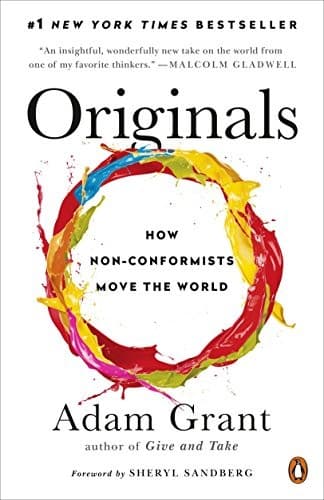
- Originals: How Non-Conformists Move the World
Adam Grant
4.0 (59k) average on GoodreadsExplores the power of challenging the status quo and thinking differently.
- The Perks of Being a Wallflower
Stephen Chbosky
4.2 (1.3M) average on GoodreadsPsychologyThrough letters, a shy high school freshman learns to navigate first love, trauma, and self-discovery, stepping off the sidelines and into life.
- Eleanor Oliphant Is Completely Fine
Gail Honeyman
4.3 (708k) average on GoodreadsLiterary FictionA lonely woman's structured life changes when an IT guy and an elderly man help her learn to open her heart.
- One Flew Over the Cuckoo's Nest
Ken Kesey
4.2 (631k) average on GoodreadsPsychologyIn a mind-bending asylum, the boisterous Randle McMurphy wages a defiant war against the tyrannical Nurse Ratched, inspiring his fellow inmates, including the seemingly catatonic Chief Bromden, to reclaim their lost humanity.
- The Bell Jar
Sylvia Plath
4.0 (591k) average on GoodreadsPsychologyIn the suffocating grip of 1950s expectations, a brilliant young woman's descent into mental illness is painted with such vivid, internal clarity that her 'insanity' feels terrifyingly rational and inevitable.
- The Subtle Art of Not Giving a F*ck: A Counterintuitive Approach to Living a Good Life
Mark Manson
3.9 (530k) average on GoodreadsBusinessEmbrace your flaws and stomach life's lemons, because true happiness isn't about relentless positivity, but about choosing what truly matters to give a f*ck about.





Enjoyed the summary?
A summary gives you the shape of the book. The book itself has the detail, the examples and the voice.
Find The Rules to Break on AmazonAs an Amazon Associate, BookBrief earns from qualifying purchases. How we're funded