

Synopsis
Covers the whole plot, including the ending.
- Difficulty
- Medium
- Pacing
- Moderate
- Mood
- Reflective, Epochal, Melancholy, Progressive
- Read it if
- You enjoy Pulitzer-winning historical fiction that explores the profound impact of societal change over multiple generations, especially the transformation of American wilderness into civilization.
- Skip it if
- You prefer fast-paced plots with high action or character-driven stories focused solely on internal emotional conflict rather than societal evolution.
The Town Plot Summary
Covers the whole plot, including the ending.
The Shifting Landscape of Waynesboro
The novel begins with Sayward Luckett Wheeler, now an old woman, watching the constant growth of Waynesboro, the Ohio settlement she helped start. What was once a thick forest and a few cabins is now a busy town with streets, shops, and many people. Sayward, used to the wild frontier, feels a growing sense of being out of place and misses the untamed wilderness. Her children, especially her youngest son Chancey, are embracing this new urban environment, wanting progress and the chances it brings. Sayward, though, holds onto the old ways, finding comfort in her memories of the forest and the simpler, harder pioneer life. She struggles to connect the past with the present, often feeling like an old thing in a world rapidly changing around her, a world she helped create but no longer fully recognizes.
Chancey's Ambition and Departure
Chancey Luckett, Sayward's youngest son, is a smart and driven young man, bored by what he sees as Waynesboro's small-town feel. He dreams of a life beyond the town, wanting intellectual pursuits and a career in journalism. Despite Sayward's quiet worry and her wish for him to stay near, Chancey eventually leaves Waynesboro for the busy city of Cincinnati. There, he becomes involved in newspapers and political discussions, quickly finding work and showing his sharp mind and writing skills. His leaving is important, showing the growing gap between the pioneer generation's values and the goals of their modern, city-dwelling children. Sayward feels his absence, though she understands his drive.
The Changing Face of Family
Sayward's children, now grown, show the different paths the new society is taking. Rosa, her daughter, marries a rich merchant and enjoys the comforts and social graces of town life, often disagreeing with Sayward's more rustic ways. Wyitt, another son, is a successful lawyer and politician, deeply involved in the town's growth. Sayward watches their lives with a mix of pride and quiet confusion, often feeling disconnected from their urban concerns and goals. She struggles to understand their desire for money and social status, comparing them to the simpler, more real needs of survival on the frontier. The family dynamic changes, with Sayward often feeling like she is watching rather than actively participating in her children's modern lives.
Chancey's Return and Political Awakening
After some time in Cincinnati, Chancey returns to Waynesboro, not as the young man who left, but as a sophisticated journalist with strong political beliefs, especially against slavery. He takes over the local newspaper, 'The Waynesboro Eagle,' and uses it to share his progressive views, often clashing with the more traditional parts of the town. His articles cause debate and sometimes disagreement, making the townspeople face the wider national issues that are starting to divide the country. Sayward watches her son with admiration and concern, recognizing his passion but also seeing the trouble he creates. His return shows national politics entering the once-isolated frontier community.
Sayward's Enduring Connection to Nature
As Waynesboro grows, the forest that once defined Sayward's life shrinks further and further. Yet, Sayward continues to find deep comfort and a sense of self in the bits of nature that still exist — a patch of woods, the river, the changing seasons. She often walks outside the town, seeking quiet solitude and the familiar sounds of the wild. These walks are not just nostalgic; they are key to her spiritual well-being, grounding her in a world that is otherwise becoming more and more foreign. Her connection to the land is a core part of who she is, a stark contrast to the town's constant pursuit of progress, which she often views with doubt.
The Town's Internal Conflicts
Waynesboro, no longer a simple frontier outpost, experiences typical conflicts of a developing town. Economic differences grow, social classes become clearer, and political groups emerge, fueled by national issues like slavery and states' rights. Chancey's newspaper often becomes the center of these debates, as he bravely publishes articles that challenge old opinions. Sayward observes these changes, often with calm wisdom, understanding the human desire for advancement but also seeing the sacrifices and divisions it creates. The town, once a unified effort against the wilderness, now faces the complexities of its own internal human struggles, reflecting the broader societal changes happening across the young nation.
Sayward's Decline and Reflection
As years pass, Sayward's body starts to fail her, a clear reminder of her old age and time passing. She is no longer the strong pioneer woman who could cut down trees and survive harsh winters. Her children, now fully part of town life, care for her, though sometimes with a slightly superior attitude, as if her frontier wisdom is no longer useful. Despite her physical decline, Sayward's mind stays sharp, and her thoughts on life, nature, and the changing world deepen. She often goes back into her memories, reliving the early days of the settlement, finding meaning in her past hardships and victories. She watches the town's constant forward movement, often with a quiet, knowing sadness.
Chancey's Growing Influence and Personal Struggles
Chancey's newspaper, 'The Waynesboro Eagle,' becomes very influential, making him a prominent voice in the region's politics, especially in the abolitionist movement. He is a respected, though sometimes controversial, figure. However, his dedication to his work and his progressive ideas also bring personal problems. He faces opposition from those who hold traditional views, and his commitment to his newspaper often strains his personal relationships. He deals with the responsibility of shaping public opinion and the complex morals of the issues he supports. Despite the challenges, Chancey stays firm in his beliefs, driven by a desire for a more just and enlightened society.
The Looming Shadow of the Civil War
The national debate over slavery grows more intense, casting a long shadow over Waynesboro. Chancey's abolitionist articles become more passionate, showing the growing urgency of the conflict. The town, like the nation, becomes more divided, with families and neighbors sometimes split by their views on the issue. The possibility of war becomes a real and frightening possibility, disrupting daily life and forcing everyone to face deep moral and political questions. Sayward, though separate from the direct political fight, observes the rising tensions with a deep understanding of human conflict, having seen hardship and struggle throughout her life. The frontier community is now permanently linked to the nation's fate.
Sayward's Final Days and Legacy
In her last days, Sayward's thoughts often return to the wilderness, the trees, and the hard-won life she built. She thinks about the huge change she has seen, from an untouched forest to a bustling town, and her part in that change. Her children, especially Chancey, gather around her, acknowledging her strength and lasting spirit. Sayward embodies the shift from the pioneer era to the modern age, a living connection between two worlds. Her legacy is not just the family she raised, but the very ground on which Waynesboro stands, a sign of her resilience, endurance, and deep connection to the land. Her death marks the end of an era, a final goodbye to the frontier spirit.
The Enduring Spirit of Progress
After Sayward's death, Chancey continues his work as a journalist, now more determined than ever to support justice and progress. He is a person of the new age, embracing the intellectual and social advancements that his mother, in her heart, often resisted. His journalism and his commitment to social reform show the ongoing evolution of the community and the nation. While Sayward's life symbolized making the wilderness livable, Chancey's embodies shaping society through ideas and words. The town of Waynesboro, now fully established, continues to grow and adapt, carrying forward the complex legacy of its founders and the hopes of its newer generations, heading towards an uncertain but hopeful future.
The Town Characters
Sayward Luckett Wheeler
Protagonist
The matriarch and pioneer who witnesses Ohio's transformation from wilderness to town.
Sayward is the indomitable spirit of the frontier, a woman of immense strength, resilience, and practicality. Having spent her early life taming the wilderness and raising a family in harsh conditions, she possesses a deep, almost spiritual connection to nature and the land. She is observant, often quiet, and holds a profound wisdom born of experience rather than formal education. As Waynesboro grows, she struggles to adapt to the new urban realities, feeling an increasing sense of alienation from the modern world her children embrace. Her values remain rooted in self-sufficiency, hard work, and the natural order.
Relationships: Chancey Luckett (Her youngest son, whom she loves deeply but struggles to understand his modern ambitions.); Rosa Wheeler (Her daughter, who embraces town life and often clashes with Sayward's rustic ways.); Wyitt Wheeler (Her son, a successful lawyer and politician, representing the new generation's achievements.)
Chancey Luckett
Supporting/Secondary Protagonist
Sayward's youngest son, a progressive journalist who champions social reform.
Chancey is intelligent, ambitious, and driven by a desire for knowledge and social justice. Unlike his mother, he thrives in the intellectual and political ferment of the burgeoning towns and cities. He is articulate, passionate, and willing to challenge the status quo, using his newspaper as a platform for his abolitionist views. He represents the new generation's embrace of progress, education, and moral reform, often finding himself at odds with the more traditional elements of Waynesboro. He deeply respects his mother but is firmly committed to his own modern path.
Relationships: Sayward Luckett Wheeler (His mother, whose traditional values he respects but often diverges from in his modern pursuits.); Rosa Wheeler (His sister, with whom he shares a family bond but different social priorities.)
Rosa Wheeler
Supporting
Sayward's daughter, who embraces the social graces and comforts of town life.
Rosa is Sayward's daughter who, in contrast to her mother, readily adapts to and embraces the comforts and social conventions of the developing town. She marries a prosperous merchant and enjoys the amenities and status that come with it. She is concerned with appearances, social standing, and the domestic sphere of town life. While she loves her mother, she often finds Sayward's rustic ways and clinging to the past somewhat embarrassing or old-fashioned, representing the growing divide between the pioneer generation and their more 'civilized' offspring.
Relationships: Sayward Luckett Wheeler (Her mother, whose pioneer ways she sometimes struggles to understand or accept.); Chancey Luckett (Her brother, sharing a family connection despite different life paths.)
Wyitt Wheeler
Supporting
Sayward's son, a successful lawyer and politician in Waynesboro.
Wyitt is another of Sayward's sons, a successful and influential figure in Waynesboro. He represents the practical, professional side of the town's development, embodying the new opportunities for advancement through education and law. He is intelligent, ambitious, and deeply involved in the community's political and legal structures. He is more pragmatic than Chancey, focused on the tangible progress and governance of the town. He holds his mother in high regard but is firmly committed to the modern, structured world he helps to build.
Relationships: Sayward Luckett Wheeler (His mother, whose strength he admires while pursuing a very different path.); Chancey Luckett (His brother, with whom he shares a common goal of community development, though through different means.)
Jake Tench
Supporting
A long-time friend and neighbor of Sayward, representing the fading pioneer generation.
Jake Tench is a grizzled, older frontiersman and a long-time friend and neighbor of Sayward. He is a relic of the wilderness era, a man of few words but deep understanding of the land and its ways. He shares Sayward's nostalgia for the untamed forest and her apprehension about the rapid growth of the town. He represents the disappearing breed of rugged individualists who first settled the land, and his presence serves as a reminder of the hard-won past. He offers Sayward a quiet companionship and understanding that her children cannot always provide.
Relationships: Sayward Luckett Wheeler (A long-time friend and kindred spirit, sharing a deep bond forged by frontier life.)
Portius Wheeler
Supporting/Mentioned
Sayward's deceased husband, whose legacy influences the family.
Portius Wheeler, Sayward's husband, is deceased by the time 'The Town' begins, but his presence and legacy are felt throughout the novel. He was a more educated and contemplative man than Sayward, a schoolteacher who brought a different sensibility to their frontier life. His intellectual curiosity and love for books are inherited by Chancey. His memory serves as a connection to the earlier days of their settlement and represents a blend of the practical and intellectual aspects that ultimately shaped Waynesboro. His influence is a subtle undercurrent in the family's development.
Relationships: Sayward Luckett Wheeler (His widow, who carries his memory and their shared history.); Chancey Luckett (His son, who inherits his intellectual curiosity and ambition.)
The Town Themes
The Transformation of Wilderness to Civilization
This is the main theme, showing the deep and often sad shift of the Ohio frontier from an wild forest to a busy town. Sayward's life directly reflects this change, as she sees the trees she once loved cut down for streets and buildings. The theme appears in her constant internal struggle between missing the wild and understanding that progress is necessary. Scenes where Sayward walks the shrinking bits of forest, or watches new buildings go up, highlight this constant change. The novel asks what is gained and lost in this march of civilization.
“She had helped to fell the trees, to clear the land, and now the trees were gone, and the land was covered with houses and streets. It was a good thing, a necessary thing, but sometimes her heart ached for the quiet green darkness.”
The Conflict Between Generations and Values
The novel clearly shows the conflict between the pioneer generation's values and those of their children, who grew up in a more settled, urban society. Sayward represents the self-sufficient, nature-focused way of the frontier, while Chancey and Rosa show the intellectual, social, and material goals of the developing town. This conflict is seen in Sayward's confusion at her children's interest in fashion and social status, and in Chancey's eagerness to leave the 'small-minded' town for the wider world. It explores how progress can create a gap in understanding, even within a loving family.
“Her children spoke of progress, of new inventions, of the world beyond the clearing, and sometimes Sayward felt as if they spoke a foreign tongue.”
The Price of Progress
While recognizing the benefits of civilization, the novel subtly explores the costs of progress. The clearing of forests, the loss of the shared frontier spirit, and the increasing social divisions in Waynesboro all represent sacrifices made for development. Sayward's deep sadness for the lost wilderness emphasizes this theme, as does the growing political division within the town. The 'progress' that brings conveniences also brings new forms of isolation and conflict. This suggests that every advancement comes with its own burdens and losses, especially for those who remember what was there before.
“The town had grown, and with it, the fences. Fences everywhere, dividing what had once been common land, common air, common sky.”
The Enduring Spirit of the American Pioneer
Despite the town's transformation, the novel celebrates the toughness, adaptability, and strong spirit of the American pioneer. Sayward, even in her old age, embodies these qualities. Her memories, her physical and mental strength, and her deep connection to the land show the fundamental strength of those who first settled the frontier. The theme suggests that while the physical wilderness may disappear, the spirit of endurance, self-reliance, and connection to the land, formed in those early days, continues to shape the character of the nation and its people, appearing in new ways through later generations.
“She had built her life with her own hands, out of the wild forest, and no matter how many houses rose, that truth remained.”
Plot Devices & Literary Techniques
Symbolism of the Forest and the Town
The forest represents the past, wilderness, and Sayward's identity; the town represents the future, civilization, and her children's aspirations.
The stark contrast between the dense, untamed forest (representing the past, nature, and Sayward's identity) and the burgeoning town (representing the future, civilization, and her children's aspirations) serves as a powerful symbolic framework for the entire novel. The shrinking forest literally and figuratively reflects Sayward's diminishing relevance in the new world, while the expanding town signifies the relentless march of progress. This symbolism highlights the central conflict between nature and civilization, tradition and modernity, and provides a visual metaphor for the psychological and societal changes taking place.
Generational Saga
The narrative spans a significant period, following the Luckett family across generations.
As the final book in 'The Awakening Land' trilogy, 'The Town' utilizes the device of a generational saga to illustrate the long-term impact of historical change. By focusing on Sayward's long life and then shifting to her son Chancey, the novel effectively demonstrates how the values, challenges, and opportunities of a society evolve over decades. This allows Richter to show not just a moment of change, but the full arc of a community's development from wilderness settlement to a more complex, modern town, seen through the eyes of those who lived through it and their descendants.
Nostalgia and Memory
Sayward's frequent recollections of the past serve as a lens through which the reader understands the lost frontier.
Sayward's deep-seated nostalgia and her frequent retreats into memory serve as a key plot device. Her internal monologues and recollections of the early days of the settlement provide the reader with vivid descriptions of the wilderness that has been lost, contrasting it sharply with the present-day town. This device not only deepens Sayward's character and her sense of alienation but also acts as a historical record, allowing the author to convey the sensory details and hardships of pioneer life, making the 'lost' world palpable and emphasizing the magnitude of the transformation.
The Newspaper as a Voice of Change
Chancey's newspaper, 'The Waynesboro Eagle,' serves as a platform for new ideas and societal debate.
The establishment and operation of 'The Waynesboro Eagle' by Chancey Luckett functions as a significant plot device for introducing and amplifying the themes of progress, social change, and political discourse. The newspaper is not merely a setting but an active agent in the narrative. It allows the author to present the evolving intellectual landscape of the town, showcase the national debates (particularly on slavery), and illustrate the power of the written word in shaping public opinion, contrasting sharply with the oral traditions and direct experiences of the frontier era.
The Town Quotes
“The wind was an old woman with a broom sweeping the dust of the prairie into the sky.”
“It was a strange thing how a man could love a piece of ground, even when it fought him every step of the way.”
“Progress was a hungry maw that swallowed the old ways whole.”
“A town was like a living thing, with a heart that beat in its streets and a soul that lived in its people.”
“The past was a river that flowed through the present, carrying its silt and its memories.”
“He saw the future as a great, uncharted forest, full of both promise and unknown dangers.”
“There was a loneliness in the heart of even the busiest place, a quiet space where a man was truly alone.”
“The wilderness had a way of getting into a man's bones, even after he left it behind.”
“Money was a good servant but a poor master.”
“Every generation had its own battles to fight, its own mountains to climb.”
“The true measure of a man wasn't in what he built, but in what he left behind for others.”
“Change came not like a storm, but like the slow, relentless push of a glacier.”
“To forget where you came from was to lose a part of yourself.”
“The past was never truly dead; it only slept, waiting for a chance to wake.”
Quiz
10 questions on the plot and the characters. Each answer comes with a short explanation.
Question 1
At the beginning of 'The Town', what is the name of the settlement that Sayward and her family have helped establish, which is rapidly growing?
- Richland
- Moonville
- Sayward's Landing
- Americus
Show answer
D. Americus The settlement that Sayward and her family helped found and which grows into a town is named Americus.
Question 2
What is Sayward's initial reaction to the rapid growth and 'civilizing' changes occurring in Americus?
- She embraces all the new conveniences and social customs immediately.
- She is deeply ambivalent, often feeling a loss for the old wilderness ways.
- She actively campaigns against the new developments, trying to preserve the frontier.
- She moves further west to escape the changes entirely.
Show answer
B. She is deeply ambivalent, often feeling a loss for the old wilderness ways. Sayward often feels a deep sense of loss for the untamed wilderness and the simpler, harder life, even as she benefits from and contributes to the town's growth.
Question 3
Which of Sayward's children becomes a central figure in the latter part of 'The Town', pursuing a career in journalism?
- Wyatt
- Achilles
- Chancey
- Rosa
Show answer
C. Chancey Chancey, Sayward's youngest son, becomes a journalist and represents the new generation adapting to the changing world.
Question 4
What significant technological advancement profoundly impacts the town of Americus and Sayward's life during the course of the novel?
- The invention of the telegraph
- The construction of a major railroad line
- The introduction of electric streetlights
- The first public water system
Show answer
B. The construction of a major railroad line The arrival and expansion of the railroad dramatically change Americus, bringing new commerce and accelerating its transformation from a frontier settlement to a modern town.
Question 5
What is a recurring theme explored through Sayward's character as the frontier gives way to civilization?
- The triumph of urban planning over natural landscapes.
- The inevitable decline of moral values with progress.
- The tension between tradition and progress, and the loss of wilderness values.
- The unalloyed joy of technological advancement.
Show answer
C. The tension between tradition and progress, and the loss of wilderness values. Sayward embodies the conflict between the rugged independence and intimacy with nature of the frontier and the social complexities and material comforts of the evolving town.
Question 6
As Americus grows, what specific change in social structure or hierarchy does Sayward observe and sometimes struggle to adapt to?
- The disappearance of gender roles.
- The emergence of distinct social classes and formal etiquette.
- A shift towards communal living and shared resources.
- The abolition of all forms of governance.
Show answer
B. The emergence of distinct social classes and formal etiquette. Sayward, accustomed to the egalitarianism of the frontier, finds the new social stratification and emphasis on formal manners challenging and sometimes perplexing.
Question 7
How does Sayward's relationship with her son Chancey reflect the generational gap between the frontier past and the emerging industrial future?
- They share an identical vision for Americus's future.
- Chancey fully rejects his mother's values, leading to permanent estrangement.
- Sayward struggles to understand Chancey's modern aspirations and intellectual pursuits, which diverge from her practical, land-based values.
- Chancey tries to revert Americus back to its original wilderness state, aligning with Sayward's nostalgia.
Show answer
C. Sayward struggles to understand Chancey's modern aspirations and intellectual pursuits, which diverge from her practical, land-based values. Their relationship highlights the different values and worldviews of their respective eras, with Sayward rooted in the land and Chancey in the burgeoning world of ideas and industry.
Question 8
What specific incident involving the town's newspaper, run by Chancey, illustrates the changing nature of public discourse and political engagement?
- The newspaper publishes an exposé on a local corruption scandal, leading to widespread debate.
- Chancey uses the paper to advocate for returning to a purely agricultural economy.
- The newspaper focuses exclusively on social gossip and entertainment.
- The paper is shut down due to lack of interest from the townsfolk.
Show answer
A. The newspaper publishes an exposé on a local corruption scandal, leading to widespread debate. Chancey's newspaper becomes a platform for public debate and exposes, marking a shift from informal community discussions to formalized public discourse through media.
Question 9
How does Sayward's personal identity evolve throughout 'The Town' in response to the changing landscape?
- She completely abandons her frontier identity to fully embrace urban life.
- She becomes increasingly isolated and bitter, refusing any form of change.
- She remains fundamentally a 'woman of the woods' even as she adapts to and participates in the town, maintaining an inner wildness.
- She becomes a prominent socialite, leading the town's cultural transformation.
Show answer
C. She remains fundamentally a 'woman of the woods' even as she adapts to and participates in the town, maintaining an inner wildness. Despite the dramatic changes, Sayward retains her core frontier spirit and deep connection to the natural world, even while living in and contributing to the growing town.
Question 10
By the end of the novel, set just before the Civil War, what major national issue is becoming increasingly prominent in the discussions and political life of Americus, reflecting the broader national tensions?
- Women's suffrage
- Temperance movement
- The issue of slavery and states' rights
- Native American land rights
Show answer
C. The issue of slavery and states' rights As the novel concludes, the growing national debate over slavery and the looming conflict of the Civil War increasingly dominate the political and social landscape of Americus.
The Town FAQ
What is the primary focus of 'The Town' within the larger 'Awakening Land' trilogy?
'The Town' shifts focus from Sayward Luckett Wheeler's direct pioneering efforts to the experiences of her youngest son, Chancey, as he navigates the rapidly developing town of Americus. It explores the transition from a wilderness settlement to a more established, industrialized society and the challenges faced by the new generation.
How does the setting of Americus evolve throughout 'The Town'?
Americus transforms from a small, struggling frontier outpost into a bustling, modern town with factories, a newspaper, and a more complex social structure. This rapid industrialization and urbanization are central to the novel, often contrasting sharply with the natural world Sayward knew.
Who is Chancey Wheeler, and what is his role in the narrative?
Chancey Wheeler is Sayward's youngest son, a sensitive and intellectual young man who becomes a journalist and editor in Americus. He represents the new generation grappling with progress, moral dilemmas, and the changing values of a society moving away from its frontier roots, often struggling to reconcile his mother's legacy with modern life.
What major historical period does 'The Town' cover, and how does it influence the plot?
'The Town' covers the years leading up to the American Civil War, specifically the 1840s and 1850s. The growing tensions over slavery, the rise of abolitionism, and the political debates of the era significantly influence Chancey's journalism and the moral fabric of Americus, becoming a central conflict.
How does Sayward Luckett Wheeler's character change or adapt in 'The Town' compared to earlier books?
In 'The Town,' Sayward is an aging matriarch, a living embodiment of the frontier past, often feeling out of place in the modernized Americus. While her wisdom and resilience remain, she struggles to understand the new ways and technologies, and her direct influence on the town's development wanes as her children take over.
What is the significance of the newspaper, 'The Americus Democrat,' in the novel?
'The Americus Democrat' serves as a crucial platform for Chancey's voice and for exploring the political and social issues of the time, particularly the growing anti-slavery sentiment. It highlights the power of the press in shaping public opinion and challenging established norms in a rapidly changing society.
Are there any symbolic objects or recurring motifs that link 'The Town' to the earlier books?
The persistent image of the forest, even as it recedes, serves as a powerful symbol connecting 'The Town' to 'The Trees' and 'The Fields.' Sayward often reflects on the lost wilderness, and trees continue to represent both natural beauty and the obstacles overcome by the pioneers, even as they are cut down for progress.
How does the novel subtly depict the decline of traditional frontier skills and values?
The novel subtly shows the decline of frontier skills through Sayward's increasing irrelevance in a town that values commerce and industry over hunting, trapping, and self-sufficiency. The younger generation, especially Chancey, is more concerned with intellectual pursuits and modern conveniences, highlighting this cultural shift.
What is the significance of the changing relationship between humans and nature in 'The Town'?
The relationship shifts from one of survival and intimate connection with nature in the earlier books to one of conquest and exploitation in 'The Town.' Nature is increasingly viewed as a resource to be tamed and utilized for industrial growth, reflecting the broader American narrative of expansion.
How does Chancey's psychological journey reflect the broader societal changes of the era?
Chancey's internal conflicts—his idealism clashing with the pragmatic realities of politics, his struggle to find his voice amidst societal pressures, and his grappling with his mother's legacy—mirror the nation's own growing pains. He represents the intellectual and moral awakening of a generation confronting complex issues like slavery and industrialization.
Analyze Sayward's emotional state as she witnesses the transformation of Americus.
Sayward experiences a profound sense of nostalgia, alienation, and a quiet melancholy as she watches Americus grow. She feels a disconnect from the modern world, often retreating into memories of the wilderness. While she takes pride in her family's achievements, there's an underlying sadness for the lost simplicity and natural beauty.
How does the novel explore the concept of progress through the experiences of different characters?
The novel explores progress through varied perspectives: Chancey embraces it, seeking to shape it through his journalism; Sayward views it with a mix of pride and regret for what is lost; and other townspeople might see it as purely economic opportunity. This multi-faceted view highlights the complex and often contradictory nature of 'progress.'
What psychological impact does the looming threat of the Civil War have on the characters?
The looming Civil War creates a pervasive sense of anxiety, moral urgency, and division among the characters. Chancey, through his newspaper, feels the burden of responsibility to influence public opinion, while others experience fear, uncertainty, and the painful fracturing of communities and families along political lines.
Is 'The Town' ultimately optimistic or pessimistic about the trajectory of American society?
The novel presents a nuanced view, not entirely optimistic or pessimistic. While it celebrates the ingenuity and growth of Americus, it also mourns the loss of wilderness and the moral compromises accompanying progress. The ending, with the unresolved tensions leading to the Civil War, suggests a complex future with both promise and peril.
How does 'The Town' contribute to the overall theme of 'The Awakening Land' trilogy?
'The Town' completes the trilogy by showing the culmination of the 'awakening' of the land, from wilderness to industrialized civilization. It highlights the sacrifices and transformations that define American expansion, demonstrating that progress is not without its costs, both environmental and cultural.
What is the novel's stance on the balance between individual freedom and societal order?
The novel explores this balance through Chancey's journalistic endeavors. He champions individual freedom of thought and expression, often clashing with established societal norms and political pressures. The struggles to maintain order in a rapidly changing town, particularly concerning slavery, highlight the constant tension between these two ideals.
How does the novel portray the role of women in the evolving society of Americus?
While Sayward represents the strength of pioneer women, 'The Town' also shows women in more traditional domestic roles within the developing town. However, it also subtly hints at emerging opportunities for women, perhaps through education or social activism, reflecting the gradual shifts in gender roles during the pre-Civil War era.
To what extent does 'The Town' critique the concept of 'manifest destiny' or American expansion?
'The Town' offers a subtle critique of unchecked expansion and manifest destiny by portraying the environmental destruction and the loss of indigenous ways of life that accompany 'progress.' While celebrating the pioneers' resilience, it also questions the moral cost of transforming a continent, particularly through the lens of Sayward's nostalgia for the wild.
About the author

Conrad Richter was a Pulitzer Prize-winning American novelist known for his historical fiction, particularly his "Awakening Land" trilogy. His works, including "The Town" and "The Fields," often explored the lives of pioneers in frontier America with a lyrical and evocative prose style. Richter's deep connection to the American past and his meticulous research informed his critically acclaimed storytelling.
Similar books
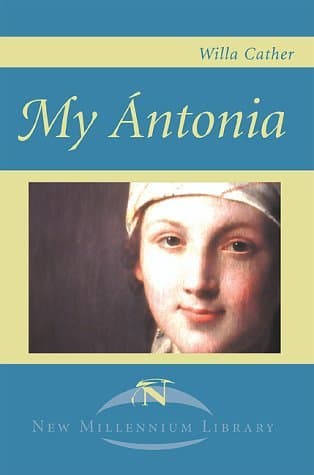
- My Ántonia
Willa Cather
3.8 (120k) average on GoodreadsHistorical FictionDepicts the lives of immigrant pioneers on the American prairie and the changing landscape.
- Lonesome Dove
Larry McMurtry
4.5 (149k) average on GoodreadsHistorical FictionA sprawling epic that captures the end of the American frontier era and its characters.
- Little House on the Prairie
Laura Ingalls Wilder
4.2 (256k) average on GoodreadsChildren'sWilder's Little House on the Prairie series romanticizes the pioneer experience for a younger audience, emphasizing community building, resilience, and the joy of simple living. Richter's The Town presents a grittier, more complex, and ultimately more melancholic vision of frontier life, focusing on the psychological costs of development and the inevitable erosion of a traditional way of life, offering a tragic counterpoint to Wilder's idealized narratives.
- The Old Man and the Sea
Ernest Hemingway
3.8 (831k) average on GoodreadsLiterary FictionA Cuban fisherman's long struggle with a giant marlin becomes a story of endurance and dignity, now retold for young adults with illustrations, phonetic guides, and writing prompts in Traditional Chinese.
- One Hundred Years of Solitude
Gabriel García Márquez
4.1 (753k) average on GoodreadsLiterary FictionThrough the multi-generational story of the Buendía family, a mythical town deals with the repeating patterns of time, love, and solitude, as the extraordinary mixes with the ordinary.
- The Goldfinch
Donna Tartt
3.9 (720k) average on GoodreadsLiterary FictionHaunted by a tragic explosion and clutching a stolen Dutch masterpiece, a young orphan navigates the opulent drawing rooms of New York and the gritty underbelly of the art world, desperately seeking connection and redemption amidst a life spiraling into crime and obsession.



Enjoyed the summary?
A summary gives you the shape of the book. The book itself has the detail, the examples and the voice.
Find The Town on AmazonAs an Amazon Associate, BookBrief earns from qualifying purchases. How we're funded