

Synopsis
Covers the whole plot, including the ending.
- Difficulty
- Medium
- Pacing
- Moderate
- Mood
- Atmospheric, Suspenseful, Melancholy, Intense
- Read it if
- You enjoy psychological depth, moral dilemmas, and stories set against the backdrop of WWII.
- Skip it if
- You prefer fast-paced action or clear-cut heroes and villains.
The Train Plot Summary
Covers the whole plot, including the ending.
The Idyllic Life Interrupted
Marcel Feron, a timid radio repairman, lives a content life in La Ferté, a quiet French town in the Ardennes, with his pregnant wife, Jeanne, and their young daughter, Elise. He values his ordinary existence, which differs from his past. On May 10, 1940, distant bombings and news of the German invasion suddenly break the peace. The town is ordered to evacuate, throwing Marcel's carefully built world into disorder. He, Jeanne, and Elise pack what they can, joining the panicked crowds of refugees heading to the train station, a scene of growing chaos.
Separation and the Freight Car
Amidst the confusion at the train station, Marcel is separated from Jeanne and Elise. In the crowd, he loses sight of them and is swept onto a crowded freight car meant for refugees. This unexpected event, though terrifying, also awakens a dormant sense of fatalism in Marcel, a feeling he has long suppressed. The freight car, packed with strangers, becomes a small version of the fleeing nation, a confined space where fear, uncertainty, and a strange camaraderie begin to emerge among its unwilling occupants. Marcel feels guilt over his family's disappearance, yet also a peculiar sense of detachment.
Meeting Anna
Inside the dimly lit and cramped freight car, Marcel notices a young woman named Anna. She has dark hair, a sad, distant look, and an accent that is hard to place, suggesting she is not French, Belgian, or German. She keeps to herself, watching the other refugees with quiet resignation. Marcel, at first hesitant, finds himself drawn to her mysterious presence. Their conversations are brief at first, often just shared glances, but a silent understanding begins to form between them. Anna's foreignness and deep sadness spark Marcel's curiosity, distracting him from his own worries about his family and the war.
The Journey South
The train's journey is slow and unpredictable, constantly stopping due to damaged tracks, air raids, or congestion. Days blend into nights as the freight car becomes a temporary home for its occupants. Marcel and Anna's bond deepens through shared hardship and quiet companionship. They share meager rations and comfort each other during moments of fear. The stops allow for brief trips into devastated towns, offering glimpses of the war's widespread impact. During these stops, Marcel and Anna often venture out together, their shared experiences forming an increasingly close connection, a bond made outside the norms of their previous lives.
The Affair Begins
During a long stop in a deserted town, Marcel and Anna find themselves alone in a small, abandoned house. The isolation, shared trauma, and uncertain future ignite an intense passion between them. They become lovers, finding solace and a desperate kind of joy in each other's arms. This affair is a radical change from Marcel's timid, conventional life with Jeanne. It represents a sudden, exhilarating freedom from his past self, a shedding of his inhibitions as society collapses. For Marcel, this forbidden relationship is a profound awakening, a discovery of a part of himself he never knew existed.
Anna's Confession
As their affair deepens, Anna finally tells Marcel the truth about her identity. She is Jewish, and her family had been living in Belgium. They were targeted by the Nazis, and she is fleeing for her life, carrying forged papers. This revelation adds a new layer of danger and urgency to their situation. Marcel is initially shocked but quickly realizes the seriousness of her confession. He understands that their relationship is not just a wartime fling but a matter of life and death, linking his fate with hers in a way he never expected. Her secret changes their bond from romantic to one of shared peril.
Arrival in La Rochelle
After weeks of travel, the train finally arrives in La Rochelle, a port city in the unoccupied zone of France. The refugees get off, and the temporary community of the freight car disperses. Marcel and Anna now face the reality of their situation outside the train. The relative safety of La Rochelle means a return to some order, but it also means confronting the future of their illicit relationship and Anna's uncertain status. Marcel feels a deep sense of responsibility for Anna, a weight that contrasts sharply with the earlier exhilaration of their affair.
A New Life and a Difficult Decision
In La Rochelle, Marcel and Anna build a life together, renting a small room and working odd jobs to survive. Marcel, using his skills, finds work repairing radios. They live under the constant threat of discovery, especially concerning Anna's Jewish identity. Marcel experiences a complex mix of love for Anna and persistent guilt over his abandoned family. The dreamlike quality of their affair on the train gives way to the harsh realities of wartime survival and the moral ambiguities of their choices. Marcel is torn between the deep connection he shares with Anna and the lingering ties to his past life.
Jeanne's Return
One day, Marcel sees Jeanne and Elise in La Rochelle. They have survived the journey and are looking for him. The reunion is both joyous and devastating for Marcel. He is filled with relief to see his family alive but also dread at the impossible choice before him. His two lives have collided. Jeanne, unaware of Anna, is simply grateful to have her husband back. Marcel is forced to confront the consequences of his actions and the deep divide that has opened in his life, realizing he cannot maintain both relationships simultaneously.
The Inevitable Confrontation
Marcel is in an agonizing situation. He cannot openly acknowledge Anna without exposing her and risking her life, nor can he abandon her. The love he feels for Anna, combined with his sense of responsibility for her safety, clashes with his duty and affection for Jeanne and Elise. The war's chaos, which allowed his affair to flourish, now demands a brutal clarity. He understands that any public association with Anna, especially given her background, could lead to severe consequences for both of them in the increasingly dangerous political climate. He is trapped in a moral and emotional bind.
The Police Raid
The inevitable happens: the local police, working with the occupying forces, raid their building, searching for unregistered persons and those in hiding. Marcel and Anna are in their room when the police arrive. In a moment of sheer panic and desperate calculation, Marcel realizes he must make a choice that will determine Anna's survival. He knows that if he is found with her, both their lives could be lost. The raid makes the life-or-death stakes of their relationship clear, forcing Marcel to act decisively and instantly.
A Blood-Chilling Decision
As the police approach their door, Marcel makes a swift, terrifying decision. He shoves Anna into a small, dark closet, locking it from the outside, effectively hiding her and denying her existence. When the police question him, he pretends ignorance, claiming he is alone and has just arrived. His betrayal, though born of a desperate instinct for self-preservation and to protect his family, is a profound act of abandonment. He sacrifices Anna's immediate safety and their shared future to preserve his own life and ensure the reunion with Jeanne and Elise, leaving Anna to an unknown, grim fate. This act forever changes his perception of himself.
Principal Figures
Marcel Feron
Protagonist
A timid radio repairman whose ordinary life is upended by war and a forbidden love.
Marcel is initially presented as a mild-mannered, unassuming man who cherishes his 'normal' life in a quiet French town. He has deliberately constructed an ordinary existence, consciously suppressing a deeper, more fatalistic or adventurous side of his personality. The war and his separation from his family act as catalysts, stripping away his inhibitions and revealing a capacity for passion and decisive action he never knew he possessed. He struggles with guilt and a profound sense of responsibility, particularly after his affair with Anna and her subsequent fate.
Relationships: Jeanne Feron (Wife, represents his conventional, stable past and familial duty.); Elise Feron (Daughter, represents his family and the innocence he wants to protect.); Anna (Lover, represents freedom, passion, and a dangerous, illicit connection forged in wartime.)
Anna
Supporting/Love Interest
A mysterious, sad-eyed Jewish woman fleeing persecution, who becomes Marcel's lover.
Anna is a enigmatic figure, initially defined by her quiet sadness and foreignness. She is a Jewish woman from Belgium, carrying the burden of her identity and the constant threat of Nazi persecution. Her vulnerability and resilience draw Marcel to her. She is courageous in her flight but also profoundly alone, finding temporary solace and connection with Marcel. Her past and her precarious present make her an object of both desire and immense responsibility for Marcel, ultimately becoming the catalyst for his most difficult decision.
Relationships: Marcel Feron (Lover, her protector during their journey, but ultimately her betrayer.)
Jeanne Feron
Supporting
Marcel's pregnant wife, representing his stable, pre-war life and moral obligations.
Jeanne is Marcel's conventional wife, pregnant with their second child, who embodies the 'normal' life Marcel has so carefully built. She is practical, loving, and deeply concerned for her family's safety during the evacuation. Her perspective remains largely tied to the domestic sphere and the hope of reuniting her family. She is unaware of Marcel's affair with Anna, serving as a poignant symbol of the innocent life he abandoned and the moral dilemma he faces upon their reunion. Her survival reinforces the weight of Marcel's past commitments.
Relationships: Marcel Feron (Husband, represents stability and family.); Elise Feron (Daughter, represents motherhood and family continuity.)
Elise Feron
Supporting
Marcel and Jeanne's young daughter, a symbol of innocence and the family's future.
Elise is Marcel and Jeanne's young daughter, whose presence underscores the fragility of life and the profound responsibility of parenthood amidst the chaos of war. She is a symbol of innocence and the future Marcel is fighting to protect, both consciously and subconsciously. Her separation from Marcel and subsequent reunion highlights the emotional stakes of the conflict and the profound impact of parental decisions. She is a reminder of Marcel's pre-war identity and the life he left behind.
Relationships: Marcel Feron (Father, a source of love and protection.); Jeanne Feron (Mother, a source of love and care.)
The Refugees
Mentioned/Collective
The diverse group of people sharing the freight car with Marcel and Anna.
The other refugees in the freight car represent a cross-section of French society displaced by the war. They are a largely anonymous collective, each with their own fears, hopes, and stories of loss. They provide the immediate social context for Marcel and Anna's burgeoning relationship, serving as both witnesses and fellow sufferers. Their shared plight fosters a temporary sense of community, but also highlights the isolation and anonymity that can arise in desperate circumstances. They are a backdrop against which Marcel's personal drama unfolds.
Relationships: Marcel Feron (Fellow traveler, temporary companion.); Anna (Fellow traveler, temporary companion.)
Themes & Insights
The Collapse of Social Norms and Moral Ambiguity
War shatters order, making conventional morality less important. Marcel, a man who values 'normalcy,' finds himself capable of a passionate affair and, in the end, a horrifying betrayal. The chaos of evacuation and the freight car journey create a space where actions are driven by survival and immediate emotional needs, rather than social expectations. This theme is shown by Marcel's affair with Anna during their journey and his final decision to sacrifice her for his own safety and family, highlighting how extreme circumstances can force people into morally difficult positions.
“He knew that this was 'life,' this was 'freedom,' and that he would never again be the Marcel Feron of La Ferté.”
Identity and Self-Discovery
Marcel's journey is one of deep self-discovery. Without his familiar environment and separated from his family, he sheds the timid persona he carefully built. The affair with Anna allows him to explore a more passionate, assertive, and even reckless side of himself. He faces the 'fate' he secretly expected, realizing he can do things, both exhilarating and terrible, that were unimaginable in his previous life. Anna, too, is defined by her hidden identity, forced to hide her true self to survive, which further complicates Marcel's understanding of himself and his choices.
“For years he had been playing a part, the part of a happy, normal man. Now, the stage had collapsed.”
Love, Betrayal, and Responsibility
The novel explores the complex interaction of love, responsibility, and the potential for betrayal under pressure. Marcel's love for Anna is born from shared vulnerability and passion, but it conflicts with his existing love and responsibility for Jeanne and Elise. His ultimate decision to save himself by sacrificing Anna is a deep betrayal, driven by a desperate sense of responsibility towards his family and his own survival. This theme highlights the agonizing choices people face when loyalties conflict in life-or-death situations, and the lasting psychological scars they leave.
“He had loved her, yes. But he loved his wife, too, and his daughter, and he loved his own life.”
The Impact of War on the Individual
The war is not just a background; it is the main force shaping the characters' lives and choices. It disrupts Marcel's peaceful existence, separates him from his family, and forces him into extreme circumstances. The constant threat, displacement, and breakdown of society create an environment where ordinary people are pushed to their limits, showing both their resilience and their capacity for morally ambiguous actions. The war isolates people, strips them of their identities, and confronts them with the raw realities of survival, fundamentally changing their sense of self and their relationships.
“It was the war, he told himself, that had made him this man, a man he scarcely recognized.”
Plot Devices & Literary Techniques
The Train/Freight Car
A confined, moving space that serves as a crucible for character development and illicit relationships.
The freight car acts as a literal and metaphorical vessel, transporting Marcel and Anna not only geographically but also emotionally. Its confinement and isolation from the outside world create an intimate, intense environment where social norms are suspended. It allows Marcel to shed his inhibitions and for his affair with Anna to develop rapidly and passionately, unobserved and unjudged by his former life. The train's erratic journey mirrors the characters' internal turmoil and the uncertain path of their lives, becoming a temporary, liminal space where new identities and relationships are forged.
Separation and Reunion
The physical splitting of Marcel from his family, followed by their unexpected reunion, creates central conflict.
The initial separation of Marcel from Jeanne and Elise is the primary catalyst for his journey and his affair with Anna. It frees him, however tragically, from his pre-war responsibilities and allows for his transformation. The unexpected reunion with his family later in La Rochelle shatters the temporary reality he built with Anna, forcing him to confront the consequences of his actions and the impossible choice between his two lives. This device heightens the dramatic tension and underscores the themes of responsibility, betrayal, and the enduring pull of familial bonds.
Anna's Secret Identity
The revelation of Anna's Jewish heritage introduces a life-or-death stakes to her relationship with Marcel.
Anna's hidden Jewish identity transforms her from a mysterious romantic interest into a vulnerable individual whose life is in constant peril. This secret elevates the stakes of Marcel's relationship with her from a mere affair to a matter of life and death. It places an immense burden of responsibility on Marcel, forcing him to confront the real-world dangers of their connection and ultimately leading to his 'blood-chilling decision.' The secret underscores the pervasive threat of the war and the personal risks involved in protecting those targeted by the regime.
The Train Quotes
“Everything was falling apart, not only for me but for the whole world. And yet, I had never felt so alive.”
“We were no longer individuals, but a single, pulsating mass, driven by a primal need to survive.”
“The train was a world unto itself, hurtling through the darkness, carrying its cargo of fear and hope.”
“It was strange how quickly one could adapt to the extraordinary, how the absurd could become the norm.”
“Each face on the train held a story, a universe of anxieties and whispered prayers.”
“The war had stripped away the veneer of civilization, revealing the raw, unvarnished truth of human nature.”
“I had left one life behind, and was heading towards another, utterly unknown. And in that uncertainty, there was a strange kind of freedom.”
“Love, even in the midst of chaos, found a way to bloom, fragile yet persistent.”
“The landscape outside blurred into an impressionistic smear, mirroring the confusion within me.”
“There were moments of unexpected tenderness, small acts of kindness that shone like beacons in the gloom.”
“The past was a distant echo, the future an unwritten page. Only the present, raw and immediate, truly mattered.”
“Sometimes, doing nothing was the hardest thing of all, to simply surrender to the flow of events.”
“The silence, when it came, was almost as deafening as the noise, a heavy blanket of unspoken fears.”
“We were all complicit in this unfolding drama, each playing our part, however small, in the grand design.”
Quiz
10 questions on the plot and the characters. Each answer comes with a short explanation.
Question 1
What significant historical event forces Marcel Ferón and his family to flee their home?
- The outbreak of World War I
- The Nazi invasion of France in May 1940
- A major flood in the Ardennes region
- A local political uprising
Show answer
B. The Nazi invasion of France in May 1940 The story begins on May 10, 1940, as Nazi tanks approach, forcing Marcel to abandon his home due to the invasion.
Question 2
How does Marcel become separated from his pregnant wife and young daughter?
- They decide to take different routes to safety.
- They are separated in the chaos of flight and evacuation.
- His wife chooses to stay behind with their daughter.
- Marcel deliberately leaves them to join the freight car.
Show answer
B. They are separated in the chaos of flight and evacuation. The synopsis states Marcel is 'separated from his pregnant wife and young daughter in the chaos of flight,' highlighting the tumultuous nature of the evacuation.
Question 3
What is Marcel Ferón's initial life like in the French suburb before the war?
- He leads a dangerous and adventurous life.
- He leads a timid, happy, and 'normal' life in a bucolic setting.
- He is a prominent political figure in his community.
- He is a recluse who avoids social interaction.
Show answer
B. He leads a timid, happy, and 'normal' life in a bucolic setting. The description states Marcel 'has made a “normal” life in a bucolic French suburb' and is a 'timid, happy man.'
Question 4
What mode of transportation does Marcel use to flee southward with other refugees?
- A passenger bus
- A private car
- A freight car
- He travels on foot.
Show answer
C. A freight car Marcel 'joins a freight car of refugees hurtling southward,' indicating his mode of escape.
Question 5
What is a notable characteristic of Anna, the girl Marcel meets on the train?
- She is boisterous and outgoing.
- She is described as sad-looking, dark-haired, and having an accent 'neither Belgian nor German.'
- She is a childhood friend of Marcel's.
- She is a French Resistance fighter.
Show answer
B. She is described as sad-looking, dark-haired, and having an accent 'neither Belgian nor German.' Anna is described as 'a sad-looking, dark- haired girl, whose accent is “neither Belgian nor German,” and who “seemed foreign to everything around her.”'
Question 6
What emotional transformation does Marcel experience as the mystery of Anna's identity unfolds?
- He remains indifferent to the situation.
- He goes from feeling profound sadness to overwhelming joy.
- He leaps from exhilarating freedom to terrifying responsibility.
- He experiences a growing sense of relief and security.
Show answer
C. He leaps from exhilarating freedom to terrifying responsibility. The synopsis states, 'As the mystery of Anna’s identity is gradually revealed, Marcel leaps from the heights of an exhilarating freedom to the depths of a terrifying responsibility.'
Question 7
What does Marcel secretly await, despite his 'normal' life, which the war ultimately forces him to confront?
- A promotion at his job
- The 'Fate' that he has secretly awaited
- The birth of his second child
- A quiet retirement
Show answer
B. The 'Fate' that he has secretly awaited The text notes that Marcel 'must abandon his home and confront the “Fate” that he has secretly awaited,' suggesting a deeper, internal anticipation.
Question 8
What is the ultimate consequence of Marcel's terrifying responsibility regarding Anna?
- He decides to marry her.
- It leads him to a blood-chilling decision.
- He helps her escape to another country.
- He reports her to the authorities.
Show answer
B. It leads him to a blood-chilling decision. The synopsis explicitly states that his 'terrifying responsibility—one that will lead him to a blood-chilling decision.'
Question 9
When did 'The Train' first appear in English, and what was a notable critical reception?
- 1950, praised as a groundbreaking war novel.
- 1964, declared by Brigid Brophy to be Simenon's 'masterpiece.'
- 1972, criticized for its historical inaccuracies.
- 1980, overlooked by most critics.
Show answer
B. 1964, declared by Brigid Brophy to be Simenon's 'masterpiece.' The text states, 'When it first appeared in English in 1964, British novelist and critic Brigid Brophy declared The Train to be “the novel his admirers had been expecting all along from Simenon.” Until The Train, she wrote, the dazzlingly prolific novelist had been “a master without a masterpiece.”'
Question 10
What aspect of Anna's background is initially ambiguous to Marcel?
- Her marital status
- Her age
- Her true identity and origin, implied by her 'foreign' accent and demeanor.
- Her financial situation
Show answer
C. Her true identity and origin, implied by her 'foreign' accent and demeanor. Anna's accent is noted as 'neither Belgian nor German,' and she 'seemed foreign to everything around her,' indicating an initial mystery surrounding her identity and background.
The Train FAQ
What is the central premise of 'The Train' by Georges Simenon?
The novel follows Marcel Ferón, a timid man from a French suburb, as he is forced to flee his home with his pregnant wife and young daughter due to the Nazi invasion in May 1940. Separated from his family in the chaos, he boards a refugee train where he encounters Anna, a mysterious woman, leading him into an unexpected and life-altering entanglement.
Who is Marcel Ferón and what is his life like before the war?
Marcel Ferón is a seemingly ordinary, timid man living a 'normal' and happy life in a quiet French suburb in the Ardennes. He works as a radio repairman, enjoys his domestic routine, and appears content with his simple existence, though the narrative hints at an underlying anticipation of 'Fate.'
How does Marcel become separated from his family during the evacuation?
During the chaotic evacuation as Nazi tanks approach, Marcel's pregnant wife and young daughter are in one train car, and he is mistakenly directed to another. The sheer pandemonium and lack of clear communication among the fleeing refugees make it impossible for him to reunite with them once the trains depart.
Who is Anna, and what initially makes her mysterious?
Anna is a dark-haired, sad-looking young woman Marcel meets in the refugee freight car. Her accent is described as 'neither Belgian nor German,' and she seems detached from her surroundings, immediately suggesting a foreignness and a hidden past that piques Marcel's curiosity.
What is the 'blood-chilling decision' Marcel must make by the end of the novel?
Marcel is forced to make a harrowing choice regarding Anna's fate, specifically whether to protect her from the authorities who are hunting her, even if it means risking his own safety and future. This decision involves confronting the moral implications of his actions and the consequences of his brief, intense connection with her.
How does the setting of the 'train' itself function as more than just a mode of transport?
The train serves as a liminal space, a temporary, isolated world where societal norms are suspended. It becomes a crucible for Marcel's transformation, a place of anonymity and forced intimacy that allows him to shed his timid persona and engage in an affair that would be unthinkable in his 'normal' life.
Are there any subtle clues about Anna's true identity or background early in the narrative?
Beyond her unusual accent and detached demeanor, Anna's reluctance to speak about her past and her general air of apprehension subtly hint at her secret. Her 'foreignness' and the way she carries herself, always on guard, are early indicators that she is not a typical refugee.
What is the significance of Marcel's work as a radio repairman before the war?
Marcel's profession as a radio repairman, dealing with communication and signals, subtly contrasts with his own lack of connection and his later inability to communicate with his family. It also highlights his technical, methodical nature, which is disrupted by the emotional chaos of the war and his affair.
How does Marcel's experience on the train reflect a broader societal breakdown during wartime?
The chaos, the forced intimacy among strangers, the breakdown of social structures, and the desperation observed on the train mirror the broader societal collapse occurring across France during the invasion. It shows how individuals are stripped of their identities and forced into primal survival modes.
How does Marcel's 'timid' nature evolve throughout his journey with Anna?
Marcel's timidity gradually gives way to a sense of agency and even recklessness. The anonymity of the train and the intensity of his connection with Anna allow him to shed his inhibitions, transforming him from a passive observer of life into an active participant, capable of making profound and dangerous choices.
What psychological need does Anna fulfill for Marcel, and vice versa?
Anna fulfills Marcel's latent desire for excitement and a departure from his mundane existence, allowing him to experience a freedom he never knew he wanted. For Anna, Marcel likely represents a temporary sanctuary, a moment of human connection and protection in a terrifying and isolating flight.
How does the concept of 'Fate' influence Marcel's actions and internal monologue?
Marcel secretly believes he has been awaiting 'Fate,' suggesting an underlying dissatisfaction with his 'normal' life or a premonition of significant change. This belief allows him to rationalize his affair with Anna and the subsequent dangerous decisions, viewing them as an inevitable unfolding of his destiny rather than deliberate choices.
In what ways does Marcel grapple with his moral compass after his affair with Anna?
Marcel experiences significant internal conflict, torn between the exhilarating freedom he found with Anna and the deep responsibility he feels towards his absent wife and daughter. His moral compass is continually challenged as he weighs the consequences of his actions against his newfound desires and the dangerous reality of Anna's situation.
Does Marcel ever fully reconcile his wartime identity with his pre-war self?
The novel suggests that Marcel is irrevocably changed by his experiences. While he may return to a semblance of his former life, the profound moral choices and emotional intensity of his time with Anna leave an indelible mark. He can never fully unsee or unfeel the person he became, creating a permanent schism within him.
How does Simenon use the historical backdrop of WWII to explore universal themes?
Simenon uses the chaos and moral ambiguity of WWII not merely as a setting, but as a catalyst to explore universal themes of identity, moral choice, freedom versus responsibility, and the unpredictable nature of human connection. The war strips away veneers, revealing the deeper psychological currents within individuals.
What is the significance of Brigid Brophy's comment calling 'The Train' Simenon's 'masterpiece'?
Brophy's comment highlights that 'The Train' transcends Simenon's prolific output of crime fiction, elevating it to a work of profound literary merit. It suggests the novel achieved a depth of psychological insight and thematic resonance that critics had long awaited from the 'master' of character study, making it stand out among his many works.
Is Anna a femme fatale, or is her role more complex?
Anna's role is more complex than a simple femme fatale. While she undeniably draws Marcel into a dangerous situation, she is also a vulnerable refugee with her own desperate circumstances. She is not actively manipulative but rather a catalyst for Marcel's self-discovery and a symbol of the moral ambiguities of wartime.
How does the novel explore the concept of freedom in a time of war?
The novel paradoxically explores freedom amidst the constraints of war. Marcel finds a perverse freedom in being separated from his conventional life and responsibilities, allowing him to act on impulses he previously suppressed. However, this freedom comes with immense moral and personal cost, demonstrating its double-edged nature.
About the author
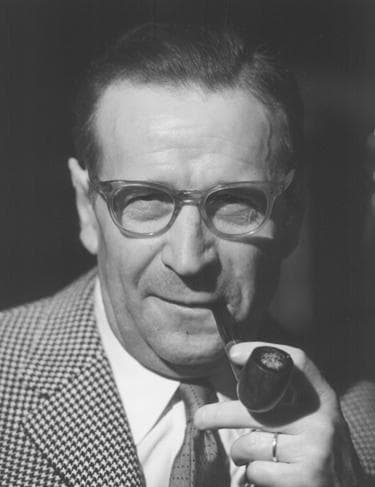
Georges Joseph Christian Simenon was a Belgian writer, most famous for his fictional detective Jules Maigret. One of the most popular authors of the 20th century, he published around 400 novels, 21 volumes of memoirs and many short stories, selling over 500 million copies.
Similar books
- The Stranger
Albert Camus
4.1 (3k) average on GoodreadsFantasyFeatures a protagonist grappling with moral ambiguity and existential choices, with a detached, observational narrative style.
- The Old Man and the Sea
Ernest Hemingway
3.8 (831k) average on GoodreadsLiterary FictionA Cuban fisherman's long struggle with a giant marlin becomes a story of endurance and dignity, now retold for young adults with illustrations, phonetic guides, and writing prompts in Traditional Chinese.
- One Hundred Years of Solitude
Gabriel García Márquez
4.1 (753k) average on GoodreadsLiterary FictionThrough the multi-generational story of the Buendía family, a mythical town deals with the repeating patterns of time, love, and solitude, as the extraordinary mixes with the ordinary.
- The Goldfinch
Donna Tartt
3.9 (720k) average on GoodreadsLiterary FictionHaunted by a tragic explosion and clutching a stolen Dutch masterpiece, a young orphan navigates the opulent drawing rooms of New York and the gritty underbelly of the art world, desperately seeking connection and redemption amidst a life spiraling into crime and obsession.
- Little Fires Everywhere
Celeste Ng
4.1 (713k) average on GoodreadsLiterary FictionIn Shaker Heights, an artist and her daughter move in, and their free-spirited lives clash with a rule-bound matriarch, revealing hidden conflicts beneath a perfect surface.
- Eleanor Oliphant Is Completely Fine
Gail Honeyman
4.3 (708k) average on GoodreadsLiterary FictionA lonely woman's structured life changes when an IT guy and an elderly man help her learn to open her heart.






Enjoyed the summary?
A summary gives you the shape of the book. The book itself has the detail, the examples and the voice.
Find The Train on AmazonAs an Amazon Associate, BookBrief earns from qualifying purchases. How we're funded