
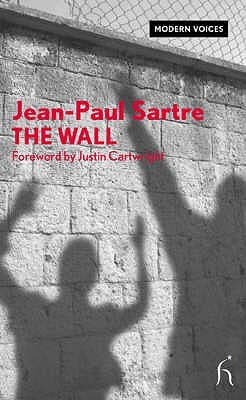
Synopsis
Covers the whole plot, including the ending.
- Difficulty
- Medium
- Pacing
- Slow
- Mood
- Dark, Philosophical, Anguished, Existential
- Read it if
- You are interested in existentialist philosophy, the psychological impact of impending death, and the absurdities of human existence.
- Skip it if
- You prefer light-hearted or action-driven plots, or find detailed psychological introspection on despair unappealing.
The Wall Plot Summary
Covers the whole plot, including the ending.
The Cell
Pablo Ibbieta, a Republican fighter, is in a cell with two other men, Tom Steinbock and Juan Mirbal, during the Spanish Civil War. The Fascists have condemned them all to death. Tom is an International Brigade volunteer, and Juan is a young, innocent-looking boy. As the night goes on, a Belgian doctor, Dr. Gras, visits their cell. He seems to offer comfort and watch their mental states. Pablo stays defiant and calm, trying to keep his composure despite the grim reality. Tom is more openly afraid, while Juan is full of terror, crying and hoping for a reprieve. The doctor's presence is unsettling. He carefully notes their reactions, making them feel like specimens being watched, not men facing execution.
Waiting for Dawn
The hours pass slowly, filled with the painful wait for dawn, which they know will bring their execution. Juan's fear is clear. He sobs, thinking of his girlfriend and his past life, unable to accept his fate. Tom tries to calm him but is also struggling with terror, imagining the firing squad. Pablo, in contrast, tries to detach himself. He watches his own reactions and those of his cellmates with a cold, almost scientific interest. He thinks about his life, his love for his girlfriend Concha, and how meaningless it all is when facing death. The doctor continues his rounds, making notes. His detached professionalism highlights the prisoners' isolation and despair.
The Doctor's Observations
Dr. Gras, the Belgian doctor, spends time with each prisoner alone. He takes their pulse and asks about their physical and mental state. He notes Juan's extreme panic, Tom's growing worry, and Pablo's attempts at being calm. His questions are probing. They are meant to understand their mental responses to death, not to give real comfort. Pablo finds the doctor's presence annoying and intrusive. He feels like he is being studied like an animal. The doctor's calm, rational manner contrasts sharply with the prisoners' inner turmoil, showing the gap between life and coming death. He is an external, uncaring observer of their suffering.
The Body's Betrayal
Despite his intellectual defiance, Pablo finds his body failing him. He feels cold, his mouth is dry, and he has a strange feeling in his stomach. This is a physical sign of fear he cannot control. He observes these reactions with disgust and fascination. He realizes that his intellectual belief does not mean he is immune to physical terror. He thinks about how his body, which he once controlled, is now a separate thing that will soon be dead. This realization deepens his feeling of being separated from himself and from the living world. He feels the 'wall' between life and death becoming more real inside him.
Juan's Despair
Juan's despair becomes too much. He cries out for his girlfriend and his brother. He cannot understand or accept that his life is ending. He is young and not ready for such a brutal reality. His pleas and sobs fill the cell, making the grim atmosphere even worse for Pablo and Tom. He repeatedly asks if there is any hope, any chance of a pardon, clinging to the smallest possibility. His raw, clear fear reflects the horror of their situation to the other prisoners, making their own attempts at composure even more fragile. The doctor observes Juan's breakdown with clinical interest, noting the body's responses to extreme terror.
Tom's Confession
Tom Steinbock, at first calmer than Juan, eventually gives in to his fear. He tells Pablo he is terrified and regrets his past actions. He questions the value of his political beliefs when facing death. He wants one last cigarette and struggles with the thought of his body being left lifeless. His confession shows how universal fear is when facing death, no matter one's beliefs or background. He talks about how strange it is to die for a cause that now seems far away and unimportant compared to the immediate, terrifying reality of his own end.
The Morning Arrives
As dawn breaks, shown by faint light in the cell, the guards arrive. Juan and Tom are called out first. Juan's cries grow louder as he is dragged away, his pleas echoing down the hall. Tom, though shaking, walks out with some resignation. Pablo remains alone in the cell, listening to the sounds of their departure. He is very aware of the finality of their fate. The silence after they are gone is heavy, making Pablo's sense of isolation stronger and chilling him with the reality that he is next. He tries to imagine their last moments, the sound of the shots, and the change from life to nothingness.
Pablo's Interrogation
Pablo is then led out for questioning by the officers. They offer him a chance to save his life: if he reveals the hiding place of Ramon Gris, a key Republican leader, his execution will be stopped. Pablo, despite his inner struggle with fear and the desire to live, refuses to betray Gris. However, in a moment of cynical defiance and a desire to mock his captors, he decides to give them a false lead. He tells them Gris is hiding in the cemetery, believing it to be a silly and safe lie. It is a final act of rebellion against their authority and the strangeness of his situation.
The Absurd Lie
Pablo, feeling a strange sense of freedom from coming death, makes up the lie about Ramon Gris hiding in the cemetery. He chooses the cemetery for its dark humor and because he is sure Gris would never be found there. He expects his captors to be fooled for a while, giving him a small, final win. He feels a momentary triumph in his ability to trick them, even as he knows his own death is still coming. This act is a desperate claim of control in a situation where he has none, a final, dark joke against the universe and his oppressors.
The Unexpected Twist
After some time, Pablo is brought back to the interrogation room, not for execution, but to be told his sentence has been stopped. To his utter shock and horror, he learns that Ramon Gris, whom he thought was far away, had moved to the cemetery to hide. He was found and killed by the Fascists precisely because of Pablo's made-up tip. The news breaks Pablo's calm and cynical humor. His 'harmless' lie had unforeseen and deadly results, showing the deep strangeness and chance of existence. He is left alive, but burdened by the knowledge that his defiance led to his friend's death.
Life After Death
Pablo, now free but deeply troubled, deals with the irony of his situation. He had mentally crossed the 'wall' into death, only to be pulled back into life by a cruel twist of fate. The world now seems strange and meaningless to him. His survival feels like a betrayal of his friends and a hollow victory, stained by Gris's death. He realizes how unpredictable life is and how useless it is to try to control one's fate or even the outcome of one's actions. He is left with a crushing sense of the absurd. His most defiant act resulted in the opposite of what he intended, leaving him alive but deeply changed and isolated.
The Wall Characters
Pablo Ibbieta
Protagonist
A defiant Republican prisoner facing execution.
Pablo is a staunch Republican fighter, condemned to death by the Fascists. He is characterized by his intellectual and emotional stoicism, attempting to maintain his dignity and defiance even in the face of imminent execution. He observes his own fear and the reactions of others with a detached, almost philosophical curiosity, trying to understand the process of dying. He is deeply cynical and uses dark humor as a coping mechanism. His love for his girlfriend, Concha, is mentioned but takes a backseat to his internal struggle with mortality.
Relationships: Tom Steinbock (Fellow prisoner, shared fate); Juan Mirbal (Fellow prisoner, younger and more terrified); Concha (His girlfriend, a source of past comfort); Dr. Gras (Observer of his psychological state)
Tom Steinbock
Supporting
An International Brigade volunteer facing execution.
Tom is an American volunteer fighting for the Republicans, also condemned to death. Initially, he tries to maintain composure, but as dawn approaches, his fear becomes increasingly evident. He expresses regret for his past actions and questions the value of his political convictions in the face of death. He is more outwardly expressive of his terror than Pablo but less hysterical than Juan. His character serves to highlight the universal human reaction to extreme existential threat.
Relationships: Pablo Ibbieta (Fellow prisoner, shared fate); Juan Mirbal (Fellow prisoner, tries to calm him)
Juan Mirbal
Supporting
A young, terrified prisoner facing execution.
Juan is a very young, innocent-looking boy, also condemned to death. He is consumed by overwhelming terror, crying uncontrollably and clinging to any faint hope of reprieve. His raw, unadulterated fear contrasts sharply with Pablo's stoicism and highlights the brutality of the situation. He constantly thinks of his girlfriend and his family, unable to accept the finality of his impending death. He represents the innocent victim of war and the visceral, animalistic fear of dying.
Relationships: Pablo Ibbieta (Fellow prisoner); Tom Steinbock (Fellow prisoner, tries to comfort him)
Dr. Gras
Supporting
A Belgian doctor observing the prisoners' psychological states.
Dr. Gras is a Belgian doctor who visits the prisoners in their cell, ostensibly to provide comfort but primarily to observe their psychological reactions to impending death. He is detached, clinical, and professional, making notes on their pulse, breathing, and emotional states. His presence is unsettling, as he treats the men more like scientific specimens than human beings facing execution. He embodies a cold, scientific gaze on human suffering, emphasizing the prisoners' isolation and the indifference of the outside world.
Relationships: Pablo Ibbieta (Observer/observed); Tom Steinbock (Observer/observed); Juan Mirbal (Observer/observed)
Ramon Gris
Mentioned
A Republican leader whose fate becomes intertwined with Pablo's.
Ramon Gris is a prominent Republican leader whom the Fascists are desperately trying to capture. He is not present in the story directly but his hiding place is the key to Pablo's potential reprieve. Pablo's casual, cynical lie about Gris's whereabouts inadvertently leads to Gris's capture and death, creating the central ironic twist of the story. Gris serves as a catalyst for Pablo's ultimate disillusionment and his encounter with the absurd.
Relationships: Pablo Ibbieta (Comrade, inadvertently betrayed)
The Wall Themes
The Absurdity of Existence
This is the main theme, shown in the characters facing death and the ultimate meaninglessness they feel. Pablo's journey shows this. His calm and defiance are made useless by fate's arbitrary nature, as his 'harmless' lie leads to Ramon Gris's death and his own unexpected survival. The lack of control over one's fate, life and death's unpredictable nature, and the breakdown of rational meaning when facing the unknown all contribute to this theme. The unexpected twist where Pablo's cynical joke becomes a tragic reality perfectly captures the absurd.
“I had gone through the wall and come back. I was still alive, but I had died. And I had died for nothing. It was a joke.”
Fear and Psychological Breakdown
The story details the mental effect of coming death on the three prisoners. Juan's pure terror, Tom's growing worry, and even Pablo's internal struggle with his body's betrayal show the basic nature of fear. The story explores how men react differently when facing their own end, from hysterical crying to attempts at intellectual detachment. Dr. Gras's clinical observations further emphasize the body's and mind's processes of facing death, making the men case studies of extreme human pain. The 'wall' itself stands for the mental barrier between life and death that the men cross before their actual execution.
“My body, I told myself, was a little heap of living flesh, and it would soon be dead. I hated it.”
Dignity and Defiance in the Face of Death
Pablo's character shows the struggle to keep dignity and defiance against a powerful force. He tries to control his fear, to watch his reactions, and to make a final act of rebellion through his cynical lie. This theme explores the human need to assert control and meaning, even when all hope is gone. However, the story ultimately reverses this, showing how even defiance can lead to unintended, strange results. The characters deal with whether their political beliefs or personal values can withstand death's finality.
“I was going to die. I was going to die and I didn't care. I didn't care about anything, not even my life.”
The Indifference of the Universe
The story shows a universe that does not care about human suffering and struggle. Dr. Gras, who watches the prisoners' agony with scientific curiosity rather than empathy, represents this indifference. The arbitrary nature of Pablo's survival and Gris's death further shows that there is no inherent justice or meaning in the events that happen. The cold, impersonal nature of the prison and the Fascist regime also reflect this theme, showing the individual's unimportance when facing larger, uncaring forces.
“Nothing mattered. Not my life, not their lives, nothing. It was all the same.”
Plot Devices & Literary Techniques
The 'Wall' Metaphor
Symbolizes the psychological barrier between life and death.
The 'wall' is a central metaphor, representing the psychological and emotional barrier that the condemned men cross as they grapple with their impending death. It's not a physical wall but an internal one, a shift in perception and being where life loses its meaning and the individual detaches from the world of the living. Pablo explicitly feels himself crossing this wall, entering a state of 'deadness' before his actual execution. The story suggests that for those condemned, death is a mental state achieved long before the physical act, isolating them from the world that continues to live.
Ironic Twist
Pablo's cynical lie leads to a tragic, unforeseen outcome.
The primary plot device is the ironic twist at the end: Pablo's casual, defiant lie about Ramon Gris's hiding place inadvertently leads to Gris's capture and death, while simultaneously saving Pablo's own life. This twist serves to highlight the story's central themes of absurdity, the unpredictability of fate, and the futility of human control. It shatters Pablo's carefully constructed stoicism and leaves him in a state of profound disillusionment, demonstrating that even acts of defiance can have unintended and cruel consequences, stripping away any perceived meaning from his survival.
The Detached Observer (Dr. Gras)
A character whose clinical gaze highlights the prisoners' dehumanization and the story's existential themes.
Dr. Gras functions as a detached, clinical observer. His presence is not for comfort but for scientific study of human reactions to death. He asks probing questions, measures pulses, and notes physiological responses, effectively dehumanizing the prisoners by reducing their agony to data. This device serves to underscore the theme of the universe's indifference to human suffering and emphasizes the existential isolation of the condemned men. His cold professionalism contrasts sharply with the raw emotion in the cell, making the prisoners' plight feel even more stark and hopeless.
Internal Monologue
Provides deep insight into Pablo's psychological state and philosophical reflections.
The story relies heavily on Pablo Ibbieta's internal monologue to convey his thoughts, fears, and philosophical musings about death, meaning, and existence. This device allows the reader to experience his psychological journey in intimate detail, from his initial defiance to his growing sense of detachment and eventual alienation. It's through his internal reflections that the story explores its profound existential themes, showing the breakdown of his identity and his struggle to comprehend the absurd nature of his situation, making his intellectual and emotional 'crossing' of the wall palpable.
The Wall Quotes
“I thought I would be brave, but I was just a coward, a coward who was afraid of a little blood.”
“There are no innocent victims, only people who are more or less stupid.”
“We were condemned to live, and that was our punishment.”
“I had to choose between being a man or being a dog. I chose to be a dog.”
“Death is a wall, but it is not the end.”
“What's the good of living if you have to die?”
“I felt myself a stranger, an intruder. I had no place in their world.”
“The greatest freedom is to choose one's own death.”
“We are all condemned to be free.”
“There was nothing left for me but to wait.”
“The past was a dream, the present a nightmare, and the future a void.”
“They want to make us talk, but we have nothing to say.”
“Life is absurd, and we are all actors in a play without a script.”
Quiz
10 questions on the plot and the characters. Each answer comes with a short explanation.
Question 1
In 'The Wall,' what is Pablo Ibbieta's initial stance regarding his fellow prisoner, Tom, when they are interrogated?
- He tries to console Tom and offer him hope.
- He feels a sense of camaraderie and shared fate with Tom.
- He feels indifference and even a slight contempt for Tom's fear.
- He attempts to get information from Tom to save himself.
Show answer
C. He feels indifference and even a slight contempt for Tom's fear. Pablo, despite being in the same dire situation, feels detached from and somewhat disdainful of Tom's open display of fear and weakness.
Question 2
What is the primary reason the doctor visits the prisoners in 'The Wall'?
- To offer them a last meal of their choice.
- To record their last wishes and confessions.
- To monitor their physical and mental state before execution.
- To inform them about a possible reprieve.
Show answer
C. To monitor their physical and mental state before execution. The doctor's role is clinical and detached, observing the prisoners' descent into anguish, rather than offering genuine solace or practical assistance.
Question 3
Which character in 'The Wall' is initially the most overtly terrified and emotional about his impending execution?
- Juan Mirbal
- Pablo Ibbieta
- Tom
- The doctor
Show answer
C. Tom Tom is depicted as openly weeping and deeply distressed, unable to compose himself, contrasting with Pablo's more stoic (though internally tormented) demeanor.
Question 4
What is the 'wall' referred to in the title of the lead story?
- The physical prison wall they are held behind.
- The psychological barrier between life and death that the prisoners cross.
- The political division between the two warring factions.
- The firing squad's actual wall against which they will be shot.
Show answer
B. The psychological barrier between life and death that the prisoners cross. The 'wall' primarily symbolizes the existential boundary the prisoners' minds cross as they confront their inevitable end, long before the physical execution.
Question 5
How does Pablo Ibbieta ultimately react when he is given the opportunity to reveal the hiding place of Ramon Gris?
- He immediately gives up Gris's location to save himself.
- He refuses to speak, maintaining his loyalty.
- He invents a false location as a final act of defiance.
- He asks for more time to consider his options.
Show answer
C. He invents a false location as a final act of defiance. Pablo, in a moment of cynical defiance, invents a hiding place for Gris in the cemetery, which ironically turns out to be where Gris is actually found.
Question 6
What is the unexpected outcome of Pablo's lie about Ramon Gris's location?
- Pablo is executed anyway, despite his cooperation.
- Ramon Gris is found exactly where Pablo falsely claimed he was.
- The interrogators realize Pablo is lying and punish him further.
- Pablo is released due to the confusion caused by his lie.
Show answer
B. Ramon Gris is found exactly where Pablo falsely claimed he was. In a twist of absurd fate, Ramon Gris, having moved from his original hiding place, is apprehended in the very cemetery Pablo jokingly suggested.
Question 7
Which philosophical concept is most strongly explored through Pablo's internal monologue in 'The Wall'?
- Utilitarianism
- Determinism
- Existential dread and the absurdity of existence
- Rationalism
Show answer
C. Existential dread and the absurdity of existence Sartre, a key figure in existentialism, uses Pablo's predicament to explore themes of ultimate freedom in the face of death, the meaninglessness of life, and the anguish of choice.
Question 8
How does Pablo Ibbieta's perception of his own body change as the morning of his execution approaches?
- He becomes more acutely aware of his physical needs and sensations.
- He feels his body becoming stronger and more vital.
- He experiences a profound detachment, seeing his body as a foreign object.
- He tries to exercise and prepare his body for the ordeal.
Show answer
C. He experiences a profound detachment, seeing his body as a foreign object. Pablo's body becomes alien to him, a 'thing' that will soon be dead, highlighting the existential separation of consciousness from the physical self in the face of annihilation.
Question 9
What is the significance of the guard's seemingly mundane conversation about his wife and children with Pablo?
- It humanizes the guard, making him appear sympathetic to Pablo.
- It highlights the stark contrast between the guard's ordinary life and Pablo's impending death.
- It is a subtle attempt by the guard to extract information from Pablo.
- It serves as a distraction, helping Pablo to calm down.
Show answer
B. It highlights the stark contrast between the guard's ordinary life and Pablo's impending death. The ordinary, future-oriented concerns of the guard starkly emphasize the 'no future' reality for Pablo, underscoring the absurdity and finality of his situation.
Question 10
At the very end of 'The Wall', what is Pablo's reaction to learning he will not be executed?
- Overwhelming joy and relief.
- Confusion, followed by a burst of anger.
- A sense of indifference and even a desire for his death to have happened.
- Immediate plans for revenge against his captors.
Show answer
C. A sense of indifference and even a desire for his death to have happened. After having psychologically crossed the 'wall' and accepted death, the reprieve leaves Pablo feeling hollow and detached, having lost the meaning he had found in his final hours.
The Wall FAQ
What is the central premise of 'The Wall' story?
'The Wall' focuses on three political prisoners—Pablo Ibbieta, Tom Steinbock, and Juan Mirbal—who are condemned to death during the Spanish Civil War. The story details their final night in prison, exploring their psychological states and reactions to their impending execution.
Who are the main characters in 'The Wall' and what are their initial attitudes?
The main characters are Pablo Ibbieta, a defiant anarchist; Tom Steinbock, a Belgian communist who tries to maintain composure; and Juan Mirbal, a young, terrified man who breaks down quickly. Each man grapples with his mortality in distinct ways, reflecting different psychological responses to extreme duress.
What role does the 'impartial doctor' play in the narrative?
The doctor is presented as an observer, seemingly there for the prisoners' solace, but he mostly serves as a detached, almost clinical witness to their mental deterioration. He offers no real comfort, highlighting the isolation of the condemned and the futility of external intervention in their internal struggles.
How do the prisoners' perceptions of their bodies change as morning approaches?
As dawn nears, the prisoners' bodies become alien to them; they no longer feel ownership or connection to their physical selves. Pablo, for instance, finds his body to be a 'useless burden,' a mere object awaiting destruction, reflecting a profound dissociation between mind and flesh.
What is the significance of Pablo Ibbieta's 'joke' about Ramon Gris?
Pablo, when asked about Ramon Gris's whereabouts, invents a lie, telling his captors Gris is hiding in the cemetery. This 'joke' unexpectedly leads to Gris's actual capture and execution at that very location, highlighting the absurd and ironic nature of fate and the arbitrary consequences of human actions.
How does Tom Steinbock's reaction to death differ from Juan Mirbal's?
Tom attempts to maintain a stoic, intellectual composure, reflecting on the nature of death, while Juan succumbs to raw, visceral terror and despair, crying and pleading. Tom tries to rationalize, whereas Juan's fear is purely emotional and overwhelming, illustrating two contrasting coping mechanisms.
What is the 'psychological wall' mentioned in the synopsis?
The 'psychological wall' refers to the mental barrier between life and death that the men cross before their actual execution. It signifies a profound internal shift where they detach from life, their pasts, and their identities, entering a state of existential dread and acceptance of their fate.
How does the setting of the Spanish Civil War influence the story's themes?
The Spanish Civil War provides a backdrop of political extremism, arbitrary justice, and widespread violence, emphasizing themes of human vulnerability, the absurdity of existence, and the dehumanizing effects of conflict. It grounds the existential crisis in a concrete historical reality.
What does Pablo's final interaction with the guards reveal about his character?
Pablo's defiant and almost playful lie about Ramon Gris reveals his enduring rebelliousness and his ultimate detachment from life's conventional values. He chooses to assert his own will and sense of irony even in the face of certain death, refusing to give his captors the satisfaction of his fear.
How does the story explore the concept of 'bad faith'?
The story subtly explores 'bad faith' through the characters' attempts to deny their freedom or responsibility. Juan, for example, is in bad faith by wishing to be 'not afraid,' while the guards act in bad faith by reducing the prisoners to mere objects. Pablo, however, tries to live authentically in his final moments.
Is the ending of 'The Wall' ironic or merely tragic?
The ending is profoundly ironic, as Pablo's casual lie inadvertently leads to the very outcome his captors sought, saving his life in the process. This twist undercuts the gravity of his earlier psychological torment, highlighting the absurd and unpredictable nature of existence, making it more than just tragic.
What is the significance of the small details, like the men's urination?
Details like the men's urination serve to underscore their shared humanity and the raw, biological reality of their situation. It's a mundane act made poignant by their impending death, stripping away any pretense of dignity and emphasizing their vulnerability and the body's continued demands.
How does the narrative perspective contribute to the story's impact?
The narrative is primarily from Pablo's perspective, allowing readers deep insight into his internal monologue and psychological torment. This subjective viewpoint makes his existential crisis immediate and visceral, drawing the reader into the harrowing experience of facing death.
What existential themes are most prominent in 'The Wall'?
Prominent existential themes include the absurdity of existence, the confrontation with nothingness, the burden of freedom and choice, and the radical isolation of the individual. The characters are forced to confront their own mortality and the meaninglessness of life in the face of death.
How does Pablo's decision to lie about Ramon Gris transform his perception of his own death?
Pablo's lie, born of defiance and a desire to mock his captors, unexpectedly transforms his fate. His subsequent release, due to the capture of the real Ramon Gris, renders his earlier psychological preparation for death almost meaningless, highlighting the arbitrary nature of life and death.
What is the broader significance of the collection's title, 'The Wall'?
The title 'The Wall' signifies various barriers: the literal prison wall, the psychological wall between life and death, and the existential wall of human isolation and the absurd. It represents the ultimate boundary that individuals face, both physically and metaphysically.
Are there any clues to the doctor's true intentions or background?
The story provides very few clues about the doctor's true intentions or background, maintaining his 'impartial' facade. His lack of emotional engagement suggests a professional detachment, perhaps born of experience, or a philosophical neutrality reflecting the story's existential themes rather than personal malice.
How do the other stories in the collection relate to the themes in 'The Wall'?
The other stories in the collection often mirror 'The Wall' by exploring themes of alienation, anxiety, and the neurosis of modern life through individual characters facing existential crises. They frequently depict characters grappling with their freedom, responsibility, and the absurdities of their existence, even if not facing immediate death.
About the author
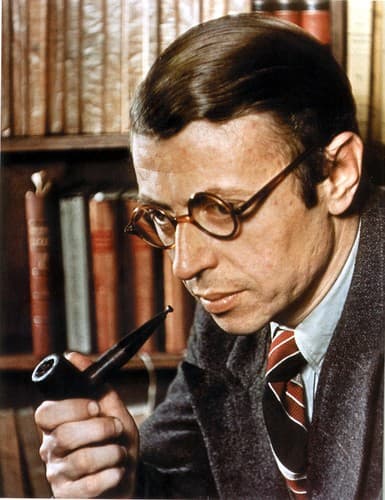
Jean-Paul Charles Aymard Sartre was a French philosopher, playwright, novelist, screenwriter, political activist, biographer, and literary critic, considered a leading figure in 20th-century French philosophy and Marxism. Sartre was one of the key figures in the philosophy of existentialism. His work has influenced sociology, critical theory, post-colonial theory, and literary studies, and continues to do so. He was awarded the 1964 Nobel Prize in Literature despite attempting to refuse it, saying that he always declined official honors and that "a writer should not allow himself to be turned into an institution."
Similar books
- The Stranger
Albert Camus
4.1 (3k) average on GoodreadsFantasyExplores themes of absurdism, alienation, and the indifference of the universe through a detached protagonist.
- Notes from Underground
Fyodor Dostoevsky
4.2 (84k) average on GoodreadsPsychologyDelves into the complex, often contradictory psychology of a man grappling with free will, reason, and suffering.
- Night
Elie Wiesel
4.3 (970k) average on GoodreadsBiographyBoth works confront death, despair, and the questioning of humanity under extreme conditions. However, Wiesel's Night is a memoir rooted in historical trauma and the systematic dehumanization of the Holocaust, focusing on the breakdown of moral order. Sartre's "The Wall" is fictional and zeroes in on the individual's internal psychological disintegration and philosophical choices when faced with an arbitrary, imminent end, rather than widespread, state-sponsored atrocity.
- To Kill a Mockingbird
Harper Lee
4.3 (4.5M) average on GoodreadsHistorical FictionIn the 1930s Jim Crow South, Harper Lee writes about racial injustice, moral growth, and the quiet courage of a lawyer father, Atticus Finch, as seen through his young daughter's eyes.
- The Great Gatsby
F. Scott Fitzgerald
3.9 (3.8M) average on GoodreadsHistorical FictionIn the opulent Roaring Twenties, a mysterious millionaire's lavish parties hide his desperate, tragic pursuit of a lost love, exposing the emptiness within the American Dream.
- Pride and Prejudice
Jane Austen
4.3 (3M) average on GoodreadsHistorical FictionIn a society focused on status and money, Elizabeth Bennet navigates love and pride, challenging Mr. Darcy and social expectations to find true affection.





Enjoyed the summary?
A summary gives you the shape of the book. The book itself has the detail, the examples and the voice.
Find The Wall on AmazonAs an Amazon Associate, BookBrief earns from qualifying purchases. How we're funded