

Synopsis
Covers the whole plot, including the ending.
- Difficulty
- Hard
- Pacing
- Slow
- Mood
- Philosophical, Abstract, Disorienting, Enigmatic, Meditative
- Read it if
- You are interested in experimental literary fiction, existential philosophy, and exploring the boundaries of narrative and consciousness.
- Skip it if
- You prefer plot-driven stories, clear character development, or a conventional understanding of reality.
Thomas the Obscure Plot Summary
Covers the whole plot, including the ending.
The Arrival and the Gaze
Thomas arrives at a desolate seaside town, a place that seems to lack distinct features or inhabitants beyond his immediate sight. He settles into a room overlooking the sea. Almost at once, he feels an intense, consuming gaze that seems to come from within him yet also from the external world. This gaze is not just visual; it is an internal experience that dissolves his sense of self and the boundaries between him and his surroundings. He struggles to define what he sees or who sees through him, experiencing a deep sense of dissolution and an inability to grasp solid reality. The sea itself mirrors this boundless, formless perception.
Anne's Presence and Absence
Thomas meets Anne, a woman whose presence is as mysterious as his own. She appears and disappears, her reality constantly shifting. Their interactions lack conventional communication, existing more as a shared space of being and non-being. Anne often seems to be fading, her form dissolving into the air. Thomas tries to grasp her, to define her existence, but she remains elusive, a figure who embodies the fluidity and impermanence he himself experiences. Her presence deepens his exploration of the limits of perception and the nature of otherness.
The Library and the Unreadable Book
Thomas finds himself in a vast, silent library, a space filled with countless books. However, these books cannot be read in any usual way. Their pages are blank, or their words are incomprehensible, dissolving into meaningless symbols as he tries to focus on them. This library becomes a metaphor for his own internal state and the nature of language itself — a place of potential meaning that remains always out of reach. He feels deep frustration and a sense of being on the edge of understanding, yet always prevented from crossing it. 'Reading' in this space means confronting absence and the limits of knowledge.
The Walk in the Woods
Thomas goes into a dense, dark forest. Here, the individual trees, leaves, and sounds merge into an undifferentiated, overwhelming mass. The forest is not a collection of separate things but a single, breathing entity that threatens to absorb him. His senses are overwhelmed, yet he perceives nothing specific; instead, he experiences the raw, immediate presence of nature as an immense, indifferent force. This experience further erodes his sense of individual identity, blurring the lines between observer and observed. The walk is less a journey and more an immersion into a primal, pre-linguistic state of being where distinctions collapse.
The Encounter with the Blind Woman
Thomas meets a blind woman, whose presence highlights the complexities of perception. Her blindness seems to give her a different, perhaps deeper, form of insight or connection to the world. She perceives not through sight, but through an internal, tactile, or intuitive understanding. This encounter challenges Thomas's reliance on visual perception and makes him consider ways of understanding that go beyond the visible. He feels drawn to her, yet also alienated by her unique way of being, which seems to exist outside his own struggles with the gaze and the visible world. Her presence comments silently on the limits of conventional seeing.
The Mirror and Self-Dissolution
Thomas stands before a mirror, but what he sees is not a stable image of himself. His reflection is distorted, fragmented, or even absent, showing the instability of his own identity. The mirror does not offer a coherent self; instead, it reflects the process of his dissolution. He feels a deep sense of unreality, as if his physical form is an illusion, constantly shifting and threatening to disappear. This confrontation with his reflection is a moment of intense self-alienation, where the boundary between self and non-self becomes porous, and the idea of a fixed, individual identity is thoroughly undermined, leaving him in a state of existential confusion.
The Unending Night
Thomas experiences a night that seems unending, stretching beyond normal time. The darkness is not merely an absence of light but an active, consuming force that permeates everything. Within this prolonged night, the distinction between waking and dreaming, reality and illusion, blurs completely. Time itself loses its linear progression, becoming a stagnant, oppressive present. This 'night' is an internal state as much as an external one, reflecting his deep disorientation and the dissolution of conventional structures of experience. It is a period of heightened internal activity, yet one without tangible events or progress.
The Sea's Embrace
Throughout his time in the town, Thomas feels an almost irresistible pull towards the sea. The sea is not a calming presence but a vast, indifferent expanse that symbolizes ultimate dissolution and the void. He considers entering it, sensing in its depths a final surrender of form and identity. The sea represents the boundless, the formless, the origin and end of all things. His fascination with it is a fascination with his own potential non-existence, a desire to merge with the undifferentiated mass. This persistent draw signifies his deep engagement with the theme of absence and the allure of ceasing to be a distinct entity.
The Conversation with the Stranger
Thomas has a brief, confusing conversation with an unnamed stranger. The dialogue is fragmented, elliptical, and seems to revolve around deep, unanswerable questions about existence, perception, and the nature of reality. The stranger's words, like those in the library, offer no concrete answers or resolutions; instead, they deepen the sense of ambiguity and reinforce the idea that true understanding is always just out of reach. This interaction highlights the solitude of Thomas's experience, as even shared language fails to bridge the gap between individual consciousnesses or provide a solid ground for meaning. The stranger might even be an externalized aspect of Thomas's own internal monologue.
The Retreat into Obscurity
As the narrative progresses, Thomas's presence becomes increasingly indistinct and elusive. He retreats further into obscurity, not just as a character in a story, but as a being whose existence is defined by its lack of clear boundaries or fixed attributes. His actions become less purposeful, his thoughts more diffuse, his form more fluid. He seems to be merging with the undifferentiated background, embodying the 'obscure' nature suggested by his name. This final phase of the novel emphasizes the culmination of his journey into non-being, a state where the individual self dissolves into a pervasive, indeterminate presence.
Principal Figures
Thomas
Protagonist
A man undergoing a profound existential crisis, struggling with the nature of being and perception.
Thomas is less a character in the traditional sense and more a consciousness through which the ontological explorations of the novel unfold. He is characterized by his extreme sensitivity to perception, his internal struggles with identity, and his constant confrontation with the limits of language and meaning. He is not driven by external goals but by an internal compulsion to understand or experience the nature of being itself, even if that being is defined by absence. His passivity and receptivity make him a vessel for the novel's philosophical inquiries.
Relationships: Anne (An enigmatic, fleeting female presence who serves as a catalyst for Thomas's explorations of otherness and absence.); The Stranger (A brief, enigmatic encounter that further highlights the limits of communication and shared meaning.)
Anne
Supporting
An enigmatic female figure whose presence is defined by its fleetingness and elusiveness.
Anne is not a conventionally developed character but rather a spectral presence who appears and disappears, embodying the themes of absence and the instability of reality. She acts as a mirror or a counterpart to Thomas's own dissolving identity, her form and reality constantly shifting. Her interactions with Thomas are marked by a lack of concrete dialogue, existing more as a shared, unspoken experience of being and non-being. She challenges Thomas's attempts to grasp and define, representing the 'other' as perpetually beyond reach.
Relationships: Thomas (An enigmatic and elusive connection, serving as a point of reflection and challenge for Thomas's perception of self and other.)
The Blind Woman
Mentioned
A figure whose lack of sight emphasizes alternative modes of perception.
The blind woman is a brief, symbolic encounter for Thomas. She represents a different way of experiencing the world, one that transcends conventional visual perception. Her presence suggests that true insight might lie beyond the visible, through an internal or tactile understanding. She serves to challenge Thomas's reliance on his gaze and deepens his exploration of what it means to perceive and to be present, without necessarily offering any direct interaction or resolution.
The Stranger
Mentioned
An anonymous figure whose fragmented conversation deepens the novel's ambiguity.
The stranger is a fleeting, anonymous figure who engages Thomas in a brief, elliptical conversation. This character serves to externalize some of the philosophical dilemmas Thomas faces, particularly concerning the limits of language and the difficulty of shared understanding. The stranger's words are profound yet ultimately inconclusive, reinforcing the novel's theme that definitive answers are unattainable. This encounter underscores the isolating nature of Thomas's quest and the inherent ambiguity of existence.
Relationships: Thomas (A brief, enigmatic conversational partner who reflects Thomas's internal struggles.)
Themes & Insights
The Nature of Being and Non-Being
The novel explores the fluid and often indistinguishable boundary between existence and non-existence. Thomas's experiences, such as his dissolving reflection in the mirror or his merging with the forest, constantly challenge the idea of a stable, fixed being. The 'obscurity' of Thomas himself is not merely a psychological state but a condition of being, suggesting that being is inherently elusive and perhaps defined by its very absence. This theme is central to the novel's 'ontological narrative,' where the subject is the nature of being itself, often found in its negation.
“He entered into things, not by means of a grasp, but by a kind of surrender that left him empty.”
The Dissolution of Identity
Thomas's journey includes a progressive erosion of his individual identity. His sense of self is constantly undermined by his perceptions, the elusive nature of others like Anne, and his inability to grasp a stable reality. The boundaries between his internal self and the external world become porous, leading to a deep sense of self-alienation. This dissolution is not presented as a tragic loss but as a fundamental condition of existence, a movement towards a more basic, undifferentiated state. His name, 'Thomas,' becomes less a marker of individuality and more a placeholder for a consciousness undergoing this process.
“He was no longer himself, but a fragment, a particle of the obscure.”
The Limits of Perception and Language
The novel consistently highlights that conventional perception and language are inadequate to grasp ultimate reality. Thomas's 'gaze' is an overwhelming, undifferentiated experience that goes beyond normal sight. The library filled with unreadable books and the fragmented conversations show how language, instead of clarifying, often obscures or fails to convey deep truths. Meaning is always delayed, and the act of looking or speaking often leads to greater ambiguity rather than understanding. This theme suggests that true apprehension lies beyond the structures we use to make sense of the world.
“Words, when he tried to seize them, dissolved into a meaningless murmur.”
The Allure of the Void
Throughout the novel, there is a powerful, almost magnetic attraction to emptiness, absence, and the undifferentiated. The sea, in particular, represents this void, drawing Thomas towards a potential merging with its boundless, formless depths. This is not a morbid fascination with death in a literal sense, but an engagement with the philosophical 'nothingness' that underpins existence. The obscure is not merely dark but full of potential, a state of pre-form that promises liberation from the constraints of individual being. This allure suggests that true freedom might reside in the absence of form and definition.
“He felt the immense call of the void, a promise of ultimate peace in dissolution.”
Plot Devices & Literary Techniques
Ontological Narrative
A narrative style where the plot's primary subject is the nature of being itself.
Instead of focusing on external events or psychological development, 'Thomas the Obscure' uses an ontological narrative. The 'plot' is the unfolding of Thomas's internal experience of existence, non-existence, and the boundaries between them. The events described, such as the library or the sea, are not mere settings but manifestations of philosophical concepts. This device transforms the novel into a meditation on being, where the 'action' is primarily conceptual and experiential, pushing the boundaries of what a story can be about. It forces the reader to engage with abstract ideas through concrete, albeit surreal, descriptions.
The Gaze
An intense, all-consuming mode of perception that dissolves the subject-object distinction.
The 'gaze' is a central plot device, personified as a powerful, almost independent entity that consumes Thomas. It is not merely visual sight but a comprehensive mode of apprehension that blurs the lines between observer and observed, self and world. This gaze is both internal and external, overwhelming Thomas's sense of individual identity and making him a passive recipient of a boundless, undifferentiated reality. It functions to destabilize conventional perception and to immerse Thomas (and the reader) in a state of profound ambiguity and existential questioning.
Symbolic Landscapes
Environments that function as extensions of Thomas's internal state and philosophical themes.
The various settings in the novel—the desolate seaside town, the silent library, the dense forest, the boundless sea—are not realistic backdrops but highly symbolic landscapes. Each environment mirrors and amplifies Thomas's internal struggles and the philosophical themes of the book. The library symbolizes the limits of language, the forest the undifferentiated mass of being, and the sea the allure of the void. These landscapes are less places to be acted upon and more states of being to be experienced, functioning as crucial elements in the novel's exploration of ontology and perception.
Elusive Characters
Characters whose presence is fleeting and whose nature remains ambiguous.
Characters like Anne and the blind woman are not fully fleshed-out individuals but rather elusive, almost spectral figures. Their ambiguity and impermanence serve to reinforce the novel's themes of absence, the instability of identity, and the limits of perception. They challenge Thomas's attempts to grasp and define reality, acting as catalysts for his internal explorations rather than as agents of external plot progression. Their very elusiveness is a key component of the narrative, highlighting the difficulty of making definitive statements about being and otherness.
Thomas the Obscure Quotes
“The night was a huge beast, and he was its prey.”
“To see was to be, and to be was to be seen, but to see oneself was to cease to be.”
“He was present at his own absence.”
“The sea, which had no memory, no future, but only an eternal present.”
“Language was a game played with absence, a game where the winner lost everything.”
“The obscure was not the hidden, but that which, by its very nature, could not be revealed.”
“He sought not to understand, but to be lost in the incomprehensible.”
“Each word was a tomb, burying the living meaning it sought to express.”
“His solitude was not a choice, but a condition of being.”
“The world was a book written in a language he almost understood, but never quite.”
“He recognized in the nothingness a form of absolute presence.”
“Death was not an event, but a continuous possibility, always at the edge of life.”
“To write was to enter into the space of absence, where the author himself disappeared.”
“The light itself was obscure, not because it was dim, but because it revealed nothing.”
Quiz
10 questions on the plot and the characters. Each answer comes with a short explanation.
Question 1
Which of the following best describes Thomas's relationship with Anne, particularly in the early parts of the novel?
- A passionate, reciprocal love affair.
- A detached, almost observational connection, marked by Anne's eventual disappearance.
- A mentor-mentee dynamic, with Anne guiding Thomas.
- A rivalry for intellectual dominance.
Show answer
B. A detached, almost observational connection, marked by Anne's eventual disappearance. Thomas's encounters with Anne are characterized by a profound sense of detachment and observation, rather than conventional intimacy. Her disappearance is a key event that underscores the novel's themes of absence and the elusive nature of being.
Question 2
What is the primary characteristic of Thomas's 'obscurity' as presented in the novel?
- His hidden past as a spy.
- His inability to comprehend basic social cues.
- His dissolution into an undifferentiated state of being, beyond individual identity.
- His literal blindness.
Show answer
C. His dissolution into an undifferentiated state of being, beyond individual identity. Thomas's obscurity is not a mere lack of clarity, but a profound ontological state where his individual identity blurs and merges with a more fundamental, undifferentiated 'being,' making him difficult to grasp as a distinct entity.
Question 3
Which animal frequently appears in Thomas's perceptions and meditations, often symbolizing an ungraspable presence or absence?
- A bird
- A dog
- A cat
- A fish
Show answer
C. A cat The cat is a recurring motif, often appearing to Thomas as a fleeting presence that embodies both intimacy and profound otherness, contributing to the novel's exploration of being and non-being.
Question 4
What is the significance of the sea in 'Thomas the Obscure'?
- It represents a place of joyous escape and freedom for Thomas.
- It is a setting for conventional romantic encounters.
- It symbolizes a vast, undifferentiated expanse where boundaries dissolve, mirroring Thomas's own dissolution.
- It is merely a backdrop for mundane daily activities.
Show answer
C. It symbolizes a vast, undifferentiated expanse where boundaries dissolve, mirroring Thomas's own dissolution. The sea in 'Thomas the Obscure' is far more than a setting; it functions as a powerful symbol of the undifferentiated, boundless nature of being, reflecting Thomas's own experience of dissolving individual identity into a more fundamental, obscure reality.
Question 5
How does Blanchot typically present narrative events in 'Thomas the Obscure'?
- Through a clear, linear, cause-and-effect plot.
- As a series of fragmented, recursive, and often contradictory experiences and meditations.
- Primarily through extensive dialogue between characters.
- In the style of a traditional adventure story.
Show answer
B. As a series of fragmented, recursive, and often contradictory experiences and meditations. Blanchot deliberately eschews conventional narrative structure, presenting events as fragmented, recursive, and often more internal than external. This reflects the 'ontological narrative' where the subject is the nature of being itself, rather than a linear plot.
Question 6
What kind of 'reading' experience does Thomas often undergo, which blurs the lines between perception and reality?
- Reading newspapers for factual information.
- Reading letters from distant relatives.
- A profound, almost hallucinatory engagement with text where the words seem to dissolve and reform, altering his own perception of self.
- Reading technical manuals for practical purposes.
Show answer
C. A profound, almost hallucinatory engagement with text where the words seem to dissolve and reform, altering his own perception of self. Thomas's act of reading is not passive; it's an intensely subjective and transformative experience. The text seems to absorb him, dissolving boundaries between reader and read, and ultimately contributing to his sense of obscure being.
Question 7
The novel is described as an 'ontological narrative.' What does this primarily mean for its subject matter?
- It focuses on the history and development of scientific theories.
- Its central concern is the nature of being itself, rather than conventional plot or character development.
- It documents the psychological case study of a specific mental illness.
- It explores the political structures of a fictional society.
Show answer
B. Its central concern is the nature of being itself, rather than conventional plot or character development. An 'ontological narrative' directly investigates 'the nature of being itself.' This means the novel is less concerned with external events and more with the fundamental questions of existence, presence, and absence, as experienced by Thomas.
Question 8
How does the concept of 'mystery' function in 'Thomas the Obscure'?
- As a detective plot to uncover a secret.
- As a religious enigma requiring faith to solve.
- It is discovered 'in the absence of mystery,' meaning the profound and ungraspable nature of being itself becomes the mystery.
- It refers to Thomas's secret identity.
Show answer
C. It is discovered 'in the absence of mystery,' meaning the profound and ungraspable nature of being itself becomes the mystery. Blanchot's paradox states that mystery is found 'in the absence of mystery.' This implies that the profound, ungraspable nature of existence, devoid of conventional secrets or puzzles, becomes the ultimate mystery to be explored limitlessly.
Question 9
What is the primary effect of Thomas's encounters with other people in the novel?
- They lead to deep, meaningful relationships and personal growth.
- They often result in a blurring of individual boundaries, a sense of merging, or the other's dissolution.
- They are characterized by lively debates and intellectual exchanges.
- They are mostly mundane, transactional interactions.
Show answer
B. They often result in a blurring of individual boundaries, a sense of merging, or the other's dissolution. For Thomas, encounters with others are rarely conventional. Instead, they often lead to a sense of merging or the dissolution of distinct identities, reinforcing the novel's exploration of being beyond individual form.
Question 10
The novel is noted for transforming 'the possibilities of the novel.' Which aspect of its style or content most contributes to this transformation?
- Its use of a traditional, omniscient narrator.
- Its focus on external action and adventure.
- Its deliberate eschewal of conventional plot, character, and psychological realism in favor of an exploration of being and language itself.
- Its clear, didactic moral message.
Show answer
C. Its deliberate eschewal of conventional plot, character, and psychological realism in favor of an exploration of being and language itself. Blanchot transforms the novel by moving away from traditional elements like plot, defined characters, and psychological realism. Instead, he focuses on the experience of being, absence, and the limits of language, creating a 'new novel' that challenges conventional narrative expectations.
Thomas the Obscure FAQ
What is the core premise of 'Thomas the Obscure'?
'Thomas the Obscure' explores the protagonist Thomas's subjective experience of reality, focusing on his encounters with the 'obscure'—a state of being characterized by absence, nothingness, and an unraveling of conventional perception. The narrative delves into his internal world as he grapples with the dissolution of self and the elusive nature of existence.
Who is Thomas, and what defines his character?
Thomas is less a character with defined traits and more a consciousness or a vessel for experiencing the novel's philosophical themes. He is often described as passive, observing his own disintegration and the strange phenomena around him, embodying a state of being rather than actively pursuing goals. His 'obscurity' is central to his identity, marking him as a figure on the threshold of meaning and non-meaning.
What role does Anne play in the narrative?
Anne serves as a significant, though often elusive, presence for Thomas. She represents a point of connection, a potential other, but her interactions with Thomas are frequently ambiguous and contribute to his sense of the 'obscure.' Their relationship is less about conventional romance and more about the interplay of consciousnesses in a dissolving world, often highlighting Thomas's isolation.
How does Blanchot use setting in 'Thomas the Obscure'?
Settings in the novel, such as the beach, the sea, or interior rooms, are not fixed or realistic but fluid and symbolic, often mirroring Thomas's internal state. They frequently shift, blur, or dissolve, contributing to the sense of disorientation and the unreality of the external world. The 'obscure' permeates these environments, making them as unstable as Thomas's perception.
What is meant by the 'ontological narrative' in the context of this book?
The 'ontological narrative' refers to a story whose primary subject is the nature of being itself, rather than conventional plot or character development. In 'Thomas the Obscure,' the narrative explores existence through Thomas's subjective experience of its absence and elusive presence, making the search for what it means 'to be' the central driving force.
Are there any recurring symbols or motifs beyond the 'obscure'?
Yes, the sea is a prominent and recurring motif, symbolizing both the infinite and the dissolving boundary between self and non-self, life and death. Light and darkness, often presented in paradoxical ways (e.g., 'obscure light'), also recur, representing the elusive nature of knowledge and perception. The act of seeing or being seen is another crucial, often unsettling, motif.
How does the novel foreshadow later literary movements like the New Novel or absurdism?
Blanchot's fragmented narrative, lack of traditional plot, focus on subjective consciousness, and exploration of meaninglessness in 'Thomas the Obscure' directly prefigure elements of the New Novel's rejection of conventional storytelling and absurdism's confrontation with an indifferent universe. His emphasis on the internal landscape and the dissolution of the self anticipates themes central to Beckett and Robbe-Grillet.
Is there a specific 'event' that triggers Thomas's journey into the obscure?
There isn't a single, clearly defined external event that triggers Thomas's journey; rather, it seems to be an inherent state or a gradual unfolding of his consciousness. His encounters with Anne, the sea, or even his own reflection often initiate deeper plunges into the 'obscure,' but these are more catalysts for introspection than external plot points.
How does Blanchot use language to convey the 'obscure'?
Blanchot's language is often paradoxical, circular, and highly abstract, utilizing negations and antitheses to describe that which resists clear definition. He employs a precise yet elusive prose that mirrors the difficulty of articulating the 'obscure,' frequently blurring distinctions between subject and object, presence and absence, to create a sense of ontological instability.
How does Thomas's passivity relate to his psychological state?
Thomas's passivity is central to his psychological state, reflecting a profound detachment and an inability to assert a stable self in the face of the 'obscure.' This passivity can be interpreted as a form of surrender to the forces of dissolution, a psychological response to the overwhelming realization of being's fragility and absence.
What is the psychological impact of the 'gaze' or being seen on Thomas?
The gaze, whether from Anne or an unspecified presence, often has a profoundly unsettling psychological impact on Thomas. It can intensify his self-awareness to the point of disintegration, making him feel exposed, vulnerable, and further dissolving his sense of individuality. Being seen often paradoxically leads to a greater sense of absence or non-existence.
Does Thomas experience fear or anxiety in a conventional sense?
Thomas's emotional responses are rarely conventional. While he experiences states akin to dread or unease, it's often a more existential 'anguish' rooted in the dissolution of meaning and self, rather than fear of a specific threat. His 'fear' is tied to the unraveling of being itself, a profound ontological unsettling.
How does the novel explore the boundaries of individual consciousness?
'Thomas the Obscure' rigorously tests the boundaries of individual consciousness by showing Thomas's mind as permeable and constantly shifting. His perceptions are unreliable, his sense of self fluid, and the distinction between internal and external realities often collapses, suggesting that consciousness is not a contained entity but a fragile, ever-dissolving phenomenon.
Is 'Thomas the Obscure' a nihilistic work?
While the novel delves into themes of absence and meaninglessness, it's not strictly nihilistic. Instead, it engages in an 'endless search' for being within its absence, suggesting that the 'mystery in the absence of mystery' is itself a profound philosophical pursuit. It questions conventional meaning without necessarily concluding that all meaning is utterly void; rather, it seeks a different kind of meaning.
How does the ending of the novel contribute to its overall message?
The ending of 'Thomas the Obscure' is typically ambiguous and cyclical, often returning to a state of unresolved 'obscurity' or a new beginning that mirrors earlier states. It resists definitive closure, reinforcing the idea that the search for being is endless and that the 'obscure' is not something to be overcome but a fundamental condition to be explored, leaving readers with lingering questions.
Can 'Thomas the Obscure' be read as an allegory for the writing process itself?
Many interpretations suggest that the novel is indeed an allegory for the act of writing, particularly for Blanchot's own conception of it. The writer, like Thomas, confronts the void, attempting to give form to the unrepresentable, and in doing so, experiences a dissolution of the self. The 'obscure' could represent the elusive raw material of language and meaning.
What is the significance of the two versions of 'Thomas the Obscure' (1941 and 1950)?
The existence of two distinct versions highlights Blanchot's ongoing engagement with the text's themes. The later, shorter version (often referred to as 'Thomas l'Obscur, nouvelle version') is more condensed and abstract, further stripping away narrative elements to focus even more intensely on the philosophical core of absence and being. This revision itself reflects the novel's themes of dissolution and refinement.
How does the novel challenge traditional notions of plot and character development?
'Thomas the Obscure' deliberately subverts traditional plot by lacking a clear beginning, middle, or end with causal progression. Character development is similarly absent, as Thomas remains a fluid consciousness rather than evolving through experience. This challenges readers to engage with the novel on a philosophical and experiential level, rather than seeking conventional narrative satisfaction.
About the author

Maurice Blanchot was a French writer and philosopher known for his contributions to literature and critical theory. His notable work, "Thomas the Obscure," explores themes of existence and the nature of writing. Blanchot's writings often blur the lines between fiction and philosophy, reflecting his interest in the complexities of language and narrative.
Similar books
- Nausea
Jean-Paul Sartre
3.9 (86k) average on GoodreadsPhilosophyExplores existential themes and the nature of being through a fragmented narrative and introspective protagonist.
- Malone Dies
Samuel Beckett
3.9 (4k) average on GoodreadsLiterary FictionFeatures a protagonist grappling with existence, memory, and the dissolution of self in a stark, minimalist style.
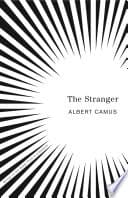
- The Stranger
Albert Camus
4.1 (3k) average on GoodreadsFantasyCamus's The Stranger also deals with alienation and the indifferent universe, but through a character (Meursault) who, despite his detachment, acts within a discernible social and legal framework. Meursault's 'strangeness' is largely a social and psychological phenomenon that can be analyzed and understood, even if not empathized with. Thomas the Obscure, however, delves into a more fundamental, ontological obscurity. Thomas's 'obscurity' is not merely social alienation but an encounter with the limits of being and language itself, pushing beyond the existential absurdism of Camus into a more radical philosophical terrain where meaning itself is perpetually undermined rather than simply found wanting.
- The Old Man and the Sea
Ernest Hemingway
3.8 (831k) average on GoodreadsLiterary FictionA Cuban fisherman's long struggle with a giant marlin becomes a story of endurance and dignity, now retold for young adults with illustrations, phonetic guides, and writing prompts in Traditional Chinese.
- One Hundred Years of Solitude
Gabriel García Márquez
4.1 (753k) average on GoodreadsLiterary FictionThrough the multi-generational story of the Buendía family, a mythical town deals with the repeating patterns of time, love, and solitude, as the extraordinary mixes with the ordinary.
- The Goldfinch
Donna Tartt
3.9 (720k) average on GoodreadsLiterary FictionHaunted by a tragic explosion and clutching a stolen Dutch masterpiece, a young orphan navigates the opulent drawing rooms of New York and the gritty underbelly of the art world, desperately seeking connection and redemption amidst a life spiraling into crime and obsession.





Enjoyed the summary?
A summary gives you the shape of the book. The book itself has the detail, the examples and the voice.
Find Thomas the Obscure on AmazonAs an Amazon Associate, BookBrief earns from qualifying purchases. How we're funded