
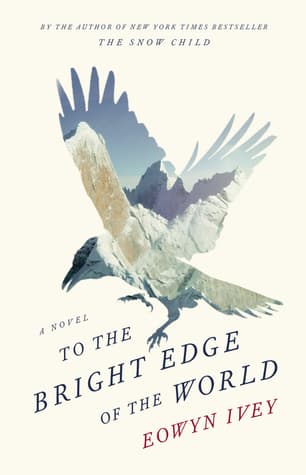
Synopsis
Covers the whole plot, including the ending.
- Difficulty
- Medium
- Pacing
- Moderate
- Mood
- Atmospheric, Mysterious, Reflective, Adventurous
- Read it if
- You enjoy historical fiction with a touch of magical realism, set against a vividly rendered Alaskan wilderness.
- Skip it if
- You prefer hard fantasy or strict historical accuracy without any speculative elements.
To The Bright Edge of the World Plot Summary
Covers the whole plot, including the ending.
The Commission and the Parting
In 1885, Colonel Allen Forrester, a recently married military officer, receives a challenging assignment: to lead an expedition up Alaska's uncharted Wolverine River. The river is rumored to be impassable and to hold vast gold reserves. Forrester accepts, despite being torn between his duty and his new home life. His wife, Sophie, is pregnant with their first child and deeply uneasy about spending a year alone in a military barracks. She worries about her pregnancy and their future, concerns made worse by a secret she keeps from Allen. Their parting is filled with unspoken fears, setting the stage for their separate journeys.
Sophie's Solitude and Scientific Pursuits
While Allen begins his expedition, Sophie stays at Fort Liscum, a remote military outpost. Despite her advanced pregnancy and the isolation, she stays busy. She pursues her passion for photography, documenting the Alaskan landscape and its unique plants and animals. She also studies local natural history, cataloging specimens and corresponding with botanists. Her intellectual pursuits distract her from her worries about Allen's safety and her own health, allowing her to create a meaningful life amid the stark realities of barracks life.
The Wolverine River Expedition Begins
Colonel Forrester's expedition up the Wolverine River starts with a small but determined team, including the experienced scout Corporal Pruitt and the superstitious Private Kachemak. From the beginning, they face the harsh realities of the Alaskan wilderness: dangerous rapids, thick forests, and extreme weather. Their journey is slow and difficult, requiring great physical and mental endurance. They also meet various indigenous groups along the river, some wary, others curious. These encounters are often brief and tense, showing the cultural gap between the explorers and the native inhabitants, who know the land far better.
Sophie's Childbirth and a Difficult Decision
Back at Fort Liscum, Sophie has a difficult childbirth. Sadly, her baby is stillborn, a devastating loss that sends her into deep grief. In her despair, she makes a profound and secret decision: she adopts an orphaned native infant, a baby girl she names Lily. This act, driven by a desperate need for connection and motherhood, is kept hidden from Allen, adding another layer to her secrets. Sophie's decision shows her resilience and creates future conflict as she deals with the implications of raising a child of a different heritage in a prejudiced society.
Encounters with the 'Little People'
As Forrester's expedition goes deeper into Alaska, they start to experience unsettling things. Supplies disappear, strange noises are heard at night, and they feel watched. They hear local legends of 'little people' or 'inua' – spirits of the land – from the indigenous people they meet. Private Kachemak, already prone to superstition, becomes more convinced of their presence, attributing every unexplained event to them. Forrester, a man of science, struggles to explain these events with his rational worldview, but the cumulative effect of the wilderness and these tales begins to chip away at his certainty.
The Journal Entries and Sophie's Observations
Sophie's detailed journals become a central part of the story, showing her sharp observational skills and growing scientific understanding of Alaska. Her entries describe not only her daily life and emotional struggles but also her precise botanical descriptions, photographic experiments, and ethnographic notes on the native cultures she meets. She develops a deep respect for the land and its original inhabitants, often comparing their knowledge with the limited understanding of the military men. Her writings show a woman changing, finding her voice and intellectual purpose amid personal tragedy and societal limits.
The Turning Point on the River
The expedition reaches a critical point on the Wolverine River. During a particularly dangerous stretch of rapids, one of their canoes overturns, leading to the loss of supplies and nearly a man. Afterward, a series of increasingly strange events convinces even the most skeptical team members that something extraordinary is happening. Forrester himself has an unsettling encounter, a fleeting glimpse of something unidentifiable in the dense forest, which shakes his rational worldview. This incident marks a turning point as he begins to question the limits of scientific explanation and the nature of the wilderness itself.
The Return and the Revelation
After a year of difficult travel and experiences, Colonel Forrester's expedition successfully navigates the Wolverine River and returns to Fort Liscum. His reunion with Sophie is initially joyful but quickly becomes complicated by the discovery of Lily, the native infant Sophie adopted. Forrester is shocked and struggles to understand Sophie's decision and the secret she kept. He finds Sophie profoundly changed, more independent and connected to the Alaskan landscape than the woman he left behind. The revelation of Lily forces them to confront their personal grief and the future of their marriage, as well as the cultural prejudices of their time.
Reconciliation and the Future
The initial tension between Allen and Sophie over Lily slowly turns into a deeper understanding. Allen, having seen the mysteries of the wilderness himself, begins to grasp the depth of Sophie's experiences and her connection to the land and its people. They reconcile, acknowledging their shared grief and the changes they have undergone. Together, they decide to raise Lily, embracing the challenges and joys of their unconventional family. Their journey ends with a shared commitment to their future in Alaska, a future shaped by their individual trials and their renewed bond, looking toward the bright edge of the world.
The Legacy of the Expedition
Colonel Forrester's official reports detail the successful navigation of the Wolverine River, opening new territories for exploration and resource extraction. However, his private reflections hint at the inexplicable elements he encountered, the 'bright edge' of the world that defied scientific explanation. Sophie's journals, though personal at first, later become a significant contribution to natural history and ethnography, offering a unique and empathetic view of Alaska's landscape and indigenous cultures. Together, their narratives provide a more complete, nuanced, and mystical understanding of the Alaskan wilderness than either could have achieved alone, leaving a lasting impact for future generations.
To The Bright Edge of the World Characters
Colonel Allen Forrester
Protagonist
A dutiful military officer leading a perilous Alaskan expedition.
Colonel Allen Forrester is a man of duty, discipline, and scientific reasoning. He is an experienced military officer, accustomed to command and order. However, his recent marriage to Sophie has introduced a new dimension to his life, one of deep affection and domesticity that conflicts with his professional obligations. He is initially skeptical of the supernatural, preferring logical explanations, but his journey up the Wolverine River gradually challenges his rational worldview. He genuinely loves Sophie and strives to do right by her, even when faced with difficult truths.
Relationships: Sophie Forrester (Husband, deeply devoted but sometimes distant due to duty and a lack of emotional understanding.); Corporal Pruitt (Trusted scout and guide, a pragmatic and experienced companion on the expedition.); Private Kachemak (Subordinate soldier, whose superstitions contrast with Forrester's rationalism.)
Sophie Forrester
Protagonist
An intellectually curious woman who finds strength and purpose in the Alaskan wilderness.
Sophie Forrester is an intelligent, sensitive, and artistic woman with a passion for photography and natural history. Initially, she is somewhat naive and sheltered, deeply in love with Allen but also anxious about her place in a military marriage. Her experiences at Fort Liscum, including personal tragedy and the adoption of Lily, force her to confront her own resilience and independence. She develops a profound connection to the Alaskan landscape and its indigenous people, becoming a keen observer and chronicler of its beauty and mysteries. She is a woman of quiet strength and deep emotional capacity.
Relationships: Colonel Allen Forrester (Wife, deeply loving but harbors secrets and grows independently during their separation.); Lily (Adoptive mother, deeply bonded and protective of the native infant.); Mrs. Parker (Barracks acquaintance, initially a source of social interaction, later a confidante.)
Lily
Supporting
A native infant adopted by Sophie, representing hope and cultural connection.
Lily is a native Alaskan infant, orphaned and subsequently adopted by Sophie Forrester. She is a symbol of new life, resilience, and the merging of cultures. Her presence profoundly impacts Sophie's life, giving her a renewed sense of purpose after personal tragedy, and later challenges Allen's preconceived notions. Lily represents the future, a bridge between the encroaching Western world and the ancient indigenous ways, and embodies the 'bright edge' of the world – a future full of both wonder and uncertainty. Her adoption is a pivotal point in the narrative, driving much of the character development.
Relationships: Sophie Forrester (Adoptive daughter, deeply loved and cared for.); Colonel Allen Forrester (Adoptive father, initially a source of shock, later accepted with love.)
Corporal Pruitt
Supporting
A pragmatic and experienced guide on the Wolverine River expedition.
Corporal Pruitt is a seasoned scout and an integral member of Forrester's expedition team. He is pragmatic, resourceful, and deeply knowledgeable about the Alaskan wilderness, having spent considerable time in the territory. While not prone to the same superstitions as Kachemak, he possesses a healthy respect for the unknown aspects of the land and its native legends. Pruitt serves as a foil to Forrester's more academic approach, representing the practical, hands-on experience of survival in the wild. He is loyal and dependable, offering a grounded presence amidst the expedition's trials.
Relationships: Colonel Allen Forrester (Trusted subordinate and guide, offering practical advice and expertise.); Private Kachemak (Fellow expedition member, often contrasting with Kachemak's more fearful nature.)
Private Kachemak
Supporting
A superstitious soldier whose fears amplify the wilderness's mysteries.
Private Kachemak is a young soldier on Forrester's expedition, characterized by his deep-seated superstitions and fear of the unknown. He is particularly susceptible to the indigenous legends of 'little people' and spirits, interpreting every unexplained event through a mystical lens. Kachemak's fear often creates tension within the group but also serves to highlight the pervasive sense of the uncanny in the Alaskan wilderness. He represents the human tendency to seek explanations beyond the rational when confronted with the vastness and mystery of nature, amplifying the magical realism elements of the story.
Relationships: Colonel Allen Forrester (Subordinate soldier, whose anxieties are often a source of frustration for Forrester.); Corporal Pruitt (Fellow expedition member, often at odds with Pruitt's more grounded perspective.)
Mrs. Parker
Supporting
A fellow officer's wife at Fort Liscum, offering companionship to Sophie.
Mrs. Parker is one of the few other officers' wives stationed at Fort Liscum. She initially provides Sophie with a semblance of social interaction and companionship in the isolated barracks. While she adheres more closely to societal expectations and gossip, she is not unkind. Her presence highlights Sophie's growing intellectual independence and her divergence from typical female roles of the era. Mrs. Parker serves as a contrast to Sophie's deeper engagement with the Alaskan environment and indigenous culture, representing the more conventional aspects of military life.
Relationships: Sophie Forrester (Acquaintance and occasional confidante, representing the social world of the barracks.)
The Little People (Inua)
Mentioned
Mysterious, unseen entities of Alaskan folklore, embodying the land's spiritual essence.
The 'little people' or 'inua' are not characters in the traditional sense but rather a significant presence in the narrative, representing the spiritual and mysterious forces of the Alaskan wilderness. They are unseen entities from indigenous folklore, believed to inhabit the land and influence events. Their presence is suggested through unexplained occurrences, unsettling noises, and the beliefs of the native peoples and Private Kachemak. They embody the 'magic' of the land, challenging the rational minds of the explorers and serving as a constant reminder of the territory's ancient, untamed essence. They are a powerful symbol of the unknown and the limits of human understanding.
To The Bright Edge of the World Themes
The Edge of the Known World
This theme explores the boundary between the familiar and the unknown, both geographically and experientially. Alaska itself is this 'bright edge' – a place of beauty and mystery, where scientific understanding meets ancient legends and inexplicable events. Forrester's expedition goes into uncharted territory, making him confront the limits of his rational worldview. Sophie also pushes her personal boundaries by becoming a mother in an unconventional way and exploring the natural and cultural mysteries around her. The novel suggests that true discovery is not just about mapping new lands, but about opening oneself to the profound, sometimes unsettling, truths that exist beyond conventional understanding.
“They were on the bright edge of the world, where everything was yet to be named, yet to be understood.”
The Clash of Cultures and Worldviews
The novel clearly shows the clash between Western scientific rationalism and indigenous spiritual understanding. Forrester's expedition aims to 'conquer' and categorize the land, while the native peoples have a deep, symbiotic relationship with it, seeing spirits and interconnectedness where the explorers see only resources. Sophie's empathetic engagement with native cultures and her adoption of Lily further highlight this clash, making her navigate prejudice and embrace a more inclusive worldview. The story subtly critiques the arrogance of colonial expansion, suggesting that true wisdom comes from respecting and learning from the land and its original inhabitants, rather than just exploiting them.
“The land was not empty, as the maps claimed. It was full of people, and spirits, and stories.”
Secrets and Their Unveiling
Secrets are a crucial part of the narrative, driving character development and plot. Sophie's main secret is adopting Lily, born from grief and a desperate need for motherhood, which she keeps from Allen. This secret creates tension in their separation and reunion, challenging their marriage. Allen also carries the unspoken burden of the inexplicable events he sees on the Wolverine, struggling to reconcile them with his rational mind. The gradual revealing of these secrets forces both characters to face difficult truths, leading to deeper understanding and strengthening their bond as they build a future based on honesty and acceptance.
“A secret was a living thing, growing in the dark, waiting to be brought into the light.”
Resilience and Transformation in the Wilderness
The Alaskan wilderness acts as a powerful force for personal growth and change for both Allen and Sophie. Separated by vast distances, each faces huge challenges that test their physical and emotional limits. Forrester's difficult expedition pushes him beyond his scientific certainties into a realm of mystery and wonder, making him adapt and question. Sophie, isolated and grieving, finds strength in intellectual pursuits, photography, and ultimately, in embracing unconventional motherhood. The harsh, untamed environment strips away their preconceived notions and societal limits, allowing them to find deeper resilience and emerge as changed individuals, more connected to themselves and the natural world.
“The wilderness demanded everything, but in return, it gave something back: a truer version of oneself.”
Plot Devices & Literary Techniques
Epistolary Narrative (Journals and Letters)
The story is primarily told through the alternating journals and letters of Allen and Sophie.
The novel employs an epistolary structure, primarily through the alternating journal entries of Colonel Allen Forrester and Sophie Forrester, interspersed with letters and official reports. This device allows for a dual perspective on the events, offering intimate insights into the characters' thoughts, feelings, and individual experiences of Alaska. Allen's journals detail the expedition's physical challenges and his evolving worldview, while Sophie's journals reveal her intellectual curiosity, emotional struggles, and growing connection to the land. This structure creates suspense, highlights the emotional distance between them, and ultimately allows for a powerful convergence of their separate journeys.
Foreshadowing through Indigenous Folklore
Local legends and tales hint at the mysterious events to come.
Indigenous folklore, particularly stories of 'little people' or 'inua,' serves as a significant foreshadowing device. Early encounters with native peoples and the anxieties of Private Kachemak introduce these mysterious entities, creating an atmosphere of unease and hinting at the supernatural elements that will later manifest during Forrester's expedition. These legends prepare the reader for the inexplicable occurrences, blurring the lines between reality and myth, and reinforcing the theme of the 'bright edge' of the world where conventional understanding breaks down. The folklore legitimizes the magical realism, making the strange events feel organic to the setting.
The Uncharted Map
The blank spaces on the map symbolize the unknown and the limits of human knowledge.
The uncharted Wolverine River and the blank spaces on the maps of Alaska serve as a powerful symbolic plot device. Initially, they represent a challenge to be conquered and knowledge to be gained through scientific exploration. However, as the expedition progresses, these blank spaces come to symbolize the limits of human knowledge and the vast, untamed mysteries of the natural world. They underscore the idea that some places and experiences defy categorization and rational explanation, pushing the characters (and the reader) to confront the 'bright edge' of what is known and understood. The map evolves from a tool of conquest to a metaphor for humility in the face of the unknown.
The Stillborn Child
A tragic loss that acts as a catalyst for Sophie's most significant decision.
The stillbirth of Sophie's first child is a pivotal plot device, serving as a profound catalyst for her subsequent actions. This devastating loss plunges her into deep grief and loneliness, directly leading to her impulsive and secretive decision to adopt the native infant, Lily. This event not only propels Sophie's character arc, forcing her to confront immense personal pain and find new purpose, but also introduces the central conflict and secret that will define her relationship with Allen upon his return. It underscores the themes of loss, resilience, and the unconventional paths to motherhood and connection.
To The Bright Edge of the World Quotes
“Perhaps that is the way of the world—to make us believe we are in control, and then to snatch it all away.”
“The wilderness does not care for your plans. It has its own.”
“Memory is a slippery thing, like trying to hold water in your hands.”
“To truly see a place, you must let it see you, too.”
“There are some stories that refuse to stay buried, no matter how deep you dig the grave.”
“The line between what is real and what is imagined is often drawn by the sharpness of one's own fear.”
“Hope, like a small persistent flame, can burn even in the deepest darkness.”
“Every journey, no matter how grand, begins with a single step into the unknown.”
“Sometimes, the greatest discoveries are not what you find, but what you learn about yourself along the way.”
“The wild has a way of stripping away all pretense, leaving only what is truly essential.”
“We chase after the myth, only to find that the truth is often far more complex and beautiful.”
“A map can show you the way, but it cannot tell you what you will find when you get there.”
“There is a language in the land itself, if only one knows how to listen.”
“The past is never truly gone; it simply waits for the right moment to surface.”
Quiz
10 questions on the plot and the characters. Each answer comes with a short explanation.
Question 1
What is the name of the river Colonel Allen Forrester is commissioned to navigate?
- Yukon River
- Wolverine River
- Kuskokwim River
- Copper River
Show answer
B. Wolverine River Colonel Allen Forrester's primary mission is to navigate the Wolverine River, which is described as hitherto impassable.
Question 2
What is the main reason the Wolverine River is important to opening up Alaska?
- It provides a direct route to the capital city.
- It is the key to accessing Alaska's huge reserves of gold.
- It is a strategic military location.
- It connects to major trade routes with Canada.
Show answer
B. It is the key to accessing Alaska's huge reserves of gold. The Wolverine River is crucial because it is the key to opening up Alaska and its vast gold reserves to the outside world.
Question 3
What is Sophie Forrester's marital status and current condition when her husband accepts his commission?
- She is recently married and pregnant with their first child.
- She is a long-time wife and mother of several children.
- She is engaged to be married and awaiting his return.
- She is a widow and contemplating remarriage.
Show answer
A. She is recently married and pregnant with their first child. Sophie is described as only recently married to Allen Forrester and pregnant with their first child, making his departure even more difficult for her.
Question 4
What is the primary concern Sophie has regarding her husband's mission?
- That he will find another woman during his long absence.
- Her genuine worry about her pregnancy and their uncertain future.
- The financial strain his absence will place on their household.
- The boredom of spending a year in a military barracks.
Show answer
B. Her genuine worry about her pregnancy and their uncertain future. Sophie 'has genuine cause to worry about her pregnancy, and it is with deep uncertainty about what their future holds that she and her husband part.'
Question 5
What genre elements, besides historical fiction, are explicitly mentioned in the description of the book?
- Mystery and Thriller
- Literary Fiction and Fantasy
- Romance and Science Fiction
- Western and bildungsroman
Show answer
B. Literary Fiction and Fantasy The book is explicitly categorized as 'Literary Fiction, Fantasy, Historical Fiction' at the beginning of the prompt.
Question 6
Which previous novel by Eowyn Ivey is mentioned as setting a precedent for the Alaskan landscape in this book?
- The Snow Child
- The Midnight Library
- Where the Crawdads Sing
- Educated
Show answer
A. The Snow Child The description states the book is 'Set again in the Alaskan landscape that she brought to stunningly vivid life in The Snow Child'.
Question 7
What is the 'closely held secret' mentioned in relation to the marriage of Allen and Sophie Forrester?
- Allen's true reason for taking the commission.
- Sophie's past relationship before marrying Allen.
- The nature of the secret is not revealed in the provided text.
- That Sophie is secretly planning to follow Allen on his journey.
Show answer
C. The nature of the secret is not revealed in the provided text. The description mentions 'a marriage tested by a closely held secret' but does not specify what that secret is.
Question 8
What characteristic of Eowyn Ivey's writing, also present in 'The Snow Child', is noted as a 'darker but potent strand' in 'To The Bright Edge of the World'?
- Historical accuracy
- Magic
- Military strategy
- Psychological realism
Show answer
B. Magic The novel is described as 'shot through with a darker but potent strand of the magic that illuminated The Snow Child'.
Question 9
Which author and novel are used as a comparison point for the 'sweep and insight' that characterizes 'To The Bright Edge of the World'?
- Rose Tremain's The Colour
- Ann Patchett's Bel Canto
- Anthony Doerr's All the Light We Cannot See
- Marilynne Robinson's Gilead
Show answer
A. Rose Tremain's The Colour The description explicitly states, 'and with the sweep and insight that characterizes Rose Tremain's The Colour'.
Question 10
What is the historical period during which Colonel Allen Forrester's expedition is set?
- Early twentieth century
- Mid-nineteenth century
- End of the nineteenth century
- Late eighteenth century
Show answer
C. End of the nineteenth century The novel is set 'at the end of the nineteenth century', as stated in the description.
To The Bright Edge of the World FAQ
What is the central premise of 'To The Bright Edge of the World'?
The novel follows Colonel Allen Forrester's perilous expedition up Alaska's Wolverine River in 1885, a mission crucial for opening the territory to gold prospectors. Concurrently, it explores the experiences of his pregnant wife, Sophie, left behind at a military fort, and the secrets and natural wonders that challenge their marriage and perceptions.
Who are the main characters in the story?
The primary characters are Colonel Allen Forrester, a stoic explorer leading a dangerous expedition, and his wife Sophie Forrester, an intelligent woman with a deep connection to nature and a secret. Key supporting characters include Forrester's men, particularly the Indigenous guides and his scientific assistant, and the various individuals Sophie encounters at the fort.
What is the significance of the Wolverine River in the plot?
The Wolverine River is the unnavigated frontier that Colonel Forrester is tasked with conquering. It represents both a geographical barrier preventing access to Alaska's gold reserves and a symbolic threshold into the unknown, where conventional understanding and scientific methods are tested by the wild, untamed landscape and its spiritual inhabitants.
What kind of challenges does Sophie face while Allen is away?
Sophie grapples with the anxieties of her first pregnancy, the isolation and rigid social structure of the military fort, and her growing fascination with the natural world and local Indigenous lore. Her personal struggles are compounded by a significant secret she keeps from Allen, which deeply impacts her emotional state.
How does the novel incorporate elements of fantasy or magical realism?
The novel subtly weaves in elements of magical realism through the characters' encounters with the Alaskan wilderness. This includes sightings of elusive creatures, unexplained phenomena, and the blurring of lines between reality and myth, particularly as experienced by Allen's expedition and Sophie's growing spiritual connection to the land.
What is the 'closely held secret' mentioned in the synopsis that tests Allen and Sophie's marriage?
The secret is Sophie's inability to conceive and carry a child to term, which she has concealed from Allen for years, leading her to feign pregnancy to secure their marriage. This deception creates a profound emotional chasm and fear of discovery that permeates her internal narrative.
Are there any connections to Eowyn Ivey's previous novel, 'The Snow Child'?
While not a direct sequel, 'To The Bright Edge of the World' shares a similar setting in the Alaskan wilderness and explores themes of isolation, the power of nature, and the subtle intrusion of folklore and magical realism into human lives. Both novels evoke a strong sense of place and the resilience of characters against harsh environments.
What is the significance of the expedition's encounter with the 'Bright Edge'?
The 'Bright Edge' refers to a mystical, almost otherworldly place deep within the wilderness that Allen's expedition eventually reaches. It represents the ultimate frontier where the physical world thins, allowing for profound spiritual experiences and challenging the scientific, empirical worldview of the explorers.
How do the Indigenous characters contribute to the narrative?
Indigenous characters, particularly the guides accompanying Allen, provide crucial knowledge of the land, its dangers, and its spiritual significance. They serve as a bridge between the pragmatic, Western approach of the explorers and the deeper, more mystical understanding of the wilderness, often foreshadowing events or offering alternative perspectives on phenomena.
How does Colonel Forrester's stoicism impact his journey and relationships?
Forrester's stoicism allows him to lead his men through immense hardship, maintaining order and purpose. However, it also creates emotional distance, preventing him from fully connecting with his wife Sophie or openly acknowledging the more inexplicable, spiritual aspects of his expedition, leading to internal conflict and personal isolation.
What psychological effects does Sophie's secret have on her throughout the novel?
Sophie's secret pregnancy and infertility deeply affect her psyche, leading to intense anxiety, guilt, and a profound sense of isolation. This emotional burden fuels her growing fascination with the natural world and local folklore, as she seeks solace and meaning outside the confines of her deceptive domestic life.
How does the Alaskan landscape influence the characters' mental states?
The vast, wild Alaskan landscape profoundly impacts the characters, pushing them to their mental and physical limits. For Allen, it tests his resolve and scientific worldview, while for Sophie, it becomes a source of both solace and unsettling mystery, mirroring her internal turmoil and fostering a deeper, almost primal connection to the world.
In what ways do Allen and Sophie undergo personal transformations by the end of the book?
Allen transforms from a purely rational explorer to someone open to the inexplicable, his worldview expanded by the 'Bright Edge.' Sophie evolves from a woman burdened by deception to one who embraces her authentic self and finds a unique path to motherhood and connection to the land, regardless of societal expectations.
Is the novel primarily a historical account, a fantasy, or a blend of genres?
The novel is best described as a blend of historical fiction and literary fantasy/magical realism. While meticulously researched regarding its 19th-century Alaskan setting and expedition details, it deliberately incorporates elements of the uncanny and mythical, challenging a purely empirical interpretation of events and blurring genre lines.
What is the author's message about humanity's relationship with nature?
Ivey suggests that humanity's attempts to conquer or purely rationalize nature are ultimately limited. The novel argues for a more humble, respectful, and integrated relationship, where the natural world holds profound mysteries and spiritual power that can transform human understanding if one is open to it, rather than just exploiting its resources.
How does the narrative structure, with its alternating perspectives and journal entries, enhance the story?
The alternating perspectives of Allen's expedition logs, Sophie's letters and journals, and later retrospective accounts create a rich, multi-layered narrative. This structure allows for different interpretations of events, builds suspense, and highlights the subjective nature of truth, particularly concerning the magical and inexplicable occurrences.
What is the ultimate fate of Allen and Sophie's marriage by the novel's conclusion?
The novel suggests a complex and ultimately strengthened bond for Allen and Sophie, forged through adversity and honesty. While Sophie's deception is revealed, their shared experiences of profound natural wonder and personal transformation lead to a deeper understanding and acceptance of each other's true selves, allowing them to rebuild their marriage on a more authentic foundation.
What does the 'Bright Edge of the World' symbolize within the broader themes of the novel?
The 'Bright Edge of the World' symbolizes the liminal space where the known meets the unknown, where scientific understanding gives way to spiritual mystery, and where human ambition confronts the sublime power of nature. It represents a threshold of profound personal and collective transformation, challenging all who encounter it to redefine their reality.
Does the novel offer a definitive explanation for the magical or supernatural events?
The novel deliberately refrains from offering definitive, rational explanations for the magical or supernatural events. Instead, it maintains a sense of ambiguity, allowing readers to interpret these occurrences through lenses of folklore, psychological experience, or genuine magical realism, underscoring the mystery of the Alaskan wilderness.
Similar books
- The Snow Child
Eowyn Ivey
4.0 (117k) average on GoodreadsLiterary FictionShares the same author's lyrical style and blend of historical fiction with Alaskan folklore and magical realism.
- The Terror
Dan Simmons
4.1 (43k) average on GoodreadsThrillerBoth novels are historical fictions set in harsh, unforgiving Arctic environments, dealing with expeditions gone awry and the presence of supernatural or unknown threats. Simmons's "The Terror" leans heavily into horror and survival, with a more monstrous and overtly terrifying antagonist. Ivey's "To The Bright Edge of the World," while containing elements of dread and the unknown, maintains a more literary and contemplative tone, with its fantastical elements often serving to deepen themes of perception and belief rather than simply instilling fear. Ivey's approach is more lyrical and less focused on graphic survival horror, making the 'threat' more ambiguous and psychological.
- The Old Man and the Sea
Ernest Hemingway
3.8 (831k) average on GoodreadsLiterary FictionA Cuban fisherman's long struggle with a giant marlin becomes a story of endurance and dignity, now retold for young adults with illustrations, phonetic guides, and writing prompts in Traditional Chinese.
- One Hundred Years of Solitude
Gabriel García Márquez
4.1 (753k) average on GoodreadsLiterary FictionThrough the multi-generational story of the Buendía family, a mythical town deals with the repeating patterns of time, love, and solitude, as the extraordinary mixes with the ordinary.
- The Goldfinch
Donna Tartt
3.9 (720k) average on GoodreadsLiterary FictionHaunted by a tragic explosion and clutching a stolen Dutch masterpiece, a young orphan navigates the opulent drawing rooms of New York and the gritty underbelly of the art world, desperately seeking connection and redemption amidst a life spiraling into crime and obsession.
- Little Fires Everywhere
Celeste Ng
4.1 (713k) average on GoodreadsLiterary FictionIn Shaker Heights, an artist and her daughter move in, and their free-spirited lives clash with a rule-bound matriarch, revealing hidden conflicts beneath a perfect surface.





Enjoyed the summary?
A summary gives you the shape of the book. The book itself has the detail, the examples and the voice.
Find To The Bright Edge of the World on AmazonAs an Amazon Associate, BookBrief earns from qualifying purchases. How we're funded