
Synopsis
Covers the whole plot, including the ending.
- Difficulty
- Medium
- Pacing
- Moderate
- Mood
- Atmospheric, Reflective, Thought-provoking, Poignant
- Read it if
- You appreciate literary fiction that connects disparate historical events through the intimate lives of characters, enjoy rich prose and a meditative exploration of history and legacy.
- Skip it if
- You prefer fast-paced plot-driven novels or struggle with non-linear narratives that jump across time and perspective.
TransAtlantic Plot Summary
Covers the whole plot, including the ending.
Alcock and Brown's Atlantic Crossing
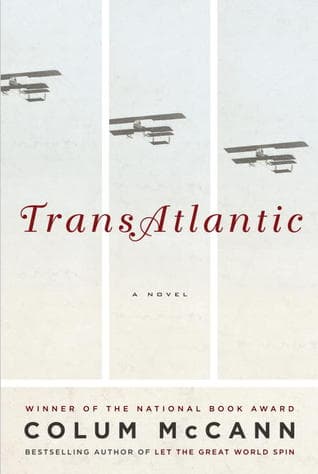
In June 1919, Captain John Alcock and Lieutenant Arthur Whitten Brown prepare for their dangerous flight across the Atlantic from St. John's, Newfoundland, to Clifden, Ireland. Their Vickers Vimy biplane, a modified bomber, is a marvel of engineering but not tested for such a trip. Despite the risks and basic navigation tools, they want to make history. Brown also wants to escape the lingering trauma of World War I. Their takeoff is difficult, the plane barely clearing the trees, and the flight has mechanical issues, like a broken exhaust pipe and a frozen airspeed indicator. They face bad weather, fog, and the constant threat of falling into the ocean, relying on sheer will and luck.
Frederick Douglass in Ireland
In 1845, Frederick Douglass, an escaped slave and abolitionist, arrives in Dublin, Ireland, for a lecture tour. He is with his friend and fellow abolitionist, Richard Webb. Douglass finds surprising warmth and support from the Irish people, who, despite their own problems, sympathize with the cause of ending slavery. He sees a clear difference between the intellectual freedom he has in Ireland and the racism he faced in America. However, as his tour continues into 1846, he becomes more aware of the growing potato blight and the famine starting to spread across the country. He struggles with the irony of fighting for freedom abroad while his own people are enslaved, and the suffering he sees in Ireland affects him deeply.
Lily Duggan's Encounter
During Frederick Douglass's time in Dublin, a young housemaid named Lily Duggan works for a rich family. She is quiet and observant, deeply affected by the poverty and social inequality around her, made worse by the famine. Lily attends one of Douglass's lectures, drawn by his powerful words and the fervent atmosphere. She is captivated by his speech and his message of freedom and human dignity. This meeting with Douglass, though brief, plants a seed of awareness and possibility in her. She sees in him resilience and the potential for change, despite the hardships of her own life and her countrymen's suffering.
Senator Mitchell's Peace Efforts
In 1998, former U.S. Senator George Mitchell arrives in Belfast, Northern Ireland. He faces the difficult task of leading multi-party peace talks. The political climate is full of deep-seated animosity, suspicion, and a history of violence. Mitchell, who has Irish and Lebanese heritage, feels a personal connection to the region's conflicts. He handles endless rounds of complex negotiations, dealing with stubborn politicians, paramilitary representatives, and old grievances. His patience, fairness, and commitment to finding common ground are constantly tested as he tries to guide the groups toward a historic agreement that could end decades of bloodshed.
The Aviators' Landing
After sixteen hours of terrifying flight, Alcock and Brown finally see the coast of Ireland. Tired and battered, they mistake a flat green field in Clifden for a landing strip. It turns out to be a bog, and their plane crashes, nose-first, into the soft peat. Both men are unhurt, though the Vickers Vimy is damaged. Their historic feat is immediately recognized. Local Irish villagers meet them with awe and relief. The successful transatlantic flight captures the world's imagination, symbolizing human ingenuity and resilience after the Great War, securing their place in aviation history.
Lily's Journey to America
Years after meeting Frederick Douglass and experiencing the Irish famine, Lily Duggan makes the difficult journey across the Atlantic to America. She wants a better life and the promise of opportunity, but she carries memories of Ireland's suffering and Douglass's inspiring words. In America, she builds a new life, marries, and raises a family. Her experiences, though not told in great detail, subtly shape her view of the world and are passed down through her family, influencing her daughter and granddaughter in ways she might not fully understand. Her crossing shows the lasting hope and resilience of immigrants.
Emily and the American Dream
Emily, Lily Duggan's daughter, grows up in America, part of her family's transatlantic story. She inherits a strong sense of her Irish heritage and the values her mother taught her, including quiet determination and appreciation for hard-won freedom. Emily's life, though more comfortable than her mother's, is still shaped by past struggles and the ongoing challenges of assimilation and identity. She marries and has her own daughter, Lottie, continuing the family line. Emily represents how history and personal experiences are passed down through generations, affecting choices and views, even without clear historical lessons.
Lottie's Life and Legacy
Lottie, Emily's daughter and Lily Duggan's granddaughter, becomes a journalist. This job lets her explore and report on the world, much like her ancestors observed and endured. She is intelligent and perceptive, often thinking about her family's history and broader events. Lottie is drawn to stories of resilience, struggle, and connection. She becomes a link for the family's narratives, subtly putting together the threads that connect her to Lily, Emily, and the historical figures they met. Her work provides a modern view through which the novel's themes of crossing, connection, and historical impact are explored, leading to the present day.
The Good Friday Agreement
After months of difficult, often frustrating negotiations, Senator George Mitchell's persistence pays off. Against great odds, he guides the parties in Northern Ireland to a historic agreement on April 10, 1998 – the Good Friday Agreement. This landmark accord sets up a framework for peace, power-sharing, and reconciliation, ending decades of violence known as 'The Troubles.' Mitchell's role as a fair mediator and his ability to build trust among deeply divided groups are crucial to its success. The agreement shows the power of diplomacy and the possibility of overcoming even the most entrenched conflicts, offering hope for a peaceful future.
Hannah Carson's Connection
Hannah Carson, Lottie's daughter, represents the current generation and the end of the novel's connected stories. She lives in the modern world, yet she is deeply tied to her female ancestors' history. Through her, the echoes of Lily's meeting with Douglass, the aviators' daring flight, and Mitchell's peace efforts resonate. Hannah is a photographer, a visual storyteller, and she finds herself increasingly drawn to the stories that link her family to these historical moments and figures. She understands that her identity is shaped by the journeys and choices of those who came before her. She deals with the responsibility of carrying on their legacy, acknowledging both the successes and the unresolved complexities.
The Legacy of Crossings
The story ends with Hannah Carson thinking about the lasting legacy of transatlantic crossings – both literal and metaphorical – that have shaped her family and the wider world. She understands that the fights for freedom, the pursuit of new ideas, and the efforts for peace are not separate events but connected threads woven through generations. The book shows how seemingly different historical moments and personal journeys are linked by invisible currents of human experience, resilience, and memory. Hannah's thoughts highlight the idea that every crossing, every decision, and every act of kindness or struggle, affects time, influencing the present and shaping the future in subtle yet strong ways.
TransAtlantic Characters
Lily Duggan
Supporting
An Irish housemaid whose life is subtly shaped by historical events and figures.
Lily is a young, observant Irish housemaid living in Dublin during the mid-19th century. She is a quiet witness to the poverty and suffering of her country, particularly as the Great Famine begins to take hold. Her encounter with Frederick Douglass, though brief, leaves a profound impression on her, instilling a sense of hope and an awareness of larger world struggles. She is resilient and determined, eventually emigrating to America for a better life. Lily embodies the spirit of the Irish diaspora, carrying her history and experiences across the Atlantic.
Relationships: Frederick Douglass (Brief, inspiring encounter as an audience member); Emily (Daughter, to whom she passes on her legacy)
Frederick Douglass
Protagonist (historical)
An escaped slave and abolitionist on a transformative lecture tour in Ireland.
Frederick Douglass is a powerful orator and a passionate abolitionist, having escaped slavery in America. His journey to Ireland is initially a strategic move to promote his autobiography and garner international support for the anti-slavery movement. In Ireland, he experiences a remarkable freedom from racial prejudice, which deeply affects him. However, he is also confronted with the devastating reality of the Irish Famine, forcing him to grapple with the universality of human suffering and the complexities of freedom and oppression. He is a figure of immense moral authority and intellectual depth.
Relationships: Lily Duggan (Unaware of her presence, but inspires her deeply); Richard Webb (Friend and fellow abolitionist)
Senator George Mitchell
Protagonist (historical)
The American senator tasked with brokering peace in Northern Ireland.
George Mitchell is depicted as a patient, persistent, and remarkably resilient American politician. He arrives in Belfast in 1998, facing the daunting challenge of mediating peace talks between deeply entrenched and often hostile factions in Northern Ireland. His background as the son of an Irish-American father and a Lebanese mother gives him a unique perspective on sectarian conflict. He is characterized by his unwavering commitment to dialogue, his impartiality, and his ability to navigate complex political landscapes with dignity and quiet authority, ultimately leading to the historic Good Friday Agreement.
Relationships: Various Northern Irish politicians (Negotiator and mediator)
Jack Alcock
Protagonist (historical)
The daring British pilot of the first nonstop transatlantic flight.
Captain Jack Alcock is the skilled and audacious pilot of the Vickers Vimy biplane. He is driven by a pioneering spirit and a desire for adventure, pushing the boundaries of aviation shortly after World War I. Alcock is confident in his abilities and the machine, yet fully aware of the immense risks involved in the transatlantic flight. His focus is on the technical challenge and the glory of being the first, embodying the post-war era's thirst for innovation and conquest over nature.
Relationships: Arthur Brown (Co-pilot and navigator)
Arthur Brown
Protagonist (historical)
The navigator for the first nonstop transatlantic flight, haunted by war.
Lieutenant Arthur Whitten Brown is the meticulous navigator and co-pilot for Alcock. More introspective than Alcock, Brown carries the psychological scars of his experiences as a prisoner of war during WWI. The flight for him is not just about making history but also a form of escape, a way to reclaim agency and perhaps find a new purpose. He is detail-oriented and resourceful, crucial for their survival during the perilous journey. His internal struggles add a layer of human vulnerability to the heroic feat.
Relationships: Jack Alcock (Pilot and partner in the historic flight)
Emily
Supporting
Lily Duggan's daughter, who grows up in America.
Emily is the daughter of Lily Duggan, representing the second generation of the family's American experience. Her life is shaped by the legacy of her mother's immigrant journey and the historical currents that brought her family across the Atlantic. While not as directly exposed to the pivotal historical events as Lily, Emily's character subtly reflects the themes of inherited memory and cultural identity. She embodies the quiet strength and resilience passed down through her matrilineal line, laying the groundwork for the next generation's understanding of their heritage.
Relationships: Lily Duggan (Daughter); Lottie (Mother)
Lottie
Supporting
Emily's daughter and a journalist, who connects with her family's past.
Lottie is Emily's daughter and Lily Duggan's granddaughter. As a journalist, she has a professional inclination towards storytelling and understanding the world, which naturally draws her to her family's unique history. She is intelligent, curious, and reflective, serving as a bridge between the historical events and the contemporary narrative. Lottie actively seeks to understand the connections between her ancestors' lives and the larger sweep of history, implicitly setting the stage for her own daughter, Hannah, to fully grasp the intricate web of their shared past.
Relationships: Emily (Daughter); Hannah Carson (Mother)
Hannah Carson
Protagonist
Lottie's daughter, a photographer, who embodies the culmination of her family's history.
Hannah Carson is the contemporary protagonist, Lottie's daughter and the great-granddaughter of Lily Duggan. She is a photographer, a visual storyteller, who becomes the ultimate inheritor of her family's rich and complex history. Hannah is thoughtful and sensitive, grappling with the weight of inherited memory and the interconnectedness of seemingly disparate historical events. Her character serves as the focal point for the novel's overarching themes, as she reflects on how the crossings of her ancestors—both literal and metaphorical—have shaped her own identity and understanding of the world. She represents the enduring impact of history on the present.
Relationships: Lottie (Daughter)
TransAtlantic Themes
The Interconnectedness of History and Personal Lives
The novel shows how large historical events—like the first transatlantic flight, the Irish Famine, or the Northern Ireland peace talks—are not separate but are deeply connected to the personal lives of individuals. Lily Duggan's brief meeting with Frederick Douglass, for example, subtly influences her family for generations. Similarly, Alcock and Brown's flight, while public, is also a personal journey for two men affected by war. The book argues that history is not just made by 'great men' but is a mix of countless individual experiences, choices, and movements across time and space.
“History is not a line, but a circle, and the past is always present.”
Transatlantic Crossings and Migration
The idea of 'crossing' is central, appearing both literally and metaphorically. Literal crossings include Alcock and Brown's flight, Frederick Douglass's voyage to Ireland, Lily Duggan's move to America, and Senator Mitchell's diplomatic trips. These journeys are full of danger and promise, symbolizing the human desire for progress, freedom, and a better life. Metaphorically, 'crossing' means bridging divides—between continents, cultures, historical eras, and even warring groups. The novel explores how these physical and ideological crossings shape identities, create new connections, and leave lasting marks on individuals and nations.
“Every crossing is a gamble, a leap into the unknown, but the human heart is built for such journeys.”
The Enduring Power of Memory and Legacy
Memory, both personal and shared, is a strong force throughout the novel. The characters are shaped by their direct experiences and by the inherited memories of their ancestors. Lily's descendants, Emily, Lottie, and Hannah, carry echoes of her Irish past and her meeting with Douglass, even if they are not always aware of the direct links. The novel suggests that historical trauma, resilience, and hope are passed down through generations, influencing identity and worldview. Hannah, as a photographer, actively engages with this theme, trying to capture and understand the visual and emotional legacies that connect her to the past.
“What is remembered carries weight, but what is forgotten carries more.”
The Quest for Freedom and Peace
This theme supports the motivations of several key figures. Frederick Douglass seeks freedom from slavery for his people and finds a different kind of freedom in Ireland. Lily Duggan and other Irish immigrants seek economic and social freedom by crossing the Atlantic. Senator George Mitchell works to make peace in Northern Ireland, a quest for freedom from violence and sectarian oppression. The novel contrasts these quests, showing that freedom and peace are complex and often hard to win, requiring courage, sacrifice, and persistence. It highlights the ongoing nature of these struggles in different historical settings.
“Peace is not an absence of conflict, but the ability to cope with conflict by peaceful means.”
Plot Devices & Literary Techniques
Interwoven Narratives
Multiple seemingly disparate storylines converge through shared themes and characters.
McCann employs a non-linear, multi-perspective structure, presenting three distinct historical events and the lives of a matrilineal line of women. Initially, these narratives appear separate: Alcock and Brown's flight, Frederick Douglass in Ireland, and George Mitchell's peace talks. However, the novel gradually reveals their profound interconnectedness through shared themes of transatlantic crossings, struggle, and human connection, ultimately linking them to the family of Lily Duggan. This device allows for a rich exploration of how history, seemingly disparate, actually flows together, influencing generations and demonstrating the subtle ripples of impact across time and space.
Matrilineal Ancestry as a Unifying Thread
A family line of women connects historical events across generations.
The lineage of Lily Duggan, Emily, Lottie, and Hannah Carson serves as the primary unifying thread that ties together the disparate historical narratives. Each woman, through her life experiences and inherited memories, subtly carries forward the echoes of the past. Lily's encounter with Douglass, for instance, indirectly shapes her descendants' understanding of freedom and identity. This device allows McCann to explore themes of legacy, inherited memory, and the enduring impact of history on individual lives across multiple generations, demonstrating how personal stories are caught up in the swells of history and passed down through a specific family line.
Historical Figures as Catalysts
Real historical figures act as pivotal points for fictional characters and themes.
The novel uses real historical figures—Jack Alcock, Arthur Brown, Frederick Douglass, and George Mitchell—not merely as subjects, but as catalysts for the fictional characters' journeys and the overarching themes. Lily Duggan's life is fundamentally altered by witnessing Frederick Douglass. The aviators' flight becomes a symbol of human daring and resilience that resonates through time. Mitchell's peace efforts represent the enduring human quest for reconciliation. These figures ground the narrative in historical reality while simultaneously elevating the fictional characters' experiences, allowing for a deeper exploration of how individual lives intersect with and are shaped by pivotal moments in history.
Symbolism of 'Crossing'
The act of crossing represents physical journeys, overcoming divides, and transitions.
The concept of 'crossing' is a pervasive and multifaceted symbol. It literally refers to transatlantic journeys (flight, sea voyage), but extends to metaphorical crossings: bridging cultural divides, overcoming personal struggles, transitioning between historical eras, and seeking reconciliation between warring factions. The act of crossing embodies risk, hope, transformation, and the constant human desire to move beyond boundaries—geographic, social, or emotional. This pervasive symbolism reinforces the novel's central idea of interconnectedness, illustrating how every journey, every leap of faith, contributes to the larger human narrative.
TransAtlantic Quotes
“The past is not a story for us to tell. It is a story for us to learn from.”
“There are times when the only thing you can do is keep going.”
“Every journey begins with a single step, but it is the steps that follow that define the journey.”
“The wind carries the voices of the dead, if you only listen close enough.”
“We are all just trying to make sense of the chaos, to find a pattern in the noise.”
“Love is a strange thing. It can be a burden and a blessing, all at once.”
“The world is full of stories, and each one is waiting to be told.”
“Sometimes the greatest courage is simply to be yourself.”
“The silence between words can often speak louder than the words themselves.”
“History is not just dates and names, it is the beating heart of humanity.”
“We build bridges, not just of steel and stone, but of understanding and empathy.”
“The future is always uncertain, but that doesn't mean we shouldn't reach for it.”
“To truly see someone, you must first be willing to look beyond what is visible.”
“The sea remembers what the land forgets.”
Quiz
10 questions on the plot and the characters. Each answer comes with a short explanation.
Question 1
Which two aviators attempt the first nonstop flight across the Atlantic Ocean in 1919 at the beginning of the novel?
- Charles Lindbergh and Amelia Earhart
- Jack Alcock and Arthur Brown
- Orville and Wilbur Wright
- Chuck Yeager and Neil Armstrong
Show answer
B. Jack Alcock and Arthur Brown The novel opens with Jack Alcock and Arthur Brown's historic transatlantic flight in 1919.
Question 2
In what city does Frederick Douglass find the Irish people sympathetic to the abolitionist cause during his 1845-46 lecture tour?
- Belfast
- Cork
- Dublin
- Galway
Show answer
C. Dublin Frederick Douglass's lecture tour, where he found sympathy for abolition, took place in Dublin during 1845 and 1846.
Question 3
Which historical figure is tasked with shepherding Northern Ireland's peace talks in Belfast in 1998?
- President Bill Clinton
- Senator George Mitchell
- Tony Blair
- John Hume
Show answer
B. Senator George Mitchell Senator George Mitchell is the character involved in the 1998 Northern Ireland peace talks, connecting the historical threads.
Question 4
The novel connects the three iconic crossings through a series of remarkable women. Who is the first woman mentioned, an Irish housemaid who crosses paths with Frederick Douglass?
- Hannah Carson
- Lottie
- Emily
- Lily Duggan
Show answer
D. Lily Duggan Lily Duggan is the first of the interconnected women, an Irish housemaid who encounters Frederick Douglass.
Question 5
What significant historical event is ravaging the Irish countryside during Frederick Douglass's visit in 1845-46?
- The Easter Rising
- The Great Famine
- The War of Independence
- The Fenian Raids
Show answer
B. The Great Famine The Great Famine is a key historical backdrop to Frederick Douglass's time in Ireland, highlighting the suffering of the Irish people.
Question 6
The three aviators in 1919 place their trust in what type of modified aircraft to attempt the first nonstop flight across the Atlantic?
- A biplane
- A modified bomber
- A seaplane
- A zeppelin
Show answer
B. A modified bomber Alcock and Brown used a modified bomber for their historic 1919 flight, not a biplane or seaplane.
Question 7
The novel explores the theme of 'identity and history in a wide world that grows somehow smaller and more wondrous.' Which of the following best represents how the novel achieves this 'smaller world' concept?
- By focusing exclusively on the experiences of men in different historical periods.
- By having a single protagonist who travels through time.
- By connecting disparate historical events and locations through the lineage of women.
- By suggesting that technological advancements alone shrink the world.
Show answer
C. By connecting disparate historical events and locations through the lineage of women. The novel explicitly states that the connections are made through the 'series of remarkable women whose personal stories are caught up in the swells of history,' linking generations and events.
Question 8
Hannah Carson represents the culmination of the hopes and failures of previous generations. Which of the following women is NOT directly in her lineage as described in the synopsis?
- Lily Duggan
- Emily
- Lottie
- Amelia Earhart
Show answer
D. Amelia Earhart The synopsis clearly states the lineage from Lily Duggan to her daughter Emily, granddaughter Lottie, and finally Hannah Carson. Amelia Earhart is not part of this family line.
Question 9
The novel's structure involves three distinct time periods and 'iconic crossings.' Which of these crossings is NOT primarily a physical journey across the Atlantic Ocean, but rather a metaphorical one related to diplomacy?
- Alcock and Brown's flight in 1919
- Frederick Douglass's lecture tour in 1845-46
- Senator George Mitchell's peace talks in 1998
- Lily Duggan's journey to America
Show answer
C. Senator George Mitchell's peace talks in 1998 While Mitchell travels to Belfast, his 'crossing' is primarily diplomatic, bridging divides in peace talks, rather than a direct physical transit of the Atlantic as in the other examples.
Question 10
The synopsis states that the characters learn 'even the most unassuming moments of grace have a way of rippling through time, space, and memory.' This theme suggests which of the following about individual actions within the novel's scope?
- Only grand, heroic gestures truly influence history.
- Individual actions are largely insignificant in the face of historical forces.
- Small, seemingly minor acts of kindness or connection can have profound, lasting impacts across generations.
- History is predetermined and cannot be altered by personal choices.
Show answer
C. Small, seemingly minor acts of kindness or connection can have profound, lasting impacts across generations. The phrase 'unassuming moments of grace have a way of rippling through time' directly supports the idea that small individual acts can have significant, far-reaching consequences, a central theme in the novel's generational connections.
TransAtlantic FAQ
What are the three main historical timelines and their central male figures in 'TransAtlantic'?
The novel features three distinct historical timelines: 1919 with aviators Jack Alcock and Arthur Brown attempting the first nonstop transatlantic flight; 1845-1846 with abolitionist Frederick Douglass on a lecture tour in Ireland amidst the Great Famine; and 1998 with Senator George Mitchell mediating the Northern Ireland peace talks in Belfast.
Who are the key female characters, and how do their stories connect the different historical periods?
The key female characters are Lily Duggan, Emily, Lottie, and Hannah Carson, representing a generational lineage. Lily, an Irish housemaid, encounters Frederick Douglass in 1845. Her daughter, Emily, connects to the Alcock and Brown flight in 1919, and Emily's daughter, Lottie, is involved with Senator Mitchell's efforts in 1998. Hannah Carson, Lottie's daughter, brings the narrative into the present, embodying the culmination of these intertwined histories.
What is the significance of the 'transatlantic' theme beyond the literal crossings?
The 'transatlantic' theme extends beyond literal journeys across the ocean to encompass the transatlantic flow of ideas, struggles, and human connections. It highlights the shared histories and influences between Ireland, America, and other regions, particularly concerning issues of freedom, peace, and cultural identity, demonstrating how events on one side impact the other.
How does Frederick Douglass's experience in Ireland challenge or affirm his views on slavery?
Douglass finds the Irish people remarkably sympathetic to the abolitionist cause, a stark contrast to many attitudes in America. However, witnessing the devastating poverty and famine in Ireland, which he describes as worse than anything he'd seen in the American South, complicates his understanding of human suffering and freedom, forcing him to recognize different forms of oppression.
What specific challenges did Alcock and Brown face during their historic flight, and how did they overcome them?
Alcock and Brown faced severe weather, including dense fog, snow, and ice, which threatened to bring down their Vickers Vimy bomber. They battled mechanical issues, particularly with the aircraft's instruments, and navigated largely by dead reckoning. Their sheer determination, skill, and mutual trust were crucial in enduring the perilous conditions to reach Ireland.
How does the character of Lily Duggan bridge the gap between Frederick Douglass's story and subsequent generations?
Lily Duggan, an Irish housemaid, is present at Frederick Douglass's lectures in Ireland and directly interacts with him, forming a personal connection to the abolitionist movement. Her experience and the stories she carries are then passed down to her daughter, Emily, establishing the initial familial link that threads through the novel's different eras.
What is the subtle connection between Emily and the 1919 flight of Alcock and Brown?
Emily, Lily's daughter, is a journalist in Newfoundland who covers the preparations and eventual landing of Alcock and Brown's flight. She witnesses their arrival firsthand and interviews them, linking her generation directly to this monumental technological and historical achievement and its immediate aftermath.
In what specific way does Lottie's life intersect with Senator George Mitchell's peace efforts in Belfast?
Lottie, Emily's daughter, is working as a photographer in Belfast during the 1998 peace talks. She is present in the political landscape and captures images of the key figures involved, including Senator Mitchell, thereby connecting her personal narrative to this significant moment in Northern Irish history.
How does Hannah Carson's role in the present day reflect the 'hopes and failures' of previous generations?
Hannah Carson, Lottie's daughter, is a contemporary character who inherits the legacy of her ancestors' struggles for freedom, peace, and connection. Her experiences and reflections show how the past continues to resonate in the present, embodying both the progress made and the lingering challenges and unresolved tensions passed down through the family line.
Analyze the psychological impact of the Great Famine on Frederick Douglass, despite his own history of oppression.
The Great Famine profoundly impacts Douglass, causing him to re-evaluate the nature of suffering. While he understood slavery, the sheer scale of starvation and destitution in Ireland, particularly among free people, forces him to confront a different, equally devastating form of human misery, creating a complex internal struggle between his abolitionist cause and universal empathy.
How does the novel explore the psychological burden of historical memory through its female characters?
The female characters, particularly Lily, Emily, Lottie, and Hannah, carry the psychological burden of historical memory through their inherited stories and experiences. Each generation processes the past differently, grappling with the weight of past injustices, triumphs, and personal losses, which shapes their identities and perspectives on the world.
Discuss the psychological resilience demonstrated by Alcock and Brown during their perilous flight.
Alcock and Brown demonstrate remarkable psychological resilience, enduring extreme physical discomfort, fear of failure, and the constant threat of death. Their ability to maintain focus, trust each other implicitly, and make critical decisions under immense pressure highlights their mental fortitude and unwavering commitment to their shared goal.
What psychological pressures did Senator George Mitchell face in mediating the Northern Ireland peace talks?
Senator Mitchell faced immense psychological pressures, including the weight of historical animosity, deep-seated distrust between factions, and the constant threat of negotiations collapsing. He needed immense patience, impartiality, and strategic thinking to navigate volatile personalities and entrenched positions, all while maintaining hope for a peaceful resolution.
How does the novel use the concept of 'grace' to connect seemingly disparate historical moments?
The novel suggests that 'grace' manifests in unassuming moments of human connection, empathy, or courage that ripple through time. It's not necessarily religious but refers to acts of kindness, understanding, or resilience that offer hope and subtly influence future events, connecting characters across generations through shared human experience rather than direct causality.
Is the novel primarily optimistic or pessimistic about humanity's capacity for progress and peace?
The novel presents a nuanced view, leaning towards cautious optimism. While it acknowledges the enduring struggles, violence, and injustices throughout history, it simultaneously celebrates moments of profound human connection, breakthroughs in technology, and persistent efforts towards peace and understanding, suggesting that progress, though slow and imperfect, is possible.
How does 'TransAtlantic' challenge or reinforce traditional notions of heroism?
'TransAtlantic' expands traditional notions of heroism by showcasing not only the grand, public acts of men like Alcock, Brown, Douglass, and Mitchell but also the quiet, resilient heroism of ordinary women like Lily, Emily, and Lottie. It suggests that heroism can be found in endurance, empathy, and the passing down of stories, not just in bold public achievements.
What is the significance of the recurring motif of flight and crossing in the narrative?
The motif of flight and crossing symbolizes humanity's enduring desire to overcome boundaries, both physical and metaphorical. It represents journeys of discovery, escape, reconciliation, and the transmission of ideas and experiences across vast distances, highlighting the interconnectedness of human destiny and the constant push for progress.
To what extent does the novel argue for the idea that personal stories are inseparable from grand historical narratives?
The novel strongly argues for the inseparability of personal and grand historical narratives. By weaving the intimate lives of the female characters into the fabric of monumental historical events, it demonstrates that history is not just made by prominent figures but is deeply shaped by the experiences, perspectives, and quiet contributions of everyday individuals.
How does the novel's structure, with its alternating timelines, contribute to its overall message?
The novel's alternating timelines create a tapestry of interconnectedness, allowing readers to draw parallels and contrasts between different eras and struggles. This structure reinforces the idea that history is cyclical yet progressive, showing how past events echo in the present and emphasizing the enduring human themes of freedom, memory, and the search for peace across generations.
About the author

Colum McCann is an Irish-born novelist known for his critically acclaimed works that often explore themes of connection and displacement. His novel "Let the Great World Spin" won the National Book Award for Fiction, and "This Side of Brightness" was a New York Times Notable Book. McCann's writing is celebrated for its lyrical prose and ambitious scope.
Similar books
- Homegoing
Yaa Gyasi
4.4 (175k) average on GoodreadsLiterary FictionFollows the generational saga of a family, connecting their lives across centuries and continents.
- The Hours
Michael Cunningham
3.9 (125k) average on GoodreadsLiterary FictionInterweaves the lives of several women across different time periods, linked by a central theme or literary work.
- Let the Great World Spin
Colum McCann
3.9 (94k) average on GoodreadsLiterary FictionWhile both novels showcase McCann's literary prowess and explore interconnected lives, "Let the Great World Spin" maintains a tighter narrative focus around a single pivotal event (Philippe Petit's walk between the Twin Towers) and its immediate aftermath. "TransAtlantic," in contrast, spans centuries and multiple distinct historical events, leading to a broader but less concentrated emotional impact.
- The Old Man and the Sea
Ernest Hemingway
3.8 (831k) average on GoodreadsLiterary FictionA Cuban fisherman's long struggle with a giant marlin becomes a story of endurance and dignity, now retold for young adults with illustrations, phonetic guides, and writing prompts in Traditional Chinese.
- One Hundred Years of Solitude
Gabriel García Márquez
4.1 (753k) average on GoodreadsLiterary FictionThrough the multi-generational story of the Buendía family, a mythical town deals with the repeating patterns of time, love, and solitude, as the extraordinary mixes with the ordinary.
- The Goldfinch
Donna Tartt
3.9 (720k) average on GoodreadsLiterary FictionHaunted by a tragic explosion and clutching a stolen Dutch masterpiece, a young orphan navigates the opulent drawing rooms of New York and the gritty underbelly of the art world, desperately seeking connection and redemption amidst a life spiraling into crime and obsession.





Enjoyed the summary?
A summary gives you the shape of the book. The book itself has the detail, the examples and the voice.
Find TransAtlantic on AmazonAs an Amazon Associate, BookBrief earns from qualifying purchases. How we're funded