

Synopsis
Covers the whole plot, including the ending.
- Difficulty
- Easy
- Pacing
- Moderate
- Mood
- Witty, Adventurous, Humorous, Liberating, Slightly Absurdist
- Read it if
- You enjoy witty, character-driven literary fiction with a strong sense of adventure and a comedic touch, exploring themes of freedom and unconventional living.
- Skip it if
- You prefer fast-paced thrillers or stories with a strictly linear plot and no moral ambiguities.
Travels with My Aunt Plot Summary
Covers the whole plot, including the ending.
A Peculiar Reunion at a Funeral
Henry Pulling, a dull, retired bank manager, attends his mother's funeral with his usual politeness. To his surprise, a flamboyant, seventy-year-old woman claims to be his Aunt Augusta, someone he hasn't seen since childhood. Aunt Augusta, with her dyed red hair and bold manner, is a stark contrast to Henry's orderly world. She tells a scandalous, exaggerated story of his mother's life, implying a romance with a Mr. Visconti, a man Henry had only known as a 'benefactor.' Augusta's presence immediately disrupts Henry's calm life, hinting at a family past far more colorful than he imagined.
The First Indiscretion: The Urn and the 'Boy'
After the funeral, Aunt Augusta convinces Henry to go with her to her flat in Brighton. There, she shows him a large urn, claiming it holds the ashes of her recently deceased lover, Giuseppe. She asks for Henry's help to smuggle the urn to Paraguay, which immediately makes Henry question his morals. He is further confused by Wordsworth, a young Black man Augusta introduces as her 'boy' and servant, despite his adult age. Wordsworth's quiet competence and Augusta's casual disregard for social norms begin to challenge Henry's rigid views, as he finds himself a reluctant helper in her plans.
Brighton and the Shadow of the Past
In Brighton, Henry meets Augusta's unconventional friends, including an American named Tooley, who seems to have a mysterious link to Augusta's past. Augusta continues to tell elaborate stories about Giuseppe, hinting at his criminal activities. During their stay, Henry discovers the urn does not contain ashes, but hundreds of thousands of counterfeit notes. This revelation deeply disturbs Henry, forcing him to face Augusta's illegal dealings. He also learns of Augusta's long affair with a man named Visconti, a name that connects to his mother's past, further blurring his family history.
A Farcical Escape to Paris
The counterfeit money in the urn leads to a tense encounter with customs officials, which Augusta skillfully handles with charm and quick thinking. Henry, horrified, finds himself involved in the deception. After this incident, Augusta decides they must leave England at once. They start a spontaneous trip to Paris, with Henry becoming more and more involved in Augusta's chaotic life. In Paris, Augusta reconnects with old friends, showing parts of her bohemian past, and Henry, despite his initial reluctance, begins to enjoy the new experiences, slowly letting go of his inhibitions.
Turkish Delights and Dangerous Liaisons
Their travels take them to Istanbul, a city that further disorients Henry. There, Augusta meets her former lover, a charming but dangerous man named Mr. O'Toole, who is involved in various illegal activities. The plot thickens with the arrival of a CIA agent, Mr. Tooley (a different one from Brighton), who is tracking O'Toole. Henry, now used to constant drama, finds himself mediating between Augusta and her complicated relationships. He observes Augusta's resilience and resourcefulness, starting to admire her ability to navigate such a risky world with an almost childlike innocence.
The Reveal of Visconti's Identity
As their journey continues, Augusta begins to share more personal details of her past. She eventually confesses that Mr. Visconti, the man she loved and the subject of many of her stories, was not only her lover but also Henry's biological father. This revelation shatters Henry's view of his entire life, his mother, and his own identity. The careful facade of his suburban existence crumbles, replaced by a confusing new reality. He grapples with the implications of this secret, realizing the extent of Augusta's sacrifices and the complex love that connected his family.
The South American Quest
With the truth about Visconti revealed, the reason for their trip to Paraguay takes on new meaning. It is not just about smuggling counterfeit money, but about fulfilling Augusta's promise to Visconti and facing the legacy of their shared past. In South America, Henry fully embraces Augusta's adventurous spirit, taking a more active part in her plans. He sees her unwavering loyalty and love for Visconti, despite his criminal activities. The wild, lawless landscape of Paraguay reflects the wildness of Augusta's life, and Henry finds himself more at home in this unconventional world.
A New Life in Paraguay
Upon arriving in Paraguay, Henry finds himself drawn to the country's chaotic charm and Augusta's community of ex-pats and minor criminals. He helps Augusta with her dealings, which now include smuggling and other small illicit ventures. He discovers a sense of purpose and excitement he never knew existed in his quiet English life. The appeal of adventure, along with his new understanding of his family's history, convinces Henry to leave his old life behind entirely. He sheds his suburban inhibitions, finding freedom in the danger of his new surroundings.
Marriage and Contentment
Henry, completely changed by his experiences, eventually marries a young local woman named Tooley (not related to the other Tooleys) in Paraguay. He embraces his new life, working alongside Augusta in her various schemes, which now include small-scale smuggling and other minor illegal activities. He finds a deep sense of contentment and belonging, something entirely missing from his previous existence. His dahlias and the Major next door are distant memories, replaced by the vibrant, unpredictable reality of his life with Augusta, a life he now values for its excitement and genuine human connection.
Augusta's Final Act
Aunt Augusta, true to her nature, remains restless and eager for new adventures. Despite her age, she always plans the next escapade, the next grand scheme. She decides to go on a potentially dangerous journey to Paraguay, implying a final, large criminal enterprise. Henry, now a full member of her world, supports her decision. Her endless energy and refusal to follow social expectations continue to inspire him. The novel ends with Augusta's constant motion, leaving Henry to reflect on the great impact she has had on his life, changing him from a dull, retired bank manager into a man who has truly lived.
Travels with My Aunt Characters
Henry Pulling
Protagonist
A retired, meticulously dull bank manager whose life is upended by his eccentric aunt.
Henry Pulling is a man defined by order, routine, and a profound lack of excitement. Before meeting Augusta, his life revolves around his dahlias, his suburban home, and the predictable rhythms of retirement. He is initially shocked and repulsed by Augusta's flamboyant lifestyle and criminal associations, representing the quintessential English conformist. His journey with Augusta forces him to confront his own inhibitions and the carefully constructed facade of his identity. He is a keen observer, often providing a dry, understated commentary on the increasingly absurd situations he finds himself in.
Relationships: Aunt Augusta (Niece/nephew, then son/father, eventually close companions and partners in crime); Wordsworth (Employer/servant, then companion and friend); Mr. Visconti (Unknown benefactor, then biological father); Tooley (Paraguay) (Wife)
Aunt Augusta Bertram
Protagonist/Catalyst
Henry's flamboyant, septuagenarian aunt, a veteran of Europe's hotel bedrooms and a life of adventure and minor crime.
Aunt Augusta is a force of nature: vibrant, audacious, and utterly unconcerned with societal norms. She lives by her own rules, driven by a love for adventure, a deep affection for a deceased criminal lover (Visconti), and an insatiable curiosity about life. She is a master storyteller, often embellishing the truth, and possesses an uncanny ability to charm and manipulate others. Her past is a tapestry of lovers, illicit dealings, and narrow escapes. Despite her seemingly amoral existence, she possesses a fierce loyalty and a genuine warmth that ultimately captivates Henry.
Relationships: Henry Pulling (Aunt/nephew, then mother/son, eventually close companions and partners in crime); Wordsworth (Employer/servant, close confidant); Mr. Visconti (Long-term lover, father of Henry); Mr. O'Toole (Former lover, criminal associate)
Wordsworth
Supporting
Aunt Augusta's loyal, silent, and resourceful servant, bodyguard, and companion.
Wordsworth is a young, Black man of Sierra Leonean descent who serves as Augusta's devoted companion and protector. He is a man of few words but immense capability, often anticipating Augusta's needs and executing her plans with quiet efficiency. His stoic demeanor belies a deep loyalty and affection for Augusta. He is a constant, reassuring presence amidst the chaos of Augusta's life, and his skills range from driving to discreetly handling troublesome situations. He represents a different kind of freedom and resourcefulness, operating outside conventional society.
Relationships: Aunt Augusta (Devoted servant, bodyguard, and companion); Henry Pulling (Fellow traveler and companion)
Mr. Visconti
Mentioned/Pivotal
Aunt Augusta's deceased criminal lover and Henry's biological father, whose legacy drives much of the plot.
Mr. Visconti is a charismatic, enigmatic figure who is deceased before the start of the novel but whose presence looms large over the entire narrative. He was Augusta's great love, a professional criminal involved in forgery and other illicit activities. His 'ashes' (actually counterfeit money) are the initial catalyst for Henry and Augusta's journey to Paraguay. He is the missing piece in Henry's family puzzle, eventually revealed to be Henry's biological father. Visconti represents the romanticized, dangerous life that Augusta embraces and that Henry eventually comes to accept.
Relationships: Aunt Augusta (Long-term lover); Henry Pulling (Biological father); Henry's Mother (Brief affair)
Mr. O'Toole
Supporting
Aunt Augusta's former lover and a dangerous, charming criminal encountered in Istanbul.
Mr. O'Toole is a charming but dangerous Irish criminal whom Augusta encounters in Istanbul. He is a man of ambiguous loyalties, involved in various illicit schemes. He represents Augusta's more dangerous past and her capacity for attracting complex, morally grey individuals. His presence in Istanbul brings a new layer of intrigue and peril to Henry and Augusta's journey, highlighting the constant threat that underpins Augusta's adventurous life. He serves as a reminder that Augusta's world is not just exciting but also genuinely dangerous.
Relationships: Aunt Augusta (Former lover and criminal associate)
Tooley (CIA)
Supporting
A persistent, somewhat bumbling CIA agent tracking Mr. O'Toole.
This Mr. Tooley is an American CIA agent who appears in Istanbul, tracking Mr. O'Toole. He is somewhat out of his depth in Augusta's world of casual criminality and intrigue. He provides a touch of bureaucratic absurdity to the narrative, trying to impose order on a fundamentally chaotic situation. His presence adds to the sense of espionage and danger, but he is ultimately ineffective against Augusta's charm and resourcefulness. He represents the futility of conventional law enforcement in dealing with Augusta's fluid and unconventional operations.
Relationships: Mr. O'Toole (Target of investigation); Aunt Augusta (Object of suspicion and amusement)
Henry's Mother
Mentioned
Henry's seemingly conventional mother, whose secret affair with Visconti is revealed.
Henry's mother is initially presented as a staid, respectable woman, much like Henry himself. Her funeral is the catalyst for the entire story. However, Augusta's revelations posthumously transform her image, unveiling a hidden past that includes a brief but significant affair with Mr. Visconti. This secret challenges Henry's entire understanding of his family history and his own origins. Her character, though never physically present, serves as a symbol of the hidden depths and complexities that can lie beneath a seemingly ordinary surface.
Relationships: Henry Pulling (Mother); Aunt Augusta (Sister); Mr. Visconti (Lover)
Tooley (Paraguay)
Supporting
A young Paraguayan woman whom Henry marries at the end of the novel.
Tooley is a young, local Paraguayan woman whom Henry meets and eventually marries. She represents Henry's complete immersion into his new, unconventional life in South America. Her youth and connection to the local culture symbolize Henry's final break from his English past and his embrace of a new identity. Her marriage to Henry signifies his acceptance of the chaotic, yet fulfilling, existence he has found with Augusta.
Relationships: Henry Pulling (Wife)
Travels with My Aunt Themes
The Liberation from Convention
The novel explores breaking free from a conventional, predictable life. Henry Pulling, initially a dull retired bank manager, represents suburban conformity. His journey with Aunt Augusta forces him to shed his inhibitions and embrace adventure, minor crime, and bohemian freedom. This freedom is not just travel but a deep internal change, as seen when Henry leaves his old life to settle into a happy, though illicit, life in Paraguay. The story celebrates the joy and energy found in rejecting social expectations.
“I had left my dahlias and the Major next door for good. I had left all that behind me for the sake of Aunt Augusta.”
The Nature of Truth and Identity
Greene explores the changing nature of truth and identity. Aunt Augusta's stories are often exaggerated, her 'facts' shift, and her past is mysterious. Henry's entire understanding of his family, his mother, and himself is shattered by the revelation that Visconti, a known criminal, is his biological father. This theme questions whether a 'true' identity exists or if it is a story we constantly create. Henry's journey involves dismantling a false identity and building a new one based on the chaotic, yet real, truths Augusta reveals.
“One day, when you are old enough, you will understand that a man's life is a long, long story, and it's not always easy to tell the truth. Sometimes the truth is too simple, and sometimes it's too complicated.”
Love and Loyalty in Unconventional Forms
The novel examines different forms of love and loyalty that go against traditional social norms. Augusta's strong devotion to the deceased criminal Visconti, despite his illegal activities, is a main example. Her love is fierce and unconditional, driving her actions throughout the story. Similarly, Wordsworth's quiet, steady loyalty to Augusta, serving as her protector and confidant, shows a bond beyond mere employment. Henry's changing relationship with Augusta, from initial embarrassment to deep affection and partnership, shows a family love that goes beyond conventional definitions, proving that real connection can grow in unexpected situations.
“Love, Henry, is a form of attention. And attention, my dear, is a form of love.”
The Allure of the Exotic and the Illicit
The narrative contrasts Henry's ordinary English life with the vibrant, often illicit, world Augusta lives in. The exotic locations—Brighton, Paris, Istanbul, Paraguay—are not just settings but active parts of Henry's change, each offering new experiences and challenges. The appeal of smuggling, counterfeit money, and associating with criminals gradually draws Henry in, revealing a part of himself he never knew existed. This theme suggests that excitement and vitality can be found outside legal and respectable bounds, offering a critique of middle-class complacency.
“I had never imagined a world where one could be so happy and so illegal at the same time.”
Plot Devices & Literary Techniques
The Urn of 'Ashes'
A seemingly innocent container holding a dark secret, driving the initial plot.
The urn, initially presented as containing the ashes of Augusta's deceased lover, Giuseppe, serves as a crucial MacGuffin. Its true contents—counterfeit money—propel Henry and Augusta on their initial journey and introduce Henry to the illicit nature of Augusta's life. It acts as a physical manifestation of Augusta's secrets and the hidden dangers of her world, forcing Henry to confront uncomfortable truths and drawing him into her schemes. The urn's deceptive nature mirrors the theme of hidden truths and appearances versus reality throughout the novel.
The Unreliable Narrator (Aunt Augusta)
Aunt Augusta's penchant for embellishment and selective truth-telling.
Aunt Augusta's character functions as an unreliable narrator, particularly concerning her own past and the details of her life. Her stories are often exaggerated, romanticized, or outright fabricated, forcing Henry (and the reader) to constantly question what is true. This device creates a sense of playful mystery and suspense, as Henry gradually uncovers the 'real' story behind Augusta's tales. It also highlights the theme of truth's fluidity and how personal narratives are constructed, serving to keep the reader engaged in discerning fact from fiction within her colorful anecdotes.
The Journey as Metaphor
The physical journey across continents mirrors Henry's internal transformation.
The extensive travels from England to Brighton, Paris, Istanbul, and finally Paraguay are more than just a plot device; they serve as a powerful metaphor for Henry's internal journey. Each new location and cultural encounter chips away at his rigid, conventional persona, forcing him to adapt and expand his worldview. The physical movement across geographical boundaries directly reflects his psychological and emotional transformation from a repressed bank manager to a liberated, adventurous individual. The journey symbolizes the shedding of old identities and the embrace of a new, more authentic self.
The Hidden Family Secret
The revelation of Henry's true parentage as a major turning point.
The gradual revelation that Mr. Visconti, Augusta's criminal lover, is Henry's biological father is a pivotal plot device. This secret shatters Henry's foundational understanding of his identity and his family history, forcing him to re-evaluate his entire existence. It provides a profound personal motivation for his continued involvement with Augusta and justifies his eventual embrace of her unconventional life. This device not only drives the emotional core of the narrative but also connects Henry intimately to the very illicit world he initially resisted.
Travels with My Aunt Quotes
“It's a mistake to think you can make a good story out of a bad life.”
“There are some people who can't bear to be alone, and others who can't bear to be with anyone else.”
“My aunt had a way of looking at life as though it were a series of happy accidents.”
“One doesn't have to be a criminal to enjoy a little illegality.”
“I had never considered before that life could be anything but a slow preparation for death.”
“The great thing about travel is that it makes you realize how little you need.”
“He had a way of speaking as though the world had been created solely for his convenience.”
“There are no bad people, only people who are sometimes bad.”
“I had always lived a life of cautious respectability, and it had been, in its way, a kind of death.”
“One must be careful with memories. They can be more dangerous than facts.”
“The unexpected is always more interesting than the planned.”
“It was as though my aunt carried her own climate with her, a climate of perpetual surprise.”
“Youth is a wonderful thing, but it's a pity to waste it on children.”
“I began to understand that her life was a continuous improvisation, a series of inspired guesses.”
Quiz
10 questions on the plot and the characters. Each answer comes with a short explanation.
Question 1
At what event does Henry Pulling first encounter his Aunt Augusta after more than fifty years?
- A family wedding
- His mother's funeral
- A garden party in Southwood
- A chance meeting on a train
Show answer
B. His mother's funeral Henry Pulling meets Aunt Augusta for the first time in over fifty years at what he supposes to be his mother's funeral, which marks the beginning of his adventures.
Question 2
What hobby does Henry Pulling enjoy in his suburban life before meeting Aunt Augusta?
- Collecting stamps
- Growing dahlias
- Playing chess
- Bird watching
Show answer
B. Growing dahlias Before his adventures with Aunt Augusta, Henry's dull suburban life is characterized by his passion for growing dahlias in Southwood.
Question 3
Which of the following is NOT one of the initial destinations Aunt Augusta persuades Henry to visit?
- Brighton
- Rome
- Paris
- Istanbul
Show answer
B. Rome Aunt Augusta's initial travels with Henry take them to Brighton, Paris, and Istanbul, among other places, but Rome is not specifically mentioned as an early destination.
Question 4
What is Henry Pulling's profession before he retires?
- School teacher
- Bank manager
- Librarian
- Accountant
Show answer
B. Bank manager Henry Pulling is introduced as a retired bank manager, indicating his previously conventional and structured life.
Question 5
Aunt Augusta's lifestyle and companions introduce Henry to a society that includes which of the following groups?
- Academics and scholars
- Hippies, war criminals, and CIA men
- Local politicians and clergy
- Suburban neighbors and golf enthusiasts
Show answer
B. Hippies, war criminals, and CIA men Aunt Augusta's 'shiftless, twilight society' is described as including a mix of hippies, war criminals, and CIA men, exposing Henry to a very different world.
Question 6
What is one specific illegal activity Henry participates in due to Aunt Augusta's influence?
- Smuggling antiques
- Breaking currency regulations
- Gambling in illicit casinos
- Identity theft
Show answer
B. Breaking currency regulations As part of his transformation, Henry finds himself 'breaking all the currency regulations,' a stark contrast to his former law-abiding life.
Question 7
What is the primary thematic contrast explored through Henry's journey with Aunt Augusta?
- Wealth versus poverty
- Youth versus old age
- Dull suburban life versus adventurous, unconventional living
- Love versus loneliness
Show answer
C. Dull suburban life versus adventurous, unconventional living The core theme of the book is Henry's transformation from a 'dull suburban life' to an 'intoxicating entertainment' of travel and unconventional experiences with Aunt Augusta.
Question 8
How does Henry Pulling generally feel about his life before meeting Aunt Augusta?
- Content and fulfilled
- Excited and adventurous
- Dull and uninspired
- Anxious and stressed
Show answer
C. Dull and uninspired The description explicitly states Henry was 'coming alive after a dull suburban life,' indicating his previous existence lacked excitement and inspiration.
Question 9
What does the book suggest about the nature of 'truth' or 'reality' through Aunt Augusta's narratives?
- Truth is always straightforward and verifiable.
- Reality is often subjective and shaped by personal experience and storytelling.
- Only documented facts constitute reality.
- People always tell the unvarnished truth.
Show answer
B. Reality is often subjective and shaped by personal experience and storytelling. Aunt Augusta is known for her elaborate and often questionable stories, blurring the lines between fact and fiction, suggesting a more fluid and subjective understanding of reality.
Question 10
Which specific location is mentioned as Aunt Augusta's preferred type of accommodation throughout Europe?
- Luxury villas
- Boutique bed and breakfasts
- Hotel bedrooms
- Rustic countryside inns
Show answer
C. Hotel bedrooms Aunt Augusta is described as 'a veteran of Europe's hotel bedrooms,' indicating her extensive experience and preference for this type of accommodation during her travels.
Travels with My Aunt FAQ
What prompts Henry Pulling to embark on his travels with Aunt Augusta?
Henry Pulling, a retired bank manager with a passion for dahlias, first encounters his Aunt Augusta at his mother's funeral. Intrigued by her unconventional nature and the scandal surrounding her, he is soon persuaded by her charismatic personality and the offer of adventure, leading him to abandon his quiet suburban life in Southwood.
Who is Aunt Augusta and what is her general demeanor?
Aunt Augusta is a septuagenarian woman, Henry's mother's sister, who has lived an extraordinarily colorful and morally ambiguous life across Europe's hotel bedrooms. She is vivacious, manipulative, charming, and utterly unconcerned with conventional morality, frequently recounting tales of her past lovers and illicit activities with a disarming frankness.
What is Henry's initial reaction to Aunt Augusta's lifestyle and companions?
Initially, Henry is shocked and bewildered by Aunt Augusta's bohemian lifestyle, her dubious associates like Wordsworth and Tooley, and her casual disregard for laws and social norms. He struggles to reconcile her world with his own ordered existence, often feeling uncomfortable and out of place amidst the hippies, smugglers, and ex-criminals she frequents.
Where do Aunt Augusta and Henry travel, and what is the significance of their final destination?
Their travels take them from Brighton and Paris to Istanbul, eventually culminating in Paraguay. Paraguay becomes their final destination, a place where Aunt Augusta intends to live out her days with her former lover, Mr. Visconti, and where Henry ultimately finds a sense of belonging and purpose, embracing a life far removed from his past.
How does Henry Pulling transform over the course of the novel?
Henry undergoes a profound transformation from a dull, repressed suburbanite to a more liberated and adventurous individual. He sheds his inhibitions, participates in illicit activities, smokes marijuana, and eventually finds love and a sense of belonging, coming alive under Aunt Augusta's influence and embracing a life of unconventional freedom.
What is the true nature of the relationship between Aunt Augusta and Mr. Visconti?
Mr. Visconti is revealed to be Aunt Augusta's long-lost lover, a man with a dubious past as a war criminal. Their reunion in Paraguay is the culmination of her lifelong pursuit, suggesting a deep, enduring, albeit morally complicated, love that transcends legal and ethical boundaries.
What is the significance of the Major and Henry's dahlias at the beginning of the book?
The Major and Henry's dahlias represent Henry's former life of rigid routine, predictable interests, and emotional repression. They symbolize his suburban complacency and the sheltered existence he meticulously cultivated before Aunt Augusta's arrival shattered his world and opened him to new possibilities.
Are there any clues to Aunt Augusta's true identity or past that Henry initially misses?
Aunt Augusta frequently drops hints about her scandalous past, her numerous lovers, and her disregard for law, but Henry, initially blinded by his conventional upbringing, often misinterprets or dismisses these as eccentricities. Her casual mentions of smuggling and her long-standing relationship with Wordsworth are early indicators of her deeper involvement in illicit activities.
How does the character of Wordsworth serve Aunt Augusta?
Wordsworth is Aunt Augusta's devoted, long-suffering African servant and companion, who has been with her for many years. He assists her in various schemes, acts as a confidant, and provides a stable, if often exasperated, presence in her chaotic life, embodying loyalty despite her often selfish demands.
How does Henry's initial reluctance to engage with Aunt Augusta's world reflect his psychological state?
Henry's initial reluctance stems from a lifetime of emotional repression and adherence to societal norms. His discomfort with Aunt Augusta's libertine lifestyle highlights his fear of the unknown, his ingrained prudishness, and his deep-seated need for order and respectability, all of which keep him from experiencing genuine life.
What psychological needs does Aunt Augusta fulfill for Henry, despite her manipulative nature?
Despite her manipulation, Aunt Augusta fulfills Henry's deep-seated need for excitement, adventure, and emotional connection that his previous life lacked. She acts as a catalyst for his self-discovery, forcing him to confront his inhibitions and ultimately leading him to a more authentic, albeit unconventional, existence.
How does the novel explore themes of morality and conventional vs. unconventional ethics through its characters?
The novel directly challenges traditional morality by presenting Aunt Augusta and her associates as characters who operate outside conventional legal and ethical frameworks, yet often exhibit a peculiar kind of integrity and loyalty. Henry's journey involves questioning his own ingrained moral compass, suggesting that happiness and fulfillment can be found in morally ambiguous territories.
What role does memory and the past play in Aunt Augusta's character and her influence on Henry?
Aunt Augusta constantly lives in and recounts her past, which is full of scandalous affairs and adventures, shaping her present identity and driving her actions, particularly her pursuit of Visconti. Her vivid recollections gradually open Henry's eyes to the richness and complexity of life beyond his own limited experiences, encouraging him to embrace his own future.
Is Aunt Augusta a morally bankrupt character or a liberator?
Aunt Augusta is a complex figure who can be seen as both. While she engages in illicit activities and manipulates others, she also liberates Henry from his dull existence, introducing him to a vibrant, if chaotic, life. Her actions, though morally questionable, ultimately lead to Henry's personal growth and happiness.
What is the novel's stance on the pursuit of happiness versus societal expectations?
The novel strongly suggests that true happiness often lies outside the confines of societal expectations and conventional morality. Henry's journey illustrates that abandoning a respectable but unfulfilling life for one of adventure and love, however illicit, can lead to genuine contentment and self-realization.
How does Greene use humor to address serious themes in 'Travels with My Aunt'?
Greene employs a dry, often ironic humor to lighten the tone while exploring profound themes of morality, aging, and self-discovery. The juxtaposition of Henry's primness with Augusta's outrageousness, and the absurd situations they encounter, allows the reader to engage with complex ethical questions without the narrative becoming overly didactic.
Could Henry have found happiness without Aunt Augusta's intervention?
It is highly unlikely Henry would have found happiness or personal fulfillment without Aunt Augusta. His life in Southwood was characterized by stagnation and emotional repression. Aunt Augusta acted as the necessary disruptive force, pushing him out of his comfort zone and forcing him to confront a world beyond his limited imagination, leading to his awakening.
What is the ultimate message about freedom and confinement presented in the book?
The book suggests that true freedom is not about adhering to laws or social norms, but about embracing one's authentic self and desires, even if they lead to unconventional paths. Henry's initial confinement was self-imposed through his adherence to convention, while Aunt Augusta embodies a radical freedom that ultimately liberates him.
About the author
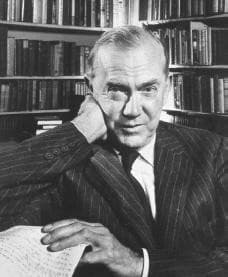
Henry Graham Greene was an English writer and journalist regarded by many as one of the leading English novelists of the 20th century.
Similar books
- A Confederacy of Dunces
John Kennedy Toole
3.9 (231k) average on GoodreadsLiterary FictionShowcases a highly eccentric protagonist and a satirical look at societal norms, with a strong comedic voice.
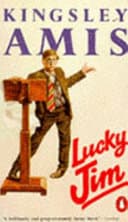
- Lucky Jim
Kingsley Amis
3.8 (25k) average on GoodreadsLiterary FictionA comedic novel about an ordinary man's misadventures and his struggle against the stuffiness of his environment.
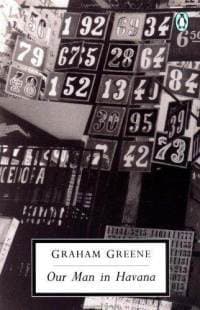
- Our Man in Havana
Graham Greene
3.9 (27k) average on GoodreadsThrillerWhile both Travels with My Aunt and Our Man in Havana share Greene's characteristic wit and a sense of the absurd, Our Man in Havana maintains a darker, more satirical edge, blending its comedy with Cold War espionage anxieties and a more pronounced critique of political machinations. Travels with My Aunt is less politically charged and focuses more on personal liberation and the subversion of social norms, operating in a more purely comedic and picaresque mode.
- The Old Man and the Sea
Ernest Hemingway
3.8 (831k) average on GoodreadsLiterary FictionA Cuban fisherman's long struggle with a giant marlin becomes a story of endurance and dignity, now retold for young adults with illustrations, phonetic guides, and writing prompts in Traditional Chinese.
- One Hundred Years of Solitude
Gabriel García Márquez
4.1 (753k) average on GoodreadsLiterary FictionThrough the multi-generational story of the Buendía family, a mythical town deals with the repeating patterns of time, love, and solitude, as the extraordinary mixes with the ordinary.
- The Goldfinch
Donna Tartt
3.9 (720k) average on GoodreadsLiterary FictionHaunted by a tragic explosion and clutching a stolen Dutch masterpiece, a young orphan navigates the opulent drawing rooms of New York and the gritty underbelly of the art world, desperately seeking connection and redemption amidst a life spiraling into crime and obsession.




Enjoyed the summary?
A summary gives you the shape of the book. The book itself has the detail, the examples and the voice.
Find Travels with My Aunt on AmazonAs an Amazon Associate, BookBrief earns from qualifying purchases. How we're funded