
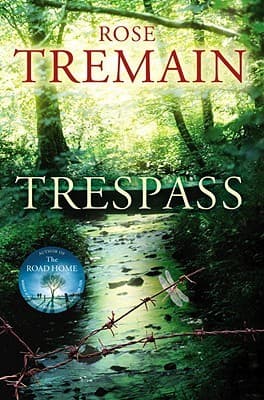
Synopsis
Covers the whole plot, including the ending.
- Difficulty
- Medium
- Pacing
- Moderate
- Mood
- Atmospheric, Dark, Suspenseful, Brooding, Psychological
- Read it if
- You enjoy dark, atmospheric literary thrillers with a focus on psychological tension and deeply flawed characters set in a vivid, isolated landscape.
- Skip it if
- You prefer fast-paced action, clear-cut heroes, or stories with a hopeful outlook.
Trespass Plot Summary
Covers the whole plot, including the ending.
The Mas Lunel and Its Occupants
Anthony Verey, a successful but tired London antiques dealer, arrives in the Cévennes region of France looking for a rural escape. He finds the isolated and ancient stone farmhouse, Mas Lunel, and is immediately drawn to its desolate beauty. The Mas belongs to Aramon, a man scarred by a traumatic past, who lives in neglect, letting his hunting dogs starve and the property fall apart. His sister, Audrun, lives nearby in a modern bungalow and resents Aramon and her life's perceived injustices, fueling a desire for vengeance. Anthony, unaware of the tension, asks about buying the property, starting a chain of events that will unravel everyone's lives.
Anthony's Pursuit and Audrun's Manipulation
Anthony Verey's first attempts to buy Mas Lunel face resistance and confusion because of Aramon's reclusiveness and the property's unclear legal status. Audrun, Aramon's sister, quickly sees an opportunity. She befriends Anthony, acting as a helpful go-between, while subtly manipulating the situation. She gives Anthony carefully chosen information about Aramon's instability and the Mas's history, hinting at secrets and difficulties that make the sale seem more complicated. Audrun's main goal is to get a large part of the sale price for herself, believing it is her due for a lifetime of perceived slights and sacrifices, and to punish Aramon.
The Unveiling of Traumas
As Anthony continues to pursue the Mas, the dark history of the property and its inhabitants slowly emerges. Aramon's catatonic state and inability to care for himself come from a childhood trauma. It is gradually revealed that Aramon witnessed his mother's brutal murder by his father, who then killed himself. This horrific event, which happened inside the Mas, has left Aramon deeply scarred, making him unable to process the past or engage with the present. The house itself becomes a silent witness to this tragedy, filled with the lingering echoes of violence and grief that have defined Aramon's life.
Audrun's Scheming and the Dogs
Audrun's manipulative nature is further shown through her cruel treatment of Aramon's hunting dogs. She deliberately withholds food and water from them, letting them starve, an act that shows her deep animosity towards her brother. She then uses the dogs' emaciated state to support her story to Anthony, portraying Aramon as completely incapable and irresponsible, reinforcing the idea that he is unfit to own the Mas. Audrun calculates that by showing Aramon's perceived neglect, she can strengthen Anthony's resolve to buy the property and solidify her position as the only rational and capable person in the transaction, while ensuring Aramon suffers.
Anthony's Growing Unease
Despite his initial excitement for the Mas Lunel, Anthony Verey starts to feel uneasy. Audrun's intense gaze, her possessive manner, and her increasingly demanding presence begin to disturb him. He finds her constant interference and thinly veiled animosity towards Aramon unsettling. The isolated valley, initially a haven, now feels oppressive, and the silence seems charged with unspoken history and tension. Anthony, used to the sophisticated world of antiques, finds himself increasingly caught in the raw, unresolved emotional landscape of the Mas and its inhabitants, questioning if buying it is a good idea.
The Revelation of Audrun's Betrayal
Anthony, driven by a nagging suspicion and his growing discomfort with Audrun, starts to put the truth together. He learns that Audrun has been systematically poisoning Aramon's life, not only by neglecting his dogs but also by withholding financial support and isolating him. He discovers that her seemingly helpful actions were always designed to benefit herself and get revenge on her brother. The full extent of her cruelty and her long-standing desire for retribution becomes clear to Anthony, revealing her as a far more sinister figure than he first thought. This revelation shatters his trust in her and exposes the depth of the family conflict.
Aramon's Fleeting Moments of Clarity
Despite his almost catatonic state, Aramon has brief moments of clarity. During these short periods, he shows a flicker of awareness, a glimpse into the profound pain and trauma that have paralyzed him. He might utter a fragmented word or make a symbolic gesture, hinting at the buried memories of his parents' deaths. These moments are poignant, revealing the intelligent and sensitive man trapped beneath layers of psychological damage. They also humanize Aramon for Anthony, changing him from a mere obstacle to a deeply suffering individual, further complicating Anthony's moral dilemma about buying the Mas.
The Confrontation and the Mas's Fate
Armed with the knowledge of Audrun's deceit, Anthony Verey finally confronts her. The confrontation is tense and charged, with Audrun initially denying everything before her anger and resentment erupt. The future of the Mas Lunel, and Aramon's fate, hangs in the balance. Anthony faces a moral choice: proceed with the purchase, knowing it would effectively dispossess a deeply traumatized man, or withdraw and leave Aramon vulnerable to Audrun's continued malice. The climax forces Anthony to choose between his personal desire for the property and a newfound sense of responsibility towards Aramon.
Aramon's Escape and Anthony's Decision
Following the intense confrontation, Aramon, perhaps sensing the upheaval or stirred by an instinct for survival, manages to escape the Mas Lunel. His disappearance adds another layer of complexity, leaving his whereabouts unknown and his future uncertain. Faced with this new development and the full understanding of Audrun's malevolence and Aramon's profound suffering, Anthony Verey makes a key decision. He withdraws his offer to buy the Mas, realizing that his desire for the property cannot justify the further disruption and potential harm it would inflict on Aramon. He recognizes that the Mas is deeply linked to Aramon's trauma.
The Aftermath and Lingering Shadows
In the aftermath, the Mas Lunel remains unsold, a silent, powerful reminder of unresolved traumas and past conflicts. Aramon's fate is unclear, his escape symbolizing a fragile hope for freedom from his past, or perhaps a descent into further isolation. Audrun is left to deal with the results of her failed schemes, her vindictive desires ultimately unfulfilled. Anthony Verey leaves the valley, giving up his dream of owning the Mas. He is deeply changed by his encounter with the raw human suffering and deep-seated animosity he witnessed, his initial desire for an idyllic escape replaced by a sober understanding of the past's lasting power.
Trespass Characters
Anthony Verey
Protagonist
A wealthy, disillusioned London antiques dealer seeking a new life in rural France.
Anthony Verey is a successful but emotionally weary antiques dealer in his late fifties. He is sophisticated, cultured, and financially secure, yet feels a deep sense of dissatisfaction with his life. He seeks an escape from urban superficiality and finds himself drawn to the wild, untouched beauty of the Cévennes. His initial desire for the Mas Lunel is driven by a romantic ideal of rural life and a need for a new project, but he is ultimately forced to confront the harsh realities of human suffering and moral compromise. He is initially naive to the dark undercurrents of the Mas but develops a growing moral conscience.
Relationships: Audrun (Initially perceived as a helpful intermediary, later revealed as a manipulative antagonist.); Aramon (Initially a property owner, later becomes an object of Anthony's pity and moral concern.)
Aramon
Supporting
The reclusive, traumatized owner of Mas Lunel, haunted by a violent past.
Aramon is a man in his sixties, profoundly damaged by a childhood trauma. He witnessed the brutal murder of his mother by his father, who then committed suicide, events that occurred within the Mas Lunel. This horrific past has rendered him largely catatonic, unable to care for himself, his property, or his dogs. He lives in a state of neglect and isolation, a prisoner of his memories. His silence and passivity are a direct result of his psychological wounds, making him vulnerable to Audrun's machinations and a symbol of the enduring power of trauma.
Relationships: Audrun (His sister and tormentor, who harbors deep resentment towards him.); Anthony Verey (An outsider who briefly becomes a potential savior or dispossessor.)
Audrun
Antagonist
Aramon's embittered sister, consumed by a desire for revenge and financial gain.
Audrun is a woman in her late fifties, living in a modern bungalow near the Mas Lunel. She is consumed by a deep-seated resentment towards her brother, Aramon, and a lifetime of perceived slights and injustices. She believes she was denied her rightful inheritance and has been forced to sacrifice for her brother. This bitterness fuels her manipulative and cruel nature. She is cunning and calculating, expertly weaving a web of deceit to exploit Anthony Verey's desire for the Mas, hoping to gain financially and exact vengeance on Aramon. Her actions are driven by a corrosive blend of greed and vindictiveness.
Relationships: Aramon (Her brother, whom she deeply resents and seeks to punish.); Anthony Verey (A target for manipulation to achieve her financial and vengeful aims.)
The Mas Lunel (as a character)
Supporting/Setting
An isolated, ancient farmhouse deeply imbued with the traumatic history of its inhabitants.
The Mas Lunel is more than just a setting; it functions almost as a character in itself. It is an isolated, ancient stone farmhouse in the Cévennes, dilapidated and overgrown, but possessing a potent, almost magnetic allure for Anthony Verey. It is the site of Aramon's childhood trauma – the murder of his mother and his father's suicide – and is saturated with the lingering echoes of this violence and neglect. The house represents both a romantic ideal of escape and a tangible manifestation of unresolved suffering, drawing people into its orbit and exposing their hidden desires and fears. Its very stones seem to hold the secrets of the past.
Relationships: Aramon (His home and the site of his deepest trauma, inextricably linked to his identity.); Anthony Verey (An object of desire, representing a new beginning but also a source of moral entanglement.); Audrun (A symbol of her perceived lost inheritance and the source of her resentment.)
The Dogs
Mentioned/Symbolic
Aramon's neglected hunting dogs, symbolizing his profound despair and Audrun's cruelty.
Aramon's hunting dogs are not characters in the traditional sense, but they serve a crucial symbolic role. Their neglect and starvation at the hands of Audrun highlight Aramon's deep despair and inability to care for himself, as well as Audrun's extreme cruelty and vindictiveness. They are innocent victims caught in the crossfire of a bitter familial feud. Their suffering underscores the pervasive atmosphere of decay and neglect surrounding the Mas Lunel and serves as a tangible manifestation of the moral corruption at play. Their emaciated state also serves to manipulate Anthony's perception of Aramon.
Relationships: Aramon (His companions, whose neglect reflects his own profound suffering.); Audrun (Victims of her deliberate cruelty and manipulation.)
Aramon's Mother
Mentioned
The victim of a violent murder, whose death initiated Aramon's trauma.
Aramon's mother is only present in the story through the memories and lingering trauma she left behind. Her violent murder by her husband, within the Mas Lunel, is the central, pivotal event that defines Aramon's entire existence and casts a long shadow over the property. She represents the innocence lost and the profound, unhealed wound that continues to fester within the family. Her death is the origin point of the suffering that permeates the novel, driving Aramon's catatonia and Audrun's resentment.
Relationships: Aramon (Her son, traumatized by her death.); Aramon's Father (Her murderer.)
Aramon's Father
Mentioned
The murderer of his wife and perpetrator of the family's foundational trauma.
Aramon's father is a spectral presence in the narrative, known only through his horrific actions. He murdered his wife (Aramon's mother) and then committed suicide, all within the walls of the Mas Lunel. His violence is the catalyst for Aramon's psychological breakdown and the source of the enduring darkness that clings to the farmhouse and its inhabitants. He represents the destructive power of human rage and despair, and his actions are the root cause of the family's fractured dynamics and the pervasive sense of tragedy.
Relationships: Aramon (His son, traumatized by his actions.); Aramon's Mother (His victim.)
Trespass Themes
The Enduring Power of Trauma
The novel shows how past traumas shape and dictate present lives. Aramon's entire existence is defined by the childhood horror of witnessing his mother's murder and father's suicide inside the Mas Lunel. This event has made him almost catatonic, unable to function. The house itself becomes a container of this trauma, its decaying state mirroring Aramon's internal collapse. Audrun's resentment, too, is rooted in perceived past injustices, showing how even secondary experiences of trauma can fester and lead to destructive behavior. The past is not just remembered; it actively 'trespasses' on the present.
“He knew that what had happened in the Mas Lunel had happened a long time ago, but for Aramon, it was still happening.”
Greed and Vengeance
Greed and vengeance are Audrun's main motivations, driving much of the plot's conflict. She wants financial gain from the Mas's sale, believing it is her rightful due, and also seeks to punish Aramon for a lifetime of perceived slights and sacrifices. Her actions, from neglecting the dogs to manipulating Anthony, are carefully planned to achieve both goals. This theme highlights the destructive nature of these emotions, showing how they can blind individuals to morality and lead to cruelty, ultimately leaving her unfulfilled.
“Audrun saw the Mas not as a home, but as a ledger, a place where debts were owed to her.”
The Burden of the Past
Beyond individual trauma, the novel explores the burden of the past on places and families. The Mas Lunel is not just an old house; it is steeped in generations of history, secrecy, and violence. Its stones seem to absorb and emanate the events that happened within its walls. The family's inability to reconcile with or escape their history creates a closed, toxic environment. Anthony's arrival, an outsider seeking a fresh start, accidentally stirs this dormant past, bringing its ugly truths into the open and showing that some histories are too heavy to simply be bought and sold.
“The Mas Lunel had its own memory, a deep, silent memory that held fast to every scream and every tear.”
Isolation and Connection
Isolation is a central theme, shown in the physical remoteness of the Mas Lunel and the emotional detachment of its inhabitants. Aramon is deeply isolated by his trauma, living in a world of internal suffering. Audrun, though living nearby, is isolated by her bitterness and resentment, unable to form genuine connections. Anthony Verey initially seeks isolation as an escape, but his journey teaches him the importance of human connection and moral responsibility. The novel suggests that while isolation can offer peace, it can also foster decay and malice, and that genuine connection, however difficult, is essential for healing or moral clarity.
“The valley held its secrets close, and its inhabitants even closer.”
Plot Devices & Literary Techniques
The Mas Lunel (Setting as a Device)
The isolated farmhouse functions as a central repository of history, trauma, and conflict.
The Mas Lunel is not merely a backdrop but a crucial plot device. Its isolation and dilapidated state immediately establish a sense of mystery and decay. As a physical space, it literally contains the evidence of past trauma (Aramon's parents' deaths) and becomes the focal point of the characters' desires and conflicts. Its potential sale drives the narrative, while its inherent 'memory' and atmosphere act as a constant, subtle force influencing character actions and revelations. The house itself becomes a character, embodying the themes of the past's enduring power and the burden of history.
Unreliable Narration/Perspective
The story is primarily filtered through Anthony's limited perspective, initially obscuring the full truth.
While not strictly an unreliable narrator, the novel frequently uses Anthony Verey's limited perspective to control the flow of information and build suspense. Anthony, as an outsider, initially perceives Audrun as helpful and Aramon as merely incompetent. The reader's understanding of events and characters is filtered through his evolving realizations. This device allows for gradual revelations about Audrun's true nature and Aramon's past, creating a sense of unfolding mystery and surprise. It mirrors Anthony's journey from naive observer to someone more aware of the complex, dark realities.
Symbolism of the Dogs
Aramon's neglected hunting dogs symbolize his profound despair and Audrun's malicious intent.
The starving hunting dogs serve as a potent symbolic plot device. Their emaciated state immediately conveys Aramon's profound neglect and his deep psychological incapacitation. More significantly, Audrun's deliberate withholding of food from them is a clear, visceral demonstration of her cruelty and her active desire to cause her brother suffering. The dogs' plight acts as a tangible manifestation of the moral decay and malice permeating the Mas, and their suffering directly impacts Anthony's perception of both Aramon and Audrun, driving his growing unease and eventual understanding of the truth.
Flashbacks/Revealed History
Gradual revelations of past violent events drive the plot's mystery and character motivations.
The novel uses a slow, piecemeal revelation of past events, particularly the violent deaths of Aramon's parents, as a key plot device. These 'flashbacks' or historical disclosures are not presented chronologically but are unveiled through fragmented memories, Audrun's manipulative accounts, and Anthony's investigations. This gradual uncovering of the past serves to build suspense, explain Aramon's catatonic state, and expose the deep-seated motivations behind Audrun's actions. The past is not merely recounted; it actively intrudes on the present, dictating the characters' choices and the story's direction.
Trespass Quotes
“The past is a country from which we are constantly being deported, and yet we keep trying to find our way back.”
“Fear has a way of making the familiar seem utterly alien, even dangerous.”
“It’s not just the things you do, but the things you don’t do, that define you.”
“Silence, when it’s truly deep, can be louder than any scream.”
“Grief is a landscape you have to walk through, not around.”
“Secrets are like seeds; once planted, they grow in unexpected directions.”
“The greatest prison is often the one we build for ourselves, brick by brick, with our own thoughts.”
“Sometimes, the most ordinary places hide the most extraordinary darkness.”
“Love, in its purest form, is also a kind of trespass.”
“The truth is rarely simple, and never truly sets you free without first tearing something down.”
“We all carry ghosts, whether we admit it or not. They whisper in our ears, guide our steps.”
“To forgive is not to forget, but to remember differently.”
“The wind carries stories, if you only know how to listen.”
“Every house has a heart, and sometimes that heart beats with a terrible secret.”
Quiz
10 questions on the plot and the characters. Each answer comes with a short explanation.
Question 1
What is the name of the isolated stone farmhouse owned by Aramon?
- La Maison Blanche
- Château du Soleil
- Mas Lunel
- Domaine de la Lune
Show answer
C. Mas Lunel The isolated stone farmhouse in the silent valley is specifically named the Mas Lunel in the book's description.
Question 2
What is Aramon's primary emotional state or condition that renders him incapable of meaningful action?
- Overwhelmed by love
- Haunted by a violent past
- Driven by ambition
- Lost in artistic creation
Show answer
B. Haunted by a violent past Aramon is described as being 'so haunted by his violent past that he's become incapable of all meaningful action'.
Question 3
What is Audrun's main desire or motivation?
- To leave France and travel the world
- To start a new family
- To exact retribution for unspoken betrayals
- To restore the Mas Lunel to its former glory
Show answer
C. To exact retribution for unspoken betrayals Audrun 'dreams of exacting retribution for the unspoken betrayals that have blighted her life'.
Question 4
What is Anthony Verey's profession?
- A novelist
- An antiques dealer
- A real estate agent
- A chef
Show answer
B. An antiques dealer Anthony Verey is introduced as a 'wealthy but disillusioned antiques dealer from London'.
Question 5
What is the primary consequence of Anthony Verey setting his sights on the Mas Lunel?
- A peaceful resolution to family disputes
- A sudden economic boom for the valley
- A frightening and unstoppable series of consequences
- The immediate restoration of the farmhouse
Show answer
C. A frightening and unstoppable series of consequences The text states that 'When he sets his sights on the Mas, a frightening and unstoppable series of consequences is set in motion.'
Question 6
Where does Audrun live in relation to the Mas Lunel?
- In a village far away
- In a modern bungalow within sight of the Mas Lunel
- Inside the Mas Lunel with Aramon
- In a city apartment
Show answer
B. In a modern bungalow within sight of the Mas Lunel Audrun is described as being 'alone in her modern bungalow within sight of the Mas Lunel'.
Question 7
What does Aramon neglect due to his haunted past?
- His wine collection and art
- His hunting dogs and his land
- His social life and friendships
- His personal hygiene and diet
Show answer
B. His hunting dogs and his land Aramon's incapacity leads to him 'letting his hunting dogs starve and his land go to ruin'.
Question 8
What aspect of the setting contributes most to the novel's atmosphere of isolation and tension?
- The bustling city life of southern France
- The vibrant communal gatherings in the valley
- An isolated stone farmhouse in a silent valley
- The constant influx of tourists to the region
Show answer
C. An isolated stone farmhouse in a silent valley The description immediately sets the scene with 'In a silent valley in southern France stands an isolated stone farmhouse, the Mas Lunel,' establishing the core atmosphere.
Question 9
The book can be categorized into which genres?
- Fantasy, Romance, Comedy
- Science Fiction, Historical Fiction, Biography
- Literary Fiction, Thriller, Mystery
- Young Adult, Horror, Self-Help
Show answer
C. Literary Fiction, Thriller, Mystery The genre classification for the book is explicitly stated as 'Literary Fiction, Thriller, Mystery'.
Question 10
The 'unspoken betrayals' that blight Audrun's life suggest a key thematic element of the novel. What is it?
- The importance of clear communication in relationships
- The lasting impact of hidden family secrets and unresolved grievances
- The necessity of forgiveness for personal peace
- The irrelevance of past events to present happiness
Show answer
B. The lasting impact of hidden family secrets and unresolved grievances Audrun's desire for retribution for 'unspoken betrayals' highlights the theme of how past, unaddressed wrongs and secrets continue to affect the present lives of the characters, driving the plot's tension.
Trespass FAQ
What is the central conflict that drives the plot of 'Trespass'?
The central conflict arises from Anthony Verey's desire to purchase the Mas Lunel, which collides with Aramon's deep-seated trauma and Audrun's long-held resentments and desire for retribution. Anthony's intrusion into their isolated world disrupts the fragile stasis of the siblings' lives, ultimately leading to a violent climax.
Who are the primary characters, and what are their initial motivations?
Aramon is the reclusive owner of Mas Lunel, haunted by a violent past, whose primary motivation is to remain isolated and avoid engagement. Audrun, his sister, lives nearby, driven by a desire for retribution for past betrayals. Anthony Verey is a disillusioned London antiques dealer, initially motivated by a desire to acquire the Mas Lunel as an escape or new beginning.
How does the setting of the Mas Lunel and the surrounding valley contribute to the novel's atmosphere?
The isolated stone farmhouse, Mas Lunel, and the silent valley create an atmosphere of foreboding, stagnation, and entrapment. Its remoteness amplifies the characters' psychological states, making their internal conflicts feel more intense and inescapable, and contributing to the thriller and mystery elements of the story.
What is the nature of the 'violent past' that haunts Aramon?
Aramon is haunted by the memory of killing his father years ago, an act that has paralyzed him with guilt and rendered him incapable of meaningful action. This past event is the root cause of his reclusiveness, his neglect of the Mas, and his emotional detachment, which profoundly impacts his relationship with Audrun.
What role does Anthony Verey's offer to buy the Mas Lunel play in escalating the tension?
Anthony's offer acts as a catalyst, forcing Aramon to confront his past and Audrun to see an opportunity for her long-simmering revenge. It shatters the delicate balance of their isolated existence, bringing their hidden resentments and traumas to the surface and setting an unstoppable chain of events in motion.
What specific 'unspoken betrayals' does Audrun seek retribution for?
Audrun harbors deep resentment over Aramon's murder of their father, which she witnessed, and the subsequent cover-up. She also feels betrayed by her mother's complicity and Aramon's perceived abandonment and subsequent neglect, which left her to bear the emotional burden and responsibilities of their family's secret and decline.
Are there any symbolic meanings behind Aramon's neglect of his hunting dogs and land?
Aramon's neglect of his hunting dogs, allowing them to starve, and his land going to ruin are powerful symbols of his own internal decay and paralysis. They reflect his inability to nurture life, his self-punishment, and the devastating impact of his past trauma on his present existence, signifying his complete emotional and practical breakdown.
How does the novel subtly hint at the true nature of the siblings' relationship before the full reveal?
The novel hints at the siblings' strained and complex relationship through Audrun's bitter internal monologues and Aramon's profound avoidance of her. Their lack of direct communication, the palpable tension when they are in proximity, and Audrun's constant surveillance of the Mas Lunel all suggest a history far more complicated than simple sibling estrangement.
What is the significance of the Mas Lunel itself, beyond being a physical structure?
The Mas Lunel is a powerful symbol of the family's past, its secrets, and its slow decay. It embodies Aramon's trauma, Audrun's grievances, and the collective memory of their shared history. For Anthony, it represents a fantasy of escape and renewal, highlighting the stark contrast between his idealized vision and its true, haunted reality.
How does Aramon's trauma manifest psychologically throughout the story?
Aramon's trauma manifests as severe emotional paralysis, profound guilt, and an overwhelming inability to act or engage with the world. He experiences social withdrawal, neglect of self and surroundings, and a deep sense of anhedonia, effectively becoming a prisoner of his past actions and their psychological consequences.
Analyze Audrun's psychological state and her motivation for revenge.
Audrun suffers from deep-seated resentment, a sense of injustice, and a desire for control stemming from her past trauma. Her motivation for revenge is rooted in a need to rebalance the scales, to make Aramon suffer for his perceived betrayals and the burden she has carried, and to finally articulate the unspoken truths that have defined her life.
How does Anthony Verey's disillusionment contribute to his actions and eventual fate?
Anthony's disillusionment with his wealthy but unfulfilling life makes him vulnerable to the allure of the Mas Lunel, seeing it as a symbol of authenticity and a fresh start. This desire blinds him to the underlying dangers and the deeply disturbed reality of Aramon and Audrun, leading him to trespass into their dangerous world and sealing his tragic fate.
Discuss the theme of isolation and its impact on the characters in 'Trespass'.
Isolation profoundly impacts all characters. Aramon's self-imposed isolation exacerbates his trauma and paralysis, while Audrun's emotional isolation fuels her bitterness and desire for revenge. Even Anthony, though wealthy, feels a sense of existential isolation, leading him to seek connection or meaning in the Mas, ultimately making all three vulnerable to their destructive impulses.
Is Aramon a sympathetic character despite his actions and neglect?
Aramon is presented as a complex character. While his neglect and inaction are destructive, his profound suffering and paralysis stemming from his past trauma evoke a degree of sympathy. The novel explores the heavy psychological burden he carries, making him a tragic figure rather than purely villainous, leaving room for interpretation of his culpability.
What is the novel's stance on justice and retribution, particularly through Audrun's actions?
The novel suggests that while Audrun seeks justice, her path to retribution is deeply flawed and ultimately destructive, leading to further violence rather than resolution. It explores the dark side of vengeance, implying that holding onto past grievances can consume an individual and lead to tragic consequences, rather than providing true healing or closure.
How does the ending of 'Trespass' resolve the central conflicts, or does it leave questions unanswered?
The ending of 'Trespass' provides a violent resolution to the immediate conflicts, with the Mas Lunel's fate and the characters' lives irrevocably altered. However, it leaves profound questions about the nature of healing, the possibility of true escape from the past, and whether any real justice has been served, emphasizing the enduring psychological scars.
Could the events of the novel have been avoided if the characters had communicated more openly?
Open communication might have altered the trajectory, but the deep-seated trauma and psychological damage of Aramon and Audrun suggest that simple communication alone might not have been sufficient to prevent the tragedy. Their inability to articulate their pain and grievances is a symptom of their profound issues, making genuine dialogue incredibly difficult, if not impossible.
What is the significance of the title 'Trespass'?
The title 'Trespass' signifies multiple layers of transgression. Anthony Verey physically trespasses onto the land and into the lives of Aramon and Audrun. More deeply, the characters trespass against each other through betrayals and unspoken resentments, and Aramon's past act was a trespass against life and family, setting the stage for all subsequent conflicts.
Similar books
- The Secret History
Donna Tartt
3.9 (2k) average on GoodreadsPoliticsExplores dark psychological depths and hidden pasts within a contained, intense setting.
- Rebecca
Daphne du Maurier
4.2 (450k) average on GoodreadsThrillerFeatures an isolated, atmospheric estate with a pervasive sense of dread and a powerful, manipulative female character.
- The Wasp Factory
Iain Banks
3.8 (83k) average on GoodreadsThrillerDelves into the mind of a disturbed character and the dark secrets of a remote family.
- The Secret Place
Tana French
3.9 (63k) average on GoodreadsThriller"Trespass" shares with French's work an exploration of hidden secrets and psychological manipulation within a confined setting (a boarding school in French's case, a mas in Tremain's). However, Tremain's novel prioritizes internal states and atmospheric dread over French's more procedural, detective-driven mystery.
- The Little Stranger
Sarah Waters
3.5 (44k) average on GoodreadsHistorical FictionBoth novels feature an oppressive house embodying secrets and a slow-burning dread, with a focus on psychological complexities. Tremain's work, like Waters', uses the setting to mirror internal turmoil. However, Waters often delves deeper into the societal and historical context influencing her characters' neuroses, whereas Tremain's focus remains more intensely on immediate interpersonal dynamics and personal trauma.
- The Old Man and the Sea
Ernest Hemingway
3.8 (831k) average on GoodreadsLiterary FictionA Cuban fisherman's long struggle with a giant marlin becomes a story of endurance and dignity, now retold for young adults with illustrations, phonetic guides, and writing prompts in Traditional Chinese.






Enjoyed the summary?
A summary gives you the shape of the book. The book itself has the detail, the examples and the voice.
Find Trespass on AmazonAs an Amazon Associate, BookBrief earns from qualifying purchases. How we're funded