

Core Idea
- Difficulty
- Hard
- Read it if
- You are familiar with Nietzsche's broader philosophy and want a concise, polemical summary of his critique of Western culture and morality, presented with his characteristic aphoristic style and psychological insights.
- Skip it if
- You are new to philosophy, prefer systematic arguments over provocative aphorisms, or are easily offended by aggressive critiques of conventional morality, religion, and foundational Western thinkers.
Key Takeaways from Twilight of the Idols
The Idols Are Falling
Nietzsche's hammer exposes the hollowness of traditional values.
Nietzsche's 'twilight' means not just an end, but a fresh look at the basic beliefs and values that shaped Western civilization. He uses a 'hammer' to test these 'idols' – old truths, moral systems, and philosophical ideas – to show their emptiness. This is not nihilism for its own sake, but a deep psychological diagnosis of cultural decay. He argues that many cherished ideals, from Christian morality to Socratic reason, are not strong realities but 'bloated entrails' that sound hollow when struck, showing their life-denying origins or their decline into mere habit. The goal is to hear this emptiness and start creating new values.
“There are more idols than realities in the world: that is my 'evil eye' for this world; that is also my 'evil ear'… To question here with a hammer, and perhaps to hear as a reply that famous hollow sound which speaks of bloated entrails – what a delight for one who has ears behind his ears, for an old psychologist and rat-catcher like me!”
In the book: The very title and opening sections of the book, where Nietzsche declares his intention to 'philosophize with a hammer' and to 'sound out' the idols, setting the stage for his critique of various cultural figures and concepts.
Try this: Apply a critical, 'hammering' skepticism to your own deeply held beliefs, societal norms, and cultural narratives. Question their origins, their effects on vitality, and whether they truly serve life or merely perpetuate comfort and conformity. Ask: 'What does this belief actually affirm or deny about life?'
Related ideas: revaluation-of-all-values, nihilism, genealogy-of-morals
Socrates: The First Decadent?
Nietzsche dissects the origins of Western rationality and its anti-life bias.
Nietzsche famously points to Socrates as a central figure in the 'decline' of Western thought. He argues that Socrates, with his constant demand for rational proof and his link between virtue and knowledge, brought in a 'tyranny of reason' that suppressed instinct and natural drives. For Nietzsche, Socrates's unattractive appearance and his supposed wish for death (the hemlock) show a deeper physical decline, where reason becomes a way to make up for a weakening life force. The Socratic method, while seeming to promote truth, actually makes instinct seem sick and raises a life-denying intellect. This criticism extends to Plato, who put Socratic thought into a dualistic system that lessened the value of the sensory world in favor of abstract Forms, effectively devaluing life on Earth.
“Socrates was a misunderstanding: the whole improvement-morality, including the Christian, was a misunderstanding… Socrates was a buffoon who got himself taken seriously.”
In the book: Nietzsche's 'The Problem of Socrates' chapter, where he links Socrates's ugliness and the 'dialectician's revenge' to a physiological decadence, positing that the pursuit of reason was a symptom of a weakened life rather than a sign of strength.
Try this: Examine the extent to which pure rationality dictates your decisions and values. Consider if an overemphasis on logic and intellectual justification might be stifling your instincts, creativity, or connection to the sensory, embodied aspects of life. Seek a balance where reason serves life, rather than dominating it.
Related ideas: socratic-method, platonic-forms, decadence, reason-vs-instinct
Morality as Anti-Nature
Christian morality is a disguised will to power of the weak against the strong.
Nietzsche says that traditional morality, especially Christian morality, is 'anti-nature' because it constantly condemns and suppresses humanity's basic instincts and drives. Ideas like humility, compassion, and self-denial, while appearing good, are seen by Nietzsche as expressions of a 'will to power' from the weak and resentful, who want to control the strong and life-affirming. This 'slave morality' reverses natural order, calling what is strong and healthy 'evil,' and what is weak and suffering 'good.' This reversal drains human energy, leading to a small, guilt-ridden life instead of one that thrives. For Nietzsche, true goodness aligns with instinct, strength, and an acceptance of life's natural challenges and differences.
“All that is good is instinct — and consequently easy, necessary, free. If morality is anti-nature, it is precisely because it is hostile to instinct.”
In the book: Nietzsche's sections on 'Morality as Anti-Nature' and 'The Four Great Errors,' where he explicitly critiques the Christian concept of 'goodness' and its psychological origins in resentment and the desire to control.
Try this: Scrutinize the moral frameworks you adhere to. Do they empower you to live a full, vital life, or do they primarily restrict, shame, or diminish your natural impulses? Question whether your 'virtues' are genuinely life-affirming or merely inherited mechanisms for control and self-denial. Consider cultivating an ethic that aligns with your strongest, healthiest instincts.
Related ideas: slave-morality, master-morality, ressentiment, will-to-power
The 'Free Spirit' and the Path to Self-Overcoming
Liberation from idols demands intellectual courage and personal creation.
For Nietzsche, true freedom is not just having no outside limits, but an active 'will to self-responsibility' – the hard work of 'self-overcoming.' This means freeing oneself from the inherited 'idols' of tradition, morality, and common thought, which he sees as forms of mental and spiritual slavery. The 'free spirit' is someone who dares to question, to try new things, and to create their own values, even if it means being alone and misunderstood. It requires not caring about comfort and social approval, and a willingness to accept hardship as a way to build strength. This path is not easy; it demands deep honesty with oneself and a constant drive to become more than one currently is, going beyond one's own limits and creating new meaning.
“What is freedom? The will to self-responsibility. To maintain the distance which separates us from other men. To become more indifferent to hardship, to severity, to privation, and even to life itself.”
In the book: Nietzsche's discussions on 'What I Owe to the Ancients' and his celebration of figures like Goethe, Napoleon, and even Caesar Borgia as examples of strong, self-legislating individuals, implicitly contrasting them with the 'herd.'
Try this: Actively challenge your own intellectual and moral comfort zones. Identify areas where you conform out of habit or fear, rather than conviction. Take responsibility for shaping your own values and life's meaning, rather than passively accepting what is given. Embrace the discomfort of independent thought and action.
Related ideas: overcoming-man, will-to-power, individualism, autonomy
The Four Great Errors
Nietzsche dismantles the illusions underpinning traditional metaphysics and morality.
Nietzsche identifies four basic mistakes that have troubled human thought, especially in philosophy and religion, leading to wrong understandings of reality and morality. First, the 'error of confusing cause and effect,' where results are mistaken for reasons (e.g., 'virtue makes one happy,' instead of 'happiness is a sign of good health'). Second, the 'error of a false causality,' attributing events to non-existent causes (e.g., 'God's will,' 'the soul'). Third, the 'error of imaginary causes,' making up explanations for unclear feelings (e.g., attributing guilt to 'sin' when it might be physical). Finally, the 'error of free will,' which he sees as a religious invention to justify punishment and guilt, denying the complex mix of drives and influences that truly shape human action. These mistakes together create a false world that prevents human flourishing.
“The error of confusing cause and effect. The error of a false causality. The error of imaginary causes. The error of free will.”
In the book: The dedicated chapter 'The Four Great Errors,' where Nietzsche systematically deconstructs these pervasive fallacies, using examples like the 'cure' for melancholy or the origin of moral responsibility.
Try this: Cultivate rigorous intellectual honesty. When analyzing problems or making judgments, critically examine your assumptions about cause and effect. Be wary of attributing complex phenomena to simplistic or supernatural causes. Question the concept of absolute free will and acknowledge the intricate web of influences that shape behavior, both your own and others'.
Related ideas: determinism, causality, metaphysics, critique-of-morality
The Cult of German Culture: A Decadent Illusion
Nietzsche castigates his contemporary German intellectual and artistic scene.
Nietzsche, though German, was very critical of contemporary German culture, seeing it as deeply decadent and unoriginal. He criticizes German philosophy (after Kant), music (after Beethoven, with a complex view of Wagner), and scholarship for being heavy, lacking grace, and tending towards dullness and abstraction, rather than energy and clarity. He believed German culture had lost its connection to real artistic instinct and philosophical depth, instead indulging in nationalistic self-praise and intellectual mediocrity. He makes an exception for Goethe, whom he admires as a 'European event' and a strong, life-affirming spirit, contrasting him sharply with the perceived weakness and narrow-mindedness of his peers. This criticism extends to the 'German spirit' itself, which he links with a certain clumsiness and lack of artistic taste.
“Wherever Germany extends, it corrupts culture. It is only in reference to Goethe that I feel any respect for the 'German spirit.'”
In the book: Nietzsche's 'Skirmishes of an Untimely Man' and 'What I Owe to the Ancients' sections, where he directly criticizes German universities, philosophers (like Kant and Hegel), and even German food and beer, contrasting them with the clarity and strength of ancient Greek or French culture.
Try this: Critically evaluate the cultural trends and intellectual movements within your own society or field. Are they genuinely innovative and life-affirming, or do they merely perpetuate mediocrity, provincialism, or a false sense of superiority? Cultivate an appreciation for genuine excellence and vitality, regardless of its origin, and challenge uncritical nationalistic or group pride.
Related ideas: decadence, cultural-criticism, goethe, aesthetic-judgment
Art as the Great Stimulant to Life
Art, unlike morality or science, affirms existence and fosters strength.
In contrast to his criticism of morality, religion, and even some forms of philosophy and science, Nietzsche champions art as the best 'stimulant to life.' For him, art is not a separate pursuit, but a powerful expression of the will to power, an affirmation of existence even in its tragic parts. Art creates meaning, beautifies life, and provides a strong sense of purpose and strength. It allows people to face life's chaos and suffering without giving in to nihilism or turning to life-denying ideals. Through art, we don't escape reality, but intensify and transform it, making it bearable and even desirable. The artist, in Nietzsche's view, is a life-affirming creator, shaping reality rather than just explaining or condemning it.
“Art is the great stimulant to life: how could one understand it as purposeless, as aimless, as l'art pour l'art?… To have a goal, an aim, a 'purpose,' to be driven, to have a 'will' – this is what the artist feels.”
In the book: Nietzsche's sections on 'What I Owe to the Ancients' and his admiration for ancient Greek tragedy, which he saw as a profound artistic affirmation of life despite suffering, and his general preference for Dionysian art.
Try this: Actively engage with art not just as entertainment, but as a vital force for understanding and affirming life. Seek out art that challenges, inspires, and invigorates your spirit, rather than merely comforting or distracting. Consider how you can bring an artistic, creative, and transformative approach to your own life and work, seeing it as a process of creation rather than mere duty or problem-solving.
Related ideas: dionysian, apollonian, aesthetic-existence, will-to-art
Psychology as the Queen of the Sciences
Understanding human drives is essential for revaluing all values.
Nietzsche places psychology as the highest science, not as a modern clinical field, but as the main tool for understanding the basic drives, instincts, and 'will to power' that motivate human behavior, belief systems, and cultural events. He argues that traditional philosophy and morality have largely worked on surface levels, failing to grasp the deeper, often unconscious, physical and psychological forces at play. To 'revalue all values' and to break down the old 'idols,' one must first understand their psychological origin – why certain beliefs arose, whose interests they served, and what kind of person they created. This deep psychological insight is essential for clearing the way for new, life-affirming values, rather than just replacing old beliefs with new ones.
“One does not get rid of a god by means of an argument, let alone 'morality' — one has to re-create him, one has to give him new clothes, new motives, new aims. One has to prove that he is no longer necessary.”
In the book: Nietzsche's frequent use of psychological analysis throughout the book, particularly in 'The Problem of Socrates' and 'Morality as Anti-Nature,' where he delves into the motivations and physiological states behind philosophical and moral constructs.
Try this: Adopt a deeply psychological lens in understanding yourself and the world. Instead of merely accepting ideas or behaviors at face value, ask: 'What underlying drives or unmet needs might be motivating this? What kind of person or life does this belief system produce?' Use this insight to deconstruct limiting beliefs and to build a more authentic, self-aware existence.
Related ideas: genealogy, will-to-power, sublimation, self-knowledge
Beyond Good and Evil: The Transvaluation of Values
The ultimate goal is to create new values that affirm life's fullness.
The peak of Nietzsche's criticism is the call for a 'transvaluation of all values' – a complete re-evaluation and creation of new values that go 'beyond good and evil' as traditionally understood. This is not about being amoral, but about developing a morality that supports life in its strongest, most vital forms, rather than one that lessens or denies it. It recognizes that suffering is a natural part of existence and can even lead to growth and strength, if it has meaning. The goal is to overcome the reactive, resentful morality of the past and to affirm new values based on strength, creativity, self-overcoming, and a joyful embrace of the earthly. This is the task of the 'free spirit' and the potential 'overcoming man' – to become a maker of one's own values, not just a follower.
“Man, the bravest animal and the one most accustomed to suffering, does not deny suffering as such: he desires it, he even seeks it out, provided he is shown a meaning for it, a purpose of suffering.”
In the book: The overarching theme of the book, particularly in the later sections where Nietzsche lays out the implications of his criticisms and hints at the future task of humanity, implying the necessity of creating new values.
Try this: Consciously identify and articulate your own highest values, ensuring they are truly your own and that they serve to enhance your life and the lives of those around you in a vital, strong way. Be willing to redefine 'good' and 'bad' based on what genuinely affirms life, rather than what is merely conventional or comfortable. Embrace challenges as opportunities for growth and meaning-making.
Related ideas: transvaluation-of-values, overcoming-man, eternal-recurrence, amor-fati
The Hammer as a Diagnostic Tool
Nietzsche's method is to sound out, not merely to destroy.
Nietzsche's 'philosophizing with a hammer' is often misunderstood as a call for random destruction. However, he clarifies that the hammer is mainly a diagnostic tool. Its purpose is to 'sound out' the idols, to test their inner consistency and vitality, to tell the difference between solid truth and hollow pretense. He aims to expose the 'idols' that have become rigid, life-denying, and ultimately harmful. This diagnostic approach requires a deep historical and psychological understanding of how these values came to be, what needs they originally met, and how they have since declined. The ultimate goal is not just demolition, but clearing the ground for new creation, for the rise of a stronger, healthier humanity. This requires the philosopher to go beyond the biases and limits of their own time to gain a 'timeless' perspective.
“What does a philosopher demand of himself first and last? To overcome his age in himself, to become 'timeless.'”
In the book: The recurring metaphor of the hammer throughout the preface and early chapters, where Nietzsche explicitly states its purpose is to 'test' and 'sound out,' not simply to smash.
Try this: When encountering established ideas, institutions, or personal habits, apply a 'diagnostic' lens. Don't immediately accept or reject. Instead, ask: 'What is the true substance here? What is its origin? Does it still serve a vital purpose, or has it become a hollow ritual or belief?' Cultivate a critical, discerning mind that seeks understanding before judgment.
Related ideas: critique, genealogy, diagnosis, critical-thinking
Twilight of the Idols Quotes
“What does not kill me makes me stronger.”
“To live alone one must be a beast or a god, says Aristotle. There is a third case: one must be both—a philosopher.”
“And if you gaze long enough into an abyss, the abyss will gaze back into you.”
“The greatest events are not our loudest but our stillest hours.”
“I call an animal, a species, an individual corrupt when it loses its instincts, when it chooses what is harmful to it.”
“The value of a thing sometimes lies not in what one gets by it, but in what one pays for it—what it costs us.”
“There are no moral phenomena at all, but only a moral interpretation of phenomena.”
“The will to a system is a lack of integrity.”
“All psychology so far has got stuck in moral prejudices and fears: it has not dared to descend into the depths.”
“Whoever has eyes for it will find everywhere signs that the European is ripe for a new slavery.”
“One must shed the bad taste of wanting to agree with many. 'Good' is no longer good when one's neighbor mouths it.”
“We deny God, we deny the responsibility in God: thereby alone do we redeem the world.”
“My conception of freedom.—The value of a thing sometimes lies not in what one gets by it, but in what one pays for it—what it costs us.”
“The most spiritual men, as the strongest, find their happiness where others would find their ruin: in the labyrinth, in hardness against themselves and others, in experiment.”
Quiz
10 questions on the main ideas. Each answer comes with a short explanation.
Question 1
In 'Twilight of the Idols,' Nietzsche famously states, 'What does not kill me makes me stronger.' In which section does this aphorism appear?
- 'Expeditions of an Untimely Man'
- 'The Problem of Socrates'
- 'Morality as Anti-Nature'
- 'Skirmishes of an Untimely Man'
Show answer
A. 'Expeditions of an Untimely Man' This famous aphorism is found in the 'Expeditions of an Untimely Man' section, specifically aphorism 8, where Nietzsche discusses his views on suffering and strength.
Question 2
Nietzsche argues that Socrates, despite his reputation, represents a decline in Greek culture. What is his primary criticism of Socrates in 'The Problem of Socrates'?
- Socrates was too focused on physical prowess and neglected intellectual pursuits.
- Socrates's emphasis on reason and dialectic was a symptom of decadence and an instinct against life.
- Socrates promoted a hedonistic lifestyle that undermined traditional Greek virtues.
- Socrates's lack of interest in politics led to the downfall of Athens.
Show answer
B. Socrates's emphasis on reason and dialectic was a symptom of decadence and an instinct against life. Nietzsche views Socrates's reliance on reason and dialectic as a sign of physiological degeneration and a move away from the healthy, instinctual life that characterized earlier Greek culture.
Question 3
Which of the following best describes Nietzsche's concept of 'revaluation of all values' as presented in 'Twilight of the Idols'?
- A return to traditional Christian morality and values.
- The critical examination and overturning of established moral, philosophical, and cultural values.
- The establishment of a new, universally accepted set of moral principles.
- A renewed appreciation for the values of ancient Roman society.
Show answer
B. The critical examination and overturning of established moral, philosophical, and cultural values. The 'revaluation of all values' is a core theme where Nietzsche advocates for a radical critique and overturning of traditional values, particularly those he sees as life-denying or nihilistic.
Question 4
In the section 'Morality as Anti-Nature,' Nietzsche argues that certain moralities are 'anti-nature' because they:
- Encourage excessive displays of physical strength and aggression.
- Are based on a denial of instincts and a hostility towards life's fundamental drives.
- Promote a scientific worldview over spiritual beliefs.
- Lead to an overemphasis on individual freedom at the expense of communal harmony.
Show answer
B. Are based on a denial of instincts and a hostility towards life's fundamental drives. Nietzsche criticizes moralities that suppress or deny natural instincts, viewing them as 'anti-nature' because they are hostile to life and its inherent drives.
Question 5
Nietzsche's critique of the 'Platonic legacy' in 'Twilight of the Idols' primarily targets:
- Plato's artistic style and literary techniques.
- Plato's emphasis on the World of Forms and the denigration of the sensory world.
- Plato's political philosophy and advocacy for an aristocracy.
- Plato's arguments for the immortality of the soul.
Show answer
B. Plato's emphasis on the World of Forms and the denigration of the sensory world. Nietzsche sees Plato's dualism, particularly the concept of a superior, non-sensory 'true world' (World of Forms), as a foundational error that devalues the real, empirical world and thus life itself.
Question 6
What does Nietzsche mean by the phrase 'God is dead' as it is implicitly understood and elaborated upon in 'Twilight of the Idols'?
- A literal statement that a divine being has ceased to exist.
- The decline and loss of faith in traditional Christian metaphysical and moral frameworks.
- An argument for the existence of multiple deities.
- A call for a return to ancient pagan religions.
Show answer
B. The decline and loss of faith in traditional Christian metaphysical and moral frameworks. 'God is dead' signifies the collapse of the traditional foundations of Western morality and meaning, leaving humanity without a transcendent basis for values, which Nietzsche sees as both a crisis and an opportunity.
Question 7
In 'How the 'True World' Finally Became a Fable,' Nietzsche outlines the historical stages of the concept of the 'true world.' Which stage is characterized by the idea that the 'true world' is 'unreachable, unprovable, unpromisable, but even as thought a comfort, an imperative'?
- Plato's stage: The 'true world,' reachable for the wise, pious, virtuous man, lives in it, he is it.
- Christianity's stage: The 'true world,' for now unreachable, but promised to the wise, pious, virtuous man ('sinner who repents').
- Kant's stage: The 'true world,' unreachable, unprovable, unpromisable, but even as thought a comfort, an imperative.
- Modernity's stage: The 'true world' has become a fable.
Show answer
B. Christianity's stage: The 'true world,' for now unreachable, but promised to the wise, pious, virtuous man ('sinner who repents'). This description specifically refers to the Kantian stage (the third stage in Nietzsche's six-stage progression) where the 'true world' becomes an unreachable intellectual construct, yet still holds a conceptual importance.
Question 8
Nietzsche frequently uses the term 'decadence' in 'Twilight of the Idols.' What does he primarily associate with decadence?
- A flourishing of artistic and cultural innovation.
- A state of physiological and psychological decline, characterized by weakness of will and denial of life.
- The pursuit of luxury and material wealth.
- The rise of democratic political systems.
Show answer
B. A state of physiological and psychological decline, characterized by weakness of will and denial of life. For Nietzsche, decadence is a state of spiritual and physical decline, marked by a weakening of life-affirming instincts and a turn towards reactive, resentful values.
Question 9
In 'Skirmishes of an Untimely Man,' Nietzsche criticizes various figures. Which of the following does he NOT explicitly target in this section?
- Victor Hugo
- George Eliot
- Thomas Carlyle
- Émile Zola
Show answer
B. George Eliot While Nietzsche critiques many authors and philosophers in 'Skirmishes,' including Hugo, Carlyle, and Zola, George Eliot is not among those specifically singled out for criticism in this section of 'Twilight of the Idols.'
Question 10
Nietzsche argues that the concept of 'free will' is a theological fabrication designed to:
- Empower individuals to overcome their circumstances.
- Make humanity guilty and dependent on God for salvation.
- Promote scientific inquiry into human behavior.
- Justify political revolutions and social change.
Show answer
B. Make humanity guilty and dependent on God for salvation. Nietzsche sees 'free will' as a theological trick to impose guilt and responsibility, thereby creating a need for a savior and divine judgment, ultimately disempowering humanity by making it accountable to external moral laws.
Twilight of the Idols FAQ
What is 'Twilight of the Idols' about?
Twilight of the Idols is a concise overview of Friedrich Nietzsche's mature philosophical ideas, focusing on his critique of Western philosophy and culture, particularly the legacy of Plato and Socrates. It serves as an accessible entry point to his broader body of work.
Does Nietzsche's critique of idols still work in modern society?
Nietzsche's critique of 'idols' — deeply held, often unquestioned values and beliefs — remains highly relevant. It challenges readers to examine the foundations of their own moral and cultural assumptions, encouraging critical thinking about societal norms.
What is the 'Platonic legacy' that Nietzsche attacks?
The 'Platonic legacy' refers to the enduring influence of Plato's philosophy, particularly his distinction between a 'real', ideal world and a 'sensible', material world, which Nietzsche saw as devaluing earthly life and promoting asceticism in Western thought and religion.
How is 'Twilight of the Idols' different from other Nietzsche books like 'Thus Spoke Zarathustra'?
'Twilight of the Idols' offers a more direct, aphoristic, and concentrated summary of Nietzsche's mature philosophy compared to the poetic, narrative style of 'Thus Spoke Zarathustra'. It's often considered a more accessible introduction to his core ideas.
Who was Socrates, and why does Nietzsche attack him?
Socrates was an ancient Greek philosopher, often seen as the father of Western philosophy. Nietzsche attacks Socrates for introducing a 'rational' approach that he believed led to the suppression of instincts and the 'decadence' of Greek culture, paving the way for the Platonic legacy.
Is 'Twilight of the Idols' suitable for beginners to Nietzsche's philosophy?
Yes, 'Twilight of the Idols' is often recommended as an excellent starting point for new readers of Nietzsche. Its concise and aphoristic style provides a concentrated dose of his key arguments without the extensive narrative or complex structure of some of his other works.
What role does psychology play in 'Twilight of the Idols'?
Nietzsche employs psychological insights to analyze the motivations behind philosophical and moral systems, often diagnosing them as expressions of underlying human drives, ressentiment, or a 'will to power.' He delves into the human psyche to expose the 'idols' we create.
How does this edition improve understanding of Nietzsche's text?
This edition features a trustworthy rendering in contemporary American English by Polt, along with helpful notes from the translator and Tracy Strong. An authoritative introduction by Strong further contextualizes the work, making complex ideas more accessible.
About the author
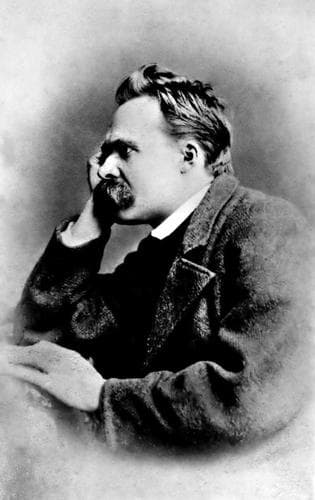
Friedrich Nietzsche was a German philosopher active in the late 19th century, known for his critiques of traditional moral values and religion. His notable works include "Thus Spoke Zarathustra," "Beyond Good and Evil," and "On the Genealogy of Morals," which explore themes of individualism, power, and the nature of existence. Nietzsche's writings have had a profound influence on modern philosophy and literature.
Similar books
- Beyond Good and Evil
Friedrich Nietzsche
4.0 (67k) average on GoodreadsPsychologyExpands on the critique of morality and the call for a revaluation of values with greater depth and scope.
- Thus Spoke Zarathustra
Friedrich Nietzsche
4.0 (111k) average on GoodreadsPsychologyPresents many similar themes (overcoming, will to power, eternal recurrence) in a poetic, allegorical style.
- The Perks of Being a Wallflower
Stephen Chbosky
4.2 (1.3M) average on GoodreadsPsychologyThrough letters, a shy high school freshman learns to navigate first love, trauma, and self-discovery, stepping off the sidelines and into life.
- Eleanor Oliphant Is Completely Fine
Gail Honeyman
4.3 (708k) average on GoodreadsLiterary FictionA lonely woman's structured life changes when an IT guy and an elderly man help her learn to open her heart.
- One Flew Over the Cuckoo's Nest
Ken Kesey
4.2 (631k) average on GoodreadsPsychologyIn a mind-bending asylum, the boisterous Randle McMurphy wages a defiant war against the tyrannical Nurse Ratched, inspiring his fellow inmates, including the seemingly catatonic Chief Bromden, to reclaim their lost humanity.
- The Bell Jar
Sylvia Plath
4.0 (591k) average on GoodreadsPsychologyIn the suffocating grip of 1950s expectations, a brilliant young woman's descent into mental illness is painted with such vivid, internal clarity that her 'insanity' feels terrifyingly rational and inevitable.





Enjoyed the summary?
A summary gives you the shape of the book. The book itself has the detail, the examples and the voice.
Find Twilight of the Idols on AmazonAs an Amazon Associate, BookBrief earns from qualifying purchases. How we're funded