
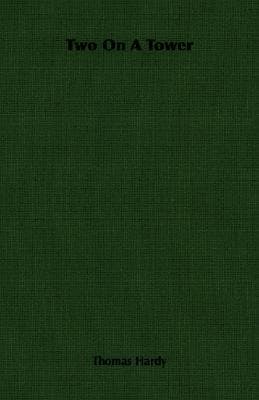
Synopsis
Covers the whole plot, including the ending.
- Difficulty
- Medium
- Pacing
- Moderate
- Mood
- Melancholy, Romantic, Reflective, Tragic
- Read it if
- You enjoy classic Victorian romances with a strong sense of social commentary and tragic, star-crossed lovers.
- Skip it if
- You prefer lighthearted romances or stories with a happy, uncomplicated ending, or find Victorian prose challenging.
Two on a Tower Plot Summary
Covers the whole plot, including the ending.
A Lady's Midnight Intrusion
Lady Viviette Constantine, feeling neglected by her absent and much older husband, Sir Blount Constantine, goes to the old tower on their estate, Welland House, one night. She finds a young man, Swithin St Cleeve, using the tower as an observatory for his astronomy studies. Swithin, a brilliant but poor youth from a lower social class, is surprised and embarrassed by her presence. Viviette is drawn to his passion and the celestial world he shows her, finding a sense of wonder she had been missing. This first meeting establishes their unusual relationship, bridging social divides and introducing the central idea of looking at the sky.
Developing Affection and a Secret
Over several months, Viviette and Swithin spend more time together in the tower, with Swithin teaching her about astronomy. Their shared interest in the stars grows into deep affection. During this time, Viviette hears that her husband, Sir Blount, has died abroad. However, due to complex legal matters about his death and a possible heir, she is told to keep his death a secret for a time to secure her financial future. Despite this, Viviette and Swithin, deeply in love, decide to marry secretly. This quick decision, made out of passion and circumstance, sets the stage for future problems and moral choices.
The Secret Marriage and Its Aftermath
Viviette and Swithin are secretly married by a sympathetic clergyman, Mr. Torkingham. Soon after their marriage, a surprising fact comes out: Sir Blount Constantine had made a new will just before his death, leaving his entire estate to Viviette, but only if she remained a widow. If she remarries, the estate goes to his distant cousin, Louis Gifford. This news throws their secret marriage into disarray, as Viviette would lose everything, including the money to support Swithin's astronomical work, if their union were discovered. They decide to keep their marriage a secret indefinitely, a decision that weighs heavily on both, especially Viviette.
The Arrival of Louis Gifford
Louis Gifford, Sir Blount's cousin and the next in line for the estate, arrives at Welland House. He is a charming and persistent man who quickly becomes interested in Viviette. His presence creates great tension for the secretly married couple. Viviette feels forced to appear as a widow, leading to uncomfortable interactions with Gifford. Swithin, meanwhile, is torn between his love for Viviette and his wish not to risk her financial security, which is important for his scientific pursuits. Gifford's suspicions about Viviette's true marital status begin to grow, adding another threat to their unstable situation.
Swithin's Ambition and Separation
Swithin receives a scholarship to study astronomy at a university, a dream opportunity that promises to start his scientific career. However, accepting it means leaving Viviette for a long time. Despite their deep love and secret marriage, Viviette insists he must go. She recognizes the importance of his ambition and fears her presence might hinder his progress. Their separation is a sad moment, showing the conflict between personal desire and professional goals. Viviette, always sacrificing, encourages him, even as she faces loneliness and the ongoing threat of Gifford's advances alone.
Viviette's Dilemma and a Desperate Act
With Swithin away, Louis Gifford pursues Viviette more intensely. He is relentless, and the social pressure on Viviette to consider remarriage, along with the instability of her secret, becomes unbearable. In desperation, hoping to ward off Gifford and protect Swithin's future, Viviette confesses to Gifford that she is already married. However, she leaves out Swithin's name, letting Gifford assume her husband is a lower-class man who is conveniently absent. This partial truth temporarily stops Gifford but creates a new web of lies that will eventually unravel.
The Truth Revealed and Swithin's Return
Swithin, having made good progress in his studies, returns to Welland House, eager to be with Viviette again. His return, however, happens as Viviette's carefully built secret falls apart. Louis Gifford, still suspicious, eventually uncovers the truth of Viviette and Swithin's marriage. The revelation causes a scandal, especially due to the ten-year age gap and Swithin's lower social status. Viviette loses her inheritance, and Swithin's reputation is threatened. The consequences of their secret union and Viviette's desperate attempt to protect him now fully appear, forcing them to face society's reactions.
A New Beginning, or So It Seems
Despite the social rejection and financial ruin, Viviette and Swithin's love remains strong. They decide to remarry openly, hoping to legitimize their union and start fresh. However, a cruel twist of fate occurs: it is discovered that Sir Blount Constantine was not legally dead when Viviette and Swithin first married. This makes their first ceremony invalid and, shockingly, means Viviette was technically still married to Sir Blount, making her marriage to Swithin bigamous. This devastating news shatters their plans and casts a shadow of illegitimacy over their relationship, adding to their misery.
The Final Sacrifice and Tragic End
Faced with the immense problems and the damage to Swithin's growing scientific career, Viviette makes the ultimate sacrifice. She decides to leave his life, believing that her association only brings him ruin and stops him from achieving his potential. She accepts a marriage offer from the well-meaning but unexciting Bishop Helmsdale, an old admirer, believing this will free Swithin to pursue his ambitions without the stigma of their past. This decision, driven by deep love and selflessness, leads to a tragic end, as Viviette's spirit is broken by the loss of Swithin and her forced acceptance of societal norms.
Swithin's Return and a Heartbreaking Discovery
Years later, Swithin St Cleeve returns to England, having gained recognition as an astronomer. He seeks out Viviette, still deeply in love with her, only to find her married to Bishop Helmsdale and very ill. The shock of seeing Swithin, combined with the suppressed grief and longing from their past, is too much for Viviette. She collapses and dies shortly after their reunion, her heart broken by the sacrifices she made and the unfulfilled promise of their love. Swithin is left devastated, realizing the full extent of her suffering and the irreparable loss.
A Life of Solitude and Astronomical Devotion
After Viviette's death, Swithin St Cleeve dedicates his life entirely to his astronomy studies. He gains international fame for his discoveries and contributions to science, fulfilling the ambition Viviette had so passionately supported. However, his success is tinged with deep sadness and a sense of constant loss. He never marries, remaining devoted to Viviette's memory and their time together under the stars in the old tower. The tower itself becomes a symbol of their tragic love, a place where their spirits once soared together, now a sad reminder of what could have been.
Two on a Tower Characters
Lady Viviette Constantine
Protagonist
A beautiful, passionate, and ultimately self-sacrificing woman trapped by social conventions.
Lady Viviette Constantine is the beautiful, intelligent, and emotionally unfulfilled wife of Sir Blount Constantine. She is a woman of deep passions and an unconventional spirit, drawn to the intellectual curiosity and innocence of Swithin St Cleeve. Despite her aristocratic background, she is willing to defy social norms for love and truth. She possesses a strong sense of loyalty and a capacity for immense sacrifice, often putting Swithin's future above her own happiness. Her vulnerability lies in her dependence on social standing and her susceptibility to the pressures of her class.
Relationships: Swithin St Cleeve (Deeply in love, intellectual and romantic partners, secret spouses.); Sir Blount Constantine (Her much older, neglectful, and absent husband.); Louis Gifford (Her husband's cousin, a persistent suitor and antagonist to her secret.); Bishop Helmsdale (An old admirer whom she eventually marries out of sacrifice.)
Swithin St Cleeve
Protagonist
A brilliant, ambitious young astronomer from a humble background.
Swithin St Cleeve is a young, intelligent, and highly ambitious astronomer. He is dedicated to his scientific pursuits, finding solace and wonder in the celestial world. Despite his intellectual brilliance, he is socially naive and innocent, often unaware of or indifferent to the complexities of human society and its conventions. His love for Viviette is pure and intense, but he is also driven by his desire for scientific recognition. He struggles to reconcile his personal desires with the practicalities and social expectations that threaten his relationship with Viviette and his career.
Relationships: Lady Viviette Constantine (Deeply in love, intellectual and romantic partners, secret spouses.); Mr. Torkingham (A sympathetic clergyman who marries him and Viviette.); Louis Gifford (A rival for Viviette's affection and a threat to their secret.)
Louis Gifford
Antagonist/Supporting
Sir Blount's opportunistic cousin who complicates Viviette's life.
Louis Gifford is Sir Blount Constantine's cousin and the next in line for the Welland House estate should Viviette remarry. He is presented as charming, persistent, and somewhat opportunistic. Gifford develops a strong interest in Viviette and pursues her relentlessly, inadvertently becoming a major threat to her secret marriage with Swithin. While not overtly malicious, his actions and persistence expose the vulnerabilities of Viviette's situation and drive much of the plot's conflict, particularly regarding the inheritance. He represents the societal pressures and legalistic complications that thwart the lovers.
Relationships: Lady Viviette Constantine (A persistent suitor, unaware of her true marital status for much of the novel.); Sir Blount Constantine (His cousin, from whom he stands to inherit.)
Bishop Helmsdale
Supporting
A kind but conventional clergyman who offers Viviette a refuge.
Bishop Helmsdale is a kind, respectable, and somewhat older clergyman who has long admired Viviette. He is a figure of conventional morality and social standing, representing the stability and societal acceptance that Viviette ultimately seeks for Swithin's sake. His offer of marriage, though born of genuine affection and respect, becomes a means for Viviette to make her final, heartbreaking sacrifice. He is a gentle character, largely unaware of the depth of Viviette's past suffering, and serves as a stark contrast to Swithin's passionate, unconventional nature.
Relationships: Lady Viviette Constantine (An old admirer who eventually marries her.)
Mr. Torkingham
Supporting
The sympathetic clergyman who performs Viviette and Swithin's secret marriage.
Mr. Torkingham is the local clergyman who, out of sympathy for Viviette's plight and a belief in the sincerity of her love for Swithin, performs their secret marriage ceremony. He is a compassionate and understanding figure, willing to bend societal rules for what he perceives as a moral good. His involvement highlights the moral complexities of the situation and the human element in navigating rigid social structures. He later grapples with the legal implications of his actions, representing the tension between personal empathy and institutional law.
Relationships: Lady Viviette Constantine (A sympathetic confidant and officiant of her secret marriage.); Swithin St Cleeve (Officiant of his secret marriage.)
Tabitha Lark
Mentioned
A young village girl who fleetingly attracts Swithin's attention.
Tabitha Lark is a young, pretty village girl who briefly catches Swithin's eye. She represents a simpler, more conventional romantic possibility for Swithin, one that contrasts sharply with the complex and socially fraught relationship he shares with Viviette. Her presence is fleeting but serves to underscore Swithin's youthful innocence and the path he ultimately forsakes for his deeper, more challenging love. She embodies the 'normal' life that Swithin might have led had he not been drawn into Viviette's world.
Relationships: Swithin St Cleeve (A brief, unrequited romantic interest.)
Sir Blount Constantine
Mentioned
Viviette's deceased, neglectful husband whose will dictates her fate.
Sir Blount Constantine is Viviette's much older, often absent, and ultimately deceased husband. Though he never appears alive in the narrative, his presence is profoundly felt through his neglect of Viviette and, most significantly, through the terms of his will. His will, which disinherits Viviette if she remarries, becomes the primary catalyst for the lovers' secrecy and subsequent tragedies. He represents the restrictive social and legal structures that govern women's lives in the Victorian era, even from beyond the grave.
Relationships: Lady Viviette Constantine (Her husband, whose will dictates her financial and social fate.); Louis Gifford (His cousin, who stands to inherit if Viviette remarries.)
Two on a Tower Themes
Social Class and Convention vs. Love and Passion
The novel sharply contrasts Victorian society's rigid social classes and customs with the strong, unusual love between Viviette and Swithin. Viviette, an aristocrat, falls for Swithin, a brilliant but poor youth, defying her class's expectations. Their secret marriage is driven by passion but constantly threatened by the legal and social effects of their unequal status. Viviette's final sacrifice, marrying Bishop Helmsdale, is a surrender to these societal pressures. She prioritizes Swithin's career over her own happiness and shows how class barriers destroy individual fulfillment. The tower, a neutral space, becomes a refuge from these societal judgments, allowing their love to grow for a time.
“'It was a time when to be a lady was to be a lady indeed, and to have a mind of her own meant ruin.”
The Conflict Between Science and Human Emotion
Swithin's dedication to astronomy shows the pursuit of objective truth and intellectual ambition. This often conflicts with the complexities of human relationships and emotions. While Viviette first finds wonder in his scientific world, his career's demands eventually separate them and contribute to her tragic end. Swithin's ambition, though noble, sometimes makes him unaware of Viviette's emotional suffering and the sacrifices she makes. The stars, initially a symbol of their shared passion and endless possibility, become a metaphor for the vast, impersonal forces that ultimately overshadow their earthly love. This suggests that human happiness is often made small by grander, more indifferent pursuits.
“The world of human emotions seemed to shrink to a mere spot in the great stellar scheme.”
Sacrifice and Its Consequences
Sacrifice is a main theme, especially seen in Lady Viviette. She repeatedly sacrifices her happiness, reputation, and eventually her life for Swithin and his scientific career. Her secret marriage, her decision to let Swithin go, and her final marriage to Bishop Helmsdale are all acts of deep selflessness. However, the novel suggests that such great sacrifice, while noble, often leads to tragic and unfulfilling outcomes. Viviette's sacrifices do not bring her joy or lasting peace, but rather isolation and a broken spirit. This highlights the often-futile nature of self-sacrifice against insurmountable societal odds.
“She had sacrificed all to him, and he had gained nothing but a temporary advantage for his studies.”
Fate, Coincidence, and Unforeseen Circumstances
Hardy's use of fate and coincidence plays a big role in the plot's tragic unfolding. The timing of Sir Blount's death, the specifics of his will, the discovery that he was not legally dead when Viviette and Swithin first married – these are all seemingly random events that conspire against the lovers. These plot points create seemingly impossible obstacles, suggesting that human actions are often powerless against destiny and bad timing. The lovers' attempts to navigate these circumstances only seem to entangle them further, showing a pessimistic view of their ability to control their own lives.
“Such is the fate of all who venture beyond the narrow path of the commonplace.”
Plot Devices & Literary Techniques
The Tower
An astronomical observatory symbolizing escape, ambition, and tragic love.
The tower serves as a central symbol and plot device. Initially, it is a sanctuary where Viviette and Swithin's love and intellectual passion can flourish, away from the prying eyes of society. It represents their shared ambition, their pursuit of knowledge, and their connection to something larger than themselves (the cosmos). As the story progresses, it becomes a poignant symbol of their lost love and unfulfilled dreams, a place of both profound connection and ultimate separation. It also highlights the contrast between the vastness of the universe and the constricting nature of human society.
The Will of Sir Blount Constantine
A legal document that dictates Viviette's financial and social fate.
Sir Blount's will is a crucial plot device that directly drives the central conflict. By disinheriting Viviette if she remarries, it forces her and Swithin into a secret marriage, creating a web of deceit and social pressure. The will represents the oppressive legal and economic structures of Victorian society that controlled women's lives and choices. Its terms are arbitrary and cruel, directly responsible for Viviette's sacrifices and the tragic trajectory of her relationship with Swithin, highlighting the power of posthumous control.
The Bigamy Twist
A sudden revelation of legal invalidity that devastates the protagonists' plans.
The discovery that Sir Blount Constantine was not legally dead at the time of Viviette and Swithin's first marriage is a major plot twist and a classic Hardy device. It invalidates their marriage, effectively making Viviette a bigamist and Swithin a partner in a legally void union. This revelation serves to escalate the tragedy, making any legitimate union between them seem impossible and pushing Viviette towards her ultimate, fatal sacrifice. It underscores the theme of fate and the seemingly arbitrary nature of legal complications that thwart human happiness.
Astronomy as a Motif
The study of stars symbolizing ambition, perspective, and the impersonal universe.
Astronomy is a pervasive motif throughout the novel. It represents Swithin's intellectual ambition and passion, which initially draws Viviette to him. It provides a contrast to the petty concerns of human society, offering a perspective of vastness and indifference. While it initially unites the lovers, it also ultimately separates them, as Swithin's pursuit of scientific glory takes him away from Viviette. The stars, though beautiful, are ultimately cold and impersonal, mirroring the indifferent forces of fate and society that crush the lovers' hopes.
Two on a Tower Quotes
“The greater the human frame, the more it is capable of agony.”
“The poetry of a place is its power of making you think.”
“A man's worth is estimated by what he doesn't do, as much as by what he does.”
“We are but a part of a system, and not the whole of it.”
“Happiness is but a chance, and sorrow is a certainty.”
“There are some things which, if they are not done at once, are never done at all.”
“The universe is a place where there are no exceptions to law.”
“Love is a thing of the heart, not of the circumstances.”
“The world is a stage, and all the men and women merely players.”
“One cannot be always looking up at the sky; one must sometimes look down at the earth.”
“Time is a great healer, but a poor comforter.”
“The greatest tragedy in life is not death, but life without a purpose.”
“We are puppets in the hands of some unknown force.”
“The stars are not so far away as we think, but our eyes are weak.”
Quiz
10 questions on the plot and the characters. Each answer comes with a short explanation.
Question 1
What is the primary function of the 'tower' mentioned in the title, as used by Swithin St Cleeve?
- A lighthouse for navigation
- An ancient monument converted into an astronomical observatory
- A hunting lodge for the local gentry
- A defensive structure from medieval times
Show answer
B. An ancient monument converted into an astronomical observatory The tower serves as an astronomical observatory where Swithin pursues his scientific studies and where he and Lady Constantine spend time together.
Question 2
What is the age difference and social standing disparity between Lady Constantine and Swithin St Cleeve?
- Lady Constantine is Swithin's social inferior and ten years his senior.
- Swithin is Lady Constantine's social superior and five years her junior.
- Lady Constantine is Swithin's social superior and ten years his junior.
- Swithin is Lady Constantine's social inferior and ten years her junior.
Show answer
D. Swithin is Lady Constantine's social inferior and ten years her junior. The synopsis explicitly states that Swithin is Lady Constantine's social inferior and ten years her junior, highlighting the social taboo of their relationship.
Question 3
According to the provided description, what does Sally Shuttleworth call the novel's central conflict?
- 'A saga of star-crossed lovers'
- 'A drama of oppositions and conflicts'
- 'A tale of forbidden passion'
- 'A study in social rebellion'
Show answer
B. 'A drama of oppositions and conflicts' Sally Shuttleworth is quoted as calling the novel 'a drama of oppositions and conflicts,' emphasizing the thematic tensions within the story.
Question 4
Which of the following societal pressures is NOT explicitly mentioned in the synopsis as intruding upon Swithin and Lady Constantine's relationship?
- Work
- Ambition
- Financial ruin
- The pressures of the outside world
Show answer
C. Financial ruin The synopsis mentions 'work, ambition and the pressures of the outside world' as factors intruding on the pair, but 'financial ruin' is not specifically listed.
Question 5
The synopsis states that the novel 'describes an arc across the horizon of late nineteenth-century social and cultural concerns.' Which of these is NOT listed as one of those concerns?
- Sexuality
- Politics
- Science
- Religion
Show answer
B. Politics The listed concerns are 'sexuality, class, history, science and religion.' 'Politics' is not mentioned.
Question 6
What common trope or conflict does the description suggest Hardy's story sets against each other?
- Male ambition against female ambition
- Rural life against urban life
- Male desire against female constancy
- Youthful idealism against aged cynicism
Show answer
C. Male desire against female constancy The synopsis explicitly states that Hardy's story 'sets male desire against female constancy,' highlighting a key thematic opposition.
Question 7
What is the core conflict that arises from Lady Constantine's relationship with Swithin, specifically regarding social norms?
- She breaks rules of religious doctrine by associating with him.
- She breaks all the rules of social decorum due to their age and class disparity.
- She breaks the law by allowing him to use her property.
- She breaks ties with her family to pursue the relationship.
Show answer
B. She breaks all the rules of social decorum due to their age and class disparity. The synopsis states Lady Constantine 'breaks all the rules of social decorum' by falling in love with her social inferior and younger partner.
Question 8
The description mentions 'Science and romance are destined to collide.' What specifically causes this collision?
- A scientific discovery made by Swithin proves detrimental to their love.
- The demands of Swithin's scientific work and ambition, coupled with external pressures, disrupt their relationship.
- Lady Constantine's lack of interest in Swithin's scientific pursuits creates a rift.
- A new scientific theory disproves their romantic ideals.
Show answer
B. The demands of Swithin's scientific work and ambition, coupled with external pressures, disrupt their relationship. The text states, 'Science and romance are destined to collide, however, as work, ambition and the pressures of the outside world intrude upon the pair,' directly linking these elements to the collision.
Question 9
Based on the description of Hesperides Press's republishing efforts, what is their primary goal for classic works like 'Two on a Tower'?
- To modernize the language and plot for contemporary audiences.
- To provide affordable, high-quality modern editions using original text and artwork.
- To create new interpretations and analyses of the classic texts.
- To exclusively publish academic annotated editions of rare books.
Show answer
B. To provide affordable, high-quality modern editions using original text and artwork. The description clearly states Hesperides Press's aim: 'republishing these classic works in affordable, high quality, modern editions, using the original text and artwork.'
Question 10
Considering the 'arc across the horizon of late nineteenth-century social and cultural concerns,' what specific aspect of 'class' is most prominently challenged by the central romance?
- The economic struggle of the working class against the landed gentry.
- The rigid social hierarchy that dictates appropriate partners based on status.
- The political power held by the aristocratic class over commoners.
- The distinctions between old money and new money within the upper class.
Show answer
B. The rigid social hierarchy that dictates appropriate partners based on status. The core conflict revolves around Lady Constantine, a social superior, falling in love with Swithin, her social inferior, directly challenging the rigid class-based expectations for romantic pairings in the 19th century.
Two on a Tower FAQ
What is the central premise of 'Two on a Tower'?
The novel centers on the illicit romance between Lady Viviette Constantine, an aristocratic woman, and Swithin St Cleeve, a young, ambitious astronomer of lower social standing. Their love blossoms in the secluded tower observatory, but is constantly threatened by societal conventions and personal ambitions.
Who are the main characters and what are their key traits?
Lady Viviette Constantine is a beautiful, passionate, and ultimately self-sacrificing woman constrained by social expectations. Swithin St Cleeve is a brilliant, ambitious, and somewhat naive astronomer, deeply devoted to his scientific pursuits and initially less aware of social complexities.
What is the significance of the 'tower' in the novel's title?
The tower serves as both a literal astronomical observatory where Swithin pursues his passion and a symbolic refuge for the lovers, isolated from the judgmental world. It represents their shared intellectual and romantic space, but also their vulnerability to external forces.
What societal rules does Lady Constantine break?
Lady Constantine defies Victorian social norms by falling in love with, and secretly marrying, a man ten years her junior and significantly below her in social class. Her actions risk her reputation, inheritance, and social standing within the rigid class structure of the time.
How does the novel explore the conflict between science and romance?
The novel portrays Swithin's dedication to astronomy as both a bond and a barrier in his relationship with Viviette. His ambition and scientific pursuits often pull him away from her, symbolizing how external callings and societal pressures can intrude upon and ultimately undermine personal love.
What is the true nature of Viviette's first marriage to Sir Blount Constantine?
Viviette's first marriage was a loveless union, primarily for social status and security, as Sir Blount was an older, absentee husband. This unsatisfying marriage is what initially leaves her vulnerable and open to Swithin's affections, highlighting the constraints placed upon women in her position.
How does the 'hidden' marriage between Viviette and Swithin complicate the plot?
Their secret marriage, later discovered to be invalid due to Sir Blount's unexpected reappearance, creates immense legal and social turmoil. This invalidity forces Viviette into a position where she must make further sacrifices, including a second marriage of convenience, to protect Swithin's reputation and future.
What is the role of Bishop Helmsdale in the narrative?
Bishop Helmsdale is a figure of societal authority and conventional morality who offers Viviette a path to respectability and financial security through marriage. His presence highlights the societal pressures Viviette faces and the difficult choices she makes for Swithin's sake.
How does Swithin's ambition impact his relationship with Viviette?
Swithin's burning ambition to achieve recognition in astronomy frequently overshadows his commitment to Viviette, leading him to prioritize his studies and career opportunities. This ambition, though admirable, makes him somewhat oblivious to the emotional toll his decisions take on Viviette and ultimately contributes to their tragic separation.
Analyze Viviette's decision to marry Bishop Helmsdale.
Viviette marries Bishop Helmsdale out of a profound sense of self-sacrifice and a desire to secure Swithin's future, believing it is the only way to avoid scandal and allow him to pursue his scientific career unburdened. This decision reveals her deep love and her willingness to endure personal unhappiness for his benefit.
How does the age difference between Viviette and Swithin affect their dynamic?
The ten-year age gap, with Viviette being older, reverses typical Victorian power dynamics, placing her in a more vulnerable position socially despite her aristocratic status. It contributes to Swithin's initial naiveté regarding social consequences and Viviette's greater awareness of the risks involved, leading her to make more difficult sacrifices.
What emotional state leads to Viviette's tragic death?
Viviette's death is a result of emotional shock and a broken heart upon seeing Swithin again, realizing the profound sacrifices she made and the finality of their separation. Her overwhelming grief and the culmination of her long-suffering life lead to a fatal collapse, emphasizing the destructive power of societal pressures on individual happiness.
Is Swithin truly deserving of Viviette's sacrifices?
This is debatable. While Swithin's scientific ambition is genuine, some interpretations argue he is too self-absorbed and naive to fully appreciate the depth of Viviette's love and the extent of her sacrifices. Others might see him as a product of his time, driven by societal expectations for male achievement, and therefore not entirely to blame.
How does the ending of 'Two on a Tower' reflect Hardy's typical tragic vision?
The novel's ending, with Viviette's sudden death and Swithin left alone with his unfulfilled love, aligns with Hardy's characteristic tragic vision. It underscores the powerlessness of individuals against fate, societal conventions, and the crushing weight of circumstance, leaving a pervasive sense of loss and injustice.
What is the broader social commentary Hardy makes through this novel?
Hardy critiques the rigid class system and restrictive social conventions of Victorian England, particularly how they stifle individual happiness and disproportionately punish women. He highlights the hypocrisy and destructive power of societal judgment over genuine human connection and love.
Could Viviette have chosen a different path to happiness?
Given the societal constraints of the late 19th century, Viviette's options were severely limited. A different path would likely have involved defying society even more openly, which would have brought greater ruin to both herself and potentially Swithin, making her chosen path, however tragic, seem like the only viable one to protect him.
How does the recurring motif of the stars and heavens function symbolically?
The stars symbolize both the vast, indifferent universe that dwarfs human concerns and the lofty ambitions of Swithin. They represent an eternal, unchanging beauty, contrasting with the fleeting and complicated human passions below, and highlight the lovers' fleeting moments of shared transcendence.
About the author
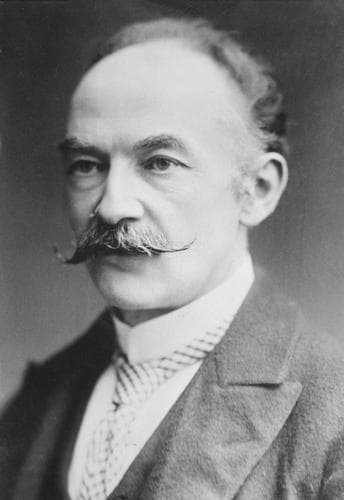
Thomas Hardy was an English novelist and poet. A Victorian realist in the tradition of George Eliot, he was influenced both in his novels and in his poetry by Romanticism, including the poetry of William Wordsworth. He was highly critical of much in Victorian society, especially on the declining status of rural people in Britain, such as those from his native South West England.
Similar books
- Tess of the D'Urbervilles
Thomas Hardy
3.8 (238k) average on GoodreadsHistorical FictionExplores similar themes of social class, moral dilemmas, and tragic love with a strong female protagonist.
- Jane Eyre
Charlotte Brontë
4.1 (1.6M) average on GoodreadsHistorical FictionFeatures a strong female character navigating societal constraints and a complex, secret-laden romance.
- Far from the Madding Crowd
Thomas Hardy
3.9 (129k) average on GoodreadsHistorical FictionAnother Hardy novel with complex romantic entanglements and a deep exploration of character against a rural backdrop.
- To Kill a Mockingbird
Harper Lee
4.3 (4.5M) average on GoodreadsHistorical FictionIn the 1930s Jim Crow South, Harper Lee writes about racial injustice, moral growth, and the quiet courage of a lawyer father, Atticus Finch, as seen through his young daughter's eyes.
- The Great Gatsby
F. Scott Fitzgerald
3.9 (3.8M) average on GoodreadsHistorical FictionIn the opulent Roaring Twenties, a mysterious millionaire's lavish parties hide his desperate, tragic pursuit of a lost love, exposing the emptiness within the American Dream.
- Pride and Prejudice
Jane Austen
4.3 (3M) average on GoodreadsHistorical FictionIn a society focused on status and money, Elizabeth Bennet navigates love and pride, challenging Mr. Darcy and social expectations to find true affection.



Enjoyed the summary?
A summary gives you the shape of the book. The book itself has the detail, the examples and the voice.
Find Two on a Tower on AmazonAs an Amazon Associate, BookBrief earns from qualifying purchases. How we're funded