
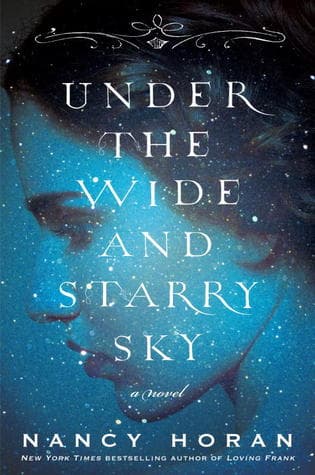
Synopsis
Covers the whole plot, including the ending.
- Difficulty
- Medium
- Pacing
- Moderate
- Mood
- Romantic, Evocative, Bittersweet, Adventurous
- Read it if
- You enjoy sweeping historical romances about real-life literary figures, particularly those featuring strong, unconventional female protagonists.
- Skip it if
- You prefer fast-paced plots or are not interested in character-driven historical narratives focusing on relationships and personal struggles.
Under the Wide and Starry Sky Plot Summary
Covers the whole plot, including the ending.
A New Life in Europe
In 1875, Fanny van de Grift Osbourne, an American woman, leaves her unfaithful husband, Samuel, in San Francisco. She seeks independence and a new life, traveling to Antwerp, Belgium, with her three children – Lloyd, Belle, and Hervey – and a nanny, to study art. Fanny is determined to build a life for herself and her children free from her past marriage. Tragedy strikes when her youngest son, Hervey, falls ill and dies in Paris. Devastated, Fanny moves her family to Grez-sur-Loing, an artists' colony in France, to recover and continue her art, hoping to find comfort and a fresh start amid her grief.
Meeting Louis
In Grez-sur-Loing, Fanny meets Robert Louis Stevenson, known as Louis. He is a charming, bohemian Scotsman, ten years younger, with a sharp mind and dreams of becoming a writer. Louis is immediately drawn to Fanny's unusual beauty, strength, and life experience, despite her being married with children. Fanny, initially wary of his youthful energy and bohemian ways, finds herself attracted to his wit, passion, and intense gaze. Their first interactions involve intellectual debates and a growing, clear mutual attraction that starts to challenge Fanny's desire to remain independent.
A Budding Affair
Fanny first resists Louis's advances, aware of the social consequences of an affair, especially with her marital status and children. However, Louis's charm, intellectual connection, and genuine affection gradually break down her defenses. They begin a passionate and secret love affair, spending their days discussing literature, art, and life, and their nights in secret meetings. This time is marked by strong emotional and intellectual ties, but also by the constant presence of Fanny's existing marriage and Louis's fragile health, which often causes severe coughs and fevers. Their love deepens, forming a bond that ignores conventional expectations and social rules.
The American Pursuit
Fanny, torn between her children and her feelings for Louis, decides to return to California to finalize her divorce from Samuel. Louis, heartbroken by her departure but completely devoted, makes the difficult and dangerous journey across the Atlantic and then overland to California, despite his delicate health. He travels in steerage, enduring harsh conditions and falling gravely ill upon arrival. His determination to be with Fanny, even at the risk of his own life, deeply moves her. During this time, Louis struggles with poverty and illness, often relying on Fanny's care as she handles her divorce and cares for her children.
Marriage and Return to Europe
Fanny successfully divorces Samuel, allowing her to marry Louis. Despite the ten-year age difference and his frail health, they marry in California in 1880. Fanny's family, especially her sister Nellie, has strong doubts about Louis, seeing him as a sickly, poor bohemian unworthy of her. Undeterred, Fanny and Louis return to Europe with Fanny's children, Lloyd and Belle. They face immediate financial struggles and the ongoing challenge of Louis's chronic lung condition, which requires constant care and a search for climates suited to his health. Fanny becomes his main nurse and protector, strongly advocating for his well-being.
The Writer's Wife
As Louis focuses on writing, Fanny becomes an important part of his creative process. She actively discusses his plots, characters, and themes, offering critiques and ideas. Her practical nature and life experience often ground his more imaginative ideas. Fanny manages their often-unstable finances and the logistics of their many moves across Europe in search of suitable climates for Louis's health. She creates a stable environment for him to write, often giving up her own artistic goals. Their collaboration is deep, with Fanny acting as his confidante, first reader, and strong defender against critics and illness, ensuring he has the space and peace to create his works, including 'Treasure Island' and 'Dr. Jekyll and Mr. Hyde'.
The Road to Davos and Beyond
Louis's tuberculosis continues to trouble him, forcing the couple into a nomadic life. They move from one European location to another, including Davos, Switzerland, and the south of France, always seeking a climate that will ease his symptoms. These years include periods of hope and despair, with Louis often bedridden and Fanny carefully caring for him. Despite the constant threat of illness, Louis's writing flourishes, often inspired by their travels and the people they meet. Fanny's strength and determination are tested, but her devotion to Louis and his work drives their endless search for health and stability.
The Voyage of the Casco
Desperate for a lasting solution to Louis's worsening health, the family decides on a bold move: a sea voyage to the South Pacific. In 1888, they charter the yacht 'Casco' and begin a long journey across the Pacific Ocean. This voyage marks a significant turning point, offering Louis a new lease on life and inspiring new writing. The sea air and warmer climates initially seem to improve his condition, bringing a renewed sense of hope and adventure to the family. Fanny, always practical, manages the complex logistics of the voyage and continues to support Louis's creative work, which now focuses on the exotic places and cultures they encounter.
Settling in Samoa
After extensive travels through various Polynesian islands, the Stevensons decide to buy land and settle permanently in Samoa, which they name 'Vailima.' The tropical climate and peaceful environment greatly benefit Louis's health, allowing him a period of relative vigor and prolific writing. Fanny, with her practical skills, oversees the construction of their home and the establishment of a large plantation, integrating into the local community. They become deeply involved with the Samoan people, and Louis, affectionately known as 'Tusitala' (teller of tales), becomes a respected figure, speaking up for their rights against colonial powers. This time is one of deep peace and productivity for Louis.
Family Dynamics and Tensions
Life in Samoa, while providing stability for Louis's health, also brings challenges, especially within the family. Lloyd and Belle, now adults, deal with their own identities and relationships. Belle's marriage to Joe Strong is strained, and she often relies on her mother. Lloyd, inspired by Louis, pursues his own writing. Fanny, the matriarch, tries to keep the family together amid the remote island life. Louis, despite his improved health, still experiences bouts of illness and the pressures of his writing. The family dynamic is a complex mix of love, artistic collaboration, and occasional friction, all set against their unique island home.
Louis's Final Years and Legacy
Louis's years in Samoa are some of his most productive, as he writes extensively about the South Seas and continues to produce fiction. He is loved by the Samoan people and finds a deep sense of belonging. Fanny continues to be his steady partner, managing their home and supporting his work. However, his health remains fragile. In December 1894, while working on his last novel, 'Weir of Hermiston,' Louis suffers a cerebral hemorrhage and dies suddenly at 44. His death is a great shock to Fanny and the entire family. He is buried on Mount Vaea, overlooking his beloved Vailima, under the epitaph from his own 'Requiem,' as he had wished.
Fanny's Enduring Legacy
After Louis's death, Fanny remains in Samoa for some years, showing her deep connection to the island and her husband's memory. She works to preserve his legacy, organizing his papers and ensuring his works are remembered. Despite her immense grief, Fanny continues to show the strength and independence that defined her throughout her life. Eventually, she leaves Samoa and travels, but her heart remains tied to the island and the man she loved. Her story is one of a woman who defied social expectations, embraced an unusual life, and was the unwavering muse and partner to one of her time's great literary figures.
Principal Figures
Fanny van de Grift Osbourne Stevenson
Protagonist
The independent and passionate American woman who becomes Robert Louis Stevenson's wife.
Fanny is a formidable and unconventional woman, fiercely independent and pragmatic. She is an artist, a mother, and a survivor, having left a philandering husband to forge her own path. She possesses a strong will, a sharp intellect, and a nurturing spirit, often acting as the grounded force to Louis's more ethereal nature. Her life is marked by hardship and resilience, from the death of her son to the constant care of her sickly husband. She is deeply loyal, passionate, and protective, often sacrificing her own desires for the well-being of her family, especially Louis.
Relationships: Robert Louis Stevenson (Husband, intellectual partner, and the great love of her life. She is his muse, nurse, and critic.); Samuel Osbourne (First husband, philandering and largely absent, leading to their divorce.); Lloyd Osbourne (Son, whom she loves deeply and supports, later becoming Louis's collaborator.); Isobel 'Belle' Osbourne Strong (Daughter, whom she has a complex, sometimes strained, but loving relationship with.); Hervey Osbourne (Youngest son, whose early death profoundly impacts her.)
Robert Louis Stevenson (Louis)
Protagonist
The brilliant but sickly Scottish writer who falls passionately in love with Fanny.
Louis is a charismatic, bohemian, and intensely imaginative writer with a fragile constitution. He is a dreamer, a storyteller, and a man driven by a profound need to create. Despite his chronic illness (tuberculosis), he possesses an infectious optimism and a deep appreciation for life. He is sensitive, charming, and utterly devoted to Fanny, seeing in her the strength and grounding he often lacks. His literary genius is undeniable, but his physical frailty often dictates his life's trajectory, leading him to constantly seek warmer climates.
Relationships: Fanny van de Grift Osbourne Stevenson (Wife, muse, nurse, and intellectual equal. She is his anchor and his greatest inspiration.); Lloyd Osbourne (Stepson and later literary collaborator, whom he mentors and loves.); Isobel 'Belle' Osbourne Strong (Stepdaughter, whom he respects and enjoys, though sometimes frustrated by her.); Thomas Stevenson (Father, with whom he has a complex relationship, marked by tension over Louis's career choice but ultimately love and respect.)
Lloyd Osbourne
Supporting
Fanny's son, who grows up under Louis's influence and later becomes a writer himself.
Lloyd is Fanny's loyal and intelligent son, who forms a deep bond with his stepfather, Louis. He is initially a young boy, somewhat overshadowed by his older sister and the intense relationship between his mother and Louis. As he grows, he develops his own artistic sensibilities, often collaborating with Louis on stories. He is observant, sensitive, and struggles with finding his own identity separate from the famous couple. He admires Louis greatly and tries to emulate his literary pursuits, becoming a steadfast companion and helper to his mother.
Relationships: Fanny van de Grift Osbourne Stevenson (Mother, whom he loves deeply and is protective of.); Robert Louis Stevenson (Stepfather, mentor, and later literary collaborator. He deeply admires Louis.); Isobel 'Belle' Osbourne Strong (Sister, with whom he shares a typical sibling relationship.)
Isobel 'Belle' Osbourne Strong
Supporting
Fanny's headstrong daughter, who often struggles with her own path and her mother's choices.
Belle is Fanny's eldest child, a spirited and sometimes rebellious young woman. She is artistic and strong-willed, much like her mother, but often struggles to find her own identity and purpose. She can be critical of Louis and her mother's unconventional lifestyle, yet she also loves them fiercely. Belle marries young to Joe Strong, a painter, but her marriage is often troubled, leading her to rely heavily on her mother. She eventually becomes a valuable assistant to Louis, illustrating his works and managing aspects of their household in Samoa.
Relationships: Fanny van de Grift Osbourne Stevenson (Mother, with whom she has a complex, sometimes strained but loving relationship.); Robert Louis Stevenson (Stepfather, whom she initially views with skepticism but later respects and assists.); Lloyd Osbourne (Brother, with whom she shares a typical sibling relationship.); Joseph Strong (Husband, an artist with whom her marriage is often difficult.)
Samuel Osbourne
Mentioned
Fanny's first husband, a philandering and neglectful man.
Samuel is Fanny's first husband, a charming but ultimately unreliable and unfaithful man. His philandering and neglect lead Fanny to leave him and seek a new life in Europe. He represents the conventional, stifling world Fanny is trying to escape. While not a central character, his actions are the catalyst for Fanny's journey and her eventual meeting with Louis. He is a distant figure in the narrative, primarily serving to highlight Fanny's desire for independence and a more fulfilling partnership.
Relationships: Fanny van de Grift Osbourne Stevenson (Estranged husband, eventually divorced.)
Hervey Osbourne
Mentioned
Fanny's youngest son, whose tragic death deeply impacts her.
Hervey is Fanny's youngest son, whose early death from scrofula (tuberculosis of the lymphatic glands) in Paris is a profound tragedy that shapes Fanny's early European experience. His death underscores the precariousness of life and health, a theme that will continue with Louis's own illness. While he appears briefly, his loss is a constant undercurrent of grief for Fanny, influencing her need for stability and her fierce protectiveness of her remaining children and later, Louis.
Relationships: Fanny van de Grift Osbourne Stevenson (Son, whose death causes her immense grief.)
Thomas Stevenson
Supporting
Robert Louis Stevenson's stern but ultimately loving father.
Thomas Stevenson is Louis's father, a respected Scottish engineer. He is a man of strong principles and expectations, initially disapproving of Louis's bohemian lifestyle and his choice to pursue writing over a more conventional career, and especially his relationship with a married American woman. Despite his stern exterior, he deeply loves his son and eventually comes to accept Louis's choices and even provides financial support. His character represents the societal pressures and family expectations that Louis defies in pursuit of his passion and love.
Relationships: Robert Louis Stevenson (Father, with a complex relationship of initial disapproval turning to eventual acceptance and support.); Fanny van de Grift Osbourne Stevenson (Daughter-in-law, whom he initially views with suspicion but later tolerates.)
Sidney Colvin
Supporting
Louis's literary friend and confidant, often acting as his agent and critic.
Sidney Colvin is a key friend and literary contact for Louis in London. He serves as Louis's literary agent, editor, and a trusted confidant, offering advice and support for his burgeoning career. Colvin is part of Louis's intellectual circle and often mediates between Louis's bohemian lifestyle and the more conventional literary world. He is a steady presence, providing a link to the literary establishment and helping to manage Louis's publishing endeavors, often corresponding with Fanny as well.
Relationships: Robert Louis Stevenson (Friend, literary agent, and confidant.); Fanny van de Grift Osbourne Stevenson (Acquaintance and correspondent, often discussing Louis's affairs.)
Themes & Insights
Unconventional Love and Partnership
The novel explores a passionate, unconventional love that ignores social norms. Fanny and Louis's relationship includes an age difference, Fanny's previous marriage, Louis's chronic illness, and their bohemian lifestyle. Their love is not just romantic but also a strong intellectual and creative partnership, with Fanny as Louis's muse, nurse, and critic. Their devotion, especially Fanny's commitment to Louis's health and career, shows a love that goes beyond social expectations and personal hardships, as seen when Fanny follows Louis to Samoa, giving up her own comfort for his well-being and creative output.
“He needed me. I knew it in my bones. And I needed him, not as a woman needs a man to complete her, but as an artist needs a canvas, a story needs a teller.”
The Price of Genius and Creativity
The book looks at the sacrifices and challenges of pursuing artistic genius. Louis's creative drive is immense, but it affects his health and often burdens Fanny and their family. The constant search for a climate good for his writing and health, the financial struggles, and the emotional toll of his illness are all part of the cost of his literary work. Fanny's role in supporting his genius is central, showing how creativity is often a collaborative effort, requiring great dedication not just from the artist but from those who support them. This is clear in Fanny's tireless efforts to give Louis the ideal environment for his work, even at the cost of her own artistic goals.
“His genius was a demanding master, and I, his humble servant, was bound to it as much as he was.”
Independence and Self-Reliance
Fanny's journey shows female independence and self-reliance in a restrictive era. She leaves a cheating husband, travels to Europe to study art, and makes her own way with her children. Her strength and practicality are constant throughout the story, as she handles financial difficulties, social judgment, and the responsibility of caring for a chronically ill husband and her family. Even within her devoted partnership with Louis, Fanny keeps a strong sense of self and agency, making important decisions for their collective well-being and refusing to be just a background figure in his life. Her decision to stay in Samoa after Louis's death further proves her independent spirit.
“I had learned long ago that if I wanted a life, I had to build it myself, brick by brick, against whatever tide came in.”
The Search for Home and Belonging
Throughout their lives, Fanny and Louis constantly search for a place where Louis can thrive physically and creatively, and where they can both feel they belong. Their nomadic life, moving across Europe and eventually to the South Pacific, highlights this theme. 'Home' becomes less about a fixed place and more about being together and having a community that accepts them. Their eventual settlement in Samoa, 'Vailima,' represents the end of this search, where Louis finds health, inspiration, and a deep connection with the local people, and Fanny creates a true home for their unconventional family, a place where they are finally settled and at peace.
“We searched the world for a place where his lungs could breathe and his spirit could soar, and found it, at last, where the wide and starry sky met the endless sea.”
Illness and Resilience
Louis's chronic tuberculosis is a constant factor, shaping nearly every part of the couple's life. The constant threat of illness, the search for cures, and the physical and emotional toll it takes are central to the story. Fanny's strength as his caregiver is remarkable, showing her determination in the face of constant hardship. The theme shows how illness can be both destructive and, paradoxically, a reason for deeper connection, forcing the characters to face death and appreciate moments of health and creativity. Louis's ability to produce lasting works despite his suffering shows human resilience.
“His cough was a constant companion, a third presence in our marriage, but it never extinguished the fire in his eyes or the stories in his mind.”
Plot Devices & Literary Techniques
Epistolary Elements (Letters)
Letters exchanged between characters, particularly Fanny and Louis, reveal their inner thoughts and maintain connection during separation.
The novel frequently incorporates letters written by Fanny and Louis, especially during their periods of separation (e.g., when Fanny returns to California and Louis follows). These letters serve as a direct window into their emotional states, their burgeoning love, their anxieties, and their intellectual exchanges. They allow the reader to understand the depth of their connection and the challenges they face, providing intimate insights that might not be conveyed through narrative alone. They also advance the plot by communicating intentions and events across distances, emphasizing the strength of their bond even when physically apart.
Foreshadowing (Louis's Health)
Repeated references to Louis's fragile health and chronic cough hint at his eventual early death.
From their initial meeting, Louis's delicate health, persistent coughs, and bouts of illness are consistently emphasized. These recurring details serve as a constant source of tension and foreshadow his eventual demise. This device creates a sense of fragility and urgency, reminding the reader that their time together is precious and potentially limited. It imbues their love story with a bittersweet quality, highlighting Fanny's tireless efforts to prolong his life and the shadow of mortality that hangs over their happiness, making his death, while sudden, not entirely unexpected within the narrative context.
Geographic Progression
The physical movement of the characters across continents and islands mirrors their emotional and professional journey.
The constant relocation of Fanny and Louis, from Europe to California, back to Europe, and finally to the South Pacific, is a crucial plot device. Each new location—Grez, Davos, Hyères, Samoa—is not just a backdrop but an active participant in their story, reflecting Louis's search for health and inspiration and Fanny's efforts to create a stable home. This geographic progression symbolizes their journey of self-discovery, their artistic growth, and their relentless pursuit of a life where Louis could thrive. Samoa, as their final destination, represents the ultimate finding of 'home' and a period of profound peace and productivity before Louis's death.
Symbolism of the Sea
The ocean represents both peril and freedom, a path to health and a connection to the unknown.
The sea plays a significant symbolic role, particularly with the family's voyage on the 'Casco' and their eventual settlement in Samoa. Initially, the sea represents the dangerous journey Louis undertakes to reach Fanny in California. Later, the sea voyage to the South Pacific symbolizes a desperate gamble for Louis's health and a break from the constraints of European society. It offers freedom, adventure, and a therapeutic environment. In Samoa, the ocean surrounding their island home becomes a symbol of Louis's renewed vitality and inspiration, and a final resting place, connecting him to the wide, starry sky of his 'Requiem.'
Under the Wide and Starry Sky Quotes
“When you choose a life, you choose a story. And every story has its share of sorrow.”
“He saw her not as a woman to be possessed, but as a mind to be engaged.”
“Love, she thought, was not a steady flame, but a series of fires, some small, some raging.”
“The past is a stubborn thing. It clings to you, no matter how far you run.”
“There are some truths that can only be spoken in the dark, whispered between two souls.”
“A good story, like a good life, is rarely simple.”
“She learned that courage wasn't the absence of fear, but the decision to act in spite of it.”
“The world was a vast, glittering stage, and they were merely players, trying to make sense of their lines.”
“Sometimes, the greatest freedom is found in embracing your own constraints.”
“He understood that her wildness was not a flaw, but the very essence of her being.”
“To truly know someone, you must see them in their shadows as well as their light.”
“The quiet moments, she realized, were often the loudest in memory.”
“Every journey, no matter how grand, begins with a single, uncertain step.”
“Perhaps the most beautiful stories are not those with happy endings, but those with true ones.”
Quiz
10 questions on the plot and the characters. Each answer comes with a short explanation.
Question 1
Where does Fanny van de Grift Osbourne initially travel to study art after leaving her husband in San Francisco?
- France
- England
- Belgium
- Italy
Show answer
C. Belgium Fanny initially sails to Belgium to study art, accompanied by her children and a nanny.
Question 2
What is the age difference between Fanny van de Grift Osbourne and Robert Louis Stevenson when they first meet?
- Fanny is five years older
- Robert Louis Stevenson is ten years older
- Fanny is ten years older
- They are the same age
Show answer
C. Fanny is ten years older Robert Louis Stevenson is described as being 'ten years her junior,' meaning Fanny is ten years older than him.
Question 3
In which country do Fanny and Robert Louis Stevenson eventually settle and where he is buried?
- France
- Scotland
- United States
- Samoa
Show answer
D. Samoa The couple eventually settles in Samoa, where Robert Louis Stevenson is buried.
Question 4
What is Robert Louis Stevenson's initial profession or aspiration before fully devoting himself to literature?
- Doctor
- Lawyer
- Artist
- Sailor
Show answer
B. Lawyer The text states that Fanny 'does not immediately take to the young lawyer who longs to devote his life to literature.'
Question 5
What is the primary reason the couple travels the world for decades?
- Fanny's art career
- Robert Louis Stevenson's health
- Seeking inspiration for Stevenson's books
- Avoiding Fanny's first husband
Show answer
B. Robert Louis Stevenson's health Their love affair 'spans decades as they travel the world for the sake of his health.'
Question 6
Which of the following books is explicitly mentioned as being written by Robert Louis Stevenson?
- Moby Dick
- Pride and Prejudice
- Treasure Island
- Great Expectations
Show answer
C. Treasure Island The passage lists 'Treasure Island' and 'The Strange Case of Dr. Jekyll and Mr. Hyde' as classics he would write.
Question 7
What personal tragedy strikes Fanny shortly after her arrival in Belgium, leading her to move to an artists' colony in France?
- Her art supplies are stolen
- Her husband follows her to Belgium
- One of her children becomes gravely ill or dies
- She runs out of money
Show answer
C. One of her children becomes gravely ill or dies The text states 'tragedy strikes' and 'Fanny and her brood repair to a quiet artists' colony in France where she can recuperate,' implying a significant personal loss or illness, most likely involving one of her children given the context of her 'brood.'
Question 8
What characteristics are used to describe Fanny van de Grift Osbourne, portraying her as a 'woman ahead of her time'?
- Shy, delicate, and conventional
- Earthy, independent, and opinionated
- Reserved, intellectual, and solitary
- Frivolous, artistic, and naive
Show answer
B. Earthy, independent, and opinionated Robert Louis Stevenson is 'instantly smitten with the earthy, independent and opinionated belle Americaine,' which aligns with her being a 'woman ahead of her time.'
Question 9
The epitaph for Robert Louis Stevenson, 'Home is the sailor, home from sea, And the hunter home from the hill,' primarily conveys which theme?
- The excitement of adventure and exploration
- The longing for peace and rest after a life of journeying
- The sorrow of leaving loved ones behind
- The importance of living a life of constant movement
Show answer
B. The longing for peace and rest after a life of journeying The lines 'Home is the sailor, home from sea, And the hunter home from the hill' symbolize the end of a journey and the attainment of final rest, reflecting a life of travel and adventure concluding in peace.
Question 10
What is the nature of the love affair between Fanny and Robert Louis Stevenson as described in the passage?
- Calm and uneventful
- Brief and superficial
- Fierce, marked by intense joy and harrowing darkness
- One-sided, with Fanny being reluctant
Show answer
C. Fierce, marked by intense joy and harrowing darkness The text describes their relationship as a 'fierce love affair, marked by intense joy and harrowing darkness,' indicating a passionate and turbulent dynamic.
Under the Wide and Starry Sky FAQ
What is the central premise of 'Under the Wide and Starry Sky'?
The novel chronicles the passionate and often turbulent love story between Scottish author Robert Louis Stevenson and his unconventional American wife, Fanny van de Grift Osbourne. It details their meeting in France, their fierce romance despite societal disapproval and health challenges, and their global travels in search of a climate suitable for Louis's tuberculosis.
Who is Fanny van de Grift Osbourne, and what is her background before meeting Stevenson?
Fanny is an American woman, thirty-five years old, who leaves her philandering husband in San Francisco. She travels to Belgium with her three children and a nanny to study art, seeking independence and a new life after a period of personal tragedy and marital dissatisfaction.
How does Robert Louis Stevenson's health impact his relationship with Fanny and their life choices?
Stevenson suffers from severe tuberculosis, which dictates their constant search for warmer, drier climates, leading them to travel extensively from Europe to the American West, and eventually to the South Seas. Fanny dedicates herself to his care, often making significant personal sacrifices to manage his fragile health and prolong his life.
What role do Fanny's children play in the narrative, particularly Lloyd?
Fanny's children, particularly her son Lloyd Osbourne, are integral to the story. Lloyd later collaborates with Stevenson on several literary works, demonstrating the blended family dynamic. Her daughters, Belle and Hervey, also feature, with Hervey's tragic death being a pivotal event that leads Fanny to meet Louis.
Where do Fanny and Robert Louis Stevenson ultimately settle, and what is the significance of this location?
They eventually settle in Samoa, a decision driven by Louis's desperate need for a climate that could alleviate his tuberculosis symptoms. Samoa becomes their final home, where Louis is deeply integrated into the local culture and is buried under his famous 'Requiem' epitaph, symbolizing his longing for peace and home.
How did Fanny's previous experiences and independent spirit prepare her for a relationship with someone like Stevenson?
Fanny's prior experience with a difficult marriage, her travels, and her pursuit of art instilled in her a strong sense of independence and resilience. These qualities made her receptive to Stevenson's unconventional nature and enabled her to navigate the challenges of his health, his literary career, and their often-scandalous relationship.
What psychological impact does Stevenson's chronic illness have on Fanny?
Fanny experiences immense psychological strain due to Stevenson's chronic illness, often feeling the weight of his survival on her shoulders. She battles anxiety, exhaustion, and the pressure of constant travel and caregiving, which sometimes manifests as irritability or possessiveness, yet she remains fiercely devoted.
How does the age difference between Fanny and Louis affect their dynamic?
The ten-year age difference, with Fanny being older, initially contributes to societal disapproval and Fanny's own hesitations. However, it also establishes a dynamic where Fanny, with her life experience, often takes on a protective and nurturing role, while Louis brings a youthful passion and intellectual fervor that revitalizes her.
What internal conflicts does Fanny face regarding her artistic ambitions versus her role as Stevenson's wife and caregiver?
Fanny grapples with the conflict between her own artistic aspirations, particularly painting, and the demands of being Stevenson's devoted wife and primary caregiver. Her artistic pursuits often take a backseat to managing his health and household, leading to moments of frustration and a sense of unfulfilled personal potential.
How does the novel explore the theme of sacrifice in Fanny's life?
The novel portrays Fanny's life as a series of profound sacrifices: leaving her first husband, enduring public scandal, and constantly uprooting her life for Louis's health. Her unwavering dedication to Stevenson's well-being and literary career often means subordinating her own desires and comfort, highlighting the depths of her love.
In what ways does Fanny challenge the Victorian societal norms of her time?
Fanny challenges Victorian norms by leaving her husband, pursuing art independently, and engaging in a relationship with a younger man before her divorce was final. Her outspoken nature, her practical skills, and her refusal to conform to traditional female roles mark her as a woman significantly ahead of her time.
How does the book portray the complex nature of 'love' through Fanny and Louis's relationship?
The book depicts love as a multifaceted force, encompassing intense passion, deep intellectual connection, unwavering loyalty, and profound sacrifice. Their love is not idealized but shown with its inherent difficulties, jealousies, and arguments, demonstrating that true love can thrive amidst significant hardship and personal flaws.
What is the significance of the title 'Under the Wide and Starry Sky'?
The title is a direct quote from Robert Louis Stevenson's 'Requiem,' his own chosen epitaph, which appears at the end of the novel. It encapsulates his desire for a peaceful, natural resting place and symbolizes the vast, adventurous life he led, often under open skies, in search of health and inspiration.
Are there any allusions to Stevenson's famous works, like 'Treasure Island' or 'Dr. Jekyll and Mr. Hyde,' within the narrative?
While the narrative focuses on Stevenson's life, it subtly alludes to his literary genius and the creative process behind his works. Fanny often acts as his first reader and critic, and the novel occasionally hints at the experiences or personal struggles that might have inspired elements of his famous stories, such as his own 'duality' or wanderlust.
How does the author, Nancy Horan, balance historical accuracy with fictional embellishment in telling Fanny's story?
Nancy Horan meticulously researches the historical records, letters, and biographies of Fanny and Louis to build an authentic framework. She then uses fictional embellishment to fill in the emotional gaps, internal thoughts, and unrecorded conversations, bringing a vivid, personal dimension to the well-documented historical facts.
What specific details are provided about Fanny's artistic endeavors?
Fanny is depicted as a determined art student, initially traveling to Belgium to study painting. While her formal artistic career is often curtailed by Louis's needs, she continues to draw and paint throughout her life, finding solace and expression in her art, even using her skills for practical purposes like illustrating or designing.
How does the character of Isobel Strong (Belle) contribute to the family dynamics?
Belle, Fanny's daughter, plays a significant role, particularly in later years as she serves as Louis's amanuensis and secretary. Her loyalty to her stepfather and her mother, coupled with her own artistic inclinations, creates both supportive and sometimes tense dynamics within the household, especially as she grows into adulthood.
What is the significance of the recurring theme of 'home' in the book?
The theme of 'home' is central, as Fanny and Louis are constantly searching for a place where Louis can thrive, both physically and creatively. This quest for a stable home reflects their deeper longing for belonging, peace, and acceptance, ultimately finding a unique sense of 'home' in Samoa, far from their origins.
Similar books
- The Paris Wife
Paula McLain
3.8 (267k) average on GoodreadsHistorical FictionFictionalized account of a famous writer's wife, offering an intimate look at their marriage and the challenges of being a muse.
- The Old Man and the Sea
Ernest Hemingway
3.8 (831k) average on GoodreadsLiterary FictionA Cuban fisherman's long struggle with a giant marlin becomes a story of endurance and dignity, now retold for young adults with illustrations, phonetic guides, and writing prompts in Traditional Chinese.
- One Hundred Years of Solitude
Gabriel García Márquez
4.1 (753k) average on GoodreadsLiterary FictionThrough the multi-generational story of the Buendía family, a mythical town deals with the repeating patterns of time, love, and solitude, as the extraordinary mixes with the ordinary.
- The Goldfinch
Donna Tartt
3.9 (720k) average on GoodreadsLiterary FictionHaunted by a tragic explosion and clutching a stolen Dutch masterpiece, a young orphan navigates the opulent drawing rooms of New York and the gritty underbelly of the art world, desperately seeking connection and redemption amidst a life spiraling into crime and obsession.
- Little Fires Everywhere
Celeste Ng
4.1 (713k) average on GoodreadsLiterary FictionIn Shaker Heights, an artist and her daughter move in, and their free-spirited lives clash with a rule-bound matriarch, revealing hidden conflicts beneath a perfect surface.
- Eleanor Oliphant Is Completely Fine
Gail Honeyman
4.3 (708k) average on GoodreadsLiterary FictionA lonely woman's structured life changes when an IT guy and an elderly man help her learn to open her heart.





Enjoyed the summary?
A summary gives you the shape of the book. The book itself has the detail, the examples and the voice.
Find Under the Wide and Starry Sky on AmazonAs an Amazon Associate, BookBrief earns from qualifying purchases. How we're funded