
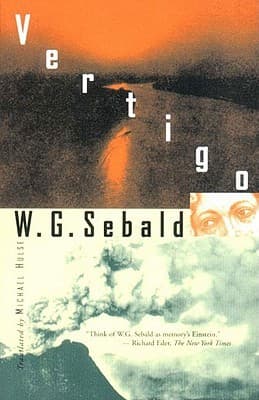
Synopsis
Covers the whole plot, including the ending.
- Difficulty
- Hard
- Pacing
- Slow
- Mood
- Atmospheric, Melancholy, Philosophical, Disorienting, Introspective
- Read it if
- You enjoy experimental literary fiction that blurs genres, explores themes of memory and identity, and features a contemplative, melancholic tone.
- Skip it if
- You prefer plot-driven narratives, clear-cut resolutions, or straightforward non-fiction.
Vertigo Plot Summary
Covers the whole plot, including the ending.
A Life in the Country
The first section, 'A Life in the Country,' introduces the narrator and his memories of early life in the mountains. He describes his interest in insects, especially butterflies, and his early attempts to collect them. These childhood experiences have a sense of sad wonder and an early awareness of how fragile life is. He details the landscapes and the feeling of being overwhelmed by nature, hinting at an early tendency for existential unease. His memories are clear but broken, like the specimens he collected, suggesting a mind already dealing with the elusive nature of memory and identity.
The First Journey: Venice and Verona
The narrator begins a journey through Italy, starting in Venice. He feels growing anxiety, has trouble sleeping, and feels out of place. He describes Venice's winding streets, the intense heat, and his struggle to find peace. He meets various odd people and sees the city's decay, which seems to reflect his own inner state. In Verona, his unease grows, leading to a strong sense of confusion. He visits historical sites but feels detached, his mind more on his own mental trouble than the beauty around him. This journey sets the tone for the book's look at mental instability and unreliable perceptions.
The Case of P.K. (Kafka)
This section focuses on Franz Kafka's life, especially his travels to Riva del Garda and other places. The narrator carefully researches Kafka's movements, health issues, and deep feeling of being alone. He tells of Kafka's stays in sanatoriums and his attempts to find comfort or a cure for his illnesses. The narrator connects Kafka's physical and mental suffering with his own growing unease. He notes Kafka's careful observations and struggles with writing, seeing in them a reflection of his own artistic and personal worries. This look at Kafka acts as a literary mirror for the narrator's own decline.
Return to the Alps
After his unsettling Italian journey, the narrator returns to the mountainous region of his childhood in Austria. He revisits familiar places and tries to reconnect with his past, but the comfort he seeks is not there. Instead, the familiar surroundings now seem subtly changed, with a new strangeness. He cannot fully connect his memories with the present, further increasing his feelings of confusion. Returning home, instead of offering comfort, makes his inner struggle worse, showing the theme of how elusive home and the past are.
The Casanova Interlude
The narrator recounts Giacomo Casanova's escape from the Piombi prison in the Doge's Palace in Venice. He details Casanova's imprisonment, his clever planning, and his daring flight across the rooftops. The focus is not on Casanova's romantic life, but on his resourcefulness, curiosity, and strong desire for freedom. The narrator looks into the specific architectural details of the prison and the city, creating a clear, almost suffocating atmosphere. This historical story acts as a contrast to the narrator's own feelings of being trapped and his search for an escape from his mental state.
Stendhal in Milan
This section explores the life and writings of Stendhal (Henri Beyle), especially his time in Milan. The narrator examines Stendhal's strong interest in Italian culture, his love affairs, and his observations of the city and its people. He highlights Stendhal's sensitivity and his ability for strong emotional experience, which often bordered on a kind of ecstatic confusion. The narrator connects Stendhal's intense emotional life and his sharp observations to his own struggles with perception and the overwhelming nature of reality, suggesting a shared tendency for heightened states.
The Narrator's Illness and Delusions
As the story goes on, the narrator's unease grows, showing up as physical illnesses, sleeplessness, and increasingly clear hallucinations. He describes times when he feels his identity breaking down, where the lines between himself and his surroundings blur. Objects seem to shift, and his perception of time and space becomes warped. He feels a deep sense of unreality, leading him to question his own sanity. These descriptions often mix with his literary explorations, as if the lives of Kafka, Casanova, and Stendhal are becoming one with his own, blurring the line between biography and personal delusion.
The Search for Meaning in Details
Throughout his travels and thoughts, the narrator becomes very focused on small details – a specific architectural feature, a type of insect, a brief look on a stranger's face. He carefully records these observations, often with photos or drawings, trying to find order or meaning in a world that feels more and more chaotic. This careful attention to detail is both a sign of his unease – a way to ground himself in reality – and a way of creating art, as he weaves these different elements into a complex mix of memory and experience. He looks for connections where none are clearly stated, creating a web of subtle links.
Encounters with Strangers
During his travels, the narrator often meets strangers who, though brief, leave a lasting impression. These meetings are often unsettling or puzzling, adding to his sense of confusion. He describes a woman he sees often in Venice, an odd innkeeper, or an old man with a haunted look. These figures sometimes seem to embody parts of his own worries or act as fleeting, strange reflections of his inner state. The interactions are usually brief and superficial, yet they add to the pervasive feeling of strangeness and the sense that he is lost in a world of equally lost souls.
The Unreliable Narrator
As his unease deepens, the narrator openly admits that his own memory and perception are unreliable. He questions the accuracy of his recollections, the truth of his observations, and even the stability of his own identity. The narrative style itself becomes broken and repetitive, mirroring his mental state. He often revisits scenes or details, offering slightly different versions or interpretations, further blurring the line between objective reality and subjective experience. This self-awareness of his unreliability is a core part of the novel, inviting the reader to question truth and memory with him.
The Nature of Memory
A constant theme in the book is the nature of memory. The narrator constantly revisits his own past, but these memories are shown as broken, elusive, and often unreliable. He questions if memory is a true record or a creative recreation. This personal struggle is mirrored in his engagement with historical figures like Kafka, Casanova, and Stendhal, whose lives he tries to reconstruct through archives and biographical details. He highlights the gaps and ambiguities in historical records, suggesting that even collective memory is fluid and imperfect. The book ultimately suggests memory is a fragile, subjective, and often haunting force.
The Act of Writing
The act of writing itself is an important part of the plot. The narrator's careful descriptions, his research into other writers' lives, and his attempts to describe his unease are all part of a larger literary effort. He sees writing as a way to face his worries, to bring some order to his broken perceptions, and to save fleeting moments and memories. The book's own structure, with its mix of autobiography, travelogue, and literary criticism, reflects this theme, showing the creative process as a way to navigate an unstable world. The lives of Kafka and Stendhal, as writers, further highlight the struggles and successes in artistic creation.
The Return to England
After his extensive travels through Europe and his deep dives into the lives of historical figures, the narrator eventually returns to England. While the physical journey ends, his internal unease continues. Returning home does not bring a clear solution or a cure for his condition. Instead, the story suggests a continuous process of dealing with memory, identity, and the unsettling nature of reality. He continues to observe, reflect, and write, implying that the journey of understanding and self-discovery is ongoing, without a clear end.
Principal Figures
The Narrator
Protagonist
An unnamed writer and traveler experiencing profound disorientation and anxiety.
The unnamed narrator is a sensitive and highly introspective individual, prone to anxiety, insomnia, and a pervasive sense of 'vertigo.' He is a meticulous observer, fascinated by details, history, and the lives of other writers. His journey across Europe is as much an internal exploration of his deteriorating mental state as it is a physical traversal of landscapes. He is driven by a need to understand his own malaise, often projecting his anxieties onto the world around him. His academic and literary pursuits serve as both a coping mechanism and a catalyst for his profound disorientation.
Relationships: Franz Kafka (Subject of intense biographical study and a literary mirror for the narrator's anxieties.); Giacomo Casanova (Subject of historical fascination, particularly his escape and resourcefulness.); Stendhal (Henri Beyle) (Subject of study, whose emotional intensity and observations resonate with the narrator.)
Franz Kafka
Mentioned/Literary Figure
The influential Czech writer whose life and struggles parallel the narrator's experiences.
Kafka is presented as a figure of profound suffering, both physical and mental. The narrator focuses on Kafka's travels, his stays in sanatoriums, and his meticulous, often tortured, writing process. He embodies a profound sense of alienation, neurosis, and a meticulous, almost clinical, observation of the world. His life serves as a historical and literary precedent for the narrator's own 'vertigo,' highlighting themes of illness, displacement, and the struggle for meaning in an indifferent world. Kafka's detailed letters and diaries are used by the narrator to construct a portrait of a mind grappling with existential dread.
Relationships: The Narrator (A profound influence and object of intense study, serving as a mirror for the narrator's own internal struggles.)
Giacomo Casanova
Mentioned/Historical Figure
The Venetian adventurer and memoirist, whose dramatic escape from prison is recounted.
Casanova appears not as the legendary lover, but as an ingenious and resourceful prisoner, whose dramatic escape from the Piombi prison in Venice is meticulously detailed. The narrator focuses on Casanova's intellectual curiosity, his meticulous planning, and his profound desire for freedom. He represents a different kind of human experience than Kafka or the narrator – one of action, cunning, and a will to survive. His story, while historical, resonates with the narrator's own feelings of being trapped and his search for an escape, albeit from a mental rather than physical prison. He symbolizes a bold engagement with the world.
Relationships: The Narrator (A subject of historical fascination, whose ingenuity and desire for freedom offer a counterpoint to the narrator's own paralysis.)
Stendhal (Henri Beyle)
Mentioned/Literary Figure
The French writer known for his passionate descriptions and emotional intensity.
Stendhal is presented as a writer deeply immersed in the sensory and emotional experiences of life, particularly during his time in Italy. The narrator highlights Stendhal's capacity for intense feeling, his observations of art and society, and his own experiences of a kind of ecstatic disorientation, often referred to as 'Stendhal syndrome.' He embodies a passionate engagement with the world, a heightened sensitivity that, like the narrator's, borders on the overwhelming. Stendhal's detailed observations and his rich inner life provide another lens through which the narrator explores the complexities of human perception and emotion.
Relationships: The Narrator (A literary figure whose emotional intensity and observations resonate with the narrator's own heightened sensitivity and 'vertigo.')
Various Strangers
Supporting/Mentioned
Briefly encountered individuals who add to the narrator's sense of strangeness and unreality.
Throughout his travels, the narrator encounters numerous unnamed individuals – an elderly woman in a hotel, a peculiar innkeeper, a man with a distinctive gait, or a recurring figure in Venice. These characters are fleeting, often appearing only for a moment, yet they contribute significantly to the atmosphere of the novel. They often seem to mirror the narrator's anxieties or highlight his alienation. Their brief appearances underscore the transient nature of human connection and the sense that the narrator is adrift in a world populated by equally enigmatic and often unsettling figures. They are ciphers, reflecting the narrator's internal state.
Relationships: The Narrator (Brief, often unsettling encounters that contribute to his sense of alienation and the blurring of reality.)
Themes & Insights
Memory and the Past
The novel explores the elusive and reconstructive nature of memory, both personal and historical. The narrator's childhood memories are broken and sad, suggesting the past is never truly fixed. He carefully researches the lives of Kafka, Casanova, and Stendhal, trying to reconstruct their experiences from archival pieces, while acknowledging the inherent gaps. This constant struggle with memory highlights its fragility and subjective nature, suggesting that our understanding of the past is always a creative act, prone to distortion and longing. The past haunts the present, acting as both comfort and deep confusion, as seen when the narrator returns home and finds it subtly changed.
“What had once been whole now lay in fragments, and it was the task of recollection to assemble them again.”
Disorientation and Vertigo
The theme of 'vertigo' runs through the entire story, appearing as both a physical and psychological state. The narrator experiences dizziness, sleeplessness, and anxiety during his travels, but 'vertigo' also means a deeper existential confusion. This includes a blurring of identity, a feeling of unreality, and a deep sense of being out of place. Venice's winding streets, the intense heat, and the narrator's unsettling encounters all contribute to this pervasive feeling of being unmoored. The lives of Kafka and Stendhal, with their own struggles with mental and emotional balance, amplify this theme, suggesting a universal human tendency for such states. The world itself seems to spin out of control.
“I felt myself suspended in a void, a swimming of the head that was more than mere dizziness.”
The Nature of Reality and Perception
Sebald constantly questions how reliable reality and perception are. The narrator's worsening mental state leads to hallucinations and a blurring of the line between objective fact and subjective experience. He carefully describes details, yet his interpretations are often tinged with paranoia and a sense of the uncanny. The use of photographs and illustrations, seemingly factual, paradoxically shows how reality is built, as their context and meaning are often unclear. The lives of the historical figures also add to this theme, as their subjective experiences and interpretations of the world are presented as equally valid, yet possibly unreliable. The book suggests that reality is not fixed but a constantly shifting construct of the mind.
“Was what I saw truly there, or merely a projection of my own troubled mind?”
Identity and Self-Dissolution
The narrator's journey is also one of self-dissolution, where his sense of identity becomes more fluid and uncertain. He often feels like a ghost, watching life from afar, and at times feels a loss of his own self. His immersion in the lives of Kafka, Casanova, and Stendhal seems to blur the lines between their identities and his own, as if he is taking on parts of their experiences. This theme is made worse by his unease, which makes him question who he is and where he belongs. The novel suggests that identity is not stable but a fragile construction, constantly threatened by memory, illness, and the overwhelming nature of existence.
“I felt my own self dissolving, like a photograph left too long in the sun.”
The Act of Writing and Artistic Creation
Writing itself is a key theme, presented as both a response to and a sign of the narrator's unease. The narrator's careful note-taking, his biographical research, and his attempts to describe his experiences are all part of a larger artistic effort. Writing becomes a way to confront chaos, to bring temporary order to his broken perceptions, and to save fleeting moments. The book's own structure, with its mix of autobiography, travel writing, and literary criticism, reflects this theme, showing the creative process as a way to navigate an unstable world. The lives of Kafka and Stendhal, as writers, further highlight the struggles and successes in artistic creation.
“Perhaps to write is to construct a temporary shelter against the storm of the world, however flimsy.”
Plot Devices & Literary Techniques
Unreliable Narrator
The narrator's perceptions and recollections are increasingly questionable, blurring reality and delusion.
The narrator's 'vertigo' and anxiety directly lead to an unreliable narrative perspective. He frequently questions his own memories, admits to hallucinations, and presents events with a degree of uncertainty. This device forces the reader to actively engage with the text, questioning the veracity of what is being presented and contributing to the pervasive sense of disorientation. It blurs the lines between objective truth and subjective experience, making the reader experience a form of 'vertigo' alongside the narrator.
Intertextuality and Biographical Insertion
The lives and works of historical figures are interwoven with the narrator's personal journey.
Sebald intricately weaves biographical details and literary analysis of figures like Kafka, Casanova, and Stendhal into the narrator's own story. This device creates a rich tapestry of historical and personal experience, suggesting parallels and correspondences between the narrator's struggles and those of his literary predecessors. It also emphasizes the cyclical nature of human suffering and the enduring power of art to articulate it, while simultaneously blurring the boundaries between the narrator's identity and the figures he studies.
Photographs and Illustrations
Ambiguous visual aids that complicate the narrative and question the nature of truth.
Throughout the novel, numerous uncaptioned or vaguely captioned photographs and illustrations are interspersed with the text. These visuals are often cryptic, depicting landscapes, buildings, or anonymous figures. Far from providing objective proof, they often deepen the mystery, creating a sense of uncanny realism while simultaneously questioning the reliability of visual evidence. They serve to ground the narrative in a tangible reality while simultaneously suggesting that what is seen can be as elusive and open to interpretation as what is remembered or imagined.
Non-Linear Narrative and Fragmentation
The story jumps between time periods, locations, and subjects, mirroring the narrator's disjointed mental state.
The narrative does not follow a strict chronological order. It frequently shifts between the narrator's childhood, his current travels, and the historical accounts of other figures. This fragmented, associative structure mirrors the narrator's 'vertigo' and the way memory and thought processes often operate. It contributes to the sense of disorientation and forces the reader to actively piece together connections, reflecting the narrator's own struggle to make sense of a chaotic world. The lack of a clear linear progression enhances the dreamlike and unsettling quality of the prose.
Vertigo Quotes
“At that time I had no idea that I was traveling, as it were, into my own future, and that the city of Venice, which I had just visited, would one day be the setting for a story that I would write.”
“The further I went, the more I felt as if I were walking not just through space but through time.”
“It is not the past that holds us captive, but the images of the past.”
“One could say that the whole of nature is a process of memory, since everything in it refers to something else that has been before.”
“The older one gets, the more one realizes that the world is made of stories, and that we are all, in the end, nothing but stories.”
“Everything, it seems to me, is subject to the law of impermanence, and the only thing that remains is the trace of what has been.”
“What is it, after all, that drives us to distraction but the knowledge that we are always losing something, that everything is always slipping away?”
“Perhaps the true nature of time is not linear but circular, and that we are always returning to the same points, only from a different perspective.”
“I had the distinct impression that the landscapes I was passing through were not merely external to me, but were in some way also within me.”
“The past, I thought, is not dead. It is not even past. We carry it with us, in our bones, in our blood, in our minds.”
“Every journey, in a sense, is a journey into the self, and every landscape a mirror of our inner state.”
“It is often in the most unexpected places that we encounter the most profound revelations.”
“The weight of what has been, and what might have been, presses down on us, even when we are not aware of it.”
“Perhaps all writing is a form of homesickness, a longing for a place that never quite existed, or that has been lost.”
Quiz
10 questions on the plot and the characters. Each answer comes with a short explanation.
Question 1
Which of the following literary figures is NOT explicitly mentioned as a 'restless literary ghost' accompanying the narrator's journey in 'Vertigo'?
- Franz Kafka
- Stendhal
- Giacomo Casanova
- Marcel Proust
Show answer
D. Marcel Proust The book description explicitly names Kafka, Stendhal, and Casanova as literary ghosts, but not Marcel Proust.
Question 2
What is the primary physical ailment the unnamed narrator is described as suffering from?
- Chronic fatigue syndrome
- Severe headaches
- Nervous ailments
- A broken leg
Show answer
C. Nervous ailments The book description states the narrator is 'beset by nervous ailments', which is a central element to the 'vertigo' theme.
Question 3
How many 'dizzying sections' is 'Vertigo' structured into?
- Two
- Three
- Four
- Five
Show answer
C. Four The summary states, 'In four dizzying sections, the narrator plunges the reader into vertigo.'
Question 4
What concept does Sebald explore 'to new intensities' in 'Vertigo', described as a 'painful pleasure'?
- The joy of discovery
- The thrill of adventure
- The pleasures of unknowability
- The comfort of familiarity
Show answer
C. The pleasures of unknowability The description highlights Sebald's exploration of 'the painful pleasures of unknowability to new intensities in Vertigo.'
Question 5
What is a defining characteristic of Sebald's narrative style, as mentioned in relation to 'Vertigo' and his other works?
- Strict adherence to chronological plot
- Reliance on fantastical elements
- Exploration of memory's uncanniness
- Use of direct, journalistic reporting
Show answer
C. Exploration of memory's uncanniness Sebald is described as 'the acknowledged master of memory's uncanniness,' which is a signature element.
Question 6
The narrator's journey in 'Vertigo' takes him through which geographical region?
- Across North America
- Through Asia
- Across Europe
- Within a single city
Show answer
C. Across Europe The description states the narrator embarks on a 'hair-raising journey... across Europe.'
Question 7
What does the word 'vertigo' specifically mean in the context of the novel, beyond its literal medical definition, as suggested by Webster's?
- A feeling of extreme excitement
- A state of deep meditation
- A 'swimming of the head,' an unsettling and fascinating state
- A sudden rush of anger
Show answer
C. A 'swimming of the head,' an unsettling and fascinating state The text directly quotes Webster's definition as 'that 'swimming of the head,'... that state so unsettling, so fascinating.'
Question 8
What aspect of Sebald's subsequent acclaimed novels, 'The Emigrants' and 'The Rings of Saturn', is said to have its 'first flowering' in 'Vertigo'?
- His use of elaborate, detailed maps
- His signature narrative elements
- His focus on scientific discovery
- His development of a recurring protagonist named Max
Show answer
B. His signature narrative elements The description states, 'Here in their first flowering are the signature elements of Sebald's hugely acclaimed novels.'
Question 9
Why is 'Vertigo' described as 'perhaps his most amazing and certainly his most alarming' work?
- Due to its complex scientific theories
- Because it features a gripping crime mystery
- Because it pushes the 'painful pleasures of unknowability' to new intensities
- Its controversial political statements
Show answer
C. Because it pushes the 'painful pleasures of unknowability' to new intensities The text links its alarming nature to Sebald taking 'the painful pleasures of unknowability to new intensities.'
Question 10
The New York Times Book Review's description of 'The Emigrants' ('stunning and strange,' 'like a dream you want to last forever') is used in the 'Vertigo' summary to emphasize what about Sebald's writing?
- Its accessibility to a wide audience
- Its straightforward plot progression
- The captivating and unsettling nature of the 'vertigo' state it evokes
- Its focus on historical accuracy above all else
Show answer
C. The captivating and unsettling nature of the 'vertigo' state it evokes The quote is used to illustrate how the 'vertigo' state is 'so unsettling, so fascinating, and so 'stunning and strange'... that it is 'like a dream you want to last forever.'
Vertigo FAQ
What is the overarching structure of 'Vertigo' and how does it relate to the title?
'Vertigo' is divided into four distinct sections, each detailing the narrator's fragmented journeys and encounters across Europe. The title directly reflects the narrator's recurring bouts of dizziness, disorientation, and mental unease, which mirror the narrative's non-linear structure and blurring of reality and memory.
Who are some of the historical figures encountered or referenced by the unnamed narrator?
The narrator's travels are deeply intertwined with the spectral presences of several historical figures, most notably Franz Kafka, Stendhal (Henri Beyle), and Giacomo Casanova. These figures are not just mentioned; their lives and works become lenses through which the narrator experiences his own reality, often blurring the lines between their experiences and his own.
What kind of 'nervous ailments' does the narrator suffer from throughout the book?
The narrator frequently experiences severe bouts of vertigo, characterized by dizziness, nausea, and a profound sense of disorientation. These physical symptoms are often accompanied by psychological distress, anxiety, and a feeling of unreality, suggesting a deep connection between his physical state and his mental exploration of memory and history.
In what ways does 'Vertigo' foreshadow the themes and style of Sebald's later works like 'The Emigrants' and 'The Rings of Saturn'?
'Vertigo' introduces Sebald's signature blend of travelogue, autobiography, and historical rumination, often accompanied by uncaptioned photographs. It establishes themes of memory, displacement, the weight of history, and the melancholic pursuit of forgotten lives, all presented through a distinctive, meditative prose style that would define his subsequent acclaimed novels.
Describe one specific journey the narrator undertakes in the book and its significance.
One significant journey involves the narrator's retracing of Franz Kafka's footsteps through northern Italy, particularly around Riva del Garda. This pilgrimage is not just a physical journey but an attempt to commune with Kafka's spirit, exploring themes of solitude, illness, and the elusive nature of artistic creation, deepening the narrator's own sense of existential unease.
How do the uncaptioned photographs contribute to the overall atmosphere and meaning of 'Vertigo'?
The uncaptioned photographs disrupt the narrative flow, acting as ambiguous visual anchors that blur the line between fact and fiction. They lend an air of documentary authenticity while simultaneously questioning the reliability of memory and perception, inviting the reader to interpret their connection to the text and deepening the sense of mystery and disorientation.
What is the significance of the recurring motif of 'falling' or 'descent' in the novel?
The motif of falling or descent goes beyond the literal experience of vertigo; it symbolizes the narrator's psychological descent into memory, the past, and states of mental instability. It also reflects the fall of historical figures from prominence, the decline of civilizations, and the inherent fragility of human existence, contributing to the book's melancholic tone.
Are there any subtle connections between the narrator's personal history and the historical figures he investigates?
Sebald subtly weaves connections, suggesting that the narrator's own anxieties and sense of displacement resonate with the lives of Kafka and Stendhal, who also experienced alienation and a profound engagement with their inner worlds. The parallels, though never explicitly stated, imply a shared human condition of searching and suffering across different eras.
How does the narrator's pursuit of historical figures like Casanova or Stendhal reflect his own psychological state?
The narrator's obsession with these figures is a form of self-exploration, using their lives as mirrors for his own anxieties about identity, love, failure, and the passage of time. His melancholic identification with their fates suggests a deep psychological need to find meaning and connection in the past, even as it exacerbates his feelings of disorientation.
What role does memory play in exacerbating or alleviating the narrator's 'vertigo'?
Memory is a double-edged sword for the narrator. While the act of recalling and reconstructing the past is central to his quest for understanding, it also triggers his 'vertigo' by blurring the lines between personal experience and historical fact, making him question the reliability of his own perceptions and leading to profound disorientation.
How does the narrator's 'unreliability' contribute to the reader's experience of the book?
The narrator's unreliability, stemming from his nervous ailments and fragmented memories, immerses the reader in a similar state of uncertainty and disorientation. This forces the reader to actively engage with the text, question what is real, and experience the 'vertigo' alongside the narrator, deepening the book's psychological impact.
Is the narrator's 'vertigo' primarily a physical condition or a metaphor for a deeper existential crisis?
While presented as a physical ailment, the 'vertigo' functions profoundly as a metaphor for the narrator's existential crisis. It symbolizes his disorientation in a world burdened by history and loss, his inability to find stable ground in identity or memory, and a pervasive sense of unease about human existence and the nature of reality.
How does Sebald challenge traditional notions of history and autobiography in 'Vertigo'?
Sebald blurs the boundaries between history and autobiography by interweaving personal recollections with meticulous historical research and fictionalized elements. He suggests that history is not a static record but a subjective, fragmented narrative constantly being reinterpreted through individual experience, questioning the possibility of objective truth.
What is the ultimate message or 'lesson' that Sebald might be conveying through the narrator's journey?
Sebald doesn't offer easy lessons, but he seems to convey the profound weight of history and memory on the individual psyche, the inherent interconnectedness of past and present, and the melancholic beauty of human transience. The journey emphasizes the continuous search for meaning in a world often characterized by loss and unknowability.
To what extent is 'Vertigo' a self-referential work, reflecting on the act of writing itself?
'Vertigo' is highly self-referential, with the narrator often reflecting on the difficulties and inherent limitations of recounting past events and capturing elusive truths. The narrative's fragmented nature and constant questioning of memory can be seen as a meta-commentary on the writing process itself, highlighting its challenges and ambiguities.
How does Sebald use geography and place to enhance the themes of the novel?
Sebald uses specific European locales—Italy, Austria, England—not merely as settings but as palimpsests where layers of history, memory, and personal experience converge. The physical landscapes become imbued with the spirits of the past, enhancing the narrator's sense of displacement and the pervasive melancholia of his investigations.
What is the significance of the recurring theme of 'doubles' or doppelgängers in the book?
The theme of doubles is pervasive, with the narrator often seeing himself reflected in the lives of Kafka, Stendhal, and Casanova, or encountering figures who eerily resemble people from his past. This motif amplifies the sense of disorientation and suggests that identities are fluid and interconnected, blurring the lines between self and other, past and present.
Does the narrator ever find a resolution to his 'vertigo' or his existential quest by the end of the book?
Sebald intentionally avoids a clear resolution. While the narrator's journeys eventually lead him back to his starting point, the 'vertigo' persists, suggesting that the quest for understanding and stability is ongoing rather than conclusive. The book embraces the beauty and inevitability of unknowability, leaving the reader with a sense of enduring mystery.
About the author

W.G. Sebald was a German writer known for his distinctive blend of fiction and memoir. His notable works include "Austerlitz," which explores themes of memory and identity, and "Vertigo," a narrative that intertwines personal history with broader reflections on travel and loss. Sebald's writing often incorporates photographs and other visual elements, creating a unique reading experience.
Similar books
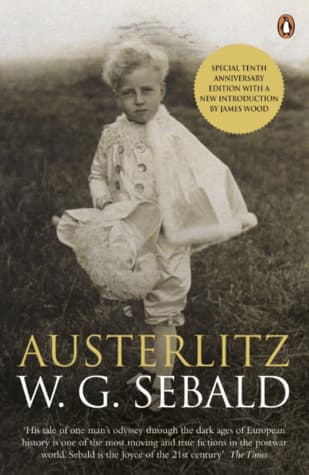
- Austerlitz
W.G. Sebald
4.0 (14k) average on GoodreadsHistorical FictionExplores themes of memory, trauma, and identity through a wandering, contemplative narrative style.
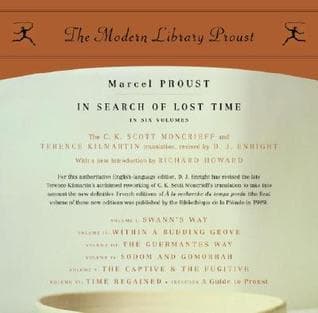
- In Search of Lost Time
Marcel Proust
4.3 (10k) average on GoodreadsLiterary FictionA sprawling, introspective work deeply concerned with memory, time, and the act of writing.
- The Old Man and the Sea
Ernest Hemingway
3.8 (831k) average on GoodreadsLiterary FictionA Cuban fisherman's long struggle with a giant marlin becomes a story of endurance and dignity, now retold for young adults with illustrations, phonetic guides, and writing prompts in Traditional Chinese.
- One Hundred Years of Solitude
Gabriel García Márquez
4.1 (753k) average on GoodreadsLiterary FictionThrough the multi-generational story of the Buendía family, a mythical town deals with the repeating patterns of time, love, and solitude, as the extraordinary mixes with the ordinary.
- The Goldfinch
Donna Tartt
3.9 (720k) average on GoodreadsLiterary FictionHaunted by a tragic explosion and clutching a stolen Dutch masterpiece, a young orphan navigates the opulent drawing rooms of New York and the gritty underbelly of the art world, desperately seeking connection and redemption amidst a life spiraling into crime and obsession.
- Little Fires Everywhere
Celeste Ng
4.1 (713k) average on GoodreadsLiterary FictionIn Shaker Heights, an artist and her daughter move in, and their free-spirited lives clash with a rule-bound matriarch, revealing hidden conflicts beneath a perfect surface.




Enjoyed the summary?
A summary gives you the shape of the book. The book itself has the detail, the examples and the voice.
Find Vertigo on AmazonAs an Amazon Associate, BookBrief earns from qualifying purchases. How we're funded