

Synopsis
Covers the whole plot, including the ending.
- Difficulty
- Hard
- Pacing
- Slow
- Mood
- Melancholy, Introspective, Atmospheric, Subdued, Romantic
- Read it if
- You enjoy deep psychological character studies, Victorian prose, and themes of isolation, unrequited love, and female independence, especially if you appreciate a complex, introverted narrator.
- Skip it if
- You prefer fast-paced plots, clear-cut happy endings, or find detailed internal monologues and descriptions of subtle social interactions tedious.
Villette Plot Summary
Covers the whole plot, including the ending.
Childhood Visits and Early Loss
The story begins with Lucy Snowe, a quiet young woman, remembering a time in her childhood spent at her godmother, Mrs. Bretton's, home in Bretton. During this visit, she watches the lively interactions between Mrs. Bretton, her son Graham Bretton, and their young guest, Paulina Home (Polly), a sensitive girl. Lucy sees Polly's strong attachment to her father and her sadness when he leaves her with Mrs. Bretton. Later, Lucy mentions a personal loss: her entire family dies, leaving her an orphan with no money. This event makes her seek independence and work, setting up her future.
Seeking Fortune in London
After her family's death, Lucy Snowe gets a job as a companion to an old, sick lady. This job gives her temporary security, though it is not fulfilling. The old lady eventually dies, leaving Lucy without work or prospects again. Facing poverty and not wanting to be idle, Lucy makes a big decision. Wanting independence and a hope for a better future, she decides to leave England and look for work in Europe, specifically in the fictional city of Villette, the capital of the fictional country of Labassecour (like Brussels, Belgium).
Arrival in Villette and the Pensionnat de Demoiselles
Lucy Snowe travels alone to Villette, enduring a rough sea crossing and a confusing arrival in the foreign city. Alone and speaking little French, she struggles to find her way through the unfamiliar streets at night. By chance, she meets a kind Englishwoman who directs her to the Pensionnat de Demoiselles, a girls' boarding school. Despite her fear and the presence of the directress, Madame Beck, Lucy gets a job, not as a governess as she hoped, but as an English teacher for the younger girls. She quickly gets used to the school's strict routines and constant supervision, watching its residents carefully.
Intrigue and the English Doctor
At the school, Lucy Snowe quietly observes the lives around her, including Madame Beck and her family, especially Professor Paul Emmanuel, Madame Beck's cousin. Lucy also notices a mysterious presence in the school, a nun-like ghost that seems to wander the grounds, creating a suspenseful atmosphere. During a school play, Lucy has to take on a male role, which she performs surprisingly well. Around this time, she first meets Dr. John Graham Bretton, the school's English doctor. Lucy does not initially know that Dr. Bretton is the same Graham Bretton from her childhood, though she feels a growing attraction to him.
Illness and Revelation
Lucy Snowe falls into a deep illness and depression. The difficult atmosphere of the school during the long summer holidays, when most students and teachers leave, makes it worse. Feeling completely alone and neglected, she wanders the deserted streets of Villette in despair. She eventually collapses and Madame Beck finds her, sending her to a quiet lodging. To her surprise and relief, she discovers she is being cared for by Mrs. Bretton, her godmother, and Dr. John Graham Bretton. Through talks and shared memories, Lucy realizes that Dr. Bretton is indeed the Graham Bretton of her youth, and Mrs. Bretton is her godmother. This reunion brings Lucy comfort and a brief time of domestic happiness.
The Return of Paulina Home
During Lucy's recovery at Mrs. Bretton's home, another familiar person from her past reappears: Paulina Home, now Paulina de Bassompierre, a refined and wealthy young lady. Paulina has grown into a beautiful woman, and she quickly renews her childhood friendship with Graham Bretton. Lucy watches their growing relationship with affection and quiet sadness, seeing the strong connection between them. Graham, though kind to Lucy, clearly loves Paulina more. Lucy, always the quiet observer, understands her place as a friend, not a romantic interest, in Graham's life. She prepares for her return to the school.
Graham's Engagement and Lucy's Resignation
Graham Bretton and Paulina de Bassompierre's relationship deepens, leading to their engagement. Lucy Snowe sees their joy, confirming her understanding that Graham loves Paulina. While she feels a deep sense of loss and loneliness, Lucy stays calm, never showing how much she felt for Graham. She accepts her situation quietly, knowing she is meant to observe, not participate in, such happiness. Her focus returns to her duties at the school, where she continues teaching English, finding comfort in routine and learning.
Professor Paul Emmanuel's Influence
Back at the school, Lucy Snowe finds herself more and more under Professor Paul Emmanuel's influence. At first, she sees him as bossy, odd, and often harsh, but she also recognizes his intelligence and kindness. He challenges her academically, pushing her to overcome shyness and improve her teaching skills, especially in writing and public speaking. Despite his rough manner, Paul shows a real interest in Lucy's well-being and intellectual growth, seeing her hidden talents. Their relationship is complex, with frequent arguments, but also a growing mutual respect and an unspoken affection.
The Nun and the Conspiracy
The nun-like ghost continues to appear at the school, especially to Lucy. The mystery grows when Lucy finds a nun's habit hidden in her bed. This supernatural element adds to the gothic mood and suggests deeper plots. It becomes clear that Madame Beck, with the help of Père Silas, a Jesuit priest, is actively trying to keep Lucy and Paul Emmanuel apart. They manipulate situations, spread rumors, and try to control Paul's affairs, often using the perceived threat of the nun. Lucy, though confused at first, starts to understand how much they interfere in Paul's life and his possible affections.
Paul Emmanuel's Departure and Promise
Because of Madame Beck, Père Silas, and other important people, Professor Paul Emmanuel is pressured to leave Villette for a three-year business trip to the West Indies. This departure is planned to separate him from Lucy, whom they see as an unsuitable partner. Before he leaves, Paul, in private meetings, shows his deep affection for Lucy. He makes plans for her future, getting her a small school of her own near the pensionnat, and promises to return to her. Their farewell is full of unspoken love and hope for a future reunion, though Paul's departure leaves Lucy feeling alone again.
Lucy's School and Lingering Hope
After Paul Emmanuel leaves, Lucy Snowe, using the money and arrangements he made for her, starts her own small school. She works hard, finding some independence and satisfaction in her new role as a directress. She stays in touch with Paul through letters and hopes for his promised return after three years. The story builds toward the expected reunion, but Brontë describes a powerful storm, suggesting a tragic end. Lucy, always strong, continues to wait, her future uncertain.
The Ambiguous Ending
The novel ends with an uncertain conclusion about Paul Emmanuel's return. Lucy Snowe describes a violent storm that lasts for seven days and nights, happening at the same time Paul is expected to return. While she does not say he died, her words strongly suggest his ship was lost at sea, and he never came back to Villette. Lucy ends her story by saying, 'Here pause the account. I cease to describe a period of seven years. Reader, they were the happiest of my life.' This sad statement, along with the storm's description, leads the reader to believe Paul died, and Lucy's brief time of hope and happiness ended, leaving her to endure alone once more.
Principal Figures
Lucy Snowe
Protagonist
A reserved, intelligent, and resilient Englishwoman seeking independence and affection.
Lucy Snowe is the first-person narrator and protagonist of 'Villette'. Orphaned and without means, she embodies quiet endurance and acute observation. Initially shy and self-effacing, she possesses a keen intellect, strong moral compass, and deep emotional capacity, often hidden beneath a calm exterior. She struggles with loneliness and unrequited love, first for Graham Bretton and later, more profoundly, for Paul Emmanuel. Her journey is one of self-discovery and resilience, as she navigates a foreign land and societal constraints, striving for independence and emotional fulfillment. She is a complex character, whose stoicism often masks intense inner turmoil and passion.
Relationships: Madame Beck (Employer/directress, watchful and manipulative); Dr. John Graham Bretton (Childhood acquaintance, object of unrequited love); Paul Emmanuel (Colleague, mentor, and mutual love interest); Paulina Home (Polly) (Childhood acquaintance, rival in love for Graham); Mrs. Bretton (Godmother, source of comfort and maternal affection)
Professor Paul Emmanuel
Major Supporting/Love Interest
An eccentric, dictatorial, yet ultimately kind and intellectually stimulating professor.
Professor Paul Emmanuel is Madame Beck's cousin and a key figure at the pensionnat. He is initially presented as a severe, dogmatic, and often irritating man, a devout Catholic with strong opinions and a demanding nature. However, beneath his gruff exterior lies a generous, honorable, and deeply compassionate heart. He recognizes Lucy's intelligence and potential, becoming her mentor and intellectual challenger. He is fiercely loyal, passionate, and possesses a hidden sensitivity. His affection for Lucy develops slowly but profoundly, overcoming societal barriers and the machinations of others who wish to keep them apart.
Relationships: Lucy Snowe (Mentee, love interest, intellectual companion); Madame Beck (Cousin, employer, manipulative adversary); Père Silas (Confidant, but also an instrument of manipulation against Paul); Justine Marie (Deceased former love, whose memory he cherishes)
Dr. John Graham Bretton
Major Supporting/Love Interest
Lucy's childhood acquaintance, a charming and handsome English doctor.
Dr. John Graham Bretton is Lucy Snowe's godmother's son and a doctor in Villette. He is handsome, charismatic, and universally admired, embodying conventional masculine charm and success. Lucy harbors a secret, unrequited love for him, which she carefully conceals. Graham is kind and attentive to Lucy, treating her with friendly affection, but he remains oblivious to her deeper feelings. His affections are ultimately captured by Paulina Home, whom he marries. He represents a kind of accessible, conventional happiness that Lucy observes but cannot fully participate in.
Relationships: Lucy Snowe (Childhood friend, object of her unrequited love); Mrs. Bretton (Mother); Paulina Home (Polly) (Childhood friend, fiancée, and wife)
Madame Beck
Antagonist/Supporting
The shrewd, watchful, and manipulative directress of the Pensionnat de Demoiselles.
Madame Beck is the directress of the Pensionnat de Demoiselles. She is a woman of formidable presence and calculating intelligence, renowned for her meticulous organization and constant surveillance of everyone in her establishment. She rarely speaks but misses nothing, possessing an almost supernatural ability to read people and situations. While she maintains a respectable façade, she is deeply manipulative, particularly in her efforts to control Paul Emmanuel and prevent his romantic attachments, including to Lucy. She represents the oppressive, watchful eye of societal convention and the subtle power dynamics within the pensionnat.
Relationships: Lucy Snowe (Employer, object of suspicion and surveillance); Paul Emmanuel (Cousin, object of her control and possessiveness)
Paulina Home (Polly), later Paulina de Bassompierre
Supporting
Lucy's childhood acquaintance, a delicate and wealthy young woman who marries Graham Bretton.
Paulina Home, also known as Polly, is introduced as a sensitive, affectionate child who forms a strong bond with Graham Bretton. Later, as Paulina de Bassompierre, she is a beautiful, refined, and wealthy young woman, still possessing her delicate charm and deep capacity for love. She rekindles her childhood affection for Graham, and they eventually marry. Paulina serves as a foil to Lucy, representing the idealized, conventionally feminine heroine who achieves domestic happiness and love, highlighting Lucy's more solitary and unconventional path.
Relationships: Lucy Snowe (Childhood acquaintance, friend); Dr. John Graham Bretton (Childhood friend, fiancée, and wife); Count de Bassompierre (Father)
Mrs. Bretton
Supporting
Lucy's kind and maternal godmother, a source of comfort and stability.
Mrs. Bretton is Lucy Snowe's godmother and the mother of John Graham Bretton. She is a warm, practical, and maternal figure who provides Lucy with much-needed comfort and a sense of home during her periods of illness and distress. Her house in Bretton and later in Villette becomes a temporary sanctuary for Lucy. She represents traditional English domesticity and kindness, offering a stark contrast to the often cold and watchful atmosphere of the pensionnat. Her presence reminds Lucy of her lost family and the warmth of genuine affection.
Relationships: Lucy Snowe (Godmother, maternal figure); Dr. John Graham Bretton (Son)
Père Silas
Supporting/Antagonist
A Jesuit priest who conspires with Madame Beck against Paul Emmanuel and Lucy.
Père Silas is a Jesuit priest who holds considerable influence in Villette and acts as a confidant and advisor to Madame Beck and Paul Emmanuel. While appearing pious and benevolent, he is a manipulative figure who works with Madame Beck to control Paul's life and prevent his marriage to Lucy Snowe. He represents the subtle, pervasive influence of the Catholic Church and its potential for interference in personal lives, particularly from Lucy's Protestant perspective. His actions contribute significantly to Paul's forced departure from Villette.
Relationships: Paul Emmanuel (Confidant, but also manipulator); Madame Beck (Ally in manipulation)
Ginevra Fanshawe
Supporting
A beautiful, vain, and flirtatious English student at the pensionnat.
Ginevra Fanshawe is an English student at the Pensionnat de Demoiselles. She is beautiful, frivolous, and excessively vain, constantly seeking male attention and boasting about her conquests. She is a foil to Lucy's quiet seriousness and often teases her. Ginevra represents a superficiality that Lucy scorns, yet she is also a source of some lightheartedness and gossip. She eventually elopes with and marries Count Alfred de Hamal, a man she initially dismissed but who proves persistent in his affections.
Relationships: Lucy Snowe (Fellow teacher/student, object of teasing); Dr. John Graham Bretton (Object of her flirtation); Count Alfred de Hamal (Suitor, later husband)
Count Alfred de Hamal
Supporting
A suitor to Ginevra Fanshawe, and the mysterious 'nun'.
Count Alfred de Hamal is a mysterious and persistent suitor to Ginevra Fanshawe. He is initially seen lurking around the pensionnat, prompting speculation and curiosity. He is eventually revealed to be the person impersonating the nun, using the disguise to gain access to Ginevra. This revelation exposes the 'supernatural' element of the nun as a mundane plot device. He is determined in his pursuit of Ginevra and ultimately marries her, despite her initial disdain for him. He represents the more romantic, dramatic aspects of the Villette social scene.
Relationships: Ginevra Fanshawe (Object of his affection, later wife)
Themes & Insights
Isolation and Loneliness
Lucy Snowe's life is marked by isolation. Orphaned and without family, she often finds herself alone in a foreign country, watching others' happiness from a distance. Her quiet nature and difficulty expressing emotions often make her feel detached, even when people are around. The long, solitary summer holidays at the school, where she becomes very depressed, show her loneliness. Even in her feelings for Graham and Paul, she keeps some emotional distance, never fully showing her feelings, which highlights her isolated life.
“A great solitude fell upon me, and in its hush I heard a voice whisper: 'The end is not yet. You have a trial to undergo: a struggle with yourself, with your natural foes.'”
Identity and Self-Discovery
Lucy's life is a search for self-understanding and her own identity, especially in a world that offers few options for independent women. At first, her roles (governess, teacher) define her, but she slowly shows her intellectual and emotional strength. Her talks with Paul Emmanuel, who encourages her to speak and write, are important for her growth. She learns to trust her own judgment and skills, leading to her opening her own school. Despite the sad ending, Lucy achieves a strong sense of self and defines her worth beyond traditional romantic or family roles.
“I was not made for the life I lead; it is too tame, too colourless, too devoid of zest.”
Unrequited Love and Emotional Repression
A main theme is Lucy's experience with unrequited love and her emotional repression. Her deep affection for Graham Bretton is never returned romantically, and she calmly hides her feelings, watching his romance with Paulina. Even her love for Paul Emmanuel, though mutual, has many problems and is never openly declared. Lucy's inability to express her true feelings is a key trait, causing much inner suffering and showing the societal limits on women's emotional expression in the Victorian era.
“I seemed to hold a treasure, then, within my wet, cold hand. I knew well enough what I held. It was the key to a secret, which I might have kept all my life.”
Gender Roles and Female Independence
The novel looks at the limited choices and societal expectations for women in the 19th century. Lucy, as an orphaned, unmarried woman, must work to survive. She navigates a world that offers few paths to independence or happiness outside of marriage. She struggles against the limits of her job as a teacher, Madame Beck's watchful eyes, and the general views of women's intellectual and emotional abilities. Her eventual opening of her own school, though helped by Paul, shows a significant act of female independence and self-sufficiency, challenging the usual roles set for her.
“I had wanted to be good, to be loved, to be a woman, to be happy. I had wanted all this, but I knew I could not have it.”
Appearance vs. Reality
Throughout 'Villette', there is a constant difference between what seems real and what is real. Lucy observes well, often seeing past others' appearances. Madame Beck's calm outside hides a calculating mind; Paul Emmanuel's roughness hides deep kindness. The mystery of the nun is the clearest example, appearing as a ghost but turning out to be a disguise. This theme shows Lucy's sharp mind and the deceptive nature of human interactions, making the reader question first impressions.
“To my mind, a man or woman who is not a hypocrite, is a man or woman of clear and noble nature.”
Plot Devices & Literary Techniques
First-Person Subjective Narration
The entire story is filtered through Lucy Snowe's introspective and often unreliable perspective.
The novel is told entirely from Lucy Snowe's first-person point of view, making her highly subjective and often unreliable narration a primary plot device. Her observations are acute but colored by her own anxieties, repressions, and perceptions, particularly regarding her feelings for Graham and Paul. The reader is privy only to Lucy's internal world, her interpretations of events, and her carefully guarded emotions, forcing them to infer much about other characters and the true nature of situations. This narrative choice deepens the themes of isolation and emotional repression, as Lucy rarely articulates her true feelings directly, even to the reader.
The Nun Specter
A recurring gothic motif that adds suspense and foreshadows underlying conspiracies.
The mysterious appearances of a nun-like specter haunting the pensionnat serve as a gothic plot device, creating an atmosphere of suspense, fear, and the supernatural. Lucy frequently encounters or hears about this figure, which preys on her anxieties and contributes to her sense of isolation. The nun initially appears to be a ghostly presence, hinting at past tragedies or spiritual unrest. However, its ultimate revelation as a mundane disguise used by Count Alfred de Hamal to visit Ginevra Fanshawe cleverly subverts the gothic expectation, grounding the supernatural in human intrigue and manipulation, while still highlighting Lucy's vulnerability.
Letters and Miscommunication
Letters serve as crucial plot points, often revealing or concealing information, and highlighting communication barriers.
Letters play a significant role in advancing the plot and revealing character. Initially, Lucy's letters to Graham are intercepted by Madame Beck, highlighting her manipulative surveillance. Later, letters from Graham to Lucy are initially lost or misdirected, causing Lucy distress. Paul Emmanuel's letters to Lucy after his departure are vital for maintaining their connection and hope. The presence or absence of letters, and their content, often serve as catalysts for Lucy's emotional states and reveal the machinations of others, underscoring themes of communication, control, and the often-indirect nature of human connection.
Weather as Metaphor
The external weather often reflects Lucy's internal emotional state and foreshadows plot developments.
Brontë frequently uses detailed descriptions of weather, particularly storms, as a powerful metaphorical device. The oppressive heat of the summer holidays mirrors Lucy's deep depression and loneliness. The tumultuous sea journey to Villette reflects her own internal turmoil and the uncertainty of her future. Most notably, the violent, prolonged storm at the novel's end, coinciding with Paul Emmanuel's expected return, serves as a stark metaphor for the tragic loss and dashed hopes that Lucy experiences. The external environment mirrors and amplifies Lucy's intense internal emotional landscape.
The Divided Self / Alter Egos
Lucy often describes her own personality as fragmented, with an 'inner' and 'outer' self.
Lucy Snowe frequently refers to her 'outer' self—the calm, reserved, and often impassive face she presents to the world—and her 'inner' self, which is filled with intense passion, anxiety, and longing. This concept of a divided self is a key psychological device, highlighting her emotional repression and the societal pressures that force her to conceal her true nature. She often feels a disconnect between how she appears and how she truly feels, struggling to reconcile these two aspects of her identity. This device allows Brontë to explore the complexities of a character forced to live a double life, internally vibrant but externally subdued.
Villette Quotes
“I believe in some blending of hope and sunshine sweetening the worst lots. I believe that this life is not all; neither the beginning nor the end.”
“I am no bird; and no net ensnares me: I am a free human being with an independent will.”
“The negation of severe suffering was the nearest approach to happiness I expected to know.”
“Reader, I married him.”
“A great many women and girls are supposed to have very little feeling, and to be able to bear anything.”
“I was not a native of Villette; I was not even a visitor; I was a stranger, an alien, a sojourner.”
“The human heart has hidden treasures, In secret kept, in silence sealed; The thoughts, the hopes, the dreams, the pleasures, Whose charms were broken if revealed.”
“I seemed to hold two lives—the life of thought, and that of reality.”
“To follow the lead of another, to be guided by a will not my own, was to me intolerable.”
“The love born of beauty is not the best.”
“I have not yet said that I was happy; but I was content.”
“It is a very strange sensation to inexperienced youth to feel itself quite alone in the world.”
“The future was all a blank to me.”
“I am glad I am not a man, for then I should be obliged to act as they do.”
Quiz
10 questions on the plot and the characters. Each answer comes with a short explanation.
Question 1
What is the primary reason Lucy Snowe leaves England for Villette?
- To pursue a romantic relationship with a man she met in England
- To find employment after being left without friends or family
- To escape a scandal involving her family
- To study at a university in Belgium
Show answer
B. To find employment after being left without friends or family Lucy Snowe is portrayed as isolated and without support, so she travels to Villette specifically to seek work at a girls' boarding school, which aligns with the book's focus on her independence and survival.
Question 2
Who is the headmaster of the boarding school where Lucy works, and how does he initially treat her?
- M. Paul Emmanuel, who is warm and welcoming from the start
- Dr. John Bretton, who is indifferent and distant
- M. Paul Emmanuel, who is dictatorial and suspicious
- A nameless administrator who is supportive but strict
Show answer
C. M. Paul Emmanuel, who is dictatorial and suspicious M. Paul Emmanuel is the headmaster (or professor) at the school, and his initial demeanor towards Lucy is described as suspicious and authoritarian, reflecting the challenges she faces in her new environment.
Question 3
Which character does Lucy develop feelings for first in Villette?
- M. Paul Emmanuel
- Dr. John Bretton, the English doctor
- A fellow teacher named Ginevra Fanshawe
- One of the unruly pupils at the school
Show answer
B. Dr. John Bretton, the English doctor Lucy's initial romantic interest is Dr. John Bretton, the school's English doctor, which sets up themes of unrequited love before her relationship with M. Paul Emmanuel develops.
Question 4
What major theme in 'Villette' is highlighted by Lucy's struggle to maintain her self-possession in the face of adversity?
- The joy of friendship and community
- The importance of wealth and social status
- Isolation and the preservation of an independent spirit
- The inevitability of fate and destiny
Show answer
C. Isolation and the preservation of an independent spirit The book emphasizes Lucy's isolation and her determination to keep her independence despite hardships, making this a central theme as described in the summary.
Question 5
How does Charlotte Brontë's personal experience influence 'Villette'?
- She based it on her happy childhood in Yorkshire
- She drew on her unhappy experiences as a governess in Brussels
- She used it to critique the British monarchy
- She modeled it after her sister Emily's life
Show answer
B. She drew on her unhappy experiences as a governess in Brussels Brontë's time as a governess in Brussels provided autobiographical elements for the setting and Lucy's struggles, making the novel deeply personal and reflective of her own life.
Question 6
What role do the unruly pupils play in Lucy's experience at the boarding school?
- They help her feel at home and supported
- They are minor characters with no impact on the plot
- They contribute to her challenges in retaining self-possession
- They become her closest friends and confidants
Show answer
C. They contribute to her challenges in retaining self-possession The unruly pupils add to the difficulties Lucy faces in her new job, testing her patience and resilience as she tries to establish authority and maintain her composure.
Question 7
In what way is 'Villette' considered Charlotte Brontë's most autobiographical novel?
- It directly quotes from her personal diaries
- It features a heroine whose experiences mirror Brontë's own as a governess
- It is set in the exact location where Brontë was born
- It includes real names of people from her life
Show answer
B. It features a heroine whose experiences mirror Brontë's own as a governess Lucy Snowe's journey and struggles in a foreign boarding school closely reflect Brontë's own time as a governess in Brussels, making it a deeply personal work.
Question 8
What is the significance of Lucy's narration style in conveying the themes of 'Villette'?
- It is humorous and lighthearted, downplaying her struggles
- It is detached and reserved, mirroring her isolation and inner strength
- It is overly dramatic, exaggerating her emotions for effect
- It is third-person, providing an objective view of events
Show answer
B. It is detached and reserved, mirroring her isolation and inner strength Lucy's first-person narration is often restrained and introspective, which enhances the themes of isolation and her efforts to maintain independence by showing her internal world.
Question 9
How does the relationship between Lucy and M. Paul Emmanuel evolve over the course of the novel?
- It remains strictly professional with no personal development
- It starts with mutual affection and ends in marriage
- It begins with suspicion and conflict but deepens into a complex bond
- It is overshadowed by Lucy's continued love for Dr. John Bretton
Show answer
C. It begins with suspicion and conflict but deepens into a complex bond Initially, M. Paul Emmanuel is dictatorial and suspicious of Lucy, but their relationship gradually becomes more intimate and meaningful, though it is fraught with challenges, reflecting the novel's exploration of love and adversity.
Question 10
What does the ending of 'Villette' suggest about Lucy's ultimate fate regarding love and independence?
- She achieves both romantic fulfillment and complete independence
- She sacrifices her independence for love
- She maintains her independent spirit but faces ambiguity in love
- She rejects all relationships to focus solely on her career
Show answer
C. She maintains her independent spirit but faces ambiguity in love The novel's ambiguous ending, particularly regarding M. Paul Emmanuel's fate, leaves Lucy's romantic future uncertain, but she is portrayed as resilient and independent, emphasizing her inner strength over conventional happy endings.
Villette FAQ
What is 'Villette' about?
'Villette' follows Lucy Snowe, a young Englishwoman with no family or prospects, who travels alone to the fictional town of Villette (based on Brussels) to work as a teacher at a girls' boarding school. The novel chronicles her struggle for independence, her complex relationships with the school's headmaster M. Paul Emmanuel and the English doctor John Bretton, and her battle against isolation and unrequited love in a foreign land.
Why should I read 'Villette'?
You should read 'Villette' for its profound psychological depth, as Brontë's most autobiographical novel offers a raw exploration of female independence, loneliness, and resilience. Lucy Snowe's first-person narration provides an intimate look at a complex heroine who defies Victorian expectations, while the novel's Gothic elements, romantic tensions, and subtle social commentary create a rich, emotionally charged reading experience.
What is the background/setting of 'Villette'?
The novel is set primarily in the 1840s in the fictional town of Villette, which is based on Brussels where Charlotte Brontë herself worked as a governess. The setting moves from England to the French-speaking Catholic community of Villette, where Lucy Snowe teaches at Madame Beck's boarding school—an environment marked by strict surveillance, cultural tension between Protestant England and Catholic Europe, and social constraints on women.
What are the most memorable quotes from 'Villette'?
Key quotes include Lucy's declaration 'I am no bird; and no net ensnares me' asserting her independence, her observation 'Life is so constructed, that the event does not, cannot, will not, match the expectation' about disappointment, and her poignant reflection 'I believe in some blending of hope and sunshine sweetening the worst lots' showing her resilience. M. Paul Emmanuel's 'You are a little, pale, lonely, suffering, struggling creature' also captures their complex dynamic.
What writing style does Charlotte Brontë use in 'Villette'?
Brontë employs a first-person narrative through Lucy Snowe's perspective, characterized by psychological introspection, Gothic atmosphere, and restrained emotion. The style blends realism with symbolic elements (like the ghostly nun subplot), uses vivid sensory descriptions of Villette's streets and the boarding school, and features complex sentence structures that reflect Lucy's analytical mind and emotional suppression.
What minor details add significant meaning to 'Villette'?
The recurring motif of the ghostly nun—actually a disguise used for clandestine meetings—symbolizes repressed desires and societal constraints. Lucy's habit of watching others from windows and shadows reflects her isolation and role as observer. The detailed descriptions of Catholic rituals and Villette's architecture highlight cultural alienation, while small gifts like M. Paul's books represent growing intimacy and intellectual connection.
What are some subtle foreshadowing moments in 'Villette'?
Early references to shipwrecks and drowning foreshadow Lucy's emotional desolation and M. Paul's fate. Lucy's vision of a nun in the garden precedes the revelation of the disguise plot. Her initial description of M. Paul as 'despotic' yet fundamentally kind hints at their complex relationship development. The repeated theme of separation and loss in Lucy's past (her family's death) prepares for the novel's ambiguous ending.
What unexpected character connections exist in 'Villette'?
Dr. John Bretton is revealed to be the same 'Graham' from Lucy's past, connecting her childhood to her present. Polly Home, a minor character from Lucy's early life, reappears as a pupil and later becomes engaged to Dr. John. Madame Beck, the school's director, is M. Paul's cousin, creating family tensions that affect Lucy. These connections emphasize how Lucy's isolated world is smaller and more interconnected than it initially appears.
What are Lucy Snowe's unspoken motivations?
Beneath her stoic exterior, Lucy is motivated by a deep fear of dependency and vulnerability, driving her to maintain emotional distance. Her attraction to Dr. John and later M. Paul stems from a longing for intellectual and emotional connection she consciously suppresses. Her decision to stay in Villette reflects an unspoken desire to prove her self-sufficiency, while her narrative itself serves as a covert assertion of her voice and experience.
What psychological complexities do characters exhibit in 'Villette'?
Lucy exhibits depression and dissociation, particularly during her breakdown when alone in Villette, masking deep emotion with rational control. M. Paul combines authoritarianism with genuine compassion, struggling between his Catholic faith and love for Protestant Lucy. Madame Beck represents calculated surveillance versus maternal care, while Dr. John shows superficial charm masking emotional unavailability. These complexities create realistic, conflicted personalities.
What are the major emotional turning points in 'Villette'?
Key turning points include Lucy's breakdown after the long vacation, where she confronts utter loneliness; her confession of love to Dr. John's portrait, acknowledging unrequited feelings; the storm scene where she finds solace in nature and begins recovery; her growing friendship with M. Paul, marked by their intellectual exchanges; and the final separation, where she must choose between waiting for him or accepting probable loss.
How do relationship dynamics evolve in 'Villette'?
Lucy and M. Paul's relationship evolves from mutual suspicion to intellectual rivalry, then to guarded friendship, and finally to deep, restrained love constrained by religious and cultural differences. Lucy's feelings for Dr. John shift from idealized infatuation to resigned acceptance of his preference for Polly. Her dynamic with Madame Beck moves from employer surveillance to subtle power struggles, while her reconnection with Polly highlights themes of childhood versus adulthood bonds.
Which parts of 'Villette' remain ambiguous or open-ended?
The novel's ending is famously ambiguous: M. Paul's ship is reported lost at sea, but Lucy's narration leaves his fate uncertain, saying 'I will not anticipate' whether he returns. Lucy's reliability as a narrator is questionable, particularly regarding her emotional transparency. The supernatural elements (like the nun) are never fully explained, and Lucy's ultimate happiness or resignation remains open to interpretation.
What are controversial scenes or decisions in 'Villette'?
Lucy's decision to enter a Catholic confessional while Protestant sparks debate about religious compromise. Her opium-induced wandering through Villette's streets raises questions about mental health portrayal. M. Paul's initially dictatorial behavior toward Lucy is controversial by modern standards. The ending's ambiguity divides readers on whether it represents tragic loss or hopeful resilience. Some criticize Lucy's passive acceptance of Dr. John's rejection as overly submissive.
'Villette' ending explained: how it ends & what it means
The novel ends with M. Paul departing for the West Indies on business, leaving Lucy to manage his school. A storm arises during his return voyage, and Lucy hints he may have perished, but she refuses to confirm it, saying 'I will not anticipate.' The ambiguous ending suggests Lucy either faces lifelong loneliness or maintains hope. It emphasizes her resilience—whether she gains independence through loss or through eventual reunion—and reflects Brontë's theme that happiness is uncertain but endurance is possible.
How does 'Villette' reflect Charlotte Brontë's own experiences?
The novel draws heavily on Brontë's time as a governess in Brussels, where she experienced loneliness and unrequited love for her married employer. Like Lucy, Brontë was a Protestant in a Catholic environment and struggled with cultural alienation. The boarding school setting mirrors her teaching experience, while Lucy's emotional repression reflects Brontë's own restrained personality. This autobiographical layer adds depth to the exploration of female independence and artistic expression.
About the author
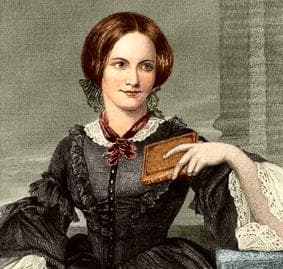
Charlotte Brontë was an English novelist and poet, the eldest of the three Brontë sisters who survived into adulthood and whose novels became classics of English literature.
Similar books
- Jane Eyre
Charlotte Brontë
4.1 (1.6M) average on GoodreadsHistorical FictionShares themes of a governess's struggles, unrequited love, and a strong female protagonist's journey for independence.
- The Tenant of Wildfell Hall
Anne Brontë
4.0 (90k) average on GoodreadsHistorical FictionExplores a woman's struggle for autonomy and a nuanced portrayal of love and societal expectations.
- Wuthering Heights
Emily Brontë
3.9 (1.3M) average on GoodreadsHistorical FictionFeatures intense emotional depth and complex, often tragic, romantic relationships set against a dramatic backdrop.
- Middlemarch
George Eliot
4.0 (136k) average on GoodreadsHistorical FictionCompared to George Eliot's Middlemarch, Villette is far more focused on the individual psychological experience rather than a broad social tapestry. While Middlemarch provides a panoramic view of a provincial town and its various inhabitants, exploring social dynamics, intellectual aspirations, and political reforms, Villette hones in almost exclusively on Lucy Snowe's subjective reality. Both novels critique societal limitations on women, but Villette's critique is more intensely personal and less overtly didactic than Eliot's.
- To Kill a Mockingbird
Harper Lee
4.3 (4.5M) average on GoodreadsHistorical FictionIn the 1930s Jim Crow South, Harper Lee writes about racial injustice, moral growth, and the quiet courage of a lawyer father, Atticus Finch, as seen through his young daughter's eyes.
- The Great Gatsby
F. Scott Fitzgerald
3.9 (3.8M) average on GoodreadsHistorical FictionIn the opulent Roaring Twenties, a mysterious millionaire's lavish parties hide his desperate, tragic pursuit of a lost love, exposing the emptiness within the American Dream.




Enjoyed the summary?
A summary gives you the shape of the book. The book itself has the detail, the examples and the voice.
Find Villette on AmazonAs an Amazon Associate, BookBrief earns from qualifying purchases. How we're funded