
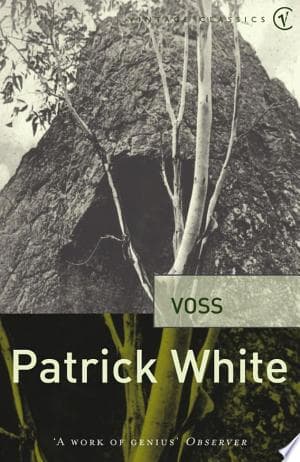
Synopsis
Covers the whole plot, including the ending.
- Difficulty
- Hard
- Pacing
- Slow
- Mood
- Atmospheric, Meditative, Intense, Philosophical, Austere
- Read it if
- You enjoy deep psychological exploration, lyrical prose, and a challenging narrative about human ambition, spiritual connection, and the Australian landscape.
- Skip it if
- You prefer fast-paced plots, straightforward character arcs, or lighthearted stories. This book can be dense and demands patience.
Voss Plot Summary
Covers the whole plot, including the ending.
The Arrival of Johann Ulrich Voss
Johann Ulrich Voss, a German explorer, arrives in Sydney in 1845, full of an almost messianic zeal to conquer the unknown Australian interior. He is introduced to the Bonners, a wealthy merchant family, and immediately makes an impression with his intense, almost confrontational personality. Mr. Bonner, intrigued by Voss's grand vision and potential for prestige, agrees to fund his expedition. During his stay, Voss meets Laura Trevelyan, Mr. Bonner's orphaned niece, a young woman of sharp intellect and independent spirit who is initially repulsed by his arrogance but soon finds herself drawn to his unsettling ambition. Their initial encounters are marked by intellectual sparring and a growing, unspoken connection.
Laura Trevelyan and the Unspoken Connection
Before Voss departs, he and Laura Trevelyan engage in a series of conversations that go beyond conventional courtship. Their discussions concern ambition, the nature of God, suffering, and the human spirit. Laura, initially resistant to Voss's hubris, gradually recognizes a shared depth and intensity within him that she rarely finds in others. Voss, in turn, is captivated by her intelligence and her ability to see beyond his outward persona. This intellectual and spiritual intimacy forms an almost telepathic bond between them, despite their limited physical proximity. Laura becomes the silent anchor for Voss's journey, and he, the consuming thought of her inner world.
Formation of the Expedition Party
Voss meticulously selects his expedition party, a varied group reflecting aspects of colonial society and human nature. This includes the pragmatic and initially skeptical Mr. Palfreyman, a natural scientist; the devoutly religious and somewhat naive Judd; the aspiring artist, Harry Robarts; the melancholic and intellectual Le Mesurier; and the morally ambiguous and manipulative Turner. Voss's leadership style is authoritarian and demanding, immediately setting a tone of strict discipline and unwavering commitment to his vision. He believes in the necessity of suffering and self-overcoming, which he projects onto his men, many of whom struggle to reconcile his grand pronouncements with the harsh realities of the impending journey.
The Journey Begins and Early Hardships
The expedition departs from Jildra, a remote outpost, and immediately encounters the unforgiving Australian land. The men face extreme heat, lack of water, treacherous terrain, and the psychological strain of isolation. Voss's leadership, while resolute, often borders on the tyrannical, as he pushes his men to their limits, viewing their suffering as a necessary crucible for spiritual growth. Early signs of dissent and personal grievances begin to surface among the party members, particularly between Voss and the more pragmatic individuals like Turner, who resents Voss's perceived arrogance and spiritual posturing. The initial optimism slowly gives way to a grim determination, punctuated by moments of despair.
Growing Dissension and Le Mesurier's Journal
As the expedition pushes deeper into the interior, the men's physical and mental states deteriorate. Sickness, exhaustion, and dwindling supplies worsen existing tensions. Le Mesurier, a sensitive and introspective member, begins to keep a detailed journal, recording the daily struggles, the growing animosity towards Voss, and his own evolving philosophical reflections. His entries provide a crucial internal perspective on the expedition's unraveling, capturing the men's disillusionment and the increasing isolation of Voss. The lack of significant geographical discoveries further dampens morale, challenging Voss's insistence on the journey's inherent spiritual value, while Turner actively works to undermine Voss's authority.
The Aboriginal Encounter and Psychological Strain
The expedition has several encounters with Aboriginal people, which are often marked by misunderstanding and fear, though sometimes by cautious curiosity. These interactions highlight the deep cultural divide between the explorers and the land's original inhabitants. More significantly, the sheer, indifferent vastness of the Australian desert begins to exert a deep psychological strain on the men. Voss, in particular, becomes increasingly withdrawn, his internal world becoming more dominant than external reality. His sense of self-importance grows, bordering on delusion, as he believes he is becoming one with the land, a god-like figure. This mental deterioration is mirrored by the increasing desperation of his men.
Mutiny and Division
The accumulated hardships and Voss's increasingly erratic and tyrannical behavior finally lead to a mutiny. Led by Turner and joined by others, a significant portion of the party rebels against Voss's leadership, demanding a return to civilization. In a tense confrontation, Voss refuses to turn back. The party splits, with Voss, Palfreyman, Le Mesurier, Judd, and Robarts continuing deeper into the interior, while the mutineers, including Turner, attempt to find their way back. This division marks a critical turning point, isolating Voss further and leaving him with only the most loyal or broken members of his original group, intensifying the sense of impending doom.
Voss's Decline and Palfreyman's Sacrifice
As the remaining party pushes onward, Voss's physical and mental health rapidly deteriorates. He suffers from fever, exhaustion, and increasingly vivid hallucinations, blurring the line between reality and his internal struggles. His leadership becomes less about guiding and more about a personal, almost masochistic quest for self-annihilation. During a severe drought, Palfreyman, the scientist, sacrifices himself in a desperate attempt to find water, believing his death might appease the land or a higher power. His selfless act deeply affects the remaining men and momentarily shakes Voss's egocentric worldview, hinting at a glimmer of humanity beneath his hardened exterior.
The Final Days and Voss's Death
Severely weakened and delusional, Voss is eventually killed by one of the Aboriginal guides, Jackie, who had remained with the party. The exact circumstances are ambiguous, but it appears to be an act of mercy or self-preservation, ending Voss's prolonged suffering and the madness that had consumed him. His death is not a triumphant conquest but a humbling, almost anonymous end in the vast, indifferent land he had sought to dominate. Le Mesurier, who dies shortly after Voss, and Judd are the last to perish. Only Jackie survives, carrying the fragmented story of the expedition's tragic conclusion.
Laura's Vision and the Aftermath
Back in Sydney, Laura Trevelyan experiences a deep, almost psychic connection to Voss's suffering and eventual death. She falls ill, experiencing visions and sharing in his agony, solidifying their spiritual bond across the vast distances. Years later, after the truth of the expedition's failure and the deaths of its members are confirmed, Laura is a figure associated with Voss's memory. She dedicates herself to charitable work and education, subtly shaping the public perception of Voss, transforming him from a failed conqueror into a symbolic figure of human endurance and spiritual quest. She becomes the keeper of his flame, ensuring his legacy endures, albeit in a form reshaped by her love and understanding.
The Public Memorial and Enduring Myth
Years after the expedition's demise, a memorial is erected in Sydney, commemorating Voss and his party. Laura, now an older woman, attends the ceremony, observing how the public memory of Voss has been sanitized and romanticized, detached from the brutal realities of his hubris and suffering. She reflects on how society constructs heroes. While the public celebrates Voss as a martyr of exploration, Laura holds the truer, more complex understanding of the man, his flaws, his ambition, and the deep, almost mystical connection they shared. The novel concludes with the enduring, yet ambiguous, legacy of Voss, forever intertwined with the untamed Australian spirit.
Voss Characters
Johann Ulrich Voss
Protagonist/Antagonist
A German explorer driven by an almost messianic ambition to conquer the Australian interior.
Voss is a complex and enigmatic figure, characterized by an immense will and a profound, almost spiritual, hubris. He views the Australian continent not just as a geographical challenge but as a spiritual battlefield where he can prove his superiority to God and man. He is a man of few words but intense presence, often alienating others with his arrogance and unyielding demands. His journey is as much an internal exploration of self and the nature of suffering as it is a physical expedition. He believes in self-mortification as a path to transcendence, leading his men through immense hardship, often to their breaking point.
Relationships: Laura Trevelyan (Intense, spiritual, telepathic bond, mutual intellectual fascination); Mr. Bonner (Financial patron, somewhat in awe of Voss's ambition); Mr. Palfreyman (Scientific counterpart, initially skeptical but later loyal and sacrificial); Turner (Antagonist within the expedition, resentful of Voss's authority); Le Mesurier (Intellectual and sensitive member, chronicler of the journey)
Laura Trevelyan
Protagonist/Supporting
An intelligent and independent young woman who forms a deep spiritual connection with Voss.
Laura is an orphaned niece of the wealthy Bonner family, distinguished by her sharp intellect, strong will, and unconventional views for a woman of her era. Initially repulsed by Voss's arrogance, she quickly recognizes a kindred spirit in his depth and intensity. She is drawn to his ambition but also sees his flaws. Her connection with Voss transcends physical presence, becoming a profound, almost telepathic bond that allows her to experience his suffering from afar. She is a symbol of inner strength and enduring love, ultimately becoming the guardian of Voss's complex legacy.
Relationships: Johann Ulrich Voss (Intense, spiritual, telepathic bond, mutual intellectual fascination); Mr. Bonner (Uncle and guardian, somewhat baffled by her intellect); Mrs. Bonner (Aunt, disapproves of Laura's independent spirit); Rose Portion (Friend and confidante, later her maid)
Mr. Palfreyman
Supporting
A gentle, devoutly religious scientist and a member of Voss's expedition.
Palfreyman is a quiet, scholarly man of science and deep religious faith. He initially joins the expedition with a more pragmatic and scientific purpose, often clashing with Voss's more mystical and self-aggrandizing pronouncements. Despite his initial skepticism, he develops a profound respect for Voss's unwavering will and eventually becomes one of his most loyal, if critical, followers. He represents a different kind of spiritual devotion, one rooted in humility and observation rather than dominance. His self-sacrificial act in the desert is a pivotal moment, highlighting the theme of suffering and redemption.
Relationships: Johann Ulrich Voss (Fellow explorer, initially skeptical but later loyal and sacrificial); Le Mesurier (Fellow intellectual, shared philosophical discussions)
Le Mesurier
Supporting
A sensitive, intellectual member of the expedition who chronicles the journey in his journal.
Le Mesurier is a young, educated man, prone to introspection and philosophical rumination. He joins the expedition partly out of a desire for experience and partly to escape the conventions of society. He serves as the expedition's chronicler, his journal entries providing a crucial, often poetic, internal perspective on the men's deteriorating physical and mental states, and their evolving perceptions of Voss. He is keenly aware of his own weaknesses and the hubris of others, particularly Voss. His writings reveal a deep sensitivity to the landscape and the psychological toll of the journey.
Relationships: Johann Ulrich Voss (Leader, object of fascination and fear); Mr. Palfreyman (Fellow intellectual, shared philosophical discussions)
Judd
Supporting
A former convict and a devoutly religious, simple man on the expedition.
Judd is a rough but deeply religious man, a former convict who finds solace and structure in his faith. He is one of the more resilient members of the expedition, enduring hardship with a stoic fatalism. His simplicity and unwavering belief in God stand in contrast to Voss's more complex, almost blasphemous, spiritual quest. He is loyal to Voss, viewing him with a mixture of awe and fear, and represents the common man's struggle and endurance in the face of overwhelming odds. He is often the voice of practical concern or simple piety amidst the intellectual debates.
Relationships: Johann Ulrich Voss (Leader, object of loyalty and fear); Harry Robarts (Fellow expedition member, often shares practical concerns)
Turner
Antagonist
A cynical and manipulative member of the expedition who challenges Voss's authority.
Turner is a pragmatic, calculating, and ultimately cynical member of the expedition. He resents Voss's arrogance and sees through his spiritual posturing, viewing the expedition purely in terms of practical survival and potential gain. He actively works to undermine Voss's authority, sowing seeds of discontent among the other men. He represents the darker, more self-serving aspects of human nature under duress, and his mutiny is a direct challenge to Voss's messianic leadership. He embodies the forces of rebellion against Voss's absolute will.
Relationships: Johann Ulrich Voss (Antagonistic, challenges Voss's authority and leadership)
Harry Robarts
Supporting
A young, impressionable artist on the expedition, seeking inspiration.
Harry Robarts is a young, somewhat naive artist who joins the expedition hoping to find inspiration in the Australian landscape. He is initially enthusiastic but quickly becomes overwhelmed by the harsh realities of the journey. He represents youthful idealism confronting brutal reality. He is impressionable and often struggles with the moral ambiguities of the expedition, clinging to his artistic sensibilities as a way to process the overwhelming experience. He is one of the more vulnerable members, physically and psychologically.
Relationships: Johann Ulrich Voss (Leader, initially admired but later feared); Judd (Fellow expedition member, often shares practical concerns)
Mr. Bonner
Supporting
A wealthy and influential Sydney merchant who funds Voss's expedition.
Mr. Bonner is a pragmatic and ambitious merchant, eager to gain prestige and status through association with a grand, historic endeavor. He is captivated by Voss's vision, seeing the potential for national glory and personal aggrandizement. While he provides the financial backing, he struggles to truly comprehend Voss's deeper, more spiritual motivations. He represents the colonial establishment's desire for conquest and recognition, often contrasting with the more profound, internal struggles of Voss and Laura.
Relationships: Johann Ulrich Voss (Financial patron, somewhat in awe of Voss's ambition); Laura Trevelyan (Uncle and guardian, somewhat baffled by her intellect)
Mrs. Bonner
Supporting
Mr. Bonner's wife, a conventional and somewhat superficial society woman.
Mrs. Bonner is the epitome of colonial society's conventions and social anxieties. She is preoccupied with appearances, social standing, and propriety. She views Voss with a mixture of admiration for his ambition and discomfort with his intensity and unconventional nature. She is often critical of Laura's independent spirit and intellectual pursuits, preferring her to conform to societal expectations. She serves as a foil to Laura, highlighting the constraints placed upon women in that era.
Relationships: Laura Trevelyan (Aunt, disapproves of Laura's independent spirit); Johann Ulrich Voss (Hostess, somewhat intimidated by his presence)
Jackie
Mentioned
An Aboriginal guide who accompanies Voss's expedition.
Jackie is one of the Aboriginal guides who accompanies Voss's expedition. He represents the indigenous presence in the vast Australian landscape, often overlooked or misunderstood by the European explorers. His actions are largely driven by his own cultural understanding and survival instincts, often in stark contrast to the European mindset. He is the one who ultimately ends Voss's suffering, an act that underscores the novel's themes of man's relationship with nature and the limits of human will.
Relationships: Johann Ulrich Voss (Guide, ultimately his killer)
Voss Themes
The Nature of God and Human Hubris
Voss explores the dangerous interplay between human ambition and a perceived divine mandate. Voss believes he is on a spiritual quest, attempting to become god-like by conquering the 'empty' continent. His hubris leads him to embrace suffering and tyranny, seeing himself as a Christ-figure or a deity. The novel questions whether his suffering is redemptive or merely a consequence of his inflated ego. This theme is evident in Voss's pronouncements to his men and in his internal monologues, where he grapples with his relationship to a higher power, culminating in a humbling, rather than triumphant, death. Laura, too, grapples with this, seeing the divine in his flawed humanity.
“'When man is truly humbled, when he has learnt that he is not God, then God may begin to use him.'”
Man vs. Nature/The Australian Landscape
The vast, indifferent, and often hostile Australian interior is a central character. It is not merely a backdrop but an active force that tests, breaks, and ultimately consumes the expedition. Voss initially seeks to conquer it, but the land's immense power forces a re-evaluation of human dominance. The land strips away all pretense, revealing the raw essence of each man. This theme is manifested through the detailed descriptions of the desert's harshness, the men's physical and mental deterioration, and the ultimate futility of their attempts to impose their will upon it. The land eventually absorbs Voss, becoming a part of his legend rather than being conquered by him.
“'The explorer is a man with a dream, a dream of a world that does not exist, and he goes to find it, and in finding it, he creates it.'”
Spiritual vs. Physical Exploration
The novel suggests that the physical journey into the unknown is a metaphor for an internal, spiritual quest. While the men are ostensibly charting new territory, Voss's true expedition is into the depths of his own soul and the nature of human will. The extreme physical suffering and isolation serve to strip away societal veneers, forcing the characters to confront their inner selves, their faith, and their capacity for good and evil. This theme is most powerfully seen in the telepathic connection between Voss and Laura, suggesting that true exploration can transcend physical boundaries, and in Le Mesurier's journal, which documents the men's psychological and spiritual unraveling.
“'Knowledge was never a matter of geography. Quite the contrary. It was by those deserts, which the explorer entered, that he has made his soul.'”
Love, Obsession, and Connection
The unconventional love story between Voss and Laura Trevelyan forms the emotional core of the novel. Their connection is not based on physical intimacy but on an intense intellectual and spiritual understanding, bordering on obsession. Despite meeting only a few times, their bond deepens across vast distances, with Laura experiencing Voss's suffering clairvoyantly. This theme explores the nature of deep human connection, suggesting that true love can transcend absence and even death, becoming a transformative force. Laura's enduring devotion and her role in shaping Voss's legacy highlight the power of this unique bond.
“'There are degrees of love, as there are degrees of light.'”
The Creation of Myth and Legacy
Voss examines how historical figures and events are transformed into myths by society. The brutal reality of Voss's failed expedition and his flawed character is gradually reshaped into a heroic narrative of exploration and martyrdom by the public and, significantly, by Laura. The novel critiques the process of myth-making, showing how uncomfortable truths are often sanitized for public consumption. Laura's role in preserving a more complex, nuanced memory of Voss, one that acknowledges his flaws alongside his ambition, is central to this theme, questioning who controls the narrative and what constitutes a 'hero'.
“'It is always the fate of the man who attempts to discover, to be misunderstood.'”
Plot Devices & Literary Techniques
Telepathic Connection
The unexplained, psychic link between Voss and Laura Trevelyan.
This device allows Voss and Laura to communicate and share experiences across vast geographical distances, particularly during Voss's suffering. It externalizes their profound spiritual and intellectual bond, making their love story unique and deeply symbolic. It also serves to heighten the drama of Voss's journey, as Laura's visions provide a parallel narrative of his decline, emphasizing the spiritual stakes of his expedition beyond mere physical exploration. This mystical element underscores the novel's exploration of transcendent human connection and the limits of rational understanding.
Le Mesurier's Journal
A written account by an expedition member, offering an internal perspective.
Le Mesurier's journal serves as an epistolary element, providing a crucial, intimate, and often poetic counterpoint to the more external narrative of the expedition. It offers insights into the psychological deterioration of the men, their growing disillusionment, and their evolving perceptions of Voss. The journal allows the reader direct access to the thoughts and philosophical struggles of a key character, adding depth and a sense of immediacy to the harrowing journey, while also chronicling the daily realities that Voss's grand vision often obscures. Its eventual recovery is vital for understanding the expedition's true end.
The Unseen Interior
The Australian continent itself, acting as a character and a symbolic force.
The vast, largely unexplored Australian interior functions not merely as a setting but as a powerful, almost sentient entity. It is the antagonist that Voss seeks to conquer, but it ultimately humbles and consumes him. Its indifference, its beauty, and its brutality are constantly emphasized, shaping the characters' fates and psychological states. This device highlights the theme of man's struggle against nature and the limits of human hubris, transforming a physical landscape into a profound spiritual and existential challenge. The 'emptiness' of the interior reflects the internal voids and spiritual quests of the characters.
Voss's Delusions and Hallucinations
The explorer's mental deterioration, leading to increasingly vivid, self-aggrandizing visions.
As Voss's physical condition worsens, he experiences frequent delusions and hallucinations, blurring the lines between reality and his internal world. These visions, often involving Laura or manifestations of his own perceived god-like status, serve to illustrate his descent into madness and the intense psychological pressure of the expedition. This device allows the author to explore Voss's complex inner life, his hubris, and his ultimate spiritual reckoning, making his journey as much a psychological one as a physical one. They are a manifestation of his struggle to maintain control and his increasing detachment from reality.
Voss Quotes
“Man is a concept, and he will remain a concept, until I have made him reality.”
“The only religion is the spirit, which is within.”
“Perhaps true knowledge comes of death by torture in the country of the mind.”
“He who has a personality, and is not afraid of it, will make his own laws.”
“All knowledge is sorrow.”
“The explorer is the only fit human occupation.”
“It is not beauty that we need, but the knowledge of the human heart.”
“God is in the rocks, and in the trees, and in the voice of the wind.”
“The country will break you, but it will also make you.”
“Love is not a comfortable thing. It is a terrible thing, like a storm.”
“To be truly alone is to be truly free.”
“The greatest journeys are not across continents, but within the soul.”
“We are all martyrs to our own delusions.”
“The wilderness is not a place, but a state of mind.”
Quiz
10 questions on the plot and the characters. Each answer comes with a short explanation.
Question 1
What is the primary motivation for Johann Ulrich Voss's expedition across the Australian continent?
- To discover new mineral resources for the British Empire.
- To prove his own spiritual and intellectual superiority over nature and other men.
- To escape a troubled past in Europe and start a new life.
- To map unexplored territories for future colonial expansion.
Show answer
B. To prove his own spiritual and intellectual superiority over nature and other men. Voss's expedition is driven by a profound, almost messianic desire to conquer the unknown and assert his will, seeing the journey as a test of his own divinity and a means to achieve a higher state of being.
Question 2
Before Voss departs, what significant, non-verbal exchange occurs between him and Laura Trevelyan that foreshadows their deep connection?
- They share a secret letter outlining their future plans.
- They exchange a prolonged, intense glance across a crowded room.
- Voss gives Laura a unique aboriginal artifact as a token of his esteem.
- Laura subtly touches Voss's hand during a formal handshake.
Show answer
B. They exchange a prolonged, intense glance across a crowded room. Their connection is established largely through unspoken understanding and telepathic communication, often initiated by intense eye contact, particularly at the Bight, symbolizing their immediate, profound bond.
Question 3
Which character serves as Voss's most loyal but ultimately disillusioned follower, who eventually writes the official account of the expedition?
- Mr. Bonner
- Judd
- Harry Robarts
- Frank Le Mesurier
Show answer
D. Frank Le Mesurier Frank Le Mesurier, the young, artistic member of the expedition, is initially devoted to Voss but suffers greatly and is the one who ultimately attempts to articulate the expedition's meaning, though his account is later interpreted by others.
Question 4
What significant event occurs during the expedition that severely impacts the group's morale and Voss's authority?
- They discover a vast, fertile plain, but Voss refuses to claim it.
- A major sandstorm destroys most of their supplies.
- A mutiny led by Judd results in the death of some members and the abandonment of others.
- They encounter a hostile aboriginal tribe that attacks their camp.
Show answer
C. A mutiny led by Judd results in the death of some members and the abandonment of others. Judd's mutiny is a pivotal moment, representing the breakdown of Voss's absolute control and highlighting the internal conflicts and human frailties within the expedition.
Question 5
How does Laura Trevelyan primarily experience and connect with Voss during his long absence?
- Through frequent letters exchanged via aboriginal messengers.
- Through vivid dreams, visions, and a shared spiritual consciousness.
- By following newspaper reports and maps of his progress.
- She travels to remote outposts hoping to meet him.
Show answer
B. Through vivid dreams, visions, and a shared spiritual consciousness. Laura's connection to Voss transcends physical presence. She experiences his journey and suffering through a profound, almost mystical empathy, often manifesting in dreams and intense mental communion.
Question 6
What is the ultimate fate of Voss in the Australian desert?
- He successfully crosses the continent and returns a hero.
- He is rescued by a search party, but dies shortly after from his injuries.
- He is killed by an Aboriginal man, having achieved a moment of spiritual transcendence.
- He simply vanishes without a trace, his fate unknown.
Show answer
C. He is killed by an Aboriginal man, having achieved a moment of spiritual transcendence. Voss is killed by an Aboriginal man, Jackie, in a moment that is ambiguous but suggests a culmination of his journey, a surrender to the land, and perhaps a final, brutal communion with the 'divine' he sought.
Question 7
What role does the character of Rose Portion play in Laura's life after Voss's departure?
- She becomes Laura's rival for social standing in Sydney.
- She represents Laura's connection to conventional domesticity and motherhood.
- She is Laura's confidante and only true friend.
- She is a constant source of gossip and societal pressure for Laura.
Show answer
B. She represents Laura's connection to conventional domesticity and motherhood. Rose, Laura's former maid and later the mother of Laura's adopted child, represents a more conventional path of female fulfillment, contrasting with Laura's intellectual and spiritual intensity.
Question 8
The novel suggests that true exploration is not merely physical but also involves a journey into what?
- The economic potential of new lands.
- The political landscape of colonial expansion.
- The inner self and the nature of human suffering.
- The scientific classification of flora and fauna.
Show answer
C. The inner self and the nature of human suffering. A central theme of Voss is that the physical journey into the unknown Australian interior mirrors an internal, spiritual journey into the depths of the human psyche, confronting pride, suffering, and the search for meaning.
Question 9
Years after the expedition, how is Voss remembered and commemorated by the Sydney society?
- His name is erased from official records due to the expedition's failure.
- He is largely forgotten, except by Laura and a few others.
- He is re-imagined as a heroic, almost saintly figure, despite the harsh realities of his journey.
- A monument is erected, but it is soon vandalized and forgotten.
Show answer
C. He is re-imagined as a heroic, almost saintly figure, despite the harsh realities of his journey. Society, particularly through the efforts of Laura and others, mythologizes Voss, transforming him into a symbol of Australian endurance and spiritual quest, sanitizing the brutal truth of his failure and suffering.
Question 10
What specific physical ailment does Voss suffer from during the expedition that contributes to his mental and physical decline?
- A recurring fever from a tropical disease.
- Severe scurvy due to lack of fresh food.
- A debilitating leg injury that becomes infected.
- A cancerous growth on his tongue, often causing him immense pain.
Show answer
D. A cancerous growth on his tongue, often causing him immense pain. Voss develops a growth on his tongue, which becomes increasingly painful and symbolic of his decaying physical self, contrasting with his soaring spiritual ambition.
Voss FAQ
What is the central premise of 'Voss'?
'Voss' centers on the ambitious and ultimately doomed expedition of German explorer Johann Ulrich Voss to cross the Australian continent in the 1840s. Simultaneously, it explores the profound, almost mystical psychic connection he develops with Laura Trevelyan, a young intellectual woman in Sydney, despite their limited physical interactions.
Who is Johann Ulrich Voss and what drives him?
Johann Ulrich Voss is a Prussian explorer, a man of immense will, arrogance, and a messianic complex, who believes his destiny is to conquer the Australian wilderness and, through suffering, achieve a god-like understanding. He is driven by a desire for absolute knowledge and mastery, viewing the landscape as a spiritual battleground.
Describe Laura Trevelyan's role in the narrative.
Laura Trevelyan is a sophisticated, orphaned niece living with the Bonners, who initially perceives Voss's ambition. She becomes his intellectual and spiritual counterpart, experiencing a deep, telepathic connection with him throughout his journey. Her unwavering belief and understanding of Voss's inner turmoil are crucial to his eventual, albeit tragic, transcendence.
How does the relationship between Voss and Laura evolve despite their physical separation?
Their relationship deepens through shared spiritual and psychological experiences, transcending physical distance. Laura becomes Voss's confidante and confessor in absentia, understanding his pride, suffering, and eventual humility, while Voss increasingly relies on her imagined presence for strength and introspection. Their bond is primarily telepathic and deeply intuitive.
What are the major obstacles Voss and his expedition party face?
The expedition faces extreme environmental hardships including drought, heat, and lack of water, leading to starvation and sickness. Internal strife, mutiny, and the psychological breakdown of his men, particularly the weak-willed Judd and the resentful Palfreyman, also plague Voss, ultimately leading to betrayal and his demise.
What is the significance of the character Palfreyman, the naturalist?
Palfreyman, the gentle naturalist, serves as a foil to Voss, representing humility, compassion, and a more spiritual, less domineering approach to nature. His eventual murder by Judd, after expressing empathy for Voss, highlights the expedition's descent into barbarism and the clash between different modes of understanding the world and God.
How do the 'dreams' and 'visions' experienced by Laura and Voss connect them?
Laura and Voss share vivid, often disturbing dreams and visions that act as a direct channel for their communication and shared suffering. These psychic experiences allow Laura to witness Voss's hardships and inner struggles, while Voss perceives Laura's steadfast belief, solidifying their spiritual union and mutual understanding.
What is the role of the Aboriginal characters in the narrative, particularly the old man who kills Voss?
The Aboriginal characters represent the ancient, inscrutable spirit of the land itself, and a wisdom that Voss initially dismisses but eventually confronts. The old man who ultimately kills Voss acts not out of malice, but as an instrument of the land, bringing an end to Voss's hubris and allowing for a kind of spiritual assimilation into the continent.
How does Voss's psychological state deteriorate and transform during the journey?
Voss's initial arrogance and belief in his own god-like power gradually erode through immense suffering and the betrayal of his men. He experiences profound psychological breakdown, hallucinations, and a forced humility, leading to a spiritual transformation where he sheds his pride and embraces a deeper, more empathetic understanding of humanity and the land.
Analyze Laura's psychological journey while Voss is away.
Laura undergoes a profound internal journey of self-discovery and spiritual awakening, moving beyond societal conventions. She becomes increasingly detached from the superficialities of Sydney society, immersing herself in Voss's imagined reality, and experiencing a form of psychological martyrdom as she shares his suffering from afar, solidifying her spiritual independence.
How does the novel explore themes of power and leadership through Voss?
Voss initially wields power through sheer force of will and intellectual superiority, demanding absolute obedience. However, as the expedition unravels, his conventional leadership fails. The novel demonstrates that true power, in the face of the overwhelming continent, lies not in dominance but in humility, self-knowledge, and a spiritual connection, which Voss only achieves through immense suffering.
What is the significance of suffering in 'Voss'?
Suffering is presented as the primary catalyst for spiritual growth and self-discovery in 'Voss.' Both Voss and Laura undergo immense personal suffering – physical for Voss, psychological and emotional for Laura – which strips away their illusions and societal constructs, leading them to a profound, almost mystical understanding of themselves, each other, and the divine.
Is Voss ultimately a hero or a tragic figure?
Voss is a complex figure who embodies elements of both. He is a tragic hero whose immense ambition and initial hubris lead to his demise, but his suffering and eventual humility allow him to achieve a profound spiritual transformation, making his death a form of transcendence rather than mere failure. His legacy is debated by the surviving characters.
How does the novel portray the Australian landscape?
The Australian landscape is depicted not merely as a physical setting but as a powerful, sentient entity that challenges and ultimately breaks Voss's European will. It is simultaneously beautiful, terrifying, indifferent, and sacred, acting as a spiritual crucible that demands humility and punishes hubris, forcing a re-evaluation of human dominance.
What is the meaning of Voss's 'resurrection' in the minds of the survivors?
Voss's 'resurrection' in the minds of the survivors, particularly Laura, signifies that his impact transcends his physical death. He becomes a symbol of spiritual endurance, the conquering of self, and the pursuit of ultimate knowledge. His memory is shaped by those who understood his true journey, transforming him into a legendary figure whose spirit lives on in the land and in those who loved him.
Does the novel offer a definitive answer to the nature of God or spirituality?
The novel does not offer a definitive, dogmatic answer to the nature of God, but rather explores spirituality through individual experience and suffering. It suggests that the divine can be found in the raw, indifferent power of nature, in profound human connection, and in the humility achieved through self-annihilation, rather than in conventional religious dogma. Voss's journey is a search for a personal, experiential God.
What is the significance of the final conversation between Laura and Mrs. Bonner at the end of the novel?
The final conversation highlights the enduring misunderstanding of Voss's true legacy by conventional society, represented by Mrs. Bonner, who sees him only as a failed explorer. Laura, however, articulates his spiritual triumph and the profound, almost religious, impact he had, asserting that 'he is there' in the land, embodying his transcendence and the private nature of her understanding.
How does White use symbolism throughout 'Voss'?
White employs rich symbolism: the desert symbolizes both a physical barrier and a spiritual crucible; Voss's stick represents his diminishing power and eventual humility; water symbolizes life, purity, and spiritual cleansing; and the various animals (e.g., the lizard) often reflect the harsh, indifferent, yet vital essence of the continent. Laura's garden symbolizes her inner world and connection to life.
About the author
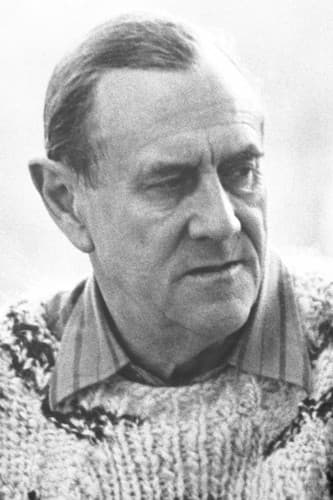
Patrick Victor Martindale White was a British-born Australian writer who published 12 novels, three short-story collections, and eight plays, from 1935 to 1987.
Similar books
- Cloudstreet
Tim Winton
4.0 (20k) average on GoodreadsLiterary FictionExplores the Australian identity and landscape with deep character studies and a sense of the mystical.
- Heart of Darkness
Joseph Conrad
3.4 (415k) average on GoodreadsHistorical FictionFeatures an isolated, ambitious figure's descent into madness in a remote, challenging environment.
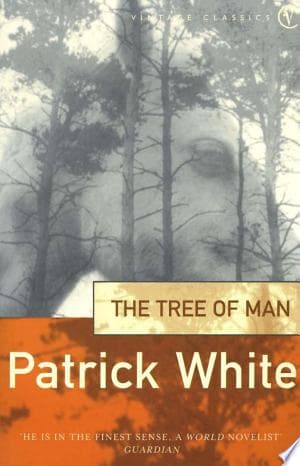
- The Tree of Man
Patrick White
Another seminal work by White, focusing on the spiritual journey and struggle against the Australian wilderness.
- The Old Man and the Sea
Ernest Hemingway
3.8 (831k) average on GoodreadsLiterary FictionA Cuban fisherman's long struggle with a giant marlin becomes a story of endurance and dignity, now retold for young adults with illustrations, phonetic guides, and writing prompts in Traditional Chinese.
- One Hundred Years of Solitude
Gabriel García Márquez
4.1 (753k) average on GoodreadsLiterary FictionThrough the multi-generational story of the Buendía family, a mythical town deals with the repeating patterns of time, love, and solitude, as the extraordinary mixes with the ordinary.
- The Goldfinch
Donna Tartt
3.9 (720k) average on GoodreadsLiterary FictionHaunted by a tragic explosion and clutching a stolen Dutch masterpiece, a young orphan navigates the opulent drawing rooms of New York and the gritty underbelly of the art world, desperately seeking connection and redemption amidst a life spiraling into crime and obsession.




Enjoyed the summary?
A summary gives you the shape of the book. The book itself has the detail, the examples and the voice.
Find Voss on AmazonAs an Amazon Associate, BookBrief earns from qualifying purchases. How we're funded