
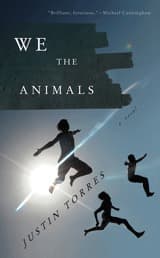
Synopsis
Covers the whole plot, including the ending.
- Difficulty
- Medium
- Pacing
- Moderate
- Mood
- Atmospheric, Raw, Melancholy, Poetic, Intense
- Read it if
- You want a short, intense, and poetic literary novel about a raw, working-class childhood and the complexities of family bonds and identity.
- Skip it if
- You prefer traditional plot structures, explicit resolutions, or find themes of domestic violence and sexual confusion unsettling.
We the Animals Plot Summary
Covers the whole plot, including the ending.
The Boys and the Wild
The novel opens with the three brothers, Manny, Joel, and the youngest unnamed narrator, living a wild life in upstate New York. Their days are full of impulsive games, often involving destruction and a connection to nature. They are always together, a unified group moving through their environment with a shared, animal-like energy. Their mother, Ma, is often absent due to her graveyard shift, leaving the boys to themselves, or under the supervision of their father, Paps. This early period establishes their intense bond and the chaotic, yet deeply felt, love that defines their family life, marked by fierce loyalty and underlying tension.
Paps and Ma's Volatile Love
Paps and Ma's relationship is a central, often destructive, force in the boys' lives. Their love is intense and passionate, but often erupts into violent arguments that traumatize the children. The boys often hide or try to intervene, seeking to keep some peace. Paps, a Puerto Rican man from Brooklyn, works hard but struggles with his temper, while Ma, a white woman, is often tired and prone to emotional breakdowns. These domestic battles create constant uncertainty and fear, pushing the brothers into a tighter unit for mutual protection and understanding, and exposing them to the raw parts of adult love and conflict.
The Narrator's Emerging Sensibility
As the brothers grow, the unnamed narrator slowly begins to stand out from Manny and Joel. While they remain a close unit, the narrator shows a growing sensitivity and an internal world that sets him apart. He notices details, feels emotions more deeply, and starts to question the rough norms of their shared life. This emerging individuality is subtle at first, often expressed through quiet observations or a desire for different kinds of play. It marks the start of his coming-of-age, hinting at a future where he might not fit as well into the 'pack' as he once did, suggesting a split in their paths.
Work and Responsibility
Paps sometimes takes the boys, especially Manny and Joel, to work with him. These experiences, often involving manual labor and long hours, are meant to teach them responsibility and the value of hard work. However, they also show the boys the harsh realities of their father's life and the struggles of the working class. The narrator, though sometimes present, often observes these scenes with a different view, perhaps less eager to copy the physical demands and more aware of the emotional toll. These work experiences solidify the older brothers' bond with Paps, while subtly widening the gap with the narrator's more thoughtful nature.
Sexual Awakenings and Confusion
As they near adolescence, the brothers' sexual curiosities and urges begin to appear. These moments are often confused, experimental, and sometimes tinged with violence or discomfort, reflecting the raw environment where they are raised. The narrator, in particular, experiences a developing attraction to other boys, which he struggles to understand and reconcile with his family's masculine world. These private explorations and shared, often unspoken, experiences with sexuality become a source of both bonding and increasing isolation for the narrator, as he deals with desires that set him further apart from his brothers' more conventional understanding of masculinity.
The Narrator's Secret Life
The narrator's growing awareness of his own difference leads him to create a secret inner life. He holds feelings and desires, especially his homosexual inclinations, that he knows his family would not understand or accept. This secrecy creates a growing divide between him and his brothers, even as he continues to take part in their shared activities. He begins to observe his family from a slight distance, becoming an analyst of their dynamics rather than just an actor within them. This internal separation is a step in his individuation, marking his transition from a complete member of 'we' to a more solitary 'I'.
Manny's Rebellions
Manny, the oldest brother, begins to show more noticeable rebellious behavior. He often clashes with Paps, mirroring his father's temper and asserting his own will. His rebellions are often destructive and impulsive, showing deep anger and frustration with their situation. He starts to pull away from the close family unit, seeking independence and expressing his discontent through defiance. This shift in Manny's behavior adds another layer of tension to the already fragile family dynamic, forcing the narrator to observe how his brothers cope with their challenging upbringing.
Joel's Struggle for Identity
Joel, the middle brother, struggles with his own identity among the strong personalities of Manny and Paps, and the narrator's emerging sensitivity. He often tries to mediate or adapt, but also experiences moments of confusion and anger. He is caught between the wildness of his childhood and the growing expectations placed on him as he matures. Joel's struggles are less outwardly rebellious than Manny's, but just as impactful, reflecting the complex internal world of a boy trying to find his place within a turbulent family. His internal conflicts often show up in quieter, more thoughtful moments, or in sudden bursts of frustration.
The Narrator's Escape
The narrator's internal separation eventually leads to a desire for physical and emotional escape. He starts to actively seek experiences outside the family unit, finding comfort in solitude, reading, or exploring his own developing identity. This growing distance is painful, as it means detaching from the fierce love and unity that defined his early life. He understands that to truly become himself, he must break free from the powerful, almost suffocating, bonds of his family, even if it means leaving behind the only world he has ever known and the brothers with whom he shared everything. This period marks his conscious effort to make an independent path.
The Fracturing of the Pack
As each brother matures and develops distinct identities, the once-unbreakable 'pack' begins to break apart. Manny's rebellions, Joel's quiet struggles, and the narrator's increasing introspection and secret life pull them in different directions. The shared understanding and fierce unity of their childhood gives way to individual paths and growing unspoken distances. This breaking is a painful, unavoidable result of their coming-of-age, as the boys shed their collective identity to become individuals. The narrator observes this disintegration with sadness and a sense of liberation, understanding it as a necessary step towards his own future.
The Narrator's Final Departure
The novel ends with the narrator's difficult, yet firm, departure from his family. He knows that to fully embrace his identity and pursue a different life, he must leave the intense, often destructive, environment of his home. This act is not one of rejection, but of self-preservation and the pursuit of authenticity. It is a painful severing of the primal bonds that shaped him, but also an essential step towards his own future. The ending is ambiguous, suggesting that while he leaves the physical space, the indelible marks of his family and childhood will forever be a part of him, moving him forward while anchoring him to his past.
We the Animals Characters
The Narrator (unnamed)
Protagonist
The youngest of three brothers, sensitive and observant, struggling with his identity.
The unnamed narrator is the youngest of the three brothers, characterized by his acute sensitivity, poetic observations, and an emerging sense of individuality. He is an introspective child who often processes the chaos of his family life internally, rather than through outward aggression like his brothers. His journey is marked by a growing awareness of his difference, particularly his burgeoning homosexual desires, which he keeps secret. He feels the intense love and pain of his family deeply, leading him to both cherish and ultimately seek escape from its suffocating bonds.
Relationships: Manny (Older brother, often protective but also a source of conflict and wildness.); Joel (Older brother, a companion in games and shared experiences, but eventually a figure of increasing distance.); Ma (Mother, a complex figure of love, exhaustion, and emotional volatility.); Paps (Father, a powerful and sometimes violent figure, both provider and source of fear.)
Manny
Supporting
The oldest brother, wild, rebellious, and fiercely protective.
Manny is the oldest of the three brothers, embodying a raw, untamed energy. He is often the leader in their boisterous games and displays a fierce, almost animalistic loyalty to his siblings. However, as he grows older, he becomes increasingly rebellious and prone to anger, mirroring some of Paps's volatile traits. He struggles with the constraints of their life and the expectations placed upon him, often expressing his frustrations through impulsive and sometimes destructive acts. He represents the physical and aggressive aspects of their shared childhood.
Relationships: The Narrator (Younger brother, whom he sometimes protects but also leads into mischief.); Joel (Younger brother, a partner in their wild games and a fellow recipient of Paps's discipline.); Paps (Father, with whom he has a complex relationship marked by both emulation and intense conflict.)
Joel
Supporting
The middle brother, often caught between his siblings and the family's turbulence.
Joel is the middle brother, often acting as a bridge between Manny's wildness and the narrator's sensitivity. He participates enthusiastically in their games but also experiences moments of quiet contemplation and struggle. He grapples with his own identity, trying to find his place within the powerful dynamics of his family. Joel's character reveals the internal pressures of conformity and the search for self amidst chaos, often expressed through his efforts to adapt or mediate, though he also has his own outbursts of frustration and confusion.
Relationships: The Narrator (Younger brother, with whom he shares many experiences and a developing sense of difference.); Manny (Older brother, a leader and partner in their childhood adventures.); Ma (Mother, whose emotional struggles impact him deeply.)
Ma
Supporting
The exhausted and emotionally volatile mother, a source of both love and pain.
Ma is the white mother of the three boys, often depicted as exhausted from working the graveyard shift and emotionally fragile. Her love for her sons is fierce, but her relationship with Paps is volatile, leading to frequent, violent arguments that traumatize the children. She struggles with the demands of motherhood and her own emotional well-being, sometimes retreating into sleep or outbursts. Despite her struggles, she represents a powerful, primal source of love and warmth for her children, even as she is also a source of their pain and fear.
Relationships: Paps (Husband, with whom she shares a passionate but destructive relationship.); The Narrator (Son, to whom she provides a complex mix of comfort and emotional distress.); Manny (Son, for whom she cares deeply despite his rebellious nature.); Joel (Son, whom she loves and strives to protect amidst the family chaos.)
Paps
Supporting
The Puerto Rican father, a hardworking but temperamental patriarch.
Paps is the Puerto Rican father, a hardworking man from Brooklyn who strives to provide for his family. He is a powerful, often intimidating figure, prone to fits of temper and violence, particularly in his arguments with Ma. He instills a sense of toughness and traditional masculinity in his sons, often taking them to work with him. While he loves his children, his methods of discipline can be harsh, and his emotional volatility creates an atmosphere of fear and uncertainty. He represents the strong, sometimes destructive, patriarchal force in the family.
Relationships: Ma (Wife, with whom he has a passionate and often violent relationship.); Manny (Son, with whom he shares a complex bond of emulation and conflict.); The Narrator (Son, whom he struggles to understand due to the narrator's sensitivity and difference.)
We the Animals Themes
The Brutality and Beauty of Childhood
The novel shows childhood as a time of intense, often conflicting experiences. The boys' lives are full of wild, uninhibited play, a deep connection to nature, and an animal-like joy in their shared existence. Yet, this beauty is always contrasted with the brutality of their home life—the parents' violent arguments, the poverty, and the raw exposure to adult struggles. Scenes like smashing tomatoes or building kites from trash highlight the inventive joy, while hiding under beds during parental fights shows the constant fear. This theme explores how these dualities shape the children's understanding of the world and their place in it.
“We were so many boys then, and we did not yet know what we were.”
The Search for Identity and Belonging
A main theme is the narrator's struggle to form an individual identity separate from his family's collective 'we.' At first, his identity is fully part of his brothers' 'pack' mentality. However, as he matures, his growing sensitivity, introspection, and developing homosexual desires create a strong sense of being alone. This theme is clear in his secret life, his observations of his family from a distance, and his eventual decision to leave. The novel explores the painful process of becoming an individual, the longing to belong, and the need to break away from primal bonds to become one's true self, even if it means profound loneliness.
“We were not gentle, and we were not kind, but we were ours. We were the animals.”
The Nature of Family and Love
The book examines the complex, often destructive, nature of family love. Paps and Ma's relationship is a powerful, passionate force that is both deeply loving and intensely violent, creating a foundation of security and terror for their children. The brothers' bond is equally fierce—a primal, protective unity born from their shared experiences and mutual need for survival. The novel questions typical ideas of 'good' and 'bad' love, showing it as a raw, untamed force that shapes individuals completely. It suggests that even painful and chaotic love can be deeply formative and have its own kind of beauty and truth.
“Their love was a serious, dangerous thing that makes and unmakes a family many times.”
Masculinity and Vulnerability
The novel explores different parts of masculinity within a working-class, Puerto Rican-white family. Paps embodies a traditional, often aggressive, form of masculinity, defined by hard work, stoicism, and a volatile temper. Manny and Joel largely copy this, engaging in rough play and struggling with their own expressions of anger and frustration. The narrator, however, is different, showing heightened sensitivity and a developing sexuality that challenges these established norms. This theme highlights the pressure to conform to specific masculine ideals and the vulnerability and isolation that can happen when one deviates, forcing the narrator to navigate a world that does not easily accept his true self.
“We wanted to be hard, but we were soft. We wanted to be men, but we were boys.”
Plot Devices & Literary Techniques
First-Person Plural Narration (initially)
The story is told from the 'we' perspective of the three brothers, then shifts to 'I'.
The novel masterfully employs a first-person plural narration ('we') in its early sections, creating an immediate and visceral sense of the brothers' unified, almost collective, identity. This 'we' underscores their intense bond, shared experiences, and the idea of them as an inseparable 'pack' or 'animals.' As the narrator begins his journey of individuation, the narration subtly shifts to a first-person singular ('I'), mirroring his growing sense of self and alienation from his brothers. This narrative device powerfully reflects the central theme of identity and the painful transition from collective belonging to solitary selfhood.
Symbolism of Animals
Animals and animalistic behavior are used to represent the characters' primal nature.
Throughout the novel, animals and animalistic imagery are used to symbolize the raw, untamed nature of the brothers' childhood and their family dynamics. The title itself, 'We the Animals,' sets this tone. Their play is often described in terms of packs, hunting, and primal urges. Their parents' volatile love is likened to a dangerous, natural force. This symbolism highlights the instinctive, uninhibited, and sometimes brutal aspects of their existence, suggesting that beneath the veneer of human society, there lies a more primal self. It also emphasizes the narrator's struggle to reconcile his sensitive nature with this wild, animalistic environment.
Fragmented Structure and Vignettes
The story is told through a series of short, poetic vignettes rather than a linear plot.
The novel is structured as a series of short, lyrical, and often non-linear vignettes rather than a traditional continuous plot. Each vignette offers a snapshot or impression of a particular moment, memory, or feeling. This fragmented structure mirrors the chaotic and episodic nature of childhood memory and the narrator's internal, often disjointed, processing of events. It allows for intense focus on specific images, emotions, and sensory details, creating a deeply immersive and poetic reading experience that emphasizes the emotional truth of the narrative over strict chronological progression. This style also reflects the narrator's evolving perspective and his later role as an observer and interpreter of his past.
Sensory Language and Imagery
Rich, vivid descriptions appealing to all five senses create an immersive experience.
Torres employs exceptionally rich and visceral sensory language, immersing the reader directly into the boys' experiences. Descriptions often evoke touch, smell, taste, sight, and sound with intense detail—the feel of dirt, the smell of their mother's perfume, the taste of stolen food, the sounds of parental arguments. This device serves to ground the abstract themes of identity and family in a tangible, physical reality. It makes the world of the novel feel immediate and raw, reflecting the unfiltered way children experience their environment. This powerful imagery also allows the narrator to convey complex emotions and memories through concrete details.
We the Animals Quotes
“We wanted to be good so bad, but we were just animals, and animals are messy.”
“I’m not a boy, I’m not a girl. I’m just me.”
“Our father was a myth, a monster, a god. Our mother was a bird, a whisper, a song.”
“We were always running, toward something or away from something, but always running.”
“The quietest moments were the most dangerous.”
“We were a pack, a gang, a pride. We were brothers.”
“There was a wildness in us that couldn't be tamed, a hunger that couldn't be fed.”
“Sometimes you just had to let the bad things happen, because trying to stop them only made them worse.”
“Our bodies were maps of our lives, scarred and bruised and beautiful.”
“We lived in a house that was always falling apart, just like us.”
“Love was a thing with teeth, and it bit.”
“My brothers were my shadows, my mirror, my constant reminder of who I was and who I wasn't.”
“We made our own rules, because the world outside didn't have any for us.”
“The world was a rough place, but we were rougher.”
Quiz
10 questions on the plot and the characters. Each answer comes with a short explanation.
Question 1
What is the primary ethnicity of the father (Paps) in the novel?
- Italian-American
- Puerto Rican
- Irish-American
- African-American
Show answer
B. Puerto Rican The book explicitly states that Paps is Puerto Rican and Ma is white, both from Brooklyn.
Question 2
What physical action do the brothers often engage in, as mentioned in the description, that symbolizes their wild and destructive play?
- Smashing windows with rocks
- Tearing up books
- Smashing tomatoes all over each other
- Setting small fires
Show answer
C. Smashing tomatoes all over each other The description specifically mentions 'smashing tomatoes all over each other' as one of their childhood activities.
Question 3
What is the mother's typical work shift that requires the children to tiptoe around the house?
- Morning shift
- Afternoon shift
- Graveyard shift
- Weekend shift
Show answer
C. Graveyard shift The synopsis states they tiptoe around the house as their mother sleeps off her 'graveyard shift'.
Question 4
The narrator's journey in the novel is characterized by a shift from intense familial unity to what state?
- Profound boredom
- Profound alienation
- Profound happiness
- Profound ambition
Show answer
B. Profound alienation The description highlights the journey 'from the intense familial unity felt by a child to the profound alienation he endures'.
Question 5
The parents' love is described using which pair of adjectives?
- Gentle and quiet
- Serious and dangerous
- Distant and cold
- Playful and fleeting
Show answer
B. Serious and dangerous The synopsis states that Paps and Ma's love is 'a serious, dangerous thing that makes and unmakes a family many times'.
Question 6
What common item do the brothers use to build kites?
- New fabric
- Old newspapers
- Trash
- Cardboard boxes
Show answer
C. Trash The description mentions the brothers 'building kites from trash', highlighting their resourcefulness amidst poverty.
Question 7
The novel is described as reinventing which traditional literary genre?
- Mystery novel
- Science fiction
- Coming-of-age story
- Historical fiction
Show answer
C. Coming-of-age story The synopsis explicitly states, 'this beautiful novel reinvents the coming-of-age story'.
Question 8
The family's life is characterized by which of the following emotional states?
- Monotony and predictability
- Calmness and serenity
- Chaos, heartbreak, and the euphoria of belonging
- Indifference and detachment
Show answer
C. Chaos, heartbreak, and the euphoria of belonging The description states, 'Life in this family is fierce and absorbing, full of chaos and heartbreak and the euphoria of belonging completely to one another.'
Question 9
What specific term is used to describe the force with which the protagonist is propelled toward their future, emphasizing an urgent, almost unavoidable separation?
- Terminal velocity
- Escape velocity
- Light speed
- Sound barrier
Show answer
B. Escape velocity The final sentence of the description uses the phrase 'propelled at escape velocity toward our futures,' highlighting the theme of breaking away from one's origins.
Question 10
The novel is praised for its 'magical language' and 'unforgettable images' in exploring what kind of landscape?
- An urban, concrete jungle landscape
- A serene, pastoral landscape
- A viscerally charged landscape of growing up
- A desolate, post-apocalyptic landscape
Show answer
C. A viscerally charged landscape of growing up The description states it is 'a stunning exploration of the viscerally charged landscape of growing up'.
We the Animals FAQ
What is the central conflict in 'We the Animals'?
The central conflict revolves around the three brothers' struggle for identity and survival within their chaotic, often violent, family unit, set against the backdrop of their parents' tumultuous love and the family's poverty. This internal and external battle is exacerbated as the youngest brother begins to recognize his burgeoning individuality and difference from his siblings and parents.
Who are the main characters in the book?
The main characters are the unnamed youngest brother, who serves as the narrator; his two older brothers, Manny and Joel; and their parents, Paps (Puerto Rican) and Ma (white), whose volatile relationship forms the emotional core of the family's dynamic. The brothers' collective identity is initially paramount before the narrator's individual journey begins.
What role does the setting play in the narrative?
The rural, somewhat isolated setting, likely in upstate New York, amplifies the family's insular world, making their home both a sanctuary and a battleground. The natural environment—woods, fields, the lake—provides both a playground for the brothers' wildness and a backdrop for their parents' struggles, reflecting their primal existence.
How does the narrative perspective evolve throughout the novel?
The novel begins with a collective 'we' perspective, embodying the unified, almost indistinguishable identity of the three brothers in their early childhood. As the youngest brother matures and becomes more aware of his differences, the narrative gradually shifts to a more individual 'I,' signifying his growing separation and self-awareness.
What is the significance of the title, 'We the Animals'?
The title reflects the brothers' feral, instinctual existence, their deep bond, and their often-untamed behavior, which mirrors the raw, animalistic nature of their parents' love and struggles. It also hints at the collective identity they share before the narrator's eventual break from the pack.
Are there any subtle clues about the narrator's sexuality early in the book?
Yes, there are subtle hints. The narrator often observes his brothers and other boys with an intense, sometimes sensual, gaze, and his descriptions of physical closeness among the brothers can be read as containing an underlying yearning or sensitivity that foreshadows his later self-discovery. His difference from his brothers is often framed through his unique way of perceiving the world and their bodies.
What is the symbolic meaning of the 'Paps' diary entries?
Paps' diary entries, discovered by the narrator, symbolize the father's hidden vulnerabilities, his longing for a different life, and his internal struggles with his own identity and desires. They reveal a complexity beyond his often-harsh exterior, offering a glimpse into the cyclical nature of family trauma and the burdens he carries.
How does the recurring motif of the 'hole' or 'pit' function in the story?
The 'hole' or 'pit' motif, whether literal or metaphorical, represents the family's precarious existence, their poverty, and the emotional voids within their lives. It also symbolizes the narrator's own internal struggles, his feelings of being trapped or falling into despair, and his eventual need to escape the destructive patterns of his family.
What is the psychological impact of Ma's graveyard shifts on the family?
Ma's graveyard shifts create a constant state of tension and instability, as her sleep deprivation often leads to irritability or emotional withdrawal, contributing to the chaotic home environment. It also forces the brothers to navigate long periods without a present parental figure, fostering both their independence and their vulnerability.
How does the 'fight or flight' response manifest in the brothers?
The brothers primarily exhibit a 'fight' response through their aggressive play, their collective defiance, and their physical altercations, often mirroring the violence they witness between their parents. However, the youngest narrator increasingly leans towards a 'flight' response, seeking escape through fantasy, observation, and eventually, physical departure, as his coping mechanisms evolve.
Describe the psychological dynamic between Paps and Ma.
Paps and Ma share a passionate, yet deeply destructive, psychological dynamic characterized by intense love, volatile arguments, and a cycle of breaking apart and coming back together. Their relationship is a complex interplay of codependency, resentment, and a shared history that binds them despite the pain they inflict on each other and their children.
How does the narrator's identity formation differ from Manny and Joel's?
The narrator's identity formation is marked by a growing sense of otherness and introspection, contrasting with Manny and Joel's more outwardly aggressive and traditionally masculine expressions of identity. While his brothers embrace the 'animal' nature of their family, the narrator increasingly questions and eventually rejects it, seeking a path that aligns with his burgeoning sensitivity and sexuality.
Is the ending of the book optimistic or pessimistic for the narrator?
The ending is ambiguously optimistic. While the narrator makes a definitive break from his family, suggesting a chance at self-discovery and freedom, the act of leaving is born out of pain and alienation. The future remains uncertain, but the very act of choosing his own path, despite the heartbreak, implies a hopeful, albeit solitary, beginning.
To what extent is the narrator's 'escape' a betrayal of his family?
The narrator's 'escape' can be interpreted as both a necessary act of self-preservation and a profound betrayal of the intense familial unity he once shared. While he needs to break free to survive and define himself, his departure leaves his brothers and parents to continue their struggles without him, severing a fundamental bond.
What is the significance of the repeated imagery of bodies and physicality?
The repeated imagery of bodies and physicality underscores the raw, visceral nature of the family's existence, their connection to the natural world, and the violence and sensuality that permeate their lives. It highlights the brothers' developing physical identities and the narrator's unique, often sensual, perception of the world around him, particularly other male bodies.
How does the book challenge traditional notions of masculinity?
The book challenges traditional masculinity by presenting a spectrum of male identities, from Paps's volatile, provider role to the brothers' wild, aggressive play, and ultimately, the narrator's sensitive, introspective, and queer identity. It shows the destructive aspects of rigid masculinity while also celebrating a different kind of strength found in vulnerability and self-discovery.
Could the 'we' in the early chapters be seen as a coping mechanism for the narrator?
Yes, the collective 'we' can be interpreted as a coping mechanism for the narrator, allowing him to subsume his individual anxieties and fears within the perceived strength and unity of the brotherhood. It's a way to navigate their chaotic home life by blurring individual responsibility and identity, until he can no longer maintain the facade.
How does the 'magical language' mentioned in the synopsis manifest in the text?
The 'magical language' manifests through the narrator's intensely sensory and poetic descriptions, imbuing everyday objects and events with an almost mythic quality. It's characterized by vivid imagery, metaphorical richness, and a dreamlike quality that elevates the brutal realities of their lives into something profound and unforgettable, blurring the lines between reality and heightened perception.
About the author

Justin Torres is an American author known for his debut novel, "We the Animals," which explores themes of family and identity through the lens of a young boy growing up in a mixed-race household. His work often delves into the complexities of personal and cultural experiences, blending fiction with autobiographical elements. Torres has received recognition for his contributions to contemporary literature.
Similar books
- The House on Mango Street
Sandra Cisneros
3.6 (126k) average on GoodreadsYoung AdultFeatures a lyrical, episodic structure and explores themes of childhood, poverty, and identity through a young narrator's perspective.
- The Old Man and the Sea
Ernest Hemingway
3.8 (831k) average on GoodreadsLiterary FictionA Cuban fisherman's long struggle with a giant marlin becomes a story of endurance and dignity, now retold for young adults with illustrations, phonetic guides, and writing prompts in Traditional Chinese.
- One Hundred Years of Solitude
Gabriel García Márquez
4.1 (753k) average on GoodreadsLiterary FictionThrough the multi-generational story of the Buendía family, a mythical town deals with the repeating patterns of time, love, and solitude, as the extraordinary mixes with the ordinary.
- The Goldfinch
Donna Tartt
3.9 (720k) average on GoodreadsLiterary FictionHaunted by a tragic explosion and clutching a stolen Dutch masterpiece, a young orphan navigates the opulent drawing rooms of New York and the gritty underbelly of the art world, desperately seeking connection and redemption amidst a life spiraling into crime and obsession.
- Little Fires Everywhere
Celeste Ng
4.1 (713k) average on GoodreadsLiterary FictionIn Shaker Heights, an artist and her daughter move in, and their free-spirited lives clash with a rule-bound matriarch, revealing hidden conflicts beneath a perfect surface.
- Eleanor Oliphant Is Completely Fine
Gail Honeyman
4.3 (708k) average on GoodreadsLiterary FictionA lonely woman's structured life changes when an IT guy and an elderly man help her learn to open her heart.





Enjoyed the summary?
A summary gives you the shape of the book. The book itself has the detail, the examples and the voice.
Find We the Animals on AmazonAs an Amazon Associate, BookBrief earns from qualifying purchases. How we're funded