
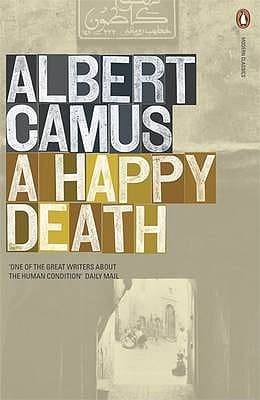
Synopsis
Covers the whole plot, including the ending.
- Difficulty
- Medium
- Pacing
- Moderate
- Mood
- Philosophical, Reflective, Existential, Lyrical
- Read it if
- You are fascinated by existential themes, philosophical fiction, or the early works of Albert Camus, especially as a precursor to 'The Stranger'.
- Skip it if
- You prefer fast-paced plot-driven narratives, clear moral frameworks, or are uncomfortable with morally ambiguous protagonists.
A Happy Death Plot Summary
Covers the whole plot, including the ending.
The Burden of Routine and the Encounter with Zagreus
Patrice Mersault, a poor shipping clerk in Algiers, is unhappy with his life. He feels stuck in his routine job and constant money worries, believing these stop him from truly living. He wants a life of leisure and deep experiences but sees no way to get it. Mersault often visits Zagreus, a wealthy man in a wheelchair, who speaks clearly about living fully and finding happiness through conscious will, even if it means ignoring common morality. Zagreus's statements about needing time and money for true freedom resonate with Mersault's own desires, planting a dangerous idea in his mind.
The Murder of Zagreus
After more visits where Zagreus talks about his philosophy of life and death, Mersault's desire to escape his dull life becomes overwhelming. He interprets Zagreus's thoughts on a "happy death" and the importance of having means to live freely as a reason to take what he needs. In a planned act, Mersault shoots Zagreus, making it look like a suicide. He takes Zagreus's money, believing this act, though morally wrong by society's rules, is necessary for his freedom and his pursuit of true happiness and a "conscious death."
Life with Catherine and the Pursuit of Simple Pleasures
After the murder, Mersault takes time off from his job. He moves in with Catherine, a woman he has a casual relationship with. He uses Zagreus's money to live without working, enjoying simple pleasures like swimming, sunbathing, and time with friends. He tries to find contentment in these daily experiences, thinking that freedom from money worries will let him appreciate life more. But a hidden unease and the weight of his secret remain, stopping him from fully reaching the "happy death" he imagines. He still feels a lack of true, deep joy.
The Sanatorium and the Circle of Friends
Unhappy with his life in Algiers and seeking a deeper sense of self, Mersault travels to a sanatorium in the mountains, supposedly for his health. There, he joins a unique community of three women—Rose, Claire, and Martha—who share a house and live simply, pooling their resources. This communal life offers Mersault a different view of human connection and the search for happiness. He observes their quiet routines, their acceptance of life's limits, and their attempts to find meaning in shared existence. This contrasts sharply with his earlier, more individual pursuit of freedom.
Travels and the Confrontation with Self
After leaving the sanatorium, Mersault travels extensively through Europe, visiting places like Prague and Genoa. This journey is a deliberate attempt to escape his past and find a new life. But despite the new surroundings and no money worries, he feels increasingly alone. The grand cities and beautiful landscapes do not bring him the deep joy or purpose he expected. Instead, he faces the persistent emptiness within himself, realizing that external things alone cannot provide the "happy death" he seeks. True contentment, he understands, must come from within.
The Return to Algiers and the Search for Meaning
Mersault, now ill with a serious lung condition, returns to Algiers, his childhood home, knowing he is dying. He is tired from his travels and his constant, but unfulfilled, search for happiness. The familiar sights and sounds of Algiers, especially the strong sunlight and the sea, bring him calm and a connection to his past. He rents a small house by the sea, wanting solitude and peace for his final days. He is no longer driven by a frantic pursuit of external happiness but by quiet reflection, trying to make sense of his actions and experiences.
The Acceptance of Life and Death
Confined to his small house by the sea, Mersault's illness worsens. He spends his days thinking about existence, the sun, the sea, and his own death. He reflects on his past actions, including Zagreus's murder, not with regret, but with a detached understanding of his choices. He begins to let go of his earlier worries about finding a perfect "happy death," instead embracing the simple, physical reality of his present. The world around him, especially nature, becomes a source of deep, if melancholic, beauty and a way to quiet acceptance.
The Embrace of the World
In his final days, Mersault has intense, almost mystical, moments with nature. He feels the sun's warmth, hears the waves, and watches the changing light, all of which fill him with a deep sense of belonging and peace. He realizes that happiness is not something achieved through wealth or specific actions, but an inherent quality of existence, found by consciously embracing the present. The weight of his past actions, including the murder, seems to lift as he becomes one with the indifferent, beautiful world around him.
The Happy Death
Patrice Mersault dies alone in his house by the sea, not with anger, hatred, or regret, but with deep peace and acceptance. His death is not dramatic, but a quiet end to his journey toward self-awareness. He has come to terms with his life, his choices, and his death, finding a form of happiness not in external things or a specific state, but in completely surrendering to the indifferent beauty of the world and his place in it. He achieves his "happy death" by consciously embracing the end, having reconciled his existence with the absurd.
A Happy Death Characters
Patrice Mersault
Protagonist
A young, disillusioned shipping clerk who seeks to achieve a 'happy death' through radical means.
Patrice Mersault is a young, impoverished man in Algiers, initially defined by his profound dissatisfaction with the monotony of his life and his lack of financial freedom. He is driven by an intense desire for happiness and a 'conscious death,' believing that money and leisure are prerequisites for true existence. His actions, including murder, stem from this philosophical conviction rather than malice. He is introspective, often detached, and struggles to connect deeply with others, yet he yearns for a profound connection to life itself. Mersault is a figure of philosophical experimentation, testing the boundaries of morality in his quest for an authentic existence.
Relationships: Zagreus (Philosophical mentor and victim; Mersault takes his money and life to achieve his goals.); Catherine (Casual lover; a companion during his initial period of leisure, but not a deep connection.); Rose, Claire, Martha (Communal housemates; they offer a different model of living and connection, albeit temporary for Mersault.)
Zagreus
Supporting/Catalyst
A wealthy, invalid man whose philosophical musings inspire Mersault's radical actions.
Zagreus is a wealthy, bedridden invalid who possesses a sharp intellect and a profound, albeit cynical, philosophy of life. He believes that true happiness requires both time and money, and that one must consciously choose and create their own life, even if it means transcending conventional morality. He articulates the concept of a 'happy death' as a conscious, chosen end to a life fully lived. His intellectual influence on Mersault is immense, effectively providing the philosophical justification for Mersault's subsequent actions. He is a catalyst for Mersault's journey, even though he becomes his victim.
Relationships: Patrice Mersault (Philosophical interlocutor and later, his murderer; Zagreus's ideas profoundly influence Mersault.)
Catherine
Supporting
Mersault's casual lover, representing a superficial attempt at happiness.
Catherine is a woman with whom Mersault has a casual, uncomplicated physical relationship. She is easygoing and represents a more conventional, albeit uncommitted, form of companionship and pleasure. She shares in Mersault's initial period of leisure after the murder, enjoying simple activities like swimming and sunbathing. However, their relationship lacks depth or profound emotional connection. She serves as a foil to Mersault's deeper existential struggles, highlighting his inability to find lasting happiness in ordinary human relationships or external comforts alone.
Relationships: Patrice Mersault (Casual lover; their relationship is based on physical intimacy and shared leisure, but lacks deep emotional connection.)
Rose, Claire, and Martha
Supporting
Three women living communally in a mountain sanatorium, offering an alternative model of existence.
Rose, Claire, and Martha are three women who live together in a shared house near a mountain sanatorium. They embody a communal, simple, and accepting way of life, pooling their resources and finding contentment in shared experiences and routines. They are portrayed as quiet, introspective, and somewhat detached from conventional society. Their collective existence offers Mersault a glimpse into a different path to peace and belonging, one that contrasts with his individualistic pursuit of happiness. They represent a brief, peaceful interlude in Mersault's journey, demonstrating that meaning can be found in shared, unpretentious living.
Relationships: Patrice Mersault (Housemates; they offer him temporary shelter and a different perspective on communal living and happiness.)
A Happy Death Themes
The Absurdity of Existence and the Search for Meaning
The novel explores the inherent meaninglessness of a life lived without conscious purpose, a core idea in Camus's philosophy of the absurd. Mersault's initial unhappiness comes from recognizing life's arbitrary routines and his struggle to find meaning. His journey, from Zagreus's murder to his travels and return to Algiers, is a continuous, often desperate, attempt to create meaning and achieve a "happy death" in an indifferent universe. He grapples with the idea that happiness is not given but created, and that even in the face of meaninglessness, one can choose to live fully. This is seen in his final moments of peace by the sea, accepting his fate without illusion.
“There are times when the world is so beautiful that the heart is seized with an almost unbearable longing, a longing for something that one cannot define, something that one has never known. It is the longing for happiness, for that true happiness which is not of this world.”
The Role of Money and Leisure in Happiness
A central theme is the belief that financial freedom and leisure are needed for true happiness and a "conscious life." Mersault's poverty is shown as a restraint, stopping him from pursuing his desires. Zagreus clearly states that "happiness is made of time and money." Mersault murders Zagreus directly because he wants this freedom. His subsequent leisure, however, shows that while money removes external limits, it does not automatically bring inner peace. His travels through Europe, funded by Zagreus's money, leave him feeling more isolated. Ultimately, he finds happiness only when he moves beyond needing external wealth, embracing the simple, sensory experiences of his final days in Algiers.
“For the first time, he understood that a man's life is not only his own, but also a part of the world, and that the world is a part of him. And that this is what makes a happy death.”
The Pursuit of a 'Happy Death' and Conscious Living
The novel directly addresses the idea of a "happy death." For Mersault, this means a death that is chosen, conscious, and the result of a life fully lived and understood. Initially, he believes this requires radical action, like Zagreus's murder, to escape a life of "unconscious" suffering. His later experiments with different lifestyles—communal living, travel, solitude—are all attempts to find this desired end. By the novel's close, Mersault achieves his "happy death" not through grand gestures or external accomplishments, but through a quiet acceptance of his death and a deep, almost spiritual, connection to nature, dying "without anger, without hatred, without regret."
“He knew now that a happy death was a conscious death, a death that one chose, not one that was inflicted upon one.”
The Indifference of the World and Human Connection
Camus explores the theme of the world's indifference to human suffering and hopes, an idea Mersault comes to accept. Mersault often feels detached from others and struggles to form deep connections. This reflects a broader sense of isolation in an indifferent universe. His relationships with Catherine and the women in the sanatorium are brief or shallow, showing his difficulty in finding meaning through personal bonds. However, in his final days, he finds a deep connection not with people, but with nature—the sun, the sea, the earth. This connection helps him move past his individual solitude and find peace in his place within the larger, indifferent cosmos.
“The sun, the sea, the earth, the sky, all were indifferent to him, and he was indifferent to them. But it was an indifference that brought him peace.”
Plot Devices & Literary Techniques
Philosophical Dialogue
Conversations that explicitly explore existential and moral questions.
The dialogues between Mersault and Zagreus serve as a crucial plot device, directly introducing and dissecting the novel's central philosophical themes. Zagreus's pronouncements on money, happiness, and the 'happy death' are not merely background but directly motivate Mersault's actions, particularly the murder. These dialogues act as a blueprint for Mersault's subsequent choices, making the philosophical underpinnings of his journey explicit and driving the narrative forward by establishing his radical goals.
Symbolism of the Sun and Sea
Natural elements representing both life's beauty and the world's indifference.
The sun and sea are recurring symbols throughout the novel, particularly in Mersault's Algerian experiences. Initially, the sun is a source of intense physical sensation and a backdrop to his pursuit of simple pleasures. As his journey progresses, these elements evolve to represent the raw, indifferent beauty of existence, mirroring Mersault's own increasing detachment and eventual acceptance. In his final moments, the sun and sea become integral to his 'happy death,' symbolizing a profound, almost mystical, communion with the natural world, where he finds peace in his insignificance within the vast cosmos.
The Journey Motif
Physical travel as a metaphor for spiritual and philosophical exploration.
Mersault's extensive travels, from the sanatorium to various European cities and his eventual return to Algiers, are more than just changes of scenery. They function as a journey of self-discovery and philosophical experimentation. Each location represents a different attempt to find happiness or a 'happy death' – communal living, solitude, cultural immersion. The inability of these external changes to bring lasting contentment ultimately forces Mersault to turn inward, making his physical travels a metaphor for his internal quest for meaning and acceptance.
First-Person Narration (Implied)
Though not strictly first-person, the narrative is deeply immersed in Mersault's perspective, shaping reader understanding.
While the novel uses a third-person limited perspective, it is deeply embedded in Mersault's consciousness, often feeling like an internal monologue. This narrative choice allows readers direct access to Mersault's thoughts, motivations, and philosophical struggles, even for his more morally ambiguous actions. It fosters a sense of intimacy and allows the reader to understand the 'why' behind his pursuit of a 'happy death,' shaping empathy and understanding of his unique worldview, rather than simply judging his actions from an external moral standpoint.
A Happy Death Quotes
“The only way to deal with an unfree world is to become so absolutely free that your very existence is an act of rebellion.”
“To be happy, one must not be too concerned with others.”
“The great task of man is to achieve a happy death.”
“Money, to him, meant the possibility of freedom, a space where he could be himself without compromise.”
“He knew that one could not build happiness on the unhappiness of another, but he also knew that one could not build happiness on anything at all.”
“Life is a sum of experiences, not a sum of hours.”
“Every man needs to create his own sun.”
“True wealth is not in having much, but in needing little.”
“The world is beautiful, and I am part of it. I am free.”
“One day, when I am old, I will have no regrets. That is the only victory.”
“Happiness is a long patience.”
“To live fully is to be consumed by the present.”
“He understood that one must choose between being a man and being a human being. A man builds, a human being is built.”
“The sea, the sun, the earth, the sky: these were his only gods.”
Quiz
10 questions on the plot and the characters. Each answer comes with a short explanation.
Question 1
What is the central question explored in Camus's 'A Happy Death'?
- Can one find happiness through material wealth?
- Is it possible to die a happy death?
- Does society always punish those who defy its rules?
- Can travel lead to self-discovery?
Show answer
B. Is it possible to die a happy death? The core theme of the novel, explicitly stated in the description, is the possibility of achieving a 'happy death'.
Question 2
Who is the protagonist of 'A Happy Death'?
- Camus
- The Outsider
- Mersault
- Algiers
Show answer
C. Mersault The description clearly states that the novel 'tells the story of a young Algerian, Mersault'.
Question 3
What significant act does Mersault commit early in the novel, defying society's rules?
- He robs a bank.
- He commits a murder.
- He abandons his family.
- He protests against the government.
Show answer
B. He commits a murder. The summary states Mersault 'defies society's rules by committing a murder and escaping punishment'.
Question 4
In what city does Mersault ultimately find peace and die 'without anger, without hatred, without regret'?
- Paris
- Marseille
- Algiers
- Rome
Show answer
C. Algiers The description explicitly mentions 'the sun-drenched Algiers of his childhood - the place where, eventually, Mersault is able to find peace and die'.
Question 5
How is 'A Happy Death' related to Camus's more famous work, 'The Outsider'?
- It is a direct sequel to 'The Outsider'.
- It is a prequel, detailing the events before 'The Outsider'.
- It is considered a fascinating first sketch for 'The Outsider'.
- The two novels share no thematic or character connections.
Show answer
C. It is considered a fascinating first sketch for 'The Outsider'. The text states, 'In many ways A Happy Death is a fascinating first sketch for The Outsider'.
Question 6
What is one aspect of Camus's own life that 'A Happy Death' is said to draw upon?
- His experiences as a war correspondent.
- His political activism in later life.
- His memories of youth, travels, and early relationships.
- His academic career as a philosopher.
Show answer
C. His memories of youth, travels, and early relationships. The description mentions it 'can also be seen as a candid self-portrait, drawing on Camus's memories of his youth, travels, and early relationships'.
Question 7
What is unique about the publication of 'A Happy Death'?
- It was originally published under a pseudonym.
- It was published posthumously.
- It was first serialized in a newspaper.
- It was initially banned in several countries.
Show answer
B. It was published posthumously. The text notes it was 'published posthumously and greeted as a major literary event'.
Question 8
How does Mersault primarily spend his time after committing murder and escaping punishment?
- He dedicates himself to charity work.
- He experiments with different ways of life.
- He lives in hiding, fearing capture.
- He writes a philosophical treatise.
Show answer
B. He experiments with different ways of life. The summary states Mersault 'escaping punishment, then experimenting with different ways of life'.
Question 9
What kind of descriptions infuse the novel, particularly concerning Algiers?
- Gritty, realistic depictions of urban poverty.
- Detailed, scientific analyses of the local flora and fauna.
- Lyrical descriptions of the sun-drenched Algiers.
- Bleak, existentialist commentaries on human isolation.
Show answer
C. Lyrical descriptions of the sun-drenched Algiers. The text specifies the novel is 'infused with lyrical descriptions of the sun-drenched Algiers of his childhood'.
Question 10
Despite committing a murder, Mersault is described as dying 'without anger, without hatred, without regret'. What philosophical concept does this outcome primarily suggest Camus is exploring?
- The inherent goodness of humanity.
- The possibility of finding meaning and acceptance in an indifferent world.
- The ultimate triumph of justice over crime.
- The necessity of religious faith for inner peace.
Show answer
B. The possibility of finding meaning and acceptance in an indifferent world. Given Camus's philosophical background (absurdism, existentialism) and the novel's central question, Mersault's peaceful death after defying societal norms points to finding personal meaning and acceptance outside conventional morality, a key theme in Camus's work.
A Happy Death FAQ
What is the central philosophical question explored in 'A Happy Death'?
'A Happy Death' primarily investigates whether it is possible for an individual to achieve genuine happiness and fulfillment in life, culminating in a death that is free from regret or anger. It probes the meaning of a 'happy death' within the context of a life lived deliberately and authentically. The novel suggests that such a death is attainable through conscious effort and a rejection of societal norms.
Who is Mersault, and what is his initial defining act?
Mersault is the young Algerian protagonist of the novel, an ordinary clerk who initially feels detached from conventional life. His defining act is the premeditated murder of Zagreus, a wealthy, disabled man who had been exploiting his lover, Marthe. This act, surprisingly, frees Mersault from the constraints of his previous existence and sets him on a path of self-discovery.
How does Mersault escape punishment for his crime?
Mersault successfully evades legal punishment for Zagreus's murder by meticulously staging the crime scene to appear as a suicide. He carefully positions the body and the weapon, ensuring that authorities conclude Zagreus took his own life. This escape from justice allows Mersault to pursue his quest for happiness without immediate societal retribution.
What different 'ways of life' does Mersault experiment with after the murder?
After the murder, Mersault embarks on a journey of experimentation, first by inheriting Zagreus's money and seeking sensual pleasure through travel and relationships, particularly with Catherine. He then retreats to a communal house in Algiers with friends like Rose and Lucienne, embracing a simpler, more contemplative existence focused on the present moment and physical sensations. These phases represent his search for authentic happiness.
What role does the sun-drenched Algiers play in Mersault's eventual peace?
Algiers, with its intense sun, sea, and natural beauty, acts as a profound backdrop and catalyst for Mersault's internal transformation. The physical sensations and unadulterated presence he experiences in his childhood home allow him to shed societal artifice and connect deeply with the world. It is in this environment that he ultimately finds peace and prepares for his 'happy death,' free from anger or regret.
How does Mersault's relationship with Catherine evolve throughout the novel?
Mersault's relationship with Catherine begins as one of convenience and shared sensuality, rooted in their mutual desire for immediate gratification. As Mersault evolves, Catherine remains a constant, supportive, and understanding presence, accepting his unconventional choices without judgment. She represents a form of unconditional love that contributes to his overall sense of peace and belonging.
What is the significance of the communal house in Algiers and Mersault's friends there?
The communal house in Algiers, shared with friends like Rose, Lucienne, and the others, represents Mersault's attempt to build a new society based on shared experience and simple pleasures, rather than conventional ambition. It provides a sanctuary where he can live authentically, focusing on the present, nature, and camaraderie. This period is crucial for his shift from individualistic hedonism to a more integrated sense of belonging and peace.
Are there any subtle allusions to Greek mythology or philosophy in the character names or plot?
While not explicitly stated, the name 'Zagreus' for the victim might subtly allude to the Orphic Zagreus, a chthonic deity associated with death and rebirth, hinting at Mersault's own transformation through this act. Mersault's pursuit of a conscious life and acceptance of death also resonates with Epicurean and Stoic philosophies, though Camus's Absurdist lens is distinct. The novel's focus on sensuality and the physical world also echoes ancient Greek thought.
How does Mersault's murder of Zagreus differ psychologically from Meursault's murder of the Arab in 'The Outsider'?
Mersault's murder of Zagreus is a deliberate, premeditated act driven by a desire for liberation and the acquisition of wealth, serving as a catalyst for his quest for happiness. In contrast, Meursault's murder of the Arab in 'The Outsider' is impulsive and seemingly without clear motive, driven by the oppressive sun and a sense of arbitrary fate. The former is a conscious choice, the latter an existential accident.
How does Mersault's initial detachment evolve into his final state of peace?
Mersault's initial detachment is a passive indifference to societal norms, but his journey transforms it into an active, conscious embrace of the present moment and the physical world. Through his experiments with travel, relationships, and communal living, he sheds false values and cultivates a deep connection to his own sensations and the natural environment. This active engagement leads to a profound internal peace and acceptance of his mortality.
What psychological need does Mersault fulfill by taking Zagreus's money?
By taking Zagreus's money, Mersault fulfills a psychological need for radical freedom and independence, allowing him to escape the constraints of his mundane clerk's life. The money grants him the means to pursue his experiments in living, free from the societal obligations of work and conventional ambition. It is a tool for self-liberation, not an end in itself, facilitating his pursuit of happiness.
How does Mersault's eventual acceptance of death reflect Camus's philosophy of the absurd?
Mersault's acceptance of death, 'without anger, without hatred, without regret,' aligns with Camus's philosophy of the absurd by demonstrating a conscious revolt against the meaninglessness of existence. Rather than succumbing to despair, Mersault finds joy and meaning in the present moment and the physical world, embracing his finite life fully. His happy death is not a transcendence but a profound affirmation of life despite its inherent absurdity.
What role does sensuality and the body play in Mersault's psychological journey towards happiness?
Sensuality and the body are central to Mersault's psychological journey, serving as his primary means of experiencing and understanding the world. He prioritizes physical sensations – the sun, the sea, touch, taste – over intellectual or societal constructs. By fully immersing himself in these bodily experiences, Mersault bypasses abstract thought and societal conditioning, allowing him to connect directly with existence and find authentic joy and peace.
Is Mersault truly 'happy' in a conventional sense, or is his happiness something else entirely?
Mersault's happiness is not conventional; it's a profound sense of peace, acceptance, and fulfillment derived from living authentically and consciously in the present moment. It's not characterized by effusive joy but by a deep satisfaction with his choices and a lack of regret or fear concerning his mortality. His happiness is an inner state of harmony with the world, free from societal expectations.
How does 'A Happy Death' challenge traditional notions of morality and justice?
'A Happy Death' radically challenges traditional morality by presenting a protagonist who commits murder yet finds profound happiness and dies peacefully, escaping conventional justice. The novel suggests that true moral worth might reside not in adherence to societal rules, but in an individual's authentic pursuit of meaning and happiness, even if it defies established ethical frameworks. It prioritizes personal liberation over societal retribution.
Can 'A Happy Death' be seen as a justification for self-serving actions, or is there a deeper message?
While Mersault's actions, particularly the murder, appear self-serving, the novel's deeper message is not a justification for amorality but an exploration of the individual's quest for authenticity and meaning in an absurd world. It questions whether societal morality truly leads to happiness, suggesting that genuine fulfillment may require breaking free from conventional strictures. It invites readers to consider the internal landscape of a life lived deliberately, regardless of its external judgment.
In what ways is 'A Happy Death' a 'first sketch' for 'The Outsider,' and how does it diverge significantly?
'A Happy Death' serves as a 'first sketch' through its shared protagonist name (Mersault/Meursault), the setting of Algiers, the theme of murder, and an exploration of detachment and the absurd. However, it diverges significantly in Mersault's active pursuit of happiness and his ultimate achievement of peace, contrasting sharply with Meursault's passive indifference and tragic fate. 'A Happy Death' offers a more optimistic and resolved journey than 'The Outsider's' bleak confrontation with the absurd.
How does Mersault's 'happy death' compare to the conventional understanding of a peaceful death?
Mersault's 'happy death' is unconventional. While it shares the peace and lack of regret of a peaceful death, it is achieved not through a life of conventional virtue but through a life that actively defied societal norms and embraced a radical personal freedom. His death is not merely peaceful but profoundly affirming of the life he chose, a conscious culmination of his unique journey rather than a quiet acceptance of fate.
About the author
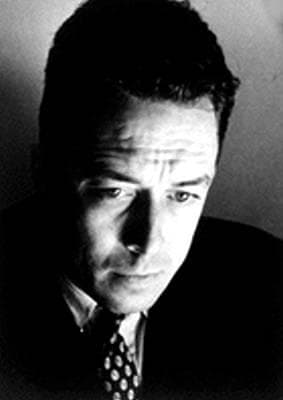
Albert Camus was a French-Algerian philosopher, author, dramatist, and journalist. He was the recipient of the 1957 Nobel Prize in Literature at the age of 44, the second-youngest recipient in history. His works include The Stranger, The Plague, The Myth of Sisyphus, The Fall, and The Rebel.
Similar books
- The Stranger
Albert Camus
4.1 (3k) average on GoodreadsFantasyExplores similar themes of alienation, absurdity, and the search for meaning with a detached protagonist.
- Nausea
Jean-Paul Sartre
3.9 (86k) average on GoodreadsPhilosophyA seminal work of existentialism, focusing on a protagonist's struggle with meaning and existence.
- Siddhartha
Hermann Hesse
4.0 (583k) average on GoodreadsHistorical FictionFollows a protagonist's journey of self-discovery and the pursuit of spiritual enlightenment through various life experiences.
- The Old Man and the Sea
Ernest Hemingway
3.8 (831k) average on GoodreadsLiterary FictionA Cuban fisherman's long struggle with a giant marlin becomes a story of endurance and dignity, now retold for young adults with illustrations, phonetic guides, and writing prompts in Traditional Chinese.
- One Hundred Years of Solitude
Gabriel García Márquez
4.1 (753k) average on GoodreadsLiterary FictionThrough the multi-generational story of the Buendía family, a mythical town deals with the repeating patterns of time, love, and solitude, as the extraordinary mixes with the ordinary.
- The Goldfinch
Donna Tartt
3.9 (720k) average on GoodreadsLiterary FictionHaunted by a tragic explosion and clutching a stolen Dutch masterpiece, a young orphan navigates the opulent drawing rooms of New York and the gritty underbelly of the art world, desperately seeking connection and redemption amidst a life spiraling into crime and obsession.





Enjoyed the summary?
A summary gives you the shape of the book. The book itself has the detail, the examples and the voice.
Find A Happy Death on AmazonAs an Amazon Associate, BookBrief earns from qualifying purchases. How we're funded