

Synopsis
Covers the whole plot, including the ending.
- Difficulty
- Easy
- Pacing
- Moderate
- Mood
- Tragic, Cautionary, Intense, Reflective
- Read it if
- You enjoy allegorical tales about the corrupting nature of greed and the struggle between good and evil, told with a classic, straightforward narrative.
- Skip it if
- You prefer complex character development and intricate plots over symbolic storytelling and moral fables.
The Pearl Plot Summary
Covers the whole plot, including the ending.
The Scorpion's Sting
The story begins with Kino, a poor pearl diver, and his wife, Juana, in their brush house in La Paz, Mexico, with their infant son, Coyotito. Their peaceful morning breaks when a scorpion stings Coyotito. Juana tries to suck the poison, and neighbors gather. Desperate, they take Coyotito to the doctor in the stone city, knowing the wealthy colonialist doctor rarely treats the poor. The doctor's servant meets them with disdain and refuses treatment, saying the doctor is too busy.
The Discovery of the Pearl of the World
After the doctor's rejection, Juana insists on traditional remedies, applying a poultice to Coyotito's shoulder. Fear for their son's life remains. Kino, determined to find a way to pay the doctor or secure his family's future, takes his canoe to the oyster beds with Juana and Coyotito. Juana prays for a pearl large enough to pay for treatment. Diving into the murky waters, Kino finds a large oyster. Opening it, he discovers an immense, flawless pearl, 'as large as a sea gull's egg,' gleaming with an otherworldly light. He calls it the 'Pearl of the World'.
Visions of a New Life
News of Kino's discovery spreads quickly through the village. Neighbors, previously indifferent, now gather at Kino's brush house, their eyes showing awe and envy. Kino and Juana begin to imagine their future changed by the pearl. Kino dreams of a proper church marriage, new clothes, a rifle, and an education for Coyotito, allowing him to escape their people's poverty and subjugation. The pearl, which first meant hope, now holds all their deepest desires for a better life and freedom from oppression.
The Doctor's Visit and Growing Greed
The doctor who refused to treat Coyotito now arrives at Kino's brush house, feigning concern for the baby. He gives a mysterious white powder, claiming it will prevent further harm, then returns later to give an antidote. Kino, suspicious but desperate, allows the treatment. The doctor's true motive is clear: he wants to find the pearl. Later, an intruder tries to steal the pearl, causing Kino to hide it more securely and signaling the start of dangers his new wealth brings. The community's attitude shifts from admiration to veiled jealousy and suspicion.
The Pearl Buyers and Their Deception
Kino, with his brother Juan Tomás and other villagers, goes to the city to sell the pearl. The pearl buyers, a seemingly independent group, are a cartel, all working for one unseen master. Each buyer, after examining the pearl with feigned indifference, offers Kino a very low price, claiming it is too large, 'fool's gold,' or has a blemish. Kino, despite his lack of formal education, senses their deception and refuses to sell. He states he will go to the capital for a fair price, a decision that fills his community with both admiration and fear.
The Pearl's Dark Influence
After the failed attempt to sell the pearl, tension in Kino's household rises. Juana, sensing the pearl's growing evil, urges Kino to throw it back into the sea, seeing it as a source of misfortune. Kino, however, remains fixed on the dreams it promises. That night, another intruder tries to steal the pearl from its hiding place under Kino's sleeping mat. Kino fights him off violently, drawing blood. The incident confirms Juana's belief that the pearl is cursed, bringing only danger and suffering to their family.
Juana's Attempt and Kino's Rage
Driven by her growing fear, Juana secretly takes the pearl and tries to throw it into the ocean. Kino, awakening, pursues her, intercepts her on the beach, and violently beats her, leaving her bruised and humiliated. As he returns, more attackers ambush him. In the struggle, Kino kills one of the men. In the chaos, his canoe, his most valuable possession, is smashed, and his brush house is set on fire. They are now homeless, murderers, and outcasts, all because of the pearl.
Flight into the Mountains
With their home destroyed and Kino a murderer, they must flee. Juan Tomás helps them prepare, providing food and a knife. Under cover of darkness, Kino, Juana, and Coyotito escape into the rugged mountains, heading north. Kino believes they can outrun their pursuers. However, they soon discover they are being tracked by three men: two on foot and one on horseback, armed with a rifle. The family must move stealthily, hiding during the day and traveling at night, their hope lessening with each mile.
The Final Confrontation
Kino and Juana find refuge in a cave high in the mountains. As night falls, Kino decides to confront the trackers. He leaves Juana and Coyotito hidden in the cave and stalks the three men, who have camped near a pool of water. Just as Kino makes his move, one of the trackers hears a sound and fires his rifle towards the cave. Kino attacks, killing all three men in a brutal struggle. However, when he returns to Juana, he finds her cradling Coyotito, who has been shot in the head, a casualty of the tracker's blind shot. The pearl has claimed their son.
The Return to La Paz
With their son dead and dreams shattered, Kino and Juana, united in grief, return to La Paz. They walk side-by-side, bound by immense suffering, Juana carrying Coyotito's lifeless body, and Kino clutching the pearl. The villagers watch in stunned silence, recognizing the profound tragedy. Reaching the shore, Kino takes the 'Pearl of the World' and, with a powerful, deliberate motion, throws it back into the ocean, watching it sink into the depths, its malevolent beauty returned to the indifferent sea. The pearl's promise of hope has been utterly corrupted, leaving only desolation.
Principal Figures
Kino
Protagonist
A poor pearl diver whose life is transformed—and ultimately destroyed—by the discovery of a great pearl.
Kino is a young, strong, and simple pearl diver, deeply devoted to his family. He lives a life of poverty but finds contentment in his daily routines and the love for his wife, Juana, and son, Coyotito. He is proud, resilient, and deeply connected to his indigenous heritage and the sea. The discovery of the 'Pearl of the World' awakens in him ambitions and desires previously unknown, transforming him from a contented man into one consumed by greed, paranoia, and violence, as he fights to protect his newfound treasure and the dreams it represents.
Relationships: Juana (Devoted wife, partner in struggle); Coyotito (Beloved infant son, the focus of his initial hopes for the pearl); Juan Tomás (Supportive older brother, loyal confidant)
Juana
Supporting
Kino's wife, a strong and intuitive woman who senses the evil within the pearl.
Juana is a resilient, practical, and deeply spiritual woman. She embodies the traditional strength and wisdom of her people. Her primary concern is the well-being of her family, especially Coyotito. From the moment the pearl is found, she possesses a keen intuition that it is a source of evil and danger, urging Kino to discard it. Despite Kino's violence towards her, she remains fiercely loyal and steadfast, enduring hardship and sorrow with quiet dignity. She represents the voice of reason and tradition against Kino's escalating ambitions.
Relationships: Kino (Devoted wife, often subject to his anger but remains loyal); Coyotito (Beloved infant son, her primary concern)
Coyotito
Supporting
Kino and Juana's infant son, whose scorpion sting leads to the pearl's discovery and whose death marks its tragic end.
Coyotito is the innocent infant son of Kino and Juana. His scorpion sting is the catalyst for the entire plot, as Kino seeks a pearl large enough to pay for his treatment. He remains a vulnerable, largely passive character throughout the narrative, representing the pure, uncorrupted hope for the future that the pearl initially symbolizes for Kino. His eventual, tragic death at the hands of the trackers' rifle fire signifies the complete destruction of Kino's dreams and the ultimate, devastating cost of the pearl's corrupting influence, making him the ultimate victim of the greed it inspires.
Relationships: Kino (Beloved son, the focus of his dreams); Juana (Beloved son, her primary concern)
Juan Tomás
Supporting
Kino's older brother, a wise and supportive figure who tries to guide Kino.
Juan Tomás is Kino's older brother and a respected figure in their community. He serves as a voice of caution and wisdom, understanding the dangers and temptations that accompany great wealth, especially for someone of their social standing. He is loyal and supportive, offering Kino shelter and advice after the murder and destruction of his home. Despite his warnings, he respects Kino's decisions and helps him in his time of need, representing the strong communal bonds and traditional values that Kino ultimately abandons in his pursuit of the pearl's promises.
Relationships: Kino (Supportive older brother, confidant); Apolonia (Wife)
The Doctor
Antagonist
A greedy, prejudiced colonial doctor who initially refuses to treat Coyotito but later seeks to exploit Kino.
The Doctor is a symbol of colonial oppression and European arrogance. He lives in luxury in the stone city, despising the indigenous people he is supposed to serve. He initially refuses to treat Coyotito due to Kino's poverty. However, upon hearing of the pearl, he immediately changes his tune, visiting Kino's hut under false pretenses of concern, attempting to extract information about the pearl's location. He embodies the greed and exploitation that Kino's people suffer under, and his actions highlight the stark class divisions and racial prejudice prevalent in their society.
Relationships: Kino (Exploitative, antagonist)
The Pearl Buyers
Antagonist
A cartel of unscrupulous merchants who conspire to cheat Kino out of a fair price for his pearl.
The Pearl Buyers represent the corrupt economic system designed to exploit the poor divers. They operate as a unified, deceptive force, despite appearing to be independent. Their elaborate charade of lowball offers and dismissive attitudes towards Kino's 'Pearl of the World' is a calculated effort to cheat him out of its true value. They symbolize the systemic greed and exploitation that traps Kino's people in poverty, ensuring that any wealth generated by their labor ultimately flows into the hands of the powerful. Their collective deception fuels Kino's paranoia and his determination to fight the system.
Relationships: Kino (Antagonistic, exploitative)
The Trackers
Antagonist
A trio of relentless pursuers who hunt Kino and Juana after Kino commits murder.
The Trackers are a shadowy, anonymous trio of men who pursue Kino and Juana into the mountains after Kino kills an intruder. They represent the inexorable, violent consequences of Kino's actions and the dangers unleashed by the pearl. One is on horseback, armed with a rifle, while the other two are on foot. They are relentless and determined, symbolizing the forces of society closing in on Kino. Their pursuit culminates in the tragic death of Coyotito, making them the direct instruments of the pearl's ultimate devastation.
Relationships: Kino (Antagonistic, pursuing him for murder)
Apolonia
Mentioned
Juan Tomás's wife and Kino's sister-in-law.
Apolonia is Juan Tomás's wife and Kino's sister-in-law. She is part of the close-knit community and is present during the initial crisis with Coyotito and later when Kino and Juana seek refuge after their house is burned. She supports her husband in helping Kino and Juana escape, embodying the communal solidarity among the villagers, especially in times of great need. While not a central character, her presence reinforces the family and community bonds that Kino initially relies upon.
Relationships: Juan Tomás (Wife); Kino (Sister-in-law)
Themes & Insights
The Corrupting Power of Wealth/Greed
A central theme of 'The Pearl' is how sudden wealth can corrupt human nature and destroy lives. Initially, Kino dreams of education for Coyotito, a church wedding, and a rifle — all seemingly good things. However, the pearl quickly changes him, making him paranoid, violent, and possessive. The pearl attracts envy, deceit, and murder from external forces like the doctor and pearl buyers, and internally, it breaks the peace within Kino's family. Juana's intuitive understanding that the pearl is evil, and Kino's descent into savagery, show how greed can strip away humanity, replacing love and community with isolation and violence, leading to Coyotito's death.
“And the pearl was ugly; it was gray, like a malignant growth. And Kino saw that the pearl was evil.”
Social Injustice and Colonial Oppression
The novel shows the systemic social and economic injustice faced by the indigenous people of La Paz by their colonial oppressors. The wealthy doctor's refusal to treat Coyotito due to Kino's poverty, contrasted with his sudden interest after the pearl's discovery, shows this. The pearl buyers, a cartel pretending to be independent merchants, conspire to cheat Kino, ensuring that the wealth from the poor divers stays with the colonial elite. Kino's desperate fight for a fair price and his eventual flight highlight the powerlessness of the oppressed against a deeply entrenched, exploitative system that denies them dignity and economic mobility. The story critiques the inequalities of a society built on racial and class divisions.
“In the town they knew about the pearl, and they knew how large it was. And they knew that Kino was a poor man. And they knew that he had not been to school. And they knew that he would be cheated.”
The Destruction of Innocence and Nature
The theme explores how greed and violence shatter the natural harmony and innocence that first define Kino's life. The opening scenes show a simple, almost Edenic existence in tune with nature. Coyotito, as an infant, embodies this innocence, and his scorpion sting is the first break. The pearl, a natural object, becomes 'ugly' and 'malignant' through human desire. The violence Kino inflicts on Juana, the destruction of his canoe (his connection to the sea), and the burning of his brush house (his connection to the land) symbolize the destruction of his simple, natural life. Coyotito's death, an innocent life extinguished by the violence brought by the pearl, means the complete loss of hope and the irreversible corruption of their world, leaving desolation both physically and spiritually.
“He looked at his pearl, and in it he saw the hazy little imps that were the trackers, and he saw Coyotito lying dead in the cave.”
Fate vs. Free Will
The story considers whether Kino's destiny is predetermined by his circumstances or shaped by his choices. The scorpion sting and the discovery of the pearl feel like acts of fate, starting a chain of events. However, Kino's decisions — to keep the pearl, to reject the buyers' offers, to fight his attackers, and to flee — are acts of free will that drive the tragedy forward. Juana, with her premonitions, often represents a fatalistic view, sensing the pearl's evil regardless of Kino's intentions. Yet, Kino's stubborn defiance against the system, while ultimately disastrous, also suggests a struggle against a predetermined life of poverty. The ending, where the pearl returns to the sea, can be seen as an act of free will, a conscious rejection of the destructive path, or a final acceptance of a tragic, unavoidable fate.
“It is not good to want a thing too much. It sometimes happens that you get it, and then you are sorry.”
Plot Devices & Literary Techniques
Symbolism of the Pearl
The pearl symbolizes both hope and the corrupting nature of wealth.
The pearl is the central symbol of the novella, embodying a complex duality. Initially, it symbolizes hope, a chance for Kino to escape poverty, educate his son, and secure a better future for his family. It represents dreams and possibilities. However, as the narrative progresses, its symbolism shifts dramatically, becoming a potent symbol of greed, evil, and destruction. It attracts envy, violence, and ultimately leads to the demise of Kino's innocence, his family's peace, and finally, his son's life. The pearl's 'malignant' glow reflects the corruption it brings, transforming from a natural wonder into a source of human suffering and despair.
Foreshadowing
Hints and clues throughout the story that predict future tragic events.
Steinbeck masterfully uses foreshadowing to build tension and suggest the inevitable tragic outcome. Juana's early premonitions that the pearl is evil and should be thrown back into the sea are direct warnings. The 'song of evil' that begins to accompany the 'song of the family' in Kino's mind, and the initial violence he experiences, all hint at the escalating dangers. The doctor's sudden interest, the pearl buyers' conspiracy, and the repeated attempts to steal the pearl all serve as escalating warnings that the pearl's promise is leading to ruin, preparing the reader for the eventual devastation of Kino's family and dreams.
The 'Songs' in Kino's Mind
Auditory motifs representing Kino's emotional state and the forces at play.
Kino experiences his world through 'songs' that play in his mind, a key literary device reflecting his internal state and the spiritual dimension of the narrative. The 'Song of the Family' represents peace, security, and love. After the pearl's discovery, this song is often intertwined with, and eventually overshadowed by, the 'Song of Evil' or the 'Song of the Enemy,' which signifies danger, greed, and malevolence. These auditory motifs externalize Kino's growing paranoia, his internal struggle, and the insidious influence of the pearl, allowing the reader to understand his emotional and psychological journey without explicit narration of his thoughts.
Animal Imagery
The use of animal comparisons to describe characters' primal instincts and the natural world.
Steinbeck frequently employs animal imagery to emphasize the primal, instinctual nature of his characters, particularly Kino, and to highlight the raw, untamed aspects of their struggle. Kino is often described with animalistic terms, such as 'crouching like a tiger' or 'his teeth were bared.' This imagery underscores his transformation from a simple man into a desperate, feral figure fighting for survival and his family. The scorpion that stings Coyotito is an immediate symbol of arbitrary evil in the natural world. This device connects the characters to the natural world, but also emphasizes the regression to primal instincts when faced with extreme pressure and the corrupting influence of greed.
The Pearl Quotes
“Kino was a man young and strong and healthy and of a proud race, but the poverty of a thousand years was like a pall over him.”
“And the music of the pearl was in the house, a little song of what might be, a little song of triumph.”
“This pearl is like a sin! It will destroy us, I tell you. It is the pearl of the devil.”
“And the music of the pearl was no longer sweet and lovely, but dark and fierce and complex.”
“Every man suddenly became related to Kino's pearl, and Kino's pearl went into the dreams of everyone.”
“He knew that the old life was gone forever. A dead thing cannot be revived.”
“It is not good to have a pearl. This is not a pearl of the world. This is a pearl of the devil.”
“A man with a pearl is a man, and he is a god, and he is a man again.”
“The pearl was his soul; it was his life. If he lost it, he would lose his life.”
“The wind blew fierce and strong, and it was the wind of the world, and it was the wind of the people, and it was the wind of the pearl.”
“For it is said that humans are never satisfied, that you give them one thing and they want something more.”
“And the music of the family sounded in his head, the song of the family, warm and soft and lovely.”
“He struck her in the face with his clenched fist and she fell among the boulders, and he kicked her in the side.”
“And Kino looked at Juana, his wife, and an instrument of God was in her hand.”
Quiz
10 questions on the plot and the characters. Each answer comes with a short explanation.
Question 1
What unfortunate event happens to Kino and Juana's baby, Coyotito, early in the story, prompting Juana to seek the doctor?
- He falls into the cooking fire.
- He is bitten by a scorpion.
- He contracts a mysterious fever.
- He is stung by a jellyfish while Juana is wading.
Show answer
B. He is bitten by a scorpion. Coyotito is bitten by a scorpion, leading Juana to desperately seek medical attention from the inaccessible doctor.
Question 2
Why does the doctor refuse to treat Coyotito initially?
- He is out of town.
- He believes Coyotito is already too far gone.
- Kino and Juana cannot pay him.
- He only treats Spanish families.
Show answer
C. Kino and Juana cannot pay him. The doctor, representing colonial greed, refuses to treat Coyotito because Kino and Juana are poor and cannot afford his services.
Question 3
What does Kino envision for his family after finding the great pearl?
- A new canoe and fishing nets.
- A rifle, marriage in a church, new clothes, and Coyotito going to school.
- A grand house in La Paz and many servants.
- A pilgrimage to a distant holy site.
Show answer
B. A rifle, marriage in a church, new clothes, and Coyotito going to school. Kino's dreams include practical improvements like a rifle and new clothes, but also social advancement like a church wedding and Coyotito's education.
Question 4
What is the primary reason the pearl buyers offer Kino such low prices for his pearl?
- They genuinely believe the pearl is flawed.
- They are conspiring to cheat him out of its true value.
- The market for pearls has recently crashed.
- They are afraid of Kino's temper.
Show answer
B. They are conspiring to cheat him out of its true value. The pearl buyers are in a syndicate, colluding to keep prices low and exploit the divers, particularly Kino.
Question 5
Why does Juana try to throw the pearl back into the sea?
- She is angry at Kino for not selling it.
- She believes it is bringing evil and misfortune upon their family.
- She thinks it will bring bad luck to the other pearl divers.
- She wants to hide it from the thieves.
Show answer
B. She believes it is bringing evil and misfortune upon their family. Juana, with her strong intuition, recognizes the evil and danger the pearl is attracting and desperately tries to rid them of it.
Question 6
What happens to Kino's canoe, which his grandfather and father also used?
- It is stolen by the trackers.
- It is destroyed by a storm while they are fleeing.
- It is smashed and a hole is knocked in its bottom by unseen enemies.
- Kino sells it to buy supplies for their journey.
Show answer
C. It is smashed and a hole is knocked in its bottom by unseen enemies. After Kino rejects the pearl buyers' offers, his canoe, a symbol of his heritage and livelihood, is maliciously destroyed.
Question 7
What is the ultimate fate of Coyotito?
- He recovers completely from the scorpion sting.
- He dies from a fever contracted during their flight.
- He is shot and killed by a tracker who mistakes him for a coyote.
- He is left behind in the village when Kino and Juana flee.
Show answer
C. He is shot and killed by a tracker who mistakes him for a coyote. In a tragic climax, Coyotito is accidentally shot by the trackers, mistaking his cry for that of a coyote.
Question 8
What does the 'song of the family' represent to Kino throughout the story?
- The traditional folk songs of his people.
- The simple, harmonious, and safe existence of his life with Juana and Coyotito.
- The dreams and aspirations he has for his son's future.
- The sound of the ocean, which provides their livelihood.
Show answer
B. The simple, harmonious, and safe existence of his life with Juana and Coyotito. The 'song of the family' is an internal melody Kino hears, representing the peace, warmth, and security of his home and loved ones.
Question 9
What action do Kino and Juana take with the pearl at the very end of the novel?
- They bury it in the desert.
- They throw it back into the sea.
- They sell it to a new buyer in a distant city.
- Kino keeps it as a reminder of their loss.
Show answer
B. They throw it back into the sea. After all the tragedy and loss, Kino and Juana return to the sea and throw the pearl back, rejecting its corrupting influence.
Question 10
How does Kino's character change from the beginning to the end of the novel?
- He becomes more trusting of the townspeople and authorities.
- He transitions from an innocent, simple diver to a hardened, violent, and disillusioned man, forever changed by greed and loss.
- He gives up his diving profession and becomes a fisherman.
- He finds inner peace and accepts his fate, regardless of wealth.
Show answer
B. He transitions from an innocent, simple diver to a hardened, violent, and disillusioned man, forever changed by greed and loss. Kino starts as a simple, contented man but is transformed by the pearl's influence into a desperate, violent figure, ultimately losing his innocence and his son.
The Pearl FAQ
What is the central conflict that drives the plot of 'The Pearl'?
The central conflict arises when Kino discovers a massive, perfect pearl, which he believes will bring his family prosperity and escape from poverty. However, the pearl instead attracts envy, greed, and violence from nearly everyone, including the doctor, the pearl buyers, and ultimately, a group of trackers, leading to tragic consequences for Kino, Juana, and their son, Coyotito.
How does Coyotito's scorpion sting act as a catalyst for the story's events?
Coyotito's scorpion sting is the initial catalyst because it forces Kino and Juana to seek medical help, only to be cruelly rejected by the wealthy doctor due to their poverty. This humiliation and desperation motivate Kino to dive for a pearl with unusual intensity, hoping to find something valuable enough to pay for his son's treatment, directly leading to the discovery of the 'Pearl of the World.'
Who are the main characters in 'The Pearl' and what are their primary roles?
The main characters are Kino, a poor pearl diver who finds the great pearl; Juana, his devoted wife who possesses a strong intuition and practicality; and their infant son, Coyotito, whose illness sparks the initial search for the pearl. Other significant figures include the greedy doctor and the manipulative pearl buyers.
What is the significance of the 'Song of the Family' and the 'Song of Evil' in Kino's mind?
The 'Song of the Family' represents Kino's inner peace, security, and love for his wife and child, often associated with the familiar sounds of their home. The 'Song of Evil' signals danger, threat, or malevolent presence, such as the scorpion or the corrupt pearl buyers, serving as an ominous warning within Kino's consciousness.
How does the description of the pearl change from something beautiful to something malignant?
Initially, the pearl reflects beautiful images of Kino's dreams: a church wedding, a rifle, Coyotito's education. However, as greed and violence plague the family, Kino begins to see evil within its surface – a starving baby, a man with a broken head, Juana's bruised face. The pearl literally mirrors the destruction it brings, transforming from a symbol of hope to one of malevolence.
What role do the villagers play in Kino's journey, and how do their reactions evolve?
The villagers initially share in Kino's excitement, imagining how the pearl could benefit them all, reflecting their collective dreams of escaping poverty. However, this collective hope quickly devolves into envy and suspicion, with many secretly wishing for Kino's downfall or hoping to steal the pearl, highlighting the corrupting influence of wealth on the community.
What is the symbolic significance of Kino throwing the pearl back into the ocean at the end?
Throwing the pearl back into the ocean symbolizes Kino's rejection of the corrupted dream and the destructive path it led him down. It represents a return to his former, simpler life, albeit one forever scarred by loss, and a recognition that true value lies not in material wealth but in the integrity of his family and his spirit, even after profound tragedy.
How does Kino's relationship with Juana evolve throughout the story?
Initially, Kino views Juana primarily as a submissive wife, but her strength, intuition, and unwavering loyalty become increasingly vital. She often sees the pearl's evil before he does, attempting to discard it. By the end, they face their hardships as equals, united in their grief and their decision to return the pearl, demonstrating a profound shift towards a partnership of shared burden and resilience.
Analyze the doctor's character and his impact on Kino's motivations.
The doctor is portrayed as a symbol of colonial oppression, greed, and racial prejudice, refusing to treat Coyotito because Kino is a poor Indian. His cruel dismissal fuels Kino's desperate desire for wealth, making the pearl not just a means to save his son but also a tool for vengeance and a way to gain respect and power from those who previously scorned him.
How does the 'Pearl of the World' bring out the worst in nearly everyone who encounters it?
The 'Pearl of the World' acts as a mirror, reflecting and amplifying the inherent greed and corruption in human nature. The doctor schemes to steal it, the pearl buyers collude to undervalue it, and even Kino's own community becomes envious. It strips away pretenses, exposing the base desires of wealth, power, and status in almost every character.
Is Kino's decision to keep the pearl, despite Juana's warnings, a sign of admirable ambition or destructive stubbornness?
Kino's decision can be interpreted as both. It's admirable ambition fueled by a desire to provide a better life for his family and escape generations of poverty. However, it also becomes destructive stubbornness, as he ignores Juana's prophetic warnings and becomes blinded by the pearl's false promise, leading him down a violent and ultimately tragic path.
How does the setting of La Paz, a real place, contribute to the novel's themes?
The setting of La Paz, meaning 'The Peace,' is ironic, as the story depicts a community where peace is shattered by greed and violence. It highlights the stark contrast between the natural beauty and simplicity of the pearl divers' lives and the corrupting influence of the colonial economic system and the pursuit of wealth, making the peace of the region metaphorical and elusive.
What is the significance of Kino's transformation from a simple, peace-loving man to a hardened killer?
Kino's transformation underscores the corrupting power of greed and the brutalizing effect of desperation. The pearl forces him to abandon his traditional, peaceful existence, compelling him to kill in self-defense and for survival, demonstrating how external pressures can erode one's humanity and force individuals into violent acts they would never have considered before.
Does 'The Pearl' offer any hope for humanity, or is it a purely cynical portrayal of human nature?
'The Pearl' offers a nuanced, rather than purely cynical, portrayal. While it exposes the destructive depths of greed and evil, Juana's unwavering loyalty, resilience, and practical wisdom, along with Kino's ultimate rejection of the pearl, suggest enduring human capacity for love, sacrifice, and the recognition of true values beyond material wealth, even amidst profound tragedy.
Why do Kino and Juana ultimately return to their village after the tragedy?
Kino and Juana return to their village because they have nowhere else to go and it represents their home and community, even if it has changed. Their return, walking side-by-side, signifies their enduring bond and a silent defiance, having faced profound loss but refusing to be broken or flee from their identity, even as they carry the weight of their ordeal.
What is the role of fate versus free will in the events of 'The Pearl'?
The novel suggests a strong element of fate, with the pearl's discovery seeming almost destined, yet Kino's subsequent choices, like refusing to sell it to the initial buyers or not heeding Juana's warnings, highlight free will. Ultimately, the story explores how individuals react when confronted by overwhelming circumstances, blending both a sense of an inevitable trajectory and the impact of personal decisions.
How does Steinbeck use animal imagery to foreshadow events or characterize individuals?
Steinbeck frequently uses animal imagery to foreshadow and characterize. The scorpion, an 'evil' creature, directly causes Coyotito's sting. Kino is often described with animalistic traits when he becomes violent, like a 'terrier' or 'wolf,' emphasizing his primal struggle for survival. The trackers are also likened to 'coyotes,' highlighting their predatory nature and the 'hunt' for Kino.
What lesson does Kino learn about wealth and happiness by the end of the story?
By the end, Kino learns that material wealth, especially when acquired through corrupt means, does not equate to happiness or security; instead, it brings destruction, violence, and profound sorrow. He realizes that the true value lies in his family's safety and his peace of mind, a lesson tragically underscored by the loss of Coyotito and his ultimate decision to discard the pearl.
About the author
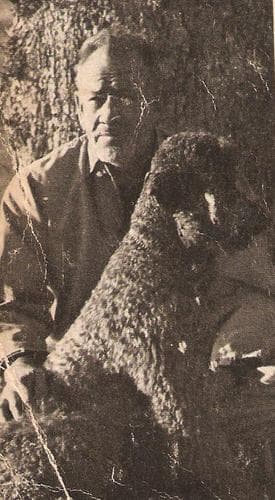
John Ernst Steinbeck was an American writer. He won the 1962 Nobel Prize in Literature "for his realistic and imaginative writings, combining as they do sympathetic humor and keen social perception". He has been called "a giant of American letters."
Similar books
- The Old Man and the Sea
Ernest Hemingway
3.8 (831k) average on GoodreadsLiterary FictionExplores themes of struggle, perseverance, and man's relationship with nature, with a similarly concise and symbolic narrative.
- Animal Farm
George Orwell
4.0 (2.7M) average on GoodreadsPoliticsA classic novella that uses allegory to critique societal corruption and the perversion of ideals.
- Of Mice and Men
John Steinbeck
3.9 (1.9M) average on GoodreadsHistorical FictionShares Steinbeck's exploration of dreams, despair, and the harsh realities faced by the working class, with a focus on simple yet profound characters.
- To Kill a Mockingbird
Harper Lee
4.3 (4.5M) average on GoodreadsHistorical FictionIn the 1930s Jim Crow South, Harper Lee writes about racial injustice, moral growth, and the quiet courage of a lawyer father, Atticus Finch, as seen through his young daughter's eyes.
- The Great Gatsby
F. Scott Fitzgerald
3.9 (3.8M) average on GoodreadsHistorical FictionIn the opulent Roaring Twenties, a mysterious millionaire's lavish parties hide his desperate, tragic pursuit of a lost love, exposing the emptiness within the American Dream.
- Pride and Prejudice
Jane Austen
4.3 (3M) average on GoodreadsHistorical FictionIn a society focused on status and money, Elizabeth Bennet navigates love and pride, challenging Mr. Darcy and social expectations to find true affection.






Enjoyed the summary?
A summary gives you the shape of the book. The book itself has the detail, the examples and the voice.
Find The Pearl on AmazonAs an Amazon Associate, BookBrief earns from qualifying purchases. How we're funded