In the shadow of ambition and betrayal, Rome's most powerful general, Julius Caesar, discovers that even the closest friends can wield the deadliest daggers.
Twelve determined men in a London printing shop started the world's first grassroots movement, using boycotts and celebrity endorsements to end the British Empire's slave trade against strong opposition.
In the harrowing, semi-autobiographical graphic novel, 'Onward Towards Our Noble Deaths,' Shigeru Mizuki plunges readers into the final, futile weeks of a Japanese infantry unit in World War II, where soldiers are condemned to a 'glorious' death in battle or execution for daring to survive.
Ian Frazier explores the realities of the Oglala Sioux on the Pine Ridge Reservation, showing a culture sustained by humor, resilience, and the past in the face of modern challenges.
Amartya Sen argues against seeking a perfectly just society, instead favoring a practical, comparative approach to justice that addresses real-world inequalities by considering diverse viewpoints.
The true story of John Merrick, the 'Elephant Man,' shows the soul and human needs beneath his deformed body, changing ideas about beauty and humanity.
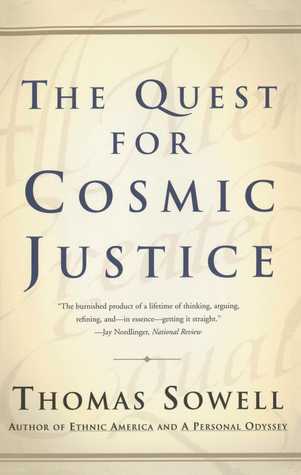
Sowell shows how seeking an ill-defined 'cosmic justice' undermines true equality and freedom, slowly eroding the foundations of the American Revolution through well-intentioned but flawed social ideas.
In fin-de-siècle Istanbul, an Ottoman family, led by an autocratic grandmother and a child-bride mother, copes with the collapse of their empire, fortune, and way of life, from opulent hamam rituals to the reality of a new Turkish republic.
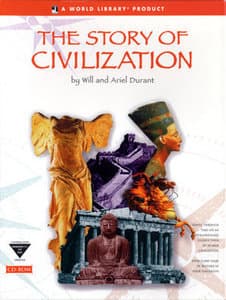
Durant’s "Story of Civilization" is an eleven-volume series that covers human history from ancient Mesopotamia to the Napoleonic era, detailing the rise and fall of empires, philosophies, and the evolution of art and science.
Plutarch's 'Parallel Lives' pairs the lives of Greek and Roman figures, not to chronicle history, but to show character through anecdote and detail, revealing how virtue and vice shaped their destinies.
Trotsky explains how the Soviet Union, under Stalin, fell from a revolutionary state to a totalitarian one, showing how bureaucratic corruption and the rejection of true socialist goals betrayed the workers' state.
Thomas Pakenham masterfully recounts the brutal and complex Boer War, weaving together gripping narratives with rich visuals that illuminate the clash of empires and the human cost of conflict.
From the African savannah to the post-9/11 world, this sweeping chronicle traces the diversity of human civilization, power shifts, and the triumphs and struggles of people across continents.
In Japanese-occupied Borneo, a downed B-24 crew's survival depends on enigmatic Dayak tribesmen, blurring the lines between 'civilized' and 'savage' during wartime.
Plato's Timaeus and Critias explores the creation of the cosmos, the divine origin of humans, and the advanced civilization of Atlantis through ancient Greek philosophical dialogues.
Robert Burton's 17th-century work is a vast, elegant exploration of human melancholy, dissecting every aspect of the condition and offering a timeless journey through psychology, history, and philosophy.
A.J.P. Taylor argues that the Second World War was not Hitler's premeditated plan, but a series of blunders and miscalculations, rewriting the war's beginnings.
Frida Kahlo turned life's hardest moments and greatest joys into lasting art, from her father's color lessons to the raw depiction of polio and bus crash pain.
Bakhtin describes the revolutionary laughter of Rabelais's carnival as a timeless force of popular renewal, subtly defying the oppressive orthodoxies of his own Stalinist era.
Frances Yates explores how ancient orators and Renaissance mages mastered vast knowledge before printing, using forgotten memory palace techniques that shaped Western thought.
Julius Caesar and Pompey the Great tear the Roman Republic apart in a brutal, bloody struggle that shatters law, order, and the soul of a civilization.
Follow the Anunnaki leader Enki as he shares the extraterrestrial origins of humanity, a story of celestial politics, ancient rivalries, and scientific discoveries that challenge what we know about our past and future.