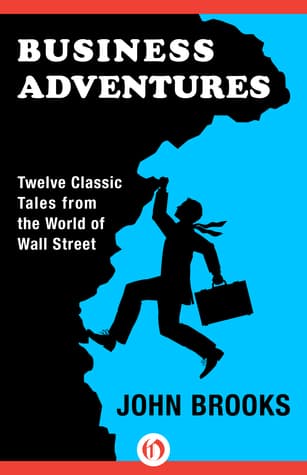
Explore the dramatic stories of corporate America, from Ford's Edsel failure to Xerox's rapid growth, revealing lessons in ambition, innovation, and human error that resonate through business history.
This revised edition explores John Locke's foundational arguments for legitimate government and individual rights, updated with recent scholarship on his influential ideas.
Orwell's journey into 1930s Britain's industrial areas shows the harshness of poverty and class, creating a strong criticism of social injustice that still matters today.
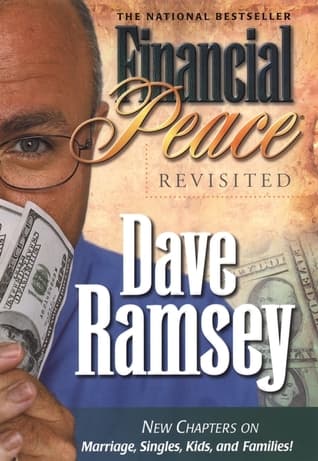
Having lost a fortune by thirty, Dave Ramsey distills his hard-won wisdom into a straightforward, step-by-step guide for escaping debt, investing simply, and finding financial peace to transform your life and relationships.
As London's Pepys Road faces financial meltdown in 2008, an anonymous campaign of "We Want What You Have" postcards exposes class, greed, and fear among its diverse residents, from bankers to refugees, whose lives connect through a city on the brink.
Rawls's 'A Theory of Justice' is a philosophical work that defines justice as fairness, offering an alternative to utilitarianism and supporting individual rights in a democratic society.
Milton Friedman argues that competitive capitalism is essential for economic prosperity and individual liberty, stating that a free market is the only way to get government benefits without facing its threats.
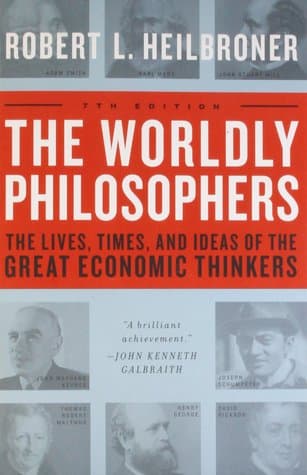
Explore the ideas of history's greatest economic thinkers, from Adam Smith to Karl Marx, to understand capitalism's complex workings and the social questions it raises, ending with a look at the future of economic thought.
Lenin dissects the capitalist state as an instrument of class oppression, arguing for its revolutionary overthrow and replacement by the dictatorship of the proletariat as the true path to human liberation.
Peter Lynch, the well-known mutual fund manager, shares his stock-picking methods through real examples and his 1992 Barron's Roundtable selections, helping individual investors find successful companies in any market.
Amartya Sen says development is about expanding human freedoms, not just economic growth. He argues these freedoms are both the goal and the best way to achieve societal progress and well-being.
A new hire at Zephyr Holdings enters a hilariously absurd corporate world where donuts spark intrigue and the CEO is a myth. He questions what business even is.
Ron Paul explains the Federal Reserve's origins, constitutional standing, and economic effects, arguing it is a corrupt, unconstitutional entity that harms ordinary Americans and causes inflation.
In the cutthroat world of high finance, a ruthless banker's rapid rise, fueled by ambition and deceit, clashes with his ethical counterpart's struggle for integrity amidst the allure of wealth.
Fukuyama argues that the global spread of liberal democracy might mark humanity's ideological endpoint, exploring what this means for identity, conflict, and progress in a 'post-historical' world.
Understand the unwritten rules and survival strategies of poverty to bridge socioeconomic gaps and offer support to those facing its unique challenges.
Kropotkin's 'The Conquest of Bread' examines historical injustices and outlines an anarchist society where collective needs are met through revolutionary redistribution and cooperative effort.
Alvin Toffler’s 'Future Shock' explores how fast technological and social change disrupts our sense of stability, making individuals and societies feel overwhelmed by newness.
This biography explores the life of Andrew Carnegie, from his start in Scotland to his rise as an American steel magnate, detailing how he built and then gave away the world's largest fortune.
Sowell shows the shared cultural roots of Southern 'rednecks' and some Black communities, arguing that well-meaning white liberals hurt these communities by defending a destructive subculture.
This book uses illustrations and parables to explain how consumer credit and inflation create economic problems, showing that real prosperity comes from saving, producing, and investing, not from government actions.