Lesslie Newbigin helps Christians understand modern pluralism, offering a way to share and live the gospel confidently amid different worldviews, cultural relativism, and secularism.
Loren Eiseley, a writer with a scientist's mind and a poet's heart, turns his encounters with nature into deep thoughts about humanity's ancient past and uncertain present.
Bertrand Russell's essay presents his atheistic worldview, a stance so controversial it cost him a teaching position, yet it remains a clear look into his thought.
A devout Catholic and a zealous atheist, both comically naive, spark a duel and a whirlwind of allegorical adventures across England, all to settle the eternal debate between faith and reason.
Trapped in an endless monologue, the Unnamable grapples with the futility of language and the relentless compulsion to speak, even as he yearns for the oblivion of silence and the cessation of self.
Explore the world of an ancient Chinese sage who questions traditional ideas with paradoxes, stories, and humor, helping readers find a spontaneous and free existence.
Through the voice of Father Abraham, Benjamin Franklin distills a quarter-century of Poor Richard's wisdom into a timeless sermon on the industrious grit and shrewd frugality required to forge one's own prosperity.
Amidst Europe's descent into fascism, a man's surreal odyssey through squalor, sadism, and drunken encounters mirrors civilization's collapse, blurring the lines between victimhood and the monstrous allure of power.
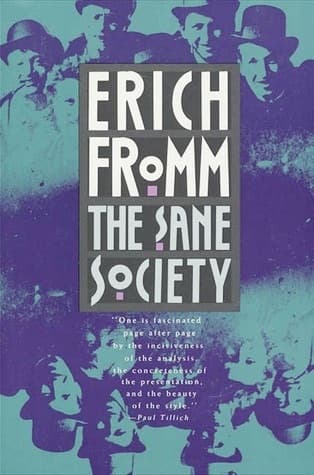
Erich Fromm examines the 'pathology of normalcy' in Western capitalism, showing how societal sickness isolates individuals and suggesting radical community-based solutions for mental health, love, and freedom.
Exiled to the desolate edge of the Roman world, the sophisticated poet Ovid finds unexpected redemption and a deep connection to the wild through his guardianship of a boy raised by deer.
A Resistance leader, during the Nazi occupation, faces a terrible choice: sacrifice his lover for the cause, or doom others. He must confront the impact of his moral decisions.
In 1924 Vermont, the Ku Klux Klan shatters a quiet town, forcing a Black girl, a Jewish girl, and their neighbors to face hatred and find strength in unexpected friendships.
Derrick Jensen connects early 20th-century American lynchings to modern South American death squads, showing the 'make-believe' that underpins our civilization.
In a dark comedy, a cynical intellectual manipulates friends and couples, exposing their fragile loyalties and proving humanity prefers drama over honest communication.
Axelrod shows how cooperation can emerge and last, even among self-interested groups without a central authority, through the surprising success of 'Tit for Tat' in game theory.
Amartya Sen argues against seeking a perfectly just society, instead favoring a practical, comparative approach to justice that addresses real-world inequalities by considering diverse viewpoints.
After his son Eric's sudden death, a philosopher turns his grief into a personal and moving lament, giving voice to the pain of loss and the strength of love.
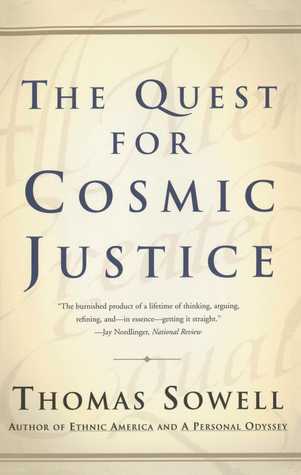
Sowell shows how seeking an ill-defined 'cosmic justice' undermines true equality and freedom, slowly eroding the foundations of the American Revolution through well-intentioned but flawed social ideas.